
新能源汽车

Search documents
锂电板块迎来“开门红”,龙头公司业绩预告亮眼
Guo Ji Jin Rong Bao· 2026-01-28 10:03
近期,赣锋锂业(002460)、先导智能(300450)、天赐材料(002709)、天际股份(002759)等锂电 企业相继公布2025年业绩预告,预计净利润同比实现正增长或扭亏为盈,行业整体景气度显著回升。 赣锋锂业:主营业务仍亏损 受益于新能源汽车、储能与消费电子等下游市场的强劲需求,锂电产业链企业2025年业绩预告大增。 1月28日,赣锋锂业发布业绩预告称,预计2025年实现归母净利润11亿元至16.5亿元,上年同期亏损 20.74亿元,同比扭亏为盈。预计扣非净利润为亏损3亿元至6亿元,同比减亏。 关于业绩变动原因,该公司表示,报告期内,公司持有的Pilbara Minerals Limited(PLS)股票价格上涨, 产生了公允价值变动收益,在领式期权相关的既定风险管理策略对冲后,整体公允价值变动收益约10.3 亿元。此外,公司通过转让控股子公司深圳易储数智能源集团有限公司部分股权并成功引入战略投资 人,确认了相应的投资收益。 值得注意的是,从近两年的业绩变动看,赣锋锂业的业绩和它持有的PLS股票关系非常大,并非主营业 务有所改善。该公司持有PLS约5.37%的股份,并享有包销权,这一投资不仅保障了锂 ...



全球化突破!2025年我国汽车出口832万辆,同比增长30%
Hua Xia Shi Bao· 2026-01-28 09:58
Core Insights - In 2025, China's automobile exports reached 8.32 million units, a 30% year-on-year increase, marking a historical high and reflecting the industry's enhanced competitiveness in the global market [2] - The growth in exports is driven by the rise of new energy vehicles (NEVs), which have become a core growth engine, with overseas markets playing a crucial role in the industry's development [2] Export Volume and Structure - Passenger vehicles accounted for over 80% of total exports, while commercial vehicle exports remained stable, with new energy commercial vehicles emerging as a highlight [3] - In December 2025, the monthly export volume reached 990,000 units, a 73% year-on-year increase and a 23% month-on-month increase [3] - NEV exports totaled 3.43 million units, a 70% increase compared to 2024, with pure electric vehicles making up 28% of exports, hybrid vehicles 13%, and traditional fuel vehicles dropping to 43% [3] Price Trends - The average export price of Chinese automobiles in 2025 was $18,200, a 15.7% increase year-on-year, while the average price for NEVs reached $29,800, 83.5% higher than traditional fuel vehicles [3] Market Performance - In Europe, Chinese automakers achieved significant growth, with December 2025 sales reaching 109,864 units, a 127% year-on-year increase, and a market share of 9.5% [5] - For the entire year, sales in Europe reached 810,000 units, a 99% increase, contributing to a 2.3% growth in the European car market [5] Regional Developments - Southeast Asia saw exports of 1.985 million units, a 24.7% increase, while Latin America recorded 1.652 million units, a 36.8% increase [6] - The Middle East market exported 826,000 units, with NEV exports reaching 128,000 units, a 132% increase [6] Industry Ecosystem - The transformation of China's automobile exports from single vehicle exports to a full industry chain ecosystem is evident, with battery companies establishing production bases globally and entering international supply chains [6] - The export of auto parts reached $89.2 billion, with technology suppliers providing smart driving solutions to global automakers [6]


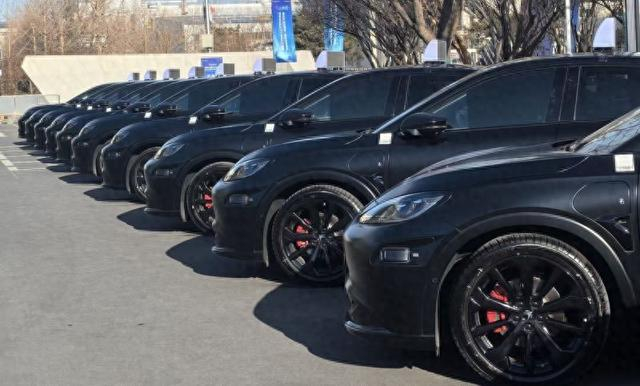
乔锋智能:2025年净利同比预增51.04%-80.27%
Ge Long Hui A P P· 2026-01-28 09:20
格隆汇1月28日|乔锋智能(301603.SZ)公告称,乔锋智能预计2025年归属于上市公司股东的净利润为 3.10亿元-3.70亿元,比上年同期增长51.04%-80.27%。业绩增长主要受益于消费电子、新能源汽车等行 业快速发展及通用设备行业复苏;公司产能与品牌影响力提升,募投项目产能持续释放;精密主轴、高 端卧式及五轴加工中心量产并形成新增长动能。 ...
洁美科技(002859) - 2026年1月26日至1月28日投资者关系活动记录表
2026-01-28 09:18
Group 1: Investor Relations Activities - The investor relations activities included a telephone conference held on January 26, 2026, from 13:30 to 14:30, with participation from Yongying Fund and Wanji Fund [2] - Additional telephone conferences were scheduled for January 27 and January 28, 2026, with various investment firms participating [3][4] Group 2: Industry Outlook and Product Pricing - The current industry outlook is positive, with the company's core product, electronic packaging materials, operating at full capacity [4] - The company is monitoring market conditions and may adjust product prices in response to rising costs from downstream customers [5] Group 3: Competitive Advantages - The company has established a strong customer base in the electronic information industry, providing a solid foundation for new product introductions [6] - It is one of the earliest companies in China to develop MLCC (Multi-Layer Ceramic Capacitor) release films, achieving stable supply to major clients [6] - The company has significant technical expertise in precision coating technology, enhancing its competitive edge in the release film market [6] Group 4: Production and Expansion Plans - The Tianjin production base is currently in the equipment debugging phase, with trial production expected to start within the first quarter of 2026 [7] - The company plans to leverage its new facility to enhance supply capabilities to strategic customers in North China, particularly Samsung [7] Group 5: Financial Health and Capital Expenditure - The company maintains sufficient bank credit limits and a normal debt ratio, ensuring financial stability for future capital expenditures [8] - It plans to conduct refinancing in line with the expansion pace of release film production [8] Group 6: Research and Development - The company is actively developing high-end release films for various applications, aiming to break foreign monopolies and achieve domestic substitution [7] - Beijing Critical Field Technology Co., in which the company holds a 22.5% stake, is focused on high-temperature superconductors and is expected to begin trial production mid-year [8]

特朗普助攻,通用汽车燃油车业务更赚钱了
Guan Cha Zhe Wang· 2026-01-28 09:04
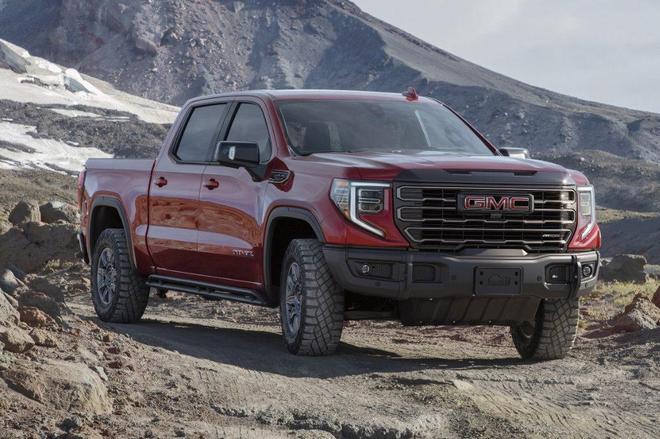
Core Viewpoint - General Motors (GM) reported a total revenue of $185 billion and a net profit of $2.7 billion for the year 2025, indicating a strong performance despite challenges in the electric vehicle (EV) sector [1][4]. Group 1: Financial Performance - GM's total revenue for 2025 was $185 billion (approximately ¥1.28 trillion), with a net profit of $2.7 billion (approximately ¥187.5 billion) and adjusted EBIT of $12.7 billion (approximately ¥882 billion) [1]. - The company expects net profit for 2026 to be between $10.3 billion and $11.7 billion, with adjusted EBIT projected between $13 billion and $15 billion [8]. Group 2: Market Performance - In the U.S. market, GM maintained its position as the top seller in 2025, with all four major brands experiencing growth in both sales and market share [2]. - The full-size pickup trucks, led by Chevrolet Silverado and GMC Sierra, continued to dominate the market for the sixth consecutive year, while full-size SUVs ranked first for the 51st year [2]. Group 3: Regulatory Environment and Cost Management - The relaxation of regulations on fuel-efficient vehicles under the Trump administration has improved the outlook for GM's profitable fuel vehicle business, saving up to $750 million in costs previously incurred from purchasing credits from EV companies [2][4]. - GM's CFO indicated that the company faces additional costs of up to $1.5 billion due to outsourcing, supply chain transformation, and software investments [4]. Group 4: Electric Vehicle Strategy - GM's EV sales in 2025 ranked second only to Tesla, but the company reported a net loss of $3.3 billion in Q4 due to declining demand and policy changes affecting EV incentives [4]. - Despite challenges, GM remains committed to its EV strategy and aims to reduce costs in the EV sector by $1 billion to $1.5 billion through restructuring [4]. Group 5: China Market Expansion - GM achieved profitability in China for five consecutive quarters, with 2025 sales and market share showing year-on-year growth, particularly in the new energy vehicle segment, which accounted for over 1 million units sold [6]. - The company is enhancing its product lineup in China with the Buick Electra family, including the upcoming Electra E7 SUV, and plans to offer new energy options for all new products launched in China by 2026 [6].

C-IASI安全指数年度洞察:三电亮眼,智能安全配置走向标配
Zhong Guo Qi Che Bao Wang· 2026-01-28 08:03
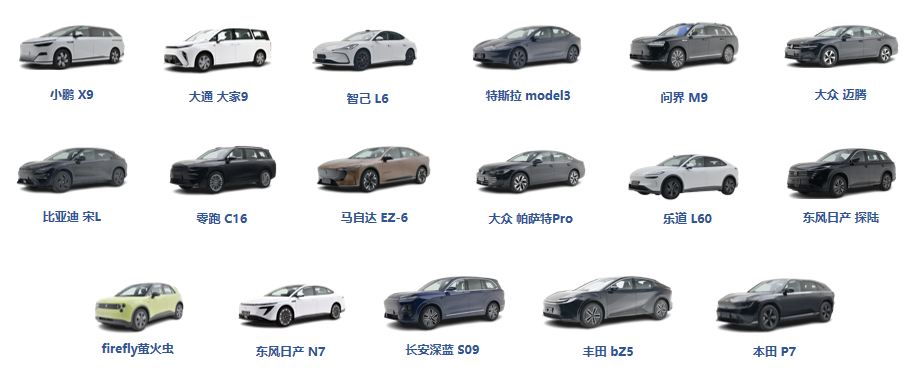
Core Viewpoint - The automotive industry is undergoing a critical transformation towards electrification and intelligence, with safety being the core baseline for high-quality development. The C-IASI safety index, led by the China Automotive Engineering Research Institute, aims to enhance automotive safety standards through iterative regulations and innovative assessments by 2025 [1]. Group 1: C-IASI Safety Index Overview - In 2025, the C-IASI safety index will release evaluation results for 17 vehicle models across three batches, with the first two batches (14 models) adhering to the 2023 regulations and the third batch (3 models) following the revised 2024 regulations, which introduces a special index for new energy vehicles [2]. - The 2023 regulations consist of four sub-indices: crashworthiness and repair economy, occupant safety, pedestrian safety, and vehicle assistance safety. The 2024 revision adds a special index for new energy vehicles, focusing on repair economy and vehicle safety [4]. Group 2: Evaluation Results - The evaluation results for 2025 show significant improvements across core dimensions, with 94% of models achieving excellent or above ratings in occupant safety. All tested models have 100% configuration rates for front airbags, front side airbags, and curtain airbags, while rear side airbags and front center airbags have increased to 47% from 19% and 5% respectively in the 2020 version [4]. - In pedestrian safety, 100% of models received excellent or above ratings, indicating a growing emphasis on pedestrian protection in vehicle design [4]. - In vehicle assistance safety, 100% of models also achieved excellent or above ratings, with all 17 tested models equipped with AEB/LSS, and 58.8% of models featuring DMS, showing a shift towards mainstream safety configurations [5]. Group 3: Challenges and Opportunities - Despite advancements, crashworthiness and repair economy remain common weaknesses, with only 29% (5 models) receiving excellent ratings and 18% (3 models) rated as good, indicating room for improvement in controlling user after-sales costs [5]. - New energy vehicles are becoming the main focus of evaluations, with 15 out of 17 tested models being electric. The first three models evaluated under the new energy vehicle special index all received excellent ratings, particularly excelling in bottom collision tests [5]. Group 4: Technological Advancements - The continuous improvement in evaluation results reflects the strong influence of the C-IASI safety index on industry technological advancements. The China Automotive Engineering Research Institute aims for zero casualties in traffic accidents and is conducting forward-looking research on key evaluation technologies and standards [6]. - The AC-HUMs digital model, developed based on Chinese population data, represents a breakthrough in safety technology, enabling comprehensive assessments of injury risks [6]. - Research on pedestrian safety evaluation is being conducted to integrate active safety (AEB) with passive protection effects, enhancing overall safety assessments [8]. Group 5: Industry Standards and Collaboration - The China Automotive Engineering Research Institute has led the development of the first industry standard for occupant safety in high-angle seats, with over 20 companies already applying it [10]. - A collaborative effort has resulted in the first deformable barrier that accurately replicates vehicle-to-vehicle collision responses, supporting vehicle compatibility assessments [12]. - Virtual evaluation studies for diverse occupant protection in frontal and side collisions are being conducted, expanding existing physical evaluation conditions and promoting a more comprehensive occupant protection assessment system [14].

销量在追近,市值在远离:吉利和比亚迪的差距在哪里?
Xin Lang Cai Jing· 2026-01-28 07:57
Core Viewpoint - The competition between Geely and BYD in the Chinese electric vehicle market is intensifying, with Geely's sales growth contrasting sharply with its market valuation and profitability compared to BYD [1][2]. Group 1: Sales Performance - In 2025, Geely achieved annual sales of 3.02 million vehicles, a year-on-year increase of 39%, positioning itself as the second-largest domestic brand [1]. - Geely's Galaxy brand contributed significantly, with sales reaching 1.6878 million units, a 150% increase, making it a formidable competitor to BYD [2][3]. - Despite the sales growth, Geely's total sales in December 2025 fell to 236,817 units, a 23.7% decrease from November, indicating potential issues in sustaining momentum [1]. Group 2: Market Valuation and Profitability - BYD's market capitalization recently surpassed HKD 908.5 billion, while Geely's stood at approximately HKD 181 billion, widening the valuation gap to 5:1 [1]. - Geely's profitability is lagging behind BYD, with significant differences in per-vehicle profit and total profit margins [1]. Group 3: Strategic Positioning - Geely's strategy of closely following BYD's product offerings has led to a reactive approach, limiting its ability to innovate independently [2][3]. - The rapid rise of the Galaxy brand has not fully addressed Geely's challenges in high-end market positioning and global expansion [7][8]. Group 4: Technological Development - Geely's technological advancements are perceived as reactive, with a notable delay in responding to BYD's innovations, such as the introduction of advanced driver-assistance systems [3][4]. - The disparity in research and development investment is evident, with BYD's R&D expenditure significantly outpacing that of Geely, reflecting a deeper commitment to technological advancement [10][11]. Group 5: Global Expansion Challenges - Geely's export volume declined by 4% in 2025, contrasting with BYD's 132% growth in overseas sales, highlighting Geely's struggles in international markets [7][8]. - The company's approach to global markets has been criticized for being outdated, relying on transferring domestic models without adapting to local demands [7][8]. Group 6: Future Outlook - Geely aims to achieve a sales target of 6.5 million vehicles by 2030, but this ambition hinges on overcoming its technological and operational challenges [1][14]. - The competition between Geely and BYD is seen as a pivotal moment for the Chinese automotive industry, transitioning from scale-based competition to one focused on systemic and paradigm shifts [15].

创近五年新低 2025年汽车行业销售利润率仅4.1%
Jing Ji Guan Cha Wang· 2026-01-28 07:36
Core Viewpoint - The Chinese automotive industry is facing significant profit declines, with 2025 projected profits at 461 billion yuan, a mere 0.6% increase year-on-year, and a sales profit margin of 4.1%, which is below the average of 5.9% for downstream industrial enterprises [2] Group 1: Profit Trends - The automotive industry's profit margin is expected to drop to 4.1% in 2025, marking a five-year low, following a decline to 4.3% in 2024 [2] - In December 2025, the automotive industry reported profits of 20.7 billion yuan, a year-on-year decrease of 57.4%, with a profit margin of 1.8%, significantly lower than the 4.1% in December 2024 [2] - Excluding the pandemic-affected April 2022, December 2025's profit margin is the lowest in five years [2] Group 2: Industry Performance - The automotive supply chain shows a mixed performance, with upstream parts manufacturers experiencing stable growth, while vehicle manufacturing and downstream dealerships face significant challenges [3] - Among 22 A-share automotive companies, 16 reported profits, but major players like BYD and GAC Group saw substantial profit declines, with GAC Group's profit dropping by 3691.33% [3] - The dealership segment is under severe pressure, with only 28% meeting sales targets and a loss rate climbing to 55% [3] Group 3: Cost Pressures - The automotive industry is experiencing increased cost pressures, with lithium carbonate prices doubling and overall raw material costs rising, impacting profit margins [3][4] - The cost of a typical electric vehicle has increased by 4,000 to 7,000 yuan due to rising prices of lithium, aluminum, and copper, which manufacturers struggle to pass on to consumers [4] - Starting in 2026, a 5% tax on new energy vehicle purchases and changes to subsidy policies will further increase consumer costs, complicating demand and supply dynamics [4][5] Group 4: Future Outlook - The China Automotive Industry Association forecasts total vehicle sales to reach 34.75 million units in 2026, a 1% year-on-year increase, with new energy vehicles projected to grow by 15.2% to 19 million units [5] - Some automotive companies are accelerating collaborations with upstream suppliers to address these challenges, focusing on strategic partnerships and new material development [5]




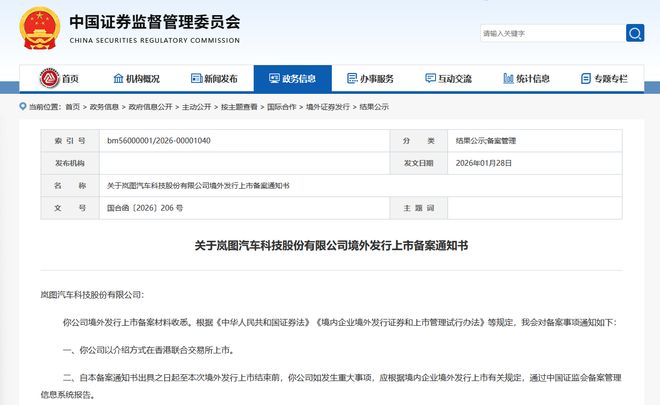
岚图汽车赴港上市获中国证监会备案
Guan Cha Zhe Wang· 2026-01-28 03:47
【文/观察者网 潘昱辰 编辑/高莘】1月28日,中国证券监督管理委员会发布《关于岚图汽车科技股份有 限公司境外发行上市备案通知书》。《通知书》显示,岚图汽车以介绍方式在香港联合交易所上市。 岚图汽车 岚图汽车 1月13日,东风汽车集团有限公司、东风汽车集团(武汉)投资有限公司和东风集团股份发布联合公 告,称东风汽车集团(武汉)投资有限公司通过吸收合并方式将东风集团股份私有化、东风集团股份分 派岚图股份及撤销东风集团股份上市地位的建议,已获得国家发改委、商务部及国家外汇管理局的批 准、备案或登记以及与合并相关的其他适用政府批准,不过彼时尚未获得证监会国际合作司对介绍上市 的备案、联交所对介绍上市的原则性批准及介绍上市所需的其他主管部门的批准。 根据东风集团股份披露的数据,2025年,东风集团股份累计销售汽车189.62万辆,同比增长0.01%;其 中新能源汽车销售56.28万辆,同比增长42.62%。作为东风集团旗下的高端新能源品牌,岚图汽车去年 全年销售15.02万辆,同比增长87.44%。 本文系观察者网独家稿件,未经授权,不得转载。 《通知书》显示,自出具之日起至本次境外发行上市结束前,岚图汽车如发生重大 ...

2026年汽车投资策略
2026-01-28 03:01
Summary of the Conference Call Industry Overview - The conference focused on the automotive industry, specifically strategies and forecasts for 2026, with a review of the automotive market from 2005 to 2025 [1][2]. Key Insights and Arguments 1. **Sales Growth and Valuation**: - Sales growth is a sufficient but not necessary condition for the valuation of the automotive sector to increase. Historical data shows that years with sales growth corresponded with rising valuations, but there were exceptions in years like 2012 and post-2020 [3]. - The automotive sector's valuation tends to respond approximately three months ahead of sales growth before 2020, and this response time has shortened to about one month post-2020 [3]. 2. **Comparison with 2018**: - The year 2026 is expected to mirror 2018, which also faced declining sales due to policy changes. In 2018, the automotive sector began to decline three months before sales dropped significantly [4][5]. 3. **Impact of Policy Changes**: - The introduction of a 5% purchase tax on new energy vehicles in 2026 and changes in subsidy structures are expected to impact demand negatively [1][2]. 4. **Investment Opportunities**: - The focus for 2026 is on new growth areas, particularly in smart driving technologies. Companies in this sector are seen as undervalued, with many trading below 30x P/E ratios while maintaining decent growth rates [7][8]. 5. **Low Valuation and High Growth Stocks**: - Several companies were highlighted as having strong growth potential while being undervalued, including: - **Mastec**: Estimated 20% growth in 2026 with a P/E of 15-16x [10]. - **Yatong**: Expected 30% growth with a P/E of around 20x [10]. - **Fuyou Glass**: Anticipated 15% growth with a P/E of about 15x [11]. - **Weichai Power**: Projected 15% growth with a similar P/E [11]. 6. **Sector-Specific Insights**: - Companies like **Desay SV** and **Kobota** are expected to see significant revenue growth due to their involvement with major clients like Li Auto and NIO, with projected revenues of 90 billion and 21 billion respectively for Q4 [17][21]. - **Huayang Group** is expected to maintain a growth rate of over 20% in 2026, driven by high-margin products [24]. Other Important but Overlooked Content - The conference also discussed the potential risks associated with rising raw material costs, particularly for companies in the forging sector, which could impact earnings realization [13]. - The importance of technological cycles, including the shift towards electric and smart vehicles, was emphasized as a key driver for future growth in the automotive sector [6][7]. - The discussion included a focus on the competitive landscape, with companies like Fuyou Glass expected to benefit from a more favorable market position as competitors exit [30][31]. Conclusion - The automotive industry is facing challenges due to policy changes and market dynamics, but there are significant investment opportunities in undervalued companies with strong growth potential, particularly in the smart driving and electric vehicle segments. The insights from the conference provide a comprehensive overview of the current state and future outlook of the automotive sector.


