
长期主义

Search documents
选择分红产品,如何化繁为简? 锚定公司实力,选择“长期可靠的伙伴”
Qi Lu Wan Bao· 2025-09-16 07:16
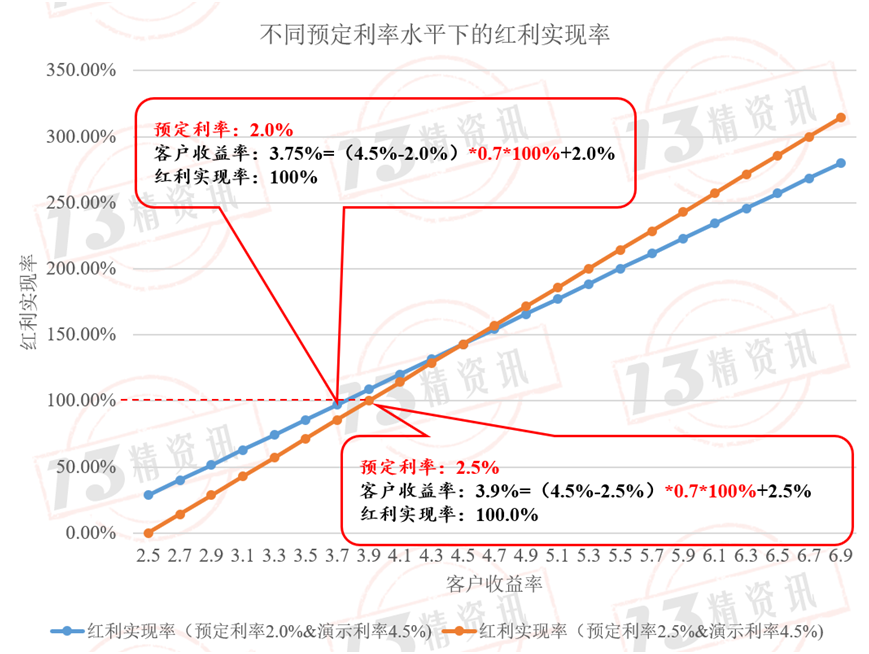
Core Viewpoint - The sustainable performance of participating insurance is fundamentally determined by the long-term operational strength of insurance companies, despite challenges in the investment market for 2024 [1][10]. Group 1: Understanding Dividend Realization Rate - The "dividend realization rate" is a key indicator for participating insurance, influenced by multiple variables rather than being a simple yield number [2][7]. - The formula for customer yield is provided, which includes predetermined rates and demonstration rates, highlighting the complexity behind the dividend realization rate [3][4]. - Regulatory requirements since June 2020 mandate that demonstration dividends only include interest spreads, with a cap of 70%, to align expectations with actual performance [4][6]. Group 2: Evaluation Standards for Insurance Companies - Four core dimensions are proposed for evaluating the long-term dividend strength of insurance companies: historical dividend performance, long-term investment capability, solvency and risk ratings, and overall operational stability [8][9]. - Quantifiable selection criteria include companies with over 20 years of participating insurance experience, a 10-year track record of dividend realization rates, and a risk rating of AAA or above [9][10]. Group 3: Case Study of Zhongyi Life Insurance - Zhongyi Life Insurance has over 20 years of experience in participating insurance and has disclosed its dividend realization rates for the past 12 years, indicating strong long-term performance [10][11]. - The company maintains a risk rating of AAA/AA and has a core solvency ratio of 166% and a comprehensive solvency ratio of 212% as of Q2 2023, demonstrating robust risk management [11][12]. - Zhongyi Life has consistently paid dividends for 12 years, with a total payout of 3.9 billion yuan, fully covering initial shareholder investments, showcasing its operational stability [11][12]. Group 4: Strategic Partnerships and Long-term Vision - The collaboration between domestic and foreign shareholders provides Zhongyi Life with strong capital support and international risk management expertise, enhancing its operational strength [13][14]. - The company's long-term strategy emphasizes balancing returns and risks, ensuring sustainable dividends amidst market fluctuations [14].

新希望金融科技CEO徐志华:零售信贷风险释放天然呈现“非匀速”特性,盲目叫停会浪费早期风险成本
Mei Ri Jing Ji Xin Wen· 2025-09-16 07:13
Core Insights - The "Future Banking Conference 2025" hosted by New Hope Financial Technology focused on key issues in the banking industry such as net interest margin, risk management, interbank competition, and digital transformation, attracting over 600 executives from more than 200 banks nationwide [1] Group 1: Retail Credit Risk Management - New Hope Financial Technology's CEO, Xu Zhihua, emphasized that retail credit does not exist in a "zero-risk" state but rather has characteristics of "small amounts, dispersion, and allowance for a certain level of risk" [1][2] - Xu's observations are based on the 1.2 trillion yuan in loans facilitated by New Hope Financial Technology, primarily consisting of small loans of 10,000, 20,000, and 30,000 yuan [2] - A mathematical model presented by Xu identified three key characteristics of retail credit risk: asset distribution shows a left-skewed distribution of approved customers, bad debts spread linearly from low to high-risk customers, and a stable inverse relationship between final bad debt rates and model scores [2][3] Group 2: Risk Release Characteristics - Xu noted that the risk release of retail credit assets is inherently "non-uniform," with a rapid increase in risk typically occurring between 18 to 24 months after business initiation [3] - Many banks have historically paused operations during this critical phase due to rising risk indicators, potentially missing out on development opportunities [3] Group 3: Long-term Strategy and Profitability - A simulation of a single batch of credit assets revealed that in certain pricing and risk scenarios, losses could occur in the third year, leading to a potential short-term focus that could overlook long-term strategic value [3][4] - Continuous lending and borrowing processes over a 10-year period showed that net yield curves fluctuate in the first few years but stabilize later, highlighting the importance of maintaining business development for long-term profitability [4] - Xu likened the management of retail credit to riding a bicycle, where initial instability gives way to steady progress once momentum is achieved, underscoring the need for a long-term, stable development strategy [4]

建发新兴投资董事长王文怀:“精准滴灌”高效协同 打造开放的创投“生态雨林”
Zhong Guo Jing Ying Bao· 2025-09-15 13:45
Core Insights - The article emphasizes the role of state-owned limited partners (LPs) and government investment funds as key players in the venture capital market, driving innovation and economic development [1][3][4] Group 1: Role of State-Owned LPs - State-owned LPs, like Jianfa Emerging Investment, are crucial "irrigators" and "enablers" in the venture capital ecosystem, supporting startups and facilitating their growth [3][4] - Jianfa Emerging Investment has participated in over 120 investment funds and supported more than 240 companies, with 44 of them achieving domestic and international listings [4] - The company has managed nearly 30 billion yuan in assets and reported a cumulative net profit exceeding 4 billion yuan, establishing itself as a significant player in China's venture capital industry [4] Group 2: Government and Market Collaboration - The chairman of Jianfa Emerging Investment, Wang Wenhui, believes that state capital should enhance its ability to judge future trends and allocate resources effectively, acting as "patient capital" [6][7] - The company serves as a bridge between local governments and startups, helping both parties understand each other's needs and policies [6][7] - In 2024, Jianfa Emerging Investment will collaborate with the National Social Security Fund to establish a market-oriented mother fund with a total scale of 4 billion yuan, marking an innovative partnership between national social security funds and local state-owned enterprises [6] Group 3: Investment Strategy and Ecosystem Building - Jianfa Emerging Investment adopts a market-oriented approach in selecting projects, focusing on financial reports, business development, technology, and team capabilities [9] - The company aims to create a dual empowerment ecosystem by linking startups with Jianfa Group's various business sectors, facilitating mutual growth and resource sharing [12][13] - Jianfa Emerging Investment actively organizes events to connect investment institutions and entrepreneurs, fostering a collaborative venture capital ecosystem [13][14]

以投资者为本 北京多家公募基金将联合组织“金融知识进社区”投资者服务活动
Xin Lang Ji Jin· 2025-09-15 06:45
Core Viewpoint - The event "Financial Knowledge into Communities" aims to enhance financial literacy and risk awareness among community residents while promoting the high-quality development of the public fund industry [1][2] Group 1: Event Overview - The event is organized by Taikang Fund with participation from several financial institutions, including Harvest Fund, China Post Fund, Guolian Fund, and others [1] - The competition includes various formats such as mandatory questions, quick-response questions, and risk-related questions, covering topics like personal finance, public fund product characteristics, and fraud prevention [1] Group 2: Industry Development - The public fund management sector is focusing on enhancing investor education and fulfilling social responsibilities, aligning with regulatory policies to support the real economy [2] - Fund companies are increasing technological investments to optimize intelligent research tools and improve active management capabilities, driving the industry towards professionalism and refinement [2] - The industry emphasizes cultural development, advocating for long-termism and prudent management values, and aims to cultivate high-quality professional talent for sustainable growth [2] Group 3: Future Outlook - The public fund industry will continue to prioritize the wealth management needs of residents and integrate into the broader financial development strategy [2] - There will be ongoing innovation in investor education methods and expansion of service channels to disseminate accessible financial knowledge to a wider audience [2] - Collaborative efforts will be strengthened to create a market ecosystem that is regulated, transparent, open, vibrant, and resilient, contributing to the high-quality development of public funds [2]
张朝阳:互联网现在最热的还是视频自媒体
Zheng Quan Shi Bao Wang· 2025-09-14 14:40
Group 1 - The core viewpoint emphasizes the importance of video self-media in the current internet trend, despite the rising discussions around artificial intelligence (AI) [1] - The company believes in the necessity of long-termism in business practices, focusing on creating good products rather than seeking immediate profits [1] - There is a call for improved intellectual property protection to foster creativity and profitability among companies, avoiding the pitfalls of competition and copying [1] Group 2 - The founder and CEO of Sohu, Zhang Chaoyang, successfully swam 8.69 kilometers across the South Australia Island, taking 5 hours and 18 minutes, highlighting personal challenges and work-related motivations [2]

魏建军坚持的标准化,能否带领高山7更进一步
Guan Cha Zhe Wang· 2025-09-13 12:21
Core Viewpoint - Long-termism and standardization are emphasized by Great Wall Motors' chairman Wei Jianjun, highlighting the importance of adhering to safety, performance, and quality standards in vehicle manufacturing [1][3][12]. Group 1: Long-termism and Standardization - Wei Jianjun has mentioned the concept of long-termism in vehicle manufacturing multiple times in recent months, advocating for a return to the essence of manufacturing [1][3]. - The focus on standardization reflects a critique of exaggerated marketing practices in the Chinese automotive industry, suggesting a trend towards maturity [3][5]. Group 2: Product Features of the High Mountain 7 - The High Mountain 7 is priced at 289,800 yuan and targets the mid-to-large family MPV market, balancing standardization with market demand [5]. - The High Mountain 7 features advanced technology, including a standard laser radar and the Coffee Pilot Ultra driver assistance system, which supports over 200 parking types with a 96% success rate [7]. - The vehicle is equipped with a self-developed Hi4 intelligent four-wheel drive system, delivering a maximum power of 337 kW and a torque of 644 N·m, achieving 0-100 km/h in 5.7 seconds [8]. Group 3: Safety and Quality Assurance - The High Mountain 7 incorporates a high-strength cage structure with 81.96% high-strength steel and has passed 89 rigorous tests for battery safety, achieving full marks in the "China Electric Vehicle Fire Safety Index" certification [10][12]. - Wei Jianjun asserts that safety is a fundamental requirement, not just an added feature, emphasizing the vehicle's commitment to quality and user trust [10][12]. Group 4: Market Positioning and Brand Strategy - The brand aims to refine its target user base while integrating the concept of standardization into its operational framework [15]. - Since introducing the new brand philosophy of "changing for users" in May, the company has been working on enhancing its brand image and direct-to-consumer (DTC) service model [15]. - The company faces challenges in proving that its commitment to standardization can compensate for its relative lag in system development compared to competitors [15].


瑞安集团主席罗康瑞:中企出海是一个长期培育市场的过程
Jing Ji Guan Cha Wang· 2025-09-13 09:33
Group 1 - The core viewpoint is that Chinese companies' overseas expansion is a long-term process that requires a long-term perspective and deep localization to avoid "cultural mismatches" in foreign markets [2][4][7] - The current global economic landscape is undergoing significant changes, with rising unilateralism and trade protectionism, leading to a restructuring of global supply chains [3][4] - Emerging markets such as ASEAN, the Middle East, and Latin America are developing and seeking international cooperation, providing alternative market opportunities for Chinese companies [3][4] Group 2 - Chinese companies should focus on finding new markets, particularly in developing countries and along the "Belt and Road" initiative, to help absorb excess production capacity and create new revenue streams [6][7] - Companies need to escape intense domestic competition and engage in global markets, which will drive innovation, brand enhancement, and management optimization [6][7] - A thorough and objective assessment of potential investment locations is crucial for successful overseas expansion, including evaluating product compatibility and core competitive strengths [6][7] Group 3 - Deep localization is essential for sustainable development in overseas markets, which includes hiring local talent and forming partnerships to better understand local markets and cultures [7] - Hong Kong's unique advantages as a "super connector" can help mainland companies with high-end professional services for overseas expansion, including legal, accounting, and tax services [8] - The Hong Kong Trade Development Council (HKTDC) offers valuable support for mainland companies, with a global presence and expertise in market connections and data consulting [8]


专业主义+长期主义,能否成为合生元的估值锚?
Ge Long Hui· 2025-09-13 07:25
Core Viewpoint - Several brokerage firms have raised the target price for Jianhe Group, indicating a positive outlook despite overall demand pressure in the maternal and infant industry [1] Financial Performance - Jianhe Group achieved revenue of 7.02 billion RMB in the first half of the year, a year-on-year increase of 5.2% [1] - The infant nutrition (BNC) segment generated revenue of 2.501 billion RMB, growing by 12.5%, with sales of formula milk in mainland China increasing by 10.0%, significantly higher than the industry average growth of 0.2% [1] - The overall gross margin for Jianhe Group in the first half of 2025 was 62.5%, with a net cash flow of 999.8 million RMB and an adjusted comparable net profit of 363 million RMB, maintaining a net profit margin of 5.2% [5] Competitive Advantage - Jianhe Group's competitive edge stems from a complete chain of "raw materials - processes - research," ensuring product quality and brand loyalty [2] - The company sources its core milk supply from high-quality farms in Normandy, France, and utilizes advanced production techniques from the century-old French dairy company Isigny Sainte-Mere [2] - Jianhe Group has established the Jianhe Nutrition and Care Research Institute (BINC) over a decade ago, collaborating with 60 renowned research institutions to advance research in maternal and infant health [2] Channel Strategy - The company's channel strategy emphasizes long-term stable partnerships, providing consistent product quality and pricing to avoid price wars [3] - Jianhe Group enhances its relationship with channel partners through training, co-creation of educational content, and public welfare projects, fostering a strong bond beyond mere supply relationships [4] Market Positioning - The maternal and infant industry has high entry barriers, but once trust is established, partnerships tend to be strong and long-lasting [4] - Jianhe Group's online strategy includes leveraging social media for brand awareness and expert endorsements, leading to effective conversion through e-commerce channels [4] Future Outlook - The "professionalism + long-termism" business model of Jianhe Group is expected to continue strengthening its valuation anchor, with key indicators for future observation including the conversion of research results, changes in high-end market share, and improvements in channel efficiency [5][6]
从产品到渠道:合生元如何构建母婴业务的稳定性
Ge Long Hui· 2025-09-13 07:25
Core Viewpoint - Several brokerage firms have raised the target price for Jianhe Group, indicating a positive outlook despite overall demand pressure in the maternal and infant industry [1] Financial Performance - Jianhe Group achieved revenue of 7.02 billion RMB in the first half of the year, a year-on-year increase of 5.2% [1] - The infant nutrition (BNC) segment generated revenue of 2.501 billion RMB, growing by 12.5%, with sales of formula milk in mainland China increasing by 10.0%, significantly above the industry average growth of 0.2% [1] - The overall gross margin for Jianhe Group in the first half of 2025 was 62.5%, with a net cash flow of 999.8 million RMB and an adjusted comparable net profit of 363 million RMB, maintaining a net profit margin of 5.2% [5] Competitive Advantage - Jianhe Group's competitive edge stems from a complete chain of "raw materials - processes - research," ensuring product quality and brand loyalty [2] - The company sources its core milk supply from high-quality farms in Normandy, France, and utilizes advanced production techniques from the century-old French dairy company Isigny Sainte-Mere [2] - Jianhe Group has established the Jianhe Nutrition and Care Research Institute (BINC) over a decade ago, collaborating with 60 renowned research institutions to advance research in maternal and infant health [2] Channel Strategy - The company's channel strategy emphasizes long-term stable partnerships, providing consistent product quality and pricing to avoid price wars [3] - Jianhe Group enhances its relationship with channel partners through training, co-creation of educational content, and public welfare projects, fostering a strong bond beyond mere supply relationships [4] Market Positioning - The maternal and infant industry has high entry barriers, but once trust is established, partnerships tend to be strong and long-lasting [4] - Jianhe Group has excelled in online marketing through social media and expert endorsements, leading to significant sales growth during promotional events [4] Future Outlook - The "professionalism + long-termism" business model of Jianhe Group is expected to continue strengthening its valuation anchor, with key indicators for future observation including the conversion of research results, changes in high-end market share, and improvements in channel efficiency [5][6]
以专业投研与数智化赋能高质量发展 公募基金的长期主义新实践
Zheng Quan Ri Bao· 2025-09-12 16:12
Core Insights - The Chinese public fund industry is experiencing continuous growth, with total assets surpassing 35 trillion yuan for the first time this year, driven by professional investment capabilities and a commitment to national strategies and economic service [1][2] Group 1: Long-termism as a Consensus - Long-termism is recognized as a necessary path for the development of public funds, becoming a common consensus within the industry [2] - High-quality development is emphasized as a primary task for building a modern socialist country, requiring financial services to focus on long-term goals [2] - The China Securities Regulatory Commission's action plan for promoting high-quality development in public funds serves as a crucial guideline for the industry [2] Group 2: Integration of Research and Investment - The integration of research and investment is seen as a bridge to translate long-termism from concept to practice, with a focus on building a robust talent base and utilizing digital platforms [3][4] - Investment firms are increasingly emphasizing long-term performance in their evaluation metrics, with a significant portion of assessments based on medium to long-term results [3][4] Group 3: Talent Development and Team Building - Talent development is central to enhancing research and investment capabilities, with firms implementing structured training and collaboration models [4] - Companies like ICBC Credit Suisse have maintained a focus on building a platform-based, team-oriented, and integrated research system over the past 20 years [4] Group 4: Leveraging Digitalization - Public fund institutions are actively utilizing digital tools to enhance operational and research efficiency, integrating scattered resources into a collaborative value network [6] - Companies are investing in financial technology teams and exploring the integration of AI and asset management to support sustainable long-term growth [6]