
技术普惠

Search documents
从华为“悍将”到荣耀掌门:李健首秀背后的AI生态野心
Jing Ji Guan Cha Wang· 2025-05-29 07:08
Core Insights - The article highlights the ambitions and strategic direction of Honor under the leadership of new CEO Li Jian, particularly in the AI terminal ecosystem [1][6]. Group 1: Leadership and Background - Li Jian, the new CEO of Honor, has over 20 years of experience within Huawei and Honor, showcasing a strong background in global market expansion and strategic management [2]. - His career includes significant achievements such as increasing sales in Nigeria from zero to $400 million and leading various successful market strategies across Europe and the Americas [2]. - Li Jian's leadership style emphasizes talent recruitment and organizational restructuring, with a focus on innovation and a younger workforce [2]. Group 2: Product Strategy - The Honor 400 series is positioned as a "light flagship" smartphone, featuring advanced specifications such as the world's first fourth-generation Snapdragon 7 chip and a 7200mAh battery [3]. - The series incorporates AI capabilities, including a 200-megapixel imaging system and features that enhance user experience based on feedback, demonstrating a commitment to user-centric design [3][4]. - The pricing strategy for the Honor 400 series starts at 2124.15 yuan, positioning it as a competitive option in the mid-range market, aiming to challenge established players like Apple [4]. Group 3: AI Ecosystem Strategy - Li Jian's "Honor Alpha Strategy" aims to invest $10 billion over five years to build a comprehensive AI ecosystem that spans smartphones, PCs, and robotics [5]. - The strategy focuses on three pillars: open ecosystems through collaboration with developers, technology accessibility through rigorous engineering efforts, and a human-centered approach to technology [5]. - Honor's initiatives include partnerships with medical companies for AI applications and efforts to reduce the flicker rate of screens, showcasing a commitment to both innovation and social responsibility [5]. Group 4: Market Position and Challenges - Despite Li Jian's extensive global experience, Honor faces challenges in expanding its overseas market share, which is currently at 30%, significantly lower than competitors like Xiaomi and OPPO [6]. - The company plans to leverage AI and robotics as dual drivers for growth, including the launch of a high-speed robot and collaborations with European operators to establish AI computing centers [6]. - The Honor 400 series is seen as a starting point in the competitive AI terminal ecosystem, with a focus on making technology more relatable and beneficial to users [6].
荣耀CEO李健:全球启动百万雄鹰计划 解决用户真实痛点
Sou Hu Cai Jing· 2025-05-28 14:11
Core Insights - The launch of the "Million Eagle Plan" aims to recruit one million young talents globally, marking a significant step in the company's global strategy and innovation ecosystem [1][3] - The Honor 400 series is positioned as a light flagship that redefines the mid-range smartphone market, with a pricing strategy starting at 2124.15 yuan after subsidies, targeting the 2000-3000 yuan price segment [3][4] Group 1: Million Eagle Plan - The plan will invest 1 billion yuan focusing on three areas: technology research and development, user experience design, and global market expansion [3][5] - The core principle of the plan is "openness," aiming to break traditional school-enterprise cooperation models and facilitate rapid technology application [3][4] - The initiative includes establishing joint laboratories with the top 200 global universities to train over 500,000 young engineers in AI algorithms, chip design, and cross-platform connectivity over the next three years [5][6] Group 2: Honor 400 Series - The Honor 400 series features the Qualcomm Snapdragon 7 Gen4 processor and the third-generation Snapdragon 8 chip, enabling high-performance gaming experiences [6] - The series includes a 200-megapixel main camera with advanced AI capabilities, and the Pro version features a flagship-level periscope lens [6] - The devices boast a 7200mAh battery with 66W fast charging and high durability ratings, setting a benchmark for durability in the mid-range segment [6] Group 3: Strategic Transformation - The ultimate goal of the company is to transition from merely selling smartphones to becoming an entry-level ecosystem company in the AI era [4][7] - The company plans to create a comprehensive AI solution covering home, travel, and office scenarios by collaborating with 1,000 partners by 2026 [4][5] - Industry observers note that the company's transformation and global vision may redefine the internationalization model for Chinese tech companies, moving from "product export" to "ecosystem and talent export" [7]

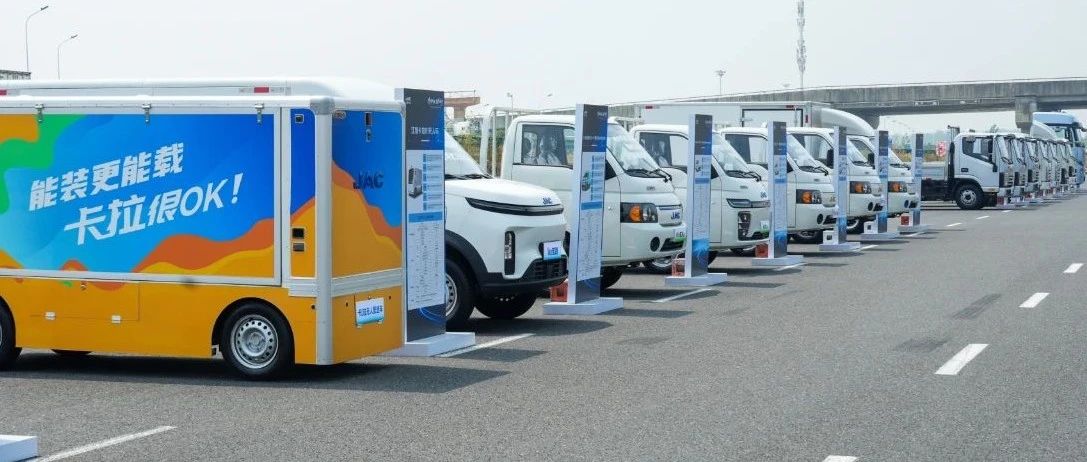
热效率40.4%+10亿追光基金!江淮商用车用“技术普惠”重写行业规则 | 头条
第一商用车网· 2025-05-28 04:30
Core Viewpoint - The commercial vehicle industry in China is undergoing unprecedented transformation, with a penetration rate of new energy vehicles exceeding 20% and increasing emission regulations. User demands are shifting towards "efficient and intelligent" solutions rather than just "high capacity and speed." Jianghuai Commercial Vehicles is leveraging its 61 years of technological foundation and focusing on "user value" through deep integration of intelligence, new energy, and customized solutions, showcasing its strategic and socially responsible approach during this industry reshuffle [1]. Group 1: Technological Strategy - Jianghuai Commercial Vehicles has adopted a four-pronged technological strategy encompassing fuel, hybrid, pure electric, and hydrogen energy, creating a product matrix that covers various scenarios such as light trucks, heavy trucks, cold chain, and urban distribution [4]. - The company has introduced the industry's first "LNG+CNG+fuel" tri-energy vehicle, catering to long-haul needs with a gas bottle capacity ranging from 180 to 1200 liters. In the pure electric sector, the ES9 refrigerated vehicle features high-density batteries from CATL, achieving 60% charge in just 18 minutes, alleviating range anxiety for users [6]. - Jianghuai's "Starlink No. 1 Technology Platform" enables modular development, transitioning from traditional transport tools to a smart logistics ecosystem, providing tailored solutions for specific user scenarios [8]. Group 2: Innovation and User Value - Jianghuai's competitive edge is attributed to its "60-year foundational gene and all-domain technological innovation," focusing on three core technological breakthroughs that set industry benchmarks [9]. - The fourth-generation chassis technology enhances load capacity by 30% and improves ride comfort by 40% on bumpy roads, while also reducing vehicle weight by 15%, leading to a 12% increase in transport efficiency [9]. - The self-developed "Intelligent Control 3.0 System" maintains battery temperature within 3°C, significantly improving winter and seasonal range by 10% and 15% respectively, while achieving a low energy consumption of 1.05 kWh/km [9]. Group 3: User Engagement and Community Building - Jianghuai Commercial Vehicles has initiated the "Chasing Light Plan," establishing a 1 billion yuan fund to reward users who drive 1 million kilometers with 8,000 yuan purchase funds and 2,000 yuan service vouchers, enhancing brand loyalty and demonstrating commitment to building a value community with users [14]. - Real user stories highlight the impact of Jianghuai vehicles, such as a fleet of nearly 500 light trucks aiding farmers in harvest operations and the ES9 refrigerated vehicle significantly reducing cold chain transport costs [12][14]. - The company emphasizes that every vehicle represents a family's livelihood, and each journey is a response to trust, reinforcing its dedication to user value [15]. Group 4: Future Outlook - Jianghuai Commercial Vehicles aims to redefine the global competitive landscape of the commercial vehicle sector through its commitment to "technological inclusivity" and "coexistence with users," addressing industry pain points and amplifying user value [17]. - The ongoing value expedition, which began in Hefei, is expected to reshape the future of China's commercial vehicle industry [18].

以旧换新政策杠杆效应明显,汽车销量正从“量变”到“质变”
3 6 Ke· 2025-05-26 10:15
Group 1 - The "old-for-new" policy has significantly boosted consumption, with over 10 million subsidy applications and a consumption increase of nearly 8% in early 2025 [1][2] - The penetration rate of new energy vehicles (NEVs) in the replacement market has surpassed 50%, indicating a clear shift from traditional fuel vehicles to NEVs [1][2] - The policy has activated the stock market and accelerated the replacement of fuel vehicles with NEVs through a dual-track system of scrapping and replacing [2][3] Group 2 - The market is experiencing a reshuffle, with traditional fuel vehicle manufacturers facing production capacity pressures while leading NEV brands gain market share through technological advantages [3] - The acceptance of NEVs by consumers is shifting from policy-driven to value recognition, driven by technological advancements and innovative business models [4] - The price range of NEVs is rapidly descending into the mainstream market, with models priced between 100,000 to 200,000 yuan now accounting for over 60% of the market [4] Group 3 - Chinese automotive exports have increased by 28% in early 2025, with companies like Tesla and BYD expanding their market share in Southeast Asia and Europe [5] - Globalization presents challenges due to trade barriers, prompting companies to build localized production and compliance capabilities [7] - The end of the new energy vehicle purchase tax exemption in 2026 raises concerns about maintaining high growth in the market, with some companies already facing profit pressure [8]

王力安防百日优惠销售额超1.15亿元 智能制造重新定义行业“促销”内涵
Quan Jing Wang· 2025-05-22 01:59
Industry Overview - The Chinese smart lock industry is experiencing a "volume increase but revenue decrease" trend in 2024, with retail volume reaching 20.31 million units, a year-on-year growth of 8.6%, while retail revenue declined by 0.9% to 20.9 billion yuan, indicating a shift away from the traditional "price for volume" model [1] - The industry is currently facing severe homogenization and unhealthy competition, which hampers the transition to high-quality development [1] Company Strategy - Wangli Security has successfully navigated the low-price competition by leveraging smart manufacturing, launching a promotional campaign that generated over 115 million yuan in sales, with a significant increase in upgrades from existing customers [3] - The company introduced a true Grade 4 national standard security door at a groundbreaking price of 1,699 yuan, significantly lowering market entry barriers while achieving dual breakthroughs in "technological accessibility" and "price reduction" [3][6] Technological Advancements - Wangli Security is the first and only company in the national security lock industry to receive the "Future Factory" certification, boasting the world's largest smart manufacturing base for locks and smart home products [5] - The company has restructured the industry cost structure through quality upgrades, efficiency improvements, capacity breakthroughs, and cost optimization, creating an innovative business model of "high quality at low prices" [5] - Wangli's smart manufacturing system includes advanced technologies such as intelligent detection lines and digital production lines, which have drastically improved production efficiency and reduced production cycles from 7 days to 1 day [6] Competitive Positioning - Wangli holds over 1,000 patents, including more than 100 national invention patents, establishing a strong technological barrier and enabling differentiated competition in the market [7] - The company's innovative technologies, such as remote unlocking and intelligent anti-pinch features, have set new industry standards and garnered high consumer recognition, reflecting strong demand for smart security products [9] Market Outlook - According to AVC predictions, the retail volume of the Chinese smart lock industry is expected to reach 21.66 million units by 2025, with a projected year-on-year growth of 6.7% [12] - Wangli aims to transform its smart manufacturing advantages into market value, focusing on quality premiums rather than price reductions, to capitalize on the opportunities presented by consumer upgrades [12]


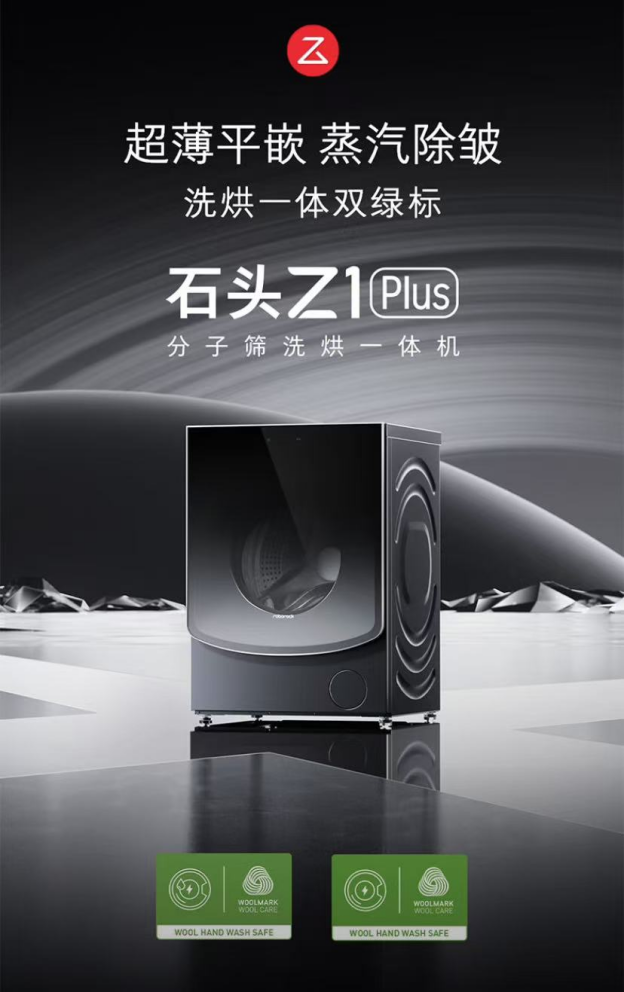
618值得买的洗烘一体机:石头Z1 Plus双绿标认证,叠加国补优惠到手不到4000元
Xin Lang Cai Jing· 2025-05-21 22:53
Core Insights - The article highlights the launch of the Roborock Z1 Plus washing and drying machine, which redefines the balance between efficiency and quality in high-end home appliances [1][10] - The product features advanced technology and competitive pricing, making it a preferred choice for modern households seeking quality living [4][9] Product Features - The Z1 Plus utilizes Zeo-cycle® molecular sieve low-temperature drying technology, achieving drying temperatures below 37°C, which protects delicate fabrics like wool and silk [5] - It has received dual green label certification from the International Woolmark Company, indicating the highest standard of care for high-end fabrics [5] - The machine boasts a 12KG capacity and a washing efficiency ratio of 1.2, effectively handling various stains and large laundry loads [6] Pricing and Market Position - The Z1 Plus is priced at 4,999 yuan, with promotional discounts bringing the price down to around 3,600 yuan, positioning it as a cost-effective option in the smart washing and drying market [9] - The product's features, including low-temperature drying technology and dual green label certification, provide a competitive edge over similar products in the same price range [9][10] Design and User Experience - The Z1 Plus features a sleek design with a thickness of 594mm, allowing it to fit seamlessly into standard cabinetry [7] - It includes smart functionalities such as remote control via a mobile app and automatic detergent dispensing, enhancing user convenience [9]


雷军长文背后的战略棋局:小米YU7的三重颠覆与隐忧
Sou Hu Cai Jing· 2025-05-19 11:30
Core Viewpoint - Xiaomi's founder Lei Jun emphasizes the company's focus on chip development and automotive industry layout, with the highly anticipated launch of the Xiaomi YU7 on May 22 becoming a hot topic in the industry [1] Group 1: Industry Trends - The new energy vehicle sector is shifting from "single-point breakthroughs" to "systematic competition," with Tesla previously establishing barriers through brand and supercharging networks, while Chinese automakers innovate through localized scenarios [3] - By 2025, global new energy vehicle penetration is expected to exceed 40%, with China leading at a 55% market share [3] - The average charging power in the industry is projected to increase from 250 kW in 2023 to 800 kW by 2025, with Xiaomi YU7 utilizing BYD's megawatt fast-charging technology to achieve 400 km of range with just 5 minutes of charging [3] Group 2: Xiaomi's Strategy - Xiaomi's approach to high-end positioning differs from traditional automakers, focusing on "technology democratization and ecosystem stickiness" to reshape user value perception [4] - The success of the SU7 indicates that young consumers are willing to pay a premium for "smart experience" [4] Group 3: Product Features and Competitiveness - The Xiaomi YU7 features a dual-motor all-wheel drive with a total power of 508 kW, 0-100 km/h acceleration in 3.8 seconds, and a CLTC range of 820 km, with a low-temperature decay rate of only 15% [6] - The YU7's wheelbase is 3000 mm, 110 mm longer than the Model Y, and its trunk depth is 1080 mm, providing a 30% increase in vertical loading capacity [6] - The expected price range for the YU7 is between 209,800 to 299,800 yuan, making it 50,000 yuan cheaper than the rear-wheel drive Model Y and 100,000 yuan less than the NIO ES6 for the all-wheel drive version, showcasing strong competitiveness [6][8] Group 4: Challenges Ahead - The YU7 faces two main challenges: user acceptance of reliability from a smartphone manufacturer and the need for Xiaomi to strengthen trust through extensive road testing [6] - The company's ability to meet its 2025 target of 350,000 units relies on the production capacity of its Wuhan Phase II factory, with potential order surges risking delivery delays similar to those experienced with the SU7 [6] Group 5: Market Positioning and Future Outlook - The YU7's disruptive potential lies in three dimensions: bringing supercar performance to the 300,000 yuan price range, reducing costs through integrated battery design, and addressing user pain points with thoughtful features [8] - The vehicle's design may enhance aerodynamics but could compromise rear headroom, necessitating real-world user experiences [12] - The absence of laser radar in the YU7 relies on pure visual solutions, with urban NOA yet to undergo large-scale validation [12] - The automotive industry’s complexity surpasses that of smartphones, and the YU7's success will depend on production ramp-up, quality control, and overcoming the stereotype of Xiaomi as a "cost-effective" brand [14] - If successful, Xiaomi could pioneer a new path of "technology democratization"; if not, it may expose risks associated with cross-industry ventures [14]

赛道Hyper | nova 14系列:革新中端市场竞争格局
Hua Er Jie Jian Wen· 2025-05-19 09:32
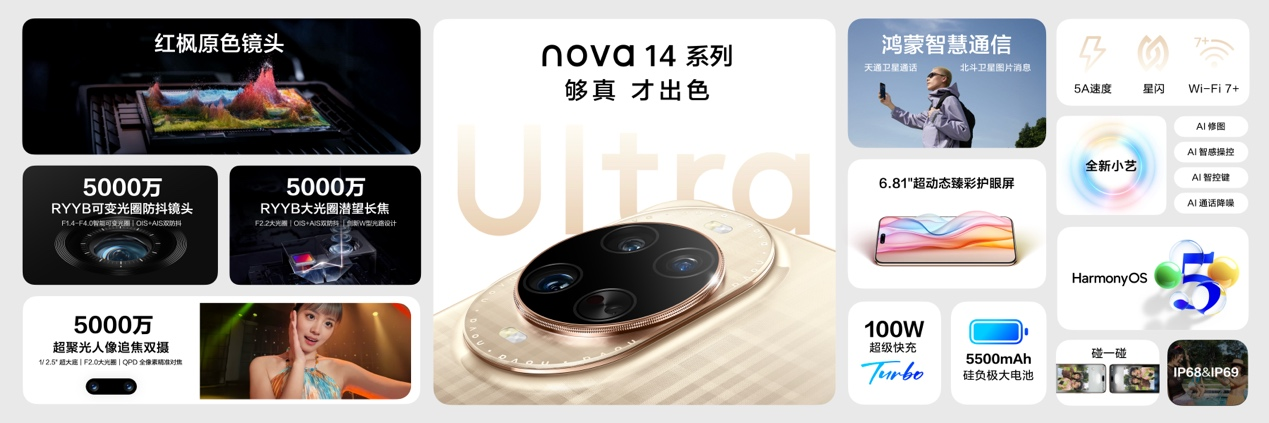
5月19日,华为推出史上最强nova新机——nova 14系列。 作者:周源/华尔街见闻 今年5月19日发布的nova 14系列之特殊价值,在于"技术普惠"定位——首次配置旗舰级技术体系,实施降维打击。 作为首款全面搭载HarmonyOS 5的直板机,nova 14系列以"美学设计、影像实力、性能表现、通信技术、鸿蒙AI体验"五项核心升级技术,开启nova家族技术 迭代新阶段。 正如nova 14系列Slogan——"够真・才出色"所寓意,华为以"真实用户需求"为原点,通过旗舰技术的降维打击和鸿蒙生态创新,将"真体验、真性能、真连 接"融入中端产品基因,主导中端机型竞争新格局。 这种回归本质的创新理念,不仅为用户带来超越期待的使用价值,更以真实可感的技术进步,为中端手机市场开辟出一条摒弃参数噱头、聚焦体验升级的新 路径。 nova 14系列真正的大杀器,实际上是将已进入存量市场竞争的智能手机,从单一产品竞争,引向生态体系融合的技术比拼,而这种巨变,有望重塑整个行 业的竞争态势。 nova系列:传统与革新 自2016年10月14日在成都发布首款nova手机以来,该系列始终以"年轻、时尚、科技"为核心标签,精准捕 ...
在“百元底妆”赛道,UNNY怎么继续赢?
FBeauty未来迹· 2025-05-14 11:04
Core Viewpoint - The perception that affordable foundation products are of low quality is being challenged by UNNY's foundation 2.0 series, which utilizes proprietary technologies to redefine market standards in the affordable cosmetics sector [2][5]. Group 1: Market Dynamics - The Z generation, born between 1995 and 2010, contributes 40% of household consumption despite being less than 20% of the total population, indicating a shift towards value-driven purchasing [3]. - The affordable foundation market in China is facing challenges due to price wars and homogenization, leading to a trust crisis where "affordable equals low quality" [5][6]. - Data shows that in 2024, foundation products priced below 140 yuan accounted for approximately 37% of the market share, with a decline in sales revenue despite an increase in product quantity [5][6]. Group 2: UNNY's Innovations - UNNY's foundation 2.0 series addresses consumer pain points such as makeup longevity and skin health through advanced technologies like "Feather Membrane," "Linglong Powder," and "Micro Lipids" [7][10][11]. - The "Feather Membrane" technology mimics the structure of bird feathers to create a flexible, breathable film that enhances makeup durability, showing significant performance in third-party tests [8]. - "Linglong Powder" effectively absorbs oil and releases antioxidants, combating makeup dullness caused by oil production [10]. - "Micro Lipids" utilize a unique fermentation process to enhance skin absorption and improve skin barrier function, addressing deeper skin health concerns [11][13]. Group 3: Industry Standards and Growth Strategy - UNNY has initiated the first industry standard for foundation makeup longevity evaluation, aiming to establish a scientific assessment framework for product performance [16]. - The company emphasizes a research-driven approach, with significant investments in R&D infrastructure and partnerships with academic institutions to enhance innovation capabilities [19]. - UNNY's product strategy includes a diverse range of offerings, covering various skin types and needs, while its marketing strategy focuses on experiential retail and user engagement [21][24]. Group 4: Market Positioning - UNNY's growth trajectory illustrates that success in the affordable segment is not solely about low pricing but rather about delivering technological advancements and quality [29]. - The brand's comprehensive product line and multi-channel strategy have established a solid market presence, appealing to a wide consumer base [26][27].

高端访谈 || 高通中国区董事长孟樸:技术为基、合作为路 与中国汽车业共创智能化新篇
Zhong Guo Qi Che Bao Wang· 2025-05-14 01:43
Core Insights - Qualcomm emphasizes the importance of "technology inclusiveness" and "ecosystem win-win" in its automotive strategy, focusing on three strategic pillars: full-stack layout for automotive business, balancing innovation with safety, and deepening collaboration in the Chinese market [1][2][5] Full-Stack Layout - Qualcomm has been in the automotive industry for over 20 years, evolving from early solutions to the Snapdragon Digital Chassis, which includes platforms for smart cockpit, advanced driver assistance systems (ADAS), and vehicle connectivity [2][3] - The company aims to adapt its focus dynamically based on industry needs, with smart cockpit and driving assistance becoming new growth engines [3][4] Technology and Safety Balance - AI is reshaping automotive interaction and decision-making, with Qualcomm focusing on terminal-side large models and multi-modal model integration to enhance user experience [5][6] - Safety is a core prerequisite for smart driving technologies, with Qualcomm maintaining a defect rate (DPPM) of just a few parts per million to ensure reliability [5][6] Chinese Market Focus - The Chinese automotive market is seen as a core engine for Qualcomm's global strategy, with a high acceptance of new technologies and rapid regulatory responses [6][7] - Qualcomm has established deep integration with Chinese automotive companies, enabling faster application deployment and innovation [7][9] Competitive Advantage - Qualcomm's competitive edge lies in its commitment to forward-looking technology investments and deep ecosystem collaboration, with 20% of its revenue allocated to R&D [8][9] - The company maintains a flexible cooperation model to meet the diverse needs of both new entrants and traditional automakers in the rapidly evolving market [9]

