
新动能

Search documents
国际观察|韧性、活力、信心——海外人士解读中国经济“三季报”
Xin Hua She· 2025-10-22 14:14
Core Viewpoint - China's GDP for the first three quarters of 2025 reached 10,150.36 billion yuan, with a year-on-year growth of 5.2%, indicating a stable and progressive economic performance despite various challenges [1][2]. Economic Performance - The GDP growth of 5.2% in the first three quarters is an acceleration compared to the previous year, showcasing China's resilience in facing domestic and international challenges [2][3]. - China's economic growth rate is significantly higher than that of major economies like the US and the EU, reinforcing its role as a key driver of global economic growth [3][6]. Trade and Export - China's import and export scale reached a historical high in the first three quarters, with notable growth in trade with ASEAN, Latin America, Africa, and Central Asia, reflecting the effectiveness of market diversification [3][4]. - Despite external pressures such as US tariffs, China's exports remained robust, indicating a strategic expansion of trade relations with other regions [3][5]. Innovation and High-Tech Manufacturing - The high-tech manufacturing sector saw a 9.6% increase in value-added output, with significant growth in industrial robots, 3D printing equipment, and industrial control systems, highlighting the transformation of innovation into economic momentum [4][5]. - The rapid development of cutting-edge technologies like AI, electric vehicles, and quantum technology underscores China's shift towards high-quality economic growth [4][6]. Policy Support and Economic Strategy - A series of macroeconomic policies aimed at expanding domestic demand and promoting green transformation have been effective in enhancing economic resilience [5][6]. - China's strategic focus on long-term development and adaptability has positioned it to transition from high-speed growth to high-quality development [5][6]. Global Economic Impact - China's steady economic growth is expected to boost global growth confidence and create new development opportunities for its trading partners [5][6]. - As the world's second-largest economy, China's active participation is deemed essential for the sustained growth of the global economy [6][7].
城记丨稳在哪、进在哪?解析上海前三季度GDP增长5.5%的成色
Xin Hua Cai Jing· 2025-10-22 06:56
Core Insights - Shanghai's GDP surpassed 40 trillion yuan for the first time in the first three quarters, achieving a year-on-year growth of 5.5%, which is higher than the national average and an increase of 0.4 percentage points compared to the first half of the year [1][7] - The economic performance reflects strong resilience and high-quality development amid complex international conditions and significant structural adjustment pressures [1][7] Economic Performance - The financial sector's value added reached 696.53 billion yuan, growing by 9.8% year-on-year, contributing over 20% to the growth of the tertiary industry [2][3] - The total transaction volume in major financial markets increased by 12.7%, with notable growth in securities (38.4%), gold (40.2%), and futures (11.5%) [2][3] Financial Sector Support - By the end of September, the total deposits of financial institutions reached 23.84 trillion yuan, up 8.4%, while loans amounted to 12.89 trillion yuan, growing by 7.1% [3] - The financial sector's rapid growth serves as a stabilizing force for the overall economy, especially in the face of global uncertainties [3] Trade and Industry - Shanghai's total import and export volume grew by 5.4%, with exports increasing by 11.3%, outperforming the national average by 4.2 percentage points [4][5] - The manufacturing sector showed stable growth, with industrial output increasing by 5.2% and strategic emerging industries performing particularly well [5] Innovation and High-tech Growth - The three leading industries in Shanghai saw a manufacturing output growth of 8.5%, with significant increases in artificial intelligence (12.8%), integrated circuits (11.3%), and biomedicine (3.6%) [5] - The number of valid invention patents reached 306,000, a year-on-year increase of 12.7%, indicating strong technological innovation [5] Consumer Market Recovery - Shanghai's retail sales reached 1.2303 trillion yuan, growing by 4.3%, with a notable increase in tourism, receiving 25.485 million visitors, up 19.7% [6][7] - Policies such as "trade-in" have effectively stimulated consumption, with significant growth in categories like sports and entertainment (27.7%) and home appliances (28.2%) [7] Overall Economic Outlook - The economic performance in the first three quarters indicates a stable and improving trend, with various factors supporting the achievement of annual economic development goals [7][8] - Continued implementation of macro policies is expected to further stimulate market vitality and foster new growth drivers [7][8]
经济运行总体平稳稳中有进(锐财经)
Ren Min Ri Bao· 2025-10-20 20:50
Economic Growth - China's GDP grew by 5.2% year-on-year in the first three quarters, ranking among the top major economies [1][2] - The economic increment reached 39,679 billion yuan, an increase of 1,368 billion yuan compared to the previous year [1][2] Employment and Prices - The average urban survey unemployment rate for the first three quarters was 5.2%, unchanged from the first half of the year [2] - The Consumer Price Index (CPI) slightly decreased by 0.1% year-on-year, while the core CPI, excluding food and energy, rose by 0.6% [2] International Trade - China's foreign trade showed strong resilience, with import and export volumes reaching historical highs, and the growth rate rebounding quarter by quarter [2][3] - By the end of September, foreign exchange reserves remained above 3.3 trillion USD, with the RMB exchange rate showing stability and appreciation [2] High-Quality Development - The proportion of added value from equipment manufacturing and high-tech manufacturing reached 35.9% and 16.7%, respectively [3] - Non-fossil energy consumption's share of total energy consumption increased by approximately 1.7 percentage points year-on-year [3] Policy Impact - A series of policies have effectively stabilized the economy and supported long-term development [4] - Final consumption expenditure contributed 53.5% to economic growth, an increase of 9.0 percentage points from the previous year [4] Investment Trends - Investment in equipment and tools increased by 14.0% year-on-year, contributing 2.0 percentage points to overall investment growth [4] - Specific sectors such as computer and office equipment manufacturing, general equipment manufacturing, and transportation equipment manufacturing saw significant investment growth [4] New Growth Drivers - Industries such as lithium-ion battery manufacturing, shipbuilding, and electric motor manufacturing experienced year-on-year value-added growth of 29.8%, 22.9%, and 17.1%, respectively [5] - The production of new energy vehicles and electric bicycles also saw substantial increases [5] Economic Stability - The third quarter GDP growth was 4.8%, reflecting a slight decline from the previous quarter but still higher than most major economies [7] - The total economic output for the third quarter reached 35.5 trillion yuan, surpassing the projected total for the third-largest economy in 2024 [7] Future Outlook - The stable growth in the first three quarters lays a solid foundation for achieving annual targets [8] - Emphasis will be placed on effectively leveraging policies to balance short-term growth with long-term development [8]
稳定、增长、成长!前三季度我国经济运行展现强大韧性和活力
Yang Shi Wang· 2025-10-20 04:43
Economic Growth - China's GDP for the first three quarters of the year grew by 5.2% year-on-year, demonstrating resilience and vitality in economic operations [1][3] - The GDP reached 10,150.36 billion yuan, with quarterly growth rates of 5.4% in Q1, 5.2% in Q2, and 4.8% in Q3 [3] Industrial Production - The industrial production saw a significant increase, with the value-added of large-scale industries growing by 6.2% year-on-year [5] - Manufacturing sector growth was recorded at 6.8%, with equipment manufacturing and high-tech manufacturing growing by 9.7% and 9.6% respectively [5] - Notable increases in production included 3D printing equipment (40.5%), industrial robots (29.8%), and new energy vehicles (29.7%) [5] Consumer Market - The total retail sales of consumer goods reached 3,658.77 billion yuan, reflecting a year-on-year growth of 4.5% [8] - Sales of essential and some upgraded consumer goods showed strong growth, with significant increases in home appliances (25.3%), furniture (21.3%), communication devices (20.5%), and cultural office supplies (19.9%) [8] - Service retail sales also grew by 5.2% year-on-year [8] Investment Trends - Manufacturing investment grew by 4.0% year-on-year, with high-tech industries such as information services (33.1%), aerospace equipment (20.6%), and computer equipment (7.4%) showing robust investment growth [9] - Agricultural production remained stable, with the value-added of agriculture (planting) increasing by 3.6% [10] Service Sector - The service sector's value-added grew by 5.4% year-on-year, with modern services performing well [10] - Specific growth in information transmission, software, and IT services was recorded at 11.2%, while leasing and business services grew by 9.2% [10]


核心CPI重回1% 9月物价数据透出哪些信号?
Xin Hua Wang· 2025-10-16 00:38
Group 1 - The consumer price index (CPI) in September showed a slight month-on-month increase of 0.1%, with the core CPI rising by 1% year-on-year, marking the first return to a 1% increase in 19 months [1] - Food prices contributed to the CPI increase, with a 0.7% rise in food prices month-on-month, particularly in seasonal items like fresh vegetables, eggs, and meats [1] - The year-on-year CPI decline of 0.3% was primarily due to base effects, with the tail effect contributing approximately -0.8 percentage points [2] Group 2 - The producer price index (PPI) decreased by 2.3% year-on-year in September, but the decline was less severe than the previous month, indicating positive changes in industrial pricing [3] - Improvements in supply-demand structures and the ongoing development of a unified national market have contributed to a narrowing of price declines in various industries [3] - Certain industries, such as coal processing and black metal smelting, have shown price increases, with coal processing prices rising by 3.8% month-on-month [3] Group 3 - Emerging industries are thriving, with new consumption patterns and business models driving positive price changes in related sectors [4] - The modernization of the industrial system is leading to high-end, intelligent, and green development, which is expanding market demand and causing price increases in sectors like aircraft manufacturing and electronic materials [8] - Consumer demand is shifting from quantity to quality, with significant price increases in sectors such as arts and crafts, sports equipment, and nutritional foods, reflecting a trend towards quality consumption [9]
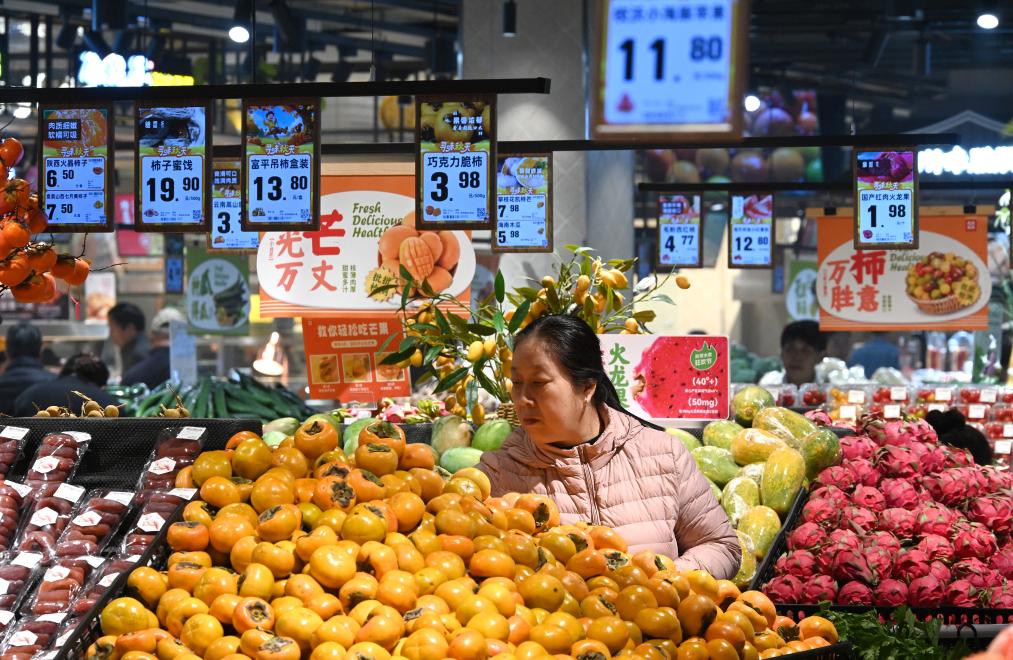
财经聚焦|核心CPI重回1%,9月物价数据透出哪些信号?
Xin Hua She· 2025-10-15 14:12
Group 1 - The consumer price index (CPI) in September showed a month-on-month increase of 0.1%, with the core CPI (excluding food and energy) rising by 1% year-on-year, marking the first return to a 1% increase in nearly 19 months [1] - Food prices contributed to the CPI increase, with a 0.7% rise in food prices month-on-month, impacting the CPI by approximately 0.13 percentage points [1] - The decline in CPI year-on-year was 0.3%, with the drop narrowing by 0.1 percentage points compared to the previous month, primarily due to the "tail effect" [3] Group 2 - The Producer Price Index (PPI) showed a year-on-year decline of 2.3% in September, with the decrease narrowing by 0.6 percentage points from the previous month, indicating positive changes in industrial pricing [4] - The prices in certain industries, such as coal processing and black metal smelting, showed a narrowing decline, reflecting improved market competition and capacity management [5] - The new energy and technology sectors are experiencing growth, with emerging consumption patterns leading to price increases in related industries, such as a 1.4% rise in aircraft manufacturing prices [6][8] Group 3 - The demand for quality consumption is increasing, with a shift from quantity expansion to quality enhancement as GDP per capita exceeds $13,000 [8] - Prices for high-quality consumer goods, such as arts and crafts, saw significant increases, with a 14.7% rise in the manufacturing price of arts and crafts and a 4% increase in sports equipment manufacturing [8] - Policies aimed at boosting consumption are expected to further support price trends in various industries, leading to improved market supply and demand relationships [8]

核心CPI重回1%,9月物价数据透出哪些信号?
Xin Hua She· 2025-10-15 13:31
Group 1 - The core CPI has returned to 1%, marking the first increase in nearly 19 months, indicating a stable price environment supported by policies aimed at expanding domestic demand and promoting consumption [1] - In September, the CPI increased by 0.1% month-on-month, with food prices rising by 0.7%, contributing approximately 0.13 percentage points to the CPI increase [1] - Seasonal price increases were observed in fresh vegetables, eggs, fruits, lamb, and beef due to weather impacts and holiday demand [1] Group 2 - The PPI decreased by 2.3% year-on-year in September, with the decline narrowing by 0.6 percentage points compared to the previous month, reflecting the effectiveness of macroeconomic policies and the progress of a unified national market [3] - Improvements in supply and demand structures have led to price stabilization in certain industries, with coal processing prices rising by 3.8% and black metal smelting prices increasing by 0.2% [3] Group 3 - Emerging industries are thriving, with new consumption patterns and models driving positive price changes in related sectors [4] - The manufacturing sector is experiencing upgrades, with aircraft manufacturing prices increasing by 1.4% and electronic materials prices rising by 1.2% year-on-year [5] Group 4 - Consumer demand is shifting from quantity expansion to quality enhancement, with significant price increases in high-quality goods such as arts and crafts (14.7%) and sports equipment (4%) [6] - Policies aimed at boosting consumption are expected to further support the development of certain consumer goods and manufacturing sectors, improving market supply-demand relationships [6]
申万宏观·周度研究成果(9.27-10.10)
赵伟宏观探索· 2025-10-11 16:03
Key Insights - The article discusses the recent U.S. government shutdown, its unique aspects, and potential impacts on the U.S. economy and markets [8] - It highlights the historical context of government shutdowns, detailing previous instances and their durations, with the latest shutdown starting on October 1, 2025, and ongoing [8] - The article also provides insights into economic indicators, including profit growth in August and the September PMI, indicating a shift from traditional to new economic drivers [10][11] Group 1: Hot Topics - The U.S. government experienced a shutdown due to the failure to pass temporary funding, marking the first such event in nearly seven years [8] - The shutdown is characterized by a focus on extending ACA premium tax credits and disputes over healthcare funding, with both parties at an impasse [8] - Historical data on past government shutdowns is presented, showing various durations and political contexts, emphasizing the recurring nature of budgetary conflicts [8] Group 2: Economic Data Insights - August profit growth is attributed to a low base effect and other financial factors, despite ongoing cost pressures [10] - The September PMI data indicates a notable recovery in new economic drivers, suggesting a need to monitor the effectiveness of growth stabilization policies in key industries [11] - Consumer behavior during the National Day holiday is analyzed, revealing trends such as a decrease in traditional tourist site popularity and an increase in cross-border travel [13]

申万宏观·周度研究成果(9.27-10.10)
申万宏源宏观· 2025-10-11 04:05
Group 1 - The article discusses the recent U.S. government shutdown that began on September 30, marking the first such event in nearly seven years, and explores its potential impacts on the U.S. economy and markets [8] - Historical context is provided, detailing previous government shutdowns, their durations, and the political dynamics involved, highlighting the ongoing negotiations around budgetary issues [8] - The current shutdown is characterized by a stalemate between the Republican-controlled Congress and the Biden administration, focusing on healthcare policy exchanges and budgetary disagreements [8] Group 2 - The analysis of August profit growth indicates a significant rebound, attributed to low base effects and other financial factors, while cost pressures remain elevated [10] - The September PMI data shows a shift from traditional sectors to new growth drivers, suggesting a need to monitor the effectiveness of policies aimed at stabilizing key industries [11] - Consumer behavior during the National Day holiday is analyzed, revealing a decline in traditional tourist site popularity and a rise in unique travel experiences, alongside stable pricing trends in accommodation and air travel [13]

我国经济总体产出扩张略有加快
Jing Ji Ri Bao· 2025-10-01 05:31
Economic Overview - In September, the manufacturing Purchasing Managers' Index (PMI) was 49.8%, an increase of 0.4 percentage points from the previous month, marking two consecutive months of increase [1] - The non-manufacturing business activity index was 50.0%, a decrease of 0.3 percentage points from the previous month, while the composite PMI output index rose to 50.6%, up 0.1 percentage points [1] Manufacturing Sector - Manufacturing production activities accelerated, with the production index at 51.9%, up 1.1 percentage points from the previous month, remaining in the expansion zone for five consecutive months [1] - The new orders index for manufacturing was 49.7%, an increase of 0.2 percentage points, indicating a stabilization in market demand [1] - The new export orders index was 47.8%, up 0.6 percentage points, reflecting a narrowing decline in export demand [1] Industry Performance - In September, the PMI for equipment manufacturing, high-tech manufacturing, and consumer goods industries were 51.9%, 51.6%, and 50.6% respectively, all significantly above the manufacturing average [2] - Large enterprises showed stable growth with a PMI of 51.0%, while small enterprises improved slightly with a PMI of 48.2%, up 1.6 percentage points [2] Future Outlook - The average PMI for the manufacturing sector in Q3 was 49.5%, indicating a slight recovery compared to Q2 and the same period last year [3] - Expectations for manufacturing activities are positive, with a production and operation expectation index of 54.1%, up 0.4 percentage points, suggesting improved market outlook [2][3] - The non-manufacturing business activity index remained stable at 50%, indicating steady performance in the sector [3] Financial Sector - The financial sector's business activity index rose above 60%, with new orders also increasing, indicating strong support for the real economy [4] - The telecommunications and software services sectors maintained high business activity indices, reflecting ongoing growth in new economy sectors [4] Policy and Demand - There is an expectation for macroeconomic policies to be strengthened in Q4, which may boost market confidence and demand [5] - Seasonal factors such as holidays and promotional events are anticipated to enhance consumer demand in the coming months [3][5]