货币政策独立性

Search documents
美联储下一任主席生变!沃什的政策主张:降息+缩表
Hua Er Jie Jian Wen· 2025-12-16 01:57
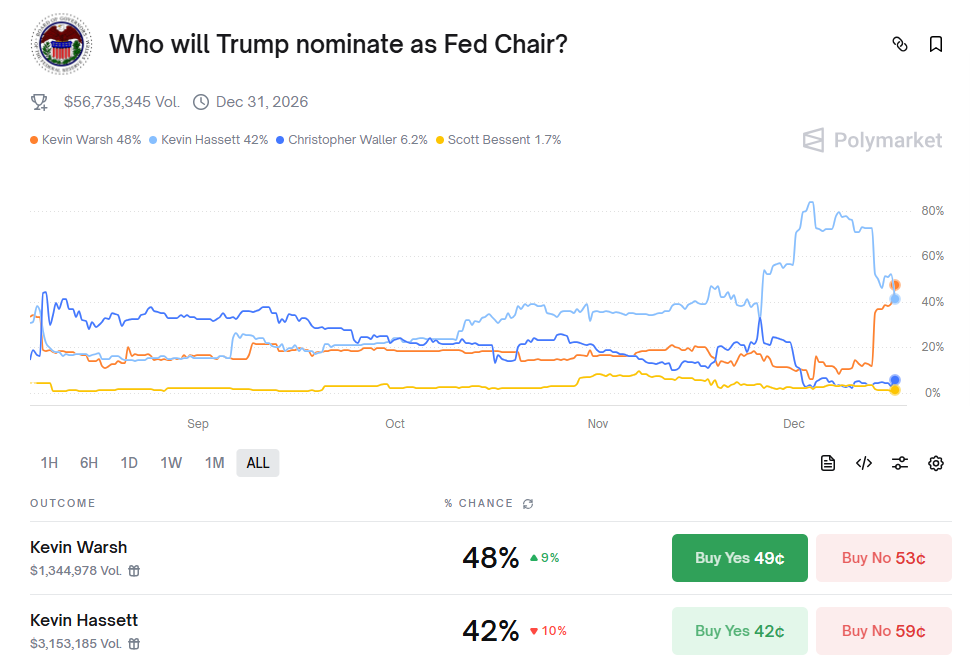
Core Viewpoint - Deutsche Bank analyzes that if Kevin Warsh is elected as the next Federal Reserve Chairman, his policy stance may present a unique combination of "simultaneous rate cuts and balance sheet reduction" [1][3]. Group 1: Warsh's Candidacy and Market Reactions - President Trump has indicated that Kevin Warsh is a leading candidate for the Federal Reserve Chair, alongside Kevin Hassett, which has led to a significant drop in Hassett's odds in prediction markets [1]. - As of the latest data, prediction markets suggest that Warsh has a higher probability of becoming the next Fed Chair compared to Hassett [1]. Group 2: Warsh's Policy Proposals - Deutsche Bank's report highlights that if Warsh is elected, he would support interest rate cuts while also advocating for a reduction in the balance sheet [3]. - The feasibility of "simultaneous rate cuts and balance sheet reduction" hinges on regulatory reforms that lower banks' reserve requirements, which is currently uncertain [3]. Group 3: Warsh's Background and Criticism of Fed Policies - Warsh, a lawyer by training, has extensive experience in both public and private sectors, having served as a Federal Reserve Governor from 2006 to 2011 during the global financial crisis [4]. - He has been a strong critic of the Fed's aggressive balance sheet operations over the past 15 years, arguing that quantitative easing (QE) has deviated from the central bank's core responsibilities [5][6]. - Warsh has expressed concerns that continued QE could lead to inflation and financial stability risks, suggesting that the Fed's actions may distort market signals [6][7]. Group 4: Warsh's Views on Forward Guidance and Monetary Policy - Warsh has criticized the Fed for over-relying on data and lacking forward guidance, stating that the forward guidance tool introduced during the financial crisis has little effect in normal times [9]. - He questions the Fed's understanding of monetary policy, suggesting misconceptions about the relationship between monetary policy and money supply [9][10]. Group 5: Implications for Future Fed Leadership - Deutsche Bank emphasizes that regardless of who is chosen as the next Fed Chair, the market will likely test the new leader's independence and credibility in achieving inflation targets [13]. - The report expresses skepticism about significant policy changes following the leadership transition in June, especially given the divided committee dynamics [13].

美联储,大消息!特朗普“点名”美联储新主席人选,还透露这一重要信号......
Sou Hu Cai Jing· 2025-12-13 23:43
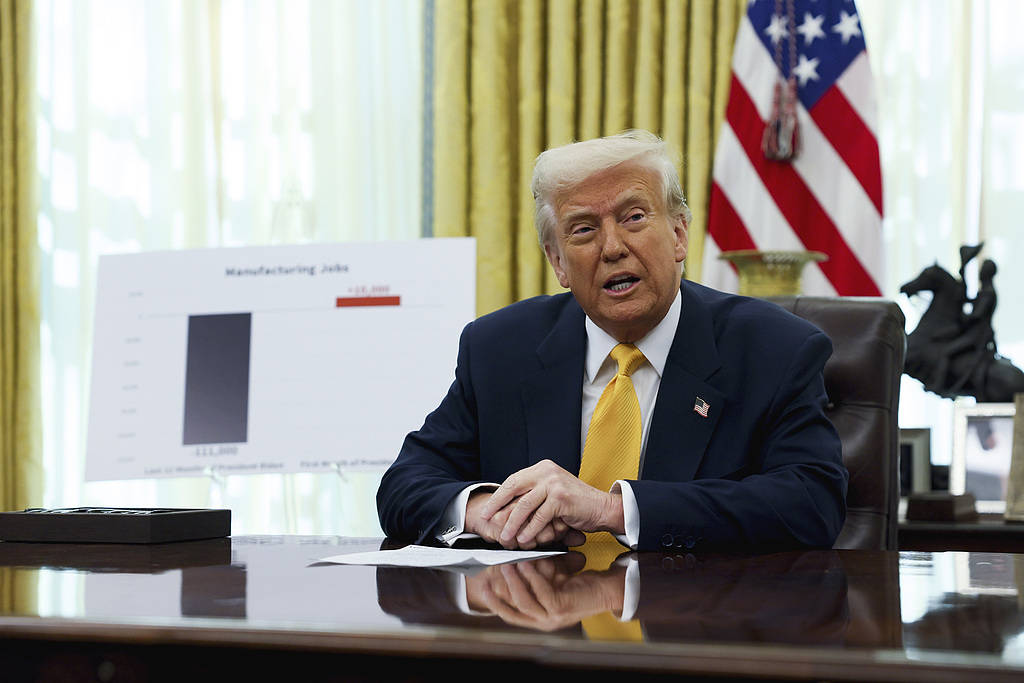
Core Viewpoint - President Trump has indicated that Kevin Walsh is the leading candidate for the next Federal Reserve Chair, with Kevin Hassett also being a strong contender [1][3] Group 1: Candidates for Federal Reserve Chair - Kevin Walsh, a former Federal Reserve governor, is currently a visiting scholar at Stanford University and was previously considered for the position in 2017 [5] - Kevin Hassett, the current Chairman of the White House Council of Economic Advisers, is also viewed positively by Trump [3][5] Group 2: Monetary Policy Expectations - Trump expressed a desire for the federal funds rate to be lowered to "1% or even lower" within a year to help reduce the high financing costs of U.S. debt [3] - The next Federal Reserve Chair should consult Trump on interest rate policies, although not necessarily follow his directives [3] Group 3: Concerns Over Independence - Jamie Dimon, CEO of JPMorgan Chase, supports Walsh for the Fed Chair position, warning that Hassett's close ties to the White House could undermine the Fed's independence [8][9] - Dimon cautioned that aggressive rate cuts under Hassett could lead to rising inflation expectations and increased long-term interest rates due to market reactions [9]
谁做下一任美联储主席,华尔街亮态度
Hua Er Jie Jian Wen· 2025-12-13 23:26
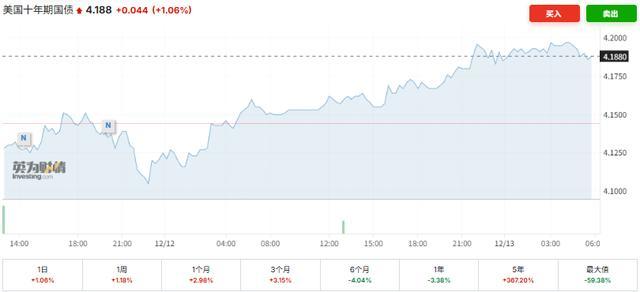
Core Viewpoint - Jamie Dimon, CEO of JPMorgan Chase, supports Kevin Warsh for the Federal Reserve chairmanship, warning that Kevin Hassett's potential appointment could undermine the Fed's independence and lead to rising long-term borrowing costs [1] Group 1: Dimon's Analysis - Dimon believes Warsh would be a "great chairman" while expressing concerns that Hassett may quickly lower short-term rates to align with President Trump's economic demands [1] - He emphasizes that the Fed can only control short-term rates, while long-term rates are determined by the market, which could react negatively to Hassett's perceived lack of independence [1] Group 2: Market Reactions - Since late November, the yield on the 10-year U.S. Treasury has risen from 4.0% to 4.2%, indicating that the market is pricing in risks associated with Hassett's candidacy [2] - Concerns about inflation are also rising, as the 5-year forward inflation swap rate has increased by 0.06 percentage points, reaching a one-month high [2] Group 3: Investor Concerns - Senior investors managing a $30 trillion U.S. Treasury market have expressed concerns to Treasury officials regarding Hassett's political ties and their potential impact on the credibility of monetary policy [4] Group 4: Trump's Preferences - President Trump has shown dissatisfaction with current Fed Chair Jerome Powell for not significantly lowering rates and has indicated that loyalty and willingness to cut rates are key criteria for his selection [5] - Hassett, a former White House insider, is viewed as the frontrunner due to his public support for aggressive rate cuts, despite attempts to assert his commitment to Fed independence [6] Group 5: Warsh's Background - Warsh, a former Fed governor and economist at the Hoover Institution, has received backing from Wall Street figures like Dimon, despite being viewed as overly hawkish prior to the 2008 financial crisis [7] - The selection process for the new Fed chair is ongoing, with Trump expected to interview more candidates soon, highlighting the tension between Wall Street's preference for an independent candidate and the White House's inclination towards a loyalist [7]

发达经济体可能进入加息通道,只有美国是个例外
Sou Hu Cai Jing· 2025-12-13 11:34
Group 1 - The Federal Reserve has lowered the target range for the federal funds rate from 3.75%-4.00% to 3.50%-3.75%, marking the third consecutive rate cut this year, totaling a reduction of 175 basis points since September of the previous year [2] - The Fed's dot plot indicates an expectation of one more 25 basis point rate cut next year, suggesting a slowdown in the pace of rate cuts compared to this year [2] - There is significant dissent among Fed officials regarding the rate cut, with concerns about stagnant inflation and a cooling job market [2] Group 2 - The global interest rate environment is fundamentally changing, with many economies potentially shifting from a rate-cutting phase to a rate-hiking phase, as evidenced by Australia's recent decision to maintain its cash rate at 3.60% due to resilient domestic demand [3] - Australia's CPI for October rose to 3.8%, exceeding previous values and market expectations, driven by strong consumer spending and government investment [3][4] - Canada is following a similar trend, with its central bank maintaining a benchmark rate of 2.25% while strong employment and GDP data suggest a potential shift towards rate hikes [4] Group 3 - Japan is currently the only developed economy in a rate-hiking phase, having announced a rate increase from 0.5% to 0.75% to address domestic inflation pressures [5] - Japan's rate hike could significantly impact global liquidity, as it is a major provider of funds in the global market [5] Group 4 - The European Central Bank (ECB) is also expected to shift its monetary policy, with President Lagarde indicating an upward revision of economic growth forecasts for the Eurozone [6] - The Eurozone's economy grew by 0.2% in the third quarter, driven by increased investment in digital services, leading to a slight increase in market expectations for ECB rate hikes [7] - Long-term bond yields in Europe have surged, with significant increases in yields for UK, German, and French bonds, reflecting concerns over fiscal conditions and rising military expenditures due to ongoing geopolitical tensions [7]

黄金、白银、美股全线跳水!美联储官员公开回怼特朗普!降息前景突变
Zheng Quan Shi Bao· 2025-12-13 00:30
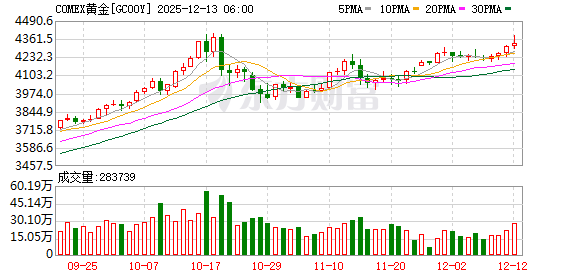
Group 1 - COMEX gold experienced a sharp decline of over $100 within two hours, closing at $4329.8 per ounce, while COMEX silver dropped by 3.88% to $62.085 per ounce after a peak decline of 5.5% [1][3] - The U.S. stock market saw all three major indices close lower, with the Dow Jones Industrial Average down by 0.51%, the Nasdaq down by 1.69%, and the S&P 500 down by 1.07% [4][6] - President Trump expressed a preference for either Waller or Hassett to lead the Federal Reserve, emphasizing the need for communication regarding interest rates, while Fed officials have pushed back against calls for rate cuts [4][5] Group 2 - Fed official Goolsbee highlighted the importance of the Fed's independence, stating that interest rate decisions should not be influenced by government borrowing costs, which he referred to as a form of debt monetization [5] - Several Fed officials have expressed skepticism about the prospects for interest rate cuts, indicating a desire to wait for more economic data before making decisions [7] - The labor market is cooling but remains balanced, with inflation still considered too high, prompting a preference for a moderately restrictive monetary policy [7]
美联储宣布降息25个基点,特朗普会选谁当下任美联储主席?
Sou Hu Cai Jing· 2025-12-11 02:18
Core Viewpoint - The Federal Reserve's decision to cut interest rates by 25 basis points reflects a complex economic situation in the U.S., characterized by high inflation and a weakening job market, leading to a total reduction of 75 basis points for the year [1][5]. Economic Context - The current federal funds rate is set between 3.50% and 3.75%, marking the sixth rate cut since September of the previous year [1]. - Core PCE inflation remains high at 2.8%, exceeding the Fed's target of 2%, while the unemployment rate has risen to 4.4%, the highest since November 2021 [1][4]. Political Influence - Former President Trump criticized the Fed for the modest rate cut, suggesting it should have been doubled, reflecting his preference for aggressive monetary easing to stimulate economic growth [3][4]. - The internal dissent within the Fed was notable, with three members voting against the decision, indicating differing views on the economic outlook [3]. Fed's Stance - Fed Chair Powell emphasized that the decision to cut rates was challenging and aimed at assessing future economic performance, indicating a cautious approach to further easing [3][5]. - Powell directly attributed rising inflation to Trump's tariff policies, highlighting the Fed's effort to maintain its independence from political pressures [4]. Global Economic Impact - The rate cut is expected to weaken the dollar, benefiting commodities priced in dollars, and potentially stimulate investment and consumption globally [5]. - However, there are risks associated with rapid rate cuts, including increased inflationary pressures and the potential for asset bubbles [5]. Future Considerations - The ongoing tension between Trump's growth-focused approach and Powell's dual mandate of employment and price stability will continue to influence Fed policy [4][5]. - The selection of the next Fed Chair, as Trump seeks a candidate more aligned with his views on aggressive rate cuts, could have significant implications for U.S. and global monetary policy [4][5].

美联储宣布降息25个基点,特朗普:降息幅度太小,还能更大
Sou Hu Cai Jing· 2025-12-11 00:04
据央视新闻客户端消息,美国联邦储备委员会10日结束为期两天的货币政策会议,宣布将联邦基金利率 目标区间下调25个基点至3.5%至3.75%之间。 10日,美联储主席鲍威尔就委员会降息决定发表讲话。鲍威尔表示,美联储的货币政策行动以促进美国 民众充分就业和物价稳定的双重使命为指导。在当日的会议上,委员会决定降息25个基点,短期内通胀 风险偏向上行,就业风险偏向下行,形势充满挑战。通过当日的决定,委员会在过去三次会议上已累计 下调政策利率0.75个百分点。此举有助于稳定劳动力市场,并在关税影响消退后,使通胀恢复至2%的 下降趋势。 鲍威尔称,自9月以来,委员会对政策立场的调整使其处于中性预期范围内,这使他们能够根据最新数 据、不断变化的经济前景以及风险平衡,更好地确定政策利率进一步调整的幅度和时机。 鲍威尔表示,在联邦公开市场委员会(FOMC)的经济预测总结中,与会者分别就各自认为最有可能的 经济情景下联邦基金利率的适当路径进行了评估。2026年底联邦基金利率的预测中值为3.4%,2027年 底为3.1%,与9月份的预测持平。然而,这些预测存在不确定性,并非委员会的计划或决定。货币政策 并非预设路线,他们将根据每 ...
OEXN:黄金支撑区间巩固与市场预期变化
Xin Lang Cai Jing· 2025-12-04 14:51
Core Viewpoint - Despite not reaching the historical high of over $4360 per ounce in October, multiple market valuation models indicate that current gold prices are approaching their reasonable range, reflecting a structural increase in support levels amid rising global economic uncertainty [1][3]. Group 1: Market Dynamics - The ongoing economic slowdown is providing a solid foundation for precious metals, as investors anticipate a series of interest rate cuts by major central banks from next week through 2026, which would lower both nominal and real yields and weaken the dollar [1][2]. - After reaching $4360 in October, gold experienced profit-taking but found stable support above $4000, consolidating around the $4200 range [1][3]. - Various models suggest that the combination of rising global debt and declining interest rates aligns with gold's performance, indicating a structural strengthening of long-term demand [1][3]. Group 2: Downside Potential - Theoretically, gold prices could drop to $3800, but models indicate strong support in that region, with a significant external shock required to breach the $4000 mark [2][4]. - In extreme bearish scenarios, policy rates would need to rise back to 5%, typically associated with increased recession risks, which would again make gold a focal point for safe-haven investments [2][4]. - The recent reversal in market expectations regarding policy paths has reinvigorated gold, with the probability of rate cuts rising to nearly 90% due to weak economic data [2][4]. Group 3: Central Bank Influence - The upcoming central bank meetings will set the policy tone for the coming year, with the independence of major central banks being a crucial variable that could impact gold's structural support [2][4]. - Any factors that undermine the independence of monetary policy are likely to provide stronger structural support for gold, potentially leading to increased gold allocations by multiple central banks and reduced reliance on the dollar [2][4].

特朗普或于明年初公布新任美联储主席提名人选
第一财经· 2025-12-03 00:46
特朗普当天还确认,美国财政部长贝森特无意担任美联储主席的职务。 2025.12. 03 本文字数:559,阅读时长大约1分钟 据央视新闻,美国总统特朗普12月2日在白宫举行的内阁会议上说,他很可能在2026年初公布下任 美国联邦储备委员会主席提名人选,以接替将于2026年5月结束任期的现任主席鲍威尔。 此前,特朗普称已就新任美联储主席提名人选做出决定。据知情人士说法,在特朗普及其顾问和盟友 眼中, 白宫国家经济委员会主任凯文·哈西特是下任美联储主席的头号候选人 。根据相关法律规 定,美国总统提名美联储主席人选后,需获参议院批准。 鲍威尔在特朗普首个总统任期内被提名为美联储主席,于2018年2月上任。后在拜登政府时期获得 提名连任。 特朗普多次因美联储货币政策公开批评鲍威尔。今年1月再次就任总统后,特朗普反复批评鲍威尔, 指责美联储降息过慢,并威胁解除鲍威尔职务。美联储能否保持货币政策独立性引发广泛担忧。 更多最新消息: 特朗普积极暗示哈塞特为下任美联储主席;俄总统助理:目前暂无乌克兰问题妥协方案;外交部:任 何外部势力胆敢介入台海事务,我们必将迎头痛击丨早报 微信编辑 | 七三 第 一 财 经 持 续 追 踪 ...
下一任美联储主席将面临的更艰难挑战
Sou Hu Cai Jing· 2025-12-02 03:17
CFN | 大河/文 当地时间11月30日,美国总统特朗普确认已敲定下一任美联储主席人选,尽管具体提名尚未公布,但无论最终接任者是市场预测概率达58%的凯文・哈西 特,还是其他四位候选者之一,其上任后都将直面美国经济多重矛盾交织的复杂局面——经济增长乏力、就业市场降温、债务规模高企、美元霸权根基松 动,叠加美联储政策独立性受政治干预的风险,这一职位的挑战难度已远超往届。 经济增长与通胀的双向挤压:政策决策陷入两难 债务规模高企:降息与偿债成本的矛盾凸显 美国联邦债务的庞大规模,让下一任美联储主席的政策选择被层层束缚。截至2025年,美国联邦债务总额已达36.2万亿美元,其中9.2万亿美元将于年内到 期,占债务总额的25.4%;2024财年美国债务利息支付已超1万亿美元,若美联储按特朗普要求降息,虽能暂时降低政府借贷成本,但长期低利率环境可能 进一步刺激债务扩张,加剧债务不可持续风险;若维持高利率,到期债务再融资成本将大幅上升,联邦财政压力陡增。 这一矛盾在哈西特成为热门人选的背景下更显突出:哈西特若获提名并推动激进降息,短期或缓解债务付息压力,但会强化市场对美国债务"借新还旧"模式 的担忧,削弱美债信用;若偏 ...