贸易政策不确定性

Search documents
松原二季度业绩亏损
Zhong Guo Hua Gong Bao· 2025-08-20 02:28
Core Viewpoint - Songyuan reported a decline in revenue for Q2 2025, with a comprehensive sales figure of 2,654 billion KRW, a 3.0% decrease compared to the same period last year, while the first half of 2025 saw a 2.2% increase in sales compared to 2024 [1] Financial Performance - In Q2 2025, Songyuan recorded a loss of 1.481 billion KRW, significantly lower than the profit of 10.575 billion KRW in the same quarter last year [1] - For the first half of 2025, the profit was 3.376 billion KRW, down from 17.237 billion KRW in the previous year [1] Market Challenges - The company continues to face challenges from Q1 2025, including weak global demand, geopolitical uncertainties, and ongoing pressure on profit margins [1] - Macroeconomic factors such as geopolitical restrictions and regulatory changes have consistently impacted market demand [1] - Increased uncertainty in U.S. trade policies and currency fluctuations have intensified competition in key markets, particularly in Asia and Europe [1] Future Outlook - Songyuan anticipates a slowdown in overall economic growth, with continued pressure on profit margins due to oversupply, leading to demand potentially falling short of previous expectations [1] - The company plans to monitor global developments closely and believes it can address emerging challenges while providing reliable product supply to customers [1]
特朗普贸易政策或致美国制造业损失4900亿美元投资
第一财经· 2025-08-19 09:44
Core Viewpoint - The report from the U.S. Joint Economic Committee warns that President Trump's trade policies could lead to a reduction of over 13% in U.S. manufacturing investment annually, totaling more than $490 billion in losses by 2029 [3][6]. Group 1: Impact on Employment and Investment - Since the announcement of the "reciprocal tariff" policy in April, the U.S. manufacturing sector has lost 37,000 jobs, with hiring levels dropping to the lowest point in nearly a decade [3][6]. - Manufacturing construction spending has been on a downward trend since Trump's administration began, as companies are hesitant to make significant investments amid economic uncertainty [3][6]. - A survey indicated that manufacturing firms expected capital expenditures to grow by 5.2% in December 2024, but by May 2025, they anticipated a decline of 1.3% [6][9]. Group 2: Trade Policy Uncertainty - The report highlights that nearly 100 different tariff policy decisions made by the Trump administration since April have significantly increased economic uncertainty [6][7]. - Manufacturers view trade uncertainty as a primary concern, followed by rising input costs, which has led to a decrease in optimism regarding future investments [6][9]. - The uncertainty surrounding trade policies is compared to the turmoil caused by the Brexit vote in 2016, suggesting that U.S. manufacturers face broader and potentially more severe consequences [9]. Group 3: Long-term Consequences - Delayed investments not only hinder innovation but may also lead to job losses in factories, weakened supply chains, and reduced competitiveness against other countries [7][9]. - Even if all trade policies were resolved immediately, the recent turmoil could still negatively impact long-term manufacturing innovation and growth [9]. - The Joint Economic Committee estimates that the uncertainty faced by businesses in April alone could result in an average annual investment reduction of 1%, leading to a manufacturing investment loss of approximately $42.2 billion by 2029 [9].


特朗普贸易政策或致美国制造业损失4900亿美元投资
Di Yi Cai Jing· 2025-08-19 07:12
Core Insights - The report from the U.S. Joint Economic Committee warns that President Trump's trade policies may lead to a reduction of over 13% in U.S. manufacturing investment annually, totaling a loss of more than $490 billion by 2029 [1] - Since the announcement of the "reciprocal tariffs" policy in April, the U.S. manufacturing sector has lost 37,000 jobs, with hiring levels dropping to the lowest in nearly a decade [1][3] - The uncertainty surrounding trade policies has significantly dampened manufacturers' investment willingness, with expectations for capital expenditures declining [3][4] Manufacturing Job Losses - The U.S. manufacturing job count decreased by a total of 37,000 between May and July, with May's hiring reaching the lowest level since 2016 [3] - Manufacturers cite economic uncertainty as a primary reason for increased layoffs [3] Investment Trends - A survey indicated that manufacturers expect a 5.2% increase in capital expenditures for 2025, but anticipate a 1.3% decline by May 2025 [3] - The optimism among manufacturers has dropped to the lowest level since the pandemic peak, with trade uncertainty being the top concern [3] Impact of Trade Policy Uncertainty - Manufacturing is particularly vulnerable to trade policy uncertainty, as decisions to expand production often involve large, irreversible investments [4] - Delayed investments can slow innovation, reduce factory jobs, weaken supply chains, and diminish competitiveness against other countries [4] Comparison with Brexit - The report compares the uncertainty from Trump's trade policies to the turmoil caused by the Brexit vote in 2016, noting that U.S. manufacturers face broader policy and economic consequences [5] - Even if all trade policies were finalized immediately, the recent turmoil could still harm long-term manufacturing innovation and growth [5] - The Joint Economic Committee estimates that uncertainty faced by businesses in April alone could lead to an average annual investment reduction of 1%, resulting in a manufacturing investment loss of approximately $42.2 billion by 2029 [5]
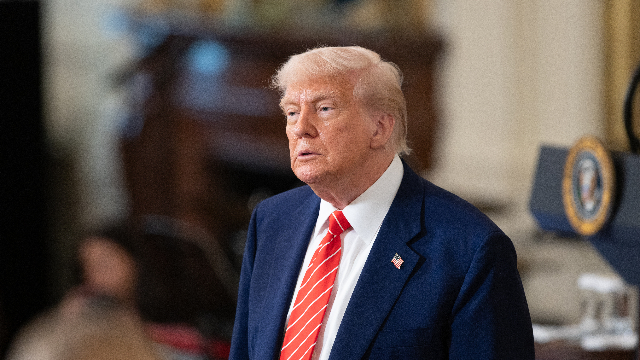
美联合经济委员会报告:特朗普贸易政策或致美国制造业损失4900亿美元投资
Di Yi Cai Jing· 2025-08-19 06:37
Group 1 - The report warns that President Trump's trade policies may lead to a reduction in U.S. manufacturing investment by over 13% annually, totaling more than $490 billion by 2029 [1] - Since the announcement of the "reciprocal tariffs" policy in April, the U.S. manufacturing sector has lost 37,000 jobs, with hiring levels dropping to the lowest in nearly a decade [1][3] - Manufacturing construction spending has been on a downward trend since Trump's presidency, as companies are reluctant to make significant investments amid economic uncertainty [1] Group 2 - The Joint Economic Committee (JEC) highlights that nearly 100 different tariff policy decisions made by the Trump administration since April have escalated economic uncertainty [3] - Between May and July, the U.S. manufacturing job count decreased by a total of 37,000, with May's hiring numbers reaching the lowest level since 2016 [3] - Manufacturers' investment sentiment has significantly declined, with expectations for capital spending growth in 2025 revised down to a decrease of 1.3% [3] Group 3 - The report emphasizes that manufacturing is particularly vulnerable to trade policy uncertainty, as decisions to expand production often involve large, long-term, and irreversible investments [4] - Delayed investments not only slow innovation but may also lead to job losses in factories, weakened supply chains, and diminished competitiveness against other countries [5] Group 4 - The report compares the uncertainty from Trump's trade policies to the turmoil caused by the Brexit vote in 2016, noting that U.S. manufacturers face broader policy and economic consequences [6] - Even if all trade policies were finalized immediately, the recent turmoil could still harm long-term manufacturing innovation and growth [6] - The JEC estimates that uncertainty faced by businesses in April alone could lead to an average annual investment reduction of 1%, resulting in a manufacturing investment loss of approximately $42.2 billion by 2029 [6]
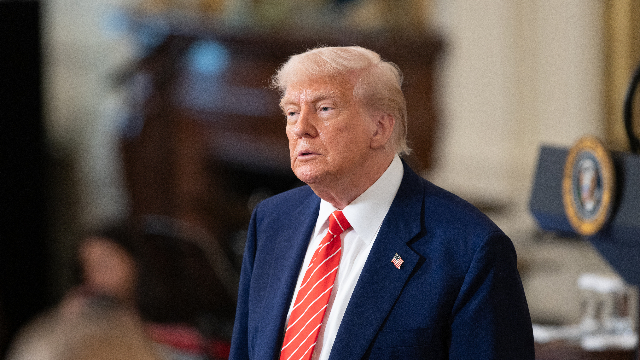
受美关税影响 德国汉堡港对美集装箱吞吐量下降近20%
Xin Lang Cai Jing· 2025-08-19 00:37
Core Insights - Hamburg port's maritime cargo throughput is expected to grow by 3.6% in the first half of 2025, with container throughput increasing by 9.3, indicating a stable growth trend [1] - The port experienced a 19.3% decline in container throughput to the US due to frequent changes in US tariff policies, highlighting the negative impact of US trade policy uncertainty on global shipping and transatlantic trade [1] - In contrast, logistics cooperation with Asia and the Baltic region has increased, with container throughput growth primarily driven by East Asia and Baltic routes [1] - The data reflects the impact of US tariff policies on transatlantic trade and the warming trade relations between Europe and East Asia, with expectations that transatlantic trade will continue to be affected in the future [1]
大行评级|瑞银:上调新秀丽目标价至17.2港元 上调经调整EBITDA预测
Ge Long Hui· 2025-08-18 02:25
Core Viewpoint - UBS reports that Samsonite's adjusted EBITDA for Q2 is $141 million, roughly in line with the expected $145 million [1] Financial Performance - Revenue decreased by 5.8% year-on-year at constant exchange rates, driven by cautious purchasing decisions from wholesale clients [1] - Wholesale channel revenue fell by 8.7% year-on-year, while direct sales only saw a decline of 1.3% [1] Management Outlook - Management anticipates some improvement in sales patterns for Q3, although ongoing trade policy uncertainties and inflationary pressures are affecting consumer sentiment and demand [1] - The company is taking measures to mitigate tariff impacts, including increasing inventory before tariff hikes and raising prices [1] Forecast Adjustments - UBS has raised its adjusted EBITDA forecasts for Samsonite for the years 2023 to 2027 by 2% to 4%, along with a 2% increase in net sales forecasts [1] - It is expected that the year-on-year revenue decline will narrow in the second half of the year, with an overall anticipated revenue drop of 5% for the year [1] Target Price and Rating - UBS has increased its target price for Samsonite to HKD 17.2, maintaining a "Neutral" rating [1]
市场担忧情绪减弱 菜籽油呈现下降态势
Jin Tou Wang· 2025-08-15 06:11
Group 1 - The core viewpoint of the article indicates that canola oil futures experienced a significant decline, with the main contract dropping to a low of 9715.00 yuan, reflecting a decrease of 1.99% [1] - The Ministry of Commerce has preliminarily determined that imported canola seeds from Canada are subject to dumping, imposing a 75.8% deposit on Canadian companies, which introduces uncertainty in the trade policy between China and Canada [2] - Domestic canola oil inventory is at a seasonally high level, and changes in trade policies may lead traders to actively import canola oil from Russia and Dubai, potentially supplementing the supply from Canada [2] Group 2 - According to Guotai Junan Futures, the canola oil market is showing a downward trend, influenced by macroeconomic factors and the recent suspension of a 24% tariff between China and the US [3] - The increase in domestic canola oil prices has further strengthened the vegetable oil sector, while the overall inventory of major oils, including soybean and palm oil, is on the rise [3] - The market is expected to wait for a new buying point after adjustments, with a long-term bullish outlook on oil fats [3]
美弱就业与关税缓和支撑人民币
Hua Tai Qi Huo· 2025-08-15 02:20
Report Industry Investment Rating No relevant content provided. Core Views of the Report - The short - term exchange rate of the US dollar against the RMB is expected to fluctuate within the range of 7.15 - 7.25. The counter - cyclical factor has been activated, and with the regulatory's expectation management, the RMB's short - term buffer against external shocks has increased [36][39]. Summary by Related Catalogs Quantity and Price Observation - The implied volatility curve of the 3 - month US dollar against the RMB option shows an appreciation trend of the RMB, with the put - end volatility higher than the call - end. The volatility of the US dollar against the RMB option has continued to decline, and the market's expectation of the future volatility of the US dollar against the RMB has weakened [4]. - The term structure shows the changes in the premium and discount of the Singapore Exchange's US dollar against the RMB futures, bank forward premium and discount, and the US - China interest rate spread in different time periods [7][8]. Policy Observation - The policy counter - cyclical factor has been activated, and there are fluctuations in the three - month CNH HIBOR - SHIBOR spread [11]. Macroeconomic Analysis US Economy - There is a differentiation in the pricing of interest rate cuts between the US and Europe. As of August 6, the TGA account was 464.3 billion, and the Fed's reverse repurchase balance was 9.196 billion US dollars. Fed Chairman Powell did not give guidance on a September interest rate cut [19]. - The economic expectation has been revised upwards. In July, non - farm data was significantly revised downwards, inflation rebounded, fiscal spending increased significantly, and the economic situation showed marginal support [21]. - Fiscal spending has rebounded, especially in defense, medical insurance, and healthcare [22]. - The employment market in July was significantly revised downwards. The employment performance of the service sector was better than that of the commodity and government sectors, and the hourly wage in July increased by 0.3% month - on - month [28]. Chinese Economy - There is a situation of strong expectation and weak reality. In July, exports and consumption showed resilience, but inflation has not recovered, and there is pressure on fixed - asset investment [29]. - Exports in July exceeded expectations. Financial data was better than expected, with changes in exports to different regions and products [31]. European Economy - The downside risks have been cleared. Economic data is oscillating at the bottom, with the manufacturing and service PMIs in Europe rebounding in July. Inflation is stable, with the eurozone's CPI in July increasing by 2% year - on - year and the core CPI increasing by 2.3% year - on - year [34]. Scenario Deduction - There are different time - based scenarios including the Fed's policy window period, the destocking cycle, tariff impacts, and domestic policy windows [40][41]. Risk Assessment - The range of basis fluctuations: From the historical data from January 2022 to the present, the range of the premium and discount of the futures main contract is between - 1100 and 900 [45].
美股异动|迪尔公司跌超7.5% 需求低迷和美国关税影响拖累第三财季盈利
Ge Long Hui· 2025-08-14 14:33
Core Viewpoint - Deere & Company (DE.US) experienced a significant decline in stock price, dropping over 7.5% to $474.83, following the release of its third-quarter financial results which showed continued revenue and profit declines [1] Financial Performance - The company's third-quarter revenue decreased by 8.6% year-over-year to $12.02 billion, marking the eighth consecutive quarter of decline, although it surpassed analysts' average expectation of $11.86 billion [1] - Net profit fell by 25.7% year-over-year to $1.29 billion, translating to earnings per share of $4.75, which exceeded the expected $4.58 [1] Market Conditions - CEO John May indicated that customer sentiment remains cautious due to uncertainties surrounding trade policies and economic conditions [1] - The company is actively addressing the issue of a large number of used equipment in the industry [1]

贸易政策不确定冲击北美鞋服品牌
Jing Ji Ri Bao· 2025-08-13 21:58
Core Viewpoint - The U.S. consumer spending is weak due to trade policy uncertainties and macroeconomic conditions, significantly impacting the performance of North American footwear and apparel brands [1][2]. Group 1: Company Performance - Under Armour reported a 4% year-over-year decline in revenue for Q1 of fiscal year 2026, totaling $1.1 billion, with a projected 6% decline for Q2 [1]. - Crocs, known for its "Croc" shoes, reported a net loss of approximately $428 million for Q2, with North American revenue down 6.5% year-over-year, and expects a further decline of 9% to 11% in Q3 [1]. Group 2: Impact of Tariffs - The U.S. tariffs on imports from countries like Vietnam and Indonesia have raised costs for major brands such as Nike, which estimates an additional $1 billion in costs due to tariffs [2]. - Gap anticipates an increase in costs between $250 million to $300 million due to the tariffs [2]. - Retailers may need to raise prices by 10% to 12% to offset these costs, which will ultimately affect U.S. consumers, particularly those with lower incomes [2]. Group 3: Consumer Behavior and Market Dynamics - U.S. consumers are cautious with non-essential spending, leading to decreased foot traffic in stores and a preference for cheaper alternatives [3]. - The footwear and apparel industry faces a dilemma: raise prices to maintain profit margins or absorb costs, which would severely impact profitability [3]. - A letter signed by 76 footwear brands, including Nike and Adidas, was sent to the White House, indicating that tariffs pose a "survival threat" to the industry [3].