
人民币国际化

Search documents
金融珍珠港?俄打响第一枪,首发人民币主权债,RMB要回归6时代?
Sou Hu Cai Jing· 2025-12-07 02:43
Group 1 - The core point of the article highlights Russia's issuance of its first sovereign bond in RMB, signaling a move towards de-dollarization amid Western sanctions and a growing reliance on the Chinese currency [1][7][10] - The bond has a maturity of 3.2 years with an interest rate between 6.25% and 6.5%, and a 7.5-year option with a maximum rate of 7.5%, aiming to raise approximately 12.3 billion USD [7][9] - The issuance is a response to the blockade of dollar and euro channels due to sanctions, with Russia's trade with China reaching 183.2 billion USD in the first ten months of the year, predominantly settled in RMB [7][9] Group 2 - The article discusses the implications of the Federal Reserve's independence under Jerome Powell, who has resisted political pressure from former President Trump, leading to market volatility and rising gold prices [3][5] - Trump's team is reportedly planning to replace Powell with a more compliant candidate, which could further undermine the credibility of the dollar [5][10] - The article notes that the issuance of RMB-denominated bonds by Russia could serve as a precedent for other countries, potentially accelerating the trend of de-dollarization globally [9][10] Group 3 - The article mentions that the share of RMB in global trade financing has increased to 8.5%, second only to the USD, indicating a shift in the global financial landscape [9][10] - The issuance of the bond is expected to strengthen financial ties between China and Russia, reflecting a broader shift in global economic power dynamics [10][13] - The article concludes that if the RMB can establish itself as a credible alternative to the dollar, it may lead to a significant change in the international monetary system [10][13]


培育和发展人民币计价功能是人民币国际化的重中之重
Sou Hu Cai Jing· 2025-12-07 00:40
Core Viewpoint - The book "New Currency Landscape" discusses the evolution of the international monetary system, the inherent contradictions of the existing system, and the progress and lessons of RMB internationalization, proposing strategies to advance it [1][2]. Group 1: Historical Context and Lessons - The authors highlight the historical experiences of the dollar's rise, yen internationalization, and euro's emergence, emphasizing the importance of maintaining domestic economic stability and independent monetary policy for RMB internationalization [2][3]. - The book provides a detailed account of how the Marshall Plan and Dodge Plan saved the Bretton Woods system and the dollar's international status, which is a unique perspective in domestic discourse [1][4]. Group 2: RMB Internationalization Strategies - The book suggests that cultivating and developing RMB pricing functions is crucial for its internationalization, with practical paths including promoting RMB pricing through economic aid to African countries, addressing trade deficits with neighboring countries, and facilitating commodity transactions [3][5]. - It argues that financial openness combined with a rigid exchange rate is a dangerous combination, indicating the need for careful consideration of the relationship between RMB internationalization and capital account liberalization [6]. Group 3: Current Challenges and Future Directions - The authors express that the failure of yen internationalization was largely due to the inability to maintain exchange rate stability, a challenge that has also affected RMB internationalization since 2015 due to depreciation and depreciation expectations [3][4]. - The book discusses the systemic risks associated with the diversification of reserve assets among countries, particularly in light of geopolitical tensions, suggesting that merely diversifying within traditional reserve currencies may not be sufficient [6][7].
锚定全球定价权:中金王曙光解码中国投行的时代使命与进阶路径
2 1 Shi Ji Jing Ji Bao Dao· 2025-12-06 13:49
Core Viewpoint - The enhancement of China's global pricing power is crucial for its position and competitiveness in the global financial system, impacting resource allocation, rule-making, and strategic initiatives for high-quality development [1]. Group 1: Global Market Dynamics - The world is undergoing unprecedented changes, with geopolitical shifts, technological revolutions, and challenges to the multilateral trade system intertwining [3]. - Historical evidence shows that control over key assets, core technologies, and strategic resources' global pricing power translates into the ability to shape global economic rules and direct international capital flows [3]. Group 2: China's Strategic Positioning - China is committed to high-level opening-up, providing a historical opportunity to enhance its pricing power in the global market [4]. - The development goals of China's capital markets have evolved beyond traditional financing to become a barometer of economic operation and a display of institutional competitiveness [4]. Group 3: Role of Chinese Investment Banks - Chinese investment banks have transitioned from being "channel-type intermediaries" to comprehensive global financial service providers, playing a key role in enhancing global pricing power [6]. - By deeply engaging in the construction of multi-tiered capital markets, Chinese investment banks have significantly broadened direct financing channels for enterprises [6]. Group 4: Cross-Border Financing and Global Influence - Chinese investment banks are expanding their pricing influence globally through active participation in cross-border financing [7]. - The successful IPO of Ningde Times in Hong Kong, facilitated by Chinese investment banks, exemplifies their ability to attract global capital and assert pricing power [7]. Group 5: Contribution to International Standards - Chinese investment banks are transitioning from being "rule acceptors" to "contributors" and "co-builders" of international standards, particularly in green finance [8]. - They are also involved in enhancing international recognition of accounting standards and information disclosure through initiatives like "Shanghai-London Stock Connect" [8]. Group 6: Future Challenges and Strategic Actions - The competition for global pricing power is a long-term battle that requires systematic capability building and strategic determination [10]. - Chinese investment banks must leverage their unique market position to articulate the long-term development logic of the Chinese economy to global investors [12]. Group 7: Talent Development and Industry Growth - The success of strategic initiatives relies heavily on attracting high-quality, international talent with diverse backgrounds [14]. - A strong talent pool is essential for building a world-class investment banking industry in China, enhancing its long-term international competitiveness [14].

刘世锦:经济增长更依托创新和消费,实施金融强国战略为之架桥
21世纪经济报道· 2025-12-06 13:27
Core Viewpoint - The article emphasizes the need for a robust financial system to support China's transition to a consumption-driven economy, highlighting the importance of capital markets and strong currency in achieving high-quality economic development [1][3]. Group 1: Economic Challenges and Financial Strategy - China's economic growth is shifting from supply constraints to demand constraints, with insufficient consumption being a primary issue rather than investment or exports [1][3]. - The implementation of a financial power strategy aims to bridge the gap between manufacturing and consumption, leveraging a modern financial system to support both sectors [1][3]. Group 2: Capital Market Development - A strong capital market is essential for selecting viable projects that are marketable, profitable, and have manageable risks, thereby enhancing resource allocation efficiency [3][4]. - As China enters an innovation-driven phase, the role of capital markets in project selection will increase, with more societal funds directed towards capital markets, particularly in light of declining real estate investment attractiveness [3][4]. Group 3: Currency and Internationalization - Strong currency is a key indicator of a financial power, historically supported by a robust economy, trade, technology, military strength, and a developed financial system [4][5]. - The internationalization of the Renminbi (RMB) has significant potential, with a focus on increasing offshore RMB availability to enhance liquidity and facilitate its use in international trade [5][6]. Group 4: Manufacturing and Trade Performance - China's manufacturing value added is projected to grow from 26.6 trillion yuan to 33.6 trillion yuan during the 14th Five-Year Plan, contributing over 30% to global manufacturing growth [5]. - In 2024, China's total goods trade is expected to reach 43.8 trillion yuan, maintaining its position as the world's largest trader, with exports surpassing 25 trillion yuan, marking a 7.1% year-on-year increase [5]. Group 5: Implications for Consumption - The anticipated appreciation of the RMB could enable Chinese consumers to purchase better international products, thereby boosting consumption and enhancing the quality of human capital [6].

俄罗斯一招破局!豪掷4000亿卢布人民币债券,给人民币“站台”,急抱中国大腿
Sou Hu Cai Jing· 2025-12-06 13:13
Core Viewpoint - Russia's Ministry of Finance announced the issuance of its first sovereign bonds denominated in RMB, totaling 400 billion rubles, marking a significant step towards de-dollarization and reflecting the geopolitical dynamics at play [1][3]. Group 1: Issuance Details - The total amount of the bonds is 400 billion rubles, equivalent to over 30 billion RMB, with maturities of 3, 5, and 10 years, set to be issued in early December [1]. - This issuance represents a shift from traditional reliance on USD or EUR for sovereign bonds, as Russia opts for RMB instead [1]. Group 2: Motivations Behind the Move - The decision to issue bonds in RMB is largely driven by Western sanctions that have severely restricted Russia's access to USD and EUR, effectively cutting off its financial channels [3]. - Over 95% of trade between China and Russia is settled in RMB, creating a "RMB closed loop" that supports this financial decision [3]. Group 3: Implications for RMB and Global Finance - The RMB's share in global foreign exchange reserves has increased from 1.07% in 2016 to 3.85% in 2024, positioning it as the fifth-largest reserve currency globally [5]. - The issuance of RMB-denominated bonds by Russia is expected to encourage other emerging markets, such as Brazil and India, to follow suit, thereby enhancing the RMB's status in the global monetary system [5][9]. Group 4: Strategic Significance - This move signifies a deepening of financial ties between China and Russia, indicating a shift from mere trade cooperation to a more integrated financial partnership [9]. - The issuance is seen as a demonstration of Russia's commitment to de-dollarization and a challenge to the dominance of the USD in global finance [7][9]. Group 5: Market Reception - There is a strong likelihood that domestic Chinese institutional investors, as well as other emerging market countries, will be interested in purchasing these bonds, viewing them as a means to mitigate USD risk [9]. - Despite Western downgrades of Russia's sovereign credit rating, its ability to repay the bonds remains supported by stable energy export revenues [9].

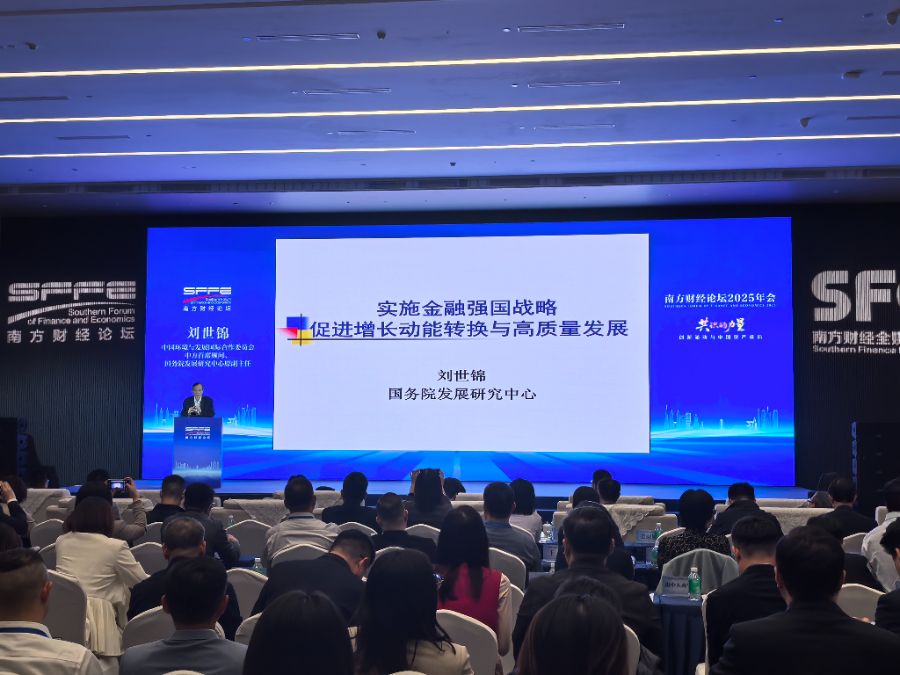
刘世锦:经济增长更依托创新和消费,实施金融强国战略为之架桥
2 1 Shi Ji Jing Ji Bao Dao· 2025-12-06 09:33
Core Viewpoint - The "Southern Finance Forum 2025 Annual Meeting" emphasizes the need for a strong financial system to support China's transition from supply constraints to demand constraints in economic growth, highlighting the importance of consumption and innovation as key drivers [1][2]. Group 1: Financial System and Economic Growth - The transition to a demand-driven economy necessitates a modern financial system that bridges manufacturing and consumption, enhancing service provision for both sectors [1]. - The financial system's role in selecting projects with market potential, profitability, and manageable risks is crucial for improving resource allocation efficiency as the economy shifts to high-quality development [2]. - As China enters an innovation-driven phase, the capital market will increasingly take on the project selection function, directing more societal funds towards capital markets rather than traditional banking [2]. Group 2: Capital Market Development - The influx of new capital will lead to a distinct new phase in the capital market, focusing on nurturing globally competitive large tech firms and innovative SMEs, thereby promoting industrial transformation and innovation [3]. - Increasing the proportion of institutional investors, such as pension funds, in the capital market will stabilize the stock market and support social security expenditures in an aging society [3]. Group 3: Currency and Internationalization - A strong currency is a key indicator of a financial power, with historical examples showing that robust economic and financial systems underpin strong currencies [5]. - China's manufacturing value added is projected to grow from 26.6 trillion yuan to 33.6 trillion yuan from 2020 to 2024, contributing over 30% to global manufacturing growth [5]. - The total value of China's goods trade is expected to reach 43.8 trillion yuan in 2024, maintaining its position as the world's largest trader for eight consecutive years [5]. Group 4: Trade Strategy and Currency Utilization - China aims to implement a new trade strategy that balances imports and exports, increasing imports to facilitate payments in renminbi, thereby enhancing the currency's international status [6]. - Expanding the offshore renminbi financial product ecosystem will increase liquidity and usability, accelerating the internationalization of the renminbi [6]. - Strengthening the renminbi will allow Chinese consumers to purchase better international products, thereby boosting consumption and improving human capital quality [6].
人民币强势升值,会破7吗?
Sou Hu Cai Jing· 2025-12-06 04:37
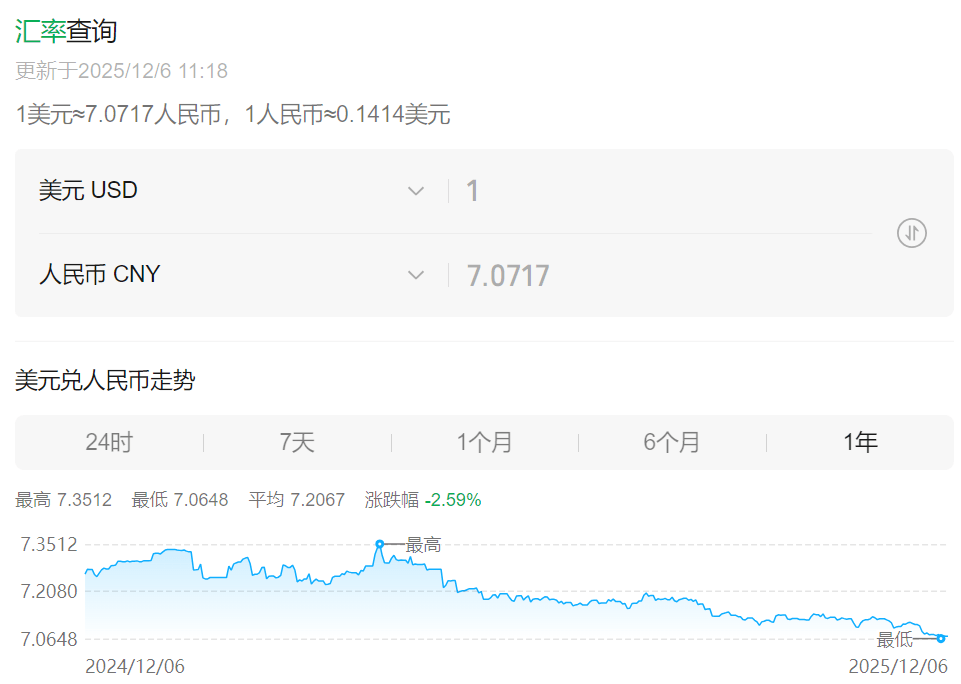
点击【樱桃大房子】关注并 人民币"硬气"了! 今天(12月6日),美元兑人民币汇率报7.0717。近日,在岸和离岸人民币兑美元报价均升破关键点位,尽管短期走势有所波动,但整体趋势显著走强。 人民币这波升值,背后藏着2025年全球经济的大棋局。 今天,我们就来扒一扒,这波升值潮到底意味着什么? 先聊聊人民币为什么强势升值? 从外部因素来讲,美联储主席即将换人+12月降息预期的升温,是推动本轮人民币升值的关键因素。 美国进入降息周期,美元指数持续回落,中美利差持续扩大(下图红色箭头可见),人民币对美元贬值的压力瞬间小了一大截,为人民币对美元升值创造 了空间。 另一方面,美国经济增长放缓和政策上的反复无常,也加速了全球"去美元化"。 巴西、沙特、俄罗斯等资源大国,纷纷开始减少对美元的依赖,增加使用本币或人民币进行贸易结算。人民币在这场货币多元化的浪潮中,正成为重要选 项之一。 最主要的原因肯定还是我国自身,央行在引导人民币升值。 通过观察中间价与市场价的差异可以发现,过去一个多月人民币的中间价一直在即期价下方。这就差直接说:"人民币可以升一升了!" 虽然近日二价合一,央行态度转为中性,但政策导向早已经为升值创造了条 ...
俄罗斯一招破局!豪掷4000亿卢布人民币债券,急抱中国大腿
Sou Hu Cai Jing· 2025-12-06 04:34
Core Viewpoint - Russia's Ministry of Finance has announced the issuance of its first sovereign bonds denominated in RMB, amounting to 400 billion rubles, marking a significant shift in global financial dynamics and a strategic move towards de-dollarization [1][3][9] Group 1: Issuance Details - The bonds will be issued in three maturities: 3 years, 5 years, and 10 years, with the issuance expected to begin in early December [1] - The total amount of 400 billion rubles is approximately 30 billion yuan, making it a substantial issuance in the context of emerging market RMB bonds [1] Group 2: Reasons for Choosing RMB - The decision to issue bonds in RMB is largely a response to unprecedented financial sanctions imposed by the West following the Ukraine conflict, which have severely restricted Russia's access to traditional currencies like USD and EUR [3][5] - Over 95% of trade between China and Russia is already settled in RMB, with bilateral trade reaching a record high of 220 billion USD in 2023, primarily driven by energy exports [3][5] Group 3: Strategic Implications - This issuance represents a significant endorsement of the RMB as a reliable international currency, potentially encouraging other emerging markets to follow suit, thereby enhancing the RMB's status in the global monetary system [7][9] - The move is seen as a demonstration of deepening Sino-Russian cooperation, extending beyond trade to financial integration, which could have broader implications for global multipolarity and resistance to unilateral sanctions [9][10] Group 4: Market Reception - There is strong demand for RMB-denominated bonds from domestic Chinese institutional investors and interest from other emerging market countries looking to mitigate USD risks [9] - Despite Western downgrades of Russia's sovereign credit rating, its debt repayment capacity remains robust due to stable income from energy exports [9]

俄踢开美元,人民币地位上升,特朗普通告全球,美联储主席将换人
Sou Hu Cai Jing· 2025-12-06 04:06
Group 1: Core Insights - Russia is set to issue its first RMB-denominated bonds, marking a significant elevation in the status of the Chinese currency [1][3] - The issuance of these bonds is part of a long-term strategy for Russia, aimed at providing new investment options for its enterprises and supporting the internationalization of the RMB [3][4] - The total trade volume between China and Russia is projected to reach $250 billion in 2024, indicating a strengthening economic relationship [3] Group 2: Market Implications - The RMB's share in global trade financing has reached 8.5%, making it the second most used currency after the USD [4] - The issuance of RMB bonds will reduce Russia's reliance on USD and EUR, while also promoting a more complete system for RMB usage, settlement, and investment [4] - The potential change in the U.S. Federal Reserve leadership could lead to a weaker USD, providing more space for other currencies, including the RMB [7][8] Group 3: Broader Trends - The trend of increasing RMB usage is not isolated to Russia; other countries like Kazakhstan and Kenya are also exploring RMB financing options [3] - The global financial landscape is undergoing significant changes, with the RMB's rising international status challenging the dominance of the USD [8]
多方回应“小电驴”国标争议,险资入市再松绑丨一周热点回顾
Di Yi Cai Jing· 2025-12-06 02:10
其他热点还有:我国首部上市公司监督条例征求意见,豆包手机助手引发热议。 国务院部署新型城镇化重点任务 12月3日,国务院以"深入推进以人为本的新型城镇化,着力构建城乡融合发展新格局"为主题,进行第 十七次专题学习。国务院总理李强在主持学习时强调,坚持以人为本提高城镇化质量水平,充分释放城 乡融合发展蕴藏的巨大内需潜力,为经济社会发展提供强劲动力。 新型城镇化是个系统工程。李强提到四方面的重点任务:要因地制宜实施好新型城镇化规划;要科学有 序推进农业转移人口市民化,解决好农业转移人口的就业、社保、安居、子女教育等问题;要深入实施 城市更新行动,把城市更新和消除安全隐患、稳楼市等工作结合起来,扎实推进好房子建设和房地产高 质量发展;要着力破解城乡二元结构,推进基本公共服务均等化,促进城乡融合发展。 【点评】新型城镇化不仅能扩大有效益的投资,而且能激发有潜能的消费,是统筹投资和消费的黄金结 合点。尽管我国城镇化已经进入快速发展阶段的后期,但仍有提升空间。为此,要继续深入推进新型城 镇化,重点要解决农业转移人口的就业、社保等问题,推动城乡融合发展,同时利用REITs等创新融资 方式支持城市更新项目,这些系统性的规划与 ...