滞胀

Search documents
特朗普再施压鲍威尔,美股美元齐下跌
Guan Cha Zhe Wang· 2025-04-22 02:19
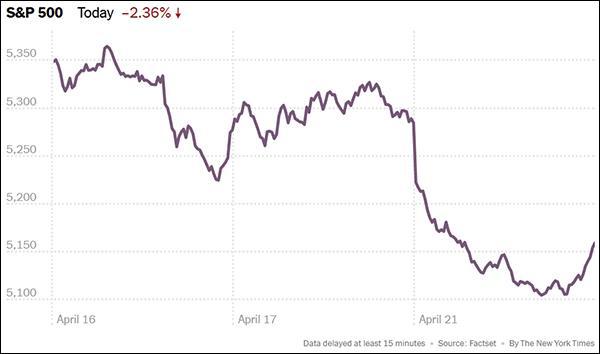
【文/观察者网 王一】随着美国总统特朗普再次施压美联储主席鲍威尔、要求其降息,21日美股暴跌, 美债遭抛售,美元继续下跌,美国经济不确定性加剧。 分析人士表示,特朗普最近关于鲍威尔的言论"进一步加剧了市场对美联储独立性的担忧",美国政策的 不确定性导致美元和美债"表现得更像风险资产"。 当地时间4月21日,纽约股市三大股指低开,道琼斯工业平均指数跌0.78%,纳斯达克综合指数跌 1.74%,标准普尔500种股票指数跌1%。 随后,特朗普在其自创的社交媒体"真相社交"(Truth Social)上发帖批评"太迟先生"(Mr. Too Late)鲍 威尔,要求其降息。特朗普称,美国"通胀几乎为零",而鲍威尔总是降息太迟,这可能会导致经济放 缓。 特朗普此番言论后,抛售加剧。截至当天收盘,道琼斯工业平均指数较前一交易日下跌2.48%,纳斯达 克综合指数下跌2.55%,标准普尔500种股票指数下跌2.36%。其中,标普500指数十一大板块全线下 跌,科技、能源和非必需消费品板块受创最为严重。 《纽约时报》分析指出,投资者通常倾向于低利率,因为低利率使企业更容易借贷和扩张业务,但近期 市场在特朗普降息呼吁后反而下跌,这 ...

美股全线回落,特朗普呼吁降息:申万期货早间评论-20250422
申银万国期货研究· 2025-04-22 01:01
铜: 夜盘铜价收低。目前精矿加工费总体低位以及低铜价,考验冶炼产量。根据国家统计局数据来 看,国内下游需求总体稳定向好,电网带动电力投资高增长,家电产量延续增长,需关注出口变化,新 能源渗透率提升有望巩固汽车铜需求,地产数据降幅缩窄。铜价短期可能宽幅波动,关注美国关税谈判 进展,以及美元、人民币汇率、库存和基差等变化。 贵金属 :黄金持续刷新新高。特朗普在其社交媒体平台 Truth Social 表示,"谈判与成功的黄金法则: 拥有黄金者制定规则",即谁有黄金谁占主导,引发市场猜想。同时,特朗普一再要求美联储降息,并 研究能否免去鲍威尔的美联储主席职务,动摇市场信心。随着贸易战扰动加剧,引发一系列的连锁反 应,金融市场动荡、衰退风险加剧、去美元化、美国债务等问题愈发凸显,伴随政策和市场的不确定 性,黄金价格持续刷新历史新高。面对未来通胀上行压力,鲍威尔也未对未来降息进行松口,但长端美 债价格的波动,令市场对美联储重启 QE 和提前降息的预期升温。考虑今年美国国债到期和债务压力进 一步加剧,滞胀形式进一步明确下,黄金整体仍将维持强势。 一、当日主要新闻关注 1 )国际新闻 首席点评:美股全线回落,特朗普呼吁降息 ...
黄金价格不断创历史新高:多重国际因素推动避险资产狂飙
Sou Hu Cai Jing· 2025-04-21 12:00
Group 1 - The international spot gold price has surpassed $3,387 per ounce, doubling from the low in 2022, with a year-to-date increase of 28.3% [2] - Domestic gold jewelry prices have reached a historical high of 1,040 yuan per gram, reflecting a significant market trend [2] - The surge in gold prices is attributed to multiple factors including geopolitical conflicts, a crisis in dollar credibility, a global central bank gold-buying spree, and shifts in monetary policy [2] Group 2 - Geopolitical risks have escalated, with tensions in the Middle East and the Iran nuclear facility attack causing a single-day gold price spike of 3% [2] - The ongoing Russia-Ukraine conflict and the intensifying US-China trade war are increasing market demand for safe-haven assets like gold [2] - The World Bank estimates that if the trade war continues, global GDP growth could decline by 1.8% by 2025, further driving investment into gold due to supply chain disruptions [2] Group 3 - Global central banks have net purchased 420 tons of gold from January to April 2025, with emerging markets like China and India increasing their gold reserves [3] - China's central bank gold reserves have risen to 4.9%, the highest in 20 years, indicating a trend towards de-dollarization and gold as a sovereign credit stabilizer [3] - The risk of stagflation and recession is prompting investors to view gold as a hedge against inflation, with the US March CPI rising by 3.5% [3] Group 4 - The international and domestic gold markets are experiencing significant price increases, with London gold rising by 2.1% and COMEX gold futures surpassing $3,315 [5] - Demand for investment gold bars has surged by 27.1%, while gold jewelry consumption has decreased by 20% due to high prices [5] - Lightweight investment products, such as 10-50 gram gold jewelry and "gold beans," are gaining popularity, with sales increasing by 12%-20% [5] Group 5 - Analysts predict bullish trends for gold prices, with Goldman Sachs forecasting prices could reach $3,700-$4,000 by the end of 2025, and UBS projecting $3,400-$3,500 [5] - The long-term bull market for gold is supported by central bank purchases and ongoing geopolitical risks [5] - Despite the bullish outlook, some institutions warn of potential technical corrections in gold prices, which could face a 10%-15% decline if the Federal Reserve changes its policy or geopolitical tensions ease [5] Group 6 - The doubling of gold prices over the past 30 months reflects a restructuring of the global economic order and a collective market response to uncertainty [7] - While short-term volatility risks are increasing, long-term support for gold remains strong due to de-dollarization, stagflation threats, and prolonged geopolitical conflicts [7] - Investors are advised to maintain a rational approach in asset allocation amidst the current market fervor [7]

弘则市场漫谈大类资产的波动冲击和AI的革命性突破
2025-04-21 03:00
Summary of Key Points from Conference Call Industry Overview - The conference call discusses the performance of major asset classes, particularly focusing on commodities and the stock market, with a notable emphasis on the AI sector and its developments [2][32]. Key Insights and Arguments 1. **Market Performance**: - Commodity prices, such as copper, have risen above $9,000 per ton, and oil prices have rebounded from previous lows. In contrast, the U.S. stock market has faced significant adjustments, with four consecutive days of declines [2][32]. - The A-share market has seen a decrease in trading volume, but ETF inflows and policy support have helped maintain index stability [3][2]. 2. **Economic Indicators**: - The Philadelphia Fed manufacturing survey indicates a sharp decline in new orders, suggesting weak economic expectations, while prices are rising, indicating potential stagflation risks [4][5]. - Initial jobless claims have decreased, reflecting a relatively stable real economy, but businesses are generally pessimistic about demand [4][5]. 3. **China's Asset Market**: - The risk appetite in China's asset market remains high, with small-cap stocks performing strongly despite a decrease in trading volume. Observations suggest that patience is needed to identify market bottoms [6][7]. 4. **AI Developments**: - The introduction of the MCP (AI Ecosystem General Protocol) is highlighted as a revolutionary advancement, akin to the HTTP protocol for the internet, facilitating interaction between applications and AI [8][9]. - MCP enables large models to utilize tools like humans, enhancing development efficiency and application breadth across various sectors, including smart customer service and autonomous driving [10][11]. 5. **Impact of MCP**: - MCP standardizes services and resources, allowing service providers to offer AI calling capabilities directly, which reduces the complexity of application development [12][13]. - The emergence of MCP is expected to transform business models, shifting focus from human usability to AI usability, potentially leading to new commercial paradigms [15][30]. 6. **Investment Opportunities**: - Future leaders in the AI sector are anticipated to be platforms and applications that effectively leverage new technologies to meet user needs, particularly in vertical fields like smart customer service and precision medicine [11][25]. - Investment strategies should prioritize platforms and data-driven applications in consumer sectors, as these areas are expected to yield significant growth potential [29][25]. 7. **Market Dynamics**: - The call discusses the differences in development paths between AGI (Artificial General Intelligence) and vertical AI, with a belief that vertical AI will have a more substantial impact due to its focus on specific tasks [26][21]. - The role of open-source versus closed ecosystems in AI development is emphasized, with open-source models facilitating faster market adaptation and innovation [20][21]. Additional Important Content - The call outlines the rapid evolution of the AI commercial ecosystem, highlighting the importance of developing a common language and tools for startups and vertical companies [23]. - The potential for MCP to reshape software industry dynamics is noted, as companies will need to rethink their product and service offerings to cater to AI needs [30][31]. - The discussion includes the implications of recent asset performance and the potential for significant shifts in market dynamics based on upcoming economic data and trade negotiations [5][32]. This summary encapsulates the critical insights and developments discussed in the conference call, providing a comprehensive overview of the current state and future outlook of the relevant industries.
【UNFX课堂】外汇市场一周展望: 美元震荡待破局,非美货币寻机遇
Sou Hu Cai Jing· 2025-04-21 01:26
2025年4月21-25日外汇市场展望: 美元震荡待破局,非美货币寻机遇 滞胀担忧、央行分歧与关键数据博弈 一、 政策焦点 美国关税政策影响持续发酵: 美国此前宣布对主要贸易伙伴加征10%"基准关税",已引发多国(如欧 盟)酝酿反制措施。这一政策加剧了市场对全球经济陷入"滞胀"的担忧。短期内,这可能继续抑制美元 的避险吸引力;但若贸易摩擦显著升级,引发避险资金回流美国,美元则可能获得阶段性支撑。 主要央行政策路径分化: 美联储 (Fed): 3月会议纪要暴露出官员们在通胀上行风险与经济增长放缓之间的权衡存在分歧。市场 对年内降息幅度的预期已从50基点扩大至90基点。若下周四(4月24日)公布的初请失业金人数较上月 增加,可能增强美联储的降息概率,对美元构成下行压力。 欧洲央行 (ECB): 欧洲央行在4月17日会议上降息25个基点。然而,德国潜在的财政刺激计划可能部分 抵消货币宽松的效果。欧元兑美元(EUR/USD)或先测试1.1220支撑位,随后有望逐步反弹至1.1650。 日本央行 (BoJ): 随着3月核心CPI升至3.2%,市场对日本央行在7月加息的预期概率已升至68%。美日 利差的潜在收窄趋势,可能 ...
美股一线|三大股指全线下挫,策略师警告抄底良机未至
Sou Hu Cai Jing· 2025-04-21 00:10
21世纪经济报道记者吴斌 上海报道 随着华尔街担忧关税政策的不确定性和经济冲击,美股在跌跌撞撞中再度走弱。 过去一周,道指累计下跌2.66%,纳指跌2.62%,标普500指数跌1.50%。自美国总统特朗普4月初宣 布"对等关税"以来,标普500指数、道指和纳指全线大跌,美股一度坠入熊市。 嘉盛集团资深分析师Fawad Razaqzada对记者表示,美国三大股指过去一周均收跌,而欧洲股市上涨。 这种差异表明,资金流向显示出偏好欧洲股市的迹象,视其为避险资产。 与此呼应的是,美国银行发布的4月全球基金经理调查显示,4月份基金经理净减配美国股票的比例为 36%,为2023年5月以来的最低水平。在过去两个月的时间里,投资者对美国股票的配置下降了53个百 分点,为有记录以来的最大降幅。 目前华尔街仍处在观望状态,如果关税政策的不确定性持续,美股仍有开启新一轮下行周期的风险。 美联储暂无"紧急救市"打算 据央视新闻报道,4月16日,美联储主席鲍威尔就特朗普贸易政策的通胀效应发出了强烈警告。鲍威尔 表示,特朗普的关税政策"极有可能"刺激通胀暂时上升,警告称这些影响可能会持续很长时间,同时明 确表示不会因市场波动而采取紧急救 ...
申万宏源:美国关税2.0冲击下 关注长期通胀预期、企业资本开支等
智通财经网· 2025-04-20 22:45
智通财经APP获悉,申万宏源证券发表研报称,美国"对等关税"已经落地,滞与胀的强弱、次序和持续 性的比较或将成为货币政策和金融市场表现的主要矛盾。目前,通胀上行压力尚不显著。根据美联储官 员表态,美国通胀可能要到6月才会体现关税效果。美国商品消费中的医药、服装、新车、多媒体设备 (电脑等)高度依赖进口,短期需重点关注此类商品的"再通胀"风险。中期,驱动服务通胀的核心因素 仍为就业市场。长期通胀预期是决定美联储更关注"滞"还是"胀"的核心要素。美联储资本开支调查、制 造业PMI或是衡量关税对经济短期冲击的最佳指标。 申万宏源观点如下: 一、关税冲击的经济原理:一次性成本冲击,导致经济呈现"滞胀"格局 从最新数据来看,关税2.0对美国实体经济冲击如何?1)通胀上行压力尚不显著。美国3月进口商品价 格环比仅-0.1%,核心进口价格环比也较弱。根据美联储官员表态,美国通胀可能要到6月才会体现关税 效果;2)美国经济当前仍为"强现实,弱预期",3月就业、零售表现较强。 关税冲击的经济学原理:对等关税是一次性的成本冲击,情形类似于2020年公共卫生事件,导致经济呈 现"滞胀"格局。关税会抬升进口价格、抑制进口的需求。更高 ...

海外高频 | 特朗普关税态度软化,3月美国零售反弹
申万宏源宏观· 2025-04-20 14:07
摘要 美国"对等关税"已经落地,"滞"与"胀"如何演绎成为市场焦点。滞与胀的强弱、次序和持续性的比较或将 成为货币政策和金融市场表现的主要矛盾。 陈达飞 首席宏观分析师 王茂宇 高级宏观分析师 联系人: 王茂宇 报告正文 二、海外大类资产&基本面&重要事件:特朗普关税态度软化 (一)大类资产:美股三大股指齐跌,黄金价格上涨 当周,发达市场股指多数上涨,新兴市场股指多数上涨。发达市场股指,德国DAX、英国富时100、日经 225分别上涨4.1%、3.9%、3.4%,道琼斯工业指数、纳斯达克指数分别下跌2.7%和2.6%;新兴市场股指,印 度SENSEX30、南非富时综指、韩国综合指数分别上涨4.5%、3.6%、2.1%。 赵 伟 申万宏源证券首席经济学家 二、大类资产&海外事件&数据:特朗普关税态度软化,3月美国零售反弹 美股三大股指齐跌,黄金价格再创新高。 当周,纳指下跌2.6%,日经225上涨3.4%;10Y美债收益率下行 14bp至4.34%;美元指数下跌0.5%至99.23,离岸人民币降至7.3022;WTI原油上涨7.7%至64.7美元/桶, COMEX黄金上涨5.0%至3323.1美元/盎司。 特朗 ...
揭秘美联储:独立于政府的神秘金融机构
Sou Hu Cai Jing· 2025-04-20 02:35
Core Viewpoint - The Federal Reserve (Fed) is a powerful institution in the U.S. that operates independently of the government, which has recently been highlighted by tensions between President Trump and Fed Chairman Jerome Powell regarding monetary policy decisions [1] Group 1: History and Establishment of the Federal Reserve - The Federal Reserve was established in 1913 following a severe financial crisis in 1907, which highlighted the need for a central banking system to stabilize the financial order in the U.S. [3] - The creation of the Fed marked the beginning of its significant influence on both the U.S. and global economies [3] Group 2: Independence of the Federal Reserve - The legal framework of the Fed ensures its independence, with a Board of Governors consisting of seven members appointed by the President but confirmed by the Senate, serving long terms of 14 years [4] - Historical experiences, such as the 1970s "stagflation," demonstrate the importance of the Fed's independence in making long-term economic decisions without succumbing to short-term political pressures [4] - Countries with more independent central banks tend to have lower inflation rates and more stable economic growth, as evidenced by the Bank of England's independence leading to a reduction in expected inflation by about 1 percentage point since 1997 [4] Group 3: Tensions Between Trump and the Federal Reserve - President Trump's economic policies conflict with the Fed's monetary policy, as he advocates for interest rate cuts to stimulate economic growth, while Powell emphasizes caution in the face of economic uncertainty [6] - Trump's dissatisfaction with Powell's leadership has led to threats of dismissal, reflecting the ongoing tension between the executive branch and the Fed [6] Group 4: Perceptions of the Federal Reserve - The book "Currency Wars" portrays the Fed as a mysterious entity manipulated by international financial groups, suggesting it has played a role in major historical events like the World Wars [7] - In reality, the Fed operates independently, with decisions made by a committee based on economic data and market conditions, and is subject to congressional oversight and public disclosure [7]
特朗普,按下恐怖“定时炸弹”的倒计时
Sou Hu Cai Jing· 2025-04-18 18:51
Group 1 - The 10-year U.S. Treasury yield experienced its largest weekly increase in over 20 years, surpassing 4.5%, while the 30-year yield exceeded 5% [3][4] - Concerns are rising that the U.S. debt situation could lead to a financial crisis worse than that of 2008, with the national debt reaching approximately $36.21 trillion, which is 126.5% of the projected 2024 GDP [6][14] - The U.S. government is facing significant debt maturities in 2025, with estimates of up to $7.84 trillion in non-short-term bonds maturing, raising fears of potential defaults [6][15] Group 2 - The U.S. Treasury market is currently the most liquid bond market globally, with an average daily trading volume exceeding $600 billion, making it a critical asset for central banks managing large foreign reserves [12][10] - The share of foreign investors in U.S. Treasury securities has decreased from nearly half in 2014 to about 30% by the end of 2024, indicating a shift in investment patterns [12][23] - Recent trends show that central banks are increasingly interested in gold, with 69% indicating plans to increase their gold purchases in the next five years, reflecting a potential shift away from U.S. dollar-denominated assets [23][12] Group 3 - The U.S. government has a history of managing its debt through various means, including legalizing defaults in the past, which raises questions about the sustainability of its current debt practices [19][20] - The debt ceiling has been raised over 110 times since its establishment in 1917, indicating a long-term trend of increasing national debt without significant fiscal discipline [16][22] - The current economic environment poses a dilemma for the Federal Reserve, as lowering interest rates could exacerbate inflation while not acting could lead to a liquidity crisis [25][27]