
循环经济

Search documents
国际影响力不断提升 服贸会搭建高效开放大舞台
Zhong Guo Zheng Quan Bao· 2025-09-11 20:35
Group 1: Event Overview - The 2025 China International Service Trade Fair was held in Beijing from September 10 to 14, featuring nearly 2,000 exhibitors, including around 500 Fortune 500 companies, with an international participation rate exceeding 20% [1] - The fair serves as a significant platform for international cooperation, enhancing the global influence of service trade and providing opportunities for participating companies to share development prospects [1] Group 2: Innovations and Collaborations - GE Healthcare showcased over ten high-end imaging devices, including the newly launched PET/CT device Max Elite+, which utilizes advanced noise reduction technology and AI for enhanced imaging speed and accuracy [2] - Schneider Electric announced a joint declaration with eight service partners and established collaborations with local companies to address the urgent demand for digital transformation in the service industry [2] Group 3: Market Opportunities - China's service industry is experiencing growth due to high-level openness and an improved business environment, becoming a key driver of global service trade expansion [3] - The demand for innovation in the service market is prompting companies like Schneider Electric to increase local R&D investments and deepen their "China Center" strategy [3] Group 4: Future Directions - The Chinese government aims to enhance the service trade environment by establishing a negative list management system for cross-border service trade and creating innovation development demonstration zones [6] - There is a focus on expanding international cooperation networks in service trade, promoting practical cooperation outcomes, and leveraging platforms like the service trade fair for economic collaboration [6]
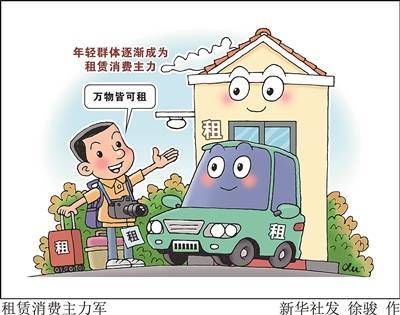
年轻人为何偏爱“租赁消费”?
Sou Hu Cai Jing· 2025-09-11 19:15
Core Viewpoint - The rental economy is rapidly growing in China, driven by a shift in consumer preferences among young people who favor "usage over ownership" and seek flexible, cost-effective solutions for various products and services [2][4][5]. Group 1: Market Growth and Trends - The rental economy in China is projected to exceed 4.2 trillion yuan in transaction volume by 2024, representing a 32% year-on-year growth, with over 750 million users [2]. - Diverse rental demands are evident, with significant increases in search volumes for camera rentals (63%), wedding dress rentals (109%), and children's stroller rentals (165%) in August [2]. - The rental market has expanded from traditional categories like housing and vehicles to include apparel, beauty products, digital devices, and baby products, showcasing a trend towards diversification and digital services [3][4]. Group 2: Young Consumers as Key Drivers - Young consumers, particularly those born in the 1990s and 2000s, are becoming the main force in the rental market, emphasizing experiences over ownership and valuing cost-effectiveness and environmental considerations [5]. - The concept of "shared wardrobes" is gaining popularity among young people, allowing them to access a variety of clothing styles at a lower cost, thus freeing up space at home [4]. Group 3: Challenges and Recommendations - The rapid expansion of the rental market has led to increased consumer disputes and challenges such as unclear contracts and damage assessments [6]. - Experts suggest establishing a multi-stakeholder governance system involving government, platforms, businesses, and consumers to regulate the rental market effectively [6]. - Recommendations include enhancing service standards, ensuring transparency in contracts, and exploring innovative business models like "rental + subscription" to meet diverse consumer needs [6].

“中国开放创新窗口”再发力!“北京日”暨投资北京大会释放1397.5亿元投资机遇
Zheng Quan Shi Bao Wang· 2025-09-11 11:37
Group 1 - The "Beijing Day" and Investment Beijing Conference showcased 140 investment projects in new information technology and healthcare, with a total investment amount of 139.75 billion yuan [1] - Beijing is positioned as a reliable investment destination, particularly in artificial intelligence and healthcare, aligning with global investor needs [2][3] - The city has implemented over 140 groundbreaking policies in the past five years, with more than 70 being national firsts, demonstrating the resilience of its open economy [3] Group 2 - AI and healthcare are identified as key drivers for industrial upgrades, with multinational companies and local unicorns highlighting Beijing's attractive industrial ecosystem [4] - Beijing has established eight government-guided funds totaling 100 billion yuan, which have leveraged 867 million yuan in social capital, fostering 16 unicorns and 57 national-level specialized enterprises [5] - The financial sector is providing global solutions to support enterprises' international expansion, with a focus on risk management and tailored products for emerging markets [5]
欧盟要去月亮上挖矿?还有这些国家也在推动太空资源挖掘
Di Yi Cai Jing· 2025-09-11 10:29
Core Viewpoint - The European Union (EU) is exploring space mining, particularly targeting the Moon, as a potential source for raw materials essential for renewable energy technologies due to reliance on non-EU countries being challenged [1][3]. Group 1: Space Mining Initiatives - The EU Commission's annual Strategic Foresight Report highlights the need for advanced mining technologies, including space mining, to secure critical materials like lithium, copper, nickel, and rare earth metals [1][3]. - Luxembourg is positioned as a hub for space mining in Europe, planning to utilize robotics for extracting resources from the Moon and asteroids, which are rich in practical metals and precious metals [3][4]. - The European Space Resources Innovation Centre (ESRIC) was established in 2020 to focus on the scientific, technological, and economic aspects of space resource utilization [4]. Group 2: Demand for Key Minerals - The demand for key minerals is surging due to the energy transition, with estimates indicating that the global copper mining requirement over the next 25 years will equal the total mined in history [5]. - The EU anticipates a 12-fold increase in lithium demand for batteries by 2030 compared to 2020 levels, and a 21-fold increase by 2050, while currently lacking any lithium mining operations within its borders [5]. - The EU is heavily reliant on imports for rare earth materials, with nearly 100% dependence, which poses risks of supply disruptions and price volatility [5]. Group 3: Challenges in Resource Recovery - Despite the strategic importance of rare earth recycling, a facility established by Heraeus in Germany to recover rare earth magnets is struggling to achieve full production capacity and is currently operating at a loss [6].
山东海化(000822) - 000822山东海化投资者关系管理信息20250911
2025-09-11 09:34
Group 1: Production and Expansion Plans - The company produced 4,400 tons of bromine in the first half of 2025, with no current plans for expansion [2] - The company focuses on optimizing existing production and expanding new areas to enhance profitability [2] Group 2: Market Value Maintenance - The company aims to enhance market value through improved operational performance and effective investor relations management [2] - There are currently no plans for stock buybacks [2] Group 3: Industry Competition and Strategy - The company plans to reduce production costs and improve operational efficiency through internal optimization and technological upgrades [2] - The company is exploring new product development and market expansion to create new profit growth points [2] Group 4: Market Impact and Geopolitical Factors - The company's business is primarily domestic, with a small export ratio, thus minimally affected by international trade environment changes [2] - The political and economic conditions in countries related to the company's export markets are relatively stable [2] Group 5: Industry Insights - Certain chemical products can replace caustic soda with soda ash under specific conditions, but this depends on market prices, technology, and environmental regulations [3] - The company is a significant player in the marine chemical production sector, focusing on the comprehensive utilization of brine resources [3]

全球能源循环计划亮相慕尼黑 宁德时代、奔驰等共话汽车产业绿色变革
Zheng Quan Shi Bao Wang· 2025-09-11 07:59
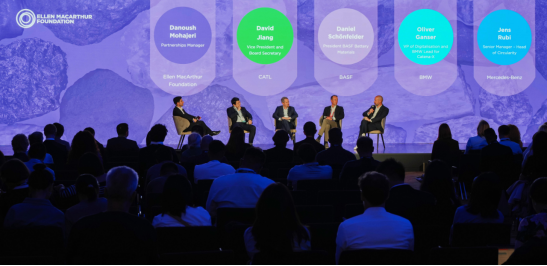
Core Insights - The global battery circular economy high-end forum was successfully held during the IAA in Munich, supported by CATL and hosted by the Ellen MacArthur Foundation, with participation from major industry players like BMW, Mercedes-Benz, and BASF [1][2] - The forum focused on two main topics: the pathways to achieving a circular battery value chain and the collaboration between policy and finance to promote a circular economy [1][2] - CATL's Vice President emphasized the need for a collaborative network and knowledge sharing to maximize battery value through design and innovation [1] Industry Developments - The European Battery Alliance and other stakeholders highlighted that the EU's new battery regulations provide direction for industry development, but scaling requires innovative business models and capital market support [2] - The concept of quantifying "circularity" as a green asset for capital market pricing is seen as crucial for attracting social capital [2] - The Global Energy Circular Program, initiated by a Chinese enterprise, aims to create a collaborative network across the entire industry chain, targeting a 50% reduction in new mineral extraction for battery production over the next 20 years [2] Future Initiatives - The forum marked a consensus in the industry, indicating that the Global Energy Circular Program is entering a substantive phase of advancement [2] - Plans are in place to collaborate with global partners on pilot projects to explore comprehensive solutions and develop replicable circular economy models to support the green transformation of the automotive industry [2]

全球能源循环计划亮相慕尼黑,宁德时代、奔驰等共话汽车产业绿色变革
Zheng Quan Shi Bao Wang· 2025-09-11 07:52
Core Insights - The global battery circular economy high-end forum was successfully held during the IAA in Munich, supported by CATL and hosted by the Allen MacArthur Foundation, with participation from major automotive industry players and organizations [1][3] Group 1: Forum Highlights - The forum gathered over a hundred representatives from the automotive industry, international organizations, and research think tanks to discuss the "pathways to achieve battery value chain circularity" and "policy and financial collaboration to promote circular economy" [1] - CATL's Vice President, Jiang Li, emphasized that achieving a battery circular economy is not just a technical issue but a systemic engineering challenge that requires building collaborative networks and integrating value chains [3] Group 2: Key Discussions - Participants discussed critical design principles for enhancing battery pack circularity and the selection of chemical materials that impact recycling rates, reaching a broad consensus on establishing cross-industry collaboration mechanisms [3] - Mercedes-Benz's circular economy head, Jens Rubi, highlighted the need for a deep understanding of cooperation mechanisms within the entire supply and value chain, particularly in areas like quality responsibility and localization strategies [3] Group 3: Regulatory and Market Insights - The EU's "New Battery Law" and other mandatory regulations were noted as guiding directions for industry development, with a call for innovative business models and support from capital markets to achieve scalability [4] - The Global Battery Alliance's Executive Director, Inga Petersen, stated that quantifying "circularity" as a green asset that can be priced by capital markets is key to attracting more social capital [4] Group 4: Future Plans - The Global Energy Circular Program, the first circular economy public welfare project involving a Chinese enterprise, aims to create a collaborative network covering the entire industry chain and various stakeholders [4] - The program plans to promote the complete implementation of the battery circular economy and aims to eliminate new mineral extraction for 50% of global battery production within the next 20 years [4] - The forum marked a significant step in advancing the Global Energy Circular Program, with plans to collaborate with global partners on pilot projects to explore comprehensive solutions and develop replicable circular economy models [4]
一轻控股亮相2025年服贸会 多领域奏响轻工强音
Zhong Guo Jing Ji Wang· 2025-09-11 06:29
Core Viewpoint - Beijing Yiqing Holding Co., Ltd. showcased its innovative achievements in green manufacturing, artificial intelligence, new materials research, and livelihood services at the 2025 China International Service Trade Fair, emphasizing the responsibilities and commitments of state-owned enterprises in the capital [1][3]. Group 1: Innovation and Technology - The "Orange Life" exhibition highlighted the complete chain of the Hongju industry by Beibingyang, demonstrating efficient resource utilization through immersive interactive experiences [1]. - Intelligent robots "Clever" and "BunBun" attracted attention in the smart exhibition area, showcasing the application of AI technology in the light industry [2]. - Dahu Technology's A15 cloud intelligent embroidery system became a focal point, integrating cloud versioning, image recognition, and IoT technology for personalized embroidery services [2]. Group 2: Product and Service Offerings - Yili Company presented a variety of products including snacks, cooked food, baked goods, and ice products, enhancing the interactive experience with activities like "sandbag throwing" [1]. - The "Walking Glasses Store" by the Glass Group provided professional optical services on-site, showcasing a commitment to consumer needs [3]. - The "Xinghai Tantan" smart instrument introduced by Xinghai Group simplified music experiences through app and keyboard light interaction [2]. Group 3: Corporate Responsibility and Strategy - Yiqing Holding's presentation reflected its mission and vitality in supporting the core functions of the capital and contributing to national development strategies [3].
我国纺织行业单位产值能耗近20年下降超65% 再生纤维年使用量突破300万吨
Zhong Guo Zhi Liang Xin Wen Wang· 2025-09-11 02:02
Core Viewpoint - The Chinese textile industry is actively transitioning towards a circular economy, with significant reductions in energy consumption and increases in recycling rates, driven by policy initiatives and industry collaboration [1][2][3] Group 1: Industry Achievements - From 2005 to 2024, the energy consumption per unit of output in China's textile industry has decreased by over 65% [1] - The annual growth rate of recycled textile materials is 12%, with the usage of regenerated fibers exceeding 3 million tons [1] - In 2024, cotton production is expected to exceed 6 million tons, synthetic fiber production is close to 70 million tons, and fabric production will surpass 30 billion meters [2] Group 2: Policy and Market Dynamics - The implementation of the "2025 target" aims for a 25% recycling rate of used textiles and a regenerated fiber output of 2 million tons [2] - Policy guidance is crucial for the textile industry's circular economy, transitioning from spontaneous exploration to a phase driven by policy and market response [2] - Future policies will focus on standardization, data sharing, and financial support to enhance the recycling system and expand applications for regenerated fibers [2] Group 3: Challenges in Recycling - Currently, only about 2% of waste textiles are recycled for industrial use, with 1% achieving closed-loop recycling [3] - The complexity of separating blended fabrics, particularly polyester and cotton, poses significant challenges for recycling efforts [3] - The predominant recycling method remains physical processing, which produces low-value products, while chemical recycling faces high costs and complexity [3] Group 4: Innovations and Future Directions - The introduction of Digital Product Passports (DPP) aims to provide traceability for fibers throughout their lifecycle, enhancing recycling efforts [3] - The goal is to enable garments to be fully recyclable multiple times, with each cycle adding new functionalities [4] - Successful exploration in China's textile industry serves as a valuable reference for global industry development, although significant challenges remain in realizing the value of the circular economy [4]
云南昆明加快推进工业领域绿色低碳转型
Ren Min Ri Bao· 2025-09-11 01:58
Group 1 - Kunming is accelerating the green and low-carbon transformation in the industrial sector, focusing on solid waste recycling and utilization [1][2] - The Anning base of Wugang Group Kunming Steel Co., Ltd. has achieved a significant transformation by turning industrial waste into valuable resources, with approximately 20% of solid waste being reused in production and nearly 80% converted into products [1] - The city aims to further reduce the intensity of general industrial solid waste generation by 2024 [1] Group 2 - In the field of energy and resource recycling, China National Petroleum Corporation (CNPC) Yunnan Petrochemical has developed a new process to convert high-viscosity filter residue into higher-value petroleum coke, addressing a common industry challenge [2] - The Anning Industrial Park is fostering a modern green circular economy, with companies developing comprehensive utilization technologies for by-products like coal slag and phosphogypsum, enhancing resource value [3] - The park is also focusing on the lithium battery supply chain, with the launch of a 300,000-ton integrated factory for lithium battery anode materials, promoting a full lifecycle approach to the industry [3]