电动化

Search documents
中国工程机械类产品进出口数据看板(2025年1-5月)
工程机械杂志· 2025-07-22 08:47
Excavator Import and Export Overview - In the first five months, China's total import and export value of excavators reached 4.1 billion USD, with a year-on-year increase of 21.3% [1] - Exports accounted for 4 billion USD, up 22.3% year-on-year, while imports were 100 million USD, down 10.8% [1] - The trade surplus was 3.91 billion USD, indicating a continuous recovery in market demand [1] Loader Transport Machinery Import and Export Overview - The total import and export value of loader transport machinery was 2.93 billion USD, with a slight year-on-year increase of 0.2% [2] - Exports were 2.83 billion USD, up 0.5% year-on-year, while imports were 11 million USD, down 7.3% [2] - The trade deficit stood at 2.72 billion USD, reflecting a stable overall trend [2] Crane Machinery Import and Export Overview - The total import and export value of crane machinery reached 2.28 billion USD, with a year-on-year increase of 13.5% [3] - Exports were 2.25 billion USD, up 14.4% year-on-year, while imports were 40 million USD, down 25.8% [3] - The trade surplus was 2.21 billion USD, indicating steady export growth [3] Industrial Vehicles Import and Export Overview - The total import and export value of industrial vehicles was 3.6 billion USD, down 1.2% year-on-year [4] - Exports were 3.53 billion USD, down 1.4%, while imports were 7 million USD, up 15.3% [4] - Electric industrial vehicles accounted for over 50% of total exports, supported by rapid domestic development [4] Road Construction Machinery Import and Export Overview - The total import and export value of road construction machinery was 720 million USD, with a year-on-year increase of 13.7% [5] - Exports were 720 million USD, up 14%, while imports were 0.5 million USD, down 16.8% [5] - The trade surplus was 710 million USD, indicating stable industry performance [5] Mixing and Stirring Machinery Import and Export Overview - The total import and export value of mixing and stirring machinery was 1.01 billion USD, with a year-on-year increase of 24.6% [6] - Exports were 1 billion USD, up 24.5%, while imports were 0.12 billion USD, up 27.9% [6] - The trade surplus was 980 million USD, reflecting a growth trend in exports [6] Rock Drilling and Piling Tools Import and Export Overview - The total import and export value of rock drilling and piling tools was 630 million USD, down 8.4% year-on-year [7] - Exports were 550 million USD, down 9.4%, while imports were 8 million USD, down 0.1% [7] - The trade surplus was 480 million USD, with a notable increase in self-propelled drilling machines [7] Elevators and Escalators Import and Export Overview - The total import and export value of elevators and escalators was 1.01 billion USD, with a year-on-year increase of 12.4% [8] - Exports were 990 million USD, up 12.8%, while imports were 15 million USD, down 7.6% [8] - The trade surplus was 980 million USD, with significant growth in exports to various markets [8] Other Engineering Vehicles and Equipment Import and Export Overview - The total import and export value of other engineering vehicles and equipment was 750 million USD, down 10.7% year-on-year [9] - Exports were 700 million USD, down 11%, while imports were 4.2 million USD, down 3.9% [9] - The trade surplus was 660 million USD, with mixed performance across different markets [9]

吉利汽车(00175):交接覆盖:合并极氪夯实电动化核心资产,集团平台战略进一步强化
Haitong Securities International· 2025-07-22 08:04
Investment Rating - The report maintains an "Outperform" rating for Geely Automobile Holdings with a target price of HK$28.85 [2][4][15]. Core Insights - Geely's vehicle sales reached 1.409 million units in the first half of 2025, with expectations for significant growth in the second half due to a faster rollout of new models, likely exceeding the revised target of 3 million units for the year [4][15]. - The merger with Zeekr is expected to enhance Geely's core EV assets and strengthen its group platform strategy, aligning with the "One Geely" vision [5][16][17]. - The report forecasts vehicle deliveries of 3.11 million, 3.56 million, and 4.00 million units for 2025, 2026, and 2027, respectively, with NEV penetration rates of 56%, 57%, and 65% [4][15]. Financial Projections - Revenue is projected to grow from RMB 240.19 billion in 2024 to RMB 322.07 billion in 2025, with a year-on-year growth rate of 34% [9][10]. - Net profit is expected to remain stable at RMB 16.61 billion in 2025, with projected EPS of RMB 1.65, RMB 1.91, and RMB 2.07 for 2025, 2026, and 2027, respectively [9][10][13]. - The gross profit margin is anticipated to improve gradually, reaching 16.5% in 2025 and 16.8% by 2027 [9][10]. Strategic Merger Details - The merger with Zeekr, finalized on July 15, 2025, involved Geely acquiring all outstanding shares of Zeekr for approximately US$2.4 billion, with shareholders given the option of cash or stock [5][16]. - This merger is seen as a strategic move to consolidate resources, enhance operational efficiency, and secure core assets under Geely's control [6][19]. Product Launch Pipeline - Geely plans a robust product launch schedule in the second half of 2025, including several new models across its brands, which is expected to support the sales target of 3 million units [7][17].

汽车创新链:链接上下游,链动中外“朋友圈”
Zhong Guo Qi Che Bao Wang· 2025-07-22 01:37
Group 1: Event Overview - The third China International Supply Chain Promotion Expo (Chain Expo) opened on July 16, showcasing over 30 enterprises and institutions focusing on key technologies and products in the automotive supply chain, particularly in electrification, intelligence, and connectivity [2] Group 2: Intelligent Automotive Innovations - AI themes were prevalent throughout the event, with companies like Hezhima showcasing their intelligent chip products, indicating a deeper understanding of automotive intelligence among supply chain players compared to previous years [3] - Xiaopeng Motors emphasized its goal to become a global AI automotive company, featuring flying cars and land carriers at its booth, attracting attention from international exhibitors [3] - Tesla highlighted its ecosystem approach, presenting robots, vehicles, and super factories, reinforcing its identity as an AI and robotics company [3][4] Group 3: Collaboration in the Automotive Industry - The automotive supply chain is increasingly focused on collaboration, with Qualcomm's global vice president noting that open cooperation in the global supply chain supports business development [4] - Companies like Hunan Shibit Robot showcased advanced technologies such as the PaintPro system for real-time 3D vehicle condition monitoring, demonstrating innovation in production processes [4] Group 4: Electrification Focus - The core components of electrification—batteries, electric control, and motors—were prominently featured, with companies like DFD New Energy showcasing their third-generation large cylindrical batteries [5] - Bosch presented localized innovations in energy power, motion control, and driving assistance systems tailored for the Chinese market [5][6] Group 5: Upstream Supply Chain Development - The event saw increased participation from upstream players in the automotive supply chain, with companies like Bettery and Wacker Chemie unveiling new technologies and products [7] - Bettery introduced a pioneering negative electrode material solution addressing industry challenges, while Wacker showcased several new materials for automotive applications [7] Group 6: Diverse Fuel and Connectivity Innovations - Geely Motors highlighted its exploration of multi-fuel technologies, including methanol vehicles and hydrogen power systems, attracting significant interest [8] - The Liyang Intelligent Connected Vehicle Pilot Zone demonstrated advancements in smart connectivity, including a testing ground for autonomous vehicles [8] - The event illustrated a vibrant automotive industry in China, with a wide range of participants and innovations across the entire supply chain [8]

下游订单放量 多家汽车零部件公司上半年业绩预喜
Zheng Quan Ri Bao· 2025-07-21 16:43
Core Viewpoint - The performance forecast of A-share automotive parts companies shows a polarized trend, with 38 out of 59 companies expecting positive results, while 21 companies anticipate declines or losses [1] Group 1: Performance Forecasts - Among the 59 automotive parts companies, 20 are expected to see profit growth exceeding 100% [1] - Xiangyang Changyuan Donggu Industrial Co., Ltd. forecasts a net profit of 155 million to 180 million yuan, representing a year-on-year increase of 62.65% to 88.88% [2] - Jiangsu Bojun Industrial Technology Co., Ltd. anticipates a net profit of 341 million to 387 million yuan, with a year-on-year growth of 47% to 67% [2] Group 2: Market Trends and Factors - The growth in the new energy vehicle market is driving order increases and profitability for many automotive parts companies [1][2] - Key factors for sustained order growth include optimizing product structure, enhancing technical capabilities, and expanding into overseas markets [2] Group 3: Industry Challenges - Some automotive parts companies are facing performance pressure due to intensified competition and price wars [3] - The differentiation in performance among automotive parts companies is a natural outcome of the rapid growth of new energy vehicles [3] - Companies under pressure are advised to accelerate transformation, optimize product structures, and focus on cost control to improve profit margins [3]
大涨200%!1.2万亿大机会,10倍股来了?
格隆汇APP· 2025-07-21 07:59
Core Viewpoint - The commencement of the Yarlung Tsangpo River downstream hydropower construction project, with a total investment of approximately 1.2 trillion yuan, is expected to significantly impact the engineering machinery industry, creating substantial demand for various types of equipment [1]. Group 1: Equipment Demand - The Yarlung hydropower project, with a total investment of about 1.2 trillion yuan and a construction volume close to 500 million cubic meters, will create a market space of over 200 billion yuan for equipment, as equipment costs may account for nearly 20% of the total investment [2]. - Different stages of the project will require various types of machinery: large excavators, loaders, and bulldozers will be essential during the initial earthwork phase, while concrete machinery like mixers and pumps will be crucial during the main construction phase. Additionally, tunnel boring machines will be needed for water diversion [3]. Group 2: Industry Impact - The engineering machinery industry is currently on an upward cycle, with excavator sales showing positive year-on-year growth since March of last year. The opening of the Yarlung project is seen as a "bonus" that will further enhance domestic demand for engineering machinery [4]. - The core driver of the industry's upward cycle is the replacement of old equipment, which has been ongoing since the sales of excavators turned positive. The Yarlung project will reinforce this upward trend, but the primary factor remains the demand for equipment replacement [4]. Group 3: Export and Domestic Demand - The engineering machinery industry's revenue is significantly supported by exports, which contributed approximately 52% of total revenue last year. The export momentum is improving, with a year-on-year increase of about 11% in June for excavator exports [5][6]. - Emerging markets, particularly in Latin America, Africa, and Southeast Asia, are showing strong demand and growth. The European market is also recovering, with a notable year-on-year increase of about 29% in excavator exports to Western Europe [5][6]. Group 4: Investment Opportunities - The combination of a domestic upward cycle, favorable export conditions, and the additional demand from the Yarlung project positions the engineering machinery sector as a high-value investment opportunity. Following a valuation correction in May, the sector is currently at the lower end of its historical valuation range, making it an attractive time for investment [6].
决战“电动、智能、海外” 车市下半年聚焦三大增长极
Zhong Guo Qi Che Bao Wang· 2025-07-21 02:03
Core Insights - The Chinese automotive market achieved a remarkable sales figure of 15 million units in the first half of the year, reflecting a significant growth rate of over 10% [2] - The future direction of the automotive market in the second half of 2025 is a focal point for industry insiders, investors, and consumers [2] Group 1: Market Trends - The rapid growth of the Chinese automotive market is driven by three main factors: electrification, intelligence, and overseas markets [3] - The electric vehicle (EV) market is experiencing explosive growth due to increasing environmental awareness and strong government support for new energy vehicles [3] - The integration of advanced technologies such as autonomous driving, vehicle networking, and artificial intelligence is transforming cars into multifunctional smart mobile spaces [3] - Chinese automotive brands are gaining traction in international markets, particularly in emerging countries, due to improved product quality and competitive pricing [3] Group 2: Strategic Focus for Enterprises - In the second half of the year, companies will actively focus on electrification, intelligence, and overseas markets [4] - Companies are expected to enhance R&D and deployment of new energy models, optimize battery technology, and improve driving range to meet diverse consumer demands [4] - Collaboration with technology firms will be prioritized to overcome key technical challenges and accelerate the commercialization of smart connected vehicles [4] - Companies will enhance their overseas sales networks and improve after-sales service quality to build internationally influential brands [4] Group 3: Electric Vehicle Market Dynamics - In the first half of the year, the production and sales of new energy vehicles surpassed 6.9 million units, with a growth rate exceeding 40% [5] - The second half of the year is anticipated to be a peak period for the launch of various electric products and technologies [5] - Competition in the electric vehicle market is shifting from price to product, technology, and quality, with companies focusing on safer and smarter battery technologies and faster charging solutions [6] Group 4: Intelligent Vehicle Development - The penetration rate of Level 2 driver assistance features in new energy passenger vehicles reached 77.8% in the first four months of the year [9] - The competition will focus on enhancing user experience in driver assistance features, with a significant emphasis on safety [9] - Data management is becoming crucial for improving the user experience of driver assistance systems, with a focus on developing a robust data security management system [10] Group 5: Overseas Market Expansion - China's automotive exports reached 3.083 million units in the first half of the year, marking a year-on-year increase of 10.4% [12] - The European market is a key focus for Chinese automotive brands, with significant growth in sales and market share, particularly for plug-in hybrid vehicles [12] - Companies are accelerating localization efforts in overseas markets, with plans for local production and sales networks to enhance market penetration [13][14] - The automotive industry is expected to leverage its strengths to support local economies and industries in overseas markets, fostering mutual benefits [14][15]

二手车如何成为汽车消费第二增长线
Zhong Guo Qi Che Bao Wang· 2025-07-21 01:12
Core Insights - The gap between new and used car sales in China is narrowing, with the used car market emerging as a significant growth driver in the automotive sector [1][5] - The used car industry is increasingly recognized as the second growth curve in China's automotive consumption market, supported by favorable policies and a growing vehicle ownership base [1][5] Market Trends - The used car market has maintained a double-digit growth rate annually, with a cumulative transaction volume of 9.57 million units in the first half of this year, representing a year-on-year increase of 1.99% [5] - The transaction value for used cars reached 623.24 billion yuan, indicating robust market activity [5] - The ratio of used to new car sales is gradually decreasing, reflecting a trend towards international levels [5] Policy Impact - National policies promoting vehicle trade-in and scrappage have significantly boosted the used car market, with over 10 million new cars benefiting from subsidies [5] - The penetration rate of new energy vehicles (NEVs) has surpassed 47.6% last year, contributing to the growth of the used NEV market, which has crossed the one million unit mark for the first time [6] Industry Dynamics - The used car industry is witnessing a transformation with the emergence of chain dealerships and specialized stores focusing on specific brands, particularly in the NEV segment [7] - The market is shifting from a rental-based model to a service-oriented approach, offering comprehensive services such as financing, inspections, and after-sales support [8] Consumer Behavior - A significant 41% of consumers choose used cars for their cost-effectiveness, while 37% value their high retention rates [9] - The majority of used car transactions (58%) still occur through traditional dealerships, highlighting the importance of established players in the market [10] Regional Insights - In lower-tier cities, the transaction volume of used cars is notably higher, with over 37% in tier-three cities, indicating a pragmatic purchasing approach among consumers [11] Challenges and Future Outlook - The industry faces challenges related to trust and service quality, necessitating a focus on building a robust integrity system to ensure consumer confidence [12] - The used car market in China has significant growth potential, with a current disposal rate of 5%-6% compared to higher rates in countries like Japan and the US [13]

汽车产业创新动能活跃
Jing Ji Ri Bao· 2025-07-20 21:59
国际化合作持续深入。上半年,我国汽车总体出口308.3万辆,同比增长10.4%。其中,新能源汽车出口 106万辆,同比增长75.2%。虽然国际贸易关系日趋复杂,但中国新能源汽车产业始终以开放创新的姿 态参与全球合作。品牌全球化和运营本土化逐渐成为汽车企业拓展国际合作的新模式。我国丰富的新能 源车型和较为完备的电动化智能化供应链,不仅为全球消费者提供绿色化、多样化出行选择,也帮助其 他国家发展本土汽车工业,实现产业互补、资源共赢。 未来,汽车企业要继续从技术创新、产品品质、用户体验、品牌文化等多维度发力,培育新的产业价值 增长极,助力汽车产业健康可持续发展。 (文章来源:经济日报) 今年上半年,我国汽车工业交出亮眼成绩单——汽车产销量首次双双突破1500万辆,新能源汽车产销量 同比增长均超过40%,汽车出口实现两位数增长。源源不断的创新活力,推动汽车产业驶向高质量发展 之路。 电动化根基进一步夯实。上半年,新能源汽车产销量分别为696.8万辆和693.7万辆,新能源汽车新车销 量达到汽车新车总销量的44.3%。新能源车型在续航方面普遍取得突破,整车平均续航里程接近500公 里,15分钟充电80%的快充技术量产应 ...
“更中国”的丰田,上半年在华销量逆势增长7%
Guan Cha Zhe Wang· 2025-07-20 02:12
Core Insights - The article highlights Toyota's successful recovery in the Chinese automotive market amidst challenges faced by joint venture brands, with a notable sales increase of 6.8% in the first half of the year [1][3]. Sales Performance - Toyota's total sales in China, including Lexus, reached 837,700 units in the first half of the year, marking a year-on-year growth of 6.8% [1]. - GAC Toyota sold 364,200 units, showing a slight increase, while FAW Toyota's sales reached 377,800 units, up 16% year-on-year [3]. - Lexus achieved sales of over 85,000 units, becoming the only imported luxury car brand with positive growth [3]. Strategic Changes - Toyota has implemented significant management changes in China, appointing local executives to key positions, which is a first for the company [5]. - The establishment of the "Toyota Intelligent Electric Vehicle R&D Center" in Changshu reflects Toyota's commitment to localizing its R&D efforts [5]. - The introduction of the "China Chief Engineer (RCE) system" aims to enhance product development tailored to local consumer needs [5]. Product Strategy - Toyota is pursuing a dual-track strategy of "hybrid and electric," maintaining its traditional strengths in fuel vehicles while also expanding its electric vehicle offerings [7]. - The launch of the Alphas 3X electric vehicle at a competitive price point has garnered significant consumer interest, with over 30,000 orders [7]. - Collaborations with local tech companies like Tencent, Xiaomi, and Huawei are enhancing Toyota's vehicle technology and connectivity features [7][9]. Future Developments - Toyota is investing in a dedicated Lexus electric vehicle factory in Shanghai, emphasizing the importance of electric vehicles in the Chinese market [9]. - The company's global vision combined with a strong local focus is seen as crucial for navigating industry cycles and meeting evolving consumer demands [9].

冯兴亚喊出“战时状态” 广汽集团转型进入深水区
Zhong Guo Jing Ying Bao· 2025-07-18 20:50
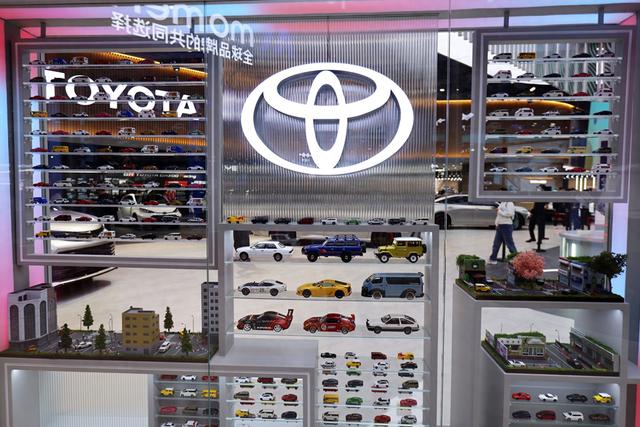
Core Viewpoint - GAC Group has entered a "wartime state" to tackle significant challenges in the automotive industry, focusing on three critical battles: user demand, product value, and service experience [2][3][6]. Company Strategy - GAC Group aims to transform into a "New GAC" by fully engaging in the three battles that are crucial for its survival and growth [3][6]. - The "Panyu Action" plan, initiated in late 2023, targets a sales volume of 2 million units for its self-owned brands by 2027, with over 60% of total sales coming from these brands [7][8]. Financial Performance - GAC Group anticipates a loss of between 1.82 billion to 2.6 billion yuan for the first half of 2025, highlighting the urgency of its transformation efforts [2][4]. Product and Technology Development - The company is restructuring its R&D system to focus on user insights and product delivery, aiming to enhance its innovation chain [4]. - GAC Group is accelerating its product technology layout, including the launch of new hybrid models and the development of an L4 level autonomous driving vehicle [4][9]. Safety and Service Enhancements - The introduction of the "Starling Safety Guardian System" emphasizes a comprehensive safety mechanism across all key systems [5]. - GAC Group is adopting a new integrated product marketing and sales (IPMS) system to improve customer service and satisfaction [5]. Market Positioning - GAC Group recognizes the need to strengthen its overseas market presence, aiming to sell 500,000 units internationally by 2027 [7]. - The collaboration with Huawei is seen as a pivotal step in enhancing GAC's competitive edge in smart vehicle technology [9]. Industry Context - The Chinese electric vehicle market surpassed 50% market share in the first half of 2025, indicating a significant shift in the automotive landscape [9].