世界模型

Search documents
李飞飞世界模型公司一年估值暴涨5倍,正洽谈新一轮5亿美元融资
3 6 Ke· 2026-01-26 00:45
Core Insights - World Labs, founded by Fei-Fei Li, is seeking to raise up to $500 million at a valuation of approximately $5 billion, significantly increasing its valuation from $1 billion in just over a year [2][3]. Funding and Valuation - World Labs has previously raised a total of $230 million, achieving a valuation of $1 billion after its initial funding round in April 2024, which started at around $200 million [3][6]. - The first round of investors included Andreessen Horowitz and Radical Ventures, with subsequent funding rounds attracting major players like NVIDIA and Temasek [6][10]. Product Development - The company launched its first 3D world generation model, Marble, in November of the previous year, which allows users to create explorable 3D worlds based on text or image prompts [7][9]. - Marble utilizes 3D Gaussian Splatting technology to efficiently render scenes while also providing collision meshes for physical simulations [9]. Strategic Vision - Fei-Fei Li emphasizes that world models are crucial for achieving spatial intelligence and are considered the next core focus of AI after large language models [10][12]. - The world model is expected to have broad applications across various fields, including AIGC, robotics, and real-world task execution [12][13]. Competitive Landscape - Another venture, AMI Labs, founded by Yann LeCun, is also attracting investment, with a potential valuation of $3.5 billion, focusing on implicit world models [15][18]. - The landscape of world models is categorized into three layers, with LeCun's approach positioned at the highest abstract level, contrasting with Li's explicit and generative model [18].


中信建投:AI多模态和世界模型或重塑多个行业的业务逻辑
智通财经网· 2026-01-26 00:07
Core Insights - The report from CITIC Securities highlights the advancements in multimodal technology by leading companies like Google and Kuaishou, addressing challenges in character consistency and physical logic, marking a shift from entertainment to productivity [1][2] - AI-generated content, particularly AI comic dramas, is emerging as a new growth area, with platforms like ByteDance incentivizing high-quality content creation, potentially reshaping advertising and gaming asset production [1][7] Group 1: Company Developments - Google has established strong barriers in long-context understanding and native audio-video integration with models like Veo, Gemini, and Nanobanana [2] - Kuaishou's Keling model integrates multiple creative tasks into a unified engine, achieving a victory ratio of 247% in image reference tasks and 230% in instruction transformation tasks [3] - Alibaba's Tongyi Wanshang 2.6 model introduces commercial role-playing capabilities, ensuring character consistency across different shots and supporting high-definition video generation [4] - Zhizhu's GLM-Image model, developed in collaboration with Huawei, is the first to complete full-process training on a domestic computing platform, addressing industry challenges like Chinese character rendering [5] Group 2: Market Trends and Opportunities - Kuaishou's Keling AI has seen a significant increase in active users, surpassing 12 million, with a 350% growth in paid users, indicating a shift of multimodal AI tools from entertainment to essential productivity tools in industries like film and advertising [6] - The AI comic drama sector is rapidly expanding, with ByteDance implementing aggressive incentive policies to promote high-quality content, reflecting a potential market size growth for short dramas and comic dramas [7][8] - The evolution of multimodal technology is expected to reshape business logic across various industries, including search and marketing, entertainment, and gaming, with advancements in generative AI leading to new commercial opportunities [8]


2025商用具身智能白皮书
艾瑞咨询· 2026-01-26 00:07
Core Insights - Embodied intelligence has gained significant traction globally, with Figure achieving a valuation of $39 billion despite zero revenue, while domestic players are securing commercial orders and projecting substantial revenue growth [1][9] - The Chinese government has integrated embodied intelligence into its key industrial strategies, indicating a robust market potential [1][9] Definition and Understanding - Embodied intelligence is recognized as a crucial development in artificial intelligence, characterized by agents that interact with their environment through a physical body, showcasing autonomy and adaptability [2] - It represents a convergence of machine learning, computer vision, and robotics, marking a significant step towards practical AI applications [2] Commercial Scene Classification - Different forms of embodied intelligent robots are evolving to meet diverse needs across retail, dining, manufacturing, logistics, education, and healthcare [4] - Commercial applications focus on enhancing service experiences in dynamic environments, while industrial applications emphasize precision and stability in structured settings [4] Strategic Significance - Embodied intelligence is pivotal in narrowing the technological gap between China and the U.S., driving innovation across various sectors [6] - It plays a vital role in upgrading the technology supply chain and fostering new industries, impacting long-term economic benefits and national competitiveness [6] Policy Incentives - The Chinese government is actively promoting the standardization and implementation of embodied intelligence through various supportive policies and funding initiatives [9] Development Stages - The evolution of embodied intelligence can be categorized into three phases: conceptual development (1950s), technological accumulation (2000-2020), and application expansion driven by large models (2020 onwards) [11] - The competition between China and the U.S. is intensifying, with both countries leveraging their unique strengths to advance in foundational models and application deployment [11] Bottlenecks and Challenges - The industry faces significant challenges, including data scarcity, technological maturity, high costs, and long ROI cycles, which hinder large-scale commercialization [13] - Data collection methods are varied but still insufficient for driving model generalization and practical applications [16] Data Breakthroughs - The industry is exploring solutions to data challenges through innovative approaches like "world models" and data collection training grounds, which are expected to alleviate data scarcity issues [19] Model Evolution - The VLA model is emerging as a consensus for development, integrating large language model reasoning with real-world perception and action capabilities [21] - This evolution is expected to lead to a significant leap in embodied intelligence capabilities, akin to the breakthroughs seen with large language models [21] Commercialization Trends - The commercialization of embodied intelligence is progressing through various application scenarios, with initial focus on low-complexity, high-ROI environments [31] - The industry is transitioning from hardware sales to service subscription models, indicating a shift in business strategies [35] Global Market Predictions - The global market for embodied intelligence is projected to reach 19.2 billion RMB by 2025, with a compound annual growth rate of 73% over the next five years [46] - China's market is expected to experience significant growth, potentially exceeding 280 billion RMB by 2035 [50] International Expansion - Chinese companies are accelerating their international presence, demonstrating the feasibility of their technologies in global markets [53] - Successful case studies highlight the adaptability and competitiveness of Chinese firms in high-standard international markets [53] Competitive Landscape - The competition in the embodied intelligence sector is characterized by three main forces: AI-native challengers, traditional industrial players, and cross-industry giants [55] - The market is witnessing early signs of product homogenization, suggesting an impending consolidation phase [57] Startup Strategies - Startups must leverage their agility and innovation to survive against established giants, focusing on strategic partnerships and long-term value creation [59]


人工智能加速重塑职业图景
Xin Lang Cai Jing· 2026-01-25 22:25
Group 1 - The core viewpoint of the articles highlights the transformative impact of artificial intelligence (AI) on the job market, creating new roles and requiring new skills from workers [1][2] - AI is leading to the emergence of new job categories such as AI trainers, AI product managers, and AI ethics reviewers, reflecting a growing demand for hybrid and application-oriented talent [1][2] - The average salary premium for workers with AI skills has reached 56%, doubling from the previous year, indicating a significant economic shift towards AI-related employment [2] Group 2 - The rise of "one-person companies" (OPC) is noted as a new entrepreneurial model enabled by AI tools, allowing individuals to manage content production, product operations, and service delivery independently [2] - The trend towards "super individuals" in the OPC model is expected to become a significant part of the digital economy within the next five years, as supported by various cities promoting OPC-friendly policies [2] - Experts emphasize that human qualities such as imagination, judgment, aesthetic ability, critical thinking, and emotional interaction will remain irreplaceable advantages in the context of human-AI collaboration [3] Group 3 - The concept of "slash" careers is emerging as a potential primary lifestyle, encouraging individuals to develop diverse skills and avoid reliance on a single profession to enhance resilience against risks posed by AI advancements [4] - AI's ability to rapidly generate content is prompting a reevaluation of human core competencies, suggesting that adaptability and a broad skill set will be crucial in the evolving job landscape [3][4]
北京形成人工智能闭环式产业生态
Bei Jing Shang Bao· 2026-01-25 17:18
Core Insights - The artificial intelligence industry has transitioned from a phase of technological exploration to a focus on practical applications, with a notable shift towards multi-agent systems that outperform single-agent systems in specific tasks [1] - AI is expanding beyond digital realms into the physical world, moving towards multimodal models and addressing core challenges such as temporal and spatial cognition [1] - Beijing is positioned as a central hub for AI development, benefiting from a comprehensive ecosystem that supports industry growth [1] Industry Development - By 2025, Beijing's core AI industry is expected to reach a scale of 450 billion yuan, with over 2,500 companies, accounting for approximately half of the national figures [2] - The city is home to nearly 60 listed companies and around 40 unicorns in the AI sector, including the first domestic AI chip and large model companies [2] - Beijing has 148 scholars listed in the "AI 2000 Global Most Influential Scholars" list, representing over 40% of the national total, with a total of 15,000 AI scholars in the city [2] Ecosystem and Policy Support - A comprehensive policy framework and a complete layout from foundational computing power to application scenarios have created a closed-loop industrial ecosystem in Beijing [2] - The collaboration between research institutions, enterprises, and policy levels is driving breakthroughs in new technologies and applications in the AI field [2] - There is an expectation that 2026 will be a pivotal year for the explosion of intelligent agents in China [2]
腾讯研究院AI速递 20260126
腾讯研究院· 2026-01-25 16:01
Group 1 - OpenAI CEO Altman announced the release of significant Codex-related content starting next week, with a technical blog revealing the core architecture of Codex CLI, specifically the intelligent agent loop [1] - The intelligent agent loop coordinates user instructions, model inference, and local tool execution through the Responses API, employing a "consistent prompt prefix" strategy to trigger cache optimization [1] - Codex supports zero data retention configurations to ensure privacy and utilizes automatic compression technology to manage context windows, with further details on tool invocation and sandbox models to be introduced later [1] Group 2 - Google DeepMind released D4RT, which unifies 3D reconstruction, camera tracking, and dynamic object capture into a single "query" action, achieving speeds 18 to 300 times faster than existing state-of-the-art methods [2] - The core innovation is a unified spatiotemporal query interface, where AI first globally "reads" videos to generate scene representations and then searches for 3D trajectories, depth, and poses of any pixel on demand [2] - This technology is significant for embodied intelligence, autonomous driving, and AR, although training still requires a 1 billion parameter model and 64 TPUs [2] Group 3 - Claude Code upgraded its internal "Todos" to "Tasks," enabling multi-session or sub-agent collaboration on long-term complex projects across multiple context windows [3] - Tasks are stored in a file system for easy collaboration among multiple sessions, with updates in one session broadcasting to all sessions handling the same task list [3] - The new feature is compatible with Opus 4.5, enhancing autonomous operation capabilities, allowing users to enable multiple sessions to collaborate on the same task list through environment variables [3] Group 4 - Baidu's Wenxin 5.0 officially launched with a parameter count of 2.4 trillion, utilizing native multimodal unified modeling technology to support understanding and generation of text, images, audio, and video [4] - It has topped the LMArena text and visual understanding leaderboard five times, entering the global first tier, with language and multimodal understanding capabilities leading internationally [4] - Practical tests show the model excels in complex emotional understanding, subtext analysis, and creative writing tasks, earning the title of "strongest liberal arts student" [4] Group 5 - The open-source project Clawdbot has gained popularity in Silicon Valley, capable of running on Mac mini, serving as both a local AI agent and chat gateway, allowing conversations via WhatsApp, iMessage, etc. [5] - Clawdbot addresses the memory limitations of large models, capable of recalling conversations from two weeks ago, proactively sending emails, reminders, and executing tasks on the computer [5] - The project has received 9.2k stars on GitHub, with a minimum monthly cost of approximately $25, though it requires some technical knowledge for deployment, and users report it can automate business management and code writing, replacing paid services like Zapier [5] Group 6 - Turing Award winner LeCun announced that AMI Labs' core direction is "world models," aiming to build intelligent systems that understand the real world, possess persistent memory, and have reasoning and planning capabilities [6] - This approach argues that merely predicting the next token does not lead to true understanding of reality, necessitating predictions and reasoning at a higher representational level to filter out unpredictable noise [6] - AMI Labs is reportedly seeking financing at a valuation of $3.5 billion, targeting applications in industrial control, robotics, and healthcare, where reliability is crucial [6] Group 7 - Anthropic launched the Claude in Excel plugin, available for Pro, Max, Team, and Enterprise users, based on the Opus 4.5 model, which can be installed and activated via Microsoft Marketplace [7] - The plugin can search the internet and automatically fill in spreadsheets, supporting formula reading, debugging errors, zero-based modeling, and pivot table creation, compatible with .xlsx and .xlsm formats [7] - Currently, it does not support conditional formatting, macros, or VBA, and the company warns of prompt injection risks, advising users to only use files from trusted sources, with high-risk functions triggering confirmation prompts [7] Group 8 - Claude Code's creator Boris Cherny provided a detailed tutorial on using Cowork, emphasizing its role as an "executor" rather than a chat tool, capable of directly manipulating documents, browsers, and various tools [8] - He reiterated that the core workflow involves running multiple tasks in parallel while overseeing Claude instances, starting with "planning mode" for communication until satisfaction is achieved, then switching to "auto-accept edits" mode for execution [8] - Cherny highlighted the importance of Claude.md as a team compounding knowledge base, where any mistakes made by Claude should be documented, and methods for validating Claude's outputs can significantly enhance quality [8] Group 9 - Google Cloud AI Director Addy Osmani warned that programmers who only write prompts will be eliminated by 2026, stating that AI can handle 70% of preliminary work, but the remaining 30% requires experienced engineers [9] - A Stack Overflow survey indicated that developer trust in AI accuracy dropped from 40% to 29%, with 73% of respondents encountering issues with code comprehension due to "ambient coding" [9] - By 2026, the true core competency will be transforming vague problems into clear execution intentions, designing appropriate contextual structures, and distinguishing what is truly important [9] Group 10 - At the Davos Forum, tech giants shared notable insights, with Musk predicting that AI will surpass human intelligence by the end of 2026 and be smarter than the collective intelligence of humanity by 2030, with Tesla set to launch the humanoid robot Optimus next year [10] - Microsoft CEO Nadella warned that if AI only consumes resources without improving outcomes, society will lose tolerance, while Huang Renxun stated that embodied intelligence represents a "once-in-a-generation opportunity" [10] - DeepMind CEO Hassabis believes AGI will still require 5-10 years, while Anthropic CEO Dario claimed that models are just 6-12 months away from being able to complete software development end-to-end [10]

2026北京两会|对话市政协委员王仲远:北京形成了人工智能闭环式产业生态
Bei Jing Shang Bao· 2026-01-25 11:17
Core Insights - The artificial intelligence industry has transitioned from a phase of rapid development to a more pragmatic focus on application efficiency, particularly moving from single-agent systems to multi-agent systems [2][5] - Beijing is positioned as a core hub for AI development, with a comprehensive ecosystem that supports the industry through policies, talent, and technological advancements [3][6] Industry Trends - The development of foundational models, especially large language models, has slowed, while the application of these models is accelerating, emphasizing the shift towards multi-agent systems [5][9] - AI is expanding beyond digital realms into the physical world, necessitating advancements in multi-modal models and world models to tackle challenges in time-space cognition and physical reasoning [2][5] Market Potential - By 2025, Beijing's AI core industry is expected to reach a scale of 450 billion yuan, with over 2,500 companies, accounting for about half of the national figures [3] - The city is home to nearly 60 listed AI companies and around 40 unicorns, showcasing its leadership in the AI sector [3] Talent and Education - Beijing boasts a significant talent pool, with 148 individuals listed in the "AI 2000 Global Influential Scholars" ranking, representing over 40% of the national total [3][7] - The city has a complete talent development chain, supported by top universities and research institutions, fostering the growth of AI professionals [7][8] Policy and Ecosystem - The policy framework in Beijing is comprehensive and practical, supporting both disruptive innovations and the development of new research institutions, which contributes to a closed-loop industrial ecosystem [6][8] - The collaboration between research institutions, enterprises, and policy-makers is driving breakthroughs in new technologies and applications in the AI field [3][6] Future Outlook - The year 2026 is anticipated to be a pivotal year for the explosion of intelligent agents in China, with expectations for significant advancements in multi-agent systems [3][8] - The focus is on achieving commercial viability for large models, which is essential for high-quality development in the industry [9][10]

科学与健康丨AI时代,职业生态如何变化?
Xin Hua Wang· 2026-01-25 10:21
Core Insights - The article discusses how artificial intelligence (AI) is reshaping the job landscape, creating new professions and changing the skills required for workers to adapt to the AI era [1][3]. Group 1: New Job Opportunities - New professions such as AI trainers, AI product managers, and AI ethics reviewers are emerging as AI technology integrates into various industries [1][3]. - The demand for hybrid and application-oriented talent is increasing, with a significant rise in job openings related to AI applications [3]. - According to PwC, the average salary premium for workers with AI skills has reached 56%, doubling from the previous year [3]. Group 2: Impact on Traditional Industries - AI is becoming a crucial infrastructure for intelligent societies, enhancing traditional industries and creating new business models [4]. - In the robotics sector, advancements in embodied intelligence are leading to the development of humanoid robots with greater autonomy and human-machine collaboration capabilities, generating new job opportunities across various applications [5]. Group 3: Entrepreneurship and New Business Models - The rise of "one-person companies" (OPC) is facilitated by AI tools, allowing individuals to manage content production, product operations, and service delivery independently [7]. - This entrepreneurial model is gaining traction, with cities promoting OPC as a preferred startup model [7]. Group 4: Skills and Education for the Future - Experts emphasize the importance of human skills such as imagination, judgment, aesthetic ability, critical thinking, and emotional interaction in the context of human-AI collaboration [8]. - There is a call for educational systems to enhance interdisciplinary skills and develop training programs for new AI-related professions to support workforce transitions [8][10]. - The concept of "slash" careers, where individuals possess multiple skills, is predicted to become a prevalent lifestyle, necessitating a dynamic knowledge system and a focus on ethical guidance in AI [10].

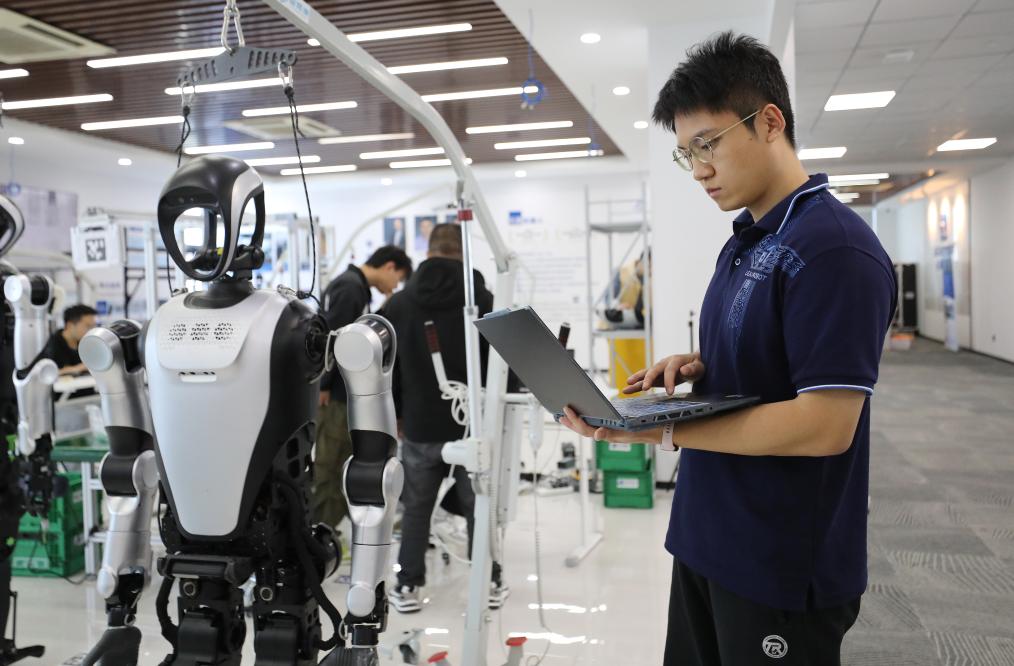
科学与健康|AI时代,职业生态如何变化?
Xin Hua She· 2026-01-25 10:17
Core Insights - The rise of new professions such as AI trainers, AI product managers, and AI ethics reviewers is reshaping the job landscape, demanding new skills from workers [1][2] - The integration of AI across various industries is creating a significant demand for hybrid and application-oriented talent, with a notable increase in job opportunities related to AI [2][3] Group 1: Employment Opportunities - AI is driving the emergence of new job roles, including data annotators and AI content creators, leading to a growing need for professionals with AI skills [2][3] - According to PwC's 2025 global AI employment forecast, nearly all AI-related job positions are increasing, with average salaries for AI-skilled workers experiencing a 56% premium compared to the previous year [2] - A report from 58.com indicates the emergence of nearly 50 types of "human-machine collaboration" jobs and 40 new intelligent services [2] Group 2: Technological Transformation - AI is fundamentally transforming the employment ecosystem and skill structures, pushing labor towards higher value-added roles characterized by human-machine collaboration [3] - Advances in embodied intelligence and world modeling are enabling AI to move from language processing to understanding and modeling the physical world [3] - The robotics sector is seeing advancements in humanoid robots, which are expected to create numerous new job opportunities across various applications, including industrial and healthcare settings [3] Group 3: Entrepreneurship and New Business Models - The concept of "one-person companies" (OPC) is gaining traction, allowing individuals to leverage AI tools for content creation, product management, and service delivery [3][4] - Cities like Suzhou are positioning themselves as hubs for OPC entrepreneurship, supported by community initiatives and policies [3] Group 4: Skills and Education - Future talent development should emphasize interdisciplinary skills and comprehensive capabilities, alongside the establishment of training systems for new AI professions [6] - Experts suggest that a "slash" career approach may become prevalent, encouraging individuals to diversify their skills to enhance resilience against job market fluctuations [6] - Young people are advised to adopt an "AI mindset" to improve their ability to navigate AI technologies and to develop a dynamic knowledge system that integrates interdisciplinary learning and ethical considerations [6]
李飞飞世界模型公司一年估值暴涨5倍!正洽谈新一轮5亿美元融资
量子位· 2026-01-25 06:00
Core Viewpoint - World Labs, founded by Fei-Fei Li, is seeking to raise up to $500 million at a valuation of approximately $5 billion, marking a significant increase from its previous valuation of $1 billion in 2024, indicating a 5x revaluation in just over a year [2][4]. Financing and Valuation - If the financing is successful, World Labs' valuation will jump from $1 billion to $5 billion, reflecting a rapid increase in investor confidence in its "world model" approach [2][4]. - World Labs has previously raised a total of $230 million, with initial funding rounds led by notable investors such as Andreessen Horowitz and Radical Ventures, and later rounds involving firms like NVIDIA and Temasek [5][6]. Product Development - World Labs is developing AI systems capable of navigation and decision-making in three-dimensional environments, focusing on creating "large world models" that understand the structure and evolution of the physical world [8][9]. - The company launched its first 3D world generation model, Marble, which can create explorable 3D environments based on text or image prompts, utilizing advanced techniques like 3D Gaussian Splatting for efficient rendering [10][14]. Strategic Importance - Fei-Fei Li emphasizes that world models are crucial for achieving spatial intelligence and are considered the next core focus for AI in the coming decade, following large language models [16][18]. - The world model is seen as a foundational capability that can influence multiple application areas, providing predictive representations of environments essential for effective decision-making and control [18][22]. Competitive Landscape - Another significant player in the world model space is AMI Labs, founded by Yann LeCun, which is pursuing a different approach focused on implicit world models. This indicates a broader investment interest in various technological paths within the world model domain [20][24]. - The world model landscape can be categorized into three layers, with LeCun's JEPA positioned at the highest abstract level, highlighting the diverse strategies being adopted by different companies in this field [24][27].