分散投资

Search documents
瑞银财富管理吕子杰,最新发声
中国基金报· 2025-10-12 12:19
Core Insights - UBS Wealth Management emphasizes the importance of being a "super connector" between Chinese and global entrepreneurs, leveraging its extensive experience and network to facilitate wealth management and investment opportunities [2][7]. Group 1: Wealth Management Strategy - UBS has over 160 years of history, focusing on wealth management, which constitutes over 50% of its total revenue [6]. - The firm adopts a "banking integration" strategy, where it first establishes long-term relationships with entrepreneurs, then extends services to investment banking and asset management as their needs evolve [6][7]. - UBS has been active in the Chinese market for over 35 years, with a strong presence in Hong Kong and the broader Asia-Pacific region [6]. Group 2: Family Wealth Management - Many overseas families view family offices as a "school" for nurturing the next generation, with younger family members increasingly interested in entrepreneurship rather than traditional family businesses [9]. - Family offices are also seen as platforms for social impact, with younger generations preferring to invest in projects that create social value rather than merely donating [9]. - Current high-net-worth clients in China are maturing and becoming more rational, focusing on "stability" and diversifying investments into alternatives like private equity and hedge funds [9]. Group 3: Opportunities in the Greater Bay Area - UBS manages one-third of its assets in the Greater Bay Area, highlighting its significance to the firm [11]. - The number of trips between Hong Kong and cities in the Greater Bay Area has increased by 25% compared to last year, with related meetings up by over 20% [12]. - UBS plans to relocate its Hong Kong office to a more strategic location by the end of 2026, enhancing its ability to serve clients in the Greater Bay Area [12].



资产配置秘诀!2025 保本理财怎么选?分散投资稳赚不亏
Sou Hu Cai Jing· 2025-10-06 04:42
Group 1 - The article emphasizes the importance of careful selection in financial products, highlighting that high expected returns do not always translate to actual gains, as seen in a case where a product advertised an 8% return but delivered only around 3% [2] - It suggests that reliable investment options in the current market are fixed income and fixed income plus products, with a specific mention of a product from Ping An that achieved over 6% returns due to a high proportion of bonds in its portfolio [2][3] - The article warns against the misconception that diversification simply means holding multiple products, stressing that true diversification involves spreading investments across different asset classes to mitigate risks [3][4] Group 2 - It discusses the trend of QDII (Qualified Domestic Institutional Investor) products, advising novice investors to approach them with caution due to complexities and potential limitations in purchasing [3] - The article concludes that there are no guaranteed investment strategies, advocating for a balanced approach that prioritizes capital preservation before seeking growth [4] - It encourages sharing of investment experiences and strategies among readers to foster a community of informed investors [4]

聪明的人,不炒股、不买币,只做这件事 quietly 发财
Sou Hu Cai Jing· 2025-10-06 01:49
Core Insights - The article emphasizes that true wealth accumulation comes from patience and strategic investment rather than impulsive trading or speculation [1][5][6] Investment Strategy - Successful investors focus on stable assets, diversifying their investments, and holding them long-term to benefit from interest and dividends [3][5] - The concept of compound interest is highlighted as a powerful tool that, while not leading to instant wealth, can significantly change one's financial situation over a decade [3][6] Market Behavior - The article contrasts the behavior of those chasing quick profits in volatile markets with those who adopt a steady and disciplined approach to wealth building [1][5] - It suggests that while others may experience anxiety and fluctuations in their investments, a calm and consistent strategy leads to true financial freedom [5][6]

晨星中国:普通投资者,如何读懂基金业绩比较基准
Sou Hu Cai Jing· 2025-10-02 06:31
Group 1 - The core viewpoint of the article emphasizes the enhanced role of performance benchmarks in mutual funds, as mandated by the regulatory framework, which aims to improve the quality of fund development [2] - Investors are advised to assess whether a fund aligns with their preferences by examining the benchmark composition, such as whether it is based on broad indices like CSI 300 or sector-specific indices like semiconductor or renewable energy indices [2] - The article highlights the importance of evaluating a fund manager's performance against the benchmark over different time frames (3 years, 5 years) to determine the fund's true management capability and investment value [2] Group 2 - The performance benchmark is not static and may change when the fund's investment scope is adjusted, indicating a shift towards a more focused investment direction, such as Hong Kong stocks [3] - Investors are encouraged to stay updated on any announcements regarding benchmark adjustments to ensure that the fund's investment direction continues to meet their needs [3]
Most Experts Say Buy Index Funds. Charles Payne Says Do This Instead
Yahoo Finance· 2025-09-27 13:17
Core Insights - The article discusses the debate between investing in index funds versus individual stocks, highlighting the potential benefits of stock picking for higher returns [1][2][3]. Group 1: Index Funds vs. Individual Stocks - Index funds provide greater diversification and are generally considered safer for risk-averse investors [1][3]. - Experts argue that avoiding individual stocks may lead to missed opportunities for significant gains [2][4]. - Charles Payne suggests that index funds can dilute high-performing stocks, advocating for a concentrated portfolio of top picks instead [5]. Group 2: Research and Strategy - Investors are encouraged to conduct thorough research before purchasing individual stocks, rather than following trends blindly [6][7]. - Key indicators of a company's health can be found in quarterly reports, which are essential for assessing future demand for products [7].
如何用傻瓜式的方法,跑赢大多数专业投资者?
雪球· 2025-09-25 13:00
Core Viewpoint - Investment is a competitive game where only a few can truly profit, and most participants are at a disadvantage compared to the most skilled and resourceful investors [2][3][4]. Group 1: Asset Allocation Strategy - Personal investors can achieve success through an all-weather asset allocation strategy proposed by Ray Dalio, which allows for profit across various market conditions despite volatility [5][6]. - Different asset classes respond differently to economic growth and inflation, with stocks and commodities performing well in certain conditions, while bonds and gold excel in others [6][8]. - The correlation between different asset classes is low, which supports the concept of "anti-fragility" in investment, allowing for diversification to mitigate risks [9]. Group 2: Importance of Reducing Volatility - The concept of reducing volatility through diversified asset allocation is crucial, as relying on a single asset class can lead to significant losses during market downturns [10][11]. - Historical performance shows that maintaining a diversified portfolio can smooth out returns and provide more consistent performance over time [12]. Group 3: All-Weather Portfolio Implementation - A recommended all-weather portfolio consists of 20% stocks, 15% gold, 15% commodities, and 50% long-term bonds, aiming for an annualized return of around 10% with lower volatility [13]. - Historical data from 2005 to 2025 illustrates the performance of this all-weather portfolio compared to individual asset classes, highlighting its resilience during market fluctuations [14]. Group 4: Conclusion - The key to successful investing lies in acknowledging one's limitations and leveraging systematic strategies to outperform the majority of professional investors [15].

房子,真的是最靠谱的投资吗?
Sou Hu Cai Jing· 2025-09-24 02:06
Group 1 - The core viewpoint is that real estate, once considered the most reliable investment in China, is now facing a divided market with varying performance across different cities and locations [1][3] - In major cities, property values remain strong, but in lower-tier cities, there is significant inventory and declining prices, leading to potential financial burdens for investors [1][3] - The traditional belief that owning property equates to financial security is challenged, as high mortgage payments can lead to cash flow issues, preventing investment in other opportunities [3][4] Group 2 - The article suggests that real estate should not be viewed as the sole investment avenue; diversification into stocks, funds, and other assets is recommended for wealth growth [3][4] - For personal use, purchasing a home is justified as a necessity, but for investment purposes, careful consideration of city, location, and policies is crucial [4] - The conclusion emphasizes that real estate is just one option among many for asset allocation, and blind faith in property as a wealth generator can lead to missed opportunities [4]

三年最大单日流入!全球投资者竞相扫货黄金ETF,金价再创新高
Feng Huang Wang· 2025-09-23 06:25
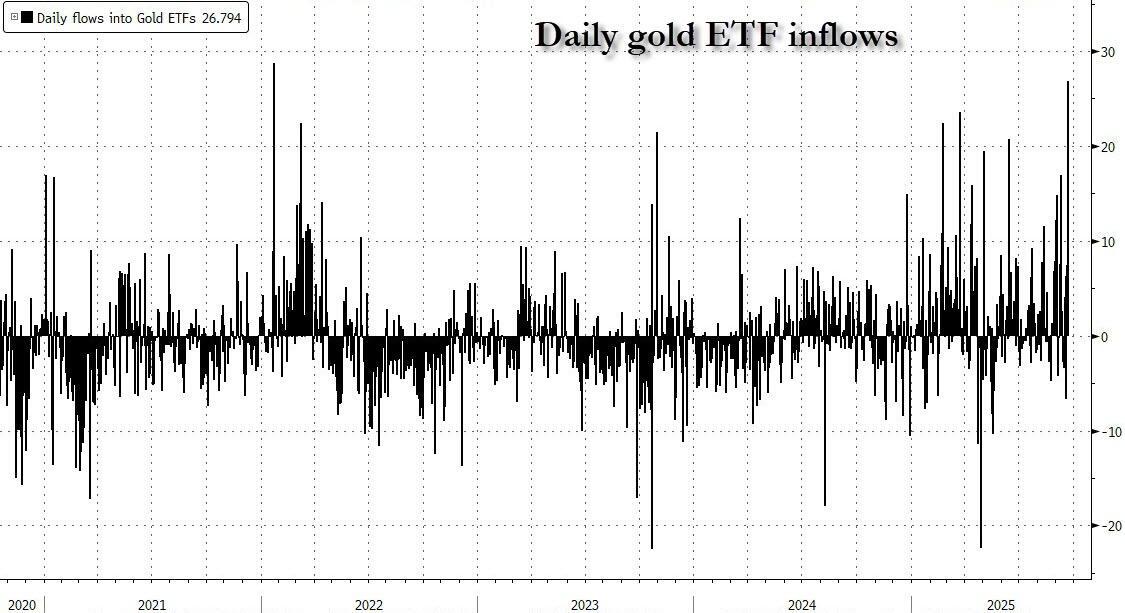
Core Viewpoint - Global investors are significantly increasing their holdings in gold ETFs, driven by rising international gold prices and favorable market conditions despite recent comments from the Federal Reserve Chairman Powell that tempered expectations for rapid monetary easing [1][3]. Group 1: Gold ETF Demand - Last Friday, global gold ETF holdings saw the fastest increase in three years, with a single-day surge of nearly 27 tons, providing new momentum for gold prices [1]. - According to the World Gold Council (WGC), gold ETF demand from January to June increased by 397 tons, marking the largest demand inflow for the same period since 2020 [4]. - As of the end of June, the total gold held in ETFs reached 3,615.9 tons, the highest since August 2022, approaching the historical peak of 3,915 tons set five years ago [4]. Group 2: Market Analysis and Predictions - Analysts from Montreal Bank Capital Markets noted that despite a brief price pullback following the Fed's rate cut, the continued inflow of ETF funds has created new upward momentum for gold prices [3]. - The current low-interest-rate environment is favorable for gold, a non-yielding asset, and the ongoing geopolitical tensions are supporting safe-haven demand [3]. - Major investment banks, including Goldman Sachs, expect further increases in gold prices, indicating a positive outlook for the commodity in the fourth quarter [3]. Group 3: Price Trends and Risks - Spot gold prices reached a new all-time high of $3,759.16 per ounce during Asian trading on Tuesday, reflecting strong demand from investment managers and traders seeking to hedge against risks in U.S. equities [4]. - Analysts from Heraeus Precious Metals noted that gold prices have surged over 10% in the past five weeks, suggesting a potential for price consolidation or slight pullback in the short term due to overbought conditions [5].
我为什么要坚持全天候投资
雪球· 2025-09-17 07:57
Core Viewpoint - Investment is a competitive game that only a few can profit from, and most participants are at a disadvantage compared to the most skilled and resourceful investors [3][4][5]. Group 1: Asset Allocation Strategy - Personal investors can achieve a favorable position through an all-weather asset allocation strategy proposed by Ray Dalio, which allows for profit across various market conditions [6][7]. - Each asset class can generate returns over the long term, but significant volatility and drawdowns can hinder many investors from realizing these gains [7]. - The correlation between different asset classes is low, which supports the concept of "anti-fragility" in investment [10][12]. Group 2: Importance of Reducing Volatility - The concepts of anti-fragility, asset allocation, and diversification are not original to Dalio but have been developed by various investment masters [12]. - The two key principles of asset allocation are to invest in long-term appreciating risk assets and to buy uncorrelated assets to reduce volatility [12]. - Maintaining a diversified portfolio is crucial as it helps smooth out returns and allows for flexibility in capital allocation [14][15]. Group 3: All-Weather Portfolio Practice - A proposed all-weather portfolio consists of 20% stocks, 15% gold, 15% commodities, and 50% long-term bonds, aiming for an annualized return of 10% [16]. - Historical performance data shows that even during market downturns, such as the 2008 financial crisis, the all-weather portfolio experienced significantly lower losses compared to individual asset classes [17]. Group 4: Conclusion - The all-weather strategy provides a robust investment framework for ordinary investors, enabling them to outperform many professional investors through a systematic approach [19][20].

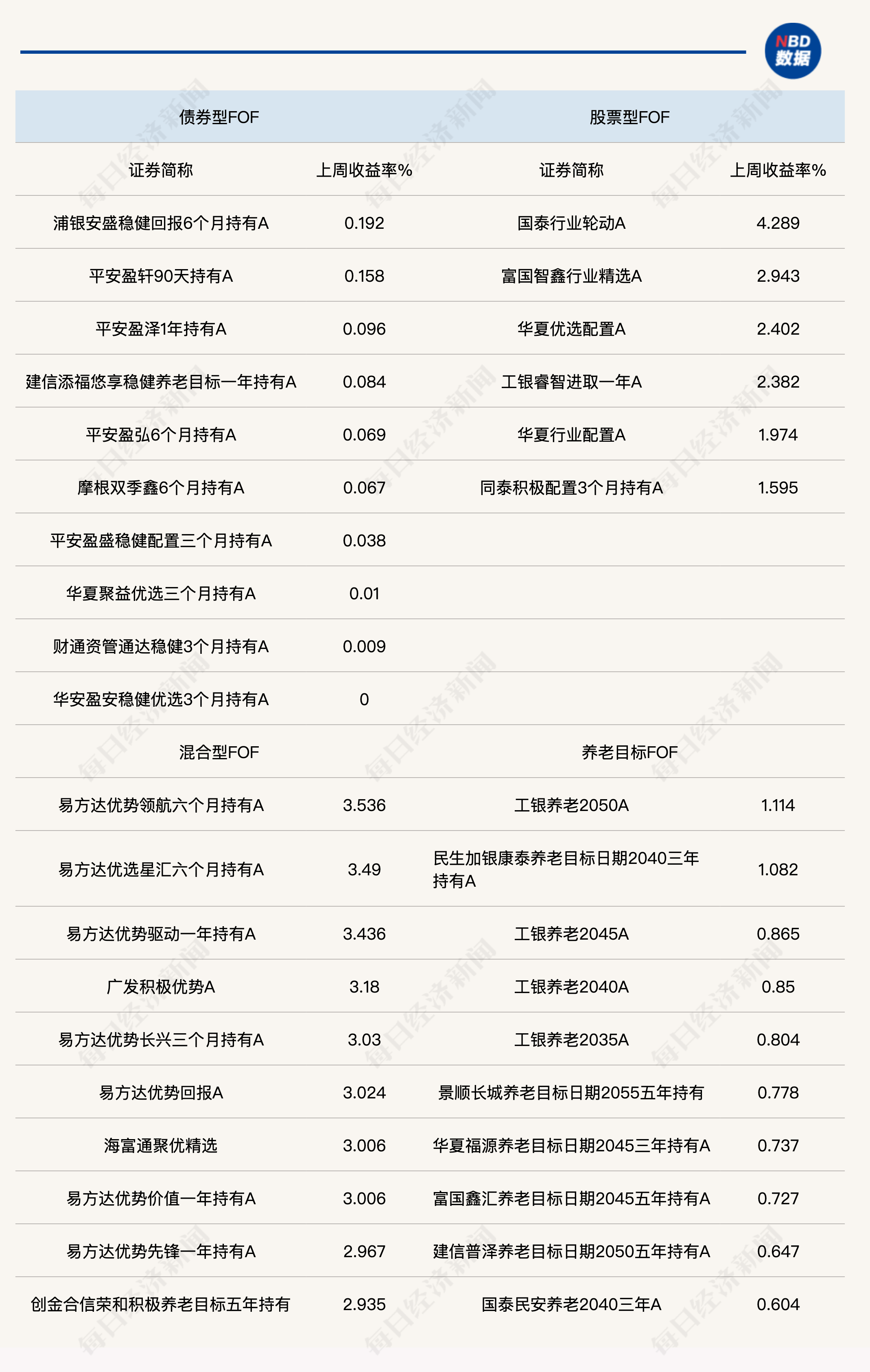
股票型FOF上周均获正收益,最高涨超4%!更多创新品种也在扎堆申报
Sou Hu Cai Jing· 2025-09-15 08:15
Group 1 - The performance of public FOFs remains strong, with all equity FOFs achieving positive returns last week [1][3] - The market saw a rebound in the AI industry chain, contributing to a general upward trend in major indices, with the Shanghai Composite Index rising by 1.52% and the Shenzhen Component Index increasing by 2.65% [2] - Structural market conditions in A-shares show a lack of overall profit-making effect, yet public FOFs maintain high investment success rates, with the Guotai Industry Rotation A fund leading with a 4.29% increase [3] Group 2 - Recent adjustments in the A-share market have not altered the overall upward trend, allowing well-positioned public FOFs to capture opportunities in other sectors [7] - The number of newly launched public FOFs has significantly increased, with three new products starting fundraising last week, including the Guotai Fenghua three-month fund with a fundraising cap of 2 billion [7][8] - The emergence of ETF-FOF products marks an innovation in the FOF space, with several fund companies actively applying for these products, indicating a growing interest in passive index funds [8][9]