
商业模式

Search documents
投资江湖:我的三种赚钱之道
雪球· 2025-07-19 03:39
Core Viewpoint - The article emphasizes the importance of understanding investment principles, focusing on valuation, industry trends, and the cyclical nature of markets to identify potential investment opportunities and risks [2][3][5]. Group 1: First Principles of Investment - The essence of investment is buying companies, with valuation being the core principle. If a company's future profit growth is realized, the stock price will align with expectations [3]. - A case study of "Siyuan Electric" illustrates that a stock can appreciate significantly while maintaining a reasonable valuation, demonstrating the power of matching valuation with performance [3]. Group 2: Industry Trends vs. Static Valuation - Industry trends can outweigh short-term valuation metrics. For instance, during the pig cycle in 2019, related stocks surged despite high static valuations, as the industry trend drove growth [4]. - The example of CATL shows that high valuations can be justified during periods of explosive growth, indicating that potential future industry trends can create significant investment opportunities [4]. Group 3: Leveraging Cycles - Cycles are a critical factor in investment, influenced by external factors like U.S. interest rate changes and the cyclical nature of A-shares [5]. - The Hong Kong innovative drug sector's decline since 2021 highlights how external cycles can impact stock performance, suggesting that a future U.S. rate cut could lead to significant gains in this sector [5]. Group 4: Business Models and Investment Aesthetics - Successful investments often involve a combination of the discussed principles, but prioritizing a solid business model is crucial. A sustainable business model ensures long-term growth and resilience against market fluctuations [6]. - The article stresses the importance of understanding the underlying business model, as it determines a company's ability to create value over time, contrasting with those reliant on short-term market trends [6]. Group 5: Broader Understanding and Investment Philosophy - Developing an aesthetic sense in investment is essential, akin to appreciating art. This involves recognizing which stocks have lasting value versus those that are fleeting [7]. - Insights gained from life experiences can enhance investment judgment, helping investors maintain focus on long-term holdings amidst market volatility [7].



段永平:高手都在做减法
Sou Hu Cai Jing· 2025-07-06 15:34
Group 1 - The essence of entrepreneurship is to provide irreplaceable value, rather than merely pursuing business for profit [6][9] - Successful entrepreneurs often fall into two categories: those with no way out and those driven by ideals [10][12] - Key preparations for entrepreneurship include avoiding nepotism and accepting the possibility of failure [13][14] Group 2 - Corporate culture consists of three elements: mission, vision, and core values, which influence each other [15][16] - A strong corporate culture serves as a constraint beyond formal regulations, helping to avoid fundamental errors [18][19] - Evaluating corporate culture involves observing actions and words, focusing on whether decisions are based on ethics or profit [22][23] Group 3 - A good business model is characterized by differentiation, a strong competitive moat, and sustainable cash flow [26][39] - Differentiation is crucial for long-term success, as it allows companies to meet unique consumer needs [32][36] - Companies with strong products, like Moutai and Apple, have established robust business models [48] Group 4 - The distinction between doing the right thing and doing things right is essential for long-term success [49][50] - Establishing a "Stop Doing List" helps avoid wrong choices and emphasizes the importance of long-term thinking [51][54] - Successful execution involves learning from mistakes while maintaining control over the direction of the business [62][63] Group 5 - The concept of "本分" (being true to oneself) emphasizes doing what is right and maintaining integrity [67][78] - A calm and rational mindset, referred to as "平常心" (ordinary mind), is crucial for making sound decisions [80][84] - The philosophy of simplicity in business and life, encapsulated in "doing the right things and doing things right," reflects profound wisdom [89]


拥挤度指标运用的深入思考
Tianfeng Securities· 2025-06-19 08:15
Group 1 - The core conclusion indicates that in the long term, A-share industries are likely to underperform within a month after experiencing "acceleration followed by volume release," with exceptions noted during the core asset era of 2020-2021, where the market showed "overheating followed by more overheating" [1][2][21] - The report emphasizes that the effectiveness of volume-price logic has been steadily increasing since 2023, making volume-price and technical aspects more important [2][21] - High congestion levels may indicate the initial bottom volume of a market, potentially signaling the start of a long-term trend, particularly evident in the TMT sector [1][7] Group 2 - The report identifies that the banking and military industries are suitable for observing acceleration and congestion signals to find selling points [3][24] - It highlights that the banking sector is characterized by stable dividends and lower volatility compared to resource sectors, relying on incremental funds and limited floating shares for slow bull market growth [24] - The military sector's investment logic has evolved, now incorporating military trade logic alongside previous factors such as technology civilianization and margin increases [24] Group 3 - The report analyzes the profit expectations and valuations across various industries, indicating that the overall A-share market is projected to have a net profit growth rate of -2.21% for 2024, with a PE ratio of 16.44 [26] - The report provides insights into the PB-ROE perspective, showing that the current PB for the entire A-share market is 1.52, with a historical median of 1.73, indicating a 16% current percentile [28] - It notes that the entrepreneurial board shows a higher PB of 3.69, with a current percentile of 13%, suggesting a significant valuation compared to historical levels [28]
创业想不清这件事,注定融不到资
创业家· 2025-06-17 09:59
Group 1 - The core viewpoint emphasizes that financing should not be used to change the business model or undertake radical changes without a clear understanding of the core operations and expansion strategies [1] - The founder of the company, 麻爪爪, highlights that after engaging with capital, there have not been significant changes in the business model or operational strategies, but there have been advancements in talent reserve and information technology upgrades [1] Group 2 - The article promotes a course focused on consumer reconstruction, featuring top practitioners from the Chinese and Japanese consumer sectors, aimed at providing insights into localizing Japanese business methodologies [2] - The event details include a price of 12,800 yuan per person, with an early bird price of 9,800 yuan available until July 15, and it will take place in Shanghai from August 7 to August 9 [4]

2025年中国餐饮配送机器人行业销售市场分析:市场需求强劲,供应厂商之间售价差距不大
Qian Zhan Wang· 2025-06-17 04:14
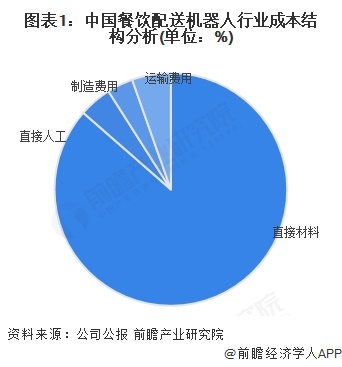
Group 1 - The cost structure of restaurant delivery robots shows that direct materials account for over 80% of total costs, with direct labor, manufacturing expenses, and transportation costs being relatively small and decreasing [1] - The pricing mechanism of the restaurant delivery robot market is influenced by supply-side costs, manufacturing costs, and consumer demand elasticity, creating a "price-demand-price" transmission path [3] - The current market price for restaurant delivery robots ranges from 20,000 to 50,000 yuan, with minor price differences among products [7] Group 2 - The commercial models in the restaurant service robot industry include direct sales, agency sales, and leasing operations, each with distinct characteristics that cater to different market needs [9][10] - The demand for restaurant delivery robots is strong, with market supply gradually balancing out after a period of high demand due to the COVID-19 pandemic, as evidenced by the production and sales growth of leading companies like Ninebot [12]

喜马拉雅与虎扑何以“殊途同归”?
凤凰网财经· 2025-06-15 11:46
Core Viewpoint - The article discusses the challenges faced by content platforms like Ximalaya and Hupu, highlighting their strategic missteps and the limitations of their business models, leading to their decisions to sell themselves to larger companies [1][10]. Group 1: Strategic Challenges - Ximalaya was once a dominant player in the online audio market, experiencing rapid growth from 2016 to 2020, with market size increasing from 2.54 billion to 27.24 billion yuan, a compound annual growth rate of 69.5% [2]. - Despite its growth, Ximalaya faced difficulties in its IPO journey, initially attempting to list in the U.S. before shifting to Hong Kong, where it struggled to gain regulatory approval [2][4]. - Internal conflicts among leadership, particularly between co-founders, contributed to strategic indecision, ultimately leading to the decision to sell to Tencent Music [4]. Group 2: Performance Metrics - Ximalaya's subscription service revenue showed stagnation from 2021 to 2023, with figures of 2.992 billion, 3.081 billion, and 3.189 billion yuan, representing 51.1%, 50.8%, and 51.7% of total revenue respectively [3]. - The paid content revenue declined significantly from 1.058 billion yuan in 2021 to 694 million yuan in 2023, with its contribution to revenue dropping from 18.1% to 11.2% [3]. Group 3: Business Model Limitations - Hupu, another content platform, faced similar challenges, with its advertising revenue constituting over 90% of its income, reflecting a lack of diversified revenue streams [7][8]. - The BBS model employed by Hupu has become increasingly ineffective in the current digital landscape, as it struggles to monetize its user base effectively [7][8]. - Both platforms illustrate a broader industry issue where content platforms grapple with the transition from user engagement to monetization, often leading to a disconnect between user value and commercial viability [9][10]. Group 4: Industry Trends - The struggles of Ximalaya and Hupu reflect a common trend in the content platform industry, where strategic ambiguity and reliance on single revenue streams hinder growth and sustainability [8][10]. - The article emphasizes that the valuation logic in the capital market is shifting, with a focus on core competitiveness and business model resilience rather than just user numbers or community engagement [10].



海天味业(603288):踏上新程,海阔天空
Huachuang Securities· 2025-06-12 04:13
Investment Rating - The report maintains a "Buy" rating for the company, with a target price of 50 CNY / 50 HKD, compared to the current price of 41.73 CNY [1][7]. Core Views - The company is recognized as a high-quality consumer stock that has successfully navigated through various economic cycles, demonstrating strong operational and adjustment capabilities. The report emphasizes the company's comprehensive optimization efforts and the positive outlook for its growth trajectory in 2025, with expected revenue growth of around 10% [1][11]. Summary by Sections 1. Operational Foundation - The company has undergone a full-scale optimization process, driven by a solid business model and management mechanism. The current operational state is strong, indicating a restart of the expansion cycle. Key adjustments include channel and product strategies, with a focus on enhancing profitability and product structure [1][6]. - The management team has improved morale and operational efficiency, leading to a positive feedback loop in business performance. The company is expected to achieve approximately 10% growth in 2025 [1][6][31]. 2. Long-term Growth Path - The company aims to maintain a baseline of market share for existing products while exploring new product opportunities for growth. The long-term revenue growth is projected to approach 10%, driven by three main sources: continued market share gains in core products, significant growth in specialty condiments, and expansion into overseas markets [1][5][7]. - The report suggests a cautious approach to growth expectations, focusing on sustainable and certain growth rather than aggressive targets [1][6]. 3. Valuation Discussion - The report discusses the potential for a revaluation of core assets in a low-interest-rate environment, suggesting that the company deserves a higher valuation premium due to its strong business model and predictable growth in market share. Comparisons with global peers indicate that the company's current valuation is reasonable, with potential for upward movement [1][6][7]. - The report estimates future earnings per share (EPS) for 2025-2027 at 1.29, 1.43, and 1.58 CNY, corresponding to price-to-earnings (PE) ratios of 32, 29, and 26 times, respectively [5][7]. 4. Investment Recommendations - The report concludes with a positive short-term outlook, indicating that the company's operational turnaround is underway, with a clear upward trend and potential catalysts from new products and international expansion. The long-term perspective remains strong, reinforcing the recommendation to "Buy" [1][7][11].

商业模式规划的终极法则:让所有人赚钱的秘密
Sou Hu Cai Jing· 2025-06-11 09:29
Core Insights - The essence of a business model is the transformation of resources into economic value, focusing on the keywords: resources, value, and transformation [2] - A successful business model must create new global increments, ensuring that all participants in the transaction structure benefit more than before [4] Business Model Principles - Successful business models are characterized by five core principles: 1. Entering high-profit areas by addressing industry bottlenecks and development trends, as seen with Alibaba and Cirque du Soleil [9] 2. Eliminating fatal shortcomings, as demonstrated by Nokia's collapse due to system flaws and poor decisions [9] 3. Occupying the high ground in the industry by focusing on core competencies, exemplified by the brand influence of Chu Orange [9] 4. Building competitive barriers to ensure sustainability, as illustrated by the downfall of Fu Yun Quan due to lack of protection against counterfeits [9] 5. Exceeding user value, where great business models ensure customer satisfaction while also generating profits for the company, like Ford's Model T [11] Steps to Design a Successful Business Model - Four key steps to planning a successful business model include: 1. Precisely identifying customer value by understanding who the customers are and what unique value can be offered [12] 2. Constructing a win-win transaction structure by listing all stakeholders and determining the value exchanges [12] 3. Designing a sustainable profit model that not only focuses on making money but also on continuously creating and distributing value, as seen with Starbucks [14] 4. Establishing key resource capabilities that are difficult for competitors to imitate, such as Toyota's lean production system [14] Common Pitfalls in Business Model Innovation - Three major pitfalls to avoid during innovation include: 1. Confusing exposure with persuasion, where high exposure does not equate to brand credibility [19] 2. Ignoring evolutionary trends, as modern enterprises must continuously optimize resource conversion efficiency [21] 3. Overcomplicating the business model, which can hinder implementation [23] Future Perspectives on Business Model Planning - The "systemic view" emphasizes that businesses are part of a deeply interconnected ecosystem, providing insights for collaboration [23] - The "evolutionary view" highlights the accelerated pace of innovation and the importance of resource conversion efficiency for survival in a fast-paced environment [23] Conclusion - Business model innovation is not a zero-sum game; designing new transaction structures that benefit all participants can lead to transformative outcomes [25] - The ultimate goal of a business model is to enable customers, partners, and the company itself to profit, as articulated by Liu Run [25]

成都卖情绪、杭州搞数字?8城商业模式还能这样玩?
Sou Hu Cai Jing· 2025-06-11 01:15
Core Insights - The article analyzes the unique business models of China's top cities, highlighting their core competencies, revenue sources, and market strategies [1] Beijing - Beijing is likened to a national-level platform operator, concentrating political resources and efficient decision-making [3] - Revenue sources include high-end service tax, land finance, and central government funding, with profits derived from centralized government resource management [3] - The market strategy focuses on enhancing its role as a political, cultural, and international exchange center, particularly in AI and big data [3] Shanghai - Shanghai serves as a global trade and financial platform, benefiting from institutional advantages and efficient financial services [4] - Revenue is diversified, including taxes from finance, high-end trade, real estate appreciation, and manufacturing [4] - The city aims to expand its global economic influence through the listing and transformation of tech companies [4] Guangzhou - Guangzhou's business model centers on trade networks and supply chain management, particularly in industrial wholesale and retail [6] - Key revenue sources are trade tax, logistics services, and land transfer fees, with significant profits from trade circulation [6] - The city is transitioning towards high-end manufacturing and modern services, facing competition from Shenzhen's automotive sector [6] Shenzhen - Shenzhen is characterized as a technology innovation and venture capital hub, with a focus on rapid iteration and continuous innovation [7] - Revenue sources include taxes from high-tech firms, intellectual property transactions, and industrial park economies [7] - The city promotes an open policy environment to attract investments in cutting-edge industries [7] Hangzhou - Hangzhou's business model is compared to Alibaba, with a strong emphasis on its digital economy platform [9] - Revenue comes from digital economy taxes, tech park income, and high-end service industry revenue [9] - The city aims to enhance its digital economy through the "Internet + AI" strategy, despite a weaker industrial base [9] Chengdu - Chengdu is positioned as a "lifestyle marketer," focusing on cultural and consumer experiences [11] - Revenue sources include cultural tourism tax, consumer service tax, and innovation income from talent aggregation [11] - The city plans to develop its digital economy and high-end manufacturing, competing with Hangzhou [11] Hefei - Hefei's business model is closely tied to the transformation of scientific and educational resources [12] - Revenue is generated from taxes on high-tech firms and the commercialization of scientific achievements [12] - The city aims to drive economic development through the conversion of research results into market products [12] Xi'an - Xi'an combines historical cultural resources with high-end manufacturing, serving as a cultural and industrial center in the west [14] - Revenue sources include tourism, educational institutions, and manufacturing taxes [14] - The city leverages its rich historical resources and its position as a "Belt and Road" hub to cultivate aerospace talent [14] Conclusion - The analysis reveals that each city has a clear strategic positioning and unique core competencies, with future development relying on precise resource allocation and differentiated competitive strategies [15]


十年百倍,“中国巴菲特”段永平的20大投资心法
3 6 Ke· 2025-05-29 23:21
Group 1 -段永平 is a legendary figure in the Chinese business world, known for founding brands like Xiaobawang and BBK, and later splitting BBK into OPPO, vivo, and Xiaotianqi [1] - After retiring,段永平 focused on investments, achieving remarkable returns, including over 100 times profit from his investment in NetEase [2] - His investment philosophy emphasizes principles like "calmness," "integrity," and "long-termism," which stand out in a market often driven by speculation [2] Group 2 - Buying stocks equates to buying companies, which involves understanding their future cash flows [4] - The ability to comprehend a company's future cash flow is crucial for successful investing, focusing on business models and competitive advantages [5] - Risk assessment is the primary consideration in investment decisions [6] Group 3 - Investment should be approached with spare money to avoid speculation, and the risks of value investing should not exceed those of everyday activities [7] - Investment is likened to farming, requiring patience and a long-term perspective, while speculation is compared to hunting, which is a zero-sum game [8] - The true buyer of stocks is the company itself, as it is the only entity that can influence stock prices through its profits [10] Group 4 - Setting specific investment return targets can lead to poor decision-making, and maintaining a focus on the investment process is more important [11] - The market may often be wrong, and companies will eventually reflect their true value over time [12] - Avoiding short selling, margin trading, and investing in unfamiliar areas is crucial for minimizing losses [13] Group 5 - Understanding a company should be intuitive enough that one does not need to seek external validation [14] - Companies that are not well understood often lead to impulsive buying and selling behaviors [15] - Successful investors have a low error rate, focusing on making the right decisions consistently [16] Group 6 - Valuation requires extensive time and understanding of a company, often built over many years [18] - Stocks are priced by individual buyers based on their perceptions of value, independent of market fluctuations [19] - Good companies are paramount in investment decisions, and long-term perspectives are more reliable than short-term ones [20] Group 7 - Macro-economic factors have less impact on companies when viewed from a long-term perspective [21] - A strong business model leads to higher certainty in outcomes, with successful companies having sustainable competitive advantages [22] - The success of a business is primarily determined by its products, with differentiation being key to long-term viability [23] Group 8 - Branding is a concentrated form of differentiation, influencing consumer perceptions over time [24] - Good corporate culture is essential for making the right decisions and avoiding mistakes [25] - Companies that prioritize consumer needs over short-term profits tend to perform better in the long run [26] Group 9 - Maintaining a calm and grounded approach is vital for making sound investment decisions [27] - Companies should focus on user-oriented strategies to meet genuine consumer needs [29] - Selecting employees based on cultural fit is more effective than solely assessing qualifications [30]