
流动性危机

Search documents
美元“荒”与全球“慌”?
2025-11-11 01:01
Summary of Key Points from Conference Call Industry Overview - The discussion primarily revolves around the **U.S. liquidity crisis** and its impact on **global risk assets** and the **AI sector**. The focus is on the implications of the Federal Reserve's actions and market dynamics. Core Insights and Arguments 1. **Liquidity Crisis and Its Causes** The liquidity crisis is attributed to the Federal Reserve's balance sheet reduction, decreased bank reserves, and increased short-term liquidity demands, compounded by market sentiment fluctuations and concerns over AI bubbles [1][10][6]. 2. **Impact on Global Risk Assets** Tightening U.S. liquidity has negatively affected global risk assets, with the dollar index rising above 100. However, fundamental factors do not support a significant decline in the dollar [3][4]. 3. **Current Market Conditions** The market is experiencing a downturn, particularly in the tech sector, with the Nasdaq showing volatility. The Hong Kong stock market is also affected, fluctuating around 26,000 points [3][4][13]. 4. **AI Bubble Concerns** While there are concerns about an AI bubble, the valuation of major tech companies remains below 35 times earnings, which is not extreme compared to the internet bubble era. Key metrics such as demand, capability, leverage, and valuation do not indicate overheating [11][2]. 5. **Federal Reserve's Historical Context** The Fed's previous balance sheet reduction in 2019 led to a liquidity crisis, prompting a return to expansionary policies. Currently, the Fed has halted balance sheet reduction to prevent similar issues [9][10]. 6. **Future Dollar Trends** The dollar is expected to strengthen slightly in Q4 2023 to Q1 2024, influenced by potential aggressive policies from Trump and overall economic uncertainty [12]. 7. **E-commerce Performance** The performance of major e-commerce platforms during the Double Eleven shopping festival showed a slowdown, with Alibaba and JD.com experiencing single-digit growth, while Pinduoduo and Kuaishou saw double-digit growth [18][19]. 8. **AI Technology Integration** AI technology has been increasingly integrated into e-commerce platforms, enhancing user experience and operational efficiency. Companies like Alibaba are leveraging AI for various applications, indicating a growing trend in the sector [21][22]. 9. **Investment Outlook for Internet Sector** Caution is advised for the internet sector in Q4 due to consumer pressure and high base effects, but long-term optimism remains, particularly regarding technological advancements and AI investments [22][24]. 10. **Cloud Computing's Role in AI** Cloud computing is crucial for AI development, providing the necessary resources for model training and inference. The demand for AI is expected to benefit the cloud computing sector significantly [26]. Other Important Insights - **Market Sentiment and Investment Trends** The current market sentiment reflects a cautious approach, with investors advised to focus on dividend strategies and potential cyclical stock opportunities as the credit cycle peaks [13][17]. - **Future Capital Expenditure Projections** Capital expenditure growth expectations for major cloud service providers have been revised upward to 20%, indicating strong demand and backlog in orders [27]. - **Software Sector's Importance** A shift from hardware to software demand in the AI sector is anticipated, with strong performance in SaaS companies potentially supporting sustainable growth in AI investments [28][30]. This summary encapsulates the critical points discussed in the conference call, providing insights into the current market dynamics, challenges, and future outlooks within the relevant industries.
8000亿美元蒸发!美股暴跌背后,最后一个接盘侠已入场
Sou Hu Cai Jing· 2025-11-10 17:53
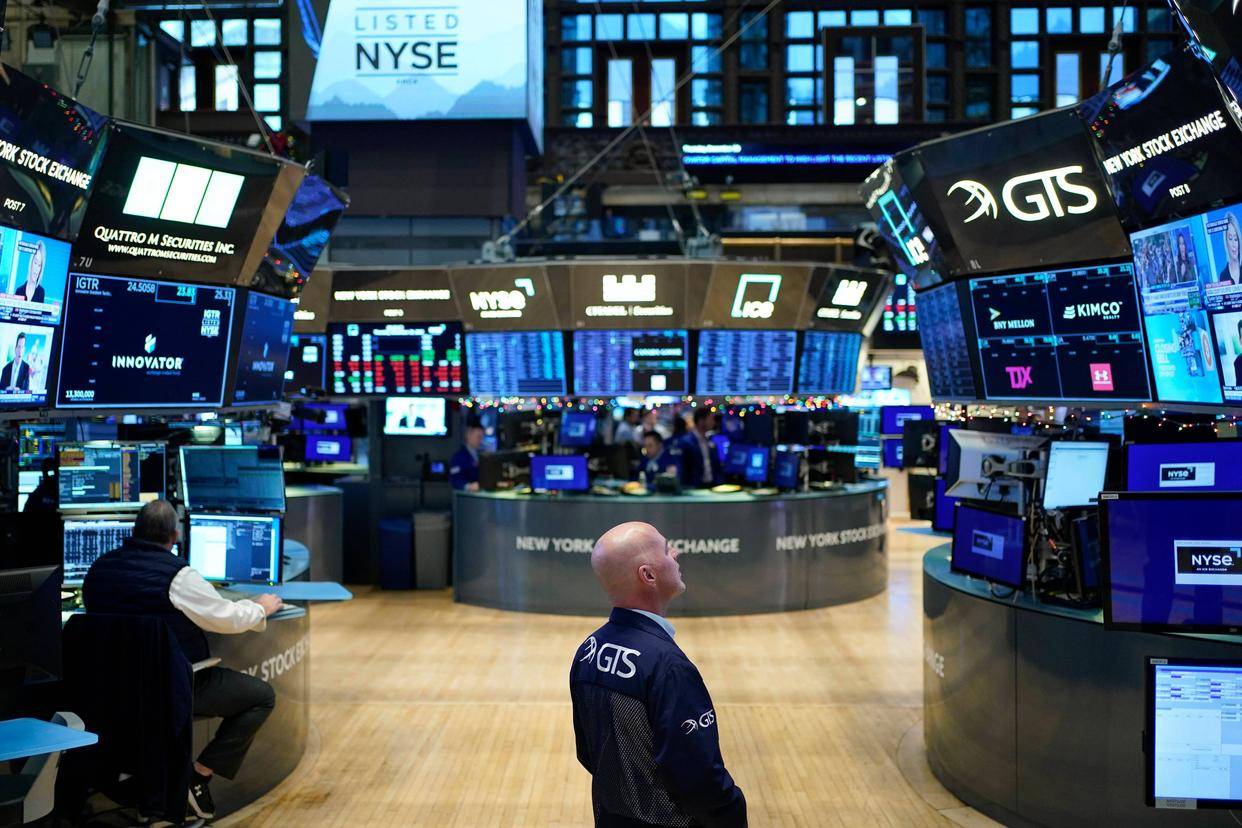
一位曾经活跃于社交媒体的美股散户,过去一个月亏损了20万美元。 他在论坛上写道:"之前卖房炒美股的FIRE计划,现在看起来像个笑话。 " 他的账户截 图显示,重仓的特斯拉和英伟达股票,让他在短短一个多月内损失了整整一年的生活费。 他的故事并非个例。 本周,美股市场经历了近半年来最惨烈的下跌。 仅仅前八大科技公司,市值就蒸发了约8000亿美元,整个AI板块单周市值缩水近1万 亿美元。 以科技股为主的纳斯达克指数全周下跌超过3%,创下自4月以来最大单周跌幅。 美联储的常备回购便利工具(SRF)使用规模在10月31日飙升至503.5亿美元的历史峰值,但这并未能阻止担保隔夜融资利率(SOFR)飙升18个基点至 4.22%。 这种"越救越慌"的局面暴露出流动性危机的深度。 SRF作为流动性危机的"最后防线",设计上存在致命缺陷。 它仅在市场利率超过其上限时被动启动,属于"事后补救",无法进行"事前预防"。 当所有机构都 涌向美联储求助,SRF的巨额资金不过是杯水车薪。 美国政府停摆已进入第39天,创下历史最长纪录。 为应对危机,财政部在三个月内将现金余额从3000亿美元增至1万亿美元,硬生生从市场吸走约7000亿美 元 ...

美国流动性危机了吗?及美元流动性研究框架
2025-11-10 03:34
Summary of Key Points from the Conference Call Industry Overview - The discussion revolves around the **U.S. repurchase (repo) market** and its liquidity conditions, particularly in the context of recent fluctuations in repo rates and the Federal Reserve's monetary policy actions. Core Insights and Arguments 1. **Repo Rate Surge**: At the end of October, the U.S. repo rate surged to **47 basis points**, the highest since the pandemic, indicating significant liquidity pressure in the market [1][2][11]. 2. **Use of Fed's Standing Repo Facility**: The usage of the Federal Reserve's standing repo facility peaked at **$50 billion**, marking the highest level since its establishment in 2021, before declining significantly in the following days [2][21]. 3. **Market Composition**: The U.S. repo market consists of **money market funds, dealer banks, and hedge funds**, with funds flowing primarily through tri-party repos and bilateral delivery versus payment agreements [1][4]. 4. **Liquidity Distribution**: The repo market experienced two distinct phases during the Fed's balance sheet reduction, affecting liquidity distribution and borrowing costs among market participants [7][8]. 5. **Impact of Government Actions**: The recent U.S. government shutdown and Treasury bond issuance led to an increase in the Treasury General Account (TGA) balance, which in turn reduced bank reserves and affected the repo market dynamics [9][21]. 6. **End-of-Month Effects**: At month-end and quarter-end, dealer banks reduce their balance sheets to meet regulatory requirements, leading to increased borrowing costs for hedge funds and spikes in repo rates [10][11]. 7. **Misinterpretation of Liquidity Crisis**: Claims of a liquidity crisis among foreign banks' U.S. branches were deemed incorrect, as the observed decrease in their reserves was a natural outcome of reduced arbitrage activities rather than a liquidity shock [12]. 8. **Liquidity Definition**: Liquidity refers to the ease with which economic entities can obtain cash, and a liquidity crisis occurs when institutions struggle to access necessary cash [13][14]. 9. **Comparison of Liquidity Events**: The liquidity crisis in March 2020, triggered by the pandemic, was characterized by widespread asset sell-offs and a significant rise in the dollar's value, contrasting with the more contained liquidity pressures observed in recent months [17][18]. 10. **Future Repo Market Outlook**: The repo market's liquidity pressure is expected to ease, contingent on the reopening of the government and potential court rulings affecting TGA balances. The Fed may also consider resuming asset purchases if repo rates continue to rise significantly [21][22]. Other Important but Overlooked Content - **Arbitrage Mechanisms**: In normal conditions, the tri-party repo rate should lie between the Fed's overnight reverse repo rate (3.75%) and the standing repo facility rate (4%), ensuring that money market funds earn more than depositing with the Fed [5][6]. - **Market Resilience**: Recent fluctuations in the repo market have not significantly impacted broader asset classes, indicating a degree of resilience in the financial system [19]. - **Dollar Strength**: The recent strength of the dollar is attributed to various factors, including the Fed's stance on interest rates and positive economic data, rather than a direct liquidity crisis [24].
降息,突变!美联储,重磅来袭!
券商中国· 2025-11-09 08:25
Core Viewpoint - The Federal Reserve's future interest rate cut path has become uncertain, with predictions suggesting no further cuts during Chairman Powell's term until May 2026 [2][3]. Group 1: Interest Rate Predictions - Bank of America predicts that the FOMC will not lower interest rates again before Powell's term ends in May 2026, contrasting with market expectations for a December rate cut [2][3]. - The probability of a 25 basis point rate cut in December is currently at 66.9%, while the probability of maintaining the current rate is 33.1% [2]. - The overall economic forecast from Bank of America is more hawkish, expecting the federal funds rate to remain between 3.75% and 4.0% until late 2025, with potential cuts starting in mid-2026 [5]. Group 2: Economic Data and Market Conditions - The ongoing government shutdown has delayed the release of key economic data, including the October CPI report, creating uncertainty for the Fed and investors [4]. - Alternative data suggests a cooling labor market without severe deterioration, providing justification for the Fed to pause rate cuts [4]. - Recent statements from Fed officials lean towards a hawkish stance, with concerns about inflation remaining high [4]. Group 3: Financial Stability Risks - The Fed's latest financial stability report highlights policy uncertainty as a primary risk to the U.S. financial system, with 61% of surveyed market participants identifying it as a top concern [7]. - Geopolitical risks have gained attention, with 48% of respondents mentioning it, up from 23% in the spring survey [7]. - Concerns regarding AI as a financial stability risk have increased significantly, with 30% of respondents identifying it as a potential shock in the next 12 to 18 months [8]. Group 4: Liquidity Issues - The U.S. Treasury's upcoming bond auctions and corporate debt issuances are expected to test market liquidity significantly [9]. - Recent indicators show a liquidity crisis in the U.S. financial system, with the secured overnight financing rate (SOFR) spiking [9][10]. - The Treasury General Account (TGA) balance has surged due to the government shutdown, exacerbating liquidity issues [10].


下周美国市场也不好过?天量美债发行潮来袭,恰逢关键流动性指标“告急”
Sou Hu Cai Jing· 2025-11-08 12:28
Group 1 - A significant wave of U.S. Treasury bond issuance is set to impact the market next week, with the Treasury planning to auction a total of $125 billion in various maturities [2][3] - The upcoming bond supply coincides with a critical liquidity indicator in the U.S. money market, which is already under pressure due to the government shutdown that has led to a significant cash hoarding by the Treasury [2][4] - The Treasury aims to refinance maturing debt and raise approximately $26.8 billion in new funds from private investors through this issuance [3] Group 2 - The bond auctions will occur in a compressed trading week due to the Veterans Day holiday, raising concerns about market liquidity [3][10] - Recent financial indicators have shown a severe liquidity crisis in the U.S. financial system, with key metrics signaling a tightening environment [4][5] - The Treasury General Account (TGA) balance has surged over $700 billion in the past three months, contributing to the liquidity strain, as it has increased from around $300 billion to over $1 trillion since July [7][9]
下周美国市场也不好过?美债发行潮来袭,流动性“雪上加霜”
凤凰网财经· 2025-11-08 12:18
这场即将到来的发债潮,恰逢美国货币市场关键流动性指标"告急"。由于美国政府停摆迫使美国财 政部囤积现金,市场流动性已被大幅抽干,其效果堪比多次加息,这使得任何新增的资金需求都可 能放大市场的波动性与风险。 天量美债来袭,考验市场承压能力 根据美国财政部的季度再融资计划,下周将迎来密集的国债拍卖。具体的发行安排: 来源|华尔街见闻 一场大规模的美债发行潮下周即将冲击市场。 刚刚过去的一周,科技巨头市值蒸发近万亿美元,拖累纳指创下七个月来最大单周跌幅。市场对高 估值的担忧、疲软的经济信号以及消费者信心的下滑,共同构成了这轮抛售的背景。 雪上加霜的是, 美国财政部计划下周拍卖总计1250亿美元的各期限国债。此外,市场预计还将迎 来约400亿美元的投资级公司债发行。在一个因假期而缩短的交易周内,如此集中的债券供应将对 市场流动性构成重大考验。 该部门计划在12月份小幅减少短期国债发行量,预计到1月中旬美债拍卖规模将再次上升。 "隐形紧缩":流动性警报早已拉响 下周的国债发行之所以备受关注,是因为它将冲击一个早已脆弱的流动性环境。 华尔街见闻此前提及,近期美国金融系统的多项关键指标已全线告急,显示市场正面临一场日益严 ...
下周美国市场也不好过?天量美债发行潮来袭,恰逢关键流动性指标“告急”
华尔街见闻· 2025-11-08 12:01
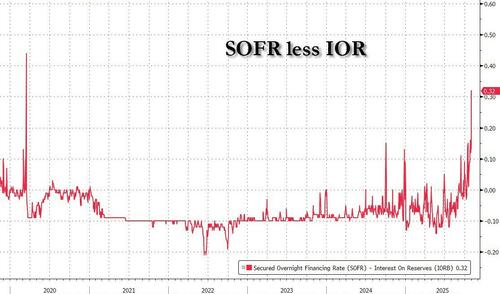
Core Viewpoint - A significant wave of U.S. Treasury bond issuance is set to impact the market, coinciding with a decline in tech giants' market value and concerns over high valuations, weak economic signals, and declining consumer confidence [1][2]. Group 1: Upcoming Treasury Issuance - The U.S. Treasury plans to auction a total of $125 billion in various maturities next week, alongside an expected $40 billion in investment-grade corporate bonds [1][2]. - The issuance will occur in a compressed trading week due to the Veterans Day holiday, which will close the bond market on Tuesday [2]. - The Treasury aims to refinance maturing debt and raise approximately $26.8 billion in new funds from private investors [3]. Group 2: Market Liquidity Concerns - The upcoming bond issuance is particularly concerning given the already fragile liquidity environment in the U.S. financial system [7][8]. - Key liquidity indicators have shown signs of distress, indicating a growing liquidity crisis [8]. - The secured overnight financing rate (SOFR) surged by 22 basis points on October 31, marking the widest spread with the Federal Reserve's excess reserves rate since March 2020 [9]. Group 3: Causes of Liquidity Tightness - The root cause of the liquidity strain is the significant increase in the Treasury General Account (TGA) balance, which has risen from approximately $300 billion to over $1 trillion since July due to cash withdrawals from the market [11]. - This liquidity withdrawal has led to the lowest level of bank reserves since early 2021 and a sharp decline in cash assets held by foreign commercial banks [13]. - Analysts suggest that the scale of liquidity withdrawal has a tightening effect comparable to multiple interest rate hikes [13]. Group 4: Potential Risks - Experts warn that the deterioration of funding conditions could lead to a self-reinforcing cycle of liquidity issues, potentially triggering a chain reaction similar to the 2019 repo crisis if key indicators continue to worsen [14].

特朗普操盘?7000%年化+100倍杠杆!美国经济崩了全世界买单
Sou Hu Cai Jing· 2025-11-08 04:47
Core Viewpoint - The article discusses the current state of the U.S. financial system, highlighting the emergence of private credit as a response to regulatory constraints on traditional banks, and the potential risks associated with high leverage and economic inequality driven by AI and financial practices [3][5][11]. Group 1: Private Credit and Financial Practices - The rise of private credit in the U.S. has led to a market size of $2 trillion, primarily serving borrowers that traditional banks avoid, with interest rates reaching as high as 7000% annually [3]. - Funds from private credit are not being directed into the real economy but are instead flowing into the stock market, bonds, and stablecoins, raising concerns about increasing default rates [3][5]. - The liquidity crisis among U.S. banks is exacerbated by the depletion of reserves, forcing banks to rely on the Federal Reserve for funding, which has reached historical peaks [5]. Group 2: Economic Inequality and AI Impact - The AI sector is consuming a significant portion of U.S. resources, contributing to 40% of GDP growth, while traditional industries are experiencing a slowdown [8][10]. - The disparity in wealth distribution is highlighted, with the majority of Americans facing declining purchasing power despite stable wages, leading to increased economic hardship [11]. - The concentration of wealth among a few tech giants, which employ less than 1 million people yet account for 20% of GDP, illustrates the growing divide in the economy [10]. Group 3: Market Dynamics and Speculation - The article suggests that the current financial environment is reminiscent of past crises, with elite investors preparing to cash out while ordinary investors bear the risks [13][15]. - The involvement of prominent figures, such as Trump, in manipulating market dynamics raises concerns about the sustainability of the current financial system [16]. - The article warns that the global influx of capital into U.S. markets may lead to significant losses for investors when the bubble bursts, as elite capitalists are positioned to profit from the fallout [18].

美联储三把手:可能很快需要扩表以满足流动性需求
智通财经网· 2025-11-07 08:57
Core Viewpoint - The Federal Reserve may soon need to purchase bonds to expand its balance sheet after halting the reduction of its bond holdings, as indicated by John Williams, the President of the New York Fed [1][2]. Group 1: Federal Reserve's Actions - The Federal Reserve has officially announced the end of quantitative tightening (QT) on December 1, but liquidity in the U.S. market remains tight, with key interest rates rising significantly [1]. - The secured overnight financing rate (SOFR) recently surged to 4.22%, exceeding the upper limit of the Fed's target policy rate range of 4% [1]. - The use of the Standing Repo Facility (SRF) reached a historical high of $50.35 billion last Friday, indicating increased reliance on emergency tools [2]. Group 2: Liquidity Crisis Factors - The liquidity crisis is primarily linked to the U.S. Treasury, which has been unable to release liquidity due to government shutdown impacts, leading to a Treasury General Account (TGA) balance swelling to approximately $1 trillion [2]. - Bank reserves have decreased to $2.85 trillion, and the balance of overnight reverse repurchase agreements (ON-RRP) is nearly exhausted, significantly weakening the liquidity buffer [2]. Group 3: Future Outlook - Williams emphasized that determining when the Fed will need to inject cash into the system is complex and requires close monitoring of various market indicators [2]. - He clarified that purchasing bonds to maintain adequate liquidity does not equate to a change in monetary policy stance, but rather represents a natural next step in implementing a strategy for sufficient reserves [2].
银河期货有色金属衍生品日报-20251106
Yin He Qi Huo· 2025-11-06 14:45
1. Report Industry Investment Rating No relevant content provided. 2. Core Viewpoints of the Report - The copper market is affected by the long - term shutdown of the US government, and the short - term concern about liquidity has increased. The supply of copper mines is tight, and the demand is affected by high prices. The price is expected to be volatile [7]. - The alumina market is in a state of significant oversupply. There are expectations of production cuts, but the actual reduction has not yet occurred. The price is under pressure, and it is expected to be in a narrow - range bottom - grinding state [16]. - The aluminum market has a tight supply - demand pattern. The overseas supply is expected to decrease, and the domestic consumption is resilient. The price is expected to be strong after corrections [23]. - The casting aluminum alloy market is affected by cost support and tight supply - demand balance. The price is likely to rise and is expected to be strong [30]. - The zinc market has a tight ore end, and there are expectations of smelter production cuts. The supply surplus situation may be alleviated, but the upward space is limited [35]. - The lead market has a situation where supply may increase and demand is entering the off - season. The price may decline [42]. - The nickel market has a loose supply - demand situation, and the price is in a wide - range shock with a downward - moving center [49]. - The stainless steel market has weak terminal demand and sufficient supply. The price is expected to be weak [55]. - The tin market has a tight ore supply and slow demand recovery. The price is expected to be in a high - level shock [64]. - The industrial silicon market has a weakening demand in November. The supply is expected to decrease, and the price is expected to be in the range of (8500, 9500). Buying at low prices is recommended [68]. - The polysilicon market has a situation where supply and demand both decrease in November, and the supply reduction is greater. The price is expected to be weak in the short term, and buying after a correction is recommended [78]. - The lithium carbonate market has a tightening supply - demand situation in November, and the price is at a high level. There are differences after December, and the upward space may be limited [85]. 3. Summary According to Relevant Catalogs 3.1 Copper Market Review - Futures: The main contract of Shanghai copper 2512 closed at 86320 yuan/ton, up 1.04%, and the Shanghai copper index reduced positions by 299 lots to 557,300 lots [1]. - Spot: The Shanghai spot reported a premium of 30 yuan/ton, up 5 yuan/ton from the previous trading day. Guangdong reported a discount of 15 yuan/ton, unchanged from the previous trading day. The North China market reported a discount of 150 yuan/ton, up 10 yuan/ton [1]. Important Information - The US government has been shut down for 36 days, causing a 700 - billion - dollar liquidity shortage in the market [2]. - The US ADP employment in October increased by 42,000, exceeding expectations [2]. - Anglo Asian Mining signed a contract to sell copper concentrates from its new Demirli copper mine [2]. - Codelco lowered its annual copper production forecast for the second time in three months [3]. - As of November 6, the SMM national mainstream copper inventory increased by 3,200 tons to 203,300 tons [4]. Logic Analysis - Macro: The long - term shutdown of the US government increases short - term liquidity concerns [7]. - Supply: Multiple mining companies lowered production plans in Q3, and the supply of copper mines is tight. The non - US supply shortage is alleviated [7]. - Demand: High copper prices reduce the operating rates of copper rod and cable enterprises, and the procurement sentiment improves after price drops [7]. Trading Strategy - Single - side: Wait and see [8]. - Arbitrage: Continue to hold cross - market positive arbitrage and leave the market temporarily after the export window opens [13]. - Options: Wait and see [8]. 3.2 Alumina Market Review - Futures: The alumina 2601 contract rose 24 yuan to 2787 yuan/ton [10]. - Spot: The northern spot comprehensive price of alumina was flat at 2840 yuan, and the national weighted index dropped 2.6 yuan. The prices in different regions had varying changes [10]. Relevant Information - On November 6, 30,000 tons of alumina were traded in Australia at a FOB price of 320 US dollars/ton [11]. - As of November 6, the national alumina inventory was 4.218 million tons, up 88,000 tons from last week [11]. - Guinea's NMC started barge shipments of bauxite, and ELITE MINING resumed shipments after the rainy season [12]. - A project in Guangxi started the inquiry and selection for the red mud pipeline survey [15]. - Guangxi Long'an Hetai New Materials' 1 - million - ton alumina project is expected to be completed and trial - produced by the end of the year [15]. Logic Analysis - The supply - demand of alumina is in significant surplus. There are expectations of production cuts, but the actual reduction has not occurred. The import window is open, and new projects are progressing smoothly, putting pressure on prices [16]. Trading Strategy - Single - side: Narrow - range bottom - grinding [17]. - Arbitrage: Wait and see temporarily [18]. - Options: Wait and see temporarily [18]. 3.3 Electrolytic Aluminum Market Review - Futures: The Shanghai aluminum 2512 contract rose 280 yuan to 21,630 yuan/ton [20]. - Spot: The prices in East China, South China, and Central China all increased [20]. Relevant Information - The US Treasury's general account balance exceeded 1 trillion US dollars, sucking more than 700 billion US dollars from the market [20]. - The US ADP employment in October increased by 42,000, exceeding expectations [20]. - As of November 6, the domestic aluminum ingot inventory decreased by 7,000 tons [21]. - Century Aluminum's Icelandic smelter reduced production due to equipment failure [22]. Trading Logic - Macro: US economic data is better than expected, and the expectation of a Fed rate cut in December has improved [23]. - Fundamental: The supply - demand of aluminum is tight. Overseas supply is expected to decrease, and domestic consumption is resilient [23]. Trading Strategy - Single - side: Maintain a strong - trending shock [28]. - Arbitrage: Choose the opportunity to go long on SHFE aluminum and short on LME aluminum [28]. - Options: Wait and see temporarily [28]. 3.4 Casting Aluminum Alloy Market Review - Futures: The casting aluminum alloy 2512 contract rose 245 to 21,000 yuan/ton [26]. - Spot: The prices in different regions were flat [26]. Relevant Information - The Sino - US economic and trade teams reached a three - point consensus, and the US will cancel the "fentanyl tariff" [26]. - The US ADP employment in October increased by 42,000, exceeding expectations [26]. - The US government shutdown has a liquidity impact on the market [27]. - The weighted average full cost of the Chinese casting aluminum alloy (ADC12) industry in October was 20,498 yuan/ton, and the profit per ton increased [29]. Trading Logic - Macro: US economic data alleviates market concerns [30]. - Fundamental: The cost of raw materials rises, and the supply - demand is in a tight balance. The price is likely to rise [30]. Trading Strategy - Single - side: The aluminum alloy price is mainly strong following the aluminum price [31]. - Arbitrage: Wait and see temporarily [31]. - Options: Wait and see temporarily [31]. 3.5 Zinc Market Review - Futures: The Shanghai zinc 2512 rose 0.29% to 22,675 yuan/ton, and the Shanghai zinc index increased positions by 2,453 lots to 225,600 lots [33]. - Spot: The Shanghai zinc inventory decreased, and the spot premium continued to hold up, but downstream procurement was cautious [33]. Relevant Information - As of November 6, the SMM seven - region zinc ingot inventory decreased [34]. Logic Analysis - The ore end is tight, and there are expectations of smelter production cuts. The supply surplus may be alleviated, but the upward space is limited [35]. Trading Strategy - Single - side: Wait and see temporarily [38]. - Arbitrage: Hold the SHFE long - LME short arbitrage [38]. - Options: Wait and see temporarily [38]. 3.6 Lead Market Review - Futures: The Shanghai lead 2512 fell 0.4% to 17,430 yuan/ton, and the Shanghai lead index reduced positions by 2,494 lots to 122,400 lots [40]. - Spot: The average price of SMM1 lead decreased, and the downstream buying willingness improved slightly [40]. Relevant Information - As of November 6, the SMM five - region lead ingot inventory increased [41]. Logic Analysis - Supply may increase, and demand is entering the off - season. The price may decline [42]. Trading Strategy - Single - side: Hold profitable short positions. Be vigilant about the impact of funds on the price [43]. - Arbitrage: Wait and see temporarily [43]. - Options: Wait and see temporarily [43]. 3.7 Nickel Market Review - Futures: The main contract of Shanghai nickel NI2512 fell 80 to 119,750 yuan/ton, and the index increased positions by 7,869 lots [45]. - Spot: The premiums of different types of nickel had different changes [47]. Important Information - MMG's acquisition of Anglo American's Brazilian nickel business is under EU investigation [48]. - The global nickel price has dropped significantly in the past two years due to oversupply [48]. Logic Analysis - The LME nickel inventory is high, and the supply - demand is loose. The price is in a wide - range shock with a downward - moving center [49]. Trading Strategy - Options: Sell the wide - straddle combination of the 2512 contract [50]. 3.8 Stainless Steel Market Review - Futures: The main contract of stainless steel SS2512 rose 35 to 12,590 yuan/ton, and the index increased positions by 10,369 lots [52]. - Spot: The spot prices of cold - rolled and hot - rolled stainless steel were in a certain range [52]. Important Information - The US steel market demand is strong, and the EU recycling industry opposes possible steel tariffs [53]. - India temporarily relaxes import restrictions on non - compliant stainless steel products [55]. Logic Analysis - Terminal demand is weak, and supply is sufficient. The price is expected to be weak [55]. Trading Strategy - Single - side: Weak - trending shock [53]. - Arbitrage: Wait and see temporarily [53]. 3.9 Tin Market Review - Futures: The main contract of Shanghai tin 2512 closed at 283,420 yuan/ton, up 1390 yuan/ton or 0.49%, and the position decreased by 1,849 lots to 66,355 lots [59]. - Spot: The average price of Shanghai metal network tin ingots increased, but the overall consumption was weak [59]. Relevant Information - The US ADP employment in October increased by 42,000, exceeding expectations [60]. - The US government has been shut down for 36 days [61]. - Yunnan has achieved over - target exploration of strategic minerals [61]. - Xingye Yinxi's production of tin in the first three quarters of 2025 decreased [61]. Logic Analysis - US employment data alleviates market pessimism. The ore supply is tight, and demand recovery is slow. The price is expected to be in a high - level shock [64]. Trading Strategy - Single - side: The supply - demand is weak, and the price is in a high - level shock [65]. - Options: Wait and see temporarily [66]. 3.10 Industrial Silicon Important Information - In Yunnan, the number of operating industrial silicon furnaces decreased in October, and it is expected to be less than 20 in November [68]. Logic Analysis - In November, the demand for industrial silicon weakens. The supply is expected to decrease, and the price is expected to be in the range of (8500, 9500). Buying at low prices is recommended [68]. Strategy Suggestion - Single - side: Buy at low prices [69]. - Arbitrage: None [70]. - Options: Sell out - of - the - money put options and hold [71]. 3.11 Polysilicon Important Information - Hubei launches a bidding for the sustainable development price settlement mechanism of new energy projects in 2025 [73]. Logic Analysis - In November, supply and demand both decrease, and the supply reduction is greater. The price is expected to be weak in the short term, and buying after a correction is recommended [78]. Strategy Suggestion - Single - side: Buy after a correction [79]. - Arbitrage: Reverse arbitrage of far - month contracts [80]. - Options: None [81]. 3.12 Lithium Carbonate Market Review - Futures: The lithium carbonate 2601 contract rose 1540 to 80,500 yuan/ton, and the index increased positions by 25,948 lots. The Guangzhou Futures Exchange warehouse receipts decreased by 410 to 26,420 tons [83]. - Spot: The SMM prices of battery - grade and industrial - grade lithium carbonate decreased [83]. Important Information - In October, the new - energy vehicle retail and wholesale in China increased year - on - year and month - on - month [84]. - The demand for lithium carbonate is expected to increase significantly in 2026, while the supply growth is limited [84]. - Samsung SDI will supply Tesla with energy - storage batteries [84]. - Salt Lake Co., Ltd.'s lithium salt project is in trial operation [84]. - Chile's lithium carbonate exports in October increased [84]. Logic Analysis - In November, the supply - demand of lithium carbonate tightens, and the price is at a high level. There are differences after December, and the upward space may be limited [85]. Trading Strategy - Single - side: Pay attention to whether the support of the lower moving average is effective [86]. - Arbitrage: Wait and see temporarily [88]. - Options: Sell the wide - straddle option combination [88].