
AI叙事

Search documents
【招银研究】海外主权债务隐忧,国内市场情绪偏强——宏观与策略周度前瞻(2025.10.09-10.12)
招商银行研究· 2025-10-09 09:52
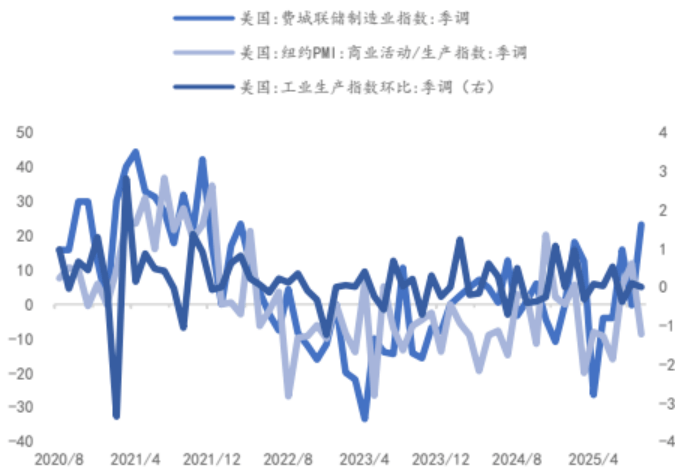
Group 1: US Economic Expansion - The US economy continues to expand, with the Atlanta Fed's GDPNOW model predicting a Q3 growth rate of 3.8%, driven by strong private consumption and investment in technology [2] - Private consumption is robust at 3.2%, with goods consumption at 4.3% and services at 2.7%, while private investment shows mixed results, with technology-driven investments remaining strong [2] - The government shutdown is expected to have a limited impact on the economy and employment, with necessary government activities continuing, although it may slightly raise the unemployment rate in October [2] Group 2: Sovereign Debt Concerns - There are rising risks related to sovereign debt issues, with political instability in Japan and France contributing to global economic uncertainties [3] - The US stock market has shown slight gains, driven by continued interest in AI stocks and strong corporate earnings, although valuations remain high [3] Group 3: US Treasury Market - The US Treasury market is experiencing weak fluctuations, with short-term rates expected to decline as the rate-cutting cycle resumes, while long-term rates face constraints due to economic resilience and inflation [4] - The 10-year Treasury yield is projected to remain high, with an annual average around 4.3% and a fluctuation range of 3.5%-5% [4] Group 4: Currency Market Dynamics - The US dollar initially weakened due to the government shutdown but later strengthened as the Japanese yen depreciated and the French political situation affected the euro [5] - The Chinese yuan has slightly depreciated against the dollar, facing short-term pressure but expected to maintain a two-way fluctuation trend in the medium term [5] Group 5: Gold Market Outlook - Gold prices have surged, breaking the $4000 per ounce mark, supported by the Fed's rate-cutting cycle and increased demand from global central banks [6] - Investors are advised to adopt a dollar-cost averaging strategy for gold investments due to its high valuation [6] Group 6: Domestic Economic Indicators - During the recent holiday period, domestic travel and consumption showed strong growth, with a significant increase in cross-regional travel compared to previous years [8] - Real estate transactions in first-tier cities improved, while second and third-tier cities faced declines, indicating a mixed recovery in the housing market [8] Group 7: External Demand and Trade - China's export growth remains strong, with significant increases in port container and cargo throughput, indicating resilience in external demand despite ongoing trade tensions [9] Group 8: Monetary Policy Adjustments - The central bank's recent monetary policy meeting indicated a shift in outlook, reflecting a more cautious stance on economic recovery and potential challenges ahead [10] - New policy financial tools are being introduced to support effective investment, with a total scale of 500 billion yuan aimed at enhancing project capital [10] Group 9: Market Sentiment and Stock Performance - The A-share market has shown stability with a slight increase, driven by liquidity easing, while the Hong Kong stock market has experienced minor fluctuations [12] - The overall market sentiment remains positive, with a focus on growth sectors and a balanced approach to investment strategies [12][13]

2025国庆&中秋节后首日展望
Guo Tai Jun An Qi Huo· 2025-10-09 05:08
1. Report Industry Investment Rating No relevant content provided. 2. Core Viewpoints of the Report - After the National Day and Mid - Autumn Festival holidays, different commodities are expected to have various market trends. For example, due to Sino - US economic and trade talks and US policy support expectations, the price center of US soybeans has slightly increased, and domestic soybean meal is expected to rebound. Gold and silver are expected to open higher and continue to rise. Copper prices are expected to move up in the long - term, while aluminum, alumina, etc. also have different trends based on their fundamentals [2]. 3. Summary by Commodity Agricultural Products - **Sugar**: In Brazil, sugar exports in September decreased by 16% year - on - year, and the sugarcane crushing volume in the central - southern region decreased by 3.68% year - on - year, with sugar production only down 0.08%. In India, the monsoon precipitation was 7.9% higher than the long - period average (LPA). In China, typhoons and floods affected sugar - producing areas. The domestic market is undervalued, with a bullish sentiment and a strong fluctuation [2]. - **Cotton**: Weak US cotton export demand and global cotton consumption demand will put pressure on ICE cotton, and international cotton prices are expected to drag down Zhengzhou cotton futures. Domestic new cotton listing pressure is still large, but as the futures price approaches 13,000, there may be some buying support. Cotton futures are expected to fluctuate weakly, and the decline may slow down [2]. - **Corn**: In North China and Northeast China, the new corn listing pressure increased during the holiday, and the prices of deep - processing enterprises in North China continued to decline. The port prices also decreased. The futures market is expected to be under pressure and run weakly [2]. - **Soybeans and Soybean Meal**: The USDA quarterly inventory report on September 30 was slightly bullish. Due to Sino - US economic and trade talks and US policy support expectations, the price center of US soybeans has slightly increased. Domestic soybean meal is expected to rebound after the holiday [2]. - **Rapeseed Meal and Rapeseed Oil**: ICE rapeseed futures first rose and then fell during the holiday. Rapeseed meal futures are expected to open slightly higher following soybean meal futures. In the medium - term, it is expected to follow soybean meal futures and maintain an oscillating trend. ZCE rapeseed oil futures are expected to have little fluctuation after the holiday. In the medium - term, it is expected to maintain a high - level oscillation, but the downward risk should be guarded against [2]. - **Palm Oil**: MPOA estimated that Malaysia's palm oil production in September decreased by 2.35%. The overall supply of palm oil is still in a state of change. The price is expected to maintain an oscillating trend, and the market needs to pay attention to supply and demand changes and related policies [2]. Metals - **Gold and Silver**: During the holiday, the price of gold continued to rise, and silver also followed the upward trend. Gold and silver are expected to open higher after the holiday and continue to rise, with silver possibly outperforming gold [2]. - **Copper**: Due to the mudslide in the Indonesian Grasberg mine, copper supply is expected to be tight, and the long - term price center is expected to move up. However, factors such as the US government shutdown, Trump's tariff policy, and the Fed's interest - rate cut expectations will increase price fluctuations [2]. - **Aluminum**: LME aluminum rose 1.95% during the holiday. Shanghai aluminum is expected to open slightly higher on October 9. In the medium - term, the price, volatility, and smelting profit of aluminum are expected to continue to rise [2]. - **Lead, Zinc, Tin, Nickel**: Lead is expected to oscillate as the increase in recycled lead supply suppresses the price. Zinc has an external - strong and internal - weak pattern, and the export window may open. Tin prices rose significantly during the holiday, but the probability of continuous strengthening is not high. Nickel is expected to oscillate in the short - term, with increased volatility [2]. Energy and Chemicals - **Crude Oil and Refined Oil Products**: OPEC + decided to increase production by 137,000 barrels per day in November, in line with market expectations. The short - term oil price is expected to be stable, and the long - term supply pressure still exists. Fuel oil, low - sulfur fuel oil, and other refined oil products have different trends based on their supply and demand and external factors [2]. - **Polyester and Related Products**: PX is expected to make up for the decline and run weakly after the holiday. PTA and ethylene glycol are expected to open lower and decline. Short - fiber and yarn still face pressure, and the market needs to pay attention to the changes in supply and demand and the progress of device maintenance [2]. - **Other Chemicals**: Glass, soda ash, synthetic rubber, urea, etc. have different market trends based on their supply - demand relationships and cost factors. For example, glass has a multi - empty dispute between seasonal demand improvement and real - estate market pressure [2]. Others - **Shipping Index**: The 2510 contract of the shipping index is expected to run at a low level with limited fluctuations. The 2512 and 2602 contracts are expected to oscillate widely [2]. - **Caustic Soda and PVC**: Caustic soda has limited downward space in the short - term and is suppressed by the alumina production reduction expectation in the long - term. PVC still faces the pressure of high production and high inventory [2]. - **Asphalt and LPG**: Asphalt is expected to continue the weak trend in the short - term, and LPG is expected to run weakly with limited downward space [2]. - **Stock Index Futures and Bond Futures**: Stock index futures are expected to oscillate strongly, while bond futures are expected to remain weak [2].
港股异动 | 铜业股逆势走高 铜市因供给端紧张预期持续强化 长期价格重心有望上移
智通财经网· 2025-10-09 02:07
Group 1 - Copper stocks are rising against the trend, with notable increases in companies such as China Gold International (+6.76%), Jiangxi Copper (+5.23%), and Zijin Mining (+2.68%) [1] - The mudslide incident at Indonesia's Grasberg mine has led to tighter copper supply, with mining operations suspended since September 8, 2023, and significant production delays expected in 2025 and 2026 [1] - The China Nonferrous Metals Industry Association is addressing the issue of "involution" in copper smelting and has submitted recommendations to control the expansion of copper smelting capacity [1] Group 2 - The Ministry of Industry and Information Technology, along with eight other departments, has issued a "Growth Stabilization Work Plan for the Nonferrous Metals Industry (2025-2026)", providing direction for the industry's future development [2] - Analysts believe that the copper market will continue to show strong performance in the fourth quarter due to supply-side disruptions and favorable macroeconomic conditions, including expectations of interest rate cuts by the Federal Reserve [2]

美联储降息落地后:全球市场迎来新周期
Sou Hu Cai Jing· 2025-10-08 08:12
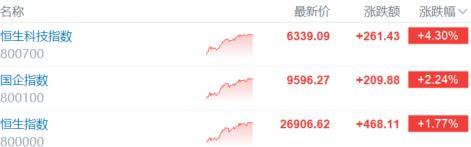
Group 1: Federal Reserve Rate Cut - The Federal Reserve announced a 25 basis point rate cut, lowering the federal funds rate target range to 4%-4.25%, marking the beginning of a global liquidity easing cycle [1] - The rate cut is characterized as a "risk management cut" by Chairman Powell, aimed at balancing labor market risks and persistent inflation pressures [2] - The dot plot indicates an increase in rate cut expectations for 2025 from 2 to 3 times, while only one cut is expected in 2026-2027, with the final rate projected at 3.125% [2] Group 2: Market Reactions and Opportunities - Hong Kong stocks are in a "shaking upward channel," with the Hang Seng Index rising 0.6% and the Hang Seng Tech Index increasing by 5.1% [4] - External capital is returning to Chinese assets, with structural opportunities in sectors like AI technology, consumer electronics, and innovative pharmaceuticals [4] - Historical data shows a significant calendar effect, with the Hang Seng Index averaging a 1.6% increase in the five trading days following the National Day holiday over the past decade [4] Group 3: U.S. Market Dynamics - Following the rate cut, U.S. stock indices reached new highs, driven by a tech surge, particularly with Nvidia investing $5 billion in a partnership with Intel [7] - The derivatives market experienced a "gamma squeeze," leading to a surge in trading volume for the S&P 500 [7] - Small-cap stocks are showing signs of recovery, with the Russell 2000 index lagging behind the broader market, benefiting from eased short-term debt pressures [7] Group 4: Asset Allocation Trends - Gold holdings are showing a divergence between institutions and retail investors, with SPDR Gold Trust increasing by 1.8% week-on-week, while retail investors reduced holdings through SPDR Minishares [10] - Global ETF flows indicate a structural preference for stocks, with a net inflow of $92.97 billion into stock ETFs, led by technology and financial sectors [10][12] - Emerging markets, particularly China, are attracting significant capital, with a net inflow of $1.08 billion into Chinese stock ETFs [10][12]
暴涨逾60美元,黄金又创新高!
Sou Hu Cai Jing· 2025-09-29 09:48
Group 1: Gold Market - Spot gold prices have been rising continuously for six weeks, reaching a record high of $3,819.59, with a daily increase of over $60 [1] - The rise in gold prices is attributed to the pressure from U.S. economic data and expectations of interest rate cuts by the Federal Reserve [1] Group 2: U.S. Economic Data - U.S. stock indices showed mixed results, with the Dow down 0.15%, S&P 500 down 0.31%, and Nasdaq down 0.65% [2] - The PCE price index year-on-year increased from 2.6% to 2.7%, while the core index remained stable at 2.9%, indicating stable inflation [2] Group 3: Federal Reserve Rate Cut Expectations - Traders currently estimate a 89.3% probability of a rate cut by the Federal Reserve in October and a 66.6% probability in December [4] - The market consensus anticipates 50,000 new jobs in September, with the unemployment rate expected to remain at 4.3% [6] Group 4: International Relations and Economic Impact - South Korea and the U.S. agreed to establish a $350 billion investment fund, but specific arrangements are currently stalled [4] - The amount proposed is over 80% of South Korea's foreign exchange reserves, raising concerns about economic impacts [4] Group 5: Geopolitical Tensions - Russia launched a large-scale attack on Ukraine, involving over 590 drones and more than 40 missiles, resulting in casualties and damage to civilian infrastructure [9] - The U.S. is considering providing Ukraine with "Tomahawk" missiles, which have a range significantly greater than previously supplied systems [10]

险资机构年内举牌上市公司已达34次
Zheng Quan Ri Bao· 2025-09-26 15:39
Core Viewpoint - Insurance companies are increasingly engaging in equity investments, with a notable rise in the number of cases where they acquire significant stakes in listed companies, reflecting a strategic shift towards long-term asset allocation in the equity market [1][2][3]. Group 1: Insurance Companies' Activities - On September 25, Changcheng Life Insurance announced its acquisition of shares in Xintian Green Energy, marking a significant move in the insurance sector's investment strategy [1][2]. - As of September 26, insurance institutions have made 34 equity acquisitions this year, surpassing the total of 20 from the previous year [1][2]. - Changcheng Life holds approximately 210 million shares of Xintian Green Energy, representing 5% of the company's total equity, thus reaching the threshold for disclosure [2]. Group 2: Investment Preferences - Insurance companies are particularly favoring equity stakes in banks and public utility sectors, with 16 out of 34 acquisitions this year targeting listed banks [2][3]. - Ping An Life has been a leading player in this trend, having made 12 acquisitions, while other firms like Minsheng Life and Taikang Life have also participated [2]. - The preference for bank stocks is attributed to their high dividend yields and stable long-term returns, aligning with the investment strategies of insurance firms [3]. Group 3: Market Trends and Future Outlook - The overall equity investment balance of insurance companies has significantly increased compared to the end of last year, and this trend is expected to continue [4][5]. - The A-share market has shown a steady upward trend since April, with notable performance in sectors reflecting China's national strength, such as AI and semiconductor industries [4]. - Insurance companies are expected to maintain or increase their equity asset allocations, viewing market fluctuations as less of a concern in their long-term investment strategies [5].
“鲍德熹·爱奇艺AI剧场”官宣 明年将上线首批AI叙事影片
Xin Lang Ke Ji· 2025-09-25 10:55
Core Insights - iQIYI announced the launch of the first domestic AI theater, "Baudry·iQIYI AI Theater," in collaboration with Oscar-winning filmmaker Baudry [1] - The theater will solicit content ideas and teams globally, providing technical support and creative subsidies to creators [1] - Selected creators will share in the net profit from membership fees and advertising revenue [1] - The first batch of AI narrative films, each over 15 minutes long, is scheduled to launch in Q1 2026 [1] - iQIYI aims to explore narrative models and content ecosystems in the AI era, positioning itself as a leader in this emerging field [1] - Baudry emphasized that AI-generated creative methods will break traditional limitations and lead a visual revolution, offering creators opportunities to innovate [1] - The collaboration will focus on both screening and nurturing new generation filmmakers, sharing Baudry's extensive experience and understanding of new technologies [1]

“AI叙事”强势回归?港股大爆发,科技巨头全线猛攻,百度爆拉!
Sou Hu Cai Jing· 2025-09-17 07:07
Core Viewpoint - The Hong Kong stock market, particularly technology stocks, has experienced a significant surge, driven by positive sentiment surrounding AI narratives and macroeconomic factors, including U.S.-China relations and anticipated monetary policy changes [1][14][26]. Group 1: Market Performance - The Hang Seng Index reached a nearly four-year high, surpassing 6200 points, with the Hang Seng Technology Index rising over 4%, marking its highest level since November 2021 [2][3]. - Major tech stocks such as Baidu, Alibaba, and Tencent saw substantial gains, with Baidu soaring nearly 20% at one point, and Tencent's market capitalization returning to 6 trillion HKD [5][6][7]. - Year-to-date, both SMIC and Alibaba have seen over 100% increases in their stock prices, while Baidu and Tencent have risen by 60% [9]. Group 2: Capital Inflows - Southbound capital has consistently flowed into Hong Kong stocks, with net purchases exceeding 57 billion HKD recently, and total net inflows surpassing 1 trillion HKD this year, setting a historical record [11][12]. - The sustained inflow of capital has been observed for 17 consecutive weeks, indicating strong investor interest in the Hong Kong market [11]. Group 3: Macroeconomic Factors - The recent surge in the Hong Kong market is attributed to several macroeconomic factors, including the positive developments in U.S.-China relations, particularly regarding TikTok, and expectations of a meeting between the two nations' leaders [15][16]. - The Hong Kong government is also taking steps to support technology companies, including facilitating financing for mainland tech firms and promoting second listings for Chinese companies in Hong Kong [19]. Group 4: Industry Trends - The return of the "AI narrative" in the Hong Kong market is evident, with technology sector growth outpacing other industries. The revenue growth for the Hang Seng Technology Index is projected to be significantly higher than that of the overall index [20][21]. - Major Chinese tech companies are expected to increase their capital expenditures in AI, with total spending projected to reach 32 billion USD by 2025, more than doubling from 13 billion USD in 2023 [26]. - The demand for AI-driven cloud services is driving revenue growth among domestic cloud providers, marking a shift in the market dynamics [26]. Group 5: Future Outlook - The market is anticipating the Federal Reserve's decision on interest rates, with a strong likelihood of a rate cut, which could further boost the Hong Kong stock market [28][29]. - Analysts suggest that Hong Kong stocks are particularly sensitive to external liquidity conditions, and a potential rate cut could lead to a rally in various sectors, especially technology and consumer goods [30].






罕见病叙事关爱AI计划暨罕见病照护者加油行动启动
Bei Ke Cai Jing· 2025-09-14 10:35
Core Viewpoint - The Beijing Pain Challenge Public Welfare Foundation has launched an AI narrative care program for rare disease patients, aiming to provide multi-dimensional support and address the psychological and social isolation faced by these individuals [1][2]. Group 1: AI Narrative Care Program - The program focuses on using AI narrative tools to help "silent" patients express their stories safely, which can serve as both a self-healing archive and a means to raise public awareness about rare diseases [2]. - The AI narrative tool is specifically trained on rare disease data, allowing it to accurately reflect the psychological experiences and emotions of patients, thereby making their "silent voices" heard and understood [2]. Group 2: Offline Support Initiatives - In addition to online support, the foundation plans to conduct offline workshops to provide education, peer companionship, and caregiver support, with three workshops scheduled between 2025 and 2026 [3]. - The workshops aim to alleviate psychological stress for patients and focus on issues that concern rare disease patients, ultimately leading to the formation of initiatives and action plans to build a sustainable mutual support community [3].
宋雪涛:为美联储独立性终结做准备
雪涛宏观笔记· 2025-09-03 05:33
Core Viewpoint - The article discusses the fundamental changes in globalization and political dynamics that are forcing developed economies to rely more on fiscal measures for economic adjustment, leading to increased political resistance, a gradual loss of fiscal discipline, and a subservient monetary policy, which in turn raises the risk premium for global long-term bonds [2][4]. Summary by Sections Monetary Policy Framework Changes - The 2025 Jackson Hole meeting is seen as a pivotal moment, potentially marking the beginning of the end for Federal Reserve independence, as external political pressures influence monetary policy decisions [4][5]. - The shift in monetary policy framework is strategically used to provide a long-term rationale for short-term dovish turns, making policy changes appear more legitimate and less arbitrary [6][8]. - Historical lessons emphasize the importance of central bank independence, with past political pressures leading to significant economic consequences, such as the inflation crisis of the 1970s [6][8]. Political Pressure on the Federal Reserve - The Trump administration employed a multi-layered strategy to pressure the Federal Reserve into lowering interest rates, including public attacks on Chairman Powell and threats of dismissal [12][13]. - This public humiliation created a hostile political environment, challenging the legitimacy of the Fed's decision-making [14]. - The administration also sought to exploit administrative issues, such as the renovation of the Fed's headquarters, to undermine Powell's authority and create grounds for dismissal [15][18]. New Macroeconomic Paradigm - A shift towards a "big fiscal era" is occurring, where fiscal policy is becoming the primary tool for economic management, while monetary policy is relegated to a secondary role [22][23]. - The effectiveness of monetary policy is diminishing in the face of supply-side shocks, with fiscal measures increasingly driving economic outcomes [24]. - Powell's compliance with political pressures reflects a broader trend where the Fed's independence is compromised, making it more responsive to political dynamics [23][24]. Global Market Outlook - The market has largely priced in a 25 basis point rate cut by the Fed in September, but this may only be the beginning of a series of cuts, with potential for a total of 75 basis points within the year [27][29]. - The dual nature of the upcoming rate cuts serves both preventive and responsive purposes, addressing economic slowdown while also providing liquidity to the market [27][29]. - The implications of these cuts present both opportunities and risks for the stock market, as liquidity expansion may support valuations, but also highlight underlying economic weaknesses [29][32].
