K型分化

Search documents
“黑五”开门红,背后有隐忧
Guo Ji Jin Rong Bao· 2025-12-07 05:19
尽管"黑五"销售额数据亮眼,但多重经济压力正在侵蚀美国消费市场的根基,表面增长难掩实际购买力 下降。 在美国,每年11月的最后一个星期五,即感恩节的后一天,被称为"黑色星期五"(下称"黑五")。当天, 商家们会推出大规模促销活动吸引消费者,美国假日购物季也随之开启。 在"黑五"之后的第一个星期一被称为"网络星期一",也是美国一年中线上销售最火爆的购物日之一。 今年美国假日购物季迎来了"开门红"。12月2日,美国零售联合会(NRF)发布数据显示,从感恩节到"网 络星期一"的五天内,约有2.029亿美国消费者进行了购物。这不仅超出NRF此前预测的1.869亿人次,更 是打破了该组织自2017年开始追踪该数据以来的所有纪录。 然而,光鲜数字背后,美国消费者正面临通胀高企、就业市场走弱和关税推高物价的多重压力。赛富时 (Salesforce)报告显示,虽然消费总额增加,但消费者购买的商品数量减少了。 最近公布的美联储褐皮书也指出,美国消费支出整体进一步下滑,尤其是中低收入家庭。 线上狂欢 奥多比分析公司(Adobe Analytics)最终数据显示,"黑五"当天,美国线上销售额达118亿美元,创历史纪 录,较2024 ...
热点思考 | 大逆转与再平衡——2026年美国劳动力市场展望(申万宏观·赵伟团队)
申万宏源宏观· 2025-12-07 02:16
Core Insights - The article discusses the significant decline in non-farm employment in the U.S. since mid-2025, highlighting the rising risk of unemployment and the impact of AI on the job market [1][5][110] Group 1: AI and Employment - AI adoption in U.S. companies has increased from 3.7% two years ago to 10% as of September 2025, with a notable rise in layoffs, particularly in the tech sector [1][5][12] - The structural impact of AI is primarily felt in high-exposure industries, among younger workers, and in high-paying positions, but overall, AI is not the main cause of the employment downturn [1][5][12] - The correlation between AI adoption rates and employment growth is weak, indicating that AI's impact on job losses may be limited [26][29][33] Group 2: Causes of Employment Decline in 2025 - The decline in U.S. employment in 2025 is attributed to both supply and demand factors, with illegal immigration net inflow decreasing by 1.6 to 2 million, explaining about 50% of the employment slowdown [2][50][52] - Government layoffs and tariff impacts are significant contributors to the employment decline, with government sector influences accounting for 37% of the non-farm employment slowdown [2][62][63] - The employment growth in tariff-sensitive sectors has slowed by two-thirds compared to the previous year, indicating ongoing challenges in the job market [2][62][63] Group 3: Outlook for 2026 - The labor supply in the U.S. is expected to continue contracting in 2026, while demand may stabilize, maintaining low levels of equilibrium employment [3][83][88] - Short-term unemployment risks remain high due to potential triggers from tariffs, government shutdowns, and AI's ongoing impact on job replacement [3][96][100] - The economic landscape is characterized by a "K-shaped" recovery, complicating Federal Reserve decision-making as labor shortages may increase labor share while surpluses could lead to economic disparities [3][100]



年终经济漫谈:怎么办取决于怎么看?
虎嗅APP· 2025-12-02 14:11
还有一个月,2025年就要结束,"十五五"就要开始。 本文来自微信公众号: 秦朔朋友圈 ,作者:秦朔,原文标题:《怎么办取决于怎么看——年终经济 漫谈之一 || 大视野》,题图来自:视觉中国 最近参加了一些展望"十五五"的研讨会,也去看了一些企业,和不少企业家、投资人做了交流。从本 期"大视野"开始,我会把和经济、产业相关的一些新思考和大家分享,也算是我的年终经济观察。 一、从斜杠增长到L型增长与K型 分化 1991年到1995年,是中国的第八个五年计划。当时还叫"计划",从"十一五" (2006-2010) 开始改 称"规划"。 "八五"期间中国经济的最大成就,是提前五年完成了"到2000年实现国民生产总值比1980年翻两 番"的战略目标。那五年中国经济年均增速为11%左右。当时我在广东工作,经历过那个高歌猛进的 时代,"八五"期间广东的国民经济年均增长高达19.62%,1992、1993年更攀上了22.1%和23%的历 史最高点。 对那种向着斜上方快速增长的方式,很多人潜意识里或多或少都有怀念。房地产是斜杠增长的典型, 有过几轮高增长,每一次都是靠高杠杆和更高的预期,驱动资产负债表快速扩张,地价房价一年一 ...

美联储官员放鸽,12月降息预期再度升温
Guo Mao Qi Huo· 2025-12-01 05:13
Report Industry Investment Rating - Not provided in the content Core Viewpoints of the Report - This week, domestic commodities rebounded with fluctuations, and most varieties in the industrial and agricultural product sectors rebounded. The market's expectation of a December interest rate cut significantly increased, Sino-US relations continued to ease, and geopolitical situations had an impact on international oil prices [3]. - Commodities will maintain a volatile range with differentiated trends among varieties. Currently, macro factors are mixed, and there are uncertainties regarding the December interest rate cut, the domestic economic slowdown, and geopolitical changes [3]. Summary by Relevant Catalogs PART ONE: Main Views - **Review**: Domestic commodities rebounded with fluctuations this week. The expectation of a December interest rate cut rose, Sino-US relations improved, and geopolitical situations affected oil prices [3]. - **Overseas**: Fed officials' dovish remarks increased the probability of a December interest rate cut from 43% to 80%. The US economy shows "K-shaped differentiation," and consumer spending may weaken in Q4. There are developments in the Ukraine peace plan, which affected oil prices [3]. - **Domestic**: From January to October, the profits of industrial enterprises above designated size increased by 1.9% year-on-year, with different growth rates in different sectors. China's foreign direct investment maintained resilient growth from January to October [3]. - **Commodity Views**: Commodities will maintain a volatile range due to mixed macro factors, including interest rate cut uncertainty, domestic economic slowdown, and geopolitical changes [3]. PART TWO: Overseas Situation Analysis - Fed officials' remarks increased the market's expectation of a December interest rate cut. The US economic activity changed little, consumer spending weakened, and there were developments in the Ukraine peace plan affecting oil prices [3]. PART THREE: Domestic Situation Analysis - From January to October, the profits of industrial enterprises above designated size increased by 1.9% year-on-year, with different growth rates in different sectors. China's foreign direct investment maintained resilient growth from January to October [3][21][25]. PART FOUR: High-Frequency Data Tracking - Data on开工率 of polyester产业链 and高炉开工率, prices of POY and PTA, and agricultural product prices are presented, showing certain trends and changes [34][41][43].
降息救不了美国地产?
Sou Hu Cai Jing· 2025-11-30 01:19
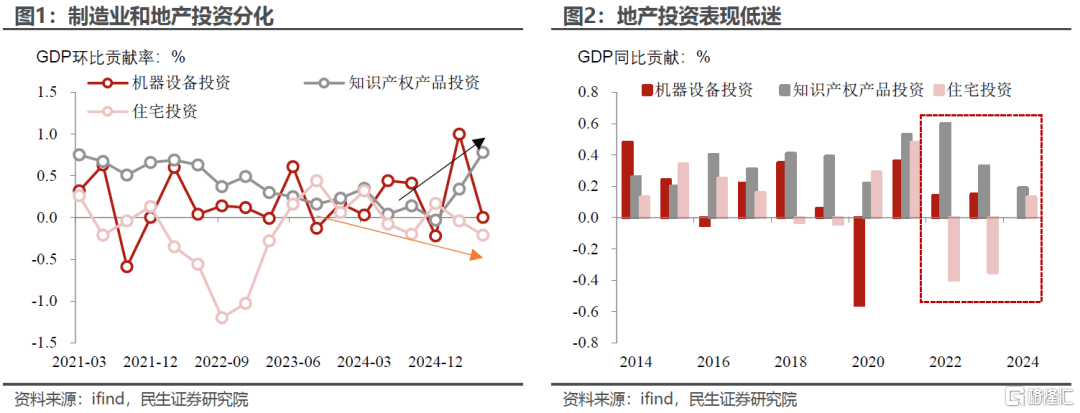
Group 1 - The core theme of the article is the K-shaped recovery and recession in the U.S. economy post-global public health events, highlighting the contrasting performance of high-end manufacturing and the real estate sector [1] - The expectation for the U.S. real estate market in the coming year largely hinges on potential interest rate cuts by the Federal Reserve, which historically have a positive impact on real estate investments and sales [9][11] - The current down cycle in the U.S. real estate market has been prolonged, lasting four years since November 2021, with a notable decline in existing home sales but resilience in new home sales and rising home prices [11][14] Group 2 - The complexity of the current real estate cycle is attributed to both cyclical and structural factors, including high mortgage rates and insufficient housing supply since 2008, leading to high prices and cautious behavior from developers [14][16] - A significant portion of existing mortgage loans have low rates, discouraging homeowners from buying or selling, which contributes to a decrease in the supply of existing homes [16][19] - The housing deficit in the U.S. remains historically high, with approximately 4.7 million units needed, while new home construction is expected to be lower than previous years, maintaining upward pressure on prices and rents [22][31] Group 3 - Proposed policy measures to address the real estate challenges include introducing 50-year fixed-rate mortgages to lower monthly payments and various supply-side reforms aimed at increasing housing availability [29][32] - The outlook for the real estate market in the coming year suggests limited improvement in supply, with builders remaining cautious due to high costs and reduced profit margins, while demand is expected to stabilize with potential interest rate cuts [31][32] - The political landscape, particularly the upcoming midterm elections, may influence fiscal policies that could impact the real estate market, with a focus on addressing affordability issues for lower-income households [33]
美联储报告:美消费支出再下滑
Sou Hu Cai Jing· 2025-11-28 04:23
当地时间26日,美联储发布的新一期全美经济形势"摸底"调查报告——"褐皮书"显示,根据10月上旬到 11月中旬收集的信息,在此期间"美国整体经济活动与上一份报告相比变化不大,或略有放缓",整体消 费者支出进一步下降,招聘放缓,关税相关成本在全国大部分地区缓慢上升。 报告称,美联储12个地区分支中有两个地区的经济活动略有下滑,1个地区略有增长,其余地区则较为 疲软。 来源:环球时报 此外,消费支出成为经济中最疲软的环节,在这个领域得到的负面评估多于调查中的其他主要类别。报 告指出,消费支出明显放缓,尤其是在中低收入家庭中,他们对物价上涨越来越敏感,在非必需品购买 方面也更加谨慎。彭博社称,这反映出"消费者群体中的K型分化加剧"。 美媒称,与今年第一版褐皮书大部分积极或中性的预测相比,年末这份报告显示出明显的悲观情绪转 变。华尔街正密切关注这份报告是否会为12月降息提供决定性依据。(甄 翔) 劳动力市场也表现出恶化,美联储称12个地区中半数地区的企业招聘意愿下降。全美大部分地区的企业 表示,当前招聘难度较以往有所降低。部分零售商透露,由于销售放缓已开始缩减员工规模。同时,制 造商和零售商普遍面临更高的投入成本,在 ...
美联储报告:美国整体消费支出再下滑
Huan Qiu Shi Bao· 2025-11-27 22:41
Core Insights - The latest Federal Reserve "Beige Book" report indicates that overall economic activity in the U.S. has not changed significantly since the last report, with a slight slowdown observed [1] - Consumer spending has further declined, particularly among middle- and low-income households, who are becoming increasingly sensitive to rising prices [1] - The labor market shows signs of deterioration, with hiring intentions decreasing in half of the regions surveyed [1][2] Economic Activity - Economic activity in two of the twelve Federal Reserve districts has slightly declined, while one district experienced slight growth; the remaining districts are generally weak [1] - Overall consumer spending is identified as the weakest segment of the economy, with negative assessments outnumbering those in other major categories [1] Consumer Behavior - There is a noticeable slowdown in consumer spending, especially among middle- and low-income families, who are more cautious in purchasing non-essential items due to price increases [1] - The report highlights a growing K-shaped divergence within the consumer base [1] Labor Market - The labor market is showing signs of weakening, with half of the districts reporting a decrease in hiring intentions among businesses [1] - Many retailers have begun to reduce their workforce due to slowing sales, while manufacturers and retailers are facing higher input costs attributed to tariffs [1]
美国农业经济陷入“K型分化”,政府补贴飙升至危机时期的水平
财富FORTUNE· 2025-11-26 13:07
Core Viewpoint - The article discusses the "K-shaped divergence" in the U.S. agricultural economy, where production costs are rising while agricultural product prices are declining, leading to significant challenges for farmers [2][3]. Group 1: Economic Trends - The agricultural economy is experiencing a "K-shaped divergence," with rising production costs and falling agricultural product prices [2][3]. - Agricultural product prices surged during the pandemic but have been in decline from 2022 to 2024, with only a slight recovery this year [2]. - The increase in production costs, including fuel, fertilizers, and machinery, has not been matched by a corresponding rise in the prices farmers receive for their products [2][5]. Group 2: Government Support and Financial Pressure - The number of farm bankruptcies is on the rise, particularly in major soybean-producing states [5]. - The U.S. government has increased support for farmers, with the "Big and Beautiful Act" signed by the Trump administration in July, allocating approximately $66 billion for agricultural spending, including $59 billion for risk management [5]. - Despite a projected nearly 40% increase in actual agricultural net income this year, about three-quarters of this growth is attributed to government subsidies [5]. Group 3: Future Outlook - The outlook for agricultural product prices remains bleak, indicating that the "K-shaped" agricultural economy may persist [5]. - There are no signs that China will fulfill its agreement to purchase 12 million tons of soybeans by the end of the year, exacerbating the situation [5]. - Farmers who switched to other crops due to the halt in soybean purchases are now facing new challenges, as prices for corn, wheat, and barley are also declining due to oversupply [5][7]. Group 4: Survey Insights - A recent survey by AgWeb indicates that 59% of economists believe the agricultural economy has worsened compared to the previous month, with nearly 90% stating it has weakened compared to last year [7]. - 76% of respondents expect the current situation to persist until 2026 or worsen further [7]. - An economist described the current predicament as a "boiling frog" scenario, where the decline is gradual rather than a sudden collapse [7].

港股消费热点解析
2025-11-24 01:46
Summary of Key Points from Conference Call Records Industry Overview - The conference call discusses the Hong Kong consumer sector, highlighting the rapid growth of instant retail, particularly in categories such as sports and outdoor, beauty, digital appliances, and pet products, which have outpaced the overall market growth. Traditional food and beverage categories are experiencing relatively weak growth [1][2]. Core Insights and Arguments - **Instant Retail Growth**: Instant retail has shown remarkable growth, with certain categories doubling their growth rates compared to the overall market. New consumption sectors are performing well both online and offline, with strong growth in new categories, demographics, and channels [1][2]. - **AI Technology Impact**: AI technology significantly enhances efficiency through precise marketing and consumer insights. Brands are encouraged to invest more in AI tools to capture consumer demand and predict product trends, thereby improving advertising conversion rates [1][4]. - **K-Shaped Market Recovery**: The market is experiencing a K-shaped recovery, where high-end products and cost-effective brands coexist. High-end products require value redefinition, while cost-effective brands leverage supply chain optimization to reduce prices [1][5][6]. - **Focus on Cash Flow and Shareholder Returns**: Essential consumer sectors emphasize certainty and shareholder returns, with a focus on companies with abundant free cash flow that can enhance shareholder returns through dividends or buybacks [1][7]. - **Potential in Health Supplements**: The health supplement industry is identified as a potential hidden champion due to the aging population and increasing health demands, with a strong growth outlook for anti-aging ingredients like ergothioneine [1][7]. Additional Important Insights - **Valuation of Consumer Sector**: The Hong Kong consumer sector is currently valued at historical lows, with the Hang Seng Consumer Index PE close to the 20th percentile over the past decade, indicating market pessimism [3][10]. - **Z Generation Consumer Behavior**: The Z generation is shifting from functional purchases to emotional and experiential ones, significantly impacting the essential consumer sector. This demographic is also price-sensitive, favoring high-cost-performance brands [3][15]. - **Risks in Essential Consumer Sector**: Despite its defensive nature, the essential consumer sector faces risks such as rising raw material costs and potential declines in consumer purchasing power during economic downturns [13][14]. - **Investment Strategy Recommendations**: Investors are advised to assess their risk profiles and consider funds that cover essential industries for stability, while more aggressive investors may explore high-volatility sectors like liquor [11]. This summary encapsulates the critical insights and trends discussed in the conference call, providing a comprehensive overview of the current state and future outlook of the Hong Kong consumer sector.
特朗普又开始“画饼”?
第一财经· 2025-11-24 00:44
Core Viewpoint - The article discusses the ongoing political battle in the U.S. over "affordability," highlighting its significance in recent elections and the differing perspectives of the two major parties on economic policies and consumer experiences [3][4]. Group 1: Understanding Affordability - "Affordability" is described as a psychological term rather than an economic one, significantly impacting lower-income groups more than higher-income groups [4]. - The concept of "unaffordable" refers to items that are not only economically difficult to obtain but also feel out of reach, particularly for basic needs like food and housing [4]. - The sentiment of "I can't afford it" is central to the current anger among voters, who often blame the government for their struggles with affordability [4][5]. Group 2: Economic Disparities - The U.S. economy is experiencing a "K-shaped" recovery, where the top 10% of income earners contribute nearly half of total consumer spending, up from 44.6% in 2019 [5]. - Data from the Atlanta Federal Reserve indicates that wage growth for the lowest 25% of earners has dropped to its lowest level in nearly a decade, while high-income earners see faster wage growth [5]. - The Consumer Price Index (CPI) is criticized for reflecting a consumption pattern biased towards high-income groups, while affordability issues are more democratic and relate to larger expenditures like housing [5][6]. Group 3: Consumer Behavior and Market Trends - There is a growing preference for private label products among price-sensitive consumers, with sales of private label foods increasing by 4.2% over the past year, compared to a 1.1% increase for national brands [6]. - The expectation of declining prices has shifted to a reality of stable or rising prices, contributing to consumer frustration [7]. - Social media exacerbates feelings of inadequacy regarding affordability, as curated lifestyles create unrealistic expectations for many consumers [7]. Group 4: Political Responses and Proposals - Recent elections saw Democratic candidates winning by focusing on affordability measures like free public transport and rent freezes, prompting a shift in Republican strategies to address affordability [8][9]. - Trump's administration has proposed various measures to lower food prices, including tariff exemptions and a $2,000 "tariff dividend" for low-income Americans, although these proposals face scrutiny regarding their feasibility and potential fiscal impact [9][10]. - The introduction of a 50-year mortgage plan has raised concerns about increased interest costs and potential housing market implications [10][11].