
关税战

Search documents
中美,通话!
证券时报· 2025-05-23 03:17
最新消息。 据外交部消息,5月22日,外交部副部长马朝旭同美国常务副国务卿兰多通电话,就中美关系及共同关心的重要问题交换了意见。双方同意继续保持沟通。 是否担心关税战等外部因素冲击中国经济?外交部:有能力、有条件、有底气 中美贸易代表会谈后是否已确定下一次会谈?外交部回应 5月19日,外交部发言人毛宁主持例行记者会。路透社记者提问,中国最高贸易谈判代表与美国贸易代表格里尔进行了会谈。请问会谈的进展如何?双方是否已经 确定下一次的会谈? 毛宁表示:"我的同事已经多次阐明了中方在关税和贸易问题上的立场。你的具体问题建议向中方的主管部门了解。" 5月21日, 外交部发言人毛宁主持例行记者会。 有记者提问,我们关注到联合国在日前发布的报告中指出,受到关税战等影响,2025年全球经济增速预计将放缓至 2.4%,比1月预测值低0.4个百分点。同时,中方也发布了4月份国民经济的运行情况。请问发言人,如何看待关税等外部因素对中国经济的影响?是否担心中国经济 会受到冲击? 毛宁表示,国务院新闻办公室19日举行了新闻发布会,介绍了4月份国民经济运行的情况,我注意到国际媒体纷纷用"超预期""有韧性"来评价中国经济的表现。特别 值得 ...


中国替华为出头,通告197国谁配合打谁,不到24小时美国怕了
Sou Hu Cai Jing· 2025-05-23 01:26
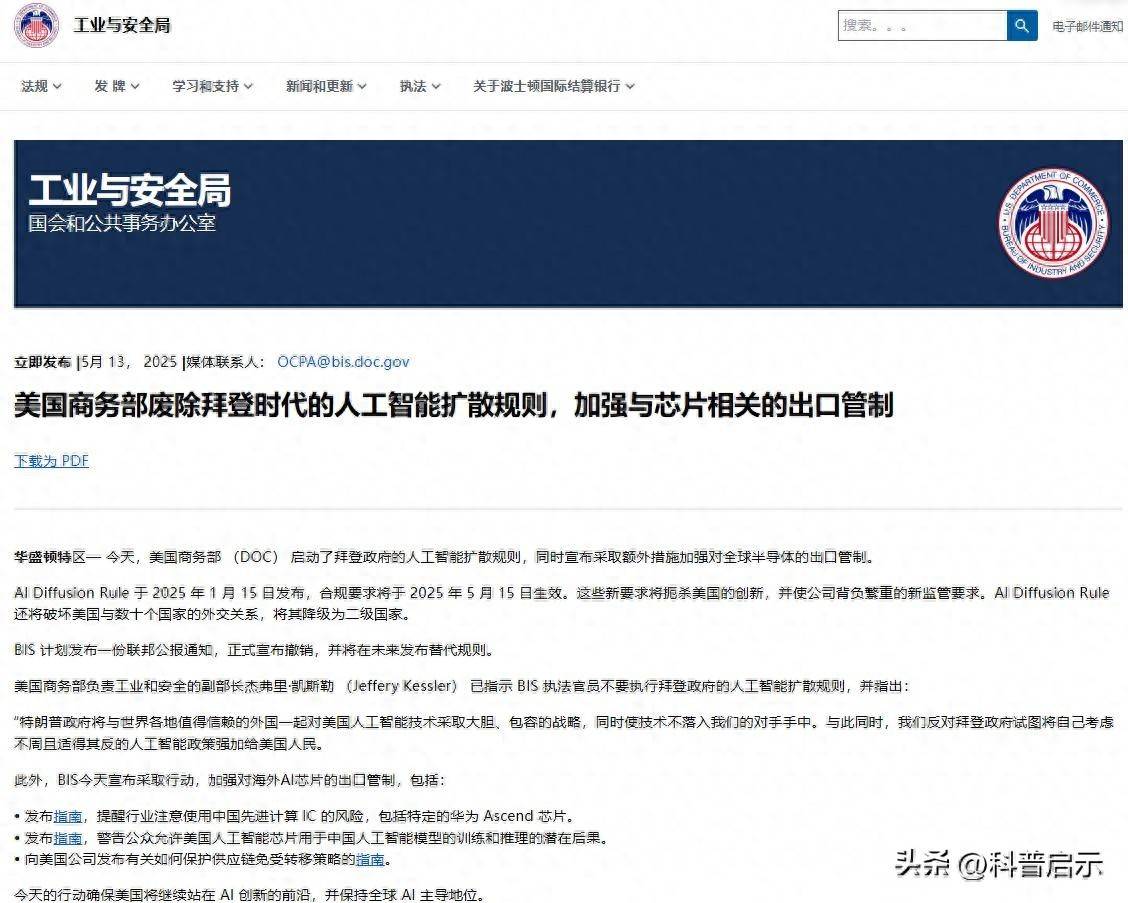
Group 1 - China is prepared to respond to the tariff war with the U.S., demonstrating a strong stance that has surprised American officials [1] - The U.S. has attempted various conciliatory measures, including a joint statement with China and securing contracts in the Middle East, but has resumed its crackdown on Chinese technology [1] - The U.S. Department of Commerce has issued regulations that broadly define any involvement of U.S. technology in Huawei's Ascend chips as illegal, aiming to suppress China's high-tech industry [1] Group 2 - In response to U.S. actions, China has enacted measures to protect its companies, including the implementation of the "Blocking Foreign Extraterritorial Application of Laws and Measures" [3] - The Chinese Ministry of Commerce has publicly supported Huawei, stating that U.S. restrictions violate free trade principles and warning other countries against cooperating with U.S. sanctions [3] Group 3 - China controls a significant portion of the global supply of rare earth elements, including 98.8% of gallium and 59.2% of germanium, and has announced new export rules that exclude the U.S. [5] - The U.S. heavily relies on Chinese rare earths for military and civilian applications, with imports from China increasing over twofold in 2023, indicating a high dependency on external supply [5] - Disruptions in the rare earth supply chain could severely impact U.S. defense modernization and technology sectors, including projects like next-generation drones and GPU chip production [5] Group 4 - Latin American countries are increasingly engaging with China, as evidenced by Colombia joining the Belt and Road Initiative and Brazil signing a fighter jet procurement contract [7][8] - The shift in Latin America towards China is attributed to the U.S.'s declining focus and investment in the region, creating an opportunity for China to establish stronger ties [8] Group 5 - Chinese officials emphasize the importance of peaceful and cooperative trade relations, while condemning U.S. policies that target China's chip industry [10] - The U.S. has modified its language regarding Huawei's chip export controls, indicating a recognition of China's strong response and the potential impact on trade negotiations [12][14] Group 6 - The narrative suggests that despite U.S. attempts to stifle China's technological advancements, the resilience and determination of Chinese researchers will continue to drive progress in the semiconductor field [13]
早报|大学生坠化粪池遇难副校长被免职;雷军说小米YU7不可能19万9;快手回应要求员工带薪刷视频;国乒男双50年来首次无缘4强
虎嗅APP· 2025-05-22 23:59
Group 1 - The article discusses the ongoing trade war initiated by the United States, highlighting that the U.S. is attempting to impose burdens on other countries to address its own economic issues [2] - A mountain landslide in Guizhou, China, trapped 19 individuals, with two confirmed fatalities after rescue efforts [3] - A tragic incident involving a student falling into a sewage pit after a physical education class has led to serious safety management accountability for the school [4][5] Group 2 - Concerns have been raised regarding the audio effects in the mobile game "Identity V," with some parents alleging inappropriate content, while others argue it is an overreaction [6] - Xiaomi's CEO, Lei Jun, dismissed rumors about the pricing of the Xiaomi YU7, emphasizing that it would not be priced at 199,000 yuan [7][8] - Li Zeju from Cheung Kong Holdings expressed caution regarding economic forecasts, emphasizing the importance of financial health to withstand uncertainties [8] Group 3 - The Sichuan Tianfu New Area Market Supervision Bureau has held discussions with the "JD Takeaway" platform regarding food safety issues and compliance with regulations [9] - Fast food chain Nayuki's Tea has adjusted its breakfast pricing strategy in the Guangzhou and Shenzhen areas, requiring customers to purchase a breakfast card for discounts [8] Group 4 - Apple is reportedly planning to launch smart glasses by the end of 2026 to compete in the AI-enhanced device market, while shelving plans for a smart watch with built-in camera capabilities [12] - Anthropic has launched the Claude 4 AI model, capable of working for seven hours continuously, which may impact job roles by automating daily tasks [16][17] - The U.S. Department of Justice is investigating Google for potential antitrust violations related to its agreements with a popular chatbot company [18] Group 5 - TSMC and Intel have submitted comments to the U.S. Department of Commerce opposing tariffs on semiconductor-related equipment, arguing that such tariffs would increase costs and jeopardize project viability [19] - High-end electric vehicle manufacturer Hozon is still in the restructuring process and has not yet announced any resumption of production [20] - Li Auto has hired a new executive to enhance its chip development efforts, indicating a strategic focus on self-research in semiconductor technology [21]

【环球财经】美国商场货架一线观察:关税冲击下的民众“物价焦虑”
Xin Hua She· 2025-05-22 14:03
Core Viewpoint - The recent price increases at Walmart, a major retail giant in the U.S., have become a significant news topic, with consumers expressing concerns about the impact of government tariff policies on their daily lives [1][3]. Price Increase Phenomenon - Walmart has seen widespread price increases across various products, with notable examples including a Chinese-made toy that rose from $59 to $84 (a 42% increase) and a Star Wars-themed LEGO set that increased from $69.99 to $89.33 (a nearly 28% rise) [2]. - Price tracking software often fails to keep up with actual price changes in stores, as evidenced by a Chinese-made inflatable mattress that was listed at $46.38 in-store, while the software showed a lower price of $44.94 [2]. - Many shelves in Walmart stores are reported to be empty, with price tags remaining for items that are no longer available [2]. Impact of Tariff Policies - Approximately one-third of Walmart's imported goods, primarily from China, Mexico, Canada, Vietnam, and India, are expected to face price increases due to U.S. tariff policies [3]. - Specific products such as bananas, avocados, and coffee are among those that will see price hikes, with bananas imported from Costa Rica already increasing by nearly 10% [3]. - Walmart's CEO noted that the current environment presents unprecedented challenges due to rapid and significant price increases [3]. Consumer Sentiment - Consumers are increasingly vocal about their frustrations regarding rising prices, with many feeling that the government's tariff policies are detrimental to the economy [4]. - Individuals, including retirees and families, express that the rising costs are affecting their ability to afford basic necessities, leading to a more cautious approach to shopping [4]. Corporate Response to Government Criticism - President Trump has publicly criticized Walmart for its price increases, urging the company to absorb tariff costs rather than passing them on to consumers [5]. - Walmart has stated that maintaining low prices is challenging due to thin retail margins, acknowledging that some tariff costs will inevitably be passed on to consumers [5]. - Other retailers, including Target and Temu, have also raised prices on certain products due to tariffs, indicating a broader trend across the retail sector [5].

澳大利亚被逼2选1,选中国还是美国?澳高官:中国比美国重要10倍
Sou Hu Cai Jing· 2025-05-22 09:44
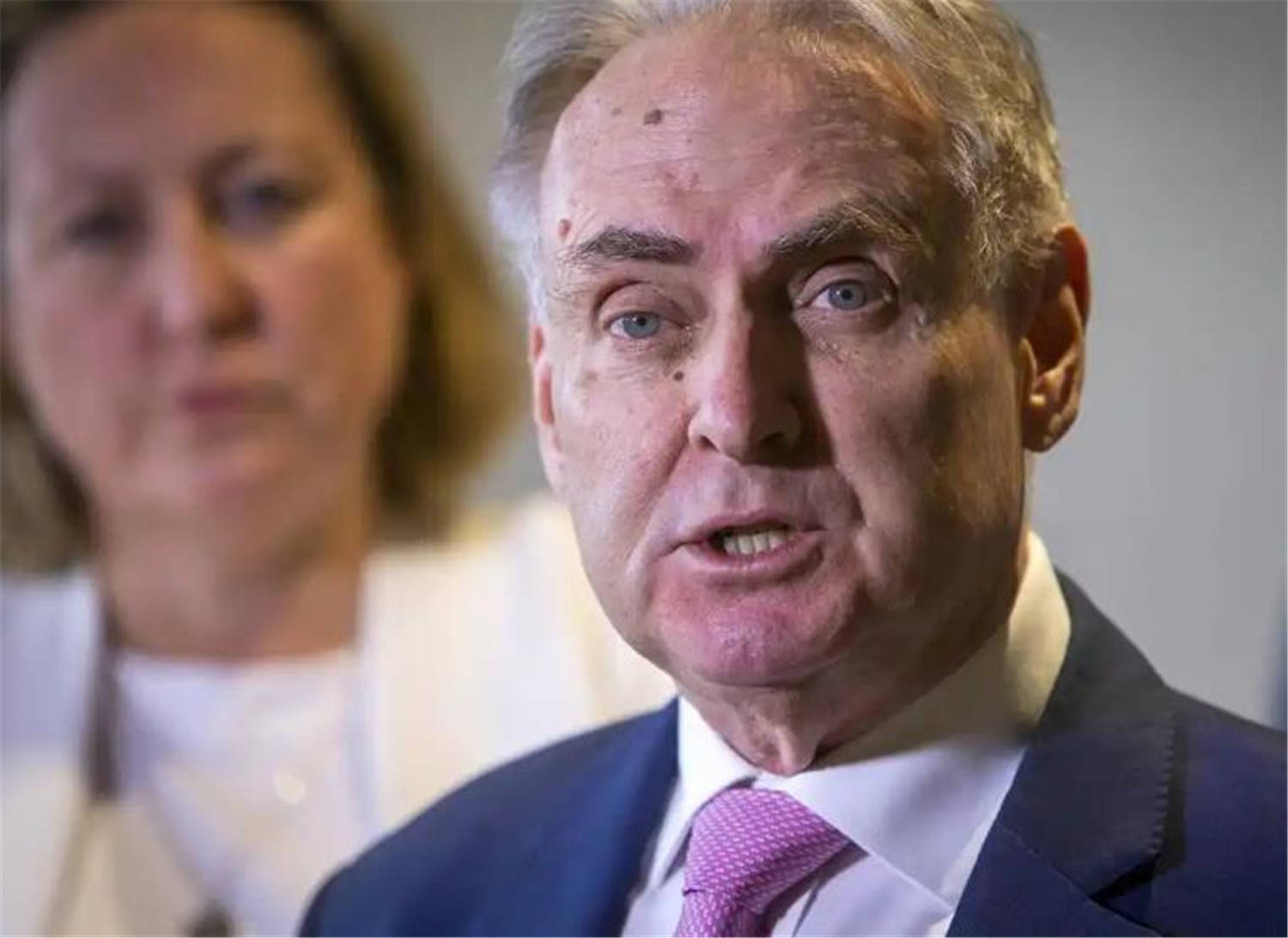
Group 1 - The recent developments in the US-China trade war indicate significant progress, with both sides nearing an agreement to substantially reduce tariffs, leaving minor issues to be resolved in future negotiations [1] - The US has applied pressure on other countries, offering tariff reductions in exchange for reduced trade with China, creating a dilemma for nations trying to maintain balanced relations with both superpowers [1][3] - Australia has publicly stated its preference for maintaining strong trade ties with China over the US, emphasizing that trade with China is "10 times more important" than trade with the US [3][5] Group 2 - Australian officials, including Prime Minister Albanese, recognize the critical importance of trade with China, with exports to China reaching AUD 212 billion compared to only AUD 37 billion to the US in the 2023-2024 period [5] - Historical context shows that Australia faced significant economic losses when it aligned too closely with the US against China, suffering hundreds of billions in losses due to trade restrictions imposed by China [7] - Since the election of Albanese in 2022, Australia has worked to improve relations with China, leading to a favorable economic outlook, with nearly 80% of its trade surplus coming from trade with China [9]
美国人疯狂下单中国
投资界· 2025-05-22 08:04
Core Viewpoint - The article discusses a dramatic turnaround in the shipping orders from China to the U.S. following the recent tariff adjustments, highlighting a surge in demand and operational challenges faced by ports and logistics companies [3][4][5]. Group 1: Shipping and Logistics - After the announcement of tariff reductions, shipping orders from China to the U.S. skyrocketed, with container bookings increasing by nearly 300% [6]. - Ports like Shenzhen's Yantian and Ningbo experienced a significant influx of orders, leading to a situation where shipping capacity was stretched thin, with a 30% shortfall in available space [6][5]. - The rapid increase in orders forced many companies to work overtime to meet the demand, with some factories operating at full capacity to fulfill U.S. orders [5][6]. Group 2: Market Dynamics - The article emphasizes that despite previous expectations, U.S. companies are struggling to shift their supply chains away from China due to high costs and inefficiencies in alternative locations [13][14]. - Many U.S. businesses have found that relocating production to Southeast Asia or other regions is not feasible, leading them to return to Chinese suppliers [14]. - Chinese manufacturers have diversified their markets, reducing reliance on the U.S. and expanding into Europe and other regions, which has provided them with more stability [15]. Group 3: Historical Context - The article draws parallels between current tariff policies and historical events, specifically referencing the Smoot-Hawley Tariff Act of 1930, which led to economic downturns rather than the intended protection of domestic industries [15]. - It suggests that the current administration should learn from history to avoid repeating past mistakes related to high tariffs [15].

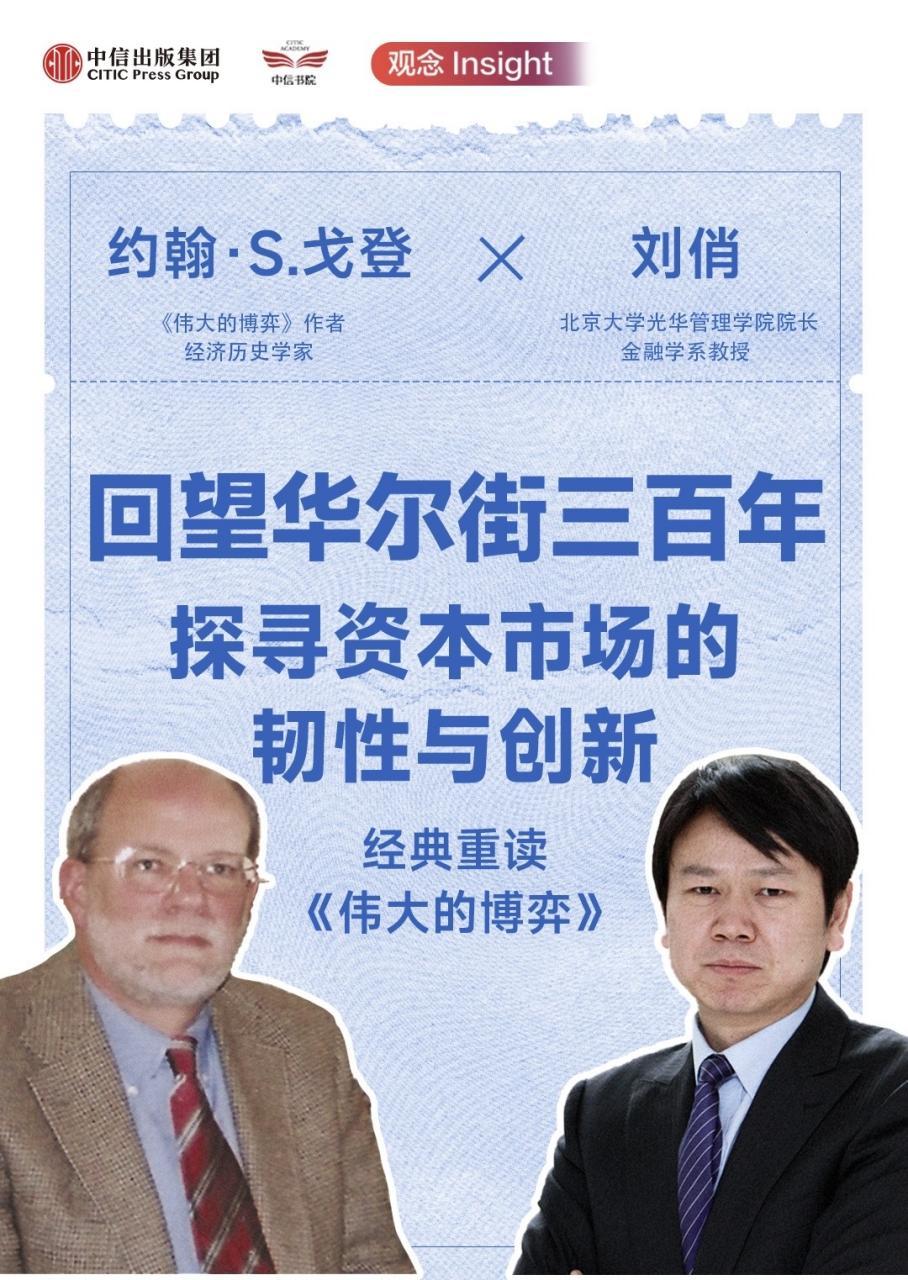
《伟大的博弈》戈登对话刘俏:游戏应该公平,关税只是牌桌上的“筹码”
Feng Huang Wang Cai Jing· 2025-05-22 07:24
Group 1 - The US-China tariff conflict has seen a significant reduction, with the US canceling 91% of additional tariffs on China, and China reciprocating with the same percentage of counter-tariffs [1] - The dialogue between economists highlights the cyclical nature of market bubbles and the historical lessons that can be learned from past financial crises [3][5] - The importance of capital markets in fostering innovation and their role as a catalyst for technological advancement is emphasized [12][13] Group 2 - The discussion on tariffs indicates that excessively high tariffs could lead to a contraction in global trade, reverting economies to localized markets [10] - The historical context of Wall Street's evolution illustrates the significance of free capital movement in driving economic vitality [8][9] - The need for a fair trading environment is underscored, with a call for the US to reassess its tariff policies in light of global economic recovery [11] Group 3 - The transition of capital markets from resource allocators to innovation catalysts is crucial for addressing current economic challenges [15] - The role of technology, such as AI and big data, in enhancing market transparency and improving investor trust is highlighted [22] - The shift in investment strategies from individual retail investors to institutional management reflects changing dynamics in capital markets [23] Group 4 - The discussion on social responsibility in capital markets emphasizes that while profit is a primary goal, broader societal impacts should also be considered [25] - The need for regulatory frameworks to ensure that capital markets operate responsibly and ethically is stressed [25]
全球瞭望丨英媒:贸易局势短暂缓和难改美国经济放缓趋势
Sou Hu Cai Jing· 2025-05-22 06:56
新华社伦敦5月21日电(记者赵小娜)路透社21日发布一项对经济学家的调查显示,围绕美国关税 战的贸易紧张局面近期出现短暂缓和,但美国经济前景仍不容乐观。受财政赤字扩大、通胀居高不下和 政策不确定性影响,美国经济正面临"低增长、高通胀"的风险。报道摘要如下: 高额进口关税暂停实施在一定程度上降低了美国短期内陷入衰退的可能性,但并未实质性改变其经 济下行趋势。最新调查显示,美国经济今年第二季度预计增长1.5%,全年增速仅为1.4%,显著低于去 年的2.8%,2026年增速预期同样为1.5%。未来一年,美国出现经济衰退的概率中位数从4月的45%降至 35%。 美联储官员认为,关税政策导致通胀形势再度恶化的风险在加剧,因此不急于降息。今年以来,联 邦基金利率一直维持在4.25%至4.50%之间不变。在103位受访的经济学家中,52人预计美联储将在第三 季度开始降息,最可能在9月;25人认为将在第四季度降息;18人预计今年不会降息;8人预测6月将降 息。 FHN金融公司首席经济学家克里斯·洛指出,联邦公开市场委员会坚持要在关税对通胀的直接影响 明朗之后再降息。因此,相关决策可能到第四季度才会做出,甚至明年年初。 摩根士 ...
专家详解关税战下的财政数据,短期财政增量政策出台可能性小
Di Yi Cai Jing· 2025-05-22 02:22
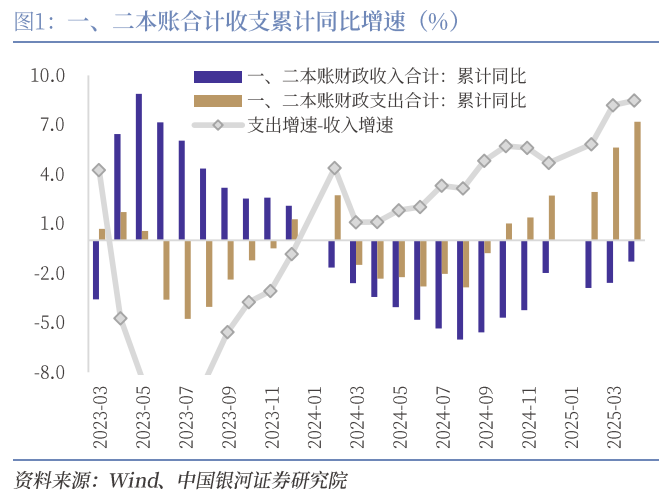
Economic Performance - In April, China's tax revenue growth turned positive for the first time this year, increasing by approximately 1.9% year-on-year, which helped narrow the decline in general public budget revenue to -0.4% for the first four months of the year [1][3] - Despite a 21% decline in exports to the US, exports to ASEAN countries increased by 20.8%, indicating a shift in trade dynamics [2] Fiscal Policy - The general public budget expenditure for January to April reached 93,581 billion yuan, a year-on-year increase of 4.6%, while government fund budget expenditure rose by 17.7% [6] - The government is expected to accelerate the implementation of existing fiscal policies, including the issuance of government bonds, to support economic stability [9][12] Real Estate Market - The land transfer income showed a significant recovery in April, with a year-on-year decline of only 11.4%, indicating a potential rebound in the real estate market [6][7] - The current real estate market is undergoing structural changes, with core cities experiencing a faster recovery, which may support future demand [7] Trade Relations - The US-China trade negotiations are set to take place within 90 days, which may lead to a significant reduction in tariffs, potentially stabilizing economic growth in the short term [8][9] - The ongoing tariff situation remains a concern, with tariffs on Chinese goods still exceeding 40%, necessitating careful monitoring of trade policies [10] Future Outlook - The economic growth for the second quarter is projected to be close to 5%, with the potential for fiscal stimulus measures to be adjusted based on trade negotiations [9][12] - The government is focusing on maintaining social stability and expanding domestic demand through targeted fiscal measures [10][12]
2025年4月经济数据解读:增长动能放缓
Dong Zheng Qi Huo· 2025-05-22 02:12
Report Industry Investment Rating - The rating for the stock index is "oscillating" [5] Core Viewpoints of the Report - In April 2025, China's economic data was generally lackluster, with a sharp contrast between high export growth and weak domestic demand. The "fatigue period" of domestic policy efforts may be emerging, and the growth rate in policy - supported areas is also declining. New - quality productivity sectors maintain growth resilience, corresponding to a relatively high risk appetite for the BeiZheng 50 Index and small - cap indexes in the stock market. However, the macro - picture of the pro - cyclical sector's failure to gain momentum, low inflation, and weak consumer confidence restricts the stock index. The corporate profit growth rate in 2025 may only be around 3%. The stock market's rise in the first five months of this year relied more on valuation expansion, but the current high valuation level makes it difficult to support continued expansion. In the long - term, the stock index still has room, but in the short - to - medium term, there is a need to be vigilant about the pressure of valuation correction [2][31] Summary According to Relevant Catalogs 1. Economic Data Interpretation in April 2025 - **Overall Economic Situation**: As the first month after the escalation of the tariff war, China's economic indicators weakened year - on - year. Except for industrial growth, all were below market expectations, indicating emerging domestic economic pressure after the rapid recovery in the first quarter. In April, the seasonally - adjusted month - on - month growth rates of industrial growth, social retail, and fixed - asset investment were at historically low seasonal levels. After deducting price factors, the supply side outperformed the demand side in the cumulative data for the first four months [1][9] - **Supply Side**: Both industrial and service sectors showed a slowdown in year - on - year growth, but new - quality productivity became a stable growth source. In the industrial supply, the high - tech industry showed strong resilience to external shocks such as the tariff war, with a relatively high overall growth rate and a small decline. The mining and public utility sectors related to domestic demand declined significantly due to weak demand. In the service supply, new business forms such as information technology services maintained resilience, while traditional industries such as wholesale and retail contracted [11][12] - **Consumption**: The growth of social retail in April fell short of expectations. In terms of categories, there may be a phenomenon of low - price competition in the catering industry. In commodity retail, gold and silver jewelry, cultural and office products, and cosmetics showed high growth, while the growth of cars and communication products in traditional subsidy areas slowed down [3][18] - **Investment**: In May, the growth rate of fixed - asset investment declined. Among them, the growth rates of manufacturing and infrastructure investment decreased from high levels, and the decline in real estate investment widened. In the real estate sector, both investment and sales weakened, and the housing price situation was not optimistic. The continuous decline in housing prices deepened the impact on residents' asset - liability behavior and weakened domestic consumption - promotion policies [23][26] 2. Investment Suggestions - The economic data in April was lackluster, with a contrast between high export growth and weak domestic demand. The "fatigue period" of domestic policy efforts may be emerging. New - quality productivity sectors maintain growth resilience, corresponding to a relatively high risk appetite for the BeiZheng 50 Index and small - cap indexes in the stock market. However, the pro - cyclical sector's failure to gain momentum, low inflation, and weak consumer confidence restrict the stock index. The corporate profit growth rate in 2025 may only be around 3%. The stock market's rise in the first five months of this year relied more on valuation expansion, but the current high valuation level makes it difficult to support continued expansion. In the long - term, the stock index still has room, but in the short - to - medium term, there is a need to be vigilant about the pressure of valuation correction [2][31]