新零售

Search documents
被“搁置”的盒马,出路在哪儿?
3 6 Ke· 2025-07-24 05:14
Core Insights - Hema, as a pioneer of Alibaba's new retail strategy, initially showed strong momentum in business innovation but struggled to achieve profitability before the departure of its founder, Hou Yi [1][2] - After the leadership change to Yan Xiaolei, Hema shifted its focus to profitability by closing most stores and concentrating on Hema Fresh, leading to a significant turnaround with adjusted EBITA turning positive for the first time in FY2025 [2][5] - Hema's sales reached 75 billion yuan, surpassing Yonghui's 73.2 billion yuan, positioning it as the third-largest supermarket in China [2][5] Business Strategy - Hema's initial strategy involved a multi-format approach with up to 12 different business models, including Hema Fresh and Hema X membership stores, but this led to high costs and unclear business models [4][5] - The high-end positioning of Hema X membership stores conflicted with the company's low-price rapid expansion strategy, resulting in a limited number of openings and eventual discounting measures [3][4] - The company has now adopted a dual strategy focusing on high-end market penetration and down-market expansion through Hema Fresh and Hema NB community stores [5][8] Market Position and Competition - Hema's growth comes amid a decline in traditional supermarkets, with a reported 28.6% drop in average foot traffic for large supermarkets since 2019, while community supermarkets and convenience stores have seen growth [5][8] - Hema plans to open 100 new Hema Fresh stores by 2025, targeting first and second-tier cities, and aims to expand its Hema NB stores to over 1,000 locations [8][9] - The company is leveraging its supply chain advantages, with over 60% of Hema NB's products being private label, although this has resulted in lower profit margins compared to Hema Fresh [9][10] Future Outlook - Hema's future hinges on its ability to integrate into Alibaba's instant retail ecosystem, as the company has not yet fully aligned with Alibaba's strategic focus on instant retail [6][7] - The competitive landscape is intensifying, with major players like Alibaba, JD, and Meituan focusing on instant retail, which poses challenges for Hema's growth strategy [5][6] - Hema's current business model aims to balance profitability in the high-end market while aggressively expanding in the lower-end market, creating a complete commercial loop [9][10]

巨星传奇(06683.HK)7月23日收盘上涨24.09%,成交40.32亿港元
Jin Rong Jie· 2025-07-23 08:27
Group 1 - The core viewpoint of the news highlights the significant stock performance of Giant Star Legend (06683.HK), which has seen a remarkable increase in share price and trading volume, outperforming the Hang Seng Index [1] - As of July 23, the Hang Seng Index rose by 1.62% to 25,538.07 points, while Giant Star Legend's stock closed at HKD 11.54, up 24.09% with a trading volume of 353 million shares and a turnover of HKD 4.032 billion, showing a volatility of 43.55% [1] - Over the past month, Giant Star Legend has achieved a cumulative increase of 80.23%, and a year-to-date increase of 89.02%, surpassing the Hang Seng Index's growth of 25.27% [1] Group 2 - Financial data indicates that for the year ending December 31, 2024, Giant Star Legend achieved total revenue of HKD 584 million, representing a year-on-year growth of 35.75%, and a net profit attributable to shareholders of HKD 56.054 million, up 62.4% [1] - The company reported a gross profit margin of 56% and a debt-to-asset ratio of 23.01% [1] - Currently, there are no institutional investment ratings for Giant Star Legend, and its price-to-earnings (P/E) ratio stands at 132.09, significantly higher than the food and beverage industry average P/E of 24.73 [2] Group 3 - Giant Star Legend Group Limited (06683.HK) was established in 2017 and focuses on IP creation and operation as well as new retail, having received multiple awards and recognitions in the industry [3] - The company has a diverse portfolio in IP content creation and management, with a cumulative fan base of 200 million for its star IPs, including notable projects with celebrities like Jay Chou [3] - In the new retail sector, Giant Star Legend develops and sells health management products and skincare items, with its brand "Magic Body" leading the bulletproof beverage market in China for four consecutive years [3]
外卖大战,打入硬折扣超市
3 6 Ke· 2025-07-22 10:15
Group 1 - Berkshire's Vice Chairman Charlie Munger admitted to misjudging Alibaba, stating it was one of his biggest mistakes due to the competitive nature of the retail business in China [1] - The new retail landscape is evolving with companies like Alibaba, JD, and Meituan combining long-distance e-commerce with instant retail, indicating a shift in strategy [1][4] - Meituan is launching a new discount supermarket called "Happy Monkey," which aims to compete with Alibaba's Hema NB, reflecting the trend towards hard discount models in retail [1] Group 2 - JD's CEO Liu Qiangdong explained that all of JD's companies, including its foray into food delivery, are aimed at serving the supply chain, particularly for fresh produce [4] - The competition in the food delivery market is intensifying, with major players focusing on integrating instant retail into their strategies, particularly through community-based hard discount supermarkets [4][5] Group 3 - The Chinese online food delivery market is stabilizing, with a projected market size of 1.6357 trillion yuan in 2024, growing by 7.2% year-on-year, indicating a slowdown in growth [7] - The competition for market share is increasingly focused on retaining existing users who are attracted by discounts, leading to a situation where merchants face challenges in profitability [7][9] - Meituan reported over 100 million daily orders for instant retail, with a significant portion coming from non-food categories, highlighting the importance of community supermarkets in this competitive landscape [9] Group 4 - Hema has undergone multiple iterations to find an efficient business model, achieving over 75 billion yuan in GMV for the fiscal year 2025, with online transactions contributing over 60% [10][12] - Meituan's Xiaoxiang supermarket is projected to reach nearly 30 billion yuan in GMV for 2024, although it has not yet achieved profitability [12][14] Group 5 - The rise of hard discount supermarkets in China is attributed to the pandemic's impact on supply chains, leading to a surge in demand for discounted products [15] - Successful international models like Aldi and Sam's Club have influenced the domestic market, with local brands and e-commerce platforms entering the hard discount space [15][17] - The competitive landscape for hard discount supermarkets is intensifying, with brands needing to excel in supply chain management and customer experience to build loyalty [19]


90后夫妻砸千万,开马来西亚最大的中国超市
Hu Xiu· 2025-07-21 11:31
Core Insights - The article discusses the establishment of a large Chinese supermarket named "He Ma Sheng Xian" in Malaysia by a couple, highlighting the business opportunities in the local market due to the lack of large-scale Chinese supermarkets [2][5][18]. Business Environment - Malaysia's retail sector is still primarily offline, with a significant gap in large-scale shopping options for the Chinese community [6][8]. - The population structure in Malaysia, consisting of diverse ethnic groups, allows for focused marketing strategies targeting specific communities [7][18]. Market Opportunity - Prior to the opening of "He Ma Sheng Xian," there were few shopping venues catering to the Chinese demographic, with most existing stores being small convenience shops [8]. - The couple identified a market gap in live seafood sales, which is avoided by local supermarkets due to cultural practices [9]. Investment and Financials - The couple invested a significant amount, reaching eight figures in RMB, and the supermarket has achieved monthly revenues in the millions, with total revenue reaching tens of millions [5]. - The initial capital requirement for their business was 25 million MYR (approximately 42.32 million RMB) [22]. Regulatory Environment - Malaysia's government is supportive of foreign investment, with a relatively stable policy environment compared to neighboring countries like Indonesia [10][11]. - The couple successfully navigated the regulatory landscape, obtaining necessary licenses and approvals for their business operations [23][13]. Supply Chain and Operations - The supermarket offers over 8,000 product types, focusing on fast turnover and fresh products to mitigate risks associated with long-distance shipping [27][28]. - Most suppliers are based in Guangdong, China, due to their quick delivery capabilities [29]. Marketing Strategy - Online marketing has proven to be the most effective method for promoting the supermarket, with significant engagement on platforms like Xiaohongshu and Facebook [40][41]. - Initial marketing efforts led to overwhelming customer turnout, which caused supply chain challenges that were later addressed [42][44]. Customer Demographics - The primary customer base has shifted from mainly Chinese expatriates to include a significant number of local Malaysians, particularly from the Chinese community [55][56]. - The supermarket plans to open a second location in a high-traffic area, focusing on mid to high-end products to cater to the local demographic [60][62]. Employment Practices - The company employs over 80% local staff, which is a requirement for foreign-owned businesses in Malaysia [32]. - Recruitment strategies vary by position, with management roles being filled internally and other positions sourced through local job platforms [34][36].
被动接招线上外卖大战的美团,这次通过“快乐猴”主动奇袭线下零售
Tai Mei Ti A P P· 2025-07-20 10:01
Core Insights - Meituan is making a significant return to offline retail with the launch of its new discount supermarket chain "Happy Monkey," marking its third attempt in this sector [1][2][3] - The Chinese retail market is currently experiencing intense competition, with major players like Alibaba, Meituan, and JD.com investing over 100 billion yuan in subsidies [1][4][6] Group 1: Meituan's Retail Strategy - Meituan's previous venture, "Little Elephant Fresh," faced challenges leading to its closure, but the company has pivoted to new strategies, including the launch of "Meituan Grocery" and "Meituan Preferred" [2][3] - The new "Happy Monkey" stores aim to leverage insights from past failures and are designed to operate with high efficiency, utilizing direct supplier connections and automated processes [7][8] - The company plans to open approximately 1,000 "Happy Monkey" stores, with several already under construction in key markets like Hangzhou and Beijing [6][10] Group 2: Competitive Landscape - The hard discount supermarket sector is highly competitive, with established players like Hema and Aldi dominating the market, necessitating a focus on low margins and high turnover [8][9] - Meituan's "Happy Monkey" will compete directly with Hema's existing stores in Hangzhou, which already has a significant presence [9][10] - The company is also developing a network of over 5,500 satellite stores to enhance its delivery capabilities, with plans to expand this to 10,000 by the end of 2025 [10][11] Group 3: Market Dynamics - The instant retail market is evolving, with Meituan capturing over 70% of the market share in daily orders, while competitors like Alibaba and JD.com are also ramping up their efforts [12][13] - The shift in consumer behavior towards non-food categories is evident, with non-food orders increasing from 28% in 2023 to 41% in the first half of 2025 [12][13] - Meituan's strategy includes integrating its membership system across various services to enhance customer retention and engagement [12][13] Group 4: Future Outlook - The success of "Happy Monkey" will depend on Meituan's ability to optimize its supply chain and establish strong partnerships with suppliers, as well as its capacity to adapt to the complexities of offline retail [14][15] - The competitive landscape will continue to evolve, with Meituan needing to differentiate itself through unique value propositions and operational efficiencies [14][15] - The upcoming launch of "Happy Monkey" is seen as a critical move for Meituan's long-term strategy in reshaping its retail presence and addressing market challenges [15][16]

面包丁定价超国内5倍,茶颜悦色北美试水零售,这场跨洋生意能赢吗?
Mei Ri Jing Ji Xin Wen· 2025-07-18 11:08
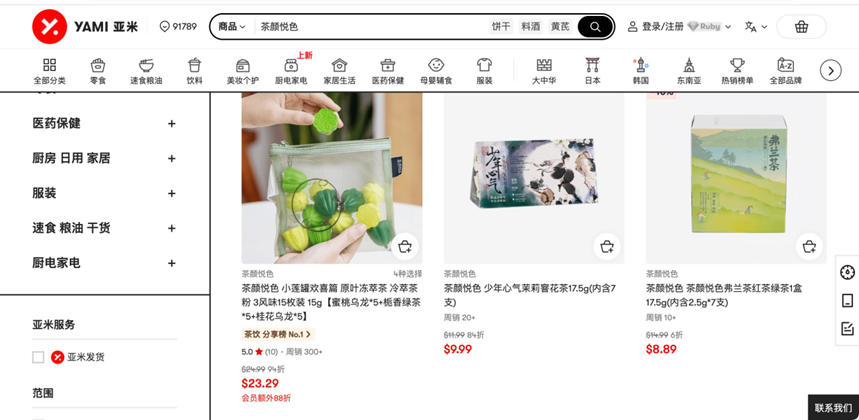
Core Viewpoint - Chayan Yuesheng has officially entered the North American market by launching its snack products online rather than opening physical stores [1][2]. Group 1: Market Entry Strategy - Chayan Yuesheng's entry into North America involves selling over 40 snack and cultural products through platforms like Shopify, Amazon, TikTok, Walmart, Weee, and Yami [2][3]. - The company has experienced varied success on different platforms, with a wider range of products available on Asian-focused platforms like Weee and Yami, while general platforms like Walmart feature mostly cultural products and coffee-related items [3][5]. Group 2: Pricing and Sales Performance - The pricing of Chayan Yuesheng's products has significantly increased in the North American market, with some items priced over five times higher than in China [10]. - Popular products on Weee include snacks that have sales exceeding 50 units each within a week of launch, indicating strong demand [9]. Group 3: Business Logic and Growth Potential - The decision to focus on retail snacks rather than traditional tea shops is seen as a strategic move to expand market reach without the complexities of physical store operations [12]. - The revenue split between snacks and tea drinks is currently 3:7, with snacks emerging as a significant growth area for the company [12]. Group 4: Industry Context and Challenges - The North American snack market is projected to reach $133.4 billion in 2023, with a compound annual growth rate of 4.57% from 2023 to 2028, presenting a lucrative opportunity for Chayan Yuesheng [13]. - The company faces challenges such as counterfeit products and competition from established snack brands, which may impact its brand image and market penetration [13][15]. Group 5: Future Outlook - The trend of tea brands entering the retail space is becoming common, with companies like Nayuki and Heytea also expanding their product offerings beyond beverages [16]. - The integration of snack sales with tea products is expected to enhance customer experience and increase overall sales, as both categories can complement each other [16].
3年多亏掉3亿多,“红枣第一股”好想你上半年还是没扭亏
Guan Cha Zhe Wang· 2025-07-17 08:56
Core Viewpoint - The company "Hao Xiang Ni," known as the "first stock of red dates," continues to face losses in the first half of the year, with a projected net loss of approximately 15 million to 25 million yuan, despite an improvement compared to the previous year's loss of 36.23 million yuan [1][2]. Financial Performance - The net loss for the first half of the year is expected to be between 15 million and 25 million yuan, which is a reduction of about 40% to 70% compared to the previous year's loss of 36.23 million yuan [1]. - Over the past three years, the company's net losses have totaled between 327 million and 337 million yuan, with losses of 189 million yuan in 2022, 51.89 million yuan in 2023, and 71.96 million yuan projected for 2024 [1]. - As of July 17, the company's stock price was 9.88 yuan per share, with a total market capitalization of approximately 4.465 billion yuan [1]. Operational Challenges - The company attributes its losses to a decline in investment income due to changes in accounting methods for equity investments, resulting in a year-on-year decrease of approximately 37 million yuan in non-recurring gains and losses [2]. - The company's core product, red dates, remains a significant part of its revenue, accounting for 73.17% of total revenue last year, with red date product revenue at 1.221 billion yuan [5]. - The company heavily relies on offline sales, with over 68% of revenue coming from offline channels, while online sales account for only 28.43% [5]. Strategic Initiatives - To address its limitations, the company has partnered with new retail brands like "Ming Ming Hen Mang" and "Mi Xue Bing Cheng" to expand product channels and generate investment income [6][7]. - The company has invested 700 million yuan in "Ming Ming Hen Mang," acquiring a 6.6191% stake, and aims to leverage its extensive store network to reach more consumers [7]. - The company has also begun listing its products in various retail channels, including Sam's Club and partnerships with companies like Yonghui and Hai Di Lao [8].


北新酒库:一站式名酒新零售平台,引领品质生活新风尚
Sou Hu Cai Jing· 2025-07-17 04:06
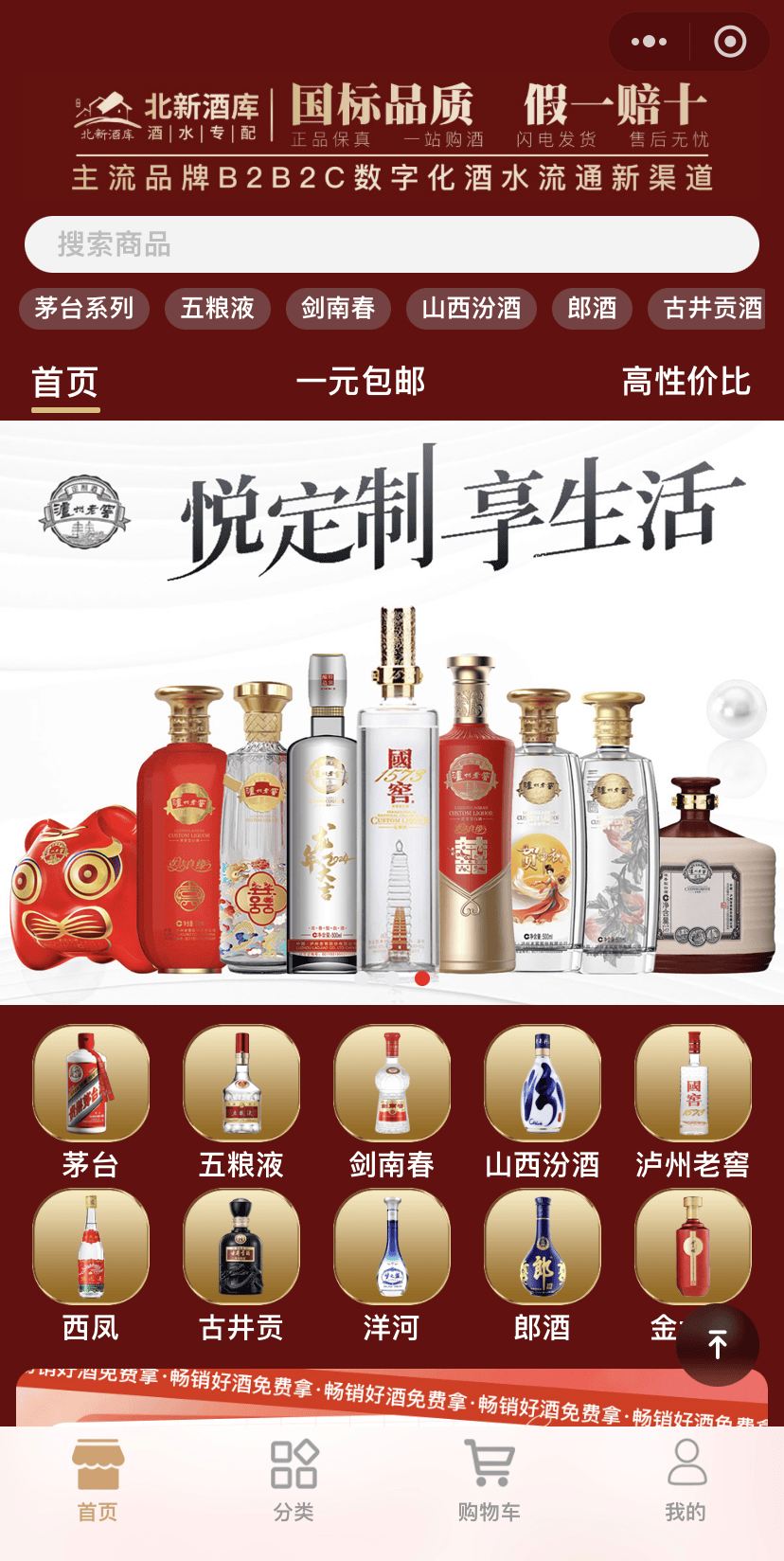
Core Viewpoint - The liquor retail industry is undergoing significant transformation driven by new retail models, particularly through platforms like WeChat e-commerce, with Beixin Jiuku emerging as a trusted choice for consumers [1] Group 1: Company Overview - Beixin Jiuku was founded by Mr. Hai, who emphasizes integrity, quality, and customer-first principles, aiming to provide a high-quality, cost-effective, and reliable liquor purchasing platform [1][3] - The company has rapidly built a strong brand image and accumulated a large customer base since its launch, positioning itself as a dark horse in the liquor e-commerce sector [1] Group 2: Product Offering - Beixin Jiuku offers a diverse product range that includes various types of liquor such as white wine, red wine, yellow wine, foreign wine, and beer, featuring renowned brands like Moutai, Wuliangye, and Lafite [4] - The platform ensures product quality by sourcing directly from reputable distilleries and offers anti-counterfeiting traceability, with a commitment to a "tenfold compensation" policy for counterfeit products [3][4] Group 3: Marketing and Customer Engagement - The company leverages the social advantages of the WeChat ecosystem to build a robust private traffic pool, allowing consumers to shop conveniently through features like group buying and flash sales [5] - Beixin Jiuku has established VIP member groups and regularly organizes online tasting events, brand live streams, and educational lectures to enhance user engagement and increase repurchase rates [7] Group 4: Service Commitment - The company promises a service commitment of "24-hour shipping, nationwide free shipping, and worry-free after-sales service," along with personalized services such as dedicated customer support and gift packaging [7] - During festive seasons, Beixin Jiuku offers attractive gift boxes, discount coupons, and promotional packages to meet consumer needs for both savings and gifting [9] Group 5: Future Plans - Beixin Jiuku plans to expand its platform scale and integrate upstream and downstream resources, aiming to create a multi-dimensional, multi-scenario, and full-link smart liquor service ecosystem [9]
金牌家居250529
2025-07-16 06:13
Company and Industry Summary Company Overview - The company is engaged in the home furnishing industry, focusing on retail, home decoration, and international expansion strategies. The company aims to enhance its competitive advantage and investor relations through strategic planning and operational improvements [2][5]. Financial Performance - For the year 2024, the company reported a revenue of 3.475 billion yuan, a decrease of 4.68% compared to the previous year [3]. - The net profit for 2024 was 199 million yuan, reflecting a significant decline of 31.76% year-over-year [3]. - The decline in profit was attributed to the real estate industry's temporary pressure and high fixed costs associated with new retail and overseas strategies [3]. Strategic Focus - The company is implementing a comprehensive upgrade of its four main business segments: retail, home decoration, overseas operations, and customized solutions [2]. - The strategy includes enhancing digital capabilities and resource integration to build a sustainable global home furnishing ecosystem [2]. - The company plans to continue focusing on its four main business areas to improve market share and profitability [5]. Business Segment Performance - The revenue from the distribution channel in 2024 was 1.756 billion yuan, down 6.62% year-over-year [4]. - The bulk business segment generated revenue of 1.242 billion yuan, with a focus on risk management and collaboration with strategic clients [4]. - The overseas business is expanding through the establishment of manufacturing bases in Thailand and satellite factories in regional markets, enhancing local supply chain capabilities [4]. Future Outlook - The company aims to strengthen its growth in retail, home decoration, overseas expansion, and customized solutions, supported by digital transformation initiatives [5]. - The management expressed optimism about the gradual realization of benefits from new retail and overseas strategies, indicating a positive outlook for future performance [3][5]. Investor Relations - The company emphasized the importance of ongoing communication with investors and expressed gratitude for their support [2][5].
即时零售大战,盒马呢?
3 6 Ke· 2025-07-16 01:25
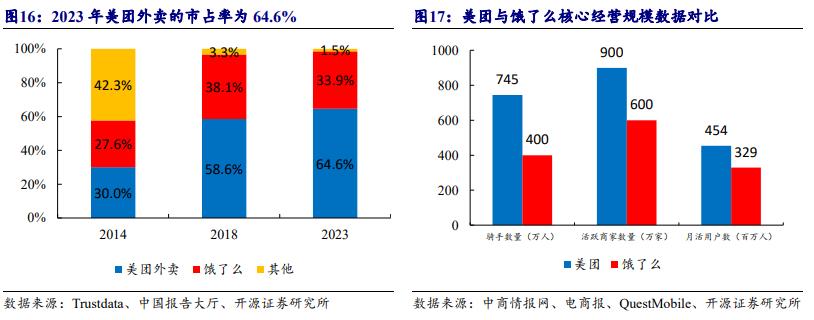
Core Insights - Hema X membership stores in Beijing will cease operations starting July 31, marking the complete closure of Hema X stores in the city [1][2] - Hema X, which aimed to compete with Sam's Club by offering high-quality products and bulk purchasing, has seen over half of its stores shut down nationwide since early last year [2] - Despite achieving profitability for nine consecutive months and a customer growth of over 50%, Hema's strategic value within Alibaba has diminished, leading to a need for self-sufficiency [2][3] Financial Performance - Hema reported overall profitability for nine months, with a customer base increase exceeding 50% [2] - The closure of Hema X stores reflects a broader trend of strategic shifts within Alibaba, where Hema has been required to be self-sustaining since 2021 [3][12] Strategic Positioning - Hema's decline in strategic importance within Alibaba contrasts with the continued support for Ele.me, which is seen as having high strategic value due to its logistics infrastructure [3][10] - The competitive landscape has intensified with Alibaba's entry into the instant retail market, where Ele.me has been actively engaged against rivals like JD and Meituan [4][5][6] Market Dynamics - Meituan maintains a dominant position in the food delivery market, with a market share of 64.6% in 2023, projected to rise to 65% in 2024 [9] - Hema's inability to effectively participate in the instant retail battle has led to its strategic sidelining, as it lacks the logistics capabilities that Ele.me possesses [11][12] Historical Context - Hema was established to capture the grocery market, but its various business models have struggled to achieve sustainable profitability [20][24] - The shift in Alibaba's strategy in 2021, which emphasized independent profit and loss responsibility for its business units, has left Hema in a precarious position [12][14][17] Competitive Landscape - Hema's attempts to innovate and capture market share have been met with challenges, as evidenced by the struggles of similar models like Meituan's "Little Elephant" fresh food stores [23][24] - The high costs associated with fresh food logistics and the need for a robust supply chain have made the grocery business particularly difficult [23][24] Leadership and Future Outlook - The retirement of former CEO Hou Yi and the subsequent lack of strategic direction have contributed to Hema's decline [30][36] - The relationship between Hou Yi and Alibaba's leadership has been pivotal in Hema's history, but the current environment suggests a shift away from its original innovative spirit [36][37]