绿色转型

Search documents
实施城乡居民增收计划、降准降息等工具灵活高效运用、增加普通高中学位……深度解读中央经济工作会议
Mei Ri Jing Ji Xin Wen· 2025-12-12 10:01
Group 1 - The core viewpoint of the Central Economic Work Conference emphasizes the need to fully tap economic potential, combining policy support with reform and innovation, and integrating investment in both physical assets and human capital [2][3] - The fiscal policy will shift from increasing the fiscal deficit rate to maintaining necessary levels of fiscal deficit, total debt, and overall expenditure, while enhancing fiscal management and optimizing expenditure structure [23][24] - The monetary policy will focus on promoting stable economic growth and reasonable price recovery, utilizing various tools such as reserve requirement ratio cuts and interest rate reductions to maintain liquidity [29][30] Group 2 - A plan to increase urban and rural residents' income will be implemented, alongside actions to boost consumption and enhance the supply of quality goods and services [11][22] - The real estate market will be stabilized through targeted measures, including encouraging the acquisition of existing housing for affordable housing purposes and reforming the housing provident fund system [45][48] - The energy sector will focus on developing a new energy system, expanding green electricity applications, and implementing comprehensive waste management actions [51][54] Group 3 - The conference outlines eight key tasks for economic work in the coming year, including prioritizing domestic demand, driving innovation, and enhancing high-quality development [10] - The emphasis on a dual circulation development pattern highlights the importance of domestic markets while maintaining a balanced approach to external trade [19][44] - The need for a robust regulatory framework for emerging technologies, particularly in artificial intelligence, is underscored to ensure safety and ethical standards [35][41]

2025中国上市公司ESG发展报告发布
Zhong Guo Hua Gong Bao· 2025-12-12 07:07
Core Insights - The report indicates that Chinese enterprises are transitioning from "compliance disclosure" to "proactive layout" in their ESG practices, reflecting a deeper and broader engagement in sustainability efforts [2]. Group 1: ESG Development in China - The Chinese ESG ecosystem is maturing, with an improving regulatory framework that supports sustainable development [1]. - China is leading in global sustainable development through significant advancements in non-fossil energy and biodiversity protection initiatives [1]. - The sustainable investment market in China is shifting from a "scale-oriented" approach to one focused on "value creation," with a total scale of ESG public funds reaching 268.29 billion yuan by June 2023 [1]. Group 2: Corporate ESG Practices - Over 70% of companies are expected to disclose carbon reduction measures by 2024, with 38% addressing biodiversity or land resource protection [2]. - Companies have reported a year-on-year decrease in total greenhouse gas emissions and intensity by 11% and 12%, respectively [2]. - More than 27% of companies will achieve 100% employee training coverage, and 75% are focusing on resilient supply chain management [2]. Group 3: Governance and Oversight - Over 70% of companies will establish board or committee oversight for sustainability efforts, with more than 40% integrating ESG factors into risk management and internal control systems [2]. - There is a notable decrease in corporate governance negative events, and employee stock ownership and incentive mechanisms are being more widely adopted [2]. Group 4: Recommendations for ESG Practices - The report suggests six measures to enhance ESG practices, including strengthening policy implementation, building internal mechanisms for sustainable practices, and enhancing local ESG rating functions [3]. - It emphasizes the importance of digital integration to improve governance efficiency and the need for international collaboration to support sustainable development [3].
券商解读中央经济工作会议:八项经济工作任务各有亮点
Sou Hu Cai Jing· 2025-12-12 07:06
Core Viewpoint - The Central Economic Work Conference held on December 10-11 emphasizes five essential approaches for economic work under new circumstances, including fully tapping economic potential and combining policy support with reform innovation [2] Group 1: Domestic Market and Consumption - The conference highlights the need to build a strong domestic market, focusing on boosting consumer spending and income to enhance residents' consumption capacity [3] - Specific measures include implementing actions to stimulate consumption, improving supply quality, and stabilizing employment and income expectations [3] - The emphasis is on optimizing policies for service consumption and removing unreasonable restrictions in the consumption sector [3] Group 2: Innovation and New Momentum - The conference stresses the importance of innovation-driven development and aims to establish international technology innovation centers in key regions [4] - It calls for a new round of high-quality development actions for key industrial chains, particularly in electric vehicles, photovoltaics, and energy storage [4][5] - Policies will focus on enhancing the innovation ecosystem and protecting intellectual property rights in emerging fields [4] Group 3: Reform and Market Vitality - The conference outlines reforms to enhance market vitality, including the establishment of a unified national market and addressing "involution" in competition [6][7] - It emphasizes the need for tax system reforms to improve local financial capabilities and support consumer-driven competition [7] - Measures will also target the revitalization of state-owned and private enterprises, addressing issues like overdue payments to private firms [7] Group 4: External Cooperation and Trade - The conference reiterates the importance of steady external openness, particularly in the service sector, and encourages the development of digital and green trade [8] - It aims to accelerate the signing of regional and bilateral trade agreements to enhance international cooperation [8] Group 5: Regional Development and Urban-Rural Integration - The conference promotes urban-rural integration and regional collaboration, focusing on the development of county towns and revitalizing rural areas [9][10] - It emphasizes the need for coordinated development among major city clusters and enhancing cross-regional cooperation [9] Group 6: Green Transition and Carbon Neutrality - The conference prioritizes green transformation, emphasizing the development of a new energy system and the promotion of energy efficiency in key industries [11][12] - It aims to expand the application of green electricity and strengthen the national carbon trading market [12] Group 7: Social Welfare and Public Services - The conference addresses key social welfare issues, including employment, social security, education, and healthcare, with a focus on stabilizing the birth rate [13] - It proposes comprehensive solutions to reduce burdens on residents in these areas, aiming to enhance overall living standards [13] Group 8: Risk Management and Real Estate - The conference outlines strategies for risk management, particularly in the real estate sector, shifting focus from stabilizing prices to controlling supply and inventory [14][15] - It emphasizes the need for reforms in housing provident funds and improving the financial health of local governments [14]



隆基森特BIPV:让钢铁行业屋顶成为“低碳增值引擎”
Huan Qiu Wang· 2025-12-12 05:43
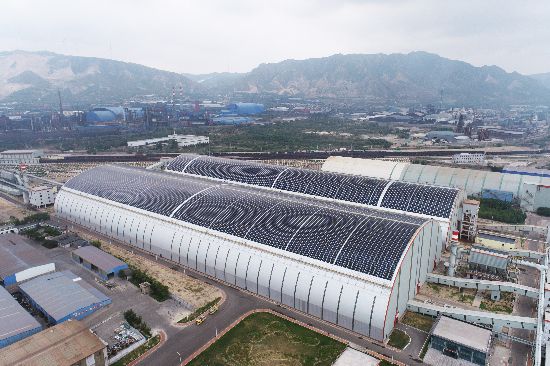
Core Viewpoint - The steel industry is facing challenges from rising energy costs and stricter carbon emission regulations, making green transformation essential for sustainable development. Longi Sente BIPV provides efficient green electricity solutions to activate space value and create new resource utilization paths for steel companies [1][2]. Group 1: New Plant Construction - Longi Sente BIPV integrates green power generation solutions with new plant construction, maximizing energy efficiency. The Baowu Taigang hot-rolling plant project exemplifies this approach, incorporating an 11MW Longi system from the start, which avoids resource waste and ensures every inch of roof space is utilized for power generation [1]. - The project is expected to reduce carbon emissions by approximately 240,000 tons over its lifecycle, saving significant energy costs and providing a competitive advantage in carbon asset accumulation [1]. Group 2: Old Plant Renovation - The renovation of old plants addresses common issues such as roof leaks and high maintenance costs. The Baowu New Steel silicon steel plant project serves as a model, implementing a 2.55MW Longi system that eliminates leakage risks and significantly reduces maintenance expenses while generating 55.5 million kWh of electricity over its lifecycle [2]. - This "renovation instead of repair" model transforms old roofs into sustainable "green assets," offering a replicable path for the renovation of aging facilities across the steel industry [2]. Group 3: Curved Roof Adaptation - Longi Sente BIPV has successfully installed photovoltaic systems on curved roofs, previously considered unsuitable for solar applications. Projects at Shan Steel Long Steel and Jiangsu Changqiang Steel achieved installed capacities of 8.73MW and 18.12MW, respectively, by using a "follow slope" installation method [2][4]. - These projects demonstrate that there are no unsuitable roofs, only solutions that have not been identified, unlocking previously unusable curved roof resources and generating significant electricity over their lifecycles [4]. Group 4: Dusty Environments - The steel production environment often generates dust, which can hinder the efficiency of photovoltaic systems. Longi Sente BIPV incorporates a dust prevention design that allows for self-cleaning through rainwater, reducing maintenance costs and preventing power loss due to dust accumulation [6]. - This design can enhance electricity generation by 6% compared to traditional photovoltaic products, further increasing profitability for steel companies [6].
稳中向新:2026中国经济的“加速密码”
Sou Hu Cai Jing· 2025-12-12 05:34
Core Viewpoint - The article emphasizes that the Chinese economy is not merely relying on luck for 2026, but rather on patience, structure, and practical efforts, suggesting a steady rhythm will lead to faster progress [5] Group 1: Economic Strategy - The year-end review and planning for the upcoming year highlight the importance of addressing pressures while maintaining a clear long-term positive outlook, which serves as a stabilizing factor [4] - The policy approach is characterized as a combination of precise measures, with continued active fiscal policies and flexible monetary policies aimed at boosting consumption, investment, and innovation simultaneously [4] - The focus on domestic demand is prioritized, with a clear logic that stabilizing income and consumption will naturally stabilize expectations [4] Group 2: Structural Changes - The article identifies new productive forces, artificial intelligence, and green transformation as key areas for economic acceleration, emphasizing the need to optimize new growth while revitalizing existing resources [4] - The stance against "involutionary competition" indicates a shift towards higher quality economic development rather than mere expansion [4] Group 3: Reform and Opening Up - Ongoing reforms in the unified market, private economy, and capital markets are highlighted, along with a shift in foreign trade focus from goods to services and digital trade, enhancing the attractiveness of the Chinese market [4] - The article suggests that true strength comes from freedom within order, reflecting a commitment to reform and opening up [4] Group 4: Social Welfare - The emphasis remains on improving livelihoods through concrete actions in employment, education, healthcare, and housing, reinforcing that stabilizing expectations equates to stabilizing confidence [4]

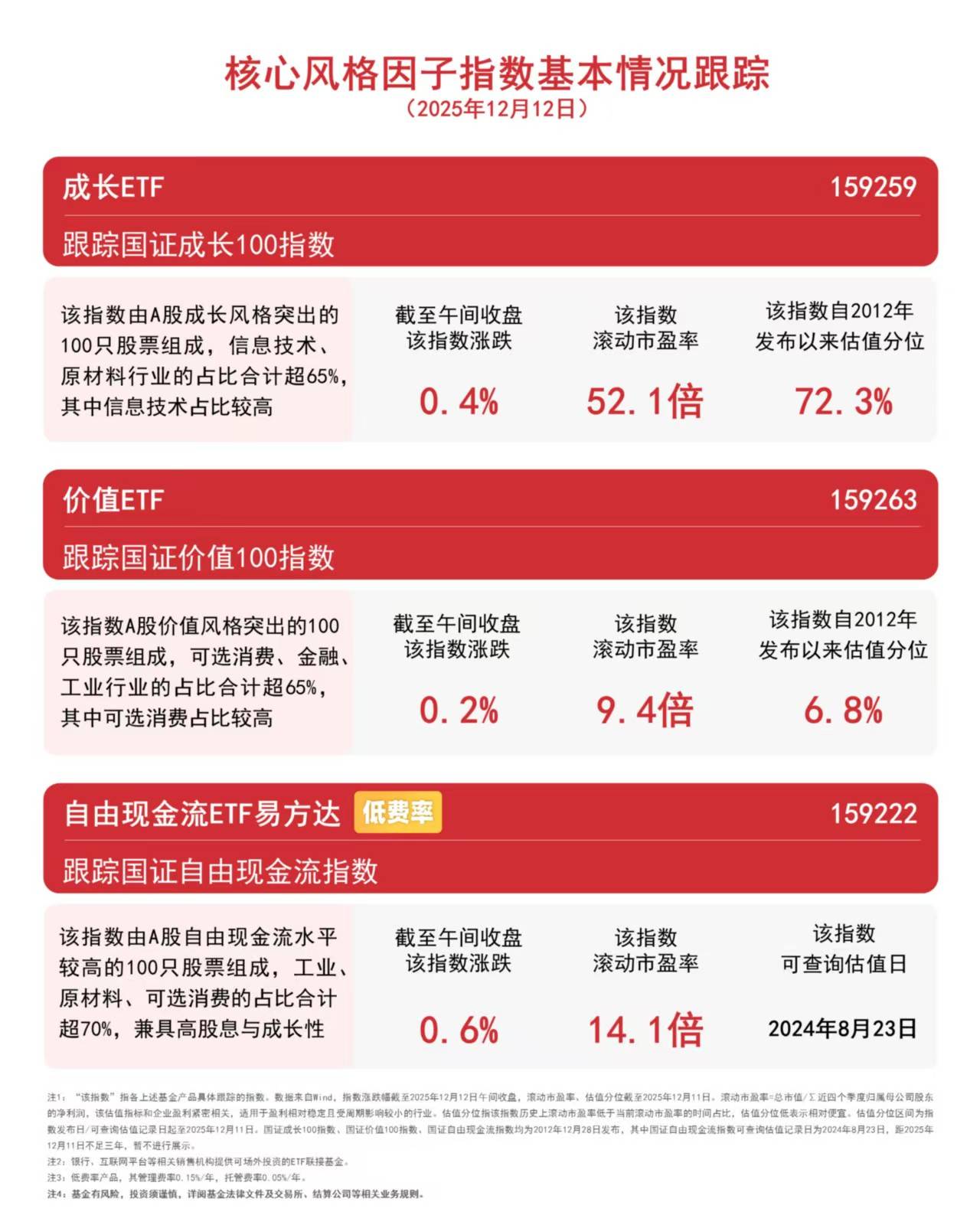
板块分化,自由现金流指数展现韧性,关注自由现金流ETF易方达(159222)等产品配置机会
Sou Hu Cai Jing· 2025-12-12 05:04
Group 1 - The core viewpoint of the articles highlights a mixed performance in the stock market, with a notable resilience in the free cash flow index, which rose by 0.6% [1] - The China Securities report emphasizes the contradiction of "strong supply and weak demand," suggesting a focus on achieving qualitative improvements and reasonable quantitative growth in the economy [1] - It is anticipated that policies will increasingly prioritize domestic demand in the coming year, with an expected enhancement in consumer resilience and a focus on innovation and reform [1] Group 2 - The report indicates that the effectiveness of policy coordination and implementation will be crucial, particularly in promoting multi-sector cooperation and green transformation [1] - Overall, the expectation is for stable economic growth through 2026, with continued policy support for high-quality development [1]
宝马集团设定2035年减排新目标 约200家中国核心供应商承诺使用绿电
Xin Lang Cai Jing· 2025-12-12 04:22
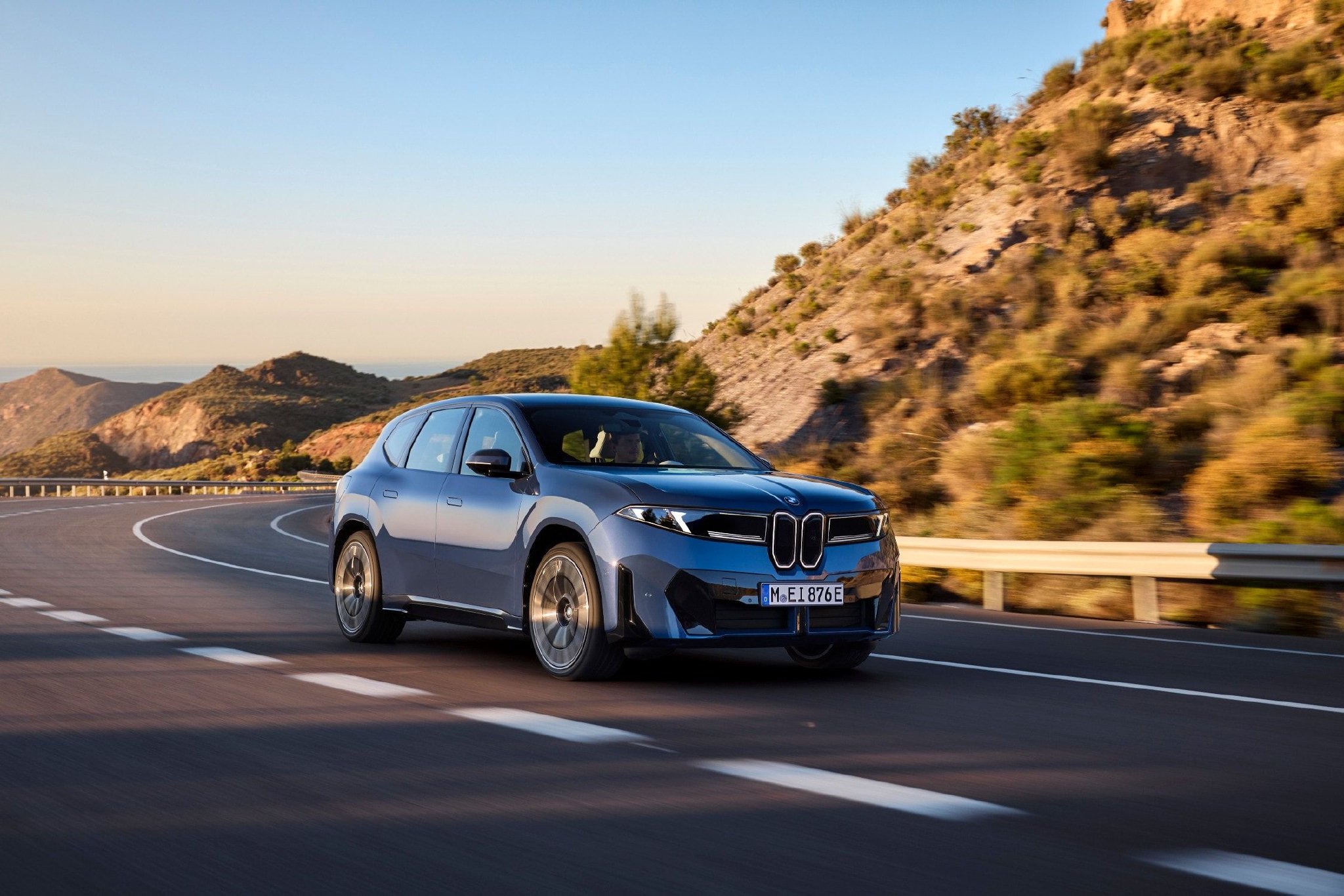
Core Insights - BMW Group has announced a new emission reduction target, aiming to cut at least 60 million tons of CO2 equivalent by 2035 compared to 2019 levels, which is an increase of approximately 20 million tons from the previous 2030 target [2][7] - The company is committed to achieving net-zero emissions by 2050, aligning its actions with the Paris Agreement [4][10] Emission Reduction Strategy - BMW's strategy focuses on a full lifecycle carbon reduction approach, with a goal to reduce lifecycle CO2 emissions by at least 40 million tons by 2030 compared to 2019 [4][10] - By 2035, the company aims to halve the CO2 emissions per euro of revenue compared to 2019 levels [4][10] Key Initiatives - Core initiatives to achieve these targets include increasing the use of renewable energy in production and supply chains, enhancing the utilization of recycled materials, optimizing energy efficiency during the usage phase, and advancing product and technology innovation [4][10] - BMW plans to expand its electric product lineup as part of its multi-technology strategy [4][10] Production and Sustainability Efforts - Since 2020, all BMW factories globally have sourced 100% of their electricity from renewable sources [5][11] - The Shenyang production base has been recognized as a national green factory for nine consecutive years and is set to generate 91.86 GWh of solar power by 2024, equivalent to the annual electricity consumption of about 30,000 households [5][11] - A geothermal heating project will begin operations in 2025, utilizing renewable geothermal energy to reduce carbon emissions by approximately 18,000 tons annually [5][11] Supplier Engagement and Recycling - BMW is actively engaging local suppliers, with around 200 core suppliers in China committing to use green electricity for producing BMW components, aiming for a reduction of about 1 million tons in supply chain carbon emissions by 2024 compared to 2019 [6][12] - The company has achieved 100% recycling of retired power batteries in China, with over 2,100 tons of recycled battery materials expected to be reused by 2024 [6][12] New Product Launch - The upcoming "new generation" models in China will feature the sixth-generation BMW eDrive technology, designed to minimize energy loss while enhancing electric driving enjoyment [6][12]
合成树脂:成功构建现代产业体系
Zhong Guo Hua Gong Bao· 2025-12-12 02:49
Core Insights - The "14th Five-Year Plan" period is a critical stage for China's synthetic resin industry, transitioning from scale expansion to quality improvement and from technology following to independent leadership [1] Group 1: Industry Growth and Capacity - The synthetic resin industry achieved historic breakthroughs during the "14th Five-Year Plan," reversing the reliance on imports, with domestic production and consumption expected to reach 127 million tons and 137 million tons respectively in 2024, marking increases of 7.4% and 5.2% year-on-year [2] - The self-sufficiency rate of synthetic resins improved from 73% in 2020 to 90% in 2024, with many previously imported varieties now produced domestically [2] Group 2: Product Structure Optimization - The industry has developed a collaborative growth pattern of "general + engineering + specialty" resins, with general resin capacity reaching 122 million tons in 2024, accounting for 80% of total capacity [3] - Engineering plastics production is globally leading, with polycarbonate (PC) production increasing from 610,000 tons in 2015 to 3.81 million tons in 2024, and nylon 66 rising from 275,000 tons to 1.261 million tons in the same period [3] Group 3: Technological Advancements - Significant breakthroughs in core technology and equipment have been achieved, with major ethylene and aromatic production technologies now largely autonomous, and coal-to-olefins (MTO) technology leading globally [4] - The competitiveness of equipment exports has been highlighted, with companies exporting to over 130 countries and regions [4] Group 4: Circular Economy and Sustainability - The synthetic resin industry has established a closed-loop ecosystem covering the entire lifecycle from synthesis to recycling, integrating deeply into national strategic emerging industries [5][6] - Breakthroughs in physical recycling and chemical recovery technologies are expected to increase the plastic recycling rate to over 30% by 2025 [6] Group 5: Internationalization and Regional Development - The industry is actively integrating into a "dual circulation" pattern, with synthetic resin exports projected to exceed 17 million tons in 2024, expanding markets beyond Asia and Europe to the Middle East, Africa, and South America [7] - Regional clusters have formed in China, with five provinces accounting for nearly half of the national production, leveraging local resources to build a closed-loop industrial chain [7]
迈向十五五:稳中求进,新质领航:策略点评报告:中央经济工作会议政策解读与投资展望
Huafu Securities· 2025-12-12 01:55
Group 1 - The core conclusion of the report emphasizes a stable and progressive approach to economic development, marking the beginning of a new chapter in high-quality growth [7] - The macro policy interpretation highlights a focus on enhancing the effectiveness of economic governance and ensuring consistency in policy direction, aiming to boost social confidence and market expectations [8] - The report outlines eight key tasks for 2026, with a focus on domestic demand and innovation as primary drivers for short-term stability and long-term growth [13][14] Group 2 - The investment strategy suggests that investors should focus on two main lines: "policy support certainty" and "new quality growth space," particularly in areas such as domestic demand recovery, technological innovation, and green transformation [7][17] - Specific investment recommendations include targeting sectors that benefit from income recovery and consumption scene restoration, as well as those involved in infrastructure and public utilities with stable dividends [17][18] - The report identifies opportunities in the real estate sector, particularly in revitalizing quality assets in key cities and in financial institutions that are expected to benefit from risk mitigation efforts [16][18]
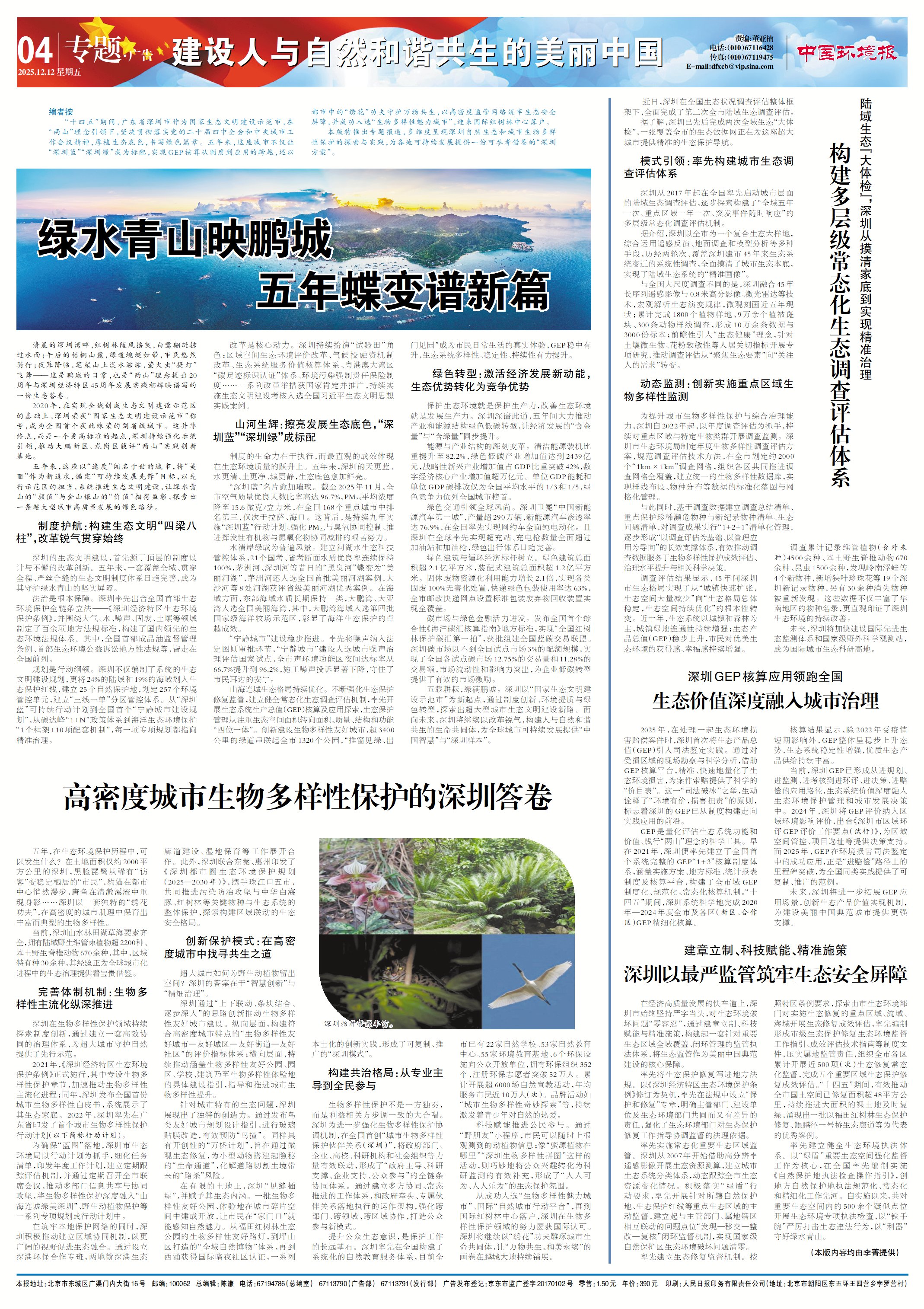
绿水青山映鹏城五年蝶变谱新篇
Zhong Guo Huan Jing Bao· 2025-12-12 01:53
Core Viewpoint - Shenzhen has made significant strides in ecological civilization construction, becoming a national model city for ecological development, integrating environmental protection with economic growth, and setting a benchmark for sustainable urban development [2][14][22]. Institutional Support - Shenzhen has established a comprehensive ecological civilization system, including the first ecological environment protection legislation in China, which covers air, water, noise, solid waste, and soil [5][17]. - The city has developed a systematic ecological civilization construction plan, designating 24% of land and 19% of sea areas for ecological protection [17][18]. Environmental Quality Improvement - Over the past five years, Shenzhen has achieved a significant improvement in environmental quality, with air quality good days reaching 96.7% and PM2.5 concentration dropping to 15.6 micrograms per cubic meter, ranking third among 168 major cities in China [20]. - The city has transformed polluted rivers into clean water bodies, with 100% of monitored river sections meeting water quality standards [20][21]. Green Economic Transformation - Shenzhen has shifted towards a green economy, with clean energy accounting for 82.2% of installed capacity and the value added of green low-carbon industries reaching 2.439 billion yuan [22][23]. - The city has become a leader in electric vehicles, with over 2.9 million units produced and a penetration rate of 76.9% for new energy vehicles [22]. Carbon Market and Green Finance - Shenzhen's carbon market has achieved significant trading volume and value, accounting for 12.75% of the national pilot market's trading volume, providing effective market incentives for low-carbon transitions [23].