
双碳

Search documents
房地产及建材行业双周报(2025/11/28-2025/12/11):中央经济工作会议提出着力稳定房地产市场,新一轮政策出台预期提升-20251212
Dongguan Securities· 2025-12-12 09:09
Investment Rating - The report maintains a "Neutral" rating for both the real estate and building materials sectors [1][3] Core Insights - The central economic work conference emphasizes stabilizing the real estate market, with expectations for new policies to be introduced to control supply, reduce inventory, and improve the quality of housing supply [4][25] - In November, first-tier cities saw a significant increase in second-hand housing transactions, reaching 49,033 units, a 20% month-on-month increase, marking a seven-month high [4][25] - The building materials sector is focusing on improving profitability, with a target for green building materials revenue to exceed 300 billion yuan by 2026 [5][47] Summary by Sections Real Estate Sector - The real estate sector is currently in a "bottoming" phase, with expectations for policy support to enhance market stability and recovery [4][25] - The report highlights a shift from high leverage and turnover to a focus on quality, service, and sustainability in the industry [4][25] - Key companies to watch include Poly Developments, Binjiang Group, and China Merchants Shekou, which are expected to perform well in the evolving market landscape [4][25] Building Materials Sector - The building materials sector has seen a slight increase of 0.89% in the last two weeks, outperforming the CSI 300 index [26] - The cement industry is undergoing structural upgrades, with over 83.59 million tons of clinker capacity being eliminated as part of the capacity replacement policy [47] - The report suggests focusing on companies with strong fundamentals and high dividend yields, such as Conch Cement, Taipai Group, and Huaxin Cement [47] Market Trends - The report notes that the overall profitability of the cement industry has significantly improved, with leading companies showing strong cash flow and performance [47] - The glass fiber sector is experiencing a shift in demand from traditional construction materials to high-growth areas such as renewable energy and high-end electronic fibers [5][48] - The report indicates that the market for photovoltaic glass is under pressure due to high inventory levels and weak demand, but long-term growth prospects remain strong [5][42]





电力设备及新能源行业双周报(2025、11、28-2025、12、11):中央经济工作会议定调深入整治“内卷式”竞争-20251212
Dongguan Securities· 2025-12-12 08:40
Investment Rating - The report maintains an "Overweight" rating for the power equipment and new energy industry [2][48]. Core Viewpoints - The Central Economic Work Conference emphasized the need to deepen the rectification of "involution" competition, particularly in the photovoltaic industry, which is expected to accelerate the exit of backward production capacity and promote the recovery of industry profit margins [4][43]. - The report suggests focusing on leading new energy companies that excel in technology and scale [4][43]. Market Review - As of December 11, 2025, the Shenwan Power Equipment industry rose by 1.32% over the past two weeks, outperforming the CSI 300 index by 0.51 percentage points, ranking 12th among 31 industries [11]. - Year-to-date, the Shenwan Power Equipment sector has increased by 40.05%, surpassing the CSI 300 index by 24.36 percentage points, ranking 5th among 31 industries [11]. - The wind power equipment sector increased by 5.79%, while the photovoltaic equipment sector decreased by 0.82% in the last two weeks [16]. Valuation and Industry Data - As of December 11, 2025, the price-to-earnings (PE) ratio for the power equipment sector is 32.90 times [24]. - The PE ratios for sub-sectors are as follows: Electric Motor II at 56.45 times, Other Power Equipment II at 51.83 times, Photovoltaic Equipment at 30.06 times, Wind Power Equipment at 33.63 times, Battery at 32.83 times, and Grid Equipment at 28.49 times [24]. Company Announcements - The report highlights significant projects and developments, including the approval of the Zhejiang UHV AC Ring Network Project with a total investment of 29.3 billion yuan, which is the highest for a single UHV AC project in China [38][39]. - The report also notes various company announcements regarding share repurchases and changes in control, indicating active corporate governance within the sector [42][43]. Weekly Perspective - The report reiterates the importance of adhering to the "dual carbon" goals and promoting a comprehensive green transition, with a focus on energy efficiency and carbon reduction in key industries [4][43]. - It emphasizes the need for technological innovation and quality improvement in the photovoltaic sector, moving away from mere scale expansion [4][43].




2025年中国会展业年会在河北沧州举办
Zhong Guo Jing Ji Wang· 2025-12-12 08:37
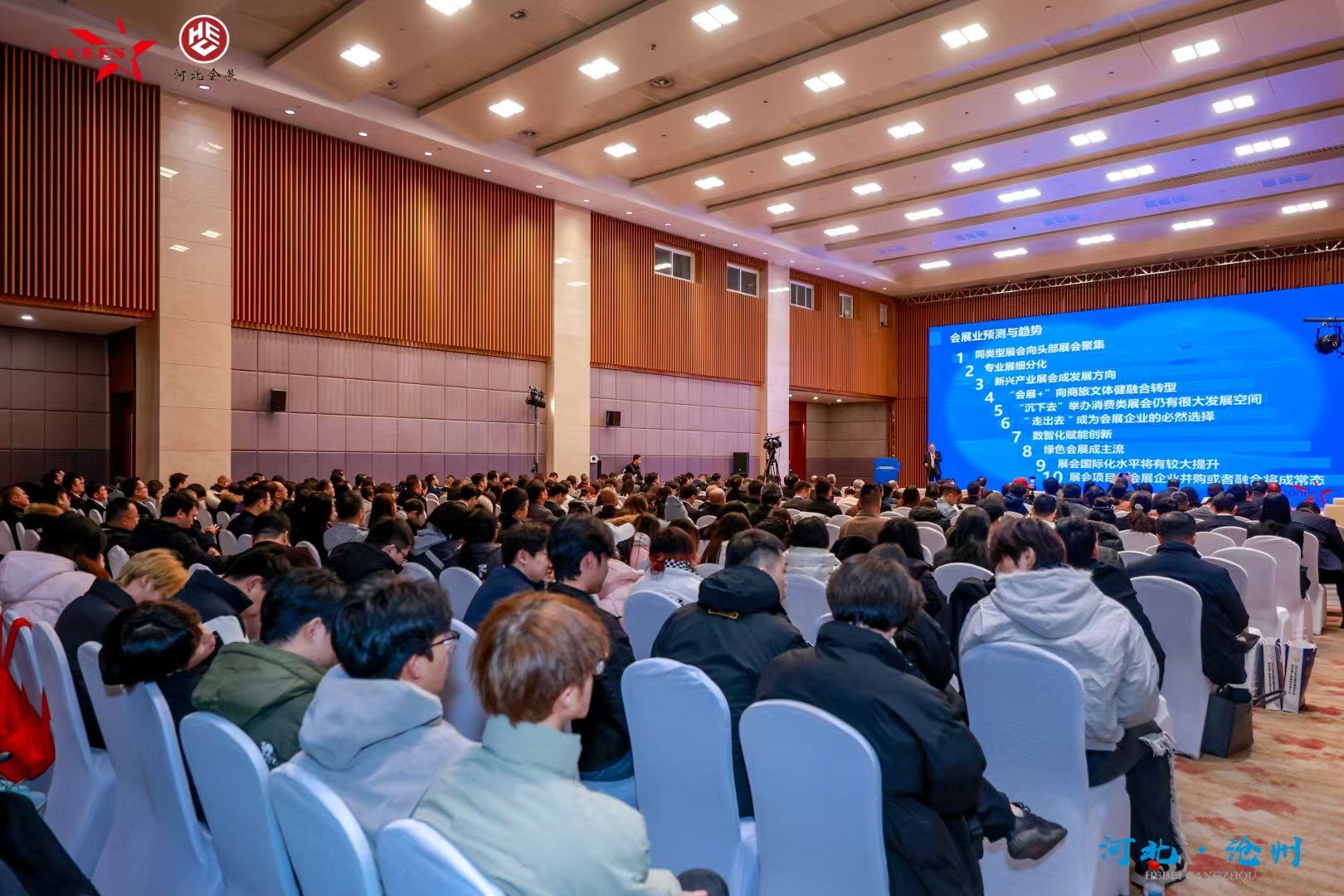
Core Viewpoint - The 2025 China Exhibition Industry Annual Conference and the Hebei Cangzhou High-Quality Development Conference for the Exhibition Economy opened, focusing on the theme of "Integration of Industry and Exhibition Empowerment, Creating a New Chapter in Consumption" to explore development opportunities and practical paths for the exhibition industry during the 14th Five-Year Plan period [2] Group 1 - The President of the China Exhibition Economic Research Association, Qu Weixi, emphasized that Hebei is aligning with national strategies to build a strong domestic market and develop new productive forces, focusing on "integration of industry and exhibition" to avoid homogeneous competition and leverage its unique industrial clusters [4] - Hebei's exhibition industry is actively responding to the "dual carbon" goals by integrating green, low-carbon, and sustainable ESG concepts throughout the planning, construction, and operation processes of exhibitions [4] - The former Chief Inspector of the Hebei Provincial Department of Commerce, An Jing, highlighted that Hebei's exhibition industry has maintained a healthy and stable development trend, becoming an important part of the Beijing-Tianjin-Hebei exhibition city cluster [5] Group 2 - The former Deputy Representative for International Negotiations at the Ministry of Commerce, Chong Quan, pointed out that exhibitions are key nodes for connecting domestic and international "dual circulation," promoting consumption and investment, and encouraging the integration of "exhibition + business travel, culture, and sports" [7] - The Honorary President of the International Exhibition Industry Association, Chen Xianjin, noted that China's exhibition venue area has seen exponential growth over the past decade, now ranking first in the world, with the top ten exhibition centers in Asia located in China [7] - The Chief Researcher of the China Exhibition Economic Research Association, Chu Xiangyin, released the "China Exhibition Industry Development Report," which provides a comprehensive overview of the industry and supports regional collaboration and strategic planning [8]

双碳周报:全国碳市场碳排放配额累计成交量明显下调-20251212
GUOTAI HAITONG SECURITIES· 2025-12-12 08:35
1. Report Industry Investment Rating There is no information provided regarding the report industry investment rating in the given content. 2. Core Viewpoints - Last week, the carbon quota trading price in the European carbon market increased, the EUA futures price in the US market decreased while the UKA futures price increased, and the KAU25 spot price in the South Korean market decreased. The carbon quota trading volume in the European and US carbon markets increased, while that in the South Korean market decreased. In the national carbon market in China, the cumulative trading volume and transaction amount of carbon emission allowances decreased, but the daily average trading price increased. The weekly trading volume of domestic pilot carbon markets increased, with trading mainly concentrated in the Hubei carbon market [2]. - Two important events occurred in the field of green development last week: the official launch of China's first pressure - energy zero - carbon data center and the successful development of the first 110 - kilowatt - class thermally coupled direct seawater electrolysis hydrogen production system device [2]. 3. Summary by Directory 3.1 International Carbon Trading Market Tracking 3.1.1 European Carbon Quota Price and Volume - EUA spot price rose from 81.92 euros/ton on December 1st to 82.56 euros/ton on December 5th, with a weekly increase of 0.78%. The EUA spot trading volume last week was 19.10 tons, a 55.28% increase from the previous week [6]. 3.1.2 US Carbon Quota Price and Volume - EUA futures price dropped from 82.64 euros/ton on December 1st to 81.98 euros/ton on December 5th, with a weekly decrease of 0.80%. The total trading volume of EUA futures last week was 369.90 million tons, a 12.87% increase from the previous week. UKA futures price rose from 55.46 pounds/ton on December 1st to 56.10 pounds/ton on December 5th, with a weekly increase of 0.64% [8]. 3.1.3 South Korean Carbon Quota Price and Volume - KAU25 spot price dropped from 10,800 won/ton on December 1st to 10,450 won/ton on December 5th, with a weekly decrease of 3.24%. The trading volume of KAU25 spot in the South Korean market last week was 35.90 tons, a 23.78% decrease from the previous week [14]. 3.2 Domestic Carbon Market Tracking 3.2.1 National Carbon Market Carbon Quota Volume and Average Transaction Price - The cumulative trading volume of carbon emission allowances (CEA) in the national carbon market last week was 681.84 tons, and the cumulative transaction amount was 399 million yuan. Both the cumulative trading volume and transaction amount decreased compared to the previous week, with a decline of 32.14% and 31.84% respectively. As of December 5th, the daily average trading price of CEA last week was 58.73 yuan/ton, a 0.61% increase from the previous week [17]. 3.2.2 Weekly Average Transaction Price of Carbon Quotas in Domestic Pilot Provincial and Municipal Carbon Markets - Except for the Guangdong Province GDEA and Fujian Province FJEA, the weekly average transaction price of carbon quotas in domestic pilot carbon markets showed a downward trend. The GDEA in Guangdong Province had the largest increase of 2.42%, and the HBEA in Hubei Province had the largest decrease of 8.59%. Compared with the same period last month (November 3rd - November 7th, 2025), except for the BEA in Beijing and the GDEA in Guangdong, the weekly average transaction price of carbon quotas in each pilot carbon market showed a downward trend, with the HBEA in Hubei Province having the largest decrease of 10.75% [20]. 3.2.3 Trading Volume and Transaction Amount of Carbon Quotas in Domestic Pilot Provincial and Municipal Carbon Markets - The carbon quota trading in domestic pilot carbon markets last week was mainly concentrated in the Hubei carbon market. Its weekly trading volume accounted for 89.25% of the total weekly trading volume of all pilot carbon markets, and the transaction amount accounted for 87.86% of the total weekly transaction amount of all pilot carbon markets. The total weekly trading volume of domestic pilot carbon markets last week was 106.16 tons, an increase of 77.37% from the previous week [21]. 3.3 Double - Carbon Frontier Technology Tracking 3.3.1 Official Launch of China's First Pressure - Energy Zero - Carbon Data Center - The first pressure - energy zero - carbon data center in China was officially launched in Shaoxing, Zhejiang. It innovatively constructs an integrated and coordinated operation system of "pressure energy - electric energy - cold energy - computing power", achieving the deep integration of electric energy, cold energy, and computing power generated by natural gas differential pressure power generation. It can provide important support for the development of "Artificial Intelligence +" applications, reaching the leading level in the industry and filling the domestic gap in related technology fields. Compared with traditional commercial data centers, it no longer relies on fossil energy for power generation, achieving "zero - carbon" operation. After the project is put into operation, the annual power generation will exceed 1.5 million kilowatt - hours, and the annual electricity cost savings will exceed 1.2 million yuan [23]. 3.3.2 China Successfully Developed the First 110 - Kilowatt - Class Thermally Coupled Direct Seawater Electrolysis Hydrogen Production System Device - The "Thermally Coupled Direct Seawater Electrolysis Hydrogen Production" achievement press conference was held in Rizhao, Shandong on December 6th. China has successfully developed the first 110 - kilowatt - class thermally coupled direct seawater electrolysis hydrogen production system device, which has achieved continuous and stable operation for more than 500 hours, marking a key breakthrough from the laboratory to engineering application in the field of direct seawater electrolysis hydrogen production. This device solves the problem that traditional green hydrogen must rely on high - purity fresh water and provides a more efficient and low - cost solution for future seawater hydrogen production and other water electrolysis hydrogen production processes [24].
【组图】2025年中国锅炉制造行业细分市场分析 锅炉行业节能减排深入推进
Qian Zhan Wang· 2025-12-12 08:18
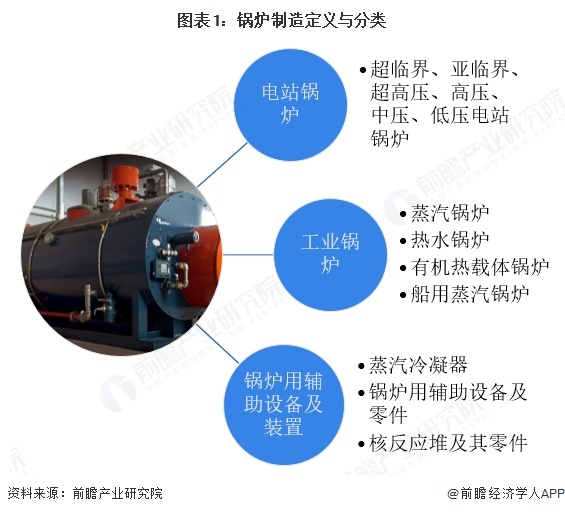
Core Insights - The boiler manufacturing industry in China is experiencing a shift towards energy efficiency and emission reduction, driven by national policies and market demands [10] Industry Overview - The boiler manufacturing sector includes the production of various types of boilers and auxiliary equipment, which convert chemical energy from fuels into thermal energy for industrial applications [1] - Major listed companies in the industry include Xizi Clean Energy, Huaguang Huaneng, Chuanrun Co., Haili Heavy Industry, Huaxi Energy, and Dongfang Boiler [1] Production Trends - Industrial boiler production in China has shown a declining trend since 2015, with a peak production of 558,100 tons in 2014, and an expected production of 203,800 tons in 2024 [3] - The production of waste heat boilers has remained stable, with an increasing market share since 2019, projected to exceed 70,000 tons by 2024 due to energy-saving renovations in high-energy-consuming industries [4] - Electric boiler production has increased from approximately 37.5 million kilowatts in 2019 to 55.0 million kilowatts in 2021, with a forecasted production of 87.5 million kilowatts by the end of 2024, reflecting a year-on-year growth of 31.8% [5] Market Segmentation and Future Trends - The market is expected to phase out coal-fired boilers with a capacity of 35t/h and below, while larger, high-efficiency, low-emission circulating fluidized bed boilers will gain market share [10] - In the industrial sector, gas-fired boilers are anticipated to dominate, focusing on decentralized heating and industrial heat applications, with a growing preference for efficient, low-carbon, and low-nitrogen emission boilers [10] - In the power generation sector, electric boilers and heat storage systems are expected to see increased demand due to reforms in the power supply side and a reduction in fossil fuel-based power generation [10]
【国泰第一时间20251212】中央经济工作会议点评
Xin Lang Cai Jing· 2025-12-12 08:07
Core Viewpoint - The Central Economic Work Conference held on December 10-11 in Beijing emphasizes the need to fully tap economic potential, combining policy support with reform and innovation, and focusing on both material and human investment to address external challenges [1][4]. Macroeconomic Policy - The conference calls for a more proactive macroeconomic policy that enhances forward-looking, targeted, and coordinated measures, aiming to continuously expand domestic demand and optimize supply [1][8]. - It stresses the importance of maintaining a necessary fiscal deficit and total debt scale while optimizing fiscal expenditure structure and addressing local fiscal difficulties [2][8]. - A moderately loose monetary policy is advocated, with a focus on promoting stable economic growth and reasonable price recovery, utilizing various policy tools to maintain liquidity [2][8]. Key Tasks - The conference outlines several key tasks, including: 1. Prioritizing domestic demand and building a strong domestic market, with initiatives to boost consumption and increase central budget investment [3][9]. 2. Fostering innovation and enhancing new growth drivers, including improving intellectual property protection in emerging fields [3][9]. 3. Promoting coordinated development and urban-rural integration, while ensuring a stable real estate market and managing local government debt risks [3][9]. Overall Attitude - The conference reflects a more optimistic and determined attitude towards future economic challenges, shifting from a focus on recognizing difficulties to consolidating and expanding economic stability [4][10]. - There is a strong emphasis on structural adjustments and reforms, with a focus on quality and efficiency improvements in macroeconomic governance [4][10]. Future Outlook - The outlook for the A-share market suggests a favorable environment for investment as policy and liquidity converge positively, with expectations for a spring market rally [6][12]. - The bond market is also expected to benefit from the conference's outcomes, with a focus on maintaining fiscal policy stability and potential interest rate cuts in early 2024 [6][12].
华泰期货董事长赵昌涛:实干担当开新局 奋勇争先谱新篇
Zheng Quan Ri Bao Wang· 2025-12-12 08:04
Core Viewpoint - The Central Economic Work Conference held on December 10-11 in Beijing provides guidance for China's economic high-quality development, emphasizing the importance of risk management and innovation in the futures industry [1] Group 1: Economic Strategy and Risk Management - The conference highlights the need to "build a strong domestic market," positioning it as a key task for the upcoming year. The company aims to enhance risk management support for the real economy by leveraging the futures market's capabilities [1] - The company plans to innovate its business model and upgrade services to provide comprehensive hedging solutions that cover the entire supply chain, thereby enhancing operational resilience for enterprises and stabilizing market supply [1] Group 2: Digital Transformation and New Growth Drivers - The conference calls for "innovation-driven development" and the company identifies digital transformation as a core path for innovation. It will utilize its self-developed intelligent hedging system "Tianji" to integrate AI and big data technologies into risk identification and decision-making processes [2] - The goal is to create an open, collaborative, and intelligent derivatives service ecosystem that enhances risk management efficiency and translates technological innovation into practical capabilities for supporting the real economy [2] Group 3: Coordinated Development and Rural Revitalization - The conference emphasizes "coordinated development" and the company is committed to extending financial services to rural areas. It aims to optimize the "insurance + futures" model and integrate it with credit financing and order agriculture [2] - The company will implement the "Five Major Revitalizations" to stabilize the supply and prices of important agricultural products, contributing to common prosperity through futures solutions [2] Group 4: Green Finance and Sustainable Development - The conference includes a focus on "dual carbon" strategies, and the company aligns its business layout with green development strategies by providing customized risk management services for green industries [3] - The company will explore service models for carbon emission rights and green electricity derivatives, assisting traditional industries in managing market risks during their green transition and directing financial resources towards low-carbon sectors [3]
德邦证券程强:“十五五”开局之年产业仍是重点,扩内需、科技创新、“双碳”值得关注
Zheng Quan Shi Bao Wang· 2025-12-12 07:09
程强表示,"十五五"开局之年产业仍是重点,扩内需、科技创新、"双碳"值得关注。政策部署更注重短 期政策力度和长期制度改革结合,会议提出"坚持政策支持和改革创新并举,必须做到既'放得活'又'管 得好'"和"坚持创新驱动,加紧培育壮大新动能"。程强认为,产业发展被提升到了一个前所未有的高 度,未来几年的工作重心将放在产业领先和安全建设方面;探索构建产业发展导向的宏观政策体系,在 推动科技创新、加快培育新动能、促进经济结构优化升级上取得实质性、突破性进展,将成为未来工作 的重要方向之一。 人民财讯12月12日电,12月12日,德邦证券首席经济学家程强表示,今年中央经济工作会议政策的总基 调更加突出"提质增效",2026年经济增速目标将调整至更务实、更符合提质增效和高质量发展要求的水 平。 ...
以“双碳”引领,中央经济工作会议提出制定能源强国建设规划纲要
2 1 Shi Ji Jing Ji Bao Dao· 2025-12-12 05:47
Core Viewpoint - The Central Economic Work Conference emphasizes the "dual carbon" goals as a guiding principle for economic work in the coming year, focusing on comprehensive green transformation and the establishment of a new energy system to ensure energy security and transition [1][3]. Group 1: Green Transformation and Energy Strategy - The conference highlights the importance of advancing energy-saving and carbon reduction transformations in key industries, with a focus on creating a strong energy nation through top-level planning [5][10]. - The "14th Five-Year Plan" is identified as a critical period for rapid green and low-carbon transformation, while the "15th Five-Year Plan" will be crucial for achieving carbon peak and green transformation [3][6]. - Energy activities account for over 80% of total carbon emissions, making it a primary battleground for achieving carbon peak goals and building a beautiful China [4]. Group 2: Renewable Energy Development - The conference calls for the expansion of green electricity applications, with renewable energy generation capacity increasing from 40% to approximately 60% [8]. - The current renewable energy landscape includes significant annual additions of wind and solar power, with green electricity now constituting one-third of total electricity consumption [8]. - Key areas for expanding green electricity applications include export-oriented enterprises, large corporations enhancing brand image, and local government mandates for high-energy-consuming sectors [8]. Group 3: Key Industry Transformation - The focus on energy-saving and carbon reduction transformations will target high-energy-consuming and high-emission industries such as steel, non-ferrous metals, building materials, petrochemicals, and data centers [9]. - Successful transformation requires a combination of technology, management, and mechanisms, including the promotion of mature technologies and comprehensive carbon management practices [9]. - The government will support these transformations through subsidies, tax incentives, and green finance to ensure that early adopters benefit [9]. Group 4: Carbon Market Development - Strengthening the national carbon emissions trading market is a key focus, with plans to expand its coverage from the power sector to include steel, cement, and aluminum industries by 2027 [11][12]. - The carbon market is seen as a core policy tool for achieving the "dual carbon" goals, with an emphasis on expanding and deepening its operational mechanisms [12]. - Future developments in the carbon market will include setting scientific quotas, ensuring data authenticity, and exploring financial innovations to mobilize funds towards green and low-carbon sectors [12].
牛凯征:建筑节能降碳路在何方?
Jiang Nan Shi Bao· 2025-12-12 04:36
Core Viewpoint - The green building materials industry is crucial for achieving China's carbon neutrality goals, requiring a dual focus on "operational carbon" and "embodied carbon" to effectively reduce emissions in the construction sector [1][2]. Group 1: Industry Development and Challenges - The green building materials industry is transitioning from scale expansion to quality and efficiency improvement, with significant achievements such as 10% growth in certification numbers and 20% annual revenue growth, reaching over 250 billion yuan [2]. - The number of pilot cities supporting government procurement of green building materials has expanded to 101, leading to over 1 trillion yuan in project investments [2]. - Despite progress, challenges remain, including insufficient adaptation to stricter carbon emission controls and a disconnect between product supply and consumer demand for quality housing [2][3]. Group 2: Solutions for Operational Carbon - Green building materials play a direct and significant role in reducing operational carbon emissions by enhancing energy efficiency through high-performance insulation and energy-saving products [4]. - The use of advanced materials, such as nano-ceramic glass energy-saving films, can significantly reduce energy consumption and carbon emissions in buildings, with potential energy savings of up to 30% in summer and 10% in winter [5][6]. Group 3: Addressing Embodied Carbon - The embodied carbon in building materials, particularly concrete and steel, constitutes a significant portion of total lifecycle emissions, necessitating improved management and quantification methods [7]. - A pioneering government procurement pilot project in Ningbo aims to establish a framework for low-carbon building material procurement, setting specific carbon emission limits for concrete and utilizing a digital platform for tracking and verification [8][9]. - The Ningbo pilot project is expected to achieve a reduction of approximately 102 tons of CO2 emissions from the procurement of low-carbon concrete, with potential city-wide reductions reaching 520,000 tons [8][9].