
关税战

Search documents
全球金融论坛| 诺贝尔经济学奖得主斯宾塞谈“关税战”:未来全球贸易或形成多边体系
Zhong Guo Jing Ying Bao· 2025-05-18 05:56
Core Viewpoint - The forum highlighted the positive changes in US-China trade negotiations, emphasizing the importance of bilateral talks and the potential for a more stable global economic environment [1][2]. Group 1: US-China Trade Relations - Michael Spence noted that the US accounts for 25% of global GDP, with 13% of its imports coming from China and 15% of China's exports going to the US, indicating significant interdependence [1]. - The ongoing trade war has negatively impacted consumer confidence in the US, which could lead to disastrous effects on the global economy if not addressed [1]. Group 2: Federal Reserve's Role - The Federal Reserve's primary tasks include managing employment and inflation, with current inflation pressures being influenced by supply and demand dynamics rather than just tariff impacts [2]. - Spence pointed out that while capital expenditures and tourism are declining, demand remains relatively stable, which could still contribute to inflationary pressures [2]. Group 3: Future of Global Trade System - Three potential scenarios for the future of the global trade system were discussed: a fragmented approach where countries act independently, a scenario where major powers exert their influence, and the most likely scenario where a multilateral system is supported by Europe, China, and other emerging markets [2]. - Despite the current US government's anti-multilateral stance, Spence believes that a multilateral system could persist and even thrive without the US, with the possibility of the US rejoining in the future [2].
美国又出大事儿了?!
格兰投研· 2025-05-17 14:42
Core Viewpoint - The article discusses the recent downgrade of the United States' credit rating by Moody's, marking the first time all three major credit rating agencies have downgraded the U.S. from its previous AAA status due to rising government debt and fiscal challenges [1][2]. Group 1: Credit Rating Downgrade - Moody's has downgraded the U.S. sovereign credit rating from Aaa to Aa1, with a stable outlook, following similar actions by S&P and Fitch [1][2]. - The downgrade is primarily attributed to increasing government debt and the rising proportion of interest payments relative to revenue [2][5]. Group 2: Fiscal Deficits and Debt Levels - The U.S. fiscal deficit has approached $2 trillion annually, with total nominal debt exceeding $36 trillion, representing over 6% of GDP, which is the highest in peacetime history [2][5]. - The U.S. Treasury Secretary acknowledged that the country is on an unsustainable fiscal path, with projections indicating that the federal deficit could reach nearly 9% of GDP by 2035 [5][7]. Group 3: Rising Interest Costs - High interest rates have led to increased debt servicing costs, with net interest expenditures expected to rise by approximately 130% by 2024 compared to 2019 levels [5][8]. - The average interest rate on outstanding U.S. debt is projected to be 3.324% in 2024, with total debt burden reaching 98% of GDP [5][8]. Group 4: Economic Implications - The trade war initiated by Trump has resulted in weakened economic conditions, leading to decreased consumer spending and increased corporate costs, which in turn affects government revenue and debt repayment capacity [8][11]. - The Yale Budget Lab estimates that proposed tax legislation could increase government debt by $3.4 trillion over the next decade, potentially reaching $5 trillion if certain temporary provisions are extended [8][12]. Group 5: Market Reactions - Following the downgrade announcement, the S&P 500 index ETF experienced a decline of over 1%, while the yield on the 10-year U.S. Treasury bond rose from 4.44% to above 4.48% [13][15]. - The article suggests that rising bond yields could lead to increased pressure on the U.S. government to address fiscal challenges, potentially impacting future economic policies [15].



关税大棒回旋镖,打疼了川总的铁票仓!
Sou Hu Cai Jing· 2025-05-17 10:32
Group 1 - The trade tariffs initially aimed at China have backfired, negatively impacting American farmers and companies like Tesla [1][3] - The chaotic tariff situation is severely harming the interests of American agricultural producers, particularly small farmers who have low risk tolerance [3][4] - U.S. poultry farmers are struggling as China, once their largest market, has reduced imports significantly [5][10] Group 2 - The U.S. soybean industry is facing devastating impacts due to tariffs, with over half of U.S. soybean production reliant on exports, primarily to China [12][14] - Brazilian farmers are benefiting from the situation as China shifts its soybean imports from the U.S. to Brazil, highlighting the competitive nature of agricultural exports [16][18] - The cost of beer cans has risen due to tariffs, leading to the closure of many small breweries, as they cannot absorb the increased costs like larger companies can [21][24] Group 3 - Despite recent talks leading to reduced tariffs, the impact on U.S. agriculture remains significant, with a 10% tariff still in place for low-value primary agricultural products [26] - Chinese manufacturers are adapting by shifting focus to domestic markets, with some companies experiencing increased sales despite the trade tensions [27][31] - The resilience of the Chinese market is evident as it continues to grow, even amidst tariffs, with exports to other countries compensating for losses in the U.S. market [34][37]

清华大学田轩:中国吸引外商投资具备独特优势,外贸企业需提高科技创新能力
Jing Ji Guan Cha Bao· 2025-05-17 10:28
Group 1 - The core viewpoint is that China possesses unique advantages in attracting foreign investment, emphasizing the need for foreign trade enterprises to enhance their technological innovation capabilities and calling for further opening of the capital market [1] - Domestic companies are currently valued at relatively low levels, and labor costs in China are among the lowest globally, making it attractive for foreign investors [1] - China has a large market and a well-trained labor force, with nearly 400 million skilled industrial workers and about 5 million graduates in science, technology, engineering, and mathematics entering the market each year [1] Group 2 - The tariff increases have created challenges for foreign trade enterprises, particularly small and medium-sized private companies, necessitating short-term policy support such as tax reductions, loan extensions, and direct subsidies [2] - In the long term, the survival of enterprises amid external shocks relies on their own capabilities, urging foreign trade companies to improve technological innovation, reduce operational costs, optimize supply chains, and explore diverse international markets [2] - Companies aiming to expand internationally must step out of their comfort zones and navigate unfamiliar political, cultural, and regulatory environments, as strengthening their own capabilities is crucial for addressing external uncertainties [2]
诺奖得主斯宾塞:关税战或助推多边贸易发展
Bei Jing Ri Bao Ke Hu Duan· 2025-05-17 09:37
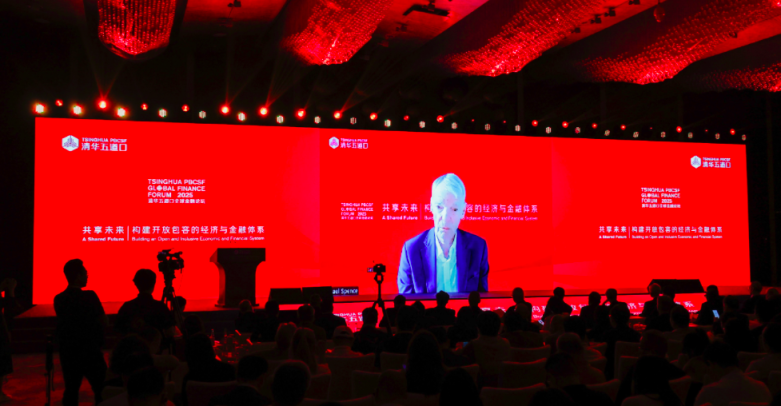
谈到贸易战的话题,迈克尔·斯宾塞表示,特朗普发起的关税战可能会推动中国、欧洲以及其他主要新兴经济体走向 一个"比较合理的、可行的"多边贸易体系。 5月17日,2001年诺贝尔经济学奖得主迈克尔·斯宾塞在2025清华五道口全球金融论坛上表示,AI发展不应局限于特定 公司或行业,开源AI模型日益增多,中美在AI领域的差距正快速缩小。 迈克尔·斯宾塞说,现在无论是中国,还是美国的很多公司都在研究一些小模型,非常有用,而且它依赖于大模型, 但是用起来会更加便宜。这些新的进展非常重要,对全球经济来讲产生了积极影响。 在经济和商业方面,迈克尔·斯宾塞表示,全球步入快速变化期。这个阶段我们能够怎么样使用AI?他表示,最主要 的是要确保AI的发展,不要只局限于某些公司或者某些行业,希望能够广泛提高生产力。在不同的AI应用领域如金 融、教育普惠方面,AI包容性越来越强,普惠性也越来越强。 对于AI在教育方面的应用,迈克尔·斯宾塞认为,应当鼓励学生负责任地使用AI,把它作为一个学习的辅助工具,无 论是在哪个学科。 斯宾塞还提到,美国发起的关税战已经削弱了消费者信心,对美国经济的负面影响开始展现,若不纠正,将对包括 中美在内的全球 ...
中国企业的国际化应该是星辰大海|微观视界
Jing Ji Guan Cha Bao· 2025-05-17 07:35
Group 1 - The "Chinese Youth Entrepreneur Star Sea Navigation Plan" aims to cultivate a new generation of globalized, innovative Chinese entrepreneurs and promote deep exchanges and cooperation between domestic and overseas Chinese entrepreneurs [1] - The plan addresses issues such as China's industrial upgrading, global value chain restructuring, and the evolution of Chinese businesses from mere traders to creators of civilization [1][2] - The U.S. tariff policy, particularly the 10% minimum benchmark tariff and the 34% tariff on Chinese goods, disrupts the internationalization strategies of Chinese companies and affects their confidence in future economic development [1][3] Group 2 - The forum titled "U.S. 'Global Tax Increase', Where to Go for Going Abroad?" was organized to discuss new challenges for Chinese companies in internationalization due to the U.S. tariff policies [1][2] - Companies are advised to adopt strategies such as collective internationalization, organizational adjustments, and a "close embrace" approach to navigate the uncertainties of the market [4][5] - The impact of tariffs on supply chains and the need for companies to enhance their understanding of customer needs and market demands are emphasized [6][8] Group 3 - Companies are diversifying their strategies in response to tariffs, with some establishing local companies in the U.S. and others adjusting production layouts in Southeast Asia [6][8] - The importance of information asymmetry in international trade is highlighted, with companies needing to understand market demands better than their suppliers [7][8] - The shift from product selling to solution selling is seen as a potential path for the future of Chinese manufacturing [8][10] Group 4 - The need for a mindset shift among Chinese companies towards understanding customer value and developing services around it is emphasized [10][11] - The relationship between national politics and international trade is complex, with businesses needing to navigate these dynamics effectively [12] - The restructuring of global trade and the importance of adapting to new market realities are discussed, with a focus on the evolving role of Chinese enterprises in the global landscape [10][19]
利空突袭!刚刚,跳水!
券商中国· 2025-05-17 05:10
美国信用评级被下调! 当地时间周五,美股盘后,穆迪将美国主权信用评级从Aaa下调至Aa1,原因是美国政府债务和利率支付比例 增加。此前,惠誉和标普全球已将美国评级调至Aaa以下,穆迪的最新决定意味着,美国这个全球最大经济体 已被国际三大信用评级机构全部降级。 受上述消息影响,追踪标普500指数的ETF基金在盘后交易中下跌1%,纳斯达克100ETF-Invesco(QQQ)跌 1.3%。美国10年期国债收益率短线从4.44%拉升至4.48%上方;两年期美债收益率涨4.5个基点,刷新日高至 4.0037%。加密货币等投机性较强的风险资产也出现跳水,以太坊从2600美元跌至2500美元以下,比特币也一 度从10.4万美元跌至10.26万美元,艾达币、BNB、XRP等纷纷跟跌。 同日,美国白宫批评国际信用评级机构穆迪当天下调美国主权信用评级的决定,称其为"政治决定"。 另据澎湃新闻消息,美国财政部周五公布的数据显示,2025年3月,美债前三大海外债主中,日本、英国增持 美国国债,中国减持。中国由美国第二大债主变为第三大债主,英国变为第二大债主。 穆迪下调美国评级 国际三大信用评级机构之一的穆迪于当地时间周五宣布,将美 ...
黄金过山车行情:趁机加仓还是继续观望?
经济观察报· 2025-05-17 04:50
价格的下跌也引发了避险资产还能否避险的讨论,这直接影响 到投资者的决策。 作者:胡艳明 封图:图虫创意 2025年5月15日上午,肖文在手机银行上买了20克黄金,价格739元/克。 早前,肖文看着国内黄金价格一路上涨而后悔没有入手。这次,他选择在价格下跌的交易日果断入 手。 近期,国际黄金价格出现较大幅度波动。5月14日,国际黄金价格持续下行,现货黄金失守3190美 元/盎司,跌破 3180美元/盎司,日内跌幅约2.24%,创4月15日以来的新低;COMEX(纽约商品 交易所)黄金期货当日下跌2.07%,收于3180.7美元/盎司;5月15日,黄金价格继续剧烈波动,现 货黄金盘中一度跌近1.80%,并跌破3130美元/盎司,此后出现V型反弹,收于3239.6美元/盎司。 价格的下跌也引发了避险资产还能否避险的讨论,这直接影响到投资者的决策。 金价回调后 肖文几年前就尝试在手机银行客户端买黄金,他最早买的时候是400元/克,但是只买了4克,这两 年黄金价格的飞涨让他后悔不已。 肖文告诉记者:"一路观望一路涨,尤其是今年4月初,国内黄金价格曾经在740元/克一度跌到720 元/克,没想到后续又快速上涨到830元/ ...

2025五道口金融论坛 |波兰前总理马雷克·贝尔卡:使美元走弱是美国的单边政策
Bei Jing Shang Bao· 2025-05-17 04:29
对于欧洲而言,马雷克·贝尔卡认为,欧洲面临着几方面的长期挑战。主要是由于生产力低下以及GDP 增长疲弱,这一点在欧洲显而易见。欧洲已经进入老龄社会,中国也进入老龄社会,但欧洲老龄社会进 程已持续很长一段时间,与任何其他世界的地区进行对比,欧洲增长会比较慢。眼前欧洲最大的挑战是 不平衡、不稳定。我们已进入不稳定的世界,欧洲目前在不稳定的国际经济之下会显得更加脆弱。如果 中美打"关税战",欧洲既不是赢家也不是输家,会变成两国相交的直接战场,对欧洲来讲没有任何好 处。欧洲一直希望可以进入和平合作的时代,但现在正面临着变革。 "我们在全球范围内看到非常危险的关税游戏正在进行中。"马雷克·贝尔卡提到,"短期来看,美国关税 的错误实施带来了几方面结果。首先是其不确定性,不仅是对于全球经济,而且对于美国经济带来了直 接的不确定性。" 马雷克·贝尔卡还提到,使美元走弱是美国的单边政策。同时,作为全球储备货币,美国在某种程度 上,又不希望美元走弱。当前可以看到资本开始流出美国美元市场,即美元已经走弱了,美元作为全球 货币以及全球储备货币位置也会逐步地走弱。美国新政府做法的危机在于其国内非常深入和深刻的社会 问题。作为科技和经济 ...
从惶恐、焦虑到“鸡血打满” 广东创业老板自述关税战下的40天
Mei Ri Jing Ji Xin Wen· 2025-05-16 15:36
Core Insights - The recent reduction of tariffs on Chinese goods from 145% to 30% has led to a surge in orders from American clients, prompting Chinese companies to ramp up production and work overtime [1][7] - The CEO of Kunyan Technology, a leading laser radar company, expressed optimism about the increased demand and the potential for growth in the foreign trade sector [1][2] - The impact of the tariff changes has been significant for small and medium-sized enterprises (SMEs) in China, with over 5,300,000 SMEs contributing to more than 60% of the national GDP [2][3] Company Performance - Kunyan Technology and other foreign trade companies have experienced a busy period, with executives actively coordinating with American clients to manage increased orders [1][2] - The company faced challenges earlier in the year when tariffs rose from 34% to 245%, leading to a temporary halt in orders from a major American client [3][4] - Following the recent tariff reduction, there has been a notable increase in inquiries and orders from clients in various countries, including Brazil, Germany, and the UK [5][6] Market Dynamics - The 137th Canton Fair saw a mixed turnout, with fewer American clients present, but unexpected interest from international clients helped boost morale [5][6] - Despite the positive outlook, the overall order volume has not reached a "explosive growth" level, with many companies still in negotiation stages for OEM orders [7][8] - Shipping costs are expected to rise due to increased demand, with major shipping companies notifying clients of upcoming price hikes [7][8] Entrepreneurial Insights - The CEO of Kunyan Technology emphasized the importance of adaptability and diversifying market strategies, recognizing the need to not rely solely on overseas markets [9] - The recent experiences have highlighted the necessity for companies to improve their operational readiness and responsiveness to market changes [9] - The CEO remains focused on product quality and technological advancement, believing that many diligent Chinese factory owners can seize opportunities in the current environment [9]
