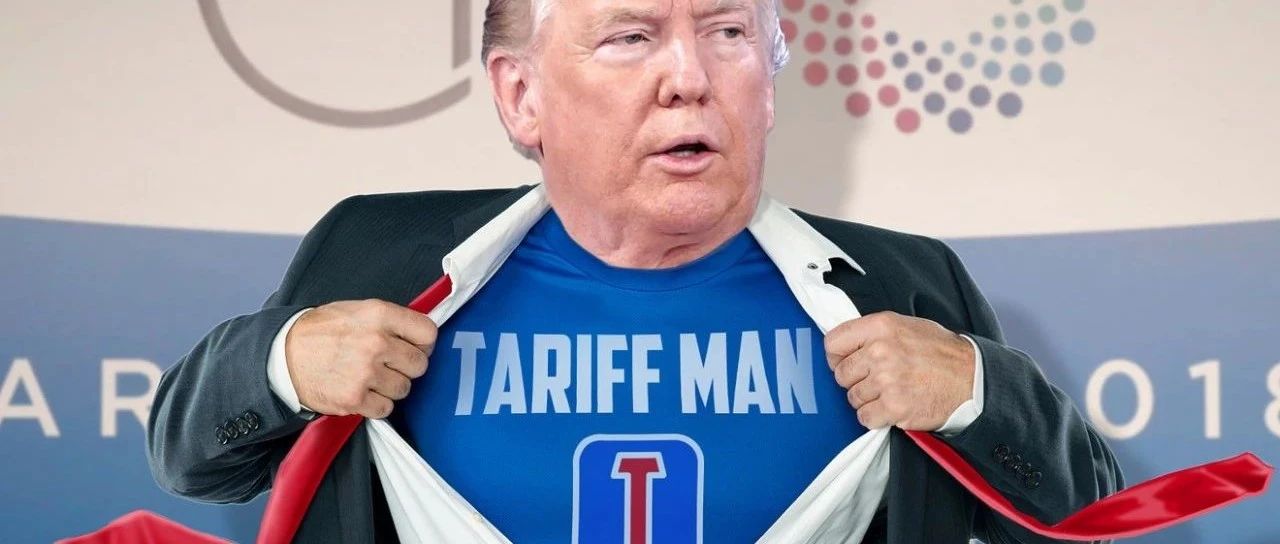
对等关税

Search documents
白宫怒批联邦法官阻止特朗普关税政策 称将上诉至最高法院
智通财经网· 2025-05-29 22:26
Core Viewpoint - The White House strongly criticized federal court rulings that blocked President Trump's global tariff policy, labeling the decisions as "judicial overreach" and calling for Supreme Court intervention [1][2]. Group 1: Legal Challenges - The U.S. International Trade Court ruled that Trump's global tariff policy is "illegal," stating that the International Emergency Economic Powers Act does not grant the president unlimited authority to impose tariffs [1]. - The federal appeals court has temporarily stayed the enforcement of this ruling, allowing the tariff policy to continue for now, while the White House has filed an appeal against the decision [1]. Group 2: Political Context - White House spokesperson Levitt criticized the judges, appointed by past presidents, as "radical judges" who are abusing judicial power and undermining the president's mandate from the public [2]. - The Republican-controlled Senate recently rejected a bipartisan proposal aimed at blocking Trump's tariff policy, which failed with a tie vote of 49-49 [2]. Group 3: Economic Strategy - Levitt emphasized that Trump's legal basis for imposing tariffs is sound and necessary for national security, arguing that the U.S. must enhance domestic manufacturing capabilities and reduce reliance on foreign adversaries [2]. - Despite legal obstacles, the administration plans to continue pursuing its trade agenda, indicating that the president has other legal authorities to implement tariffs [3].
第二家法院阻止!特朗普政府关税又被“锤”
Hua Er Jie Jian Wen· 2025-05-29 18:38
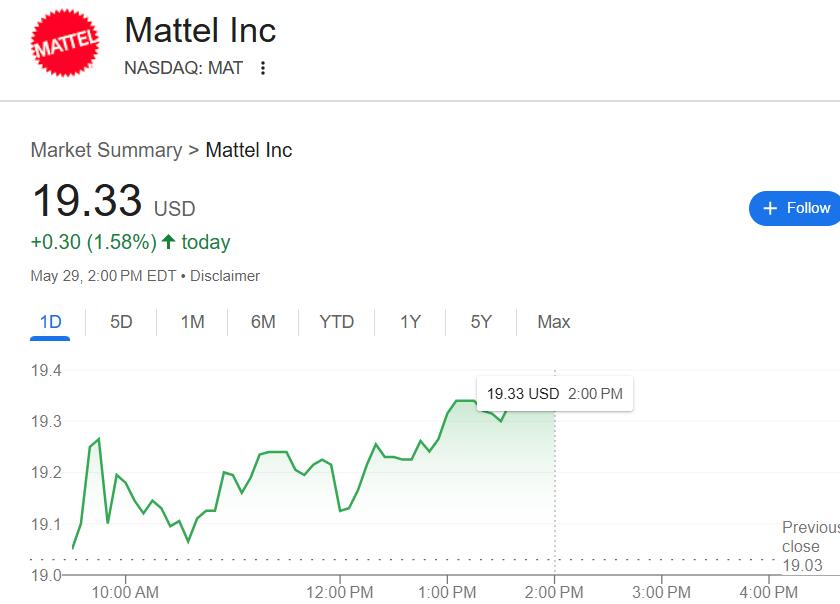
Core Viewpoint - The Trump administration's tariff actions have faced significant legal challenges, with federal judges ruling against the imposition of tariffs on toy importers in Illinois, indicating that the administration's approach may be unconstitutional and unauthorized by Congress [1][4]. Group 1: Legal Rulings - Judge Rudolph Contreras issued a ruling to block tariffs on toy importers Learning Resources and hand2mind, stating that the Trump administration's tariffs on trade with countries like China are illegal [1]. - The U.S. International Trade Court also ruled against the Trump administration's tariff policies, asserting that the president exceeded his authority by imposing tariffs on countries with trade surpluses with the U.S. [4]. - Both courts concluded that the International Emergency Economic Powers Act (IEEPA) does not grant the president the authority to impose such tariffs [5]. Group 2: Impact on Companies - Learning Resources and hand2mind, which employ around 500 workers across several states, argued that the tariffs could lead to their closure despite having survived the COVID-19 pandemic [1]. - Following the court's decision, shares of toy companies Mattel (MAT) and Hasbro (HAS) experienced fluctuations, with Mattel maintaining a gain and Hasbro slightly increasing its gains after initially dipping [2].


美联储当前的困境和策略
2 1 Shi Ji Jing Ji Bao Dao· 2025-05-29 17:23
据央视新闻报道,当地时间5月28日,美联储公布了联邦公开市场委员会(FOMC)5月6日至7日的会议 纪要。这是美国所谓"对等关税"政策宣布实施一个半月后,美联储的第一份会议纪要,以正式文件形式 反映了美联储官员对形势变化的看法,凸显了美联储当前面临的政策困境,讨论了应对策略,强化了会 议声明和美联储主席鲍威尔新闻发布会的政策立场。 孙长忠(清华大学全球私募股权研究院研究员) 面对这一特殊困境,美联储的最佳应对策略只能是保持谨慎,等待观望。"与会者一致认为,鉴于经济 增长和劳动力市场依然稳健且当前货币政策的限制性适度,(FOMC)委员会完全有能力等待通胀和经 济前景更加明朗。在一系列政府政策调整的净经济效应更加明朗之前,采取谨慎态度是恰当的。"这是 对此前美联储及鲍威尔多次强调"不急于降息""等待成本较低""处于有利态势"等观点和态度的延续和强 化,说明尽管美国通胀和失业均有上升风险,但目前美联储更侧重于通胀方面,不降息本身就是控通胀 优先。 2022年至2023年加息期间,美联储是不惜付出衰退代价也要首先把通胀降下来的,那时及此后美联储也 多次强调价格稳定是实现长期可持续就业最大化的根本和前提。5月美联储会议 ...
法院出手叫停 特朗普关税政策搁浅
Bei Jing Shang Bao· 2025-05-29 14:34
Core Viewpoint - The U.S. International Trade Court has blocked President Trump's tariff policy, ruling that the president overstepped his authority by imposing tariffs on countries with trade surpluses with the U.S. [2][4] Group 1: Court Ruling and Implications - The court's 49-page ruling prohibits the Trump administration from enforcing tariffs imposed under the International Emergency Economic Powers Act (IEEPA), stating that the Act does not grant the president the authority to issue global tariffs or retaliatory tariffs [4][5] - The ruling halts the implementation of a 10% universal tariff on most U.S. imports and certain tariffs on China, Mexico, and Canada, but does not affect the 25% tariffs on the automotive and steel industries [4][6] - This ruling is considered one of the most significant judicial setbacks for the Trump administration, effectively nullifying the legal basis for the tariff strategy during his second term [6][7] Group 2: Future Trade Negotiations - The ruling complicates ongoing trade negotiations with approximately 18 countries, as the Trump administration has relied on the "reciprocal tariffs" as leverage [6][7] - Experts believe that the court's decision may lead trade partners to halt further concessions until there is a clearer legal framework from the U.S. judicial system regarding tariff disputes [7][8] Group 3: Potential Outcomes and Strategies - If the Trump administration's appeal is unsuccessful, it could significantly undermine the strategy of using high tariffs to compel trade partners to make concessions and reduce the trade deficit [8][9] - Analysts suggest that the administration may seek alternative legal avenues to impose tariffs, potentially using different legal justifications to circumvent the court's ruling [9]
美国收到3条坏消息,中国再抛189亿美债,特朗普火速喊话中国
Sou Hu Cai Jing· 2025-05-29 14:06
Group 1 - China reduced its holdings of US Treasury bonds by $18.9 billion as of the end of March, bringing the total to $765.4 billion, marking the largest sell-off of long-term bonds since February 2023 [3] - The UK increased its holdings of US Treasury bonds by $28.9 billion, surpassing China to become the second-largest holder, while Japan remains the largest holder with $1.1308 trillion [3] - The US Treasury market experienced significant volatility following President Trump's announcement of "reciprocal tariffs," leading to a sell-off of US bonds, which are typically viewed as a safe asset [3] Group 2 - Trump expressed willingness to visit China to discuss diplomatic and economic issues, emphasizing the importance of US-China relations, although trade negotiations have not fully resolved existing tensions [4] - The US has not yet responded to China's demands to lift tariffs on imports of automobiles and steel, while increasing restrictions on technology sectors, particularly targeting Chinese companies [4] - China has been accumulating gold for six consecutive months, indicating a lack of trust in the US's intentions regarding improving bilateral relations [4] Group 3 - China's Ministry of Commerce announced anti-dumping duties on imports of certain chemicals from the US and Japan, reflecting ongoing trade tensions and a response to US actions [6] - The US has implemented new measures to strengthen AI chip export controls, specifically targeting Huawei, which may exacerbate trade relations [6] - The WTO Director-General highlighted the need for reform in the dispute resolution mechanism, calling for Japan's leadership in expanding temporary arbitration arrangements [7] Group 4 - The current state of US-China relations is characterized by challenges across trade, technology, and international regulations, with both countries needing to reassess their strategies to foster a healthier relationship [9]
格林大华期货国债期货月报:宽幅震荡格局-20250529
Ge Lin Qi Huo· 2025-05-29 14:04
1. Report Industry Investment Rating No relevant content provided. 2. Core View of the Report The China's economic growth in April showed resilience, with industrial production and exports exceeding market expectations, while fixed - asset investment and consumption slightly fell short. The 90 - day window period from the Sino - US economic and trade talks brought a short - term respite, but long - term uncertainties remain. After the central bank's reserve requirement ratio cut and interest rate cut in May, there is a low probability of another such move in the short - to - medium term. The "export rush" factor will contribute to the stable growth of the Chinese economy in the second quarter. Chinese treasury bond yields do not have much room to rise significantly, and treasury bond futures may fluctuate widely in the next month. A strategy of buying on dips and trading in bands can be considered [89]. 3. Summary by Directory 3.1. Disk Review - **Treasury Futures Active Contract Trends**: Since November 2024, the treasury futures market had a significant continuous increase until January 2025. After the central bank suspended open - market treasury bond purchases on January 10, the 30 - year variety reached a high in early February and then declined until mid - March when it rebounded. In early April, the futures prices rose due to the US tariff news, then fluctuated horizontally. After the Sino - US joint statement on May 12, prices slightly declined and then had narrow - range fluctuations [9]. - **Treasury Bond Spot Yield Trends**: Most treasury bond spot yields reached their lowest points in early January, over - reacting to the "moderately loose monetary policy." After the central bank's announcement on January 10, yields rebounded. The short - term interest rates rebounded faster than long - term ones. The 10 - year treasury bond yield reached 1.90% in mid - March, dropped rapidly in early April due to tariffs, and then stabilized. As of May 28, it was around 1.68% [12]. - **Treasury Bond Spot Yield Curve**: On May 28, compared with the end of April, the yield curve shifted upward and steepened, showing a "bear steepening" pattern. The 2 - year, 5 - year, 10 - year, and 30 - year treasury bond yields increased by 3BP, 6BP, 6BP, and 9BP respectively [15]. 3.2. Current Analysis - **Fixed - Asset Investment**: From January to April, national fixed - asset investment increased by 4.0% year - on - year, slightly lower than the expected 4.26%. General infrastructure investment (including electricity) increased by 10.85%, manufacturing investment by 8.8%, and real estate development investment decreased by 10.3%. High - tech industries and equipment purchase investment showed strong growth [20]. - **Real Estate Sales**: From January to April, the sales area of newly built commercial housing decreased by 2.8% year - on - year, and the sales volume decreased by 3.2% [23]. - **Social Consumption**: In April, the total retail sales of consumer goods increased by 5.1% year - on - year, slightly lower than the expected 5.5%. Categories such as household appliances and furniture had significant year - on - year increases [26][29]. - **Service Industry**: In April, the national service industry production index increased by 6.0% year - on - year, slightly lower than March's 6.3% [32]. - **Foreign Trade**: In April, China's exports in US dollars increased by 8.1% year - on - year, and imports decreased by 0.2%. Exports to ASEAN increased by 20.8%, to the EU by 8.27%, and decreased by 21.03% to the US. After the Sino - US joint statement on May 12, the CCFI US - West route index rebounded [35][38][41]. - **Industrial Added Value**: In April, the added value of large - scale industries increased by 6.1% year - on - year, higher than the expected 5.2% [44]. - **Industrial Profits**: From January to April, large - scale industrial enterprises' operating income increased by 3.2% year - on - year, and total profits increased by 1.4%. In April, profits increased by 3.0% year - on - year [47]. - **Social Financing and Credit**: In April, the social financing scale increased by 1.16 trillion yuan, and credit - caliber RMB loans increased by 2800 billion yuan, both lower than expected [50][53]. - **Monetary Supply**: At the end of April, M2 increased by 8.0% year - on - year, and M1 increased by 1.5% year - on - year [56]. - **Unemployment Rate**: In April, the national urban survey unemployment rate was 5.1%, a 0.1 - percentage - point decrease from the previous month [59]. - **Prices**: In April, CPI decreased by 0.1% year - on - year, and PPI decreased by 2.7% year - on - year [62][65]. - **Central Bank Policies**: The central bank cut the reserve requirement ratio by 0.5 percentage points starting from May 15 and cut the 7 - day reverse repurchase rate by 10BP starting from May 8. LPR and bank deposit rates were also lowered [68][74]. - **Exchange Rate**: From January to April, the US dollar index declined, and the US dollar against the offshore RMB dropped after a brief rise in early April. The decline of the US dollar index reduced the pressure on the RMB's depreciation against the US dollar [71]. - **Interest Rate Spreads**: The Sino - US 10 - year treasury bond interest rate spread widened slightly in May compared to April. The 10 - year and 1 - year treasury bond interest rate spread and the 30 - year and 10 - year spread were at 0.22% on May 28 [80][86]. - **Government Bond Financing**: As of May 28, government bond net financing in May was 1494.8 billion yuan, maintaining a fast pace [83]. 3.3. Strategy Suggestions Considering that Chinese treasury bond yields do not have much room to rise significantly, and treasury bond futures may fluctuate widely in the next month, a strategy of buying on dips and trading in bands can be considered [89].
全球巨震!对等关税全面停止?
Sou Hu Cai Jing· 2025-05-29 10:05
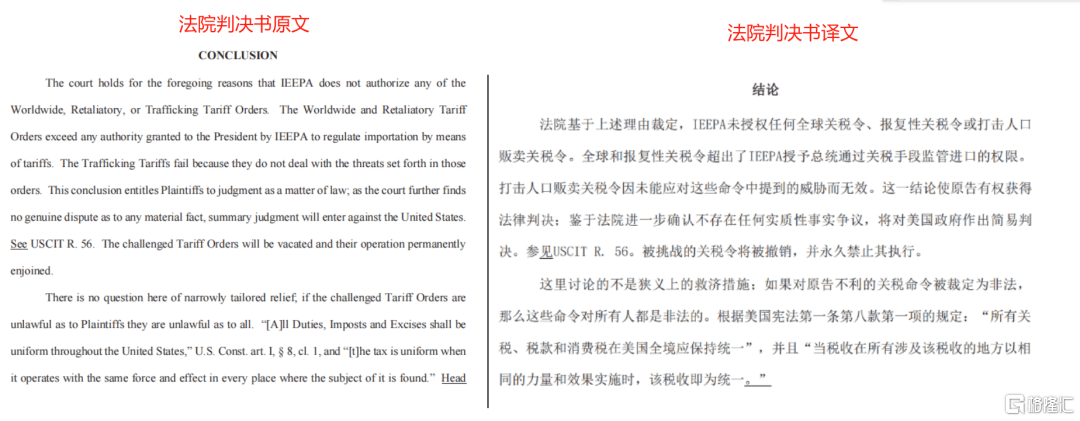
Core Points - The U.S. International Trade Court ruled that President Trump's imposition of tariffs under the International Emergency Economic Powers Act (IEEPA) exceeded legal authority, declaring the trade deficit as a "national emergency" [1][3][5] - The court's decision prohibits the enforcement of the "reciprocal tariffs" announced on April 2, emphasizing that tariffs must be uniform and have nationwide effect [2][6] - The ruling indicates that the IEEPA does not grant the president authority to implement "global tariffs" or "retaliatory tariffs," and the court found no significant factual disputes, leading to a summary judgment against the U.S. government [3][5] Impact of the Ruling - The court's decision mandates the cancellation of the reciprocal tariffs and those previously imposed on China, Canada, and Mexico related to the fentanyl issue, giving the White House 10 days to cease these tariffs [8] - Following the ruling, the Trump administration immediately filed an appeal [7] - Analysts suggest that the ruling could lead to a temporary easing of tariffs, which may positively impact the U.S. dollar and stock market if the decision holds [12] Market Reactions - The ruling has led to increased trading activity in the A-share market, with significant inflows into stock ETFs observed, indicating a shift in investor sentiment [14][27] - Despite recent inflows, there were notable outflows from major indices like the CSI 300 and CSI 500, suggesting volatility in market confidence [22][25] - The overall trading volume in the A-share market has fluctuated, with a return to over 1 trillion yuan in trading on certain days, reflecting active capital market conditions [27]
关税战非典型案例:90天不着急备货,将淡化美国市场
和讯· 2025-05-29 09:33
文/高歌 李力是一家贸易企业的负责人,他的公司位于华南区域,主营业务是向美国等发达经济体市场出口消 费电子产品。不同于To B企业对于关税的敏感度,李力感觉关税摩擦对于他所在的公司影响有限。 5月23日,李力表示:" 关税 在我们的成本中只占一小部分 , B端的模式是国外的人来这里大批量 采购货物,再分销给小B,关税提升会有一定的影响,我们是直接做C端的,影响不大。" 李力拆解了成本构成:运费、采购成本、关税以及美国当地的物流费用。其中关税并不占据绝大部 分。 目前关税价格尚未体现在产品的终端售价上,并且在可预期的未来,他所在的行业短时间内关 税提升的价格也不会显现在同类产品的价格之上,除非头部企业开始提价。 40天前,美所谓"对等关税"引发贸易震荡,美对华关税在短时间内接连攀升,一度高达145%。随 后中美日内瓦经贸会谈的落定为此轮关税摩擦摁下暂缓键。 5月12日公布的联合声明显示,美方承诺尽快取消4月8日和9日对华加征的91%非理性高额关税,同 时将34%所谓"对等关税"中24%的部分暂缓90天。 下一步中美经贸谈判迎来缓冲期。 李力在过去一个月的时间中在外贸一线亲历上述转变,他只觉得一切都"太快了"。他 ...

如果对等关税被叫停,特朗普还能怎么加关税?
华尔街见闻· 2025-05-29 09:32
Core Viewpoint - The U.S. International Trade Court's ruling halts President Trump's proposed tariffs, indicating potential legal and procedural challenges for the administration in implementing new tariffs [1][2][12]. Group 1: Court Ruling and Government Response - The U.S. International Trade Court blocked Trump's tariff policy, ruling that he overstepped his authority by imposing tariffs on countries with trade surpluses with the U.S. [1] - Goldman Sachs views the court's decision as relatively insignificant, suggesting that the Trump administration may utilize alternative legal provisions to impose tariffs [1][6]. - The White House has expressed a strong response, indicating it will leverage all available administrative powers to counter the ruling [2][3]. Group 2: Alternative Legal Provisions for Tariffs - The Trump administration has several alternative legal options to impose tariffs, including the Trade Act of 1974's Section 122, Section 301, and Section 232 [6][10]. - Section 122 allows for a rapid imposition of tariffs up to 15% without lengthy investigations, but it has a maximum duration of 150 days [7]. - Section 301 is a powerful tool for addressing unfair trade practices, allowing for unlimited tariffs but requiring lengthy investigations of 12-18 months [8][9]. - Section 232 grants broad authority to impose tariffs based on national security concerns, which has been used previously for steel and aluminum tariffs [10]. Group 3: Implications of the Court Ruling - The ruling signifies a structural shift in U.S. tariff policy, moving from unilateral executive actions to a more bureaucratic and evidence-based approach [12]. - The loss of the IEEPA as a tool for immediate and broad tariffs diminishes the Trump administration's leverage in trade negotiations, shifting focus to specific industries and unfair trade practices [13][14]. - The ruling establishes a precedent that emphasizes the need for adherence to established legal procedures in tariff imposition, reinforcing Congressional authority over trade matters [14].
宋雪涛:特朗普关税的中场战事
雪涛宏观笔记· 2025-05-29 09:16
如果关税未能持续征收,将削弱特朗普在国内外宣扬其经济成就和贸易强硬立场的说服 力,对其政治遗产和未来执政能力构成实质性挑战。 白宫对CIT的裁决将上诉至华盛顿特区的美国联邦巡回法院,最终可能上诉至美国最高法院。在上诉期 间,白宫可能会寻求紧急中止令,暂缓执行裁决,继续征收关税。 这次裁决给予行政部门最多10天时间完成停止征税的行政程序。如果特朗普政府在此期间成功获得了 紧急中止令,那么关税将继续征收,直到上诉法院或最高法院作出进一步裁决。 3、即使上诉最终失败,特朗普政府仍然可能寻求援引其他法律授权来复刻"对等关税"的效果。 文:国金宏观宋雪涛 5月28日,美国国际贸易法院(CIT)做出了一项重要裁决:认定"特朗普宣布的全球关税行政命令, 以及随后对报复国家征收额外关税的命令"均超出了总统在《国际紧急经济权力法》(IEEPA)下的权 限。此外,法院还裁定,以打击毒品贩运为由对墨西哥和加拿大征收关税的行政命令也属非法,原因是 这些关税未能有效解决毒品 贩运问题。 1、这次裁决暂停了特朗普绝大多数关税——"对等关税"和针对中国、加拿大和墨西哥征收的与芬太尼 相关的关税。 232条款和301条款加征的关税则不受影响 ...