
结构性需求

Search documents
多头趋势未改 黄金震荡上行仍是主旋律
Jin Tou Wang· 2026-01-07 06:00
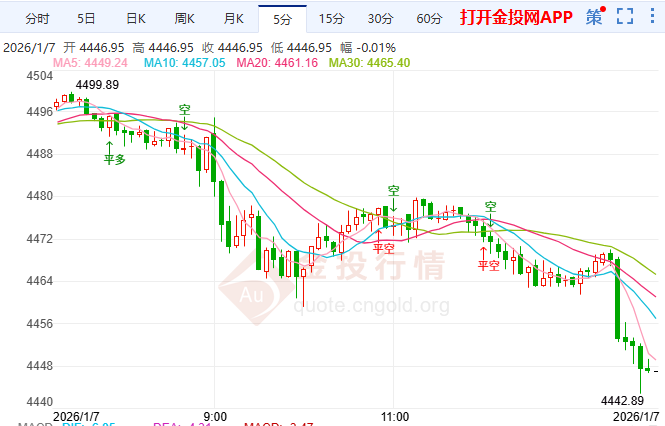
Group 1 - The core viewpoint is that gold enters 2026 with strong historical upward momentum, despite being labeled "overbought" in 2024-2025, and the market's positioning remains reasonable, with gold showing the smallest pullback among precious metals [1][3] - The primary driving logic for gold's rise in 2024-2025 is the low real yields caused by political uncertainty in the U.S., which is expected to continue into 2026 due to high government spending pushing inflation expectations and a dovish interest rate environment [3] - Central bank purchases are a long-term key support for gold prices, with global reserve allocation imbalances leading to accelerated buying from central banks in 2024-2025, particularly from countries like China and Turkey [3] Group 2 - Geopolitical tensions, such as the Russia-Ukraine conflict and recent events in Venezuela, are significant catalysts for gold prices, as risk aversion drives funds towards gold [3] - The emergence of AI narratives has injected industrial demand into the precious metals sector, potentially offsetting weak jewelry consumption and reinforcing the trend of gold prices moving in tandem with the Nasdaq index [3] - Potential risks include unexpected hawkish moves from the Federal Reserve or a surge in long-term yields, but current market expectations lean towards easing, providing a buffer for gold prices [3] Group 3 - Monthly gold prices maintain a bullish channel, but the RSI is at historical highs, indicating a need for time correction; weekly analysis shows fluctuations around the 10-week moving average [4] - Key resistance levels are identified at 4516-4544, while support levels are at 4230-4274 and 4115, with an extreme level at 4000 [4] - The strategy suggests high selling and low buying within the range, with a breakout above 4400 targeting 4516-4544, and a drop below 4230 indicating weakness [4]

2026年会是大宗商品的全面牛市吗?
对冲研投· 2026-01-02 11:04
Core Viewpoint - The article discusses the significant trends and dynamics in the commodity market for 2025, highlighting the extreme differentiation in performance among various commodities and the impact of geopolitical factors and supply-demand dynamics on pricing [4][5][6]. Group 1: Commodity Performance - Gold has reached historical highs, with prices nearing $4,550 per ounce, reflecting a year-to-date increase of over 70% [4]. - Silver has also shown remarkable performance, breaking through key price levels and reaching over $79 per ounce [4]. - Other metals like platinum, palladium, and industrial metals such as copper have also achieved significant price increases due to strong market demand [4]. Group 2: Market Dynamics - There is a stark differentiation in commodity performance, with some experiencing speculative trading while others face supply constraints [5]. - The market is witnessing a shift from broad demand recovery to a focus on supply constraints and structural demand, driven by energy transition and AI developments [5]. - The "反内卷" (anti-involution) policy in China has led to price surges in certain commodities, but the sustainability of these price increases is uncertain [7]. Group 3: Import Dependency and Price Trends - Commodities with high import dependency, such as platinum and palladium, are more susceptible to price increases due to domestic pricing power issues [9]. - The market for PX remains tight despite low import dependency, leading to price increases driven by limited supply channels [9]. Group 4: Speculative Trading and Market Sentiment - The article notes that speculative trading has become prevalent, particularly in commodities like lithium carbonate, where market sentiment can drive prices irrespective of fundamental factors [11]. - Predictions for 2026 suggest a continuation of the upward trend for precious and base metals, with copper expected to be a standout performer [12]. Group 5: Future Outlook and Considerations - The article raises questions about the potential for a comprehensive bull market in commodities in 2026, suggesting that current trading may have already priced in many expectations [13][14]. - It emphasizes the need to monitor supply-side changes and valuation concerns as many commodities may struggle to find upward momentum in the face of oversupply [15][18]. - The potential for geopolitical risks and economic uncertainties, such as the AI bubble or conflicts, could impact commodity markets significantly [19].

多家大行料金价入4500-4700 结构需支撑2026看涨
Jin Tou Wang· 2025-12-25 06:07
Core Viewpoint - The gold market is entering 2026 with a historical upward trend, supported by structural demand rather than speculative trading, despite low market participation [2][3]. Group 1: Market Dynamics - As of December 25, 2025, spot gold is trading around $4,479.42 per ounce, showing a slight decline of 0.11% with a daily high of $4,525.70 and a low of $4,448.32, indicating a short-term bearish sentiment [1]. - Major banks forecast gold prices to range between $4,500 and $4,700, with potential to reach $5,000 if macroeconomic conditions persist [1]. Group 2: Structural Demand - The core drivers for gold price increases in 2024-2025 are rooted in policy uncertainties, with the U.S. facing high fiscal spending, persistent inflation pressures, and declining real yields [2]. - Central banks are a crucial support for the structural gold market, maintaining over half of their reserves in gold, while countries like Japan hold significantly less, indicating substantial reallocation potential [3]. - The demand from central banks is characterized as structural rather than cyclical, with consistent purchasing power despite high prices [3]. Group 3: Technical Analysis - The gold price failed to break through $4,502, indicating strong resistance at this level, with key support levels at $4,467 and $4,454 [4]. - The market is expected to continue a volatile pattern, with potential for upward movement if resistance levels are breached [4].
潮水退去谁在裸泳?高盛警告:供应严重过剩,2026年铝、锂、铁矿石价格将重挫,铜价短期承压但长期坚挺
Hua Er Jie Jian Wen· 2025-12-04 19:04
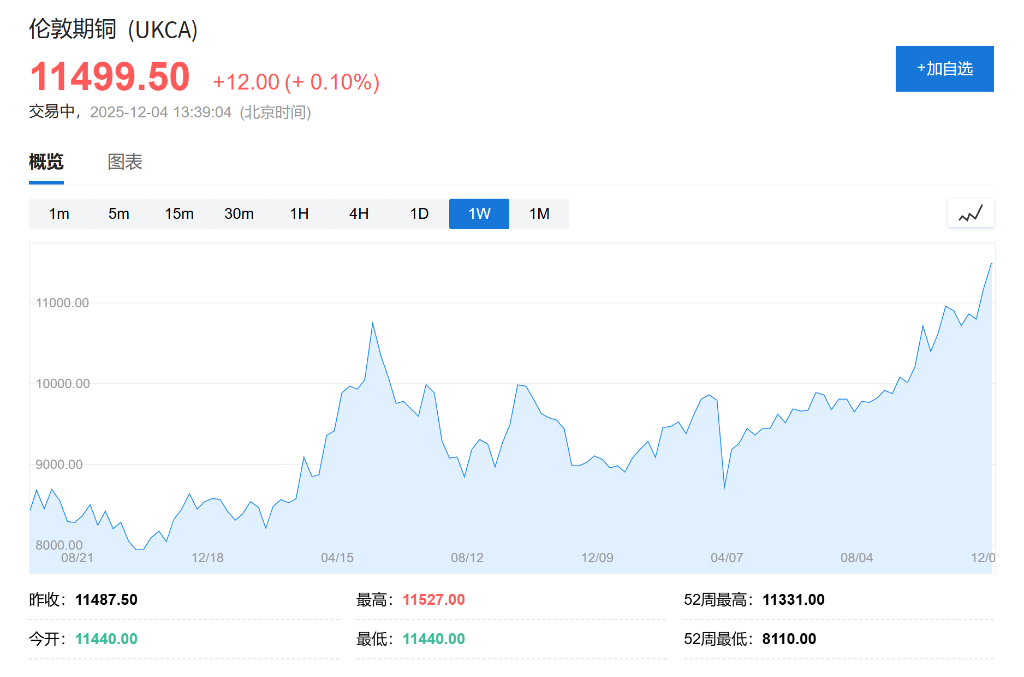
Core Viewpoint - The commodity price surge is expected to end, with a supply surplus storm projected to impact most industrial metals by 2026 [1][11]. Group 1: Copper - Goldman Sachs predicts a short-term oversupply of copper, with a forecasted surplus of 500,000 tons in 2025, leading to price difficulties in maintaining above $11,000 per ton [4][5]. - The long-term outlook for copper remains positive, with structural supply constraints and strong demand from sectors like energy transition and AI, supporting a price floor at $10,000 per ton [5][6]. - The average LME copper price forecast for the first half of 2026 has been raised from $10,415 to $10,710, with expectations of a slight price correction in the second half post-tariff implementation [5][6]. Group 2: Aluminum - Goldman Sachs maintains a bearish outlook on aluminum, predicting LME aluminum prices will drop to $2,350 per ton by Q4 2026 due to a significant supply surplus of 1.1 million tons [7][8]. - The anticipated supply surge is driven by new capacities from Indonesia and India, alongside increased production from Chinese overseas investments [7][8]. Group 3: Lithium - Despite a recent rebound in lithium prices, Goldman Sachs views this as a temporary phenomenon, forecasting a 23% decline to around $9,500 per ton by the end of 2026 due to increased supply from Africa and Australia [9][10]. - The short-term tightness in lithium supply is attributed to higher-than-expected demand for energy storage systems and operational pauses in some Chinese lithium mines [9]. Group 4: Iron Ore - The outlook for iron ore is bleak, with a projected increase in Chinese port inventories by 51 million tons in 2026, alongside a 1% decline in global seaborne demand [10]. - Goldman Sachs forecasts that iron ore prices will fall to $88 per ton by the end of 2026, driven by the need to eliminate high-cost supply from the market [10]. Group 5: Market Dynamics - The report emphasizes that the current rise in industrial metal prices is based on macroeconomic sentiment rather than solid fundamentals, indicating a potential market correction in 2026 [11][12]. - The year 2026 is anticipated to be a period of market differentiation, where only metals like copper, with genuine supply-demand tension, will remain resilient [12].

高盛:潮水退去谁在裸泳?警告!供应严重过剩,2026年铝、锂、铁矿石价格将重挫,唯有铜价“一枝独秀”
美股IPO· 2025-12-04 08:19
Core Viewpoint - Goldman Sachs warns that the current surge in industrial metal prices driven by macro sentiment is about to retreat, leading to significant market differentiation, with aluminum, lithium, and iron ore expected to see price declines by 18%, 23%, and 17% respectively by the end of 2026, while copper remains strong due to supply constraints and robust structural demand from sectors like power grids and AI [1][3]. Copper - Copper is viewed as the only metal with a positive outlook, with a price floor around $10,000 per ton due to structural demand from power grid upgrades and AI infrastructure [3][5]. - Supply constraints are highlighted, with accidents at major copper mines revealing challenges in old mines and complex geology, limiting supply growth and supporting copper prices [6]. - Strong demand is driven by strategic investments in power infrastructure, with expectations that over 60% of copper demand growth will come from this sector by 2030 [7]. - A short-term catalyst includes potential U.S. tariffs on refined copper, leading to preemptive stockpiling by traders, tightening supply outside the U.S. [7]. - Despite recent price spikes, the increase is based on future expectations rather than current fundamentals, with predictions of a 500,000-ton surplus in 2025, narrowing to 160,000 tons in 2026 [7]. Aluminum - The aluminum market faces a dual challenge of oversupply and demand risks, with Goldman Sachs recommending a short position [8]. - A supply surge is anticipated due to high prices stimulating new capacity, particularly from Indonesia and India, leading to a projected 1.1 million ton surplus by 2026 [8]. - Demand is threatened by substitution risks, as manufacturers shift from aluminum to cheaper steel in automotive production due to rising aluminum prices [8]. - Price forecasts suggest LME aluminum prices could drop to $2,350 per ton by Q4 2026 [9]. Lithium - Recent rebounds in lithium prices are viewed as temporary, with Goldman Sachs predicting a return to a surplus by the second half of 2026 [10]. - Short-term tightness is attributed to strong demand for energy storage systems and supply disruptions in China [10]. - By the end of 2026, lithium prices are expected to decline by 23% to around $9,500 per ton [10]. Iron Ore - The iron ore market's fundamentals have deteriorated significantly, with a bleak outlook for 2026 [11]. - A projected increase of 51 million tons in Chinese port inventories is expected by 2026, alongside supply increases from Australia, Brazil, and Guinea [12][13]. - Global seaborne iron ore demand is anticipated to decline by 1%, with Chinese steel production expected to drop by 2% [12]. - Price predictions indicate that iron ore prices could fall to $88 per ton by the end of 2026 [14]. Investment Strategy - The report emphasizes a strategy of "distilling the truth" for investors in 2026, advocating for long positions in copper due to its structural shortage while avoiding or shorting aluminum, lithium, and iron ore, which face significant supply pressures [14].
东方雨虹20251029
2025-10-30 01:56
Summary of Dongfang Yuhong's Q3 2025 Earnings Call Company Overview - **Company**: Dongfang Yuhong - **Industry**: Waterproofing materials and construction materials Key Points and Arguments Financial Performance - In Q3 2025, Dongfang Yuhong benefited from increased sales in membrane materials (12% YoY growth), waterproof coatings (single-digit growth), and powder products, although a price war affected revenue growth in membrane materials [2][3] - Revenue improved sequentially throughout 2025, with Q1 down 16% YoY, Q2 down about 5%, and Q3 showing over 8% YoY growth [3] - Direct sales business saw a revenue increase of approximately 30%-40% YoY, driven by overseas business and specialized divisions, despite a significant decline in public construction group real estate procurement and construction revenue [2][4] Profitability and Margins - Engineering channel gross margin increased by 2 percentage points QoQ to 23%, mainly due to gradual price increases, while retail channel gross margin slightly decreased due to limited benefits from minor price increases in consumer building materials [2][7][8] - Overall gross margin pressure exists due to last year's significant price reductions, but a notable recovery is expected in Q4 2025 due to a low comparative base from the previous year [7][9] Cost Control and Efficiency - The company implemented measures to reduce personnel and costs, resulting in a significant decrease in sales and management expenses by over 10% YoY, effectively improving profit performance [11][12] - The shift towards retail and small B business models has led to a substantial improvement in operating cash flow, achieving positive net cash flow for the first time in nearly a decade [13] Market Dynamics and Future Outlook - Despite overall weak demand in the domestic waterproofing membrane market, Dongfang Yuhong captured structural demand in key projects and livelihood engineering, leading to growth [15][17] - The company plans to focus on developing key engineering projects, livelihood projects, and industrial applications, while also pursuing trade, investment, and acquisitions to enhance global presence [4][18] - For 2026, the company anticipates a stable domestic market revenue increase, supported by steady retail growth and rapid development in the powder business, with overseas revenue expected to double [20][21] Product Sales and Pricing - Membrane sales grew 12% YoY, but revenue only increased by about 5% due to price competition; waterproof coatings saw a 15% revenue increase despite single-digit sales growth [6][14] - The company aims to stabilize product prices in 2026, with potential for price increases if major companies align on market strategies [24] Capital Expenditure and Investment Strategy - The company plans to invest in new factories globally, with significant projects in Texas, Saudi Arabia, and other regions, while maintaining a capital expenditure of approximately 1 to 1.5 billion RMB annually for overseas operations [25][30] - Future acquisitions will depend on market opportunities, with a focus on enhancing production capabilities and market reach [28][39] Cash Flow and Dividend Policy - Cash flow improvement is expected to be sustainable, driven by a shift in sales strategy towards retail and small B channels, which are more cash-generative [36] - The company has not established a clear dividend policy but anticipates good free cash flow, allowing for potential dividends in the future [37][38] Conclusion - Dongfang Yuhong is positioned for growth through strategic focus on key markets, cost control, and operational efficiency, with a positive outlook for both domestic and international markets in the coming years [40]

金价暴跌之际,高盛“坚定看涨”
华尔街见闻· 2025-10-23 08:18
Core Viewpoint - Goldman Sachs analysts reaffirmed their target price of $4,900 per ounce for gold by the end of 2026, highlighting potential "upside risk" due to ongoing structural buying from central banks and high-net-worth individuals [1][7]. Group 1: Market Dynamics - The current sell-off in the gold market is attributed to speculative position liquidations and spillover effects from the silver market, rather than a deterioration in fundamentals [1]. - Structural demand, characterized by "sticky" buying, remains strong from September to October, contrasting with the quick in-and-out nature of speculative funds [3]. Group 2: Sources of Structural Demand - Central banks are expected to show seasonal buying patterns, with purchases likely to rebound in September and October after a quiet summer [4]. - Gold ETFs are anticipated to see renewed inflows driven by expectations of Federal Reserve rate cuts and diversification needs, alongside increased physical gold purchases from ultra-high-net-worth individuals [5]. Group 3: Price Impact and Investor Interest - Goldman Sachs' model indicates that a firm buying of 100 tons can lead to a price increase of 1.5%-2%, with a notable increase of 154 tons in August validating this model [6]. - The interest from institutional investors is rising, with many planning to increase gold allocations as part of their strategic portfolios, which presents significant "upside risk" to the $4,900 target price [8][10].

广发期货《农产品》日报-20250528
Guang Fa Qi Huo· 2025-05-28 03:21
Group 1: Industry Investment Ratings - Not provided in the reports Group 2: Core Views Oils and Fats - Palm oil in Malaysia and China shows a short - term rebound, but long - term view on domestic palm oil remains weak. Soybean oil has short - term strong performance but faces inventory increase and weak demand in the domestic market, with its basis expected to decline [1]. Meal - Two types of meal are expected to maintain an oscillatory structure. US soybeans have no unilateral upward trend. Domestic meal supply pressure will increase, but the basis has limited room to fall [2]. Corn - In the short term, corn prices are stable with narrow - range oscillations. In the long term, supply tightening and increased demand will support price increases [4]. Pork - Spot pork prices have rebounded slightly. The 09 contract follows the spot price with a limited upward drive and no basis for a sharp decline [7][8]. Sugar - The supply outlook for 25/26 is optimistic, and the price of raw sugar is expected to oscillate weakly. Domestic sugar prices are also expected to maintain an oscillatory weak trend [11]. Cotton - The downstream demand for cotton has resilience, and the spot basis is strong, providing support for cotton prices. However, the long - term demand is not strong, and the price is expected to oscillate within a range in the short term [13]. Eggs - The national egg supply is relatively sufficient, and the demand may first decrease and then increase. Egg prices are expected to first fall and then rise this week with a small adjustment range [15]. Group 3: Summary by Related Catalogs Oils and Fats - **Soybean Oil**: On May 27, the spot price in Jiangsu was 8100 yuan/ton, down 0.25% from the previous day. The futures price of Y2509 was 7510 yuan/ton, down 0.27%. The basis decreased by 20 yuan/ton. The inventory is expected to increase [1]. - **Palm Oil**: The spot price in Guangdong on May 27 was 8550 yuan/ton, up 0.35%. The futures price of P2509 was 7980 yuan/ton, up 0.76%. The basis decreased by 30 yuan/ton. The import profit increased by 31 yuan/ton [1]. - **Rapeseed Oil**: The spot price in Jiangsu on May 27 was 9280 yuan/ton, down 0.31%. The futures price of OI509 was 9109 yuan/ton, up 0.92%. The basis decreased by 113 yuan/ton [1]. Meal - **Soybean Meal**: The spot price in Jiangsu was 2940 yuan/ton, unchanged. The futures price of M2509 was 2966 yuan/ton, up 0.54%. The basis decreased by 16 yuan/ton. The inventory of oil mills is at a low level [2]. - **Rapeseed Meal**: The spot price in Jiangsu was 2520 yuan/ton, up 0.40%. The futures price of RM2509 was 2599 yuan/ton, up 1.29%. The basis decreased by 23 yuan/ton [2]. Corn - **Corn**: On May 27, the futures price of Corn 2507 was 2324 yuan/ton, up 0.26%. The basis decreased by 6 yuan/ton. The long - term supply is expected to tighten [4]. - **Corn Starch**: The futures price of Corn Starch 2507 was 2652 yuan/ton, down 0.04%. The basis increased by 1 yuan/ton. The profit of Shandong starch decreased by 4 yuan/ton [4]. Pork - **Futures**: The futures price of the main contract increased by 16.87%. The price of the 2507 contract was 13250 yuan/ton, down 0.08%, and the 2509 contract was 13560 yuan/ton, down 0.29% [7]. - **Spot**: The spot price in Henan was 14530 yuan/ton, up 100 yuan/ton. The slaughter volume increased by 0.83%, and the self - breeding profit decreased by 40.23% [7]. Sugar - **Futures**: The price of the 2601 contract was 5708 yuan/ton, up 0.16%. The price of the 2509 contract was 5841 yuan/ton, up 0.10%. The price of ICE raw sugar decreased by 0.35% [11]. - **Spot**: The spot price in Nanning was 6155 yuan/ton, unchanged. The basis decreased, and the import price of Brazilian sugar decreased [11]. Cotton - **Futures**: The price of the 2509 contract was 13330 yuan/ton, down 0.41%. The price of the 2601 contract was 13385 yuan/ton, down 0.37%. The price of ICE US cotton decreased by 0.73% [13]. - **Spot**: The arrival price in Xinjiang was 14485 yuan/ton, down 0.13%. The industrial inventory decreased by 2.6%, and the import volume decreased by 14.3% [13]. Eggs - **Futures**: The price of the 09 contract was 3713 yuan/500KG, down 1.41%. The price of the 06 contract was 2696 yuan/500KG, down 2.39% [15]. - **Spot**: The spot price in the egg - producing area was 3.05 yuan/jin, up 1.72%. The basis increased by 110 yuan/500KG, and the breeding profit increased by 7.32% [15].