居民资产再配置

Search documents
看好A股结构性机遇 外资公募密集发声
Zhong Guo Jing Ji Wang· 2026-02-24 00:31
Group 1 - Foreign public funds are expressing positive signals regarding the mid-term outlook of the Chinese equity market, driven by a favorable global liquidity environment and expectations of a weaker dollar [1] - The proportion of long-term funds, such as pensions and insurance capital, is increasing, which helps optimize market investment structure [2] - There is a noticeable shift in residents' asset allocation towards equity assets, indicating a growing attractiveness of the equity market [1][2] Group 2 - The macroeconomic environment and policy direction are expected to lead to a "long cycle, structural bull market" in the A-share market, providing rich allocation opportunities for investors [2] - The ongoing "deposit migration" phenomenon is pushing residents to allocate more towards the equity market, which is expected to unfold gradually by 2026 [3] - The low interest rate environment may drive more funds towards emerging markets, benefiting the Chinese stock market [3] Group 3 - The recovery of the macroeconomic expansion and continuous improvement in corporate earnings are crucial for market confidence [4] - The shift from "policy support" to "endogenous growth" creates a healthier environment for active stock selection based on fundamentals [4] - The "going out" capability of companies is identified as a key alpha source, with the contrast between domestic sales pressure and overseas export opportunities in the home appliance industry highlighting the global competitiveness of Chinese manufacturing [4] Group 4 - Supply constraints and demand upgrades in certain industries reveal investment opportunities, particularly in industrial metals like aluminum [5] - The Chinese consumer market is experiencing an upgrade from quantity to quality, with strong recovery in leisure tourism and a demand for localized, in-depth experiences [5] Group 5 - The "14th Five-Year Plan" is expected to drive diverse growth paths for the Chinese economy, focusing on five key areas: technology, manufacturing, renewable energy, healthcare, and emerging, niche, experiential consumption [6]
财富管理系列研究之五:居民资产再配置:低利率环境下的美日经验启示
Ping An Securities· 2026-02-08 11:49
Investment Rating - The report maintains an "Outperform" rating for the industry [1] Core Insights - The ongoing low interest rate environment is prompting a reallocation of household assets, with a notable trend of "deposit migration" observed. By the end of December, the proportion of non-bank deposits reached 10.6%, up 1.2 percentage points from the beginning of the year, while public fund assets grew by 14.9% year-on-year [2][8] - The report draws insights from the experiences of the US and Japan regarding household wealth allocation under low interest rates, suggesting potential paths for the evolution of domestic asset allocation structures [2][8] Summary by Sections 1. Low Interest Rate Environment and Asset Reallocation - The report highlights the sustained low interest rate environment, with both the 1-year and 5-year Loan Prime Rates (LPR) at historical lows. The downward trend in deposit rates is expected to continue, influencing household asset reallocation [6][8] 2. US Experience: Decline in Low-Risk Assets and Rise in Equity Assets - In the US, the share of low-risk assets has decreased while equity assets have significantly increased. By the end of 2024, equity assets accounted for 51.1% of financial assets, up 17.9 percentage points from 1987 [11][12] - The report notes that during various interest rate cuts, low-risk assets saw a decline in both scale and growth rate, indicating a shift towards higher-risk, higher-return investments [21][25] 3. Japan Experience: Persistent Low-Risk Preference with Slight Increase in Equity Allocation - Japan has maintained a low-risk preference in asset allocation, with equity assets slightly increasing to 17.1% by the end of 2023, a modest rise of 4.3 percentage points since 1987. However, cash and deposits still dominate the asset mix [3][5] - The report emphasizes that despite low interest rates, there has not been a significant outflow of deposits in Japan, indicating a different response to low rates compared to the US [3][5] 4. Summary: Impact of Low Interest Rates on Asset Allocation Behavior - The report concludes that low interest rates influence household asset allocation behaviors, with macroeconomic conditions playing a crucial role in determining the flow and scale of funds. The shift from low-risk to higher-return assets is a common trend observed in both the US and Japan [2][3]
华福证券宏观首席陈兴:偏充裕的流动性环境 或将带动股市年内再创新高
Xin Lang Cai Jing· 2026-02-05 13:06
Core Viewpoint - The stock market is expected to have upward potential this year, driven by liquidity and a rebound in profit growth despite nominal GDP growth being at a low point [1] Group 1: Economic and Market Analysis - The relationship between stock market trends and economic growth is not always synchronized, with liquidity being a significant driver of market changes [1] - Current nominal GDP growth remains in a bottom range, but the expansion speed of financial institutions' balance sheets is relatively strong [1] - The divergence between household balance sheets, which are negatively impacted by real estate, and the expansion of financial institutions provides ample liquidity resources for the equity market [1] Group 2: Investment Strategy - As deposits from previous years mature, low interest rates may trigger a reallocation of household assets, which, although the proportion may be low, can still lead to significant capital movement due to the large volume of maturing deposits [1] - The combination of a relatively abundant liquidity environment and a rebound in profit growth is expected to drive the stock market to new highs within the year [1]
50万亿元定期存款会流向哪里?
Sou Hu Cai Jing· 2026-01-31 01:07
Core Viewpoint - Over 50 trillion yuan of residents' fixed-term deposits are set to mature, raising questions about where this money will flow and what investment opportunities will arise for ordinary individuals. Historical data suggests that nearly 90% of these funds will return to the banking system, but declining deposit rates and various investment channels competing for these funds have increased uncertainty regarding their allocation, posing challenges for banks' liability management [2][11]. Group 1: Deposit Maturity and Market Impact - The estimated 50 trillion yuan in fixed-term deposits maturing is derived from research by Huatai Securities, which projects a growth of approximately 10 trillion yuan by 2025. This figure reflects a significant increase in household savings due to weak performance in stock and real estate markets, leading to a rise in precautionary savings [3][12]. - The People's Bank of China reported that in 2025, the total increase in RMB deposits was 26.41 trillion yuan, with household deposits rising by 14.64 trillion yuan, continuing the trend of high savings growth. The current deposit rates for major state-owned banks have decreased significantly, with one-year and two-year large-denomination certificates of deposit at 1.2% and three-year at 1.55%, indicating a notable drop from previous high-interest periods [3][12]. Group 2: Investment Channels Competing for Funds - Various capital market products are actively competing for the maturing funds, particularly in the fund market where FOF (fund of funds) has shown remarkable performance, with new issuance surpassing 10 billion yuan in January alone. This trend has led to a historical high in the total number of public FOF funds, reaching 545 with a combined scale of 244 billion yuan [4][13]. - Additionally, equity funds have emerged as a major attraction, with new public fund issuances totaling 71.94 billion yuan in January. The stock market is showing signs of recovery, and gold, as a traditional safe-haven asset, has seen rising international prices and increased domestic trading volumes, making it an important option for some residents' asset allocation [4][14]. Group 3: Banking Strategies to Retain Depositors - Banks are facing regulatory constraints that prevent them from using gifts to attract deposits, leading to a shift in strategy. Many banks have begun to withdraw long-term high-cost deposits and focus on optimizing their liability structures, indicating a preference for lower-cost deposits [5][15]. - To enhance competitiveness, banks are developing flexible, stable-return products and integrating offerings with insurance and fund institutions to create "deposit + wealth management" products tailored to customers' risk preferences [5][15]. - The internal assessment criteria of banks are shifting from a focus on deposit scale to quality, incorporating total customer assets into evaluations. This transition encourages bank staff to act as wealth advisors, providing comprehensive wealth management services [6][16]. Group 4: Customer Segmentation and Service Optimization - Banks are increasingly focusing on customer segmentation to improve service delivery, enhancing offline services for older customers while optimizing mobile banking apps for younger users to better meet their needs [7][17]. - The maturing fixed-term deposits present not only a chance for fund reallocation but also an opportunity for individuals to learn about sound financial management. For banks, the competition for these funds is not merely about attracting deposits but also about innovating and adapting to ensure sustainable growth and effectively support the real economy [7][17].


中金:股市与宏观背离的新视角
中金点睛· 2025-11-05 23:48
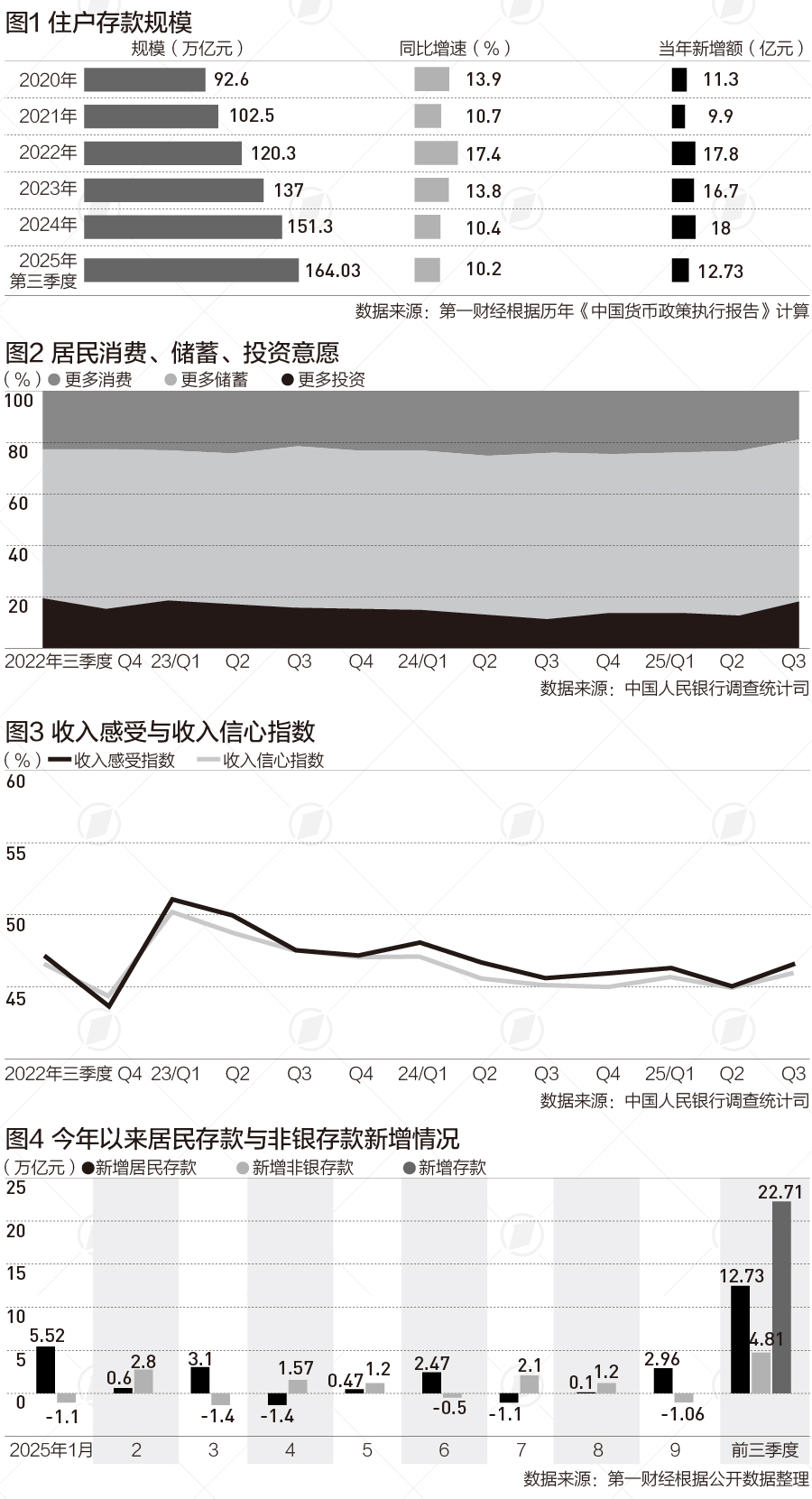
Core Viewpoint - The article discusses the divergence between stock market performance and macroeconomic fundamentals, highlighting a potential shift in investor behavior towards increased risk asset allocation, particularly in the stock market, despite a stable wealth level among residents [2][4][15]. Group 1: Market Characteristics - The current market rally is characterized by a stable level of total wealth among residents, with no significant improvement observed [4][24]. - The phenomenon of "deposit migration" is not widespread during this market rally, contrasting with previous market uptrends where a shift towards risk assets was more common [4][8]. - Historical data shows that in previous market rallies, the proportion of residents inclined to save decreased, while in the current rally, this proportion has slightly increased [8][9]. Group 2: Investor Behavior - There has been a notable increase in the proportion of investors willing to allocate more to the stock market, rising from 13.5% in Q2 2024 to 17.2% in Q3 2025 among those already investing in risk assets [15][19]. - The correlation between the choice to invest in stocks and overall income sentiment is weak, indicating that factors other than income perception are influencing stock market investments [15][33]. - The current increase in investment inclination is primarily driven by a decrease in consumption inclination, suggesting a shift in how residents allocate their funds [27][28]. Group 3: Economic and Policy Implications - The article suggests that if policies effectively restore income confidence, it could lead to increased support for the stock market from fundamental factors [34][35]. - The potential for foreign capital to diversify into RMB assets could further enhance the stock market's growth prospects [35]. - The article emphasizes the importance of addressing debt issues and supporting livelihoods to stabilize income confidence, which is crucial for the sustained development of the capital market [34][35].

央行调查:三季度倾向“更多投资”占比提升,为近两年新高
Di Yi Cai Jing· 2025-10-30 12:03
Core Insights - The report indicates a significant shift in residents' financial behavior, with an increase in the proportion of those inclined towards "more investment" by 5.6 percentage points, reaching 18.5%, the highest since Q2 2023 [2][4][3] Group 1: Investment Trends - The proportion of residents inclined towards "more investment" has risen to 18.5%, marking a notable increase from previous quarters [4] - The overall inclination towards "more consumption" and "more savings" has decreased by a total of 5.6 percentage points in Q3 2025, indicating a shift in focus towards investment [3] - The financial data suggests a trend of residents reallocating their savings from traditional deposits to capital markets, particularly in the context of a recovering stock market [12] Group 2: Savings and Consumption - The inclination towards "more savings" stands at 62.3%, which is a decrease of 1.5 percentage points from the previous quarter, yet it remains higher than the 58% recorded in Q1 2023 [2][4] - The report highlights that the total household deposits have increased by 22.71 trillion yuan in the first three quarters of 2025, with household savings specifically rising by 12.73 trillion yuan [2] - The top five preferred investment methods among residents include "bank non-principal guaranteed wealth management," "fund trust products," "stocks," "bonds," and "non-consumption insurance," with respective proportions of 36.0%, 26.4%, 17.2%, 14.8%, and 11.1% [12] Group 3: Economic Outlook - The cautious attitude of residents towards future economic expectations is evident, as indicated by the analysis of income and consumption data [13] - The government emphasizes the need to enhance residents' consumption capacity and willingness through stable employment and income growth [13] - The survey conducted by the People's Bank of China serves as a key indicator of consumer and investment potential, reflecting broader economic sentiments [13]
私募最新调研路径曝光,科技与医药仍是“心头好”
Shang Hai Zheng Quan Bao· 2025-10-13 00:02
Group 1 - In September, over 900 private equity firms participated in A-share listed company research activities, totaling nearly 2800 research instances [1] - The favored sectors for private equity research include electronics, machinery, pharmaceuticals, and power equipment, indicating a structural market trend supported by policies and capital [1][2] - The focus on technology and pharmaceuticals is expected to continue, with private equity showing particular interest in high-quality growth companies amidst market fluctuations [2][3] Group 2 - The biotechnology company Maiwei Bio received significant attention, with 88 private equity firms conducting research, highlighting interest in its dual-target small nucleic acid drugs and α-syn targeting tracer projects [2] - The electronics sector had the highest research frequency in September, with 78 companies being researched 554 times, followed closely by machinery equipment with 444 instances [3] - Investment firms are optimistic about the electronic sector's leading companies and strong pharmaceutical firms with robust fundamentals and R&D advantages [3]


高景气+低估值构筑性价比,三季报预期强催化,顶流券商ETF(512000)单日再揽8亿元
Xin Lang Ji Jin· 2025-10-10 01:20
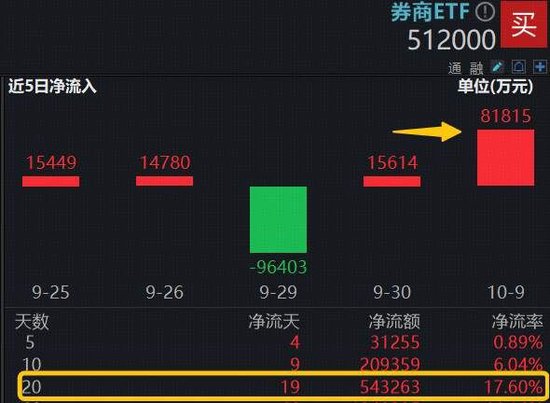
Core Viewpoint - The A-share market has shown strong upward momentum, with the Shanghai Composite Index breaking through the 3900-point mark, reaching a ten-year high, driven by significant inflows into the brokerage sector [1][3]. Group 1: Market Performance - On October 9, the Shanghai Composite Index surpassed 3900 points, marking a new high in over a decade [1]. - The brokerage sector, despite a subdued performance, continues to attract substantial capital, with the top-tier brokerage ETF (512000) seeing a net inflow of 818 million yuan in a single day and a cumulative net inflow of 5.433 billion yuan over the past 20 days [1]. Group 2: Brokerage Sector Outlook - The brokerage industry is expected to maintain high growth in Q3, supported by a low base effect, making it a key catalyst for the sector [3]. - Current market conditions indicate a rising trend in the brokerage industry's prosperity, characterized by relatively low valuations and high year-on-year growth, presenting notable investment value [3]. - Long-term trends suggest a shift in asset allocation from real estate and fixed-income assets to equity assets among residents, driven by declining yields in fixed-income investments and ongoing improvements in the real estate market [3]. - The market is entering a virtuous cycle, with strong sustainability in market conditions, which serves as an internal driver for the upward valuation of the brokerage sector [3]. Group 3: ETF and Investment Strategy - The brokerage ETF (512000) tracks the CSI All Share Securities Companies Index, encompassing 49 listed brokerage stocks, with nearly 60% of its holdings concentrated in the top ten leading brokerages [5]. - The ETF serves as an efficient investment tool, balancing exposure to leading brokerages while also capturing the high growth potential of smaller brokerages [5]. - As of October 9, the price-to-book ratio (PB) of the index tracked by the brokerage ETF is 1.58, placing it in the lower range of the past decade, highlighting its valuation attractiveness in a bullish market environment [3].

兴证全球红利混合A:2025年上半年利润578.61万元 净值增长率5.79%
Sou Hu Cai Jing· 2025-09-07 13:45
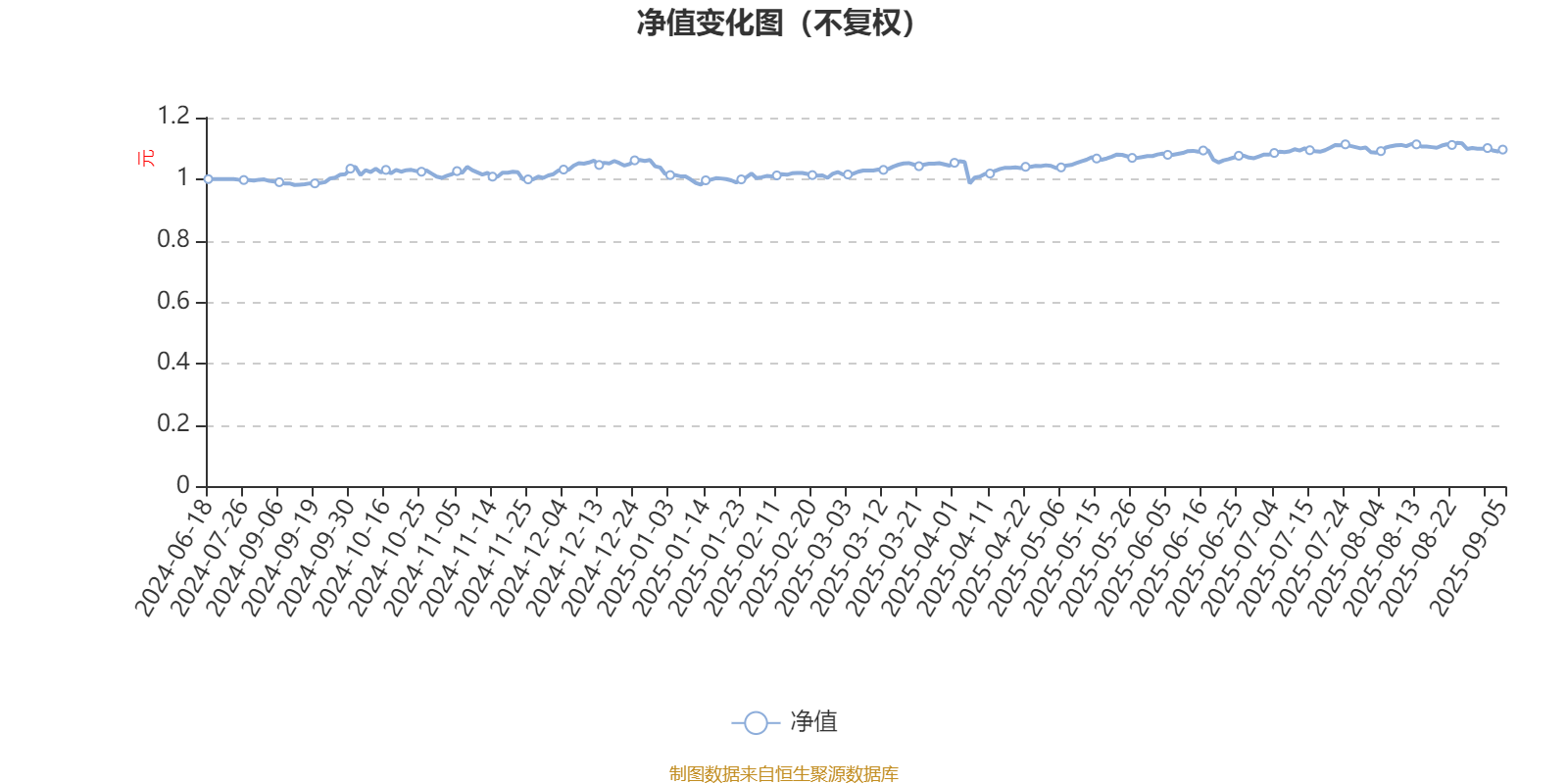
Group 1 - The core viewpoint of the article highlights the performance and outlook of the AI Fund, Xingzheng Global Dividend Mixed A, which reported a profit of 5.7861 million yuan in the first half of 2025, with a net value growth rate of 5.79% [3] - As of September 5, 2025, the fund's unit net value was 1.096 yuan, and the fund manager, Zhang Xiaofeng, manages two funds that have shown positive returns over the past year [3][6] - The fund's performance compared to peers shows a one-year net value growth rate of 16.74%, ranking 576 out of 604 comparable funds [6] Group 2 - The fund's management maintains a humble approach to macroeconomic predictions, focusing on intuitive logic and adaptability to changing circumstances, with a shift towards domestic demand as a core driver post-export growth decline [3] - The fund's stock assets are undervalued, with a weighted average price-to-earnings ratio (TTM) of approximately 5.63 times, significantly lower than the peer average of 33.74 times [12] - The weighted average net profit growth rate (TTM) for the fund's held stocks was -0.01%, indicating a challenging growth environment [22] Group 3 - The fund's maximum drawdown since inception was 6.82%, occurring in the second quarter of 2025, with an average stock position of 71.31%, lower than the peer average of 85.36% [34][37] - As of June 30, 2025, the fund had 1,515 holders, with individual investors holding 81.33% of the shares, indicating a strong retail investor base [42] - The fund's top ten holdings include companies like China Shenhua, Gree Electric, and Agricultural Bank of China, reflecting a diversified investment strategy [48]





如何看待近期M1增速持续回升︱重阳问答
重阳投资· 2025-08-22 07:33
Core Viewpoint - The recent continuous rebound in M1 growth is primarily driven by significant increases in both corporate and household demand deposits, indicating a shift in asset allocation in a low interest rate environment [2][3][4]. Group 1: M1 Growth Analysis - In July, M1 year-on-year growth reached 5.6%, continuing the upward trend since the fourth quarter of last year [2]. - The rebound in M1 growth is largely attributed to a sharp increase in corporate and household demand deposits, with corporate demand deposits recovering significantly since June [3]. - The rapid issuance of government bonds, exceeding 1.88 trillion yuan, has contributed to the recovery of corporate demand deposits as these funds are held in the accounts of repayment entities [3]. Group 2: Factors Influencing M1 Growth - The decline in interest rates and the low base effect from last year are key factors driving the current M1 growth, differing from previous cycles that were more influenced by the real estate sector [4]. - The cancellation of manual interest subsidies last year has created a low base effect that will persist until October this year, after which M1 growth will depend more on improvements in the economic fundamentals [4]. - The current policy support is expected to stabilize confidence and improve corporate cash flow, but its effectiveness in stimulating real investment and consumption remains to be seen [4].