
贸易战

Search documents
惠誉:贸易战打击新兴市场增长,令经济疲软。
news flash· 2025-05-08 15:30
Core Viewpoint - The trade war is negatively impacting the growth of emerging markets, leading to economic weakness [1] Group 1 - The ongoing trade tensions are causing significant disruptions in global trade patterns, which is particularly detrimental to emerging economies [1] - Emerging markets are experiencing slower growth rates as a direct consequence of the trade war, with many countries facing increased economic challenges [1] - The economic outlook for these markets is becoming increasingly uncertain, with potential long-term implications for investment and development [1]
加拿大央行:加拿大金融体系稳定,但贸易战带来巨大风险
news flash· 2025-05-08 14:08
金十数据5月8日讯,加拿大央行周四表示,旷日持久的贸易战可能会损害银行和其他机构,使家庭和企 业更难偿还债务,从而增加加拿大金融稳定面临的风险。加拿大央行在其年度《金融稳定报告》中表 示,金融体系具有弹性。但是,美国总统特朗普对加拿大征收的关税以及渥太华随后的反制关税的影响 可能会损害金融稳定,特别是如果这种情况持续很长一段时间的话。"长期的贸易战对加拿大经济构成 了最大的威胁。这也增加了金融稳定的风险。"加拿大央行表示,在短期内,美国贸易政策的不可预测 性可能会导致市场进一步波动和流动性紧张。在极端情况下,市场波动可能演变为市场功能失调。从中 长期来看,一场旷日持久的全球贸易战将产生严重的经济后果。加拿大央行行长麦克勒姆表示,不确定 性如此之大,以至于"我们的分析不是预测,而是对脆弱性的评估"。 加拿大央行:加拿大金融体系稳定,但贸易战带来巨大风险 ...
避开贸易战炮火,这类股成为下一个避险首选
Jin Rong Jie· 2025-05-08 02:26
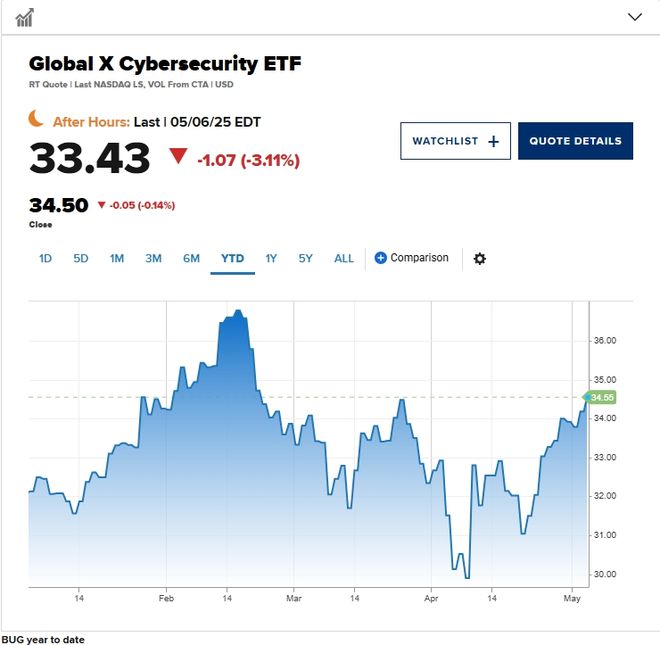
在当前贸易战带来的市场波动中,投资者如果想要寻求安全避风港,网络安全股或许是一个不错的选 择,BCA Research表示。 由于特朗普政府宣布加征关税,近几周市场剧烈震荡,标普500指数一度从2月创下的历史高点回落近 20%。但随着贸易紧张局势有缓和迹象,标普自4月8日以来反弹13%,目前年内仅下跌约5%。 尽管如此,由于缺乏实质性的进展,许多投资者仍不敢完全相信这次4月中旬的反弹。在最近的一份报 告中,BCA Research向希望对冲波动的投资者提出了一个解决方案:投资网络安全股。 "这是一个以本土市场为主的服务型行业,具有更防御性的特质,市场波动性(Beta值)低于整个科技 行业,"首席策略师Irene Tunkel写道,"它受到关税的影响较小,甚至可能从地缘政治紧张中受益,因为 客户为了防范国际网络攻击和网络犯罪而寻求保护。" Global X Cybersecurity ETF(BUG):2025年以来上涨6%,管理费0.51%,资产规模10.5亿美元。 Amplify Cybersecurity ETF(HACK):今年迄今上涨2%,管理费0.6%,资产接近20亿美元。 本文源自:金融界 展望未 ...

投资组合如何应对贸易战?全球最大主权基金的答案:熬!哪怕意味着损失6000亿
Hua Er Jie Jian Wen· 2025-05-04 03:22
Core Viewpoint - The world's largest sovereign wealth fund, the Norwegian Government Pension Fund, adopts a strategy of "waiting it out" in response to potential global economic recession and asset value decline due to trade wars [1][2]. Group 1: Investment Strategy - CEO Nicolai Tangen emphasizes a long-term investment perspective and diversification, believing that "time can heal all wounds" and lead to good returns [2]. - Approximately half of the fund's assets are allocated to U.S. stocks and bonds, primarily in equities, with the fund's performance this year remaining flat due to exposure to European markets [2]. - Tangen warns that if the global trade system fractures due to tariff barriers, the fund could face losses exceeding one-third of its value, potentially amounting to $600 billion [2]. Group 2: Historical Context and Alternatives - Historical analysis suggests that broad stock investments have generally outperformed bonds, cash, and inflation over the past century, even after significant market downturns [2]. - James Mackintosh notes that the current environment may represent a new era, where historical patterns could repeat, leading to significant asset price declines [3]. - Alternatives to the "wait it out" strategy include investing in gold as a hedge against potential short-term inflation caused by tariffs, and active trading for those who can manage it [4]. Group 3: Challenges of Active Trading - Gold, while a classic hedge, may underperform if market conditions improve, as its price has already risen by approximately 60% [5]. - The size of the Norwegian fund makes active trading impractical, as most assets track indices with only a small portion subject to Tangen's team's adjustments [5]. - Active investing requires significant time and flexibility, and not all investors can outperform the market, as every buyer must have a seller [5].
嘉吉巴西总裁Paulo Sousa:美国总统特朗普挑起的贸易战对本公司在巴西的一系列大豆压榨设施计划都构成风险。
news flash· 2025-04-28 17:49
Group 1 - The core viewpoint is that the trade war initiated by U.S. President Trump poses risks to the company's plans for a series of soybean crushing facilities in Brazil [1]
苯乙烯:短期不追空
Guo Tai Jun An Qi Huo· 2025-04-08 02:03
Report Summary Industry Investment Rating - Not provided Core View - The short - term risks of styrene have been fully released, and it is not advisable to short in the short term [2] Summary by Directory Fundamental Tracking - For styrene futures contracts, prices of EB2505, EB2506, and EB2507 all decreased compared to the previous day, with changes of - 46, - 38, and - 36 respectively. The basis of EB decreased by 14, and the spreads between different contracts also decreased. The spot price of styrene in East China dropped by 60. The number of styrene warehouse receipts decreased by 2363, the trading volume decreased by 140089, and the open interest decreased by 330 [1] Trend Intensity - The trend intensity of styrene is 0, indicating a neutral view. The trend intensity ranges from - 2 to 2, where - 2 is the most bearish and 2 is the most bullish [1] Spot News - The short - term risks of styrene have been fully released, and short - selling is not recommended in the short term [2] Market Analysis - The weak situation of pure benzene remains unresolved, with short - term downward drivers. Although the overseas gasoline blending has restarted, the overall valuation has been re - structured due to the rapid decline in oil prices, and the downward pressure on the absolute price in the overseas market has not been fully released. However, due to the marginal improvement in the supply - demand of pure benzene, bzn has rebounded rapidly and is expected to fluctuate around 200 in the short term. The domestic downstream demand is lackluster, and the trade war has added pressure to the export in the second quarter. In 2025, the downstream resilience of pure benzene is much weaker than in 2024. The downstream demand order is currently phenol > adipic acid > aniline > caprolactam. The growth of caprolactam, which was the strongest last year, has slowed down this year, with continuous price drops, inventory accumulation, and load reduction. The MDI market overseas still faces trade war pressure, with a rapid increase in inventory and obvious negative feedback from aniline. However, the recent operating rates and profits of adipic acid and phenol are relatively stronger [3] - The negative feedback of styrene has just begun. EPS has started to reduce production and prices to relieve inventory pressure. PS and ABS factories have not yet reduced production, and are expected to do so after the poor home appliance demand is transmitted to actual orders for hard plastics. In the short term, PS and ABS factories can still maintain high loads driven by profits. Although there is an expectation of significant inventory reduction for styrene in April, downstream raw material inventory is already quite sufficient. There is a possibility that styrene may follow the decline of pure benzene. Opportunities for compressing profits in the far - month contracts should be noted [3]
现在是时候再次购买美光股票了吗?
美股研究社· 2025-04-07 11:26
Core Viewpoint - Understanding the historical earnings cycle of a company is crucial before conducting stock analysis, especially for cyclical companies like Micron Technology (NASDAQ: MU) [1] Group 1: Earnings Cycle Analysis - Investing in high-quality cyclical stocks during a downturn is preferred, with a guideline that earnings must decline by 50% or more before recovering within 5 years [3] - Micron is identified as a high-quality cyclical stock with a solid long-term growth earnings trend, making it potentially profitable in the medium term [3] - Historical price declines of Micron since 2003 show that the stock typically drops between 50% to 85% from peak prices, taking 2-5 years to recover [4][6] Group 2: Business Viability and Market Conditions - The current peak revenue of Micron is comparable to previous cycles, which is acceptable for short cycles, but a downward trend in revenue from previous peaks is undesirable [9] - The company has survived for over 40 years, instilling confidence despite potential new fatal flaws that could emerge [9] - Current market threats are limited, with the ongoing trade war being a notable concern [9] Group 3: Super Cycle and Management Assessment - Micron briefly entered a super cycle following the end of stimulus measures in 2020, but the fundamentals during this period were stronger than during the late 1990s bubble [10][12] - The management of Micron is not perceived as corrupt or incompetent, and concerns about management typically arise during economic downturns [12] Group 4: Financial Health - The debt-to-equity ratio of Micron appears to be within a normal historical range, indicating financial stability [13][15] - As of the article's writing, Micron's stock price had declined nearly 60%, making it safer to invest compared to a 50% drop [15]


商贸易战危机并存,关注国产血制品及高端药械或因关税进口替代加速
Xinda Securities· 2025-04-07 00:47
Investment Rating - The investment rating for the pharmaceutical and biotechnology industry is "Positive" [3] Core Viewpoints - The chemical pharmaceutical sector has shown the highest growth among sub-sectors, driven by expectations around "centralized procurement optimization discussions" and the "Class B medical insurance catalog" [8] - The trade war environment is expected to enhance the market share of domestic blood products and high-end medical devices due to increased costs of foreign imports [8] - The report suggests a cautious approach for April, focusing on specific segments that may benefit from the trade war, such as domestic blood products and high-end medical devices [8] Summary by Sections Industry Weekly Viewpoints - The pharmaceutical and biotechnology sector's weekly return was 1.20%, outperforming the CSI 300 by 2.57%, ranking 3rd among 31 primary sub-indices [7] - The chemical pharmaceutical sub-sector had the highest weekly growth of 3.45%, while the medical services sector saw the largest decline of 2.12% [7][8] Industry Performance and Valuation - The pharmaceutical and biotechnology sector's recent one-month return was 2.94%, with a relative return of 3.63% against the CSI 300, ranking 10th among 31 primary sub-indices [9][18] - The current PE (TTM) for the pharmaceutical and biotechnology sector is 26.88 times, which is below the historical average of 30.99 times [14][15] Market Tracking - The chemical pharmaceutical sector has shown the largest growth over the past year, with a 16.51% increase, while the biological products sector has seen a decline of 11.36% [24][25] - The report highlights the potential for price increases in blood products due to supply and demand changes, particularly for domestic manufacturers [8] Focus on Individual Stocks - The report recommends focusing on specific companies in the blood products and high-end medical device sectors, such as Palin Bio, Tian Tan Bio, and Mindray Medical [8] - In the consumer healthcare sector, companies like Aier Eye Hospital and Yifeng Pharmacy are highlighted as potential beneficiaries of government stimulus policies [8] Industry and Company Dynamics - Recent policy developments include the approval of new medical service pricing for brain-computer interface technologies, indicating a growing focus on innovative medical solutions [40] - The report notes significant recent approvals for various pharmaceutical products, including those from companies like Jingxin Pharmaceutical and Antu Bio [41]
花旗-宏观-如何赢得贸易战及对抗通胀之战-3
花旗· 2025-04-06 14:36
Investment Rating - The report suggests a strong emphasis on implementing high tariffs as a strategy to achieve trade balance and reduce fiscal deficits, indicating a positive outlook for the USD and yen in the context of these tariffs [17][41]. Core Insights - The report outlines various tariff scenarios aimed at eliminating the trade deficit, with a focus on achieving a minimum 30% share of bilateral trade for the US [6][9]. - It emphasizes the need for substantial tariffs to prevent trading partners from devaluing their currencies to counteract the tariffs, which would undermine the intended effects [8][41]. - The analysis indicates that scenarios with tariffs below 25% are considered sub-optimal, as they fail to meet key objectives and leave significant trade deficits [34][38]. Summary by Sections Tariff Scenarios - Scenario 1 proposes 45% tariffs globally and 70% on China, potentially raising $1.4 trillion and eliminating trade deficits with major partners [10][12]. - Scenario 2 suggests 70% tariffs on China and 45% on the EU, raising approximately $1 trillion, leaving a trade deficit of $250 billion [18][20]. - Scenario 3 involves 70% tariffs on China and 25% on the rest of the world, raising $900 billion but leaving a trade deficit of over $400 billion [24][27]. - Scenario 4 proposes 25% tariffs across the board, raising $709 billion but still resulting in a $600 billion trade deficit [32][34]. - Scenarios with tariffs below 25% are deemed ineffective, with a 15% tariff scenario raising only $425 billion and leaving an $884 billion trade deficit [37][38]. Objectives of Tariffs - The report identifies six key objectives for the US in the trade war, including rebalancing trade, reducing the fiscal deficit, and ensuring tariffs are substantial enough to prevent currency devaluation by trading partners [6][9][41]. - It stresses that achieving a US share of at least 50% in bilateral trade is crucial, with any scenario falling below 30% being unacceptable [41].
聚烯烃:后期仍有压力
Guo Tai Jun An Qi Huo· 2025-04-06 14:12
1. Report Industry Investment Rating No relevant content provided. 2. Core Views of the Report - PP will face continuous pressure in the later stage. Factors include the impact of the trade - war on the global economy and OPEC's production increase leading to a significant drop in crude oil prices, which is likely to cause PP prices to weaken. The downstream order recovery is nearing its end, and the supply pressure will gradually resume after mid - April [5][6]. - LLDPE is expected to be weak in the short term. The macro - policy changes, especially the tariff war between the US and China, have increased market uncertainty. The tariff increase may affect polyethylene imports and plastic product exports, and the polyethylene market is facing negative feedback on the demand side and cost collapse, but the import issue also provides some support [7]. 3. Summary by Relevant Catalogs 3.1 Overview - PP: The trade - war drags down the global economy, OPEC's production increase causes a sharp decline in crude oil prices, which may lead to a weakening of PP prices. The downstream order recovery is almost over, and the supply pressure will gradually return after mid - April. In the medium - term, the new production capacity pressure on the supply side is concentrated in the first half of the year, and the total demand has hidden dangers. Although the export market has supported the domestic polyolefin market in recent years, there may be some pressure in the first half of 2025 [6]. - LLDPE: The macro - policy changes, especially the tariff war between the US and China, have increased market uncertainty. The tariff increase may affect polyethylene imports and plastic product exports. In 2025, the new domestic PE production capacity is expected to be 2.15 million tons in the second quarter, and the supply pressure may appear in the third quarter. The demand side may be affected by the trade - war, and the polyethylene market is short - term weak, but the import issue provides some support [7]. 3.2 Polypropylene Supply and Demand - Non - standard price difference: The non - standard price difference of polypropylene has flattened, and the market has changed little. In 2025, the trend of non - standard price difference is still uncertain. The first - quarter demand is unlikely to explode, and in the second quarter, if there is an unexpected fiscal expansion in China, the non - standard price difference may expand. However, the trade - war may bring potential negative risks [16][19]. - Production and capacity utilization: The overall short - term start - up of polypropylene has decreased month - on - month, and the supply in April may be relatively loose. The current polypropylene capacity utilization rate has decreased by 0.05% to 76.38%, and the weekly output has decreased by 0.04 tons to 731,600 tons, a decline of 0.05% [20][22]. - Maintenance: April is the peak season for PP device maintenance in the first half of the year, and the planned maintenance is expected to increase [24]. - New production capacity: In 2025, the potential new production capacity of polypropylene is 7.005 million tons, with a production capacity increase of 16%. The potential production pressure is still large, especially from the commissioning of several large - scale refinery devices [25]. - Inventory: The production inventory of polypropylene has decreased month - on - month, while the inventory of traders has increased. The inventory of Chinese polypropylene production enterprises has decreased by 25,300 tons to 616,400 tons, a month - on - month decrease of 3.94%, and the inventory of trader sample enterprises has increased by 8,500 tons, a month - on - month increase of 5.76% [26][30]. - Cost: The crude oil price dropped significantly during the Tomb - Sweeping Festival, and the cost of polypropylene will decline [31]. - Profit: The profits of oil - based and PDH - based polypropylene manufacturers have declined. The calculated oil - based PP profit is - 472 yuan/ton, and the PDH device profit is - 798 yuan/ton [37][38]. - Downstream: The start - up of BOPP has remained flat, the order days have decreased, and the finished product inventory is at a high level. The profit of BOPP is at a historical low, mainly due to over - capacity. The start - up of tape master rolls has remained flat, and the order situation is still not ideal. The start - up of plastic weaving has rebounded, and the order days have increased. The start - up of non - woven fabrics has remained flat, and the start - up and order days of CPP have remained flat [39][42][47][50][55][58]. 3.3 Polyethylene Supply and Demand - Import and export: In 2024, China imported 2.387 million tons of polyethylene from the US, accounting for 17.23% of the total imports and about 5.7% of the total supply. 46.2% of the products imported from the US are LLDPE. The amount of Chinese plastic products exported to the US in 2024 accounted for 16.75% of the total plastic exports, and the proportion has been declining in recent years [66]. - Price difference: The L - LL price difference of polyethylene has declined in the short term. The previous continuous decline of non - standard price difference has suppressed the overall structure of polyethylene, and the high premium of high - pressure to linear is difficult to continue in the medium - term [67][70]. - Production and capacity utilization: The start - up rate and output of polyethylene have increased month - on - month. The capacity utilization rate of Chinese polyethylene production enterprises is 82.46%, an increase of 0.14 percentage points from the previous period, and the weekly output has increased by 1.15% to 623,400 tons [71][73]. - Maintenance: The expected maintenance loss of polyethylene in April will decrease compared with March [74]. - New production capacity: In 2025, the potential new production capacity of polyethylene is 5.43 million tons, with a production capacity increase of 16.8% [75]. - Inventory: The inventory of polyethylene production enterprises and social inventory have both decreased month - on - month. The inventory of Chinese polyethylene production enterprise samples has decreased by 66,300 tons to 438,400 tons, a month - on - month decrease of 13.14%, and the social sample warehouse inventory has decreased by 11,600 tons to 618,700 tons, a month - on - month decrease of 1.84% [77][80]. - Cost: The crude oil price dropped significantly during the Tomb - Sweeping Festival, and the cost of polyethylene will decline [81]. - Profit: The profit of oil - based polyethylene devices has declined. The calculated oil - based profit is - 391 yuan/ton [83][84]. - Downstream: The start - up of agricultural film has increased month - on - month, but the order days have decreased month - on - month. The start - up and order days of packaging film have both decreased. The start - up of pipes and hollow products has rebounded, but the growth rate is relatively slow [85][86][87].