
能源基建

Search documents
中国银河证券:基建投资快速反弹 能源和交通基建景气高
智通财经网· 2026-04-01 08:11
Core Viewpoint - Fixed asset investment in China is expected to face pressure in 2025 but is projected to rebound in 2026, with a rapid recovery in infrastructure investment, particularly in transportation and energy sectors [1][2]. Fixed Asset Investment - In the first two months of the year, national fixed asset investment (excluding rural households) reached 52,721 billion yuan, showing a year-on-year growth of 1.8%. However, private fixed asset investment decreased by 2.6% [1]. - Month-on-month, fixed asset investment grew by 0.39% in February. By industry, primary sector investment was 1,093 billion yuan (up 17.4%), secondary sector investment was 17,434 billion yuan (up 5.4%), and tertiary sector investment was 34,194 billion yuan (down 0.4%) [1]. - Investment in manufacturing increased by 3.1%. Regionally, eastern China saw a 1.8% increase, central China a 1.9% increase, while western China and northeastern China experienced declines of 0.5% and 11.4%, respectively [1]. Infrastructure Investment - Infrastructure investment saw a significant rebound, with a year-on-year growth of 11.4% in the first two months. Transportation, warehousing, and postal services investment grew by 9.1% [2]. - Specific sectors such as pipeline transportation and aviation transportation experienced substantial growth, with increases of 145.2% and 31.1%, respectively. Investment in electricity, heat, gas, and water production and supply rose by 13.1% [2]. Real Estate Investment - National real estate development investment decreased by 11.1% year-on-year in January-February, but the decline was less severe than in the previous year [3]. - Residential investment was 7,282 billion yuan, down 10.7%. New housing sales area fell by 13.5%, and the decline in new housing starts was 23.1% [3]. - The area under construction decreased by 11.7%, while the completion area saw a more significant drop of 27.9% [3]. Transportation and Energy Infrastructure - The "14th Five-Year Plan" emphasizes the need for appropriate and advanced infrastructure planning, aiming to enhance the modern comprehensive transportation system and build a robust national transportation network [4]. - The plan also highlights the goal of establishing an energy powerhouse through a diversified energy approach, including wind, solar, water, and nuclear energy [4]. - High-quality urban renewal initiatives are also prioritized, focusing on community development and the Belt and Road Initiative [4].

未知机构:浙商策略2026年政府工作报告学习宏观政策取向积极系统性-20260306
未知机构· 2026-03-06 02:40
Summary of Key Points from the Conference Call Industry Overview - The conference call discusses the macroeconomic policies and outlook for the Chinese economy in 2026, emphasizing a "systematic slow bull" market trend. The economic growth target is set at 4.5%-5% for the year, allowing room for structural adjustments, risk prevention, and reforms to lay a solid foundation for future development [1][2]. Core Insights and Arguments 1. **Macroeconomic Policy Continuity**: - The report indicates a stable policy environment with a 4% deficit rate and a deficit scale of 5.89 trillion yuan, implying a nominal GDP growth rate of 5%. The weighted average GDP growth target for provinces is 5.04%, supporting the national goal [2][3]. 2. **Monetary and Fiscal Policy**: - A moderately loose monetary policy combined with more proactive fiscal measures is expected to maintain an expansionary stance. The focus will be on optimizing expenditure structures, with resources directed towards consumption and livelihood [3]. 3. **Consumer and Investment Focus**: - The report emphasizes stimulating domestic consumption and expanding investment. It highlights the importance of policies to boost consumer spending, particularly in service sectors such as tourism, hospitality, and retail [3][4]. 4. **Investment in Key Sectors**: - The report calls for increased government investment in new productivity, urbanization, and comprehensive human development. It suggests a focus on high-end manufacturing, infrastructure, and social welfare, while also addressing "involution" in competitive sectors [4]. 5. **Emerging Industries and New Growth Drivers**: - There is an urgent need to cultivate new growth drivers, with a focus on emerging industries such as integrated circuits, aerospace, biomedicine, and low-altitude economy. The report indicates a shift towards more aggressive resource allocation in these areas [4][5]. 6. **Artificial Intelligence and New Infrastructure**: - The report advocates for the development of a new intelligent economy, promoting the commercialization of AI applications and the construction of new infrastructure related to AI. This year is anticipated to be a pivotal year for AI applications [5]. Additional Important Content - **Risk Factors**: - Potential risks include unexpected changes in the international situation and slower-than-expected policy implementation [6]. This summary encapsulates the key points from the conference call, providing insights into the macroeconomic outlook, policy directions, and potential investment opportunities within the Chinese economy.
“长和系”出售英国电网业务,李嘉诚套现超1100亿港元
Huan Qiu Lao Hu Cai Jing· 2026-02-26 03:22
Group 1 - The core point of the article is that Li Ka-shing's Cheung Kong Group has agreed to sell its 100% stake in UK Power Networks Holdings Limited to Engie UK 2026 Limited for approximately £10.548 billion, which is over HKD 110 billion, with the transaction being fully cash-based [1][2] - Cheung Kong Infrastructure and Power Assets Holdings each hold 40% of UK Power Networks, corresponding to a transaction value of approximately £4.219 billion (about HKD 44.3 billion) each, while CK Hutchison Holdings holds 20%, corresponding to approximately £2.11 billion (about HKD 22.15 billion) [1][2] - The rationale behind the transaction is to optimize global asset allocation and to recover significant capital to support future business development and shareholder returns [1] Group 2 - The three companies involved in the sale are core operational platforms of the Cheung Kong Group, each focusing on different sectors: Cheung Kong Infrastructure on global energy infrastructure and transportation, Power Assets on electricity production and related investments, and CK Hutchison on real estate development and property investment [2] - UK Power Networks is a leading distribution network operator in the UK, serving approximately 8.5 million households and businesses, and is a key component of the UK's energy infrastructure [2] - For the fiscal year ending March 31, 2025, UK Power Networks is projected to have a pre-tax profit of approximately £1.149 billion (about HKD 12.179 billion), representing a year-on-year increase of 146.04%, and a post-tax profit of approximately £0.853 billion (about HKD 9.042 billion), reflecting a year-on-year increase of 173.4% [2]

马斯克预警:留给旧世界的时间只剩2000天,中国握着唯一的“王牌”
Xin Lang Cai Jing· 2026-01-13 08:24
Core Insights - Elon Musk emphasizes that humanity is at a critical juncture, with only 2000 days left for the old world, highlighting the urgency of technological advancements and the transition from carbon-based to silicon-based civilization [2][3]. Group 1: Key Predictions - The timeline for significant AI advancements includes: by 2026, AI intelligence will surpass the smartest human individuals; within 3 years, Optimus robots will outperform top surgeons; and by 2029, AI intelligence will exceed the total intelligence of all humans [4][5][6]. - Musk warns that the upcoming crisis will be related to transformers and electricity, asserting that China is leading in energy infrastructure, significantly outpacing the U.S. [7][22]. Group 2: Economic and Workforce Implications - The job market will undergo a major transformation, with white-collar jobs being the first to be affected by AI, while blue-collar jobs will face a delay until the mass production of Optimus robots [8][9]. - Musk predicts that traditional economic models will collapse, suggesting that saving for retirement will become irrelevant due to extreme deflation driven by AI and robotics [10]. Group 3: Technological Landscape - Musk believes that the semiconductor supply chain will become less relevant as physical limitations of chip manufacturing are reached, with China expected to overcome these challenges [11][31]. - The future bottleneck in computing power will shift to electricity and architecture, where both the U.S. and China will be on equal footing [12][32]. Group 4: Education and Societal Changes - Musk critiques the current education system, suggesting it will devolve into a social space as AI tutors become prevalent, rendering traditional knowledge acquisition obsolete [13][33]. - The future workforce will favor individuals who can effectively collaborate with AI, rather than those who excel in rote memorization [14][36]. Group 5: Competitive Landscape - Musk identifies three main players in the future AGI landscape: xAI, Google, and "China Inc." (the Chinese state), emphasizing that the competition will be defined by infrastructure, data, and national will [20][36]. - He suggests that only those who can harness national resources for infrastructure and talent will be able to compete effectively in the AGI arena [36][37].


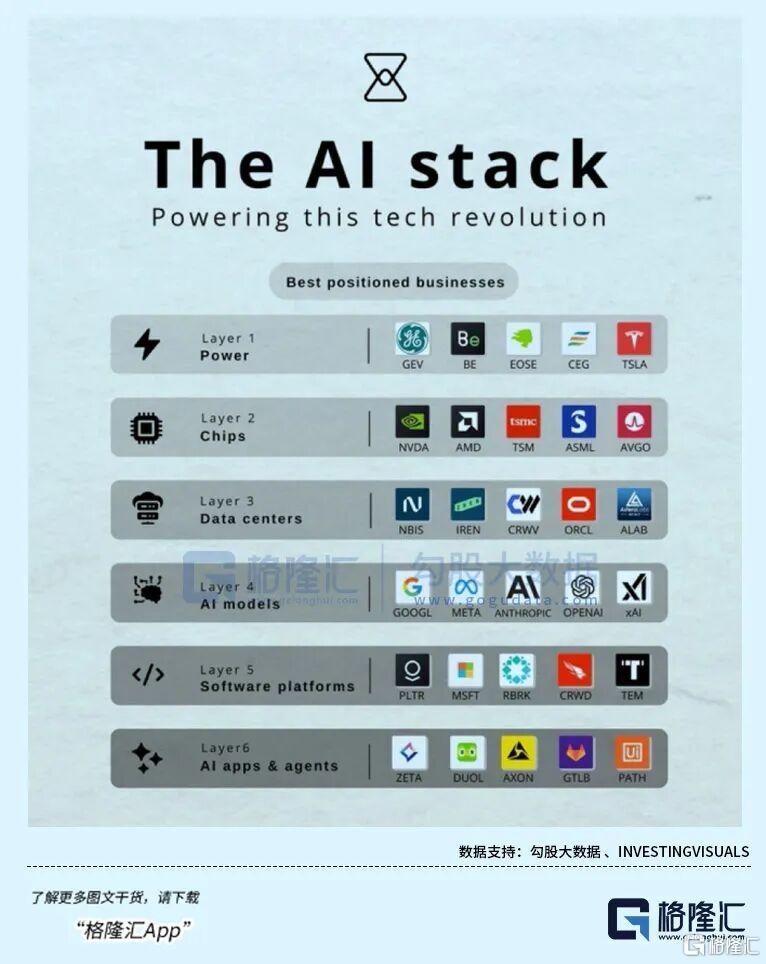
2026格隆汇“全球视野”十大核心资产之GE Vernova(GEV)
Ge Long Hui· 2026-01-10 03:33
Core Viewpoint - GE Vernova has been selected as a benchmark asset in the energy infrastructure sector for the 2026 "Global Vision" top ten core assets, highlighting its transformation from a traditional industrial manufacturer to a key player in AI infrastructure [1] Group 1: Competitive Barriers - GE Vernova holds a dominant position in the gas turbine market, forming a "trilateral" structure with Siemens Energy and Mitsubishi Heavy Industries, controlling over 75% of the global CR3 market [2] - The company is the only giant capable of providing a complete solution from gas power generation to wind energy generation and grid transmission, creating a seamless connection that meets the stable power needs of AI data centers [2] - GE Vernova's service business benefits from a large installed base of gas turbines, generating high-margin service revenue through long-term contracts for parts replacement and maintenance [2][3] Group 2: Industry Trends - The demand for energy is expected to surge due to the explosion of AI computing power, with the International Energy Agency predicting that electricity consumption in data centers will double in the coming years [6] - The aging of electrical grid infrastructure in North America and Europe necessitates urgent upgrades, which GE Vernova's electrification business is well-positioned to address [6] - The transition to renewable energy will require gas turbines as a stable backup power source in the short term, while small modular reactors (SMRs) will support long-term growth [6] Group 3: Business Layout - The gas turbine business serves as the core profit pillar, benefiting from supply-demand imbalances and price increases of 15%-20% compared to 2023 [7] - The electrification business is the fastest-growing segment, with revenue growth exceeding 20% and a backlog of $26 billion in orders [7] - The SMR project is expected to generate significant future orders, particularly from tech giants seeking carbon neutrality [8] Group 4: Financial Outlook - GE Vernova anticipates revenue of $41-42 billion for 2026, with an EBITDA margin of 11%-13%, supported by the growth of both gas turbine and electrification businesses [9] - The company expects to achieve a cumulative free cash flow of $22 billion by 2028, with a generous shareholder return policy including a stock buyback authorization of $10 billion [8][9] Group 5: Investment Perspective - Investing in GE Vernova represents a strategic move into the future of AI infrastructure, as the company is positioned as a core asset in the energy sector amid the ongoing AI computing explosion, grid upgrades, and energy transition [15]

Bernstein Reiterates a Buy Rating on Apple Inc. (AAPL)
Insider Monkey· 2026-01-09 09:21
Core Insights - Artificial intelligence (AI) is identified as the greatest investment opportunity of the current era, with a strong emphasis on the urgent need for energy to support its growth [1][2][3] Industry Overview - Wall Street is investing hundreds of billions into AI technologies, but there is a critical question regarding the energy supply needed to sustain this growth [2] - AI technologies, particularly large language models, are extremely energy-intensive, with data centers consuming as much energy as small cities [2] - The demand for electricity is rising, and power grids are under strain, leading to increased electricity prices [2] Company Insights - A specific company is highlighted as a key player in the energy infrastructure sector, poised to benefit from the increasing energy demands of AI [3][6] - This company owns critical nuclear energy infrastructure assets and is capable of executing large-scale engineering, procurement, and construction projects across various energy sectors [7] - The company is positioned to profit from the surge in U.S. LNG exports, especially under the current administration's energy policies [7] Financial Position - The company is noted for being debt-free and holding a significant cash reserve, which is nearly one-third of its market capitalization [8] - It also has a substantial equity stake in another AI-related company, providing investors with indirect exposure to multiple growth opportunities [9] Market Sentiment - There is a growing interest from hedge funds in this company, which is considered undervalued and off the radar compared to other AI and energy stocks [10][11] - The company is trading at less than 7 times earnings, indicating a potential for significant upside [10] Future Outlook - The ongoing AI revolution is expected to disrupt traditional industries, and companies that adapt to these changes are likely to thrive [11][12] - The influx of talent into the AI sector is anticipated to drive rapid advancements and innovative ideas, reinforcing the importance of investing in AI [12] - The time to invest in AI and related energy infrastructure is emphasized as being critical for future returns [13]


明年PPI回升幅度取决于需求侧配合以及“反内卷”政策落地成效|宏观晚6点
Xin Lang Cai Jing· 2025-12-25 10:11
Group 1 - The National Development and Reform Commission (NDRC) has outlined key investment directions for infrastructure during the 14th Five-Year Plan, focusing on transportation and energy sectors [1] - In the transportation sector, the NDRC emphasizes the high-quality construction of strategic corridors along coastal, border, and river areas, as well as enhancing the transportation network including railways, highways, waterways, and civil aviation [1] - The NDRC aims to address transportation shortcomings in the western and border regions, promote infrastructure updates, and implement digital transformation to create a resilient and diversified international transport corridor system [1] Group 2 - The Ministry of Commerce responded to the U.S. decision to impose Section 301 tariffs on certain Chinese semiconductor products, currently set at 0% and expected to increase after 18 months [1] - The spokesperson for the Ministry of Commerce stated that China has formally lodged strong representations to the U.S. through the China-U.S. economic and trade consultation mechanism [1] - China firmly opposes the U.S. conclusions from the Section 301 investigation and the imposition of tariffs on Chinese semiconductor products [1]
2026年宏观经济与政策展望:势启新章处:破局与再平衡
Southwest Securities· 2025-12-08 13:03
Economic Growth Projections - The economic growth target for 2026 is set at around 5%, with an expected actual growth rate of approximately 4.9%[3] - Nominal GDP growth is projected to rise to about 4.2%[3] - Manufacturing investment growth is anticipated to reach around 5.2%, driven by high-end and intelligent upgrades[3] Investment and Infrastructure - Broad infrastructure investment growth is expected to be around 6%, supported by major projects under the "14th Five-Year Plan"[3] - Real estate investment decline is projected to narrow to approximately -10% due to improved supply-demand dynamics[3] Consumption and Prices - Consumer spending is expected to increase, with retail sales growth projected at around 5%[3] - CPI is forecasted to recover moderately to 0.5%, while PPI is expected to remain between -1% and 0%[3] Policy and Fiscal Measures - The budget deficit ratio may exceed 4%, with new special bond limits around 4.5 trillion yuan[3] - Monetary policy is expected to remain "moderately loose," with potential small rate cuts of about 25 basis points and interest rate reductions of approximately 10 basis points[3] Global Economic Context - The U.S. job market is cooling, and inflation pressures are manageable, but uncertainties remain regarding future interest rate paths[3] - Emerging markets may see marginal economic slowdown in 2026, with internal performance continuing to diverge[3] Asset Allocation Strategies - Overweight positions are recommended in U.S. equities and gold, benefiting from liquidity easing and fiscal expansion[3] - Underweight positions in oil are suggested due to high inventory levels and weak demand[3] Risks - Risks include lower-than-expected domestic economic growth, geopolitical tensions, and potential overseas recession exceeding expectations[3]
REITs:连接资本与基建的“黄金桥梁”
Zheng Quan Ri Bao Wang· 2025-12-05 09:26
Core Viewpoint - The article emphasizes the strategic importance of optimizing infrastructure through the development of public REITs in China, which are seen as a key mechanism for activating existing assets and facilitating capital circulation, thereby supporting high-quality economic development [1][7]. Group 1: Market Development and Scale - As of November 27, 2025, China's public REITs market has reached 77 products with a total issuance scale exceeding 200 billion yuan, and a total market capitalization of over 220 billion yuan [2]. - The REITs model has proven feasible in China, contributing to the establishment of a mature institutional and ecological foundation for commercial real estate, with expectations to drive over 1 trillion yuan in new investments [2][3]. - The asset structure of REITs has diversified beyond early single-asset limitations, now including various sectors such as consumer infrastructure, clean energy, and affordable housing [2]. Group 2: Policy Support and Expansion - In November 2025, the National Development and Reform Commission expanded the scope of REITs to cover 15 major industries, including commercial office facilities and urban renewal projects [3]. - The policy framework aims to create a comprehensive support system for REITs across all infrastructure sectors, aligning with the goals of revitalizing existing assets and optimizing resource allocation [3]. Group 3: Advantages of Public REITs - Public REITs offer significant institutional advantages over traditional financing tools like CMBS, allowing investors to hold direct equity in underlying assets and benefit from both operational cash flow and asset appreciation [4]. - The long-term nature of REITs, with a potential lifespan of up to 40 years, aligns well with the long-term characteristics of infrastructure assets, addressing the challenges of high investment costs and lengthy recovery periods [4]. Group 4: Capital Flow and Market Dynamics - REITs serve as a "converter" of capital flow, effectively connecting the supply and demand sides of funding, with a mandatory dividend distribution mechanism that attracts long-term capital from sources like social security and insurance funds [5]. - The market-driven selection mechanism of REITs encourages infrastructure companies to shift focus from construction to operational efficiency, enhancing asset utilization rates [5]. Group 5: Inclusivity and Accessibility - REITs are reshaping the investment landscape by lowering entry barriers for individual investors, allowing them to participate in infrastructure investments with minimal capital [6]. - The expansion policies have amplified market effects, creating a closed-loop system of issuance, investment, and reinvestment, exemplified by successful fundraising for affordable housing projects [6]. Group 6: Challenges and Future Directions - The REITs market faces challenges such as an incomplete valuation system, unclear tax incentives for asset transfers, and insufficient market liquidity, which could hinder its effectiveness in capital allocation [6]. - To promote high-quality development of the REITs market, collaboration among government, enterprises, and the market is essential, including the establishment of unified valuation guidelines and improved regulatory frameworks [7].
赋能区域互联!推进跨区域跨流域大通道建设
Xin Hua Wang· 2025-11-27 09:11
Group 1 - The core viewpoint emphasizes the importance of infrastructure connectivity in promoting regional development and facilitating the flow of various resources, which is essential for integrating into the new development pattern and expanding domestic circulation space [1][4][7] Group 2 - Significant achievements in regional infrastructure connectivity have been noted, with areas like Beijing-Tianjin-Hebei, Yangtze River Delta, and Guangdong-Hong Kong-Macau Greater Bay Area forming 1 to 2-hour transportation circles, and over 70% of the national high-level waterways meeting standards [2][4] - As of July this year, the cumulative gas transmission volume of the "North Gas Southward" energy corridor has exceeded 100 billion cubic meters [3] - By September, dozens of data infrastructure nodes have completed connectivity verification, covering 20 provinces, indicating substantial room for improvement in regional infrastructure connectivity [4] Group 3 - Local initiatives are enhancing infrastructure efficiency, such as the smart transformation of logistics in Guizhou, which improves cargo distribution and deepens cooperation with coastal ports [5] - The Ningbo-Zhoushan Port has expanded its hinterland to the upper reaches of the Yangtze River through sea-rail and river-sea intermodal transport, showcasing the role of infrastructure in high-quality development [5] Group 4 - Recommendations for infrastructure development suggest tailored approaches based on regional characteristics, such as accelerating the construction of oil and gas pipelines in Northeast China and strengthening the corridor framework in Central China [6] - The ongoing development of cross-regional and cross-basin corridors is expected to continue enhancing regional collaborative growth [7]