
能量饮料

Search documents
2026年第5周:食品饮料行业周度市场观察
艾瑞咨询· 2026-02-04 03:25
Group 1: Canned Food Industry - The State Administration for Market Regulation has released three draft national standards for canned food to enhance industry standards and applicability [3] - The canned food industry in China is diverse but lacks innovation, particularly in attracting younger consumers [3][4] - Canned food prices are generally affordable, benefiting from economies of scale and technological advancements, with the industry upgrading through self-heating products and high-end categories [3][4] Group 2: New Beverage Trends - The sugar water shop model has gained popularity among franchisees, with brands like Mai Ji Milk rapidly expanding, but faces challenges such as high costs and low-frequency consumption [5] - The market for traditional Chinese health drinks is booming, with products like red bean and barley water seeing increased sales, driven by young consumers' health consciousness [6] - The beverage market is experiencing a shift towards health-oriented products, with low-sugar and functional drinks becoming mainstream, while traditional brands face declining sales [7] Group 3: Functional and Innovative Products - Vitamin drinks are becoming essential for young consumers, especially during flu seasons, with brands like Nongfu Spring seeing significant sales growth [9] - The introduction of banana-flavored drinks by major brands reflects a trend towards health-conscious and innovative beverage offerings [10] - The global nutrition and health industry is witnessing a peak in raw material innovation, with a focus on standardized and stable ingredients [11] Group 4: Market Dynamics and Brand Strategies - The "medicinal food" trend is emerging, with a market size projected to reach 370 billion yuan, driven by policy support and technological advancements [12] - The rise of Chinese-style health drinks is creating a competitive landscape, with brands needing to address issues of standardization and supply chain integration [14] - The dairy industry is shifting focus from consumer markets to B2B opportunities, driven by the growth of new consumption formats like tea and coffee [15] Group 5: Brand Developments and Challenges - The beverage brand COMMUNE is preparing for an IPO, aiming to expand its presence despite facing challenges in same-store sales and rising costs [24] - The acquisition of the domestic soda brand Dayao by KKR marks a shift towards capitalizing on efficiency over emotional branding [25] - Dongpeng's coffee brand has rapidly gained market share, positioning itself among the top three in the ready-to-drink coffee market through strategic pricing and targeted marketing [26] Group 6: New Market Entrants and Innovations - The launch of Baoshifu's first bread store in Wuhan indicates its entry into the competitive bakery market, focusing on fresh and affordable products [27] - The Mexican baking group Bimbo is increasing investment in the Chinese market, leveraging local strategies and brand acquisitions to enhance market presence [28] - The recent leadership change at China Resources Beverage aims to optimize costs and drive new business growth amid evolving consumer trends [29]


能量饮料市场迎来巨变,无糖浪潮重塑品类格局
Sou Hu Cai Jing· 2026-02-03 21:24
在健康消费理念深度渗透的当下,能量饮料行业正经历一场颠覆性变革,无糖化已从细分赛道跃升为行 业核心增长主线,重塑品类竞争格局。年轻消费群体崛起成为变革核心驱动力,Z世代与千禧一代以健 康为导向的消费偏好,正加速推动整个品类向健康转型。 无糖产品的爆发不仅是市场规模的扩容,更标志着健康功能性饮品时代的全面到来,这类产品精准契合 了当代消费者对健康需求的动态升级,成为连接品牌与消费者的核心纽带。 在日趋激烈的市场竞争中,能否抓住无糖化这一核心趋势,直接决定了品牌能否赢得核心消费群体的长 期信任,尤其是在消费决策权日益提升的Z世代与千禧一代中站稳脚跟。 健康养生 政策监管加码 倒逼行业向无糖化转型 除了消费者需求的驱动,全球范围内的政策监管加码正成为无糖化趋势的另一重要推手,倒逼品牌加速 配方升级与产品创新。各国政府与公共卫生组织纷纷出台举措限制糖分摄入,推动食品饮料行业向健康 化转型。 英国2018年实施的《软饮料行业税》,通过推动产品配方改良,已让饮料行业减少超4.5万吨糖分添 加。法国也正计划提高糖税,人工甜味剂也将被纳入征税范围。在中国,2025年出台的食品安全新国标 明确规范"零添加"等误导性表述,强化糖 ...
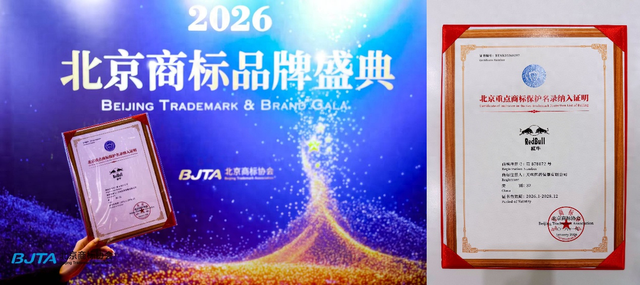
天丝集团红牛品牌入选“北京重点商标保护名录”
Zheng Quan Ri Bao Wang· 2026-01-20 14:14
Core Viewpoint - The article highlights the recognition of TCP Group's Red Bull brand for its significant contributions to trademark protection and brand development in China, as it was included in the "Beijing Key Trademark Protection Directory" for 2025 [1] Group 1: Company Achievements - TCP Group, founded by Xu Shubiao in 1993, established the first Red Bull factory in Hainan, marking over 30 years of commitment to the Chinese market [1] - The company has actively participated in the enhancement of intellectual property protection in China, benefiting from this process, with its trademark protection case included in the Supreme People's Court's "Top Ten Intellectual Property Cases of 2020" [1] Group 2: Investment and Market Growth - Since the 14th Five-Year Plan, TCP Group has deepened its presence in China, with total investments reaching 4.36 billion yuan [1] - The company has played a pioneering role in the energy drink industry, not only providing mature products but also fostering a healthy and vibrant consumer ecosystem [1]
红牛品牌入选“北京重点商标保护名录” 天丝集团持续深耕中国市场
Xin Lang Cai Jing· 2026-01-20 09:42
Group 1: Event Overview - The "First Beijing Trademark Brand Festival" was held on January 16, 2026, organized by the Beijing Trademark Association, focusing on enhancing trademark value and building a brand capital [1] - The event attracted government officials, experts, and representatives from well-known trademark brands, providing a high-standard platform for authoritative exchange and display [1] Group 2: Trademark Protection and Brand Development - Tianzi Group's Red Bull brand was included in the "Beijing Key Trademark Protection Directory" for 2025, highlighting its significant role in trademark protection and brand development in China [3] - The implementation of the "Intellectual Property Power Construction Outline (2021-2035)" is accelerating the establishment of a comprehensive trademark protection system in China, benefiting multinational companies like Tianzi Group [3] Group 3: Legal Milestones - The Supreme People's Court ruled in December 2020 that Tianzi Group holds independent and complete ownership of the "Red Bull series trademarks," which was recognized as one of the top ten intellectual property cases of 2020 [4] - The case clarified the legal boundaries between trademark transfer and licensing, enhancing the protection of intellectual property rights for foreign investors in China [4] Group 4: Investment and Economic Growth - Tianzi Group has invested a total of 4.36 billion RMB in the Chinese market since the 14th Five-Year Plan, demonstrating its long-term commitment to the region [5] - The Sichuan production base of Tianzi Group's Red Bull beverage officially commenced operations in 2023, with plans for further expansion through additional production lines [6] Group 5: Cultural and Economic Exchange - Tianzi Group promotes cultural exchange and economic cooperation between China and Thailand, supporting various cultural events and sports activities to enhance bilateral relations [9] - The company integrates cultural elements into its marketing strategies, such as sponsoring sports events and music festivals, to engage with younger consumers [8][11] Group 6: Future Outlook - With the implementation of the China-Thailand visa exemption policy and accelerated regional integration, Tianzi Group aims to continue its role as a bridge in investment cooperation and cultural exchange [13] - The company is committed to contributing to the construction of a China-Thailand community with a shared future, leveraging its brand energy for further development [13]
“买进尼古丁、能量饮料、糖果股票”!高盛喊话:准备迎接美国消费股狂欢
Hua Er Jie Jian Wen· 2025-12-18 09:32
Group 1 - Goldman Sachs analyst Bonnie Herzog recommends investors to buy stocks in nicotine, energy drinks, candy, and beauty sectors as consumer fundamentals improve significantly heading into 2026 [1] - Herzog notes that after a poor performance of essential consumer goods in 2025, the market logic is shifting, with a more constructive consumer environment expected in 2026 driven by real income growth, job growth, tax cuts, and easing inflation from tariffs [1][3] - Despite potential pressures on essential consumer goods in the coming year, Herzog encourages investors to focus on attractive stocks with growth potential, particularly in energy drinks, nicotine, candy, and beauty products [1] Group 2 - The beer industry is highlighted as a key area of focus, with predictions that 2026 will be the "year of beer stocks" due to diminishing headwinds and several favorable factors [4] - Key events such as the FIFA World Cup, the Olympic Games, and the 250th anniversary of the United States are expected to significantly boost beer consumption and sales [4][2] - October's strong core retail sales indicate that consumer conditions remain robust, despite ongoing concerns about a "K-shaped" economic recovery [2]
中泰证券:健康化与场景细分引领能量饮料新增长 重点推荐东鹏饮料(605499.SH)
智通财经网· 2025-12-16 01:50
Core Viewpoint - The energy drink industry is transitioning from a rigid demand for energy replenishment to a focus on health and scenario segmentation, with Dongpeng Beverage (605499.SH) positioned as a leading brand by introducing sugar-free products to meet core consumer needs [1] Group 1: Industry Development Overview - By 2025, the Chinese energy drink market is expected to reach a scale of 62.785 billion yuan, with a year-on-year growth of 4.3%, and a sales volume of 4.1899 million kiloliters, reflecting a stable growth trend [1] - Dongpeng Beverage holds a market share of 39.87% in the first half of 2025, leading the industry amid intensified competition and ongoing low-price promotions [1] - The average price in the industry is projected to decrease by 1.89% year-on-year to 14.98 yuan per liter, with Dongpeng's pricing strategy focusing on low prices and large packaging [1] Group 2: Underlying Logic of Industry Development - Domestic demand for energy drinks is driven by social competition and the need for energy replenishment, with the consumer base expanding to include "new blue-collar" workers, white-collar professionals, and students [2] - In the overseas market, the energy drink industry is evolving from a focus on basic functionality to health-oriented, differentiated functions, and diverse flavors, as evidenced by Celsius's market share growth from 1.7% to 13.7% between 2021 and 2025 [2] Group 3: Main Raw Materials - Taurine prices are expected to remain low due to overcapacity, with the beverage industry being the largest application market, accounting for 45% of global taurine consumption [3] - Sugar prices are under pressure due to supply and demand changes, with China's sugar production projected at 11.7 million tons for the 2025/26 season, leading to a market shift from destocking to inventory accumulation [3] Group 4: Development Trends - Health has become a core product trend, with 67.87% of consumers expressing a need to control sugar intake, prompting Dongpeng to launch a sugar-free energy drink by 2025 [4] - Consumption scenarios are shifting from high-intensity physical exertion to more frequent, lighter cognitive demands, with Dongpeng's sugar-free version incorporating new ingredients to address brain fatigue [4]


2025年第49周:食品饮料行业周度市场观察
艾瑞咨询· 2025-12-13 00:07
Group 1 - The pre-prepared food market is experiencing a paradox of consumer trust issues and capital enthusiasm, driven by urbanization and the demand for convenient dining [3][4]. - The "zero additives" concept is being phased out in favor of "clean label" standards, emphasizing ingredient transparency and natural prioritization [5][6]. - The energy drink industry is undergoing rapid transformation with ingredient innovation and scene segmentation, focusing on health trends and diverse flavors [7][8]. Group 2 - The nut import market in China is projected to reach $2.386 billion in 2024, with a significant increase in demand for high-end varieties like pistachios [10]. - The beverage market is facing a downturn, with sales declining due to the rise of on-demand drink services and aggressive pricing strategies [14][15]. - The convenience food industry in China is shifting towards value creation, with a market size expected to grow from 673.6 billion yuan in 2023 to 960.3 billion yuan by 2026 [18]. Group 3 - The dairy industry is seeing a shift from ambient milk to fresh milk, with companies like Bright Dairy exploring new growth areas in the pet food market [20]. - Wangwang is facing challenges in the milk market, prompting the company to diversify into AD calcium milk to regain market share [21]. - The plant-based food sector is experiencing a downturn, with companies focusing on technological innovation and localization to meet market demands [17]. Group 4 - JD.com is enhancing its pre-prepared food strategy, aiming to strengthen its supply chain and align with the growing demand for ready-to-eat meals [31]. - China Resources Beverage is entering the ready-to-drink coffee market, competing against established brands like Nestlé and Starbucks [32]. - Wanglaoji is diversifying into the functional beverage market by acquiring distribution rights for Red Bull in southern China, aiming for significant sales growth [33].






跳出「红牛式」配方,一款从绿茶中提取咖啡因的能量饮料,在美国7-Eleven卖爆了
新消费智库· 2025-12-01 13:04
Core Viewpoint - Phorm Energy, an energy drink that excludes taurine, has achieved record sales in the US 7-Eleven stores within two months of its launch, indicating a shift in consumer preferences towards natural ingredients in energy drinks [3][5]. Product Innovation - Phorm Energy is developed by Anheuser-Busch in collaboration with 1st Phorm International, and it aims to redefine energy drinks by removing taurine and using natural caffeine sourced solely from green tea extract [5][6]. - The drink contains 200mg of natural caffeine per 16 ounces, which is higher than many leading brands that include taurine [11][14]. - Phorm Energy also incorporates electrolytes, combining the functions of energy drinks and electrolyte beverages, which is uncommon in the market [16][17]. Market Dynamics - The energy drink market is dominated by traditional brands like Red Bull and Monster, which hold a combined market share of 91.7% as of 2024 [24][8]. - Phorm Energy's entry into the market, backed by a major beverage company, highlights a trend towards healthier, more natural formulations in energy drinks [22][36]. Competitive Landscape - Previous attempts to create energy drinks without taurine, such as Rowdy Energy, faced challenges despite initial success, indicating the difficulty of competing against established brands [30][33]. - Phorm Energy's unique selling proposition of using only green tea extract for caffeine positions it as a potential disruptor in a market that has traditionally relied on synthetic ingredients [22][36]. Consumer Trends - There is a growing consumer demand for healthier and more natural ingredients in energy drinks, as evidenced by the success of Phorm Energy and the increasing popularity of green tea extract as a caffeine source [29][36]. - The shift towards natural ingredients reflects broader health trends among consumers, who are increasingly concerned about the quality and source of their food and beverages [36][30].


【转|太平洋食饮-东鹏饮料深度】品牌东南亚出海篇:东鹏饮料出海机会探讨与展望
远峰电子· 2025-11-30 12:26
Group 1 - Southeast Asia's beverage market is experiencing significant growth, particularly in the energy drink sector, which is projected to reach a retail value of approximately 306 billion yuan by 2024, with a CAGR of 6.0% from 2014 to 2024 [23][15][24] - Vietnam and Cambodia are identified as the fastest-growing markets for energy drinks, with Vietnam leading in market size and growth rate, expected to reach 107.5 billion yuan by 2024, with a CAGR of 12.0% [25][24][23] - The overall retail value of soft drinks in Southeast Asia is estimated at 287.2 billion yuan for 2024, with a CAGR of 2.2% from 2014 to 2024, indicating a slower growth compared to energy drinks [15][19] Group 2 - The demographic profile of Southeast Asia is characterized by a young population, with a median age around 30 years in key markets like Indonesia, the Philippines, and Vietnam, which supports the demand for energy drinks [3][6][10] - The region's labor force is predominantly engaged in industrial and service sectors, creating a strong demand for energy-boosting beverages [10][12] - E-commerce is rapidly growing in Southeast Asia, with online sales channels experiencing a CAGR of over 30% from 2018 to 2023, although traditional retail remains dominant [12][14] Group 3 - Local and global brands dominate the soft drink market in Southeast Asia, with major players like Coca-Cola and PepsiCo holding significant market shares [20][21] - The energy drink market is highly concentrated, particularly in Vietnam, where Red Bull holds a market share of 42.3%, while local brands like Number 1 are gaining traction [27][24] - In Indonesia, the energy drink market is still developing, with a market size of only 18.4 billion yuan in 2024, indicating potential for growth [29][35] Group 4 - The energy drink sector in Cambodia is particularly strong, with energy drinks accounting for 50% of the soft drink market, and a projected CAGR of 9.3% from 2014 to 2024 [47][46] - The market dynamics in Thailand show a stable competitive landscape with three major players controlling 83.8% of the market share, indicating limited growth potential [40][41] - The potential for East Peak Beverage to expand in Southeast Asia is significant, with projected revenues of 5 billion yuan, primarily driven by growth in Vietnam and Cambodia [54][53]
能量饮料行业专家交流
2025-11-05 01:29
Summary of Conference Call on Energy Drink Industry Industry Overview - The energy drink industry is experiencing significant growth, with the company achieving a sales revenue of 20.0213 billion yuan in the fiscal year 2025, close to the challenge target of 21.5 billion yuan [1][3] - The fiscal year 2026 sales targets are set at a basic target of 27.1 billion yuan, an execution target of 28 billion yuan, and a challenge target of 29 billion yuan, requiring a growth rate of 34.7% [1][5] Key Product Categories Energy Drinks - Sales for energy drinks reached 16.553 billion yuan in fiscal year 2025, with targets for 2026 set at 20 billion yuan (basic), 20.4 billion yuan (execution), and 21 billion yuan (challenge) [1][7] - The strategy focuses on single-point increments, promoting a 12-pack of 250 ml gift boxes, and shifting channel focus from rural to high-end locations such as offices and gyms [1][6] Hydration Products - Hydration products performed well, achieving 2.932 billion yuan in sales for fiscal year 2025, with targets for 2026 set at 4 billion yuan (basic), 4.3 billion yuan (execution), and 4.6 billion yuan (challenge) [1][8] - The company plans to expand its network from 3.42 million to 4 million points in 2026, with an overall target of 4.95 million points [1][8] Juice Tea - Juice tea, launched in February, generated 503 million yuan in sales by October, with 2026 targets of 700 million yuan (basic), 800 million yuan (execution), and 1 billion yuan (challenge) [1][9] - Currently, only energy drinks, hydration products, and juice tea have surpassed the 500 million yuan sales threshold [1][9] Strategic Initiatives - The company plans to increase its own freezer deployment to 60,000 units in 2026, despite facing competitive market pressures [1][13] - The focus will be on channel construction, particularly in campuses, office buildings, and breakfast/afternoon tea markets, promoting zero-sugar and zero-calorie products to attract white-collar and fitness consumers [2][6] Financial Management - The company expects a decrease in expense ratio by 0.3 percentage points in fiscal year 2026, despite increased terminal construction costs and high costs for self-owned freezers [4][14] - As of October, the overall inventory coefficient was 2.6, corresponding to approximately 78 days of inventory, which is stable compared to the previous year [4][18] Market Dynamics - The energy drink market holds nearly 80% market share, followed by hydration products and juice tea [10] - Seasonal impacts are noted, with energy drinks performing well overall, while other categories like hydration products showed declines in October [21][22] Organizational Adjustments - The company is restructuring its organization to enhance operational efficiency, particularly in larger regions, by dividing them into smaller management units [16][17] Conclusion - The energy drink industry is poised for growth with ambitious targets for 2026, focusing on product innovation, strategic channel development, and effective inventory management to navigate competitive pressures and seasonal fluctuations [1][2][10]