
贸易

Search documents
原油:逢低加多,三季度或再挑战80美元/桶
Guo Tai Jun An Qi Huo· 2025-07-15 01:51
1. Report Industry Investment Rating - There is no information provided regarding the industry investment rating in the report. 2. Core View of the Report - The report suggests to buy more crude oil on dips, and the price may challenge $80 per barrel in the third quarter [2]. 3. Summary According to Related Catalogs International Crude Oil - WTI August crude oil futures closed down $1.47 per barrel, a 2.15% decline, at $66.98 per barrel; Brent September crude oil futures closed down $1.15 per barrel, a 1.63% decline, at $69.21 per barrel; SC2509 crude oil futures closed down 4.40 yuan per barrel, a 0.86% decline, at 507.50 yuan per barrel [2]. Market News - Russian seaborne oil product exports in June decreased by 3.4% month - on - month [3]. - Goldman Sachs maintains its forecast based on supply surplus, expecting Brent and WTI crude oil prices to fall to an average of $56 per barrel and $52 per barrel respectively by 2026 [4]. - Trump stated that the US will send more weapons to Ukraine and may impose 100% secondary tariffs on Russia if no agreement is reached within 50 days [4]. - S&P reported that Azerbaijan's production in June was 71,000 barrels per day less than the OPEC+ quota [4]. - Iran's foreign minister will visit China [4]. - The General Administration of Customs will implement zero - tariff policies for 53 African countries with diplomatic relations [4]. - The deputy director of the General Administration of Customs said that Sino - US trade has rebounded, with the import and export value in June rising from less than 300 billion yuan in May to over 350 billion yuan, and the year - on - year decline narrowing significantly [4]. - As of the end of June, China's broad money (M2) balance was 330.29 trillion yuan, a year - on - year increase of 8.3%; narrow money (M1) balance was 113.95 trillion yuan, a year - on - year increase of 4.6%; currency in circulation (M0) balance was 13.18 trillion yuan, a year - on - year increase of 12%. The net cash injection in the first half of the year was 363.3 billion yuan [4]. - Federal Reserve's Harker said there is no urgent need to cut interest rates currently [4]. - Powell asked the Fed inspector to review renovation costs [4]. - The EU trade chief plans to hold talks with US counterparts later on Monday [4]. - A member of Iran's National Security Council said that the military agreement on the Strait of Hormuz has been finalized, and the decision to close the strait has not been made [5]. - The US White House National Economic Council Director Hassett said the Fed should be independent but is "very wrong" on tariff issues [7]. - Brazil plans to ask the US to reduce tariffs to 30% and postpone the tariff deadline by 90 days, and will announce reciprocal counter - measures [7]. - In August, the one - way freight for Russian Urals oil between Baltic ports and India dropped below $5.3 million [7]. - The US Ambassador to NATO said secondary sanctions will target buyers of Russian oil [7]. - US President Trump will announce a $70 billion artificial intelligence and energy investment plan in Pennsylvania on Tuesday [7]. - The EU may impose additional counter - tariffs on US imports worth about $84 billion if the trade negotiation fails, as Trump announced a 30% tariff on EU imports starting August 1 [7]. - NATO Secretary - General Rutte said that countries will quickly transport equipment to Ukraine, and European countries are "stepping up" arms supplies [7]. Trend Intensity - The trend intensity of crude oil is 2, indicating a bullish view, with the range of trend intensity being integers in the [-2, 2] interval [6].
被指连续4年财务造假,江苏吴中濒临退市 董事长称会向证监会申诉
Mei Ri Jing Ji Xin Wen· 2025-07-14 13:18
Core Viewpoint - Jiangsu Wuzhong (ST Wuzhong) is facing potential delisting due to serious violations including financial fraud and failure to disclose the actual controller [1][2] Group 1: Violations and Penalties - The China Securities Regulatory Commission (CSRC) has issued a notice indicating that Jiangsu Wuzhong engaged in multiple violations, including failing to disclose the actual controller and inflating revenue and profits [1][2] - The total fines proposed by the CSRC amount to 30.5 million yuan, with the chairman, Qian Qunshan, facing a personal fine of 15 million yuan [1][3] - Jiangsu Wuzhong has been warned about the risk of being forced into delisting due to these violations [1][2] Group 2: Financial Misconduct Details - From 2018 to 2023, Jiangsu Wuzhong falsely reported Qian Qunshan's sister, Qian Qunying, as the actual controller, despite Qian Qunshan being the real controller since a shareholding change in February 2018 [2][3] - The company inflated its revenue by 495 million yuan, 469 million yuan, 431 million yuan, and 377 million yuan for the years 2020 to 2023, representing 26.46%, 26.39%, 21.26%, and 16.82% of reported revenues respectively [3] - The inflated profits for the same years were 14.58 million yuan, 20.27 million yuan, 19.92 million yuan, and 21.22 million yuan, accounting for 2.89%, 51.65%, 26.42%, and 29.81% of reported profits respectively [3] Group 3: Related Party Transactions - Jiangsu Wuzhong has been found to have significant non-operating fund occupations by related parties, with balances of 127 million yuan, 1.393 billion yuan, 1.543 billion yuan, and 1.693 billion yuan at the end of 2020 to 2023, constituting 6.88%, 74.20%, 84.60%, and 96.09% of net assets respectively [3] - The company engaged in trade activities with related parties that lacked commercial substance, using these transactions to create a façade of financial performance [4][5] Group 4: Trade Business Operations - Trade operations were a significant part of Jiangsu Wuzhong's business model, primarily involving subsidiaries that dealt in chemicals and precious metals [4] - Many of these trade transactions did not involve actual delivery of goods, indicating a lack of genuine commercial activity [4][6] - The company previously denied any improper financial practices, claiming that its trade activities did not involve related parties or circular funding, which has been contradicted by the findings of the CSRC [6]

汇鸿集团:预计2025年上半年净利润为8223万元-9868万元
news flash· 2025-07-14 10:03
汇鸿集团公告,预计2025年半年度实现归属于母公司所有者的净利润为8223万元到9868万元,与上年同 期相比,将实现扭亏为盈。预计2025年半年度归属于母公司所有者的扣除非经常性损益后的净利润 为-1.93亿元到-1.61亿元。 ...

中国大幅减持美债,英国正式取代中国,特朗普直言愿意飞往北京
Sou Hu Cai Jing· 2025-07-14 07:01
Group 1 - The core point of the news highlights the shifting dynamics in U.S.-China relations, particularly in the context of China's significant reduction of U.S. Treasury holdings, which has implications for both countries' economic strategies [1][4][21] - In March 2025, China reduced its U.S. Treasury holdings by $18.9 billion, bringing its total to $765.4 billion, while the UK surpassed China to become the second-largest foreign holder of U.S. debt [4][26] - The U.S. national debt has surged to $36.21 trillion, raising concerns about the sustainability of U.S. fiscal policy and the stability of the Treasury market [4][17][19] Group 2 - The recent U.S.-China trade negotiations have led to a temporary easing of tensions, with both sides agreeing to significantly reduce tariffs, although a substantial portion of tariffs remains in place [7][9] - Trump's recent statements expressing a willingness to visit China and emphasizing the importance of U.S.-China relations reflect a potential shift in diplomatic tone, despite ongoing trade tensions [1][9] - The contrasting actions of China reducing its Treasury holdings and the UK increasing its investments indicate differing strategic approaches to U.S. debt, influenced by each country's economic interests [21][24] Group 3 - The volatility in the U.S. Treasury market, including a recent spike in 10-year Treasury yields above 4.5%, suggests growing investor concerns about U.S. fiscal health and the implications for global financial stability [5][17][19] - The geopolitical landscape is evolving, with the Middle East becoming a new arena for major power competition, as evidenced by Trump's investment commitments in the region, which are seen as attempts to counter China's influence [12][14][21] - The ongoing adjustments in global economic alliances and the search for new cooperation models reflect the complexities of international trade and finance in a rapidly changing world [24][26]

523票赞成!欧盟议会抗议稀土管制,中国使团一句话戳中问题关键
Sou Hu Cai Jing· 2025-07-13 04:36
Group 1 - The European Parliament passed a resolution on July 10, demanding China to lift its export controls on rare earths, reflecting the EU's strong demand for these resources [1] - China's response emphasized that rare earths are dual-use materials and that its export controls are in line with international law, aimed at ensuring global security and stability [1][3] - The EU's stance appears contradictory as it criticizes China's controls while simultaneously working to strengthen its own rare earth industry and reduce reliance on external sources [3][4] Group 2 - The EU's recent diplomatic dynamics indicate a wavering policy towards China, focusing on maintaining a balanced economic relationship while reducing dependency on Chinese resources [4][6] - New proposals from the EU aim to enhance control over critical materials and prevent supply chains from being "weaponized," indicating a strategic shift in policy [4][6] - Ongoing trade negotiations between the EU and the US are accelerating, with potential agreements that may ease tariffs and reflect a shift towards closer alignment with US interests [6][8]
巴西准备硬刚美国?中国火速响应,当着10国代表的面,反将美一军
Sou Hu Cai Jing· 2025-07-13 01:22
Group 1 - The core issue revolves around Trump's announcement of a 50% tariff on all Brazilian imports, effective August 1, citing unfair trade practices by Brazil [1][3] - Brazilian President Lula's immediate response includes plans to negotiate and potentially file a complaint with the WTO, indicating a strong stance against the tariff [1][3] - The Brazilian government has formed a specialized task force to address the situation and has summoned the U.S. chargé d'affaires for clarification on the accusations against the previous Brazilian administration [3] Group 2 - Brazil's Finance Minister highlighted that the U.S. has had a trade surplus of $410 billion with Brazil over the past 15 years, arguing that the tariff lacks economic rationale and is politically motivated [3] - The tariff is expected to significantly impact U.S. consumers, particularly in sectors reliant on Brazilian products like coffee and orange juice, which constitute a large share of the U.S. market [3] - The U.S. juice industry has expressed concerns that the tariff could harm domestic supply chains and lead to job losses [3] Group 3 - Concurrently, China's Foreign Minister Wang Yi emphasized China's role as a reliable partner for ASEAN countries, contrasting with Trump's tariff approach [5][6] - Wang Yi's proposals included commitments to regional nuclear disarmament, positioning China as a responsible global player amid U.S. trade tensions [6] - Criticism of U.S. tariff policies is growing domestically, with warnings that such actions could damage the U.S. economy and lead to broader economic repercussions [6][8] Group 4 - Lula's statements at the BRICS summit reflect a shift towards a new global economic order, advocating for cooperation and equality rather than unilateral actions by powerful nations [8] - The evolving dynamics suggest that traditional protectionist measures like tariffs may no longer dominate global trade, with a focus on collaborative approaches gaining traction [8]
高频经济跟踪周报:新房成交继续降温,等待政策发力-20250712
Tianfeng Securities· 2025-07-12 11:53
1. Report Industry Investment Rating No relevant content provided. 2. Core Viewpoints of the Report - The real - estate market shows weak supply and demand, and more aggressive easing policies may be needed in the second half of the year. The strength of policy implementation will significantly affect the real - estate market and investment. Industrial production runs smoothly, and infrastructure construction starts strongly. There are fluctuations in consumption, investment, trade, and prices, and the issuance progress of interest - rate bonds is relatively fast. [1][2][3][4][5][6] 3. Summary by Related Catalogs 3.1 Demand - New home sales declined both month - on - month and year - on - year, with significant drops in first - and second - tier cities. The real - estate market's supply and demand are weak, and more aggressive easing policies are needed to release the demand for improved housing. If policy strength exceeds expectations, the decline in real - estate sales and investment may slow down; otherwise, the market may remain at a low level. Second - hand home sales also decreased month - on - month. Automobile consumption declined marginally, while the national migration scale index increased, and the subway passenger volume in first - tier cities decreased. [11][41] 3.2 Production - In the mid - and upstream sectors, the blast furnace operating rate in Tangshan decreased, while the PTA operating rate increased. In the downstream sectors, the operating rates of automobile all - steel and semi - steel tires improved, and the semi - steel tire operating rate remained at a seasonal high. The infrastructure construction start - up showed marginal improvement. [48] 3.3 Investment - The apparent consumption of rebar decreased, but its price increased. The price of cement decreased, and the cement shipment rate and inventory ratio also declined. [64] 3.4 Trade - In terms of exports, port container throughput decreased, and the overall container shipping price declined, with the European route rising and the US West and East routes falling. The BDI index increased. In terms of imports, the container shipping price continued to decline. [75] 3.5 Prices - Agricultural product prices showed a marginal improvement, with pork and vegetable prices rising and egg and fruit prices falling. International crude oil prices generally increased, while the price of gold slightly declined. [86][96] 3.6 Interest - rate Bond Tracking - Next week (July 14 - 18), the planned issuance of interest - rate bonds is 500.2 billion yuan, with a net financing of - 10.6 billion yuan. As of July 11, the cumulative issuance progress of replacement bonds exceeded 90%, and the issuance progress of new general bonds and new special bonds was 58.3% and 50.6% respectively. [106][109][112] 3.7 Policy Weekly Observation - The central bank increased its gold reserves for the 8th consecutive month in June. The State Council issued a notice to support stable employment. The Shanghai Composite Index broke through 3500 points. Trump announced a 50% tariff on copper starting from August 1. The Ministry of Finance adjusted the assessment of state - owned commercial insurance companies. Some cities adjusted housing - related policies, including housing provident fund policies and housing consumption supply optimization. [118][119][120][121][122][123]
美国推动关税战,德法联合研制战机要破局?外媒:德国要增购F35A
Sou Hu Cai Jing· 2025-07-12 02:50
Group 1 - The U.S. government is intensifying its tariff war, targeting allies such as Japan, South Korea, and Canada with significant tariff increases of 25% and 35% respectively, indicating a shift in U.S. trade policy that disregards traditional alliances [1] - The potential for high tariffs on the EU could severely impact European companies' competitiveness, given the close trade ties between the U.S. and the EU [3] - The U.S. and EU are competitors in various sectors, including aviation, where European fighter jets pose a challenge to U.S. military aircraft [3] Group 2 - France and Germany are collaborating on the FCAS (Future Combat Air System), which is essentially a sixth-generation fighter jet project, while the European market has seen a shift towards U.S. F-35 fighter jets [5] - Germany's plan to purchase additional F-35A fighter jets may be a strategic move to align with U.S. interests amid the tariff war, potentially reducing the EU's trade surplus with the U.S. [9] - The increased investment in F-35A jets by Germany could undermine the funding for the FCAS project, raising concerns about its viability [9]
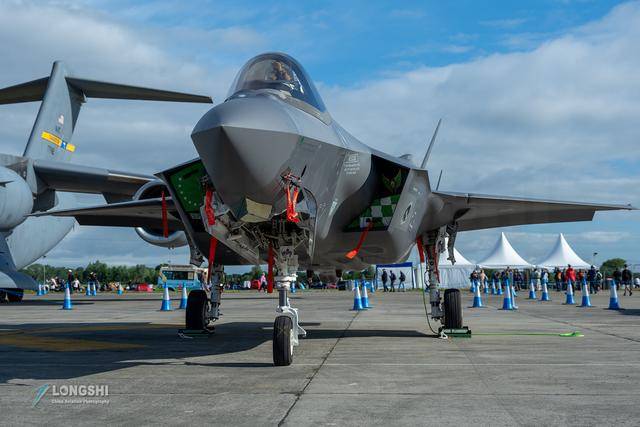
东建国际(0329)公告:通过一般授权配售新股募资约 0.8 亿港元 拓展业务
Xin Lang Cai Jing· 2025-07-11 13:26
Core Viewpoint - Dongjian International (stock code: 0329) announced a financing plan through the placement of new shares, aiming to raise approximately HKD 0.8 billion, net of expenses [1] Group 1: Financing Details - The company plans to issue 299,949,984 shares (approximately 300 million shares) at a placement price of HKD 0.28, representing a discount of about 18.8% compared to the previous trading day's closing price of HKD 0.345 [1] - The placement price also reflects a discount of approximately 19.5% compared to the average closing price over the last five trading days [1] - The new shares will account for about 20.0% of the existing issued share capital and approximately 16.7% of the enlarged share capital after completion [1] Group 2: Use of Proceeds - Approximately HKD 0.6 billion of the proceeds will be used for investments aligned with the company's general business activities and to enhance asset management financing [1] - Around HKD 0.1 billion will be allocated to expand the wine and beverage business [1] - Approximately HKD 0.2 billion will be utilized for general operating funds of the group [1] Group 3: Company Overview - Dongjian International is an investment holding company, with subsidiaries primarily engaged in asset management, investment and financial consulting, securities underwriting and placement, securities trading and investment, as well as wine and beverage trading [1]
苏豪弘业: 苏豪弘业股份有限公司章程
Zheng Quan Zhi Xing· 2025-07-10 16:22
General Provisions - The company aims to protect the legal rights of shareholders, employees, and creditors, and to regulate its organization and behavior according to relevant laws [1][2] - The company was established as a joint-stock limited company approved by the Jiangsu Provincial Reform Commission in 1994 and registered with the Jiangsu Provincial Market Supervision Administration [1][2] - The company was approved by the China Securities Regulatory Commission to issue 35 million shares of common stock to the public in 1997 and was listed on the Shanghai Stock Exchange [1][3] Company Structure - The registered capital of the company is RMB 246,767,500 [2] - The company is a permanent joint-stock limited company [2] - The legal representative of the company is the chairman of the board, who is responsible for executing company affairs [2][3] Business Objectives and Scope - The company's business objective is to enhance economic efficiency, improve operational mechanisms, and develop high-quality export products, aiming to create a group-oriented, internationalized, and industrialized economic entity [2][3] - The company is authorized to engage in various business activities, including the sale of hazardous chemicals, medical devices, food, and oil, as well as import and export operations [2][3][4] Party Committee - The company has established a Communist Party committee to lead and ensure the implementation of major decisions and policies from the central government [6][7] - The committee is responsible for political education, management of significant business matters, and oversight of personnel decisions [6][7] Share Issuance and Management - The company's shares are issued in the form of stocks, with equal rights for each share of the same category [9][10] - The company has issued a total of 246,767,500 shares, all of which are common shares [10] - The company may increase its capital through various methods, including issuing shares to unspecified objects or existing shareholders [10][11] Shareholder Rights and Responsibilities - Shareholders have rights to dividends, voting, and the ability to supervise company operations [13][14] - Shareholders must comply with laws and regulations, and they are liable for their subscribed shares [18][19] - The company must maintain transparency and provide shareholders with access to relevant documents and records [14][15] Shareholder Meetings - The company holds annual and temporary shareholder meetings, with specific procedures for calling and conducting these meetings [53][54] - Shareholder meetings must be announced in advance, and all shareholders have the right to attend and vote [66][69] - The company must maintain accurate records of meeting proceedings, including attendance and voting results [82][83]
