
汽车制造

Search documents
四大证券报头版头条内容精华摘要_2026年2月27日_财经新闻
Xin Lang Cai Jing· 2026-02-27 00:33
Group 1 - The demand for gold investment is increasing, driven by expectations of price hikes and promotional activities ahead of the Spring Festival, leading to a surge in purchases and a "golden feast" in the capital market [1][1] - The China Gold Association predicts that by 2025, the consumption of gold bars and coins in China will surpass that of gold jewelry for the first time [1] - In February, nearly 240 listed companies have been surveyed by various institutions, with over half of them achieving positive returns during the same period, and some stocks seeing cumulative gains exceeding 80% [1][1] Group 2 - In January 2026, domestic automobile sales reached 2.346 million units, with the top ten companies accounting for 1.962 million units, representing 83.6% of total sales, indicating a high concentration in the market [2][18] - The brain-computer interface sector is gaining attention, with 80 pharmaceutical and biotechnology companies undergoing institutional surveys, focusing on product development and commercialization [3][19][20] Group 3 - The Shanghai housing market shows signs of recovery, with second-hand home transactions exceeding 20,000 units for three consecutive months, and a year-on-year increase of 26.69% in January [4][21] - The People's Bank of China has issued a notice to support domestic banks in conducting cross-border RMB interbank financing, aiming to enhance the offshore RMB market [5][22][30] Group 4 - The lithium market is experiencing supply concerns due to Zimbabwe's adjustments in lithium export policies, leading to a significant increase in lithium carbonate futures prices [8][24][26] - The A-share merger and acquisition market remains active, with 507 transactions reported since the beginning of the year, totaling approximately 130 billion yuan, reflecting a robust market environment [11][27] - The popularity of rights-containing wealth management products has surged, with 32 new products launched in February, marking a significant increase compared to previous months [12][28][29] Group 5 - NIO's chip subsidiary has completed its first round of financing, raising 2.257 billion yuan, with a post-financing valuation nearing 10 billion yuan [15][32] - The price of battery-grade lithium carbonate has risen sharply post-Spring Festival, reaching 173,100 yuan per ton, a 20.38% increase from the previous price [16][33]
全球大公司要闻 | 李嘉诚再售英国资产,苹果接受三星内存报价翻倍
Wind万得· 2026-02-27 00:31
Group 1 - Nvidia's CEO Jensen Huang stated that the demand for computing is growing exponentially, and the adoption rate of Agentic AI is experiencing explosive growth, with clients accelerating investments in AI computing power [2] - Baidu projects total revenue of 129.1 billion yuan by 2025, with AI business revenue of 40 billion yuan and a net profit of 5.6 billion yuan, driven by growth in core AI new businesses [2] - Cheung Kong Infrastructure, Power Assets, and CK Hutchison announced the sale of their UK Power Networks stake to Engie for over 110 billion HKD, indicating plans for future investments and acquisitions [2] Group 2 - NIO's chip subsidiary Anhui Shenji Technology completed its first round of financing, raising over 2.2 billion yuan, with a post-investment valuation nearing 10 billion yuan [5] - iQIYI expects total revenue of 6.79 billion yuan in Q4 2025, with a net loss of 5.8 million yuan, while annual revenue is projected at 27.29 billion yuan [6] - JD.com launched a "100 Billion Supermarket" channel on its app, planning to invest over 20 billion yuan in subsidies over the next three years to boost sales [7] Group 3 - Amazon plans to invest $50 billion in OpenAI, contingent on two triggers: an IPO or achieving AGI [10] - Apple has accepted a 100% price increase for Samsung's storage chips for the iPhone 17, which may significantly raise production costs [10] - Tesla China is offering promotional financing options for its vehicles, including zero-interest loans for certain models [11] Group 4 - Samsung Electronics reported DRAM sales of $19.3 billion in Q4, regaining a 36% market share, and confirmed plans for silicon-carbon anode batteries for smartphones [15] - Toyota plans to sell approximately $19 billion in cross-shareholdings to advance governance reforms, while January production in Japan fell by 6.1% [15] - LG Energy Solution has reached an agreement with Tesla to produce lithium iron phosphate batteries in the U.S., investing 5.94 trillion KRW [15]





8点1氪丨玛莎拉蒂母公司全年净亏损1800亿元人民币;男童发育不良新药引爆股价,长春高新回应;德国总理默茨参访宇树科技
3 6 Ke· 2026-02-27 00:11
Group 1: Automotive Industry - Stellantis, the global fourth-largest automotive manufacturer, reported a net loss of €22.3 billion (approximately ¥180.2 billion) for the year 2025, primarily due to €25.4 billion in extraordinary restructuring costs incurred in the second half of the year [1] - Despite the losses, Stellantis showed signs of recovery in the second half of 2025, with revenue growth and significantly improved cash flow compared to the first half [1] - The company's net revenue for 2025 was €153.5 billion, a slight decrease of 2% year-on-year, attributed to foreign exchange impacts and declining new car prices in the first half [1] Group 2: Pharmaceutical Industry - Changchun High-tech's subsidiary, JinSai Pharmaceutical, received approval for clinical trials of GenSci141 ointment, a drug aimed at treating male children's developmental disorders, marking a significant market opportunity as no similar products exist globally [3][4] - Following the announcement, Changchun High-tech's stock price surged over 12% within two days, reflecting strong market interest and potential for growth in the pharmaceutical sector [2] Group 3: Technology and Communication - WeChat launched a new feature allowing users to check how many chats a file has been used in, which does not duplicate storage space, addressing user concerns about storage management [6] - Meituan has applied for trademarks related to real estate, indicating a strategic move into property-related services [5] Group 4: Corporate Changes - Ctrip announced the resignation of its co-founder and president, Fan Min, along with board member Ji Qi, as part of a restructuring effort to enhance the board's professional diversity and strategic oversight capabilities [7][8] - ByteDance's valuation has risen to $550 billion, reflecting a 66% increase compared to last year's stock buyback valuation, indicating strong investor confidence in the company's growth potential [9]

政策金融双轮驱动新春车市回暖 超20家车企力推超长低息贷
Zhong Guo Zheng Quan Bao· 2026-02-26 23:50
Group 1 - The domestic automotive market is experiencing a consumption boom driven by both policy and financial incentives, with various promotional activities and discounts from car manufacturers [1][4] - There is a notable increase in foot traffic at dealerships for both new energy and luxury fuel brands, with significant discounts being offered by brands like BMW and Mercedes-Benz [1][3] - Financial policies are becoming the mainstream promotional strategy, with over 20 car manufacturers offering long-term low-interest loans, indicating a shift from direct price reductions to financing options [1][4] Group 2 - The consumer purchasing behavior is shifting from basic needs to a focus on quality and personalization, as seen in the sales performance of different brands [2][3] - The implementation of the new vehicle trade-in policy has led to a significant increase in new car sales, with over 60,700 vehicles traded in by mid-February, generating sales worth 995.6 billion [5] - Industry experts suggest that the automotive market is entering a high-end consumption phase, emphasizing the need for manufacturers to enhance product value rather than relying solely on price reductions [6]
Cybercab量产在即 特斯拉把基本盘放上了赌桌
2 1 Shi Ji Jing Ji Bao Dao· 2026-02-26 23:10
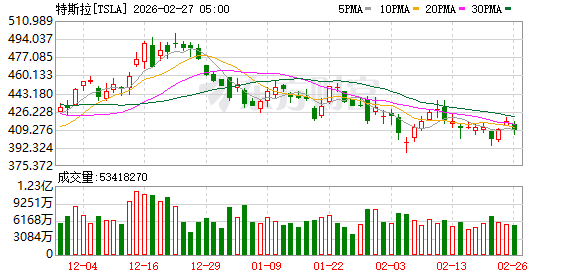
Core Insights - Tesla's Austin Gigafactory has produced the first Cybercab production validation vehicle, marking the start of mass production for this autonomous taxi without a steering wheel or accelerator pedal [2] - CEO Elon Musk asserts that the Cybercab will be priced below $30,000 from the outset, despite previous skepticism about achieving this price point by 2027 [2] - The production of Cybercab is set to begin in April 2024, with an ambitious target of reaching millions of units annually [2][5] Production and Cost Structure - The Cybercab aims for an operational cost of $0.1 to $0.2 per mile (approximately ¥0.7-1.4 per kilometer), which is competitive compared to current energy costs in the U.S. [4] - Tesla projects a lifespan of 1 million miles (1.6 million kilometers) for the Cybercab, significantly exceeding typical vehicle lifespans [4] - The "Unboxed" manufacturing model will allow for modular assembly, reducing complexity and production time, with a target to lower unit costs by 67% and achieve a production cycle of around 10 seconds per vehicle [5] Market Potential and Challenges - Musk envisions an annual production capacity of 5 million Cybercabs, which exceeds the combined total of taxis and ride-sharing vehicles in the U.S. [6] - To achieve success, Tesla will need to penetrate the consumer vehicle market, as the current taxi and ride-sharing market may not absorb the projected production volume [7] Regulatory Environment - The automotive industry is heavily regulated, and current U.S. laws require vehicles to have human drivers, complicating the Cybercab's classification as a vehicle [8][9] - Tesla has not yet applied for the necessary exemptions from the National Highway Traffic Safety Administration (NHTSA) to operate the Cybercab on public roads, which poses a significant hurdle [10] - Other companies, such as Zoox and Waymo, are more proactive in seeking regulatory exemptions for their autonomous vehicles [11] Legislative Developments - Recent legislative discussions in the U.S. Congress may lead to increased exemptions for autonomous vehicles, potentially allowing Tesla to scale production more effectively [12] - However, even with increased exemptions, Tesla may not achieve a monopoly in the Robotaxi market due to the competitive landscape [13] - Tesla is actively lobbying for favorable regulations to ensure the Cybercab can operate legally, indicating a strategic approach to navigating the regulatory landscape [14]

“中年人的一代神车”正在消失
汽车商业评论· 2026-02-26 23:05
Core Viewpoint - The article discusses the decline of classic fuel vehicles, highlighting the transition to electric vehicles and the reasons behind the discontinuation of iconic models like Honda Fit, Mazda 6, Ford Focus, and Mercedes A-Class [3][4][12][19][24]. Group 1: Reasons for Discontinuation of Fuel Vehicles - Strict emissions regulations and laws are forcing the elimination of fuel vehicles, with companies unwilling to invest heavily in R&D for a shrinking market [3][4]. - Market demand has shifted towards electric vehicles, which offer lower operating costs and better performance, leading to the phasing out of traditional fuel cars [4][9]. - Automakers are strategically pivoting towards electric and hybrid technologies, ceasing the development of new fuel platforms and engines [4][12]. Group 2: Specific Model Discontinuations - Honda Fit officially exited the Chinese fuel vehicle market in February 2026, with a limited edition model selling out quickly before the discontinuation [6][9]. - Mazda has ceased production of three classic models: Mazda 6, CX-3, and Mazda 2, with the Mazda 6's global production ending in March 2025 after a 23-year lifecycle [10][12][16]. - Ford Focus will be globally discontinued by November 2025, despite still having decent sales in Europe, due to stringent regulations and market shifts [18][19][22]. - Mercedes A-Class will not have a successor, with production extended until 2027 due to stable demand in Europe, while other compact models are being phased out [24][27].




领克Z20语音控制出问题,车主高速撞护栏,官方致歉:已推优化方案
Mei Ri Jing Ji Xin Wen· 2026-02-26 22:46
据大河报,昨日凌晨近1点,一名男子驾驶领克Z20在高速上行驶时,仅想关闭车内阅读灯,却意外触发车机误操作,导致全车灯光熄灭,最终车辆撞上 护栏,相关话题今日引发网友广泛关注。 据当事车主透露,事发时高速路段无路灯,夜色漆黑。他通过语音指令尝试关闭车内阅读灯,没想到车机并未准确识别指令。 指令下达后,车辆不仅没关掉阅读灯,反而将包括车头大灯在内的所有灯光全部关闭。瞬间,前方道路陷入一片黑暗,驾驶员顿时陷入慌乱。 情急之下,男子急忙再次下达语音指令,想要重新打开车灯,但由于语速过快,车机未能识别其指令,无法及时开启灯光。 在没有任何照明的情况下,车辆失去视线引导,最终失控撞上高速护栏,所幸未造成人员伤亡,具体财产损失暂未披露。 视频记录显示,车主多次呼唤车机重开灯光但被回复"暂时还不会哟"。 26日,领克汽车销售有限公司副总经理穆军在其个人微博上公开回应称,"昨晚发生一起领克Z20车辆行驶中语音误操作控制关闭大灯的情况,今天我们 第一时间完成了语音控制优化方案,现已通过云端推送更新,后续在行驶状态下只能通过手动控制大灯关闭,请大家放心。感谢用户的反馈与监督,对此 带来的困扰我们深表歉意,领克始终守护您的安全"。 ...

【史海回眸】1959年,机器人首入汽车生产线
Huan Qiu Shi Bao· 2026-02-26 22:46
Core Insights - The article discusses the historical development and impact of industrial robots, particularly focusing on the invention of the Unimate robot by George Devol and Joseph Engelberger, which revolutionized manufacturing processes [1][2][3] Group 1: Historical Development - The first industrial robot, Unimate, was designed by George Devol in 1954 and was later brought to market with the help of Joseph Engelberger, who is known as the "father of robotics" [1] - Devol's invention aimed to automate tasks in factories, advocating for "universal automation" to replace manual labor in processes like automotive welding and parts handling [1] - The Unimate 001 prototype was first used in a General Motors plant in 1959, capable of handling dangerous tasks, which significantly improved worker safety and efficiency [2] Group 2: Market Expansion and Impact - By 1961, the Unimate 1900 series became the first mass-produced robotic arm, with 450 units deployed in manufacturing, marking a significant shift in the industry [2] - Engelberger expanded the market for Unimate by authorizing production in Scandinavia and Eastern Europe, and later in Asia, which helped to establish a global presence [3] - The introduction of Unimate robots allowed General Motors to manufacture 110 cars per hour, leading to a transformation in the automotive industry and prompting other companies like BMW and Mercedes-Benz to adopt similar technologies [3]


1月头部车企销量表现分化 呈现“五增五降”格局
Zhong Guo Zheng Quan Bao· 2026-02-26 21:09
Core Insights - In January 2026, China's automotive sales reached 2.346 million units, reflecting a year-on-year decline of 3.2%, while production was stable at 2.45 million units, showing a slight increase of 0.01% [1][4] - The top ten automotive companies accounted for 1.962 million units sold, representing 83.6% of total sales, indicating a significant concentration in the market [1][2] - The market is characterized by a "stronger getting stronger" effect, with a clear division between companies experiencing sales growth and those facing declines [1][3] Market Performance - The top ten companies displayed a clear tiered performance, with SAIC Motor leading at 327,000 units sold, followed by Geely and FAW at 270,000 and 275,000 units respectively [2] - Among the growth cohort, SAIC Motor saw a substantial increase of 23.9% year-on-year, driven by strong performance in new energy vehicles and overseas sales [2][3] - Conversely, companies like FAW and BYD experienced slight declines, with FAW down 3% and BYD's domestic sales not compensating for its strong export performance [3][4] Industry Trends - The automotive market is undergoing a transformation towards electrification and globalization, with companies that have effectively expanded their new energy product lines and overseas markets showing better resilience [3][4] - The decline in sales for some companies is attributed to mismatches in product structure adjustments and market demand changes, highlighting the importance of aligning product offerings with consumer needs [4] Company Strategies - Major automotive companies have set clear sales targets for 2026, focusing on product launches and technological advancements to capture market share [5][6] - Traditional automakers like FAW and Dongfeng are emphasizing steady growth and new energy transitions, with FAW targeting 3.546 million units and Dongfeng aiming for 3.25 million units [5][6] - New energy leaders like BYD are focusing on global expansion, setting an overseas sales target of 1.3 million units, while startups like Leap Motor and Xiaomi aim for aggressive growth through new product launches [7]





汇个体微光成“璀璨星河”
Xin Lang Cai Jing· 2026-02-26 19:41
Core Insights - The article highlights the successful innovation project led by Li Jiaming at Dongfeng Motor Corporation, which won an award at the 2025 Hubei Province Workers' Innovation Competition, showcasing the spirit of innovation among workers in Hubei [1] - Hubei Province's labor union has established a robust framework for fostering innovation among workers, integrating institutional support, platforms for collaboration, and incentives to drive high-quality development [1][2] Institutional Framework - The Hubei Provincial Labor Union has implemented various management measures and funding guidelines to support worker innovation, including the "Management Measures for Workers' Innovation Studios" and the "Special Subsidy Fund Implementation Rules" [2] - The establishment of a comprehensive institutional framework has led to significant innovations, such as the development of a key technology for intelligent detection robots in rail transit, generating direct economic benefits of 320 million yuan over three years [2] Collaborative Platforms - Hubei Province has created a multi-dimensional platform system that facilitates innovation, with successful collaborations among various enterprises leading to significant economic benefits, such as nearly 80 million yuan from a project led by a national model worker in the automotive sector [3] - Over the past five years, 4,050 innovation studios have been established, resulting in 604 innovation achievements and 1,127 patent authorizations, contributing to an economic impact of 27.306 billion yuan [3] Targeted Support Initiatives - The "Thousand Model Workers and Craftsmen Assist Enterprises" initiative has provided targeted support to businesses, exemplified by a project that improved welding quality by over 50% for a local automotive company [4] - Since its launch, over 150 support teams have been formed, assisting nearly 2,000 enterprises and addressing over 4,262 technical challenges, benefiting approximately 35,000 workers [5] Incentive Mechanisms - The Hubei Provincial Labor Union has established a supportive ecosystem for innovators, providing financial assistance and rewards for successful projects, such as a 200,000 yuan subsidy for a metal processing project that saved costs significantly [5][6] - Training programs for innovation leaders have been conducted, enhancing the skills of nearly 500 individuals and contributing to the recognition of Hubei's workers' patent achievements in national awards [6]