
家电制造

Search documents
李强出席在巴西中资企业座谈会
证监会发布· 2025-07-09 01:26
Core Viewpoint - The Chinese government emphasizes the importance of supporting overseas Chinese enterprises as they expand internationally, highlighting the resilience and potential of the Chinese economy amidst global challenges [1][2]. Group 1: Government Support and Economic Resilience - The Chinese economy has shown resilience and potential for growth, with the government committed to providing support for overseas enterprises through improved services and policies [1]. - The government aims to enhance various economic and trade cooperation mechanisms, ensuring a better environment for Chinese enterprises abroad [1]. Group 2: International Trade Environment and Opportunities - The current international economic landscape is marked by rising unilateralism and protectionism, presenting both challenges and opportunities for enterprises [2]. - Chinese enterprises are encouraged to strengthen their brands and enhance global competitiveness, particularly in the Latin American market through local market engagement [2]. Group 3: Corporate Responsibility and Compliance - Chinese enterprises are urged to respect local laws and cultural practices while conducting business, emphasizing the importance of corporate social responsibility [2]. - Companies are encouraged to maintain a positive image and strengthen economic ties with Brazil and other Latin American countries for mutual benefit [2].





海尔智家(600690):公司深度研究:研产销“三位一体”,全球化深度整合
Tai Ping Yang Zheng Quan· 2025-07-08 06:44
Investment Rating - The report maintains a "Buy" rating for Haier Smart Home [2] Core Viewpoints - Haier Smart Home is positioned as a leading player in the home appliance sector, focusing on "accelerated transformation and efficiency improvement" and "globalization with meticulous cultivation" as its growth strategies [2] - The company adopts a localized research, production, and sales model, differentiating itself from traditional "China manufacturing + overseas distribution" approaches, which enhances its global market expansion [2][63] - The South Asian market is identified as a high-potential area, with projected revenue growth of 21.05% in 2024, particularly driven by strong performance in India [2] Company Analysis - Haier has established a comprehensive global research, production, and sales network, with over 1.6 billion units of production capacity and 163 manufacturing centers worldwide, including 61 overseas [2][75] - The company has a multi-brand strategy, leveraging brands like AQUA, GEA, and Fisher & Paykel to penetrate various international markets [63] - The report highlights the company's strong performance in the high-end market, with the Casarte brand leading in premium segments, achieving significant revenue growth [19][15] Financial Analysis - In 2024, Haier's total revenue reached 2859.81 billion yuan, marking a year-on-year increase of 4.29%, with Q1 2025 revenue at 791.18 billion yuan, up 10.06% [23][24] - The company's net profit attributable to shareholders for 2024 was 187.41 billion yuan, reflecting a growth of 12.92% [34] - The report indicates a continuous improvement in profit margins, with a net profit margin of 7.13% and a gross profit margin of 25.40% in Q1 2025 [34][33] Market Analysis - The global home appliance market is projected to grow steadily, with emerging markets like South Asia and Southeast Asia becoming key growth drivers [47][53] - In 2024, Haier's overseas revenue accounted for 49.97% of total revenue, with significant contributions from North America and Europe [29] - The report notes that the company is well-positioned to navigate external economic fluctuations due to its robust global operations and localized production capabilities [2][43]

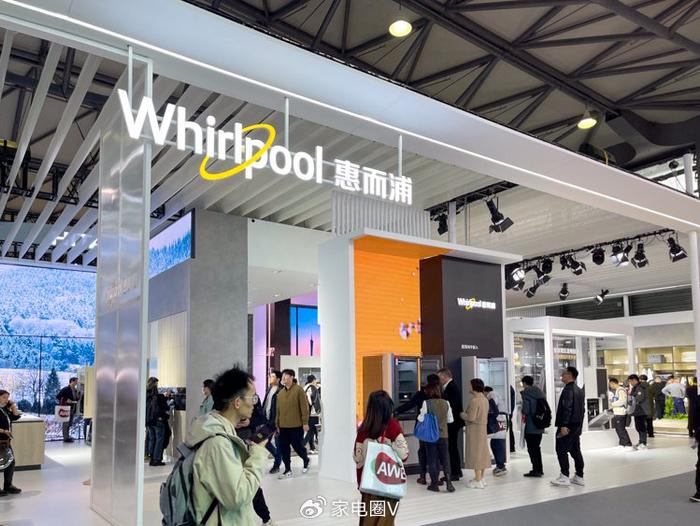
告别中国市场内卷的惠而浦(中国),今年上半年预盈2亿多的秘密
Xin Lang Cai Jing· 2025-07-08 02:13
Core Viewpoint - Whirlpool (China) has successfully transformed its business strategy under the ownership of Galanz, shifting focus from domestic competition to overseas markets, resulting in significant profit growth and operational efficiency improvements [2][4][11]. Financial Performance - In the first half of this year, Whirlpool (China) expects a net profit of approximately 205 million yuan, a year-on-year increase of about 559%, with a net profit of 194 million yuan after excluding non-recurring gains, reflecting an 857% increase [3]. - For the fiscal year 2024, the company reported total revenue of 3.649 billion yuan, a decline of 8.85%, but net profit increased by 148.72% to 202 million yuan, and net profit excluding non-recurring items rose by 74.80% to 179 million yuan [3][4]. Strategic Shift - The company has strategically abandoned direct competition in the Chinese market, focusing instead on contract manufacturing and expansion in overseas markets, particularly for its major shareholder, Whirlpool USA [4][11]. - The revenue from overseas markets accounts for 93.85% of total revenue, indicating a significant pivot towards international operations [6]. Cost Control and Management - Whirlpool (China) has implemented extreme cost-cutting measures, including a flat management structure where the president oversees all major operations, leading to enhanced efficiency [6][9]. - The management team is notably lean, with minimal executive positions, which allows for better cost management but may impact team development [9][8]. Client Dependency - The top five clients account for 90.59% of total sales, with a significant portion of sales coming from related parties, indicating a high dependency on a limited number of customers [6][7]. Product Development - The company is focusing on developing new products tailored for the U.S. and South American markets, including a series of high-standard dishwashers and innovative washing machines [11].

综述丨中国与埃及务实合作成果丰硕
Xin Hua Wang· 2025-07-08 01:29
Group 1: Bilateral Relations and Economic Cooperation - The relationship between China and Egypt has achieved significant development under the strategic guidance of both countries' leaders, with a focus on the Belt and Road Initiative and Egypt's "New Republic" construction [1][2] - Since the establishment of a comprehensive strategic partnership in 2014, the trade volume between China and Egypt has increased significantly, with a notable rise in Chinese investments in Egypt [1][2] - The establishment of the TEDA Suez Economic and Trade Cooperation Zone has been pivotal in boosting Egypt's economic development, attracting substantial foreign investment [2][3] Group 2: Investment Projects and Industrial Development - The TEDA Cooperation Zone has attracted 185 enterprises with an investment amount of approximately $3 billion and cumulative sales exceeding $5.3 billion, forming a diverse industrial cluster [3] - The recent groundbreaking of the Delixi Glass production base in the TEDA Cooperation Zone, with a total investment of about $70 million, aims to produce high-quality daily-use glassware [2][3] - Chinese enterprises have achieved several "firsts" in Africa, including the construction of the tallest building and the establishment of a world-class fiberglass production base in Egypt [3] Group 3: Cultural and Educational Exchanges - Cultural exchanges between China and Egypt have flourished, with Chinese language education becoming part of the national education system in Egypt, including 30 universities offering Chinese programs [4] - Various cultural activities, such as the "Happy Spring Festival" and "Chinese Film Week," have been widely embraced in Egypt, enhancing mutual understanding [4] - Joint archaeological projects, including the restoration of ancient sites, have deepened cooperation in the field of archaeology [4] Group 4: Tourism Development - The Egyptian government has implemented measures to facilitate Chinese tourism, including the installation of Chinese signage at major tourist sites and the increase of Chinese-speaking tour guides [5] - The launch of a direct flight route from Beijing to Cairo by Air China is expected to strengthen personnel exchanges and tourism cooperation between the two countries [5]
面对绿色贸易壁垒高筑,我国企业如何主动重构国际竞争力?
Zhong Guo Huan Jing Bao· 2025-07-08 00:21
Core Viewpoint - The article discusses the increasing green trade barriers imposed by Western countries, which pose systemic challenges to China's industries such as renewable energy and steel, under the guise of environmental protection [1][2]. Group 1: Green Trade Barriers - The green trade barriers from the US and EU are becoming systematic, standardized, and refined, with significant policies like the US Inflation Reduction Act (IRA) mandating that by 2029, 100% of electric vehicle battery components must be assembled in North America [2]. - The EU's battery regulations require foreign batteries to establish a "battery passport" by 2025, disclosing extensive information about material sources and carbon footprints, which raises compliance costs and risks of technology leakage [2]. - The Carbon Border Adjustment Mechanism (CBAM) will impose import taxes on high-carbon products starting in 2025 for the US and 2026 for the EU, increasing export costs for Chinese products, with estimated cost increases of 652 to 690 RMB per ton of steel, leading to a 15% to 20% decrease in price competitiveness [2]. Group 2: Strategic Response - Companies should adopt a proactive approach to address these barriers through a four-phase strategy: deconstructing current policies, responding to immediate challenges, resolving mid-term issues, and achieving long-term breakthroughs [3][7]. - In the short term, companies can seek new regional markets or product directions to avoid direct impacts from green trade barriers, such as establishing blockchain supply chain traceability platforms [4]. - In the mid-term, companies can invest in local production facilities in target markets to mitigate the impact of carbon tariffs, as seen with Longi Green Energy's factory in Ohio benefiting from tax credits [5]. Group 3: Long-term Strategies - In the long term, companies should focus on developing low-carbon technologies and circular processes to enhance their global competitiveness in green products [6]. - Establishing mutual recognition of environmental certifications between China and the EU can help meet carbon footprint accounting requirements [6]. - Companies should aim to lead the formulation of international green technology standards, leveraging their technological advantages in sectors like renewable energy and electric vehicles [6][7].

深康佳A: 2025年面向专业投资者非公开发行公司债券(第二期)发行结果公告
Zheng Quan Zhi Xing· 2025-07-07 16:06
Group 1 - The company successfully completed a non-public issuance of corporate bonds amounting to 790 million yuan, with a final coupon rate of 2.80% for a three-year term [1][2] - The issuance period for the bonds was from July 3, 2025, to July 4, 2025 [1] - A total of 16 investors participated in the bond issuance, all of whom met the regulatory requirements set forth by relevant authorities [2] Group 2 - The bonds were issued without participation from the underwriting institutions or their affiliates, ensuring a diverse investor base [2] - There were no subscriptions from the company's directors, supervisors, senior management, or shareholders holding more than 5% of the shares, indicating a lack of insider influence in the bond issuance [2]

信用分析周报:高票息信用债行情兑现-20250707
Hua Yuan Zheng Quan· 2025-07-07 07:02
证券研究报告 固收定期报告 hyzqdatemark 2025 年 07 月 07 日 高票息信用债行情兑现 ——信用分析周报(2025/6/30-2025/7/4) 投资要点: 本周(6/30-7/4)市场概览: 证券分析师 廖志明 SAC:S1350524100002 liaozhiming@huayuanstock.com 3)负面舆情。主体负面:本周潍坊公信国有资产经营有限公司、联储证券股份有限 公司、登封市建设投资集团有限公司、聊城市安泰城乡投资开发有限责任公司列入 主体观察名单;黑龙江创达集团有限公司主体评级调低。债项负面:中燃投资有限 公司所发行的 10 只银行间债项隐含评级调低;康佳集团股份有限公司所发行的 6 只 公司债隐含评级调低;其他债项负面包括"融茂优 B"隐含评级调低,"H20 方圆 1" 展期,"23 创 01EB"债项评级调低,"23 联储一"列入债项观察名单。转债负面: 双良节能系统股份有限公司主体评级调低,其所发行的"双良转债"债项评级调低。 本周市场分析:本周公开市场共有 20275 亿元逆回购到期,本周央行累计开展 6522 亿元逆回购操作,实现全周净回笼 13753 亿 ...
日韩家电深耕泰国,海尔创最高增速,能改变格局
Jin Tou Wang· 2025-07-07 03:20
Group 1: Market Overview - Southeast Asia, particularly Thailand, is experiencing robust growth in the white goods market due to a large population and increasing consumer spending power, making it a competitive landscape for global appliance companies [1] - Samsung and LG have historically dominated the Thai market, holding over 60% market share in washing machines, but this is changing with the entry of Chinese brands [1] Group 2: Chinese Brands' Investment - In 2024, approximately 2,700 companies are expected to invest in Thailand, with major Chinese appliance manufacturers like Haier, Midea, and TCL announcing new investment plans for 2025 [1] - Midea established a new regional headquarters in Thailand, while TCL plans to invest 680 million yuan to build a refrigerator production line [1] - Haier's market share in Thailand's white goods sector reached the top position by early 2025, with a 72% year-on-year increase in washing machine retail sales by May [1] Group 3: Product Innovation and Localization - Haier launched three high-end washing machine series in Thailand, focusing on local user needs and incorporating innovative technologies to address specific challenges [2] - The L+ series features AI heat pump technology for large item care, while the X series offers rapid drying capabilities to combat humidity [2] - Local designers showcased how Haier's products solve everyday problems, enhancing market acceptance and demonstrating the company's commitment to localized innovation [2] Group 4: Future Growth Potential - The core strategy for sustained growth is to create user demand rather than merely follow existing trends, which is crucial for Haier's continued success in the Thai washing machine market [3] - The ongoing expansion of Haier's product lines raises expectations for a potential shift in market share dynamics, challenging the long-standing dominance of Japanese and Korean brands [3]
股市必读:长虹美菱(000521)7月4日主力资金净流出728.59万元,占总成交额6.76%
Sou Hu Cai Jing· 2025-07-06 21:41
Group 1 - The core point of the article is that Changhong Meiling plans to repurchase shares using its own and self-raised funds, with a total amount between RMB 150 million and RMB 300 million, and a maximum repurchase price of RMB 10.67 per share [2][4] - The estimated number of shares to be repurchased ranges from approximately 14,058,107 shares (1.36% of total share capital) to 28,116,213 shares (2.73% of total share capital) [2][4] - The repurchase period is set to be no more than 12 months from the date of the board's approval of the repurchase plan [2][4] Group 2 - On July 4, the stock closed at RMB 7.15, with a slight increase of 0.28%, and a trading volume of 150,000 shares, resulting in a total transaction amount of RMB 108 million [1] - The fund flow on the same day showed a net outflow of RMB 7.2859 million from main funds (6.76% of total transaction amount) and a net outflow of RMB 3.7046 million from speculative funds (3.44% of total transaction amount), while retail investors had a net inflow of RMB 10.9904 million (10.2% of total transaction amount) [2][4]

智慧节能技术升级,建筑行业加速低碳化、数智化转型
Hua Xia Shi Bao· 2025-07-05 09:13
Core Insights - The construction industry is actively transitioning towards a green, low-carbon, and intelligent development model, supported by policies such as the "14th Five-Year Plan for Building Energy Conservation and Green Building Development" [1] - The integration of AI technology with HVAC systems is emphasized as a key driver for innovation in energy efficiency and smart operations within the building sector [2][3] - Existing buildings are increasingly targeted for energy-efficient retrofitting, with a focus on enhancing the performance of HVAC systems to meet the "dual carbon" goals [1][3] Industry Trends - The shift towards intelligent buildings is seen as a crucial engine for industrial ecosystem prosperity, with a strong emphasis on the dual approach of green smart buildings and financial support [1] - AI's rapid development is significantly accelerating its application in smart buildings, enabling data-driven decision-making and dynamic optimization of building management systems [2] - The demand for energy efficiency improvements, particularly in HVAC systems, is highlighted as a major trend in the building sector, with immediate visible results from retrofitting efforts [3] Company Initiatives - Midea Building Technology has been focusing on digital transformation through its iBUILDING platform, which enables energy consumption monitoring and management of various mechanical and electrical equipment [3] - The company is committed to integrating smart technology into its core business lines, aiming to enhance operational efficiency and support the green upgrade of existing buildings [4][5] - Recent product launches at the "Fourth Building Technology TRUE Conference" showcase Midea's comprehensive solutions for smart buildings, emphasizing low-carbon and intelligent features [5] Future Directions - Midea Group is positioning "digital intelligence" as a core strategic focus, aiming to transition from manufacturing to intelligent manufacturing and technology services [4] - The establishment of the Shanghai Midea Global Innovation Center is part of the company's strategy to enhance its global R&D network and support comprehensive digital and intelligent development [6]
