电动汽车

Search documents
道指重挫800点!特斯拉跌超6%;腾讯回应与苹果小程序游戏支付协议进度;恒大汽车附属公司破产清算丨每经早参
Mei Ri Jing Ji Xin Wen· 2025-11-13 22:24
Group 1 - The Chinese Premier Li Qiang will attend the Shanghai Cooperation Organization meeting in Moscow from November 17 to 18, and will visit Zambia from November 19 to 20, followed by attending the G20 summit in Johannesburg from November 21 to 23 [3] Group 2 - The U.S. stock market saw a collective decline, with the Dow Jones dropping 797.6 points (1.65%), the S&P 500 down 1.65%, and the Nasdaq down 2.29%. Major tech stocks also fell, with Tesla down over 6% and Intel down over 5% [4] - Bitcoin fell below $100,000, trading at $98,800, a decrease of 2.8% [5] - International gold prices decreased, with spot gold down 0.47% at $4,176.32 per ounce [6] - International oil prices saw slight increases, with WTI crude oil up 0.31% at $58.67 per barrel [7] - European stock indices closed lower, with Germany's DAX down 1.36% and France's CAC40 down 0.11% [8] Group 3 - The China Securities Regulatory Commission (CSRC) Chairman Wu Qing visited France and Brazil, discussing securities market regulation and cooperation with international investors [9] - The Ministry of Commerce urged the Netherlands to present substantial proposals to stabilize the semiconductor supply chain [10] - The Ministry of Commerce responded to rare earth export controls, emphasizing China's commitment to maintaining global supply chain stability [11] Group 4 - The People's Bank of China reported that the social financing scale reached 437.72 trillion yuan at the end of October, a year-on-year increase of 8.5% [12] - The Financial Regulatory Bureau will soon release a revised "Commercial Bank M&A Loan Management Measures" to support mergers and acquisitions [13] - China has completed the first phase of 6G technology testing, with over 300 key technology reserves [13] Group 5 - Alibaba has launched the "Qianwen" project to develop a personal AI assistant app, aiming to compete with ChatGPT [18] - Tencent reported a strong third-quarter revenue of 192.87 billion yuan, exceeding expectations, and is in constructive discussions with Apple regarding game payment agreements [20] - Bilibili reported a third-quarter net revenue of 7.69 billion yuan, a year-on-year increase of 5% [21] - JD Group announced a third-quarter revenue of 299.1 billion yuan, a 14.9% year-on-year increase [21] Group 6 - Yushutech launched its first wheeled humanoid robot, G1-D, as part of a comprehensive data collection and model training solution [22] - The automotive industry is facing intensified competition as 17 major brands have committed to covering the purchase tax for consumers ahead of the end of full exemption policies [24] - Moore Threads announced its IPO process, with preliminary inquiries starting on November 19 [25] - The CSRC approved the IPO registration of Muxi Integrated Circuit Co., supporting the semiconductor sector's growth [26] Group 7 - Evergrande Auto has received a court ruling accepting bankruptcy and liquidation petitions for its subsidiary, impacting its production capabilities [27] - Michael Burry's Scion fund has withdrawn its registration with the SEC, following significant market movements related to its short positions [28] - Boeing's mechanics have voted to accept a new contract proposal, ending a three-month strike [29]


“新质生产力正为中国高质量发展提供澎湃动力”
Ren Min Ri Bao· 2025-11-13 22:03
Group 1 - The core viewpoint emphasizes that developing new quality productivity is an inherent requirement and important focus for promoting high-quality development in China [1][5] - The "14th Five-Year Plan" highlights significant achievements in both quantity and quality of the economy, with innovation being a key driver for high-quality development [2][3] - International experts recognize China's advancements in technology and innovation, particularly in green development, electric vehicles, artificial intelligence, and robotics, positioning China as a global leader in these fields [2][3] Group 2 - China's strategic vision and substantial investments in future technologies enhance its adaptability and competitiveness in the global market [2][3] - The development of new quality productivity is seen as a powerful engine for China's economic growth, with significant contributions to global economic stability [5][6] - China's experience in fostering innovation and collaboration is viewed as a valuable reference for developing countries, including those in ASEAN [6]
记者手记丨中国-北爱尔兰合作有“新意”更见“心意”
Xin Hua Wang· 2025-11-13 15:33
Group 1 - The China-Northern Ireland Economic and Trade Investment Cooperation Forum attracted over 400 attendees and nearly 150 companies, highlighting the region's appeal for Chinese and British entrepreneurs [1] - Northern Ireland is recognized for its high-quality workforce and unique geographical advantages, making it an ideal development platform for Chinese enterprises [1] - The region is home to one of the most complete aerospace industry chains in Europe, producing approximately 30% of the world's aircraft seats [1] Group 2 - Thompson Aero Seating, acquired by China Aviation Industry Corporation in 2016, exemplifies successful collaboration in advanced manufacturing, overcoming challenges during the pandemic with Chinese investment support [2] - The establishment of a world-class dynamic testing center has significantly improved operational efficiency, allowing for rapid testing and development without the need for external logistics [2] - The company has seen a rise in partnerships with leading global airlines, with current orders covering production capacity for the next three and a half years [3] Group 3 - The partnership between Northern Ireland's industrial foundation and Chinese companies' advantages in supply chain integration and smart manufacturing is expected to elevate future collaborations [3] - BYD plans to establish four stores in Northern Ireland by the end of the year to enhance the electric vehicle charging network, addressing local energy resource challenges [3] - The dairy company Loughview Dairy is adapting its products for the Chinese market, reflecting a commitment to understanding local consumer preferences [3][4] Group 4 - The sentiment of friendship and long-term partnership is emphasized as a crucial element in business cooperation between Northern Ireland and China, fostering deeper connections beyond mere commercial interests [4]

轮到美国焦虑!美经济学者预言:万亿美元变人民币,升值或成定局
Sou Hu Cai Jing· 2025-11-13 11:37
Core Insights - The U.S. has accumulated a significant debt burden, with national debt reaching $38 trillion, over 124% of GDP, a nearly fivefold increase since 2003 [2][4] - The Federal Reserve's high interest rate policy has been aimed at combating inflation, but recent economic data suggests a shift towards interest rate cuts to stimulate growth [5][7] - The return of capital from Chinese enterprises, estimated to be between $1 trillion and $1.3 trillion, is expected to strengthen the yuan against the dollar, with a potential appreciation of up to 10% [7][11] Debt Dynamics - U.S. national debt has surged due to government stimulus measures, with foreign ownership dropping to less than 25% [4] - The debt growth rate has accelerated from an average of 10% to over 20% annually from 2022 to 2025 [2][13] - The burden of debt is increasingly falling on domestic institutions and households, with each American carrying nearly $110,000 in debt [13] Economic Policy Shifts - The Federal Reserve's interest rate cuts, with the federal funds rate dropping to 3.75%-4.00% by late October 2025, are a response to weak employment data and persistent inflation [5][7] - The shift in monetary policy is expected to lead to a capital outflow from the U.S. as borrowing costs decrease, redirecting funds to higher-return regions [9][15] Capital Reallocation - Chinese enterprises have accumulated over $2 trillion in overseas dollar assets, primarily in bonds and equities, with a projected return of these assets to China [9][11] - The reallocation process involves selling short-term bonds and shifting equity investments back to domestic or Hong Kong markets, with a completion target by 2026 [9][11] Currency and Trade Implications - The depreciation of the dollar, with an 8% drop in the dollar index, is expected to enhance the return on investments in China, facilitating capital repatriation [11][15] - The internationalization of the yuan is projected to increase, with its share in global payments rising from 2% in 2020 to 4% by 2025 [15][22] Infrastructure and Economic Growth - The return of capital is anticipated to boost investments in key sectors such as semiconductors and renewable energy, with semiconductor global market share expected to rise from 15% in 2020 to 25% by 2025 [11][15] - Infrastructure projects, including high-speed rail expansion from 38,000 km in 2020 to 45,000 km by 2025, will benefit from this capital influx [19][20]
“什么自割咽喉?西班牙就要做中国在欧洲最好的朋友”
Guan Cha Zhe Wang· 2025-11-13 11:19
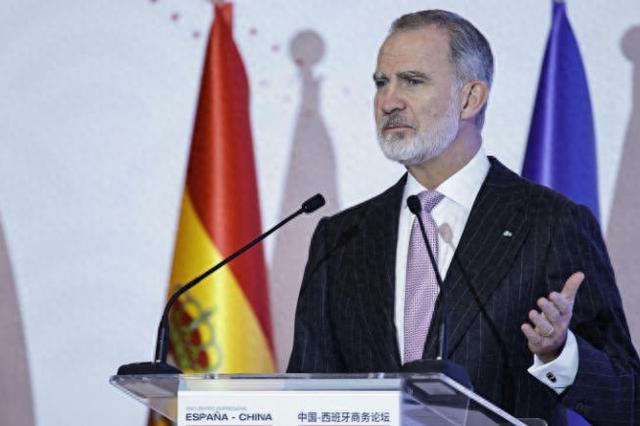
【文/观察者网 齐倩】 从马德里到成都、北京,两大文明古国跨越欧亚大陆的握手,正为一个多极化世界该如何运作,写下了 超越集团对抗的崭新范式。 "早上好!非常感谢。"11月11日上午,西班牙国王费利佩六世在成都举行的中国-西班牙商务论坛开幕 式上,秀了一句中文。此次论坛共有180家西班牙企业和近200家中国企业参加。 论坛上,西班牙经济、贸易和企业大臣卡洛斯·奎尔波表示,"不确定性"已成为全球形势新常态,但中 国仍是西班牙政府"毋庸置疑的优先事项"。他同样说了几句中文,赢得了热烈掌声。 12日,两国元首共同见证签署经贸、科技、教育等领域的10份合作文件,以实实在在的成果为此次历史 性访问写下了最有力的注脚。 西班牙国王费利佩六世在成都活动上发言 西班牙媒体 应中方邀请,费利佩六世10日开启对中国为期四天的国事访问。一名商界官员告诉英国《金融时报》, 在西班牙国王率领的访华团中,包括了来自汽车、食品、能源和制药等行业的一大批西班牙企业领袖和 代表。 多家西班牙媒体赞扬此次访华行程。其中,《世界报》引述中国媒体报道称,"2025年最令人惊讶的外 交时刻之一,无疑是费利佩六世访华"。《先锋报》提到,此行旨在缩小已近4 ...
习近平主席会见西班牙国王费利佩六世
Huan Qiu Shi Bao· 2025-11-12 23:24
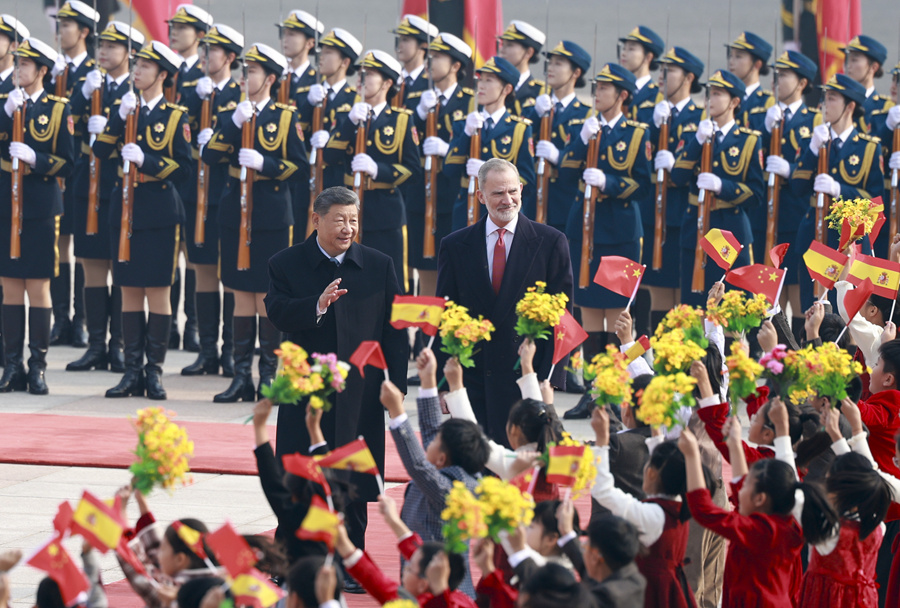
Group 1: Core Insights - The visit of King Felipe VI of Spain to China from November 10 to 13 marks the first state visit since his ascension and the first by a Spanish monarch in 18 years, highlighting the importance of bilateral relations [2][3] - Xi Jinping emphasized the strategic partnership between China and Spain, aiming to enhance cooperation in various fields including trade, technology, and cultural exchanges [3][4] - The signing of 10 cooperation documents in areas such as trade and education signifies a deepening of economic ties, with Spain positioning itself as a key partner for China in Europe [4][6] Group 2: Economic Cooperation - Spain aims to deepen economic collaboration with China, focusing on sectors like renewable energy, digital economy, and artificial intelligence, while also increasing imports of quality Spanish products [3][5] - The bilateral trade relationship is particularly strong in the pork and pharmaceutical industries, with Spanish pork exports to China increasing by 8% in the first seven months of the year, reaching €700 million [6] - Spanish companies are increasingly investing in China, with around 400 Spanish firms currently operating in the country, and an expected 9,000 Spanish companies exporting to China in 2024 [5][6] Group 3: Cultural and Diplomatic Engagement - Cultural exchanges are a significant aspect of the visit, with activities commemorating Spanish poet Antonio Machado and the importance of cultural institutions like the Confucius Institute and the Cervantes Institute [7][8] - The extension of visa-free policies for Spanish citizens traveling to China is part of broader diplomatic efforts to enhance mutual understanding and cooperation [7][8] - The visit is seen as a strategic move for Spain to maintain its independent foreign policy while navigating the complexities of international relations, particularly in the context of US-China tensions [8]
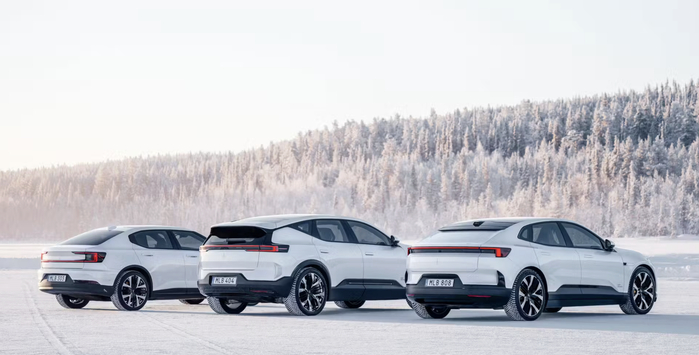
极星危局,纳斯达克启动“退市倒计时”
Tai Mei Ti A P P· 2025-11-12 10:17
Core Viewpoint - Polestar, once hailed as a "Tesla challenger," is facing significant challenges as it receives a delisting warning from Nasdaq due to its stock price falling below $1 for 30 consecutive trading days, necessitating a recovery within 18 months to avoid forced delisting [2][3]. Company Overview - Polestar is a high-end electric vehicle brand under Geely Holding Group, which went public via a SPAC merger in June 2022 with a valuation of nearly $20 billion [3]. - The company has struggled to meet its ambitious delivery targets for 2024, particularly in key markets like the U.S. and China, leading to a decline in stock price [3][4]. Financial Performance - Polestar has reported significant losses from 2020 to 2024, totaling $5.19 billion, with annual losses increasing from $485 million in 2020 to an estimated $2.05 billion in 2024 [7]. - Despite backing from Geely and Volvo, the company faces high operational costs and cash flow pressures, raising concerns about its ability to achieve profitability [7]. Market Position and Challenges - In the high-end electric vehicle market, Polestar competes against established brands like Tesla, Audi, and Porsche, which have stronger brand recognition and technological advantages [6]. - The company's pricing strategy has been criticized, particularly for its Polestar 2 model, which struggles to compete with more affordable options like the Tesla Model 3 [6]. Strategic Initiatives - Polestar is focusing on cost reduction, product line optimization, and enhancing synergies with strategic partners Volvo and Geely to navigate its current challenges [4]. - The company has secured a $200 million equity investment from existing investor PSD Investment Limited, controlled by Geely's founder, to bolster its financial position [3]. Future Outlook - Over the next 18 months, Polestar must demonstrate the viability of its high-end electric vehicle narrative by achieving product breakthroughs, effective cost control, and flexible financing strategies to ensure cash flow stability [8].
特斯拉FSD监督版即将登陆韩国;福特CEO称对特斯拉和中国电动汽车的拆解令其震惊和羞愧丨汽车交通日报
创业邦· 2025-11-12 10:11
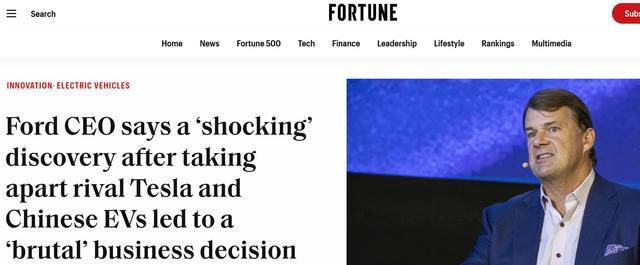
Group 1 - Ford CEO Jim Farley expressed shock and embarrassment after analyzing Tesla and Chinese electric vehicles, realizing their technological lead, prompting a complete company reform [2] - Farley noted that the Ford Mustang Mach-E uses approximately 1.6 kilometers more wiring than the Tesla Model 3, highlighting inefficiencies [2] - The electric vehicle market in China is experiencing explosive growth, and Farley emphasized the necessity for Ford to embrace electric vehicles to become a global company [2] Group 2 - Tesla announced the upcoming launch of its Full Self-Driving (FSD) feature in South Korea, which will be limited to vehicles produced in the U.S. with hardware version HW 4.0 or higher [2] - The implementation of FSD in South Korea requires specific vehicle identification numbers (VINs) starting with 5 or 7, indicating compatibility with the feature [2] Group 3 - General Motors announced that John Roth will replace Steve Hill as the president of GM China, effective December 1 [3] Group 4 - In October, China's domestic power battery installation reached 84.1 GWh, marking a year-on-year increase of 42.1% [2] - The installation of ternary batteries accounted for 16.5 GWh, representing 19.7% of total installations, with a year-on-year growth of 35.8% [2] - Lithium iron phosphate batteries dominated with 67.5 GWh, making up 80.3% of total installations, and showing a year-on-year increase of 43.7% [2] - From January to October, the cumulative power battery installation in China reached 578.0 GWh, with a year-on-year growth of 42.4% [2]


福特CEO称特斯拉和中国电动汽车促使其大刀阔斧的改革
Huan Qiu Wang Zi Xun· 2025-11-12 08:56
Core Insights - Ford's CEO Jim Farley revealed a significant disparity in wiring harness length between the Mustang Mach-E and competitors like Tesla's Model 3, with the Mach-E being approximately 1.6 kilometers longer, prompting a $5 billion investment plan for electrification [1][4] Group 1: Competitive Analysis - Ford's engineering team conducted a systematic teardown of Tesla and Chinese electric vehicle models, revealing that the Mustang Mach-E has nearly one mile more wiring than the Model 3, which increases weight, cost, and potential failure points [4] - The analysis of Chinese competitors yielded similarly surprising results, indicating a need for Ford to enhance its competitive edge in the electric vehicle market [4] Group 2: Financial Strategy - In 2022, Ford established the Model E independent division focused on electric platforms, electronic architecture, and software-defined vehicles, which is projected to incur losses exceeding $5 billion in 2024 [4] - Farley emphasized the importance of addressing the most challenging issues first and making financial data public to accelerate team iterations, acknowledging the harsh realities of innovation in the automotive sector [4] Group 3: Market Positioning - According to Cox Automotive, U.S. electric vehicle sales are expected to reach a historical high by Q3 2025, yet the penetration rate remains only about 5% [4] - Farley stressed that Ford must not abandon electric vehicles and must maintain a stronghold in battery and software development to become a global player [4]

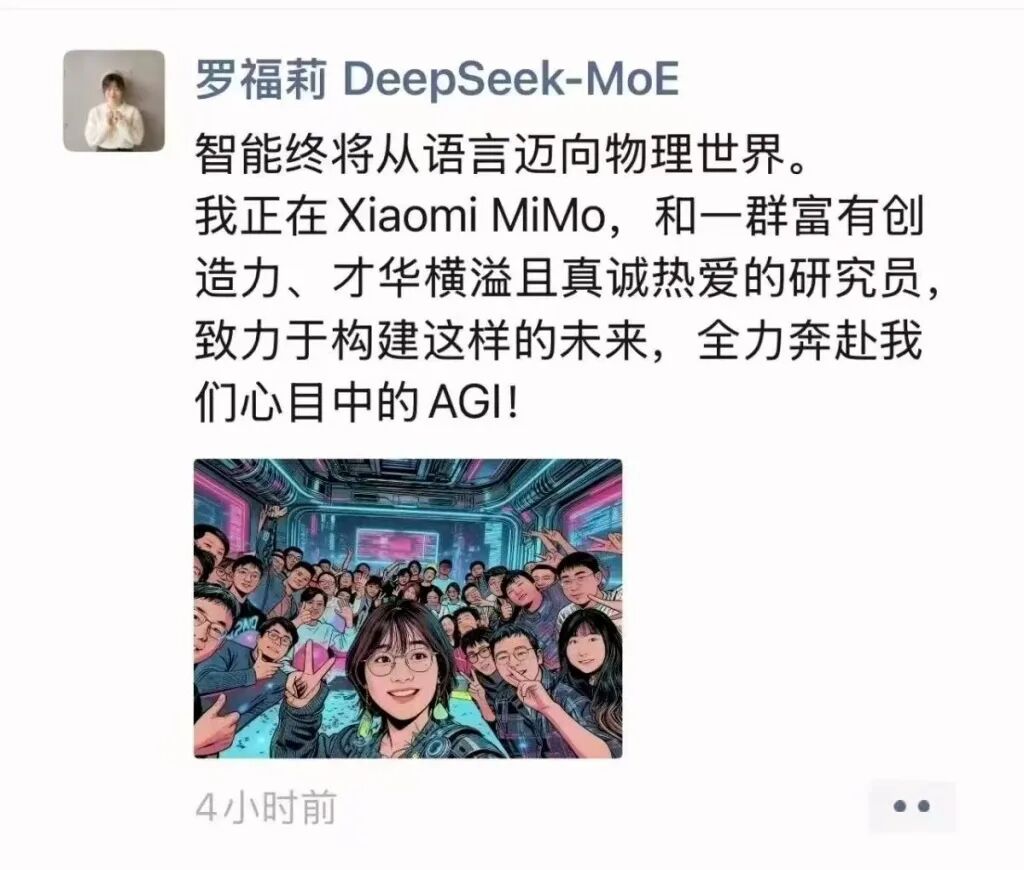
95后“AI才女”罗福莉,宣布加入小米!曾被雷军千万元年薪挖角,是DeepSeek关键开发者!她出身农村普通家庭,“是家族骄傲”
Mei Ri Jing Ji Xin Wen· 2025-11-12 07:58
Core Insights - The news highlights the announcement of AI prodigy Luo Fuli joining Xiaomi, emphasizing her role in advancing AI technology within the company [1][4]. Group 1: Company Developments - Luo Fuli, known for her significant contributions to AI, particularly as a key developer for the DeepSeek model, has been recruited by Xiaomi to lead its AI large model team [5][6]. - Xiaomi is actively building a GPU cluster to enhance its AI model research capabilities, with an initial resource of 6,500 GPUs, indicating a strong commitment to AI development [6]. - The company reported a revenue of RMB 21.3 billion from its smart electric vehicle and AI innovation segment in Q2 2025, with smart electric vehicle revenue at RMB 20.6 billion and a gross margin of 26.4% [8]. Group 2: Strategic Vision - Xiaomi's founder Lei Jun has articulated that AI large models are crucial for the future of smart connected vehicles, presenting significant innovation opportunities [7]. - The company's core strategy revolves around an integrated ecosystem of "people, vehicles, and homes," with vehicles serving as a critical node for AI applications [8]. Group 3: Individual Background - Luo Fuli, who has a strong academic background, including a degree from Beijing Normal University and further studies at Peking University, has gained recognition as an AI talent [11][13]. - Her upbringing in a rural family with a strong educational emphasis has contributed to her achievements, making her a source of pride for her community [11][13].