外卖

Search documents
美团试图穿越“非理性时期”
3 6 Ke· 2025-08-31 10:50
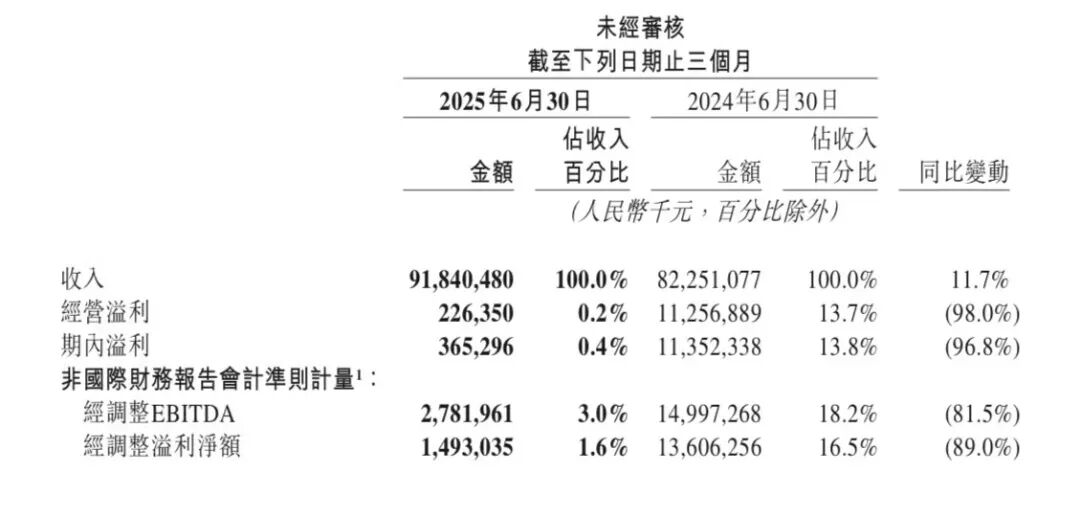
Core Insights - The second quarter marked the true beginning of the "takeout war," with Meituan's performance under scrutiny amid fierce competition [1] - Meituan's revenue reached 91.84 billion RMB, a year-on-year increase of 11.7%, but the core local business segment saw a significant decline in operating profit [2][3] - The company is focusing on long-term growth strategies despite short-term pressures from competition and increased costs [5][18] Financial Performance - Revenue for the second quarter was 91.84 billion RMB, up 11.7% from the previous year [2] - Operating profit dropped by 98% to 226.35 million RMB, with a significant decline in profit margins [2] - Sales costs increased by 27% to 61.4 billion RMB, driven by higher rider subsidies and marketing expenses [7] Business Adjustments - Meituan has restructured its new business segments, focusing resources on the more promising "Xiaoxiang Supermarket" and reducing losses from the poorly performing "Meituan Youxuan" [3][4] - The new business segment's revenue grew by 22.8% year-on-year, primarily due to the expansion of Xiaoxiang Supermarket and overseas operations [4] Competitive Landscape - The intense competition has led to a surge in user engagement, with monthly active users surpassing 500 million and daily order volumes reaching a record high of 150 million [5][12] - Despite the increase in order volume, the average order value (AOV) has declined, indicating a mismatch between demand stimulation and revenue generation [6] Strategic Focus - Meituan's management emphasizes a return to fundamental business principles: supply, delivery service, and pricing [5][18] - The company is committed to sustainable investments that enhance long-term capabilities rather than engaging in unsustainable spending [8][17] Innovations and Future Plans - Meituan is expanding its "Brand Satellite Store" initiative, aiming to open over 10,000 stores by the end of the year [8] - The "Raccoon Canteen" model is being developed to streamline operations for merchants, with a target of 1,200 locations in three years [11] - The company aims to achieve a daily order volume of 1 billion by 2025, with a profit target of 1 RMB per order [12][17]


科技周报|电商成小红书一级入口,美团二季度财报受外卖战影响
Di Yi Cai Jing· 2025-08-31 04:47
Group 1: E-commerce Developments - Xiaohongshu has made e-commerce a primary entry point in its app, launching a "million commission-free plan" to attract merchants, with 50% of its 350 million monthly active users being post-95s [2] - Meituan's second-quarter revenue reached 91.84 billion yuan, a year-on-year increase of 11.7%, but adjusted net profit fell by 89% due to intensified competition in the food delivery sector [4] - JD.com and Meituan have entered the "hard discount" market, with JD's discount supermarket opening four stores and Meituan launching its self-operated supermarket, indicating a shift in retail focus towards discount offerings [5] Group 2: Financial Performance and Strategic Moves - Ying Shi Innovation reported a 51.17% year-on-year revenue growth to 3.671 billion yuan in the first half of 2025, but net profit growth has slowed due to increased strategic investments [8] - Alibaba's second-quarter revenue was 247.65 billion yuan, a 2% increase, with operating profit declining by 3% due to significant investments in the Taobao flash purchase strategy [6][7] - Midea Group's revenue for the first half of 2025 reached 252.3 billion yuan, a 15.7% increase, with net profit growing by 25% to 26 billion yuan, marking record highs [11] Group 3: Technological Innovations - Tax Friend Co. launched the first Agentic platform in the tax industry, aiming to address common issues such as low efficiency and high costs, with AI products achieving a hallucination rate below 10% [9] - Kuaishou's AI tool, Keling, has seen significant growth, with over 1 billion yuan in monthly revenue since April and a 321% increase in content playback volume compared to six months ago [10] Group 4: Aerospace Developments - SpaceX's Starship successfully completed its tenth test flight after two previous failures, marking a significant milestone in its development and paving the way for future iterations [3]

美团想熄火,阿里不答应
Xin Lang Cai Jing· 2025-08-30 12:24
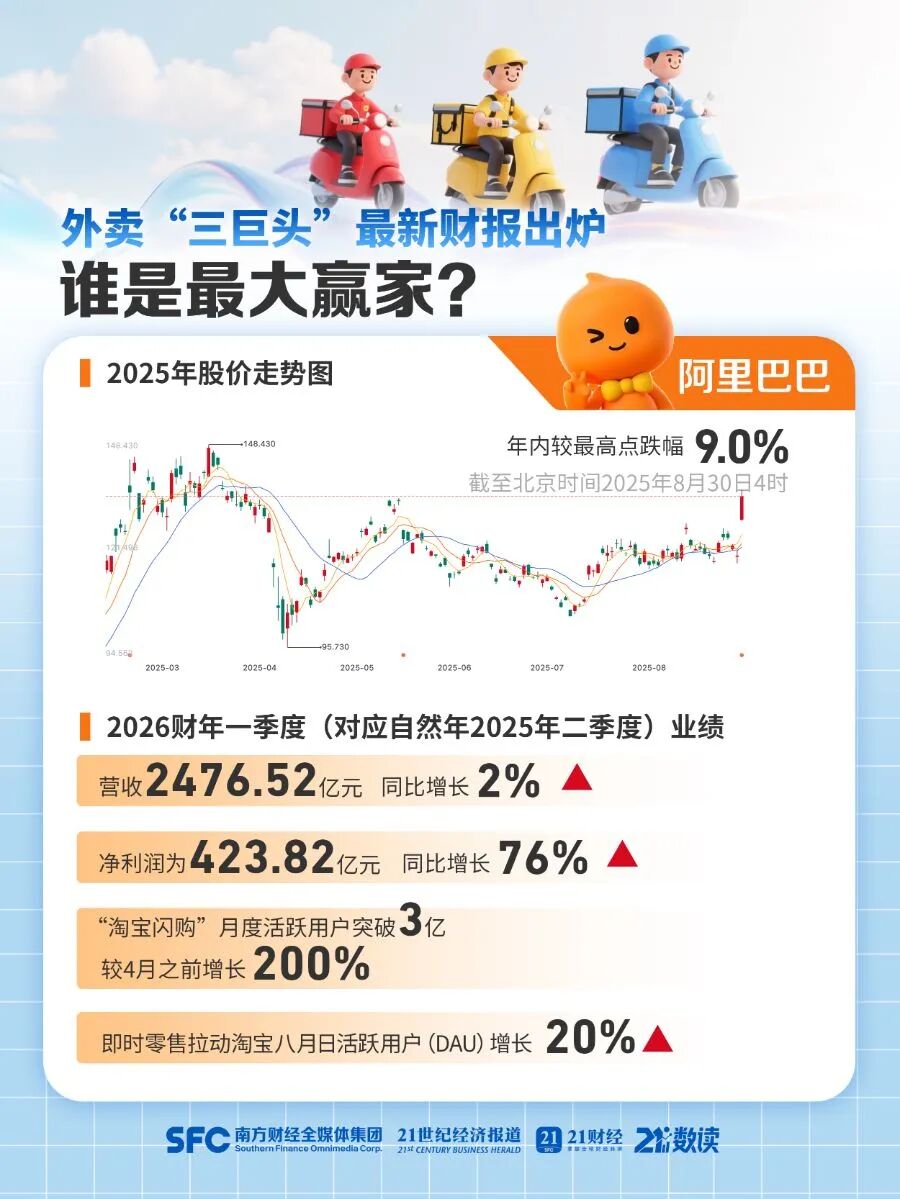
Core Insights - The competition in the food delivery market has intensified, with major players like Meituan, Alibaba, and JD.com all reporting significant financial impacts due to aggressive spending and subsidies [1][8][14] - Despite increased revenues, the profitability of these companies has declined sharply, indicating a focus on market share over immediate financial returns [2][4][9] Group 1: Financial Performance - In Q2 2025, Alibaba, JD.com, and Meituan reported total revenues of 247.7 billion yuan, 356.7 billion yuan, and 91.8 billion yuan respectively, with JD.com experiencing the fastest growth at 22.4% year-over-year [2] - Meituan's core local commerce segment generated 65.3 billion yuan, accounting for 70% of total revenue, but delivery service revenue growth was below 3% due to increased subsidies [4] - JD.com reported a significant operating loss of 900 million yuan, while Meituan's operating profit plummeted by 98% to just 20 million yuan [8][9] Group 2: Competitive Strategies - The competition has led to substantial subsidies being offered to consumers and merchants, with JD.com launching a 10 billion yuan subsidy program and Alibaba's Taobao Flash Sale initiating a 50 billion yuan subsidy plan [8][11] - Alibaba's revenue from its instant retail business, which includes Taobao Flash Sale and Ele.me, reached 14.9 billion yuan, growing by 12% year-over-year [7] - The aggressive subsidy strategies have resulted in a "non-rational competition" environment, where companies are willing to sacrifice profits for market share [8][14] Group 3: Market Dynamics - The food delivery market is evolving, with companies not only competing for delivery orders but also expanding into broader instant retail sectors [11][12] - Alibaba's CEO highlighted that the integration of instant retail services has increased user engagement, with active users on mobile Taobao growing by 20% [11] - The ongoing competition is expected to continue, with companies like Meituan and Alibaba vying for dominance in both food delivery and instant retail markets [14]



中国外卖大战,打到了巴西战场
凤凰网财经· 2025-08-30 12:19
Core Viewpoint - The article discusses the escalating competition between Chinese companies Didi and Meituan in the Brazilian food delivery market, highlighting their legal disputes and strategic maneuvers as they attempt to capture market share in a rapidly growing sector [4][12]. Group 1: Legal Disputes - Didi and Meituan are currently involved in three lawsuits in Brazil, with the conflicts escalating to the legal arena as both companies vie for dominance in the food delivery market [5][10]. - Didi entered the Brazilian market first by acquiring local ride-hailing platform 99 in January 2018 and later launched its food delivery service, 99Food, in November 2019 [5][6]. - Meituan announced its entry into the Brazilian market with its food delivery service, Keeta, planning to invest $1 billion over the next five years [7][8]. Group 2: Market Dynamics - Brazil's food delivery market is attractive due to its large population of 210 million and a compound annual growth rate of 17.6%, indicating significant growth potential [12][13]. - The Latin American food delivery market has grown from $7.497 billion in 2018 to $37.918 billion in 2023, maintaining a growth trend for seven consecutive years [13]. - Despite iFood's dominance with an 80% market share, its operational efficiency is reportedly low, presenting opportunities for competitors like Didi and Meituan [13][15]. Group 3: Competitive Strategies - Didi's strategy leverages its existing ride-hailing infrastructure and experience in other Latin American markets to enhance its food delivery services in Brazil [16][17]. - Meituan aims to capture key urban markets through aggressive subsidy strategies, while Didi focuses on utilizing its existing network of 700,000 motorcycle riders for cost-effective delivery [19][20]. - The competition is expected to intensify as both companies adapt their strategies based on ongoing legal developments and market conditions [20].

理性竞争的胜利:拆解阿里财报,淘宝闪购如何打赢外卖闪电战?
财联社· 2025-08-30 11:51
Core Viewpoint - The article discusses the competitive landscape of the food delivery market in China, highlighting Alibaba's Taobao Flash Purchase as a significant player that has rapidly gained market share and user engagement through strategic investments and operational efficiency [1][3][9]. Financial Performance - Alibaba's e-commerce group reported customer management revenue of 89.252 billion RMB for the quarter ending June 30, 2025, a 10% year-on-year increase, surpassing analyst expectations [1][8]. - The adjusted EBITA for Alibaba's China e-commerce group was 38.389 billion RMB, down from 48.753 billion RMB in the same quarter of 2024, reflecting a decrease of 10.364 billion RMB [3][8]. User Engagement and Growth - Taobao Flash Purchase achieved a peak daily order volume of 120 million in August, with an average of 80 million orders per day on Sundays, leading to a 200% increase in monthly active buyers compared to April [3][4]. - The monthly active users (MAU) of the Taobao app grew by 25% in the first three weeks of August, driven by the success of the Flash Purchase initiative [1][3]. Strategic Insights - Taobao Flash Purchase's strategy involved targeted investments in specific categories like tea drinks, aligning with consumer demand during the summer, which helped establish a strong market presence [10][13]. - The integration of various Alibaba services, such as the new membership system that connects different platforms, has enhanced user engagement and created a more cohesive consumer experience [12][23]. Market Positioning - The article suggests that Taobao Flash Purchase has reached a pivotal point in the food delivery market, achieving parity with competitors and potentially reshaping the industry landscape [5][24]. - The competitive dynamics indicate that while Taobao Flash Purchase has solidified its position, there remains room for other players to coexist, leading to a "dual strong" market structure [24][25]. Future Outlook - Alibaba plans to leverage scale effects to optimize order structures and improve operational efficiency, aiming for a comprehensive approach to large-scale consumer engagement [19][21]. - The company has significant financial resources, with over 585.663 billion RMB in cash and liquid investments, allowing for sustained investment in the Flash Purchase initiative and other growth areas [24][25].

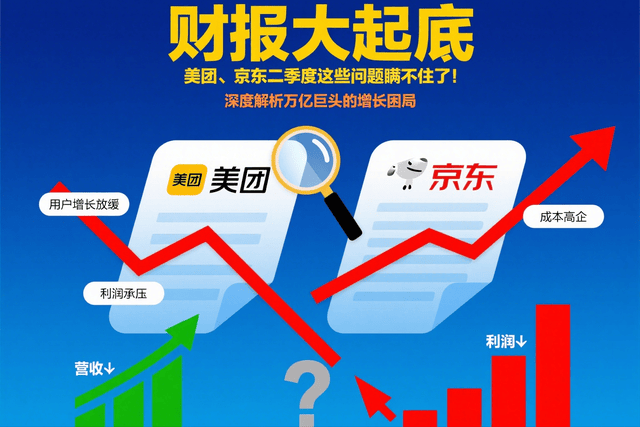
美团、京东二季度财报大起底,这些问题瞒不住了!
Sou Hu Cai Jing· 2025-08-30 10:52
Core Insights - Meituan and JD.com released their Q2 2025 financial reports, highlighting intense competition in the delivery market and the need for strategic adjustments in response to these challenges [1] Meituan Financial Performance - Meituan's Q2 revenue was approximately 91.84 billion yuan, a year-on-year increase of 11.7%, but operating profit plummeted by 98% and adjusted net profit fell by 89% [3] - The significant decline in profit was attributed to "irrational competition" starting in the quarter, primarily due to increased competition from JD.com and Alibaba in the food delivery sector [3] - Sales costs rose by 27.0% year-on-year, with sales and marketing expenses increasing by 51.8% to 22.519 billion yuan, driven by higher rider subsidies and expansion in grocery retail and overseas operations [3] - Core local business revenue grew by 7.7%, but operating profit dropped by 75.6%, indicating severe pressure on profitability [4] - New business revenue increased by 22.8%, but losses expanded to 1.9 billion yuan due to significant investments in overseas expansion [4] JD.com Financial Performance - JD.com's Q2 revenue reached 356.7 billion yuan, a 22.4% increase compared to Q2 2024, showcasing strong revenue growth [4] - However, net profit attributable to ordinary shareholders was 6.2 billion yuan, down 50.8% from 12.6 billion yuan in the same period last year, attributed to increased strategic investments in new businesses, particularly in food delivery [4] - JD.com's food delivery business saw a dramatic revenue increase of 199%, with daily order volume exceeding 25 million and coverage expanding to 350 cities [6] - Marketing expenses surged by 127.6% to 27 billion yuan, primarily for food delivery subsidies and promotions [6] - New business revenue grew by 199% to 13.852 billion yuan, but operating losses escalated from 0.695 billion yuan to 14.777 billion yuan, with an operating profit margin of -106.7% [6] Industry Implications - The financial reports from Meituan and JD.com reveal a highly competitive food delivery market, rising costs, and challenges in profitability, presenting both risks and opportunities for delivery companies [7] - Increased competition may lead to lower delivery fees and pressure on delivery companies to reduce costs, potentially squeezing profit margins [7] - However, the expansion of Meituan and JD.com's food delivery services could result in more delivery orders, allowing companies to optimize processes and achieve economies of scale [7] - Delivery companies can leverage increased business volume to negotiate better terms with platforms and explore value-added services to diversify revenue streams [7] Strategic Recommendations - The financial results from Meituan and JD.com serve as a wake-up call for delivery companies, emphasizing the need to closely monitor industry trends and adjust business strategies accordingly [9] - Companies should seek to identify opportunities within the crisis and adapt to the competitive landscape to maintain a strong market position [9]
三巨头少赚200亿,1条视频看懂上半年外卖三国杀战绩
2 1 Shi Ji Jing Ji Bao Dao· 2025-08-30 10:21
Core Viewpoint - The intense competition among major food delivery platforms (JD.com, Meituan, and Alibaba) has led to significant profit declines, prompting regulatory scrutiny and calls for fair competition practices [1][2]. Group 1: Financial Performance - JD.com reported a net profit of 6.2 billion RMB for Q2 2025, a decline of over 50% year-on-year [3]. - Meituan's adjusted net profit for Q2 2025 was 1.49 billion RMB, down 89% year-on-year [3]. - Alibaba's non-GAAP net profit for Q2 2025 was 33.51 billion RMB, a decrease of 18% year-on-year, with less impact from food delivery due to late subsidies [3]. - Collectively, the three platforms lost over 20 billion RMB in profits compared to the same quarter last year [1]. Group 2: User Engagement and Marketing Expenses - Despite profit declines, all three platforms saw record high monthly active users, with JD.com and Meituan achieving over 40% year-on-year growth in user engagement [2]. - JD.com's marketing expenses surged by 127.6% to 27 billion RMB in Q2 2025, while Meituan's marketing expenses increased by 51.8% to 22.5 billion RMB [3]. - Alibaba's sales and marketing expenses as of June 30, 2025, increased by 21.3% year-on-year [3]. Group 3: Strategic Responses - JD.com emphasized healthy growth in its food delivery business, achieving strategic goals through effective collaboration with existing operations [4]. - Meituan's CEO highlighted the company's commitment to maintaining market leadership through competitive strategies and support for merchants and riders [4]. - Alibaba's CEO noted significant investments in instant retail, leading to high consumer engagement and order volumes [4]. Group 4: Market Reactions - Following the earnings reports, JD.com and Meituan's stock prices fell, while Alibaba's stock rose by 12.9% due to its less impacted food delivery business and strong AI-related revenue growth [4].
三巨头少赚200亿,1条视频看懂上半年外卖三国杀战绩
21世纪经济报道· 2025-08-30 10:19
Core Viewpoint - The intense competition among major food delivery platforms (JD.com, Meituan, and Alibaba) has led to significant profit declines, with a total estimated loss exceeding 20 billion yuan in the second quarter of 2025 due to aggressive subsidies and marketing strategies [1][3]. Group 1: Financial Performance - JD.com reported a net profit decline of 50.8% in Q2 2025, with a profit of 6.2 billion yuan [3][5]. - Meituan's adjusted net profit fell by 89% to 1.49 billion yuan, resulting in a loss of approximately 12.1 billion yuan compared to the previous year [3][9]. - Alibaba's net profit decreased by 18% to 33.51 billion yuan, but the impact from its food delivery business was less pronounced due to the late launch of significant subsidies [3][5]. Group 2: User Engagement and Marketing Expenses - Despite profit declines, all three platforms achieved record high monthly active users, with JD.com seeing over 40% growth in active users and shopping frequency [3][4]. - Meituan's monthly active users surpassed 500 million, with annual transaction frequency reaching a historical high [3][4]. - Marketing expenses surged significantly, with JD.com spending 27 billion yuan (up 127.6%), Meituan 22.5 billion yuan (up 51.8%), and Alibaba's sales and marketing expenses increasing by 21.3% [3][4]. Group 3: Strategic Responses - JD.com emphasized healthy growth in its food delivery business, achieving strategic goals through effective collaboration with its retail operations [5][6]. - Meituan's CEO highlighted the company's commitment to maintaining its market position through cash subsidies and innovative models to support merchants [5][6]. - Alibaba focused on investing in instant retail, achieving significant user engagement and order volume growth, particularly through its Taobao Flash Sale initiative [5][6]. Group 4: Market Reactions - Following the financial reports, JD.com and Meituan's stock prices fell, while Alibaba's stock rose by 12.9% due to its less impacted food delivery business and strong growth in AI-related products [6][7].

张坤最新观点:市场先生提供好价格,这样的机会不常见
华尔街见闻· 2025-08-30 09:01
Core Viewpoint - The article emphasizes that the long-term pessimism regarding domestic consumption in China is unfounded, supported by data showing increasing disposable income and savings among residents [8][11][15]. Group 1: Economic Indicators - The per capita disposable income in China is projected to grow from 32,189 RMB in 2020 to 41,314 RMB in 2024, reflecting a compound annual growth rate (CAGR) of 6.4% [9]. - The total savings balance of residents is expected to rise from 93 trillion RMB at the end of 2020 to 152 trillion RMB by the end of 2024, with a CAGR of 13%, significantly outpacing the growth of disposable income [9]. - The difference between residents' savings and loans is anticipated to increase from approximately 30 trillion RMB at the end of 2020 to about 70 trillion RMB by the end of 2024, indicating an increase in excess savings of around 40 trillion RMB [10]. Group 2: Consumer Confidence and Spending - The increase in precautionary savings is identified as a key factor affecting consumer spending, as consumer confidence has declined from around 120 in 2020 to approximately 87 in 2022, continuing to show a downward trend [13]. - The persistent decline in real estate prices and ongoing deflationary pressures have further dampened consumer spending willingness [13]. - Despite current pessimistic expectations, the article argues that consumer confidence will eventually recover as economic conditions improve and government policies support income growth [17]. Group 3: Investment Opportunities - The article suggests that the current market presents a rare opportunity for long-term investors to acquire high-quality stocks at undervalued prices, as the prevailing pessimism about consumption is not logically sustainable [20][19]. - Zhang Kun's latest report reveals significant changes in his investment portfolio, including a notable reduction in holdings of Meituan, indicating a shift in focus towards other sectors [25][21]. - The report highlights increased investments in logistics, particularly in SF Express, suggesting optimism about opportunities in the industrial and logistics sectors [30][28]. Group 4: Portfolio Adjustments - The portfolio adjustments include a significant reduction in holdings of Futu and an increase in positions in Interactive Brokers, indicating a strategic shift in response to regulatory changes affecting the cross-border brokerage business [36][38]. - New entries in the portfolio include companies like NetEase, Tencent Music, and Beike, reflecting a diversification strategy and a return to previously held positions [42][44].


社保新司法解释9月1日起实施,对企业和劳动者影响几何?
Nan Fang Du Shi Bao· 2025-08-30 07:10
Core Viewpoint - The new judicial interpretation from the Supreme People's Court, effective from September 1, invalidates any agreements to not pay social insurance, which has sparked discussions about its implications for various employment forms, particularly for flexible workers like delivery riders and ride-hailing drivers [1][3][12]. Summary by Relevant Sections Legal Framework - The new interpretation emphasizes that both employers and employees are legally obligated to participate in social insurance, and any agreement to waive this obligation is deemed invalid [3][4]. - Employees have the right to terminate their contracts and seek economic compensation if their employers fail to pay social insurance [3][4]. Impact on Employment Practices - Companies may shift from traditional employment models to non-full-time or flexible employment arrangements to avoid social insurance obligations, potentially increasing the use of interns and retired employees [1][12][13]. - The interpretation does not alter the existing social insurance system but clarifies the legal relationships that determine who is required to pay social insurance [7][8]. Implications for Small and Medium Enterprises (SMEs) - SMEs, particularly in labor-intensive sectors, may face increased operational costs due to mandatory social insurance payments, leading to concerns about financial strain [12][13]. - There are calls for legislative adjustments to provide SMEs with flexible options regarding social insurance contributions to alleviate their financial burdens [12][13]. Employment Relationship Complexity - The interpretation highlights the challenges in identifying true employment relationships, especially in cases of "hidden labor relations" where workers may be classified as independent contractors to evade social insurance responsibilities [9][10]. - The existence of multiple employers in platform-based work complicates the determination of social insurance obligations, necessitating clearer legal definitions [9][10]. Future Developments - A pilot program for occupational injury insurance for new employment forms is set to expand, potentially impacting the social insurance landscape for gig economy workers [8][9].