
智能汽车

Search documents
港股科技板块吹响“反攻号角” 富国港股通科技ETF正在发行中
Zhong Guo Jing Ji Wang· 2025-08-08 07:16
Core Viewpoint - The Hong Kong stock market has shown strong growth in 2023, with the Hang Seng Index increasing by 20% as of June 30, driven by the return of overseas capital and increased investment from mainland China [1] Group 1: Market Overview - The Hong Kong market is expected to undergo asset revaluation, particularly benefiting the technology sector, which is considered a core asset [1] - The launch of the FTSE China A50 Technology ETF by Franklin Templeton aims to provide investors with an efficient tool to invest in the Hong Kong technology sector [1] Group 2: Index Composition and Performance - The CSI Hong Kong Stock Connect Technology Index, which the ETF tracks, includes 50 large-cap technology leaders with high R&D investment and revenue growth [1] - As of June 30, 2025, the index's constituents primarily cover emerging technology sectors such as automotive, electronics, media, pharmaceuticals, and computers, accounting for 81.2% of the index [2] Group 3: Financial Performance - The internet and automotive sectors within the Hong Kong stock market have shown a revenue growth rate exceeding 10% year-on-year, indicating strong profitability [2] - The technology sector demonstrates significant long-term growth potential, supported by high R&D investment, which has consistently exceeded 7% of revenue over the past three years [2] Group 4: Valuation and Investment Opportunities - The Hong Kong Stock Connect Technology Index is currently undervalued, with a PE ratio of 21.46, placing it in the 4.98% percentile over the past five years, suggesting substantial room for valuation recovery [3] - The anticipated easing of valuation pressures due to improving global liquidity and expectations of economic recovery in China may accelerate the valuation recovery process for the technology sector [3]



2025世界智能汽车大会前瞻:车企黑科技重塑未来出行
Zhong Guo Chan Ye Jing Ji Xin Xi Wang· 2025-08-08 00:42
Group 1 - The 2025 World Intelligent Vehicle Conference will showcase disruptive technological innovations in the smart vehicle sector, focusing on near-complete autonomous driving solutions, immersive smart cockpit experiences, and integrated vehicle-road-cloud ecosystems [1] Group 2 - The conference will highlight breakthroughs in high-level autonomous driving technology, with several automakers presenting near Level 5 fully autonomous driving solutions using multi-sensor fusion for real-time centimeter-level 3D environment modeling [2] - A new AI decision-making system based on deep reinforcement learning will be demonstrated, capable of handling complex scenarios such as predicting pedestrian intentions at unregulated intersections and utilizing vehicle-road collaboration to identify obscured traffic signals in adverse weather [2] - "Swarm intelligence" technology will be showcased, allowing multiple autonomous vehicles to coordinate and improve road traffic efficiency by over 30% [2] Group 3 - The smart cockpit is undergoing a revolutionary transformation with features like flexible rollable screens extending across the windshield, AR-HUD integrating navigation with real-world conditions, and holographic interactive assistants using light field technology for gesture and gaze recognition [3] - Emotional engines utilizing biosensors will monitor driver and passenger heart rates and expressions to automatically adjust ambient lighting, scents, and seating positions [3] Group 4 - The theme of "vehicle-road-cloud integration" will present a vision of future transportation, where vehicles communicate in real-time with traffic signals and roadside units using 5G-V2X technology [3] - The conference will introduce a "cloud-based digital twin" system, where each vehicle has a mirrored model in the cloud, allowing AI to predict and manage urban traffic flow based on real-time data from millions of vehicles [3] - The 2025 World Intelligent Vehicle Conference signifies a new era of safer, more efficient, and user-friendly transportation, celebrating technological advancements and human mobility [3]
吉利3000人智驾团队大整合,千里智驾能否超越华为“引望”?
Bei Ke Cai Jing· 2025-08-07 13:00
Core Insights - A significant integration is underway in China's intelligent driving sector, led by Geely Group, which involves the consolidation of three core teams into a new entity called Chongqing Qianli Intelligent Driving Technology Co., Ltd. [1][4] Integration Details - The integration involves approximately 3,000 R&D personnel from the Zeekr Intelligent Driving team, Geely Research Institute's relevant teams, and Maiqi Technology [1] - Geely confirmed that the specific integration plan and brands involved are still under discussion [2] - The new team structure is being rapidly established, with reports suggesting that around 1,500 members of the Zeekr team will transition without interviews, while about 100 from the Smart team will undergo a selection process [3] Strategic Objectives - The newly formed Qianli Intelligent Driving will operate as an independent company and aims to become a core partner in Geely's AI ecosystem, providing leading auxiliary driving solutions across the industry [4] - Geely's strategic focus is on consolidating resources to create a comprehensive end-to-end auxiliary driving capability [4][9] Historical Context - The integration aligns with Geely's earlier strategic shift announced in September 2024, moving from strategic expansion to integration to reduce redundant investments [9] - The establishment of Qianli Intelligent Driving was facilitated by a joint venture involving Qianli Technology, Geely, and Megvii Technology, which laid the groundwork for this resource consolidation [4][5] Leadership and Expertise - Wang Jun, former president of Huawei's Intelligent Automotive Solutions BU, has been appointed as co-president of Qianli Technology, playing a crucial role in unifying the three teams [6] - The collaboration between Wang Jun and Qianli Technology's chairman, Yin Qi, is expected to leverage their combined expertise in AI and automotive technology [7] Performance Metrics - Post-integration, Geely's intelligent driving system is projected to achieve a total computing power of 23.5 EFLOPS, with training data volume increasing from 1 billion to 3 billion [8] - The sales performance of Geely's Galaxy series vehicles, equipped with the unified Qianli Haohan intelligent driving system, saw a remarkable increase of 232% year-on-year, reaching 548,000 units in the first half of 2025 [10] Future Aspirations - Geely has set an ambitious target to exceed annual vehicle sales of 5 million units by 2027, narrowing the sales gap with industry leader BYD to 210,000 units in the first half of 2025 [10]

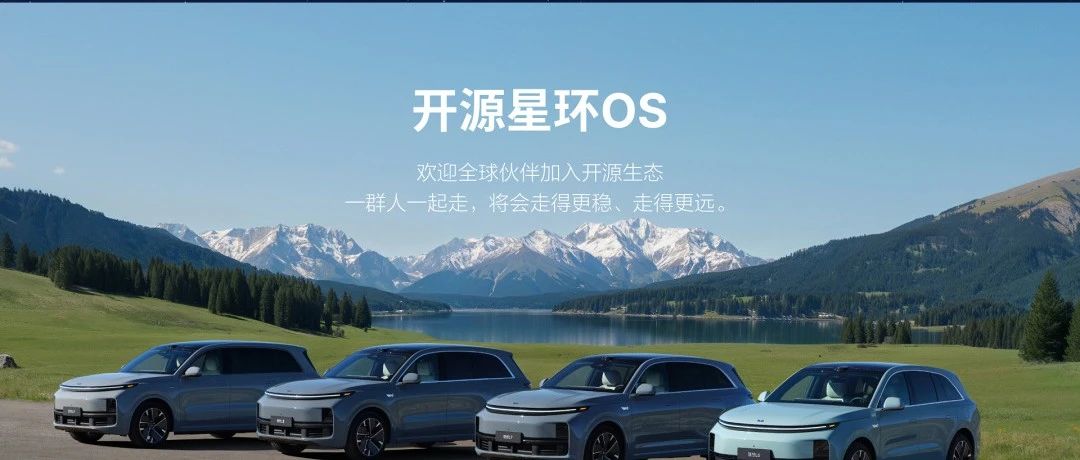
从智能汽车到空间机器人: 理想开源星环OS定义未来移动空间
理想TOP2· 2025-08-07 10:53
Core Viewpoint - The article discusses the development and vision of the Li Auto Star Ring OS, emphasizing its role in the evolution from smart vehicles to space robots, and the importance of open-source collaboration in achieving technological advancements in the automotive industry [1][3]. Group 1: Background of Li Auto Star Ring OS - The Star Ring OS was announced as an open-source project on March 27, 2024, and has since undergone two significant version releases, gaining industry recognition [1]. - Smart vehicles are seen as the initial successful commercial application of space robots, serving as a critical step towards achieving general-purpose space robots [5][6]. Group 2: Trends in Space Robot Technology Development - The ultimate goal is to develop general-purpose space robots, with the feasibility proven by the success of smart vehicles and breakthroughs in core technologies like VLA (Vision-Language-Action Models) [7][9]. - Key trends include the pursuit of extreme hardware-software collaboration, centralized and efficient utilization of computing resources, system security as a foundational prerequisite, and embracing open-source for efficient co-construction [11][12]. Group 3: Issues with Classic Automotive Software Solutions - The classic automotive software architecture, which emerged in 2000, has led to an explosion in the number of electronic control units (ECUs), resulting in integration difficulties and poor reusability [15][18]. - The limitations of the classic approach include a modular design that creates information silos and a collaborative model that is open yet not fully open-source, hindering innovation and efficiency [18][20]. Group 4: Open Source Solutions - The Star Ring OS is designed as a cohesive system with four core components: AI computing system, intelligent real-time system, communication middleware, and information security system [25][26]. - The OS aims to provide a unified, collaborative, flexible, and secure digital foundation for space robots, addressing the identified contradictions in the development process [29][30]. Group 5: Open Source Ecosystem Construction - The open-source ecosystem aims to build a unified, open, and general intelligent system foundation for the space robot era, promoting industry collaboration and reducing costs [36][39]. - Achievements include significant cost savings, reduced development cycles, and enhanced performance, with the platform enabling efficient coordination and flexible deployment of vehicle control systems [40][41]. Group 6: Future Work Focus - Future efforts will concentrate on community building, expanding ecosystem partnerships, and enhancing industry influence, with a clear path towards open governance and robust technology development [44][48]. - The next steps include supporting new chip platforms, enhancing core capabilities, and providing efficient community development facilities [49][50].


传零跑汽车与华为洽谈合作 智能汽车赛道或迎强强联手
Ju Chao Zi Xun· 2025-08-07 04:12
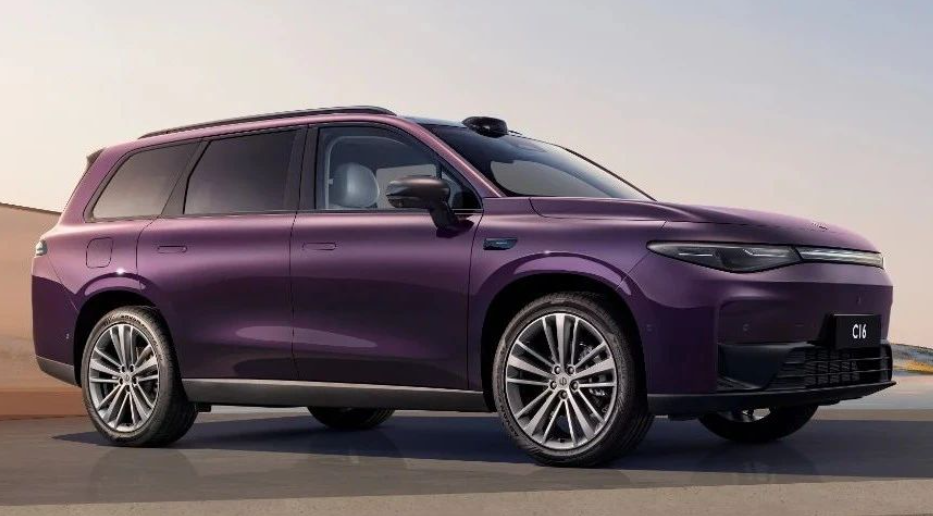
Group 1 - The core point of the news is that Leapmotor is in talks with Huawei for potential collaboration, focusing on smart driving solutions, vehicle ecosystem, or supply chain technology [2] - Leapmotor has achieved significant sales growth, becoming the top-selling new car manufacturer in China, with July deliveries reaching a record high of 50,129 units, a year-on-year increase of over 126% [2] - The collaboration with Huawei could enhance Leapmotor's brand value, particularly in key technology areas such as smart cockpit and autonomous driving [2] Group 2 - Leapmotor adheres to a "fully self-research" strategy, with its smart driving system, Leapmotor Pilot, utilizing a "pure vision + millimeter-wave radar" perception solution, emphasizing cost-effectiveness by avoiding high-cost lidar [3] - The Leapmotor Pilot system has reached version 3.0, featuring core functions such as ACC, LCC, ALC, APA, highway NOA, and city NAC, with some models offering optional lidar [3] - Leapmotor's smart driving features primarily address existing issues but still lag behind leading manufacturers like Huawei, as it heavily relies on high-precision maps and cannot achieve map-free autonomous driving [3]

多品类第一!九牧横扫全球卫浴市场,行业格局加速洗牌
Sou Hu Wang· 2025-08-07 03:43
Group 1 - Xiaomi's recent success with the Yu7 model, achieving over 200,000 units sold in just three minutes, solidifies its leadership in the 3C product sector and positions it strategically in the new energy vehicle market [1] - The trend of integrating full-category layouts with deep technological innovation is not unique to Xiaomi but is a common strategy among industry leaders [1][3] - Haier has transformed from a traditional appliance manufacturer to a builder of a "smart home" ecosystem, while Huawei has expanded from communication equipment to consumer electronics and smart vehicles, showcasing a similar multi-category approach [3] Group 2 - Jomoo has signed a strategic cooperation agreement with Haier to enhance their smart home business, aiming to create a fully interconnected smart home ecosystem that aligns with national strategies [3] - During the 618 shopping festival, Jomoo achieved significant sales, leading the market in smart toilet sales with a market share far exceeding its closest competitors [4] - Jomoo's comprehensive product strategy includes not only smart toilets and sanitary ceramics but also extends to showerheads, bathroom cabinets, and hardware, meeting consumer demand for one-stop solutions [5] Group 3 - The concept of economies of scope suggests that companies producing multiple related products can achieve lower unit costs, which is reshaping competitive dynamics across industries [6] - Jomoo's strategy aligns with this theory, leveraging its technological advancements across its entire product line to create a multiplier effect in competition [7] - Jomoo's early entry into the smart toilet market and its extensive patent portfolio have positioned it as a leader in the industry, with over 20,000 patents by the end of 2023 [7][10] Group 4 - Jomoo's innovative technologies, such as the "full waterway sterilization" system and ultra-quiet toilet designs, have set new industry standards and enhanced its competitive edge [10][19] - The company has initiated a project with the Gates Foundation to develop a waterless toilet, addressing global sanitation challenges and showcasing its technological prowess [19] - Jomoo's commitment to R&D, investing over 10% of its sales annually, has resulted in significant advancements in cleaning technology and health monitoring capabilities [15][19] Group 5 - The shift towards digitalization and globalization is driving transformation in the bathroom industry, with Jomoo leading the charge through smart manufacturing and global market expansion [21][27] - Jomoo's smart factory utilizes 5G technology and automation to enhance production efficiency and sustainability, setting industry benchmarks [21][26] - The company's AI-driven product innovations, such as the AI BATH solution, are redefining user experiences in the bathroom sector [25] Group 6 - Jomoo's brand value has reached 181.286 billion yuan, reflecting its growing market position and the increasing recognition of Chinese brands on the global stage [28] - The company's multi-category strategy, technological leadership, and commitment to digitalization and globalization are reshaping the competitive landscape of the bathroom industry [28]
小米集团-W(01810):2Q25业绩预览:关注“反内卷”的影响
HTSC· 2025-08-07 02:46
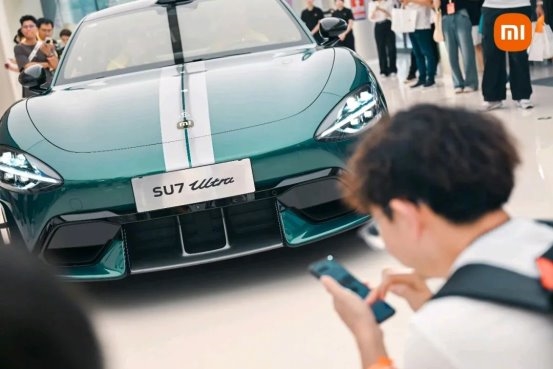
Investment Rating - The report maintains a "Buy" rating for Xiaomi Group with a target price of HKD 67.80, down from the previous HKD 71.20 [1][4][14]. Core Insights - Xiaomi's revenue for Q2 2025 is expected to grow by 29% year-on-year, with a net profit attributable to the parent company increasing by 56% [1][4]. - The automotive business is projected to generate revenue of RMB 20.4 billion in Q2 2025, reflecting a 10% quarter-on-quarter increase, with a focus on high-quality development in the automotive industry [2][4]. - The smartphone and IoT businesses are expected to face challenges due to rising storage prices, which may impact profit margins [3][4]. Summary by Sections Automotive Business - Q2 2025 automotive shipments are estimated at approximately 81,000 units, with an average selling price (ASP) increasing quarter-on-quarter, leading to a revenue of RMB 20.4 billion [2]. - The company anticipates total annual sales of 436,000 units for 2025, benefiting from scale effects that could enhance profit margins [2]. Smartphone/IoT/Internet Business - In Q2 2025, Xiaomi's smartphone shipments in China are expected to reach 10.4 million units, a 3.4% year-on-year increase, with market share rising to 15.1% [3]. - The IoT business is projected to grow by 37% year-on-year, while the internet services segment is expected to increase by 15% [3]. Profit Forecast and Valuation - Revenue forecasts for 2025-2027 have been adjusted downwards by 0.9%, 1.6%, and 1.2%, respectively, with net profit estimates also reduced by 1.3%, 1.7%, and 1.5% [4]. - The target price of HKD 67.80 corresponds to a 40x PE ratio for 2025, reflecting the company's valuation based on the sum-of-the-parts (SOTP) method [4][14].
2025赛迪百强区榜单发布 吴江全国第八 虎丘吴中上榜
Su Zhou Ri Bao· 2025-08-07 00:38
Group 1 - The report by the China City Economic Research Center highlights the high-quality economic development of urban areas in China, with Suzhou having three districts listed in the top 100, including Wujiang at 8th nationally and 1st in Jiangsu [1] - The evaluation criteria for the rankings include a GDP greater than 80 billion yuan and a general public budget revenue exceeding 2 billion yuan, utilizing 23 indicators across five dimensions: economic strength, growth momentum, endogenous support, regional capability, and shared development [1] - Wujiang's GDP grew by 6.1% year-on-year in the first half of the year, maintaining the highest growth rate in the city for four consecutive quarters, with significant increases in industrial output and retail sales [1] Group 2 - Wuzhong District improved its ranking by one position, entering the top 50 nationally, with a GDP of 98.2 billion yuan and a growth rate of 5.7% in the first half of the year [2] - The industrial output value in Wuzhong reached 136.68 billion yuan, with a growth rate of 7%, leading the city in both industrial output and added value [2] - Wuzhong's key industrial clusters, including robotics and artificial intelligence, have shown substantial growth, with the robotics and AI sector reaching 91.3 billion yuan, growing by 23.9% [2]
产业观察:【智能车产业跟踪】光梭未来完成近亿元天使轮融资,加速新能源重卡市场化
GUOTAI HAITONG SECURITIES· 2025-08-06 09:21
Investment Rating - The report does not explicitly state an investment rating for the industry Core Insights - The report highlights the rapid growth in the automotive industry, particularly in the new energy vehicle (NEV) sector, with a significant profit increase of 96.8% in June 2025 compared to the previous year [11] - The report notes that the financing activities in the smart vehicle sector are accelerating, with several companies completing significant funding rounds to enhance their market presence [34][35][37] Summary by Sections 1. Information Dispatch - July sales rankings for new energy vehicles show that Leap Motor sold 50,100 units (up 4.4% month-on-month), AITO sold 40,800 units (down 8.8%), and Xpeng sold 36,700 units (up 6.1%) [9] - New vehicle releases include the Li Auto i8, Changan's Kua Yue Xing Guang, and others, with prices ranging from 24,900 to 369,800 RMB [9] - The National Bureau of Statistics reported a 96.8% increase in profits for the automotive industry in June [11] - The China Banking Association forecasts a 23.44% year-on-year increase in loans for new energy vehicles by the end of 2024 [13] - China FAW Group aims to sell over 5 million vehicles and 3 million smart connected NEVs by 2030 [15] 2. Technology Dynamics - Zhiji Auto launched the "Hengxing" super range extender with a pure electric range exceeding 450 km and a combined range of over 1500 km [18] - Kioxia introduced automotive-grade UFS 4.1 flash memory, which offers 3.7 times the random write speed of UFS 3.1 [19] - Li Auto's i8 features the world's first VLA driver model, enhancing its autonomous driving capabilities [20] - Geely unveiled the industry's first intelligent cockpit, which will be implemented in the Galaxy M9 [21] 3. Lithium Battery Insights - Recent data indicates a slight decline in battery-grade lithium carbonate prices, averaging 71,310 RMB per ton as of August 1, 2025 [23] - The report provides a detailed overview of lithium battery material prices, showing fluctuations in various components [24] 4. Investment and Financing Events - Bulletrux completed nearly 100 million RMB in angel financing to accelerate the marketization of new energy heavy trucks [34] - Xiaomi's investment fund acquired a stake in Huayue Transmission Technology, increasing its registered capital by approximately 16% [35] - Fenrong Automotive secured 7.8 million RMB in angel financing to promote a new retail model for vehicles [36] - CATL's subsidiary raised several billion RMB in Series A financing, achieving a post-investment valuation exceeding 10 billion RMB [37]



智能汽车ETF(159889)盘中涨超1.3%,行业技术升级与全球化布局受关注
Mei Ri Jing Ji Xin Wen· 2025-08-06 07:47
Core Insights - The smart car ETF (159889) has seen an intraday increase of over 1.3%, driven by industry technological upgrades and global expansion efforts [1] - Changan Automobile Group has been established, planning to launch over 50 new energy products in the next five years, with an investment of 200 billion yuan in smart automotive robots and flying cars, accelerating global market development [1] - Key models such as the Ledo L90 and Li Auto i8 are being launched, with the Ledo L90 featuring a full-domain 900V high-voltage architecture and sharing NIO's charging and battery swap system, while the Li Auto i8 supports 5C ultra-fast charging technology, with over 3,000 supercharging stations already in place [1] - The issuance of demonstration operation licenses for smart connected vehicles continues, and Tesla's smart assisted driving plan is expected to be implemented within the year, further driving industry technological upgrades and global expansion [1] - The smart car ETF (159889) tracks the CS Smart Car Index (930721), which selects listed companies involved in smart driving and vehicle networking from the Shanghai and Shenzhen markets to reflect the overall performance of the smart car industry chain [1] - The index components cover core technology segments of the smart car supply chain, focusing on the intersection of information technology and automotive manufacturing, showcasing both technological innovation and industry growth potential [1]