
外卖

Search documents
图解三份财报,谁是外卖“烧钱之王”?
Xin Lang Cai Jing· 2025-08-30 06:46
Core Viewpoint - The fierce competition among Alibaba, JD, and Meituan in the food delivery market has led to significant financial losses for all three companies, with no clear winner emerging from the "battle" [2][5][19]. Financial Performance - JD's revenue for Q2 reached 356.7 billion RMB, a year-on-year increase of 22.4%, but its net profit plummeted by 50.8% to 6.2 billion RMB [6][10]. - Meituan reported Q2 revenue of 91.84 billion RMB, up 11.7% year-on-year, but its adjusted net profit fell by 89% to 1.49 billion RMB [8][10]. - Alibaba's Q2 revenue was 247.65 billion RMB, a mere 2% increase, with core operating profit declining by 3% [10][12]. Marketing Expenditure - JD's marketing expenses surged to 27 billion RMB in Q2, a 127.6% increase year-on-year [4][17]. - Meituan's marketing spending reached 22.5 billion RMB, up 51.8% from the previous year [4][18]. - Alibaba's marketing costs amounted to 53.18 billion RMB, a 62.6% increase year-on-year, leading to a total marketing expenditure exceeding 100 billion RMB for all three companies combined [5][18]. Cash Flow and Investment - JD's free cash flow dropped by 55% to approximately 22 billion RMB, with investment losses in the food delivery sector reaching 13 billion RMB [13][14]. - Meituan's core local business operating profit fell from 15.2 billion RMB to 3.7 billion RMB, a decline of 75.6% [10][14]. - Alibaba's free cash flow turned negative at 18.81 billion RMB, a significant drop from a positive cash flow of 17.37 billion RMB in the previous year [14]. Market Position and User Engagement - JD's food delivery service achieved over 25 million daily orders, covering 350 cities with more than 1.5 million merchants [20]. - Meituan's app reached over 500 million monthly active users, with peak daily orders for instant retail surpassing 15 million [20]. - Alibaba's instant retail revenue grew by 12% to 14.78 billion RMB, with significant increases in active users and order volumes [20]. Strategic Insights - The competition is characterized as a battle for high-frequency user engagement, with short-term growth driven by subsidies failing to create lasting competitive advantages [22]. - Industry leaders express concerns over unsustainable competition and the need for a more rational market approach moving forward [21][22].





图解三份财报,谁是外卖“烧钱之王”?
新浪财经· 2025-08-30 06:34
Core Viewpoint - The fierce competition among Alibaba, JD, and Meituan in the food delivery market has led to significant financial losses for all three companies, with no clear winner emerging from this costly battle [2][5][24]. Financial Performance - JD's revenue for Q2 2025 reached 356.7 billion RMB, a year-on-year increase of 22.4%, but its net profit plummeted by 50.8% to 6.2 billion RMB [6][9]. - Meituan reported Q2 revenue of 91.84 billion RMB, up 11.7% year-on-year, but its adjusted net profit fell by 89% to 1.49 billion RMB [9][11]. - Alibaba's total revenue for Q2 2025 was 247.65 billion RMB, a mere 2% increase year-on-year, with a core operating profit decline of 3% [13][24]. Marketing Expenditure - JD's marketing expenses surged to 27 billion RMB in Q2, a staggering increase of 127.6% year-on-year [4][20]. - Meituan's marketing costs rose to 22.5 billion RMB, reflecting a 51.8% increase compared to the previous year [4][20]. - Alibaba's marketing expenditure reached 53.18 billion RMB, up 62.6% year-on-year, indicating a total marketing spend exceeding 100 billion RMB across the three companies for the quarter [4][21]. Strategic Insights - The competition is characterized by high cash burn rates, with the three companies collectively spending over 43 billion RMB more on marketing compared to the previous year [4][21]. - JD's new business segment, which includes food delivery, saw revenue increase from 4.6 billion RMB to 13.9 billion RMB, but operating losses ballooned from 700 million RMB to 14.8 billion RMB [15][17]. - Meituan's core local business operating profit dropped from 15.2 billion RMB to 3.7 billion RMB, a decline of 75.6% year-on-year [11][17]. Market Position and Future Outlook - Despite the financial strain, all three companies reported increases in user engagement and order volumes, indicating some success in capturing market share [24][25]. - The competition is expected to continue, with industry leaders emphasizing the need for sustainable practices rather than excessive cash burn [25][26]. - Analysts suggest that the future of this competition will hinge on the ability to convert short-term subsidies into long-term customer loyalty and ecosystem stability [26].

“外卖三巨头”最新财报悉数出炉!谁是最大赢家?
2 1 Shi Ji Jing Ji Bao Dao· 2025-08-30 06:29
战得火热的"外卖三巨头"美团、京东、阿里巴巴(淘宝闪购/饿了么)的2025年第二季度财报悉数公 布,谁喜谁忧? (原标题:"外卖三巨头"最新财报悉数出炉!谁是最大赢家?) ...
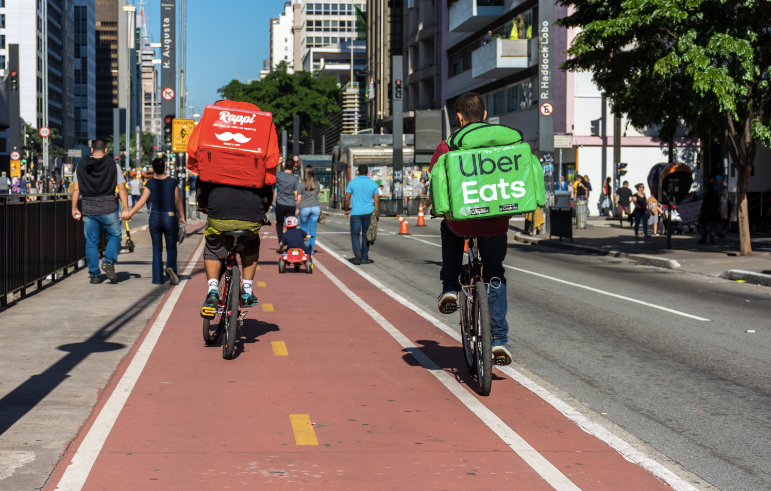
美团滴滴巴西外卖战,未上线先打官司
Hu Xiu· 2025-08-30 05:12
Group 1 - The core viewpoint of the article highlights the intense competition in the food delivery market, particularly focusing on Meituan's significant profit decline and market share loss due to irrational competition [1][2] - Meituan's adjusted net profit dropped nearly 90% in Q2 2025, with a core local business segment operating profit decrease of 75.6%, attributed to the impact of non-rational competition [1] - Meituan's market share fell from 74% at the beginning of the year to 65% in August, while its sales and marketing expenses increased by 77 billion compared to the previous year [2] Group 2 - In the overseas market, Meituan faces competition in Brazil against Didi, with its new business segment losses expanding by 43.1% year-on-year due to overseas expansion [3] - Brazil is seen as a fertile ground for food delivery expansion, driven by high urbanization rates (87.6%), government support, and a growing local fintech sector [4] - The Brazilian food delivery market is projected to grow significantly, with Q-commerce expected to reach approximately $1.05 billion by 2024, and the CEP market projected to grow from $5.93 billion in 2025 to $7.77 billion by 2030 [11][12] Group 3 - Meituan's new delivery service, Keeta, has not yet launched in Brazil but is already involved in legal disputes with Didi's 99Food over trademark infringement and unfair competition [6][7] - The legal battles include accusations of 99Food's malicious advertising practices and exclusive agreements with merchants, as well as claims of Keeta mimicking 99Food's branding [7][8] - Meituan plans to invest $1 billion in Brazil over the next five years to establish Keeta, aiming to capture a significant market share in a competitive landscape dominated by iFood [9][20] Group 4 - The article discusses the strategies employed by both Meituan and Didi in Brazil, emphasizing their willingness to invest heavily to attract users and gain market share [17][19] - Meituan's Keeta has promised lower fees than iFood and incentives for delivery riders, while Didi has also implemented aggressive promotional strategies [19][20] - The competitive landscape in Brazil is characterized by a lack of complete competition, allowing for some breathing room for new entrants like Meituan and Didi [14] Group 5 - The article notes that Brazil's e-commerce market is one of the fastest-growing globally, with a compound annual growth rate exceeding 20% [10] - The infrastructure for logistics in Brazil is improving, with significant investments planned, but challenges remain in managing delivery personnel and ensuring reliable service outside major cities [14][16] - The fragmented payment ecosystem in Brazil presents challenges for the formation of "super apps," which could hinder the growth of companies like Meituan and Didi [16]
外卖、直播电商等平台服务管理将有“新国标”
Jing Ji Guan Cha Bao· 2025-08-30 05:01
Group 1 - The National Platform Economy Governance Standardization Technical Committee has been officially established to enhance governance capabilities and modernize the governance system in the platform economy sector [2] - The main objective of the committee is to clarify market rules and standardize industry development, promoting compliance and improving the operational quality of platform enterprises [2] - The committee is focusing on key areas and challenges in platform economy governance, aiming to create a comprehensive national governance standard system [2] Group 2 - The committee has initiated the development of four national standards, including "Basic Requirements for Delivery Platform Service Management" and "Compliance Evaluation Guidelines for Online Trading Platforms" [2] - Two of these standards, "Basic Requirements for Delivery Platform Service Management" and "Compliance Evaluation Guidelines for Online Trading Platforms," have completed the project initiation phase and will soon seek public feedback [2]

阿里美股涨超12%,外卖大战“期中考”放榜
Guan Cha Zhe Wang· 2025-08-30 04:48
Core Viewpoint - The capital market has positively responded to Alibaba's performance in the ongoing "takeout war," indicating that the spending was less than expected while the results exceeded market expectations [1] Financial Performance - Alibaba's revenue for the first quarter of fiscal year 2026 reached RMB 243.236 billion, showing a year-on-year increase of 34.5% [3] - Excluding sold businesses, Alibaba's revenue grew by 10% year-on-year, with net profit increasing by 76%, surpassing market expectations [4] - Alibaba Cloud revenue grew by 26% year-on-year, marking a three-year high, while AI-related product revenue has seen triple-digit year-on-year growth for eight consecutive quarters [4] Market Competition - In comparison to Meituan, which reported a revenue of RMB 918.4 billion with a year-on-year growth of 11.7%, its sales and subsidy expenses surged to RMB 225 billion, leading to a 75.6% drop in core local business operating profit [6] - Alibaba's "Taobao Flash Sale" utilized approximately RMB 10 billion in subsidies, achieving peak daily orders of 120 million and an average of 80 million orders on Sundays, contributing to a 20% increase in daily active users [7][9] - JD.com incurred a loss of RMB 14.8 billion in new business, pushing its daily orders in takeout to over 10 million, capturing about 7% market share [7] Strategic Insights - The "Taobao Flash Sale" has exceeded expectations in both scale and market perception, with a 200% increase in monthly transaction buyers compared to April [9] - The synergy between the flash sale and e-commerce business has led to increased user engagement and reduced costs, with expectations of achieving RMB 1 trillion in transaction increments over the next three years [12] - The current financial reports are seen as a mid-term assessment of the "takeout war," with significant spending and competition expected to continue into the latter half of the year [16]

美团-W(3690.HK):外卖竞争加剧导致利润承压 静待长期价值释放
Ge Long Hui· 2025-08-30 04:13
Core Insights - The company reported Q2 2025 revenue of 91.8 billion yuan, a year-over-year increase of 12% but below market expectations, with significant declines in operating and net profits due to intensified competition in the food delivery sector and losses from overseas expansion [1] Group 1: Core Local Business - Core local business revenue grew by 8% year-over-year to 65.3 billion yuan, with delivery service revenue growth lagging behind the increase in instant delivery transaction volume due to increased delivery subsidies [2] - Operating profit for the core local business fell by 76% year-over-year to 3.7 billion yuan, significantly below the market expectation of 12 billion yuan, primarily due to declining gross margins and increased user incentives and marketing expenses [2] - The company plans to continue strategic investments in Q3 2025, which may pressure profit metrics, while maintaining a long-term profit assumption of 1 yuan per order and a profit margin of approximately 3% for 2025 [2] Group 2: Business Segments Performance - The food delivery business saw a steady growth with a 10% year-over-year increase in order volume, driven by various models enhancing food supply and user engagement [3] - The Meituan Flash Purchase business experienced strong growth in order volume and transaction value, with significant increases in high-ticket item sales during the "618" shopping festival [3] - The in-store travel and accommodation business performed well, with order volume growing over 40% year-over-year and revenue increasing by 15% [3] Group 3: New Business and International Expansion - New business revenue grew by 23% year-over-year to 26.5 billion yuan, driven by retail and overseas business growth, although operating losses expanded to 1.9 billion yuan due to increased costs in overseas operations [4] - Keeta maintained strong growth in order volume and gross transaction value, solidifying its leading position in Hong Kong and expanding into 20 cities in Saudi Arabia and launching services in Qatar [4] - The company remains optimistic about Keeta's long-term growth potential, aiming for a gross merchandise value of 100 billion USD within 10 years [4] Group 4: Financial Forecast and Valuation - The company is optimistic about its core barriers in instant delivery and growth opportunities from overseas expansion, but has revised down its profit forecasts due to irrational competition and increased short-term investments [5] - Revenue projections for 2025-2027 are set at 370.2 billion, 417.9 billion, and 475.5 billion yuan, with Non-GAAP net profit forecasts of 5 billion, 32.3 billion, and 48.8 billion yuan respectively [5] - The company has set a target market value of 735.1 billion yuan for 2026, corresponding to a target price of 120 yuan per share [5]
美团-W(03690.HK):外卖竞争激烈程度远超预期
Ge Long Hui· 2025-08-30 04:13
Core Viewpoint - The company's 2Q25 revenue and adjusted net profit fell short of market expectations, primarily due to intensified competition in the food delivery sector, leading to increased user subsidies, rider incentives, and advertising expenses [1][2]. Revenue and Profit Analysis - 2Q25 revenue increased by 12% year-on-year to 91.8 billion yuan, but was 2% below market expectations; adjusted net profit was 1.49 billion yuan, significantly lower than expected, with adjusted net profit margin dropping from 16.5% in the same period last year to 1.6% [1]. - Core local business revenue grew by 8% year-on-year to 65.3 billion yuan; however, the food delivery segment's revenue growth was flat due to the impact of subsidies [1][2]. - The company expects a 13% decline in food delivery revenue in 3Q25 due to ongoing competitive pressures and a decrease in average order value (AOV) [1]. Business Segment Performance - The food delivery segment saw a 36% year-on-year increase in order volume in 2Q25, with expectations for continued strong growth in 3Q25 [1]. - The in-store and travel segment experienced over 40% year-on-year growth in order volume, with projected GTV and revenue growth of 27% and 13% respectively in 3Q25 [1]. - New business revenue grew by 23% year-on-year to 26.5 billion yuan in 2Q25, but operating losses widened to 1.8 billion yuan due to increased overseas investments [2]. Profitability Forecast - The core local business operating profit margin (OPM) fell from 25.1% to 5.7% year-on-year, with expectations for further declines in 3Q25 [2]. - The company has revised its adjusted net profit forecast for 2025 from 28.6 billion yuan to a loss of 5.9 billion yuan, and reduced the 2026 profit forecast by 21% to 34.7 billion yuan [2]. - Despite the challenges, the company maintains a positive outlook on the resilience of its food delivery business as the industry shifts focus from market share to profitability [2].
美团(3690.HK):外卖竞争大幅影响短期利润 关注长期外卖核心竞争力
Ge Long Hui· 2025-08-30 04:13
Core Insights - The company reported total revenue of 91.8 billion RMB in Q2 2025, a year-on-year increase of 12%, slightly below market expectations by 1% and 2% [1] - Adjusted net profit decreased by 89% to 1.5 billion RMB, resulting in a net profit margin of 1.6% [1] - Core business adjusted operating profit fell by 76% to 3.7 billion RMB, with a profit margin of 5.7%, down 19 percentage points year-on-year, primarily due to irrational competition in the industry [1] Business Performance - Core business revenue growth lagged behind order volume growth, attributed to intensified industry competition and increased user subsidies to enhance price competitiveness and ensure delivery efficiency [1] - Estimated year-on-year growth in takeaway order volume is approximately 10%, with a significant decline in Average Order Value (AOV) [1] - The in-store travel and accommodation Gross Transaction Value (GTV) increased by nearly 30% year-on-year, but revenue growth was slower than GTV due to changes in category structure and market penetration [1] New Business Developments - The company is undergoing a strategic transformation in its new business segment, exiting loss-making areas [1] - The "Xiaoxiang Supermarket" is experiencing strong growth and plans to accelerate expansion into first- and second-tier cities [1] - Keeta's order volume and GTV are rapidly increasing, with coverage in 20 cities in Saudi Arabia as of the end of July [1] Future Outlook - Increased takeaway subsidies are expected to impact performance in the coming quarters, with a forecast of core business turning to losses in Q3 [2] - Q3 takeaway competition is expected to intensify, with projected daily order volume growth of 16% year-on-year, but a potential revenue decline of 6% due to subsidies and strategic adjustments [2] - New business revenue is expected to grow by 18% year-on-year, with anticipated losses of approximately 2.3 billion RMB [2] Valuation and Market Position - The company maintains a leading market position, with a high probability of sustaining market share despite short-term profit adjustments [2] - The target price has been adjusted to 147 HKD, with a maintained buy rating based on long-term projections for takeaway and in-store business profits [2]
美团-W(3690.HK):外卖竞争短期影响超预期 关注长期价值回归
Ge Long Hui· 2025-08-30 04:13
Core Viewpoint - In Q2 2025, Meituan achieved total revenue of 91.84 billion yuan, a year-on-year increase of 11.7%, but Non-GAAP net profit fell by 89% to 1.493 billion yuan, with both revenue and profit below Bloomberg consensus expectations [1][2] - The impact of intensified competition in the home delivery business on CLC profits is becoming evident, with expectations of significant deterioration in Q3 [1][2] - Long-term, the irrational competition in the industry may not be sustainable, and Meituan's food delivery profit margins are expected to return to reasonable levels [2][3] Revenue and Profit Analysis - Meituan's core local business generated revenue of 65.347 billion yuan in Q2, a year-on-year increase of 7.69%, with adjusted operating profit of 3.721 billion yuan, down 76% year-on-year [1] - Delivery service revenue was 23.7 billion yuan, up 2.76%, commission revenue was 25 billion yuan, up 12.86%, and online marketing service revenue was 13.5 billion yuan, up 10.48% [1][2] Market Competition and Future Outlook - The second quarter saw intensified competition in the food delivery market, with a rise in order volume but a decline in average order value (AOV) and revenue due to subsidies [2] - The expectation is that the food delivery unit economics (UE) will turn negative in Q2, with further declines anticipated in Q3 due to increased competition [2] - In the hotel and travel segment, GTV continued to grow rapidly, but revenue growth lagged behind due to structural impacts and decreased advertising spending by merchants [2] New Business Developments - Meituan's new business segment reported revenue of 26.5 billion yuan in Q2, a year-on-year increase of 23%, but incurred an adjusted operating loss of 1.9 billion yuan [3] - The launch of Keeta in Brazil is expected to create a new growth curve for Meituan, with long-term profit potential in overseas markets where AOV and profit margins are higher than in the domestic market [3] Financial Forecasts - Revenue projections for Meituan for FY25-27 are 372.105 billion yuan, 450.261 billion yuan, and 537.467 billion yuan, with growth rates of 10.22%, 21.00%, and 19.37% respectively [3] - Non-GAAP profits are expected to be -3.268 billion yuan, 26.677 billion yuan, and 46.477 billion yuan for the same periods [3] - The company maintains a "buy" rating with a target price of 150.00 HKD, corresponding to an 18X PE for 2027 [3]