有色金属

Search documents
上市公司年报预告超预期全景解析
量化藏经阁· 2026-02-12 00:08
Core Viewpoint - The article focuses on the analysis of companies that have reported earnings forecasts for 2025, highlighting those with analyst reports indicating "better than expected" performance based on specific keywords in the report titles [1][34]. Annual Report Forecast Disclosure Situation - As of February 11, 2026, over 2900 A-share companies listed before October 1, 2025, have disclosed their 2025 annual report forecasts [2][35]. - Among different indices, the median year-on-year net profit growth rate for the CSI 300 index constituents is the highest at 50.00% [7][35]. - The cyclical sector shows a relatively high median year-on-year net profit growth rate of 25.56%, while the consumer sector has a low median growth rate of -43.43% [7][35]. - High median year-on-year net profit growth rates are also observed in the non-bank financial, non-ferrous metals, and steel sectors [11][35]. - Hot concept indices with high public fund holdings, such as the optical chip index and optical circuit switch index, have median year-on-year net profit growth rates exceeding 100% [15][35]. - Representative industry-themed ETFs tracking indices like CS new energy vehicles, new energy batteries, and rare earth industries also show high median year-on-year net profit growth rates [18][35]. Annual Report Forecast Performance Exceeding Expectations - The proportion of companies exceeding expectations in the CSI 300 index is the highest at 4.76% [3][36]. - The financial sector has the highest proportion of companies exceeding expectations [3][36]. - In the CITIC first-level industries, the banking and textile sectors have a higher proportion of companies exceeding expectations [26][36]. - Hot concept indices with high public fund holdings, such as the Ningde Times industry chain index, also show a high number of companies exceeding expectations [27][36]. - Among representative industry-themed ETFs, indices like new energy batteries and technology leaders have a higher number of companies exceeding expectations [29][36]. Selected Companies with Exceeding Expectations - Based on the analysis of annual report forecasts and analyst comments, companies such as TCL Technology and Century Huatong are identified as having exceeded expectations for their 2025 annual report forecasts [36][36].




中金:行业景气再考察 ——从五维指数看行业景气度
中金点睛· 2026-02-11 23:38
Core Viewpoint - The article presents a scoring card framework based on four dimensions: inventory, demand, profitability, and supply, which has been optimized to assess industry prosperity and identify potential investment opportunities [1][5]. Group 1: Industry Scoring Framework - The scoring card framework has been expanded to five dimensions, incorporating inventory levels, demand growth, profitability, supply expansion, and external demand ratio, with respective weights of 10%, 40%, 20%, 20%, and 10% [5][9]. - As of the Q3 2025 report, industries such as defense, automotive, non-ferrous metals, electronics, and home appliances scored high, indicating a favorable supply-demand balance [6][9]. Group 2: Economic Context - The macroeconomic environment has shown weakened elasticity, with industrial production and prices at historically low levels, leading to a divergence in industry performance [1][3]. - Emerging industries are experiencing rapid growth, supported by increased competitiveness and expansion into overseas markets, while traditional sectors face demand constraints [1][3]. Group 3: Industry Performance Metrics - Non-ferrous metals and electronics have shown significant revenue growth, with inventory cycles turning upward, while industries like steel and communication have exhibited restrained supply expansion [6][7]. - The scoring results indicate that high-scoring industries are more likely to achieve excess returns in the market, with a notable performance of 89% excess return for the highest scoring industry combinations by the end of January 2026 [9][10].

A股市场大势研判:沪指缩量震荡微涨
Dongguan Securities· 2026-02-11 23:30
Market Overview - The A-share market showed a mixed performance with the Shanghai Composite Index slightly rising by 0.09% to close at 4131.99, while the Shenzhen Component Index fell by 0.35% to 14160.93 [2] - The overall trading volume in the market was below 2 trillion yuan, indicating a lack of strong market momentum [4][6] Sector Performance - The top-performing sectors included Construction Materials (3.29%), Nonferrous Metals (2.39%), and Oil & Petrochemicals (2.18%) [3] - Conversely, the sectors that underperformed were Communication (-2.17%), Media (-1.99%), and Social Services (-1.74%) [3] Future Outlook - The market is expected to enter a phase of consolidation with potential short-term adjustments as investor sentiment becomes cautious ahead of the Spring Festival [6] - Long-term, the regulatory environment is signaling a focus on market normalization and risk prevention, suggesting a shift towards a more balanced market structure [6] - There is an emphasis on dividend assets for long-term positioning, along with opportunities in cyclical industries and undervalued traditional consumer sectors [6] Economic Indicators - Consumer demand is recovering, with the Consumer Price Index (CPI) rising by 0.2% month-on-month and year-on-year [5] - The Producer Price Index (PPI) increased by 0.4% month-on-month but decreased by 1.4% year-on-year, reflecting ongoing pressures in the industrial sector [5] - The People's Bank of China is expected to maintain a moderately loose monetary policy to support liquidity and financing conditions [5]
浙商证券浙商早知道-20260212
ZHESHANG SECURITIES· 2026-02-11 23:30
Market Overview - On February 11, the Shanghai Composite Index rose by 0.09%, while the CSI 300 fell by 0.22%, the STAR Market 50 dropped by 1.11%, the CSI 1000 decreased by 0.13%, and the ChiNext Index declined by 1.08%. The Hang Seng Index increased by 0.31% [4]. - The best-performing sectors on February 11 were building materials (+3.29%), non-ferrous metals (+2.39%), oil and petrochemicals (+2.18%), steel (+1.68%), and coal (+1.4%). The worst-performing sectors included telecommunications (-2.17%), media (-1.99%), social services (-1.74%), electronics (-1.09%), and defense and military industry (-0.91%) [4]. - The total trading volume of the A-share market on February 11 was 20,010.43 billion yuan, with a net inflow of 4.816 billion Hong Kong dollars from southbound funds [4]. Important Insights Strategy Research - The report discusses the potential of space photovoltaics and perovskite technology, indicating that space photovoltaics is transitioning from a scientific concept to commercial reality, representing the ultimate frontier of the energy revolution [5]. - The report highlights that major players in commercial space, such as SpaceX, are accelerating the construction of space infrastructure, providing application scenarios for space photovoltaics. Meanwhile, perovskite battery technology has entered the GW-level production stage on the ground, showing significant technological spillover effects [5]. - It is recommended to focus on the core segments of the perovskite industry chain, following the logic of "materials - equipment - batteries/components" for investment layout [5]. Macroeconomic Research - The report anticipates a total monetary easing operation in 2026, with a potential reduction of 25-50 basis points in reserve requirement ratios and a 10 basis point interest rate cut, suggesting a gradual approach with infrequent adjustments [6]. - It emphasizes the importance of structural policy tools to support credit guidance, particularly in expanding domestic demand, technological innovation, and support for small and medium-sized enterprises [7]. ESG Research - The report notes that global ESG funds are projected to experience their first annual net outflow since 2018, amounting to 84 billion dollars by 2025. However, it argues that this should not be viewed pessimistically, as the outflow reflects market sentiment fluctuations due to regulatory differences in Europe and the U.S. [8]. - It highlights that the outflow is primarily driven by structural reasons, such as funds shifting to customized accounts due to stricter regulations in Europe, and political polarization affecting ESG investment sentiment in the U.S. [8].
金十数据全球财经早餐 | 2026年2月12日
Jin Shi Shu Ju· 2026-02-11 23:12
男生普通话版 下载mp3 女声普通话版 下载mp3 粤语版 下载mp3 西南方言版 下载mp3 东北话版 下载mp3 上海话版 下载mp3 今日优选 美国1月非农就业新增13万人,失业率降至4.3% 美联储米兰表达继续留在美联储的意愿 特朗普称同伊朗达成协议将是"首选" 肯尼亚央行加入非洲黄金增持行列 美股三大指数小幅下跌,道指收跌0.1%,标普500指数跌0.01%,纳指跌0.16%。微软(MSFT.O)和谷歌(GOOG.O)均跌2%,英伟达(NVDA.O)和苹果(AAPL.O) 涨幅不足1%,美光科技(MU.O)涨近10%。纳斯达克中国金龙指数收跌0.65%,金山云(KC.O)涨10%,网易(NTES.O)跌4%。 欧洲主要股指多数收跌,德国DAX30指数收跌0.53%;英国富时100指数收涨1.14 %;欧洲斯托克50指数收跌0.19%。 港股连升两日累涨623点后延续强势,恒指高开63点报27246点,一度倒跌最多49点低见27133点后回稳,在汽车、有色金属及贵金属股带领下大市逐步收复 失地并重展升势。大市午后维持窄幅波动,升势放缓。截至收盘,恒指收涨0.31%,科指收涨0.9%,恒指大市成交额21 ...

云南锡业股份有限公司关于召开2026年第二次临时股东会的提示性公告
Shang Hai Zheng Quan Bao· 2026-02-11 18:17
Meeting Information - The company will hold its second extraordinary general meeting of shareholders in 2026 on February 12, 2026, at 15:00 [3] - The meeting will be conducted both in-person and via online voting [5] - The record date for shareholders to attend the meeting is February 3, 2026 [6] Voting Procedures - Shareholders can vote through the Shenzhen Stock Exchange trading system and internet voting system on February 12, 2026, during specified trading hours [4][16] - The voting will be non-cumulative, and shareholders must choose one voting method: in-person, trading system, or internet voting [5][16] Attendance and Registration - All ordinary shareholders registered by the record date are entitled to attend the meeting and may appoint a proxy to vote on their behalf [6][7] - Registration for attending the meeting can be done in person or via fax/email for remote shareholders [11] Agenda and Proposals - The meeting will review proposals that have been approved by the board on January 26, 2026, including the termination of a share repurchase plan [9] - The proposals require a special resolution, needing more than two-thirds of the voting rights held by attending shareholders to pass [9][10]

沪市662份业绩预告“透底” 资源品量价齐升 AI链景气延续
Shang Hai Zheng Quan Bao· 2026-02-11 17:56
2025年,沪市公司经营韧性与结构亮点进一步显现,在"质"与"量"的双重维度上,助力中国经济破浪前 行。数据显示,截至2月9日,271家沪市主板公司发布2025年业绩预告,其中168家预增、85家预计扭 亏。391家科创板公司以业绩预告或快报形式披露了2025年业绩情况,近六成公司预计净利润实现同比 增长,其中39家预计净利润同比倍增、51家预计扭亏为盈。 一幅稳增长、优结构的沪市公司全年发展图景徐徐展开。记者关注到,业绩突出的公司主要集中在有色 金属、电子等行业。有色金属受产品价格与产销量共同驱动,电子行业在AI需求带动下维持较快增 长。与此同时,一批龙头公司预计盈利规模仍处于高位,持续发挥沪市主板"压舱石"作用。 有色金属行业发展尽显韧性 2025年,在全球地缘政治摩擦多发和主要经济体降息预期的推动下,黄金的避险与货币属性愈加显现, 黄金价格屡创新高,直接增厚了拥有巨量黄金储备企业的利润。 有色行业规模以上企业工业增加值增长6.9%,高于全国规上工业增加值增速1.0个百分点,十种有色金 属产量首次突破8000万吨大关。规模以上企业实现利润总额5284.5亿元,同比增长25.6%,创下历史新 高。下游新兴产 ...
金融工程日报:沪指震荡微升,周期股走强、热点题材调整-20260211
Guoxin Securities· 2026-02-11 14:55
- The report does not contain any quantitative models or factors for analysis [1][2][3][4]
宏观经济点评:输入性因素与中高端制造带动PPI环比高增
KAIYUAN SECURITIES· 2026-02-11 14:45
Group 1: CPI Analysis - January CPI year-on-year growth decreased to 0.2%, down 0.6 percentage points from the previous value of 0.8%[13] - Food CPI month-on-month growth remained flat at 0.2%, with a decrease of 0.3 percentage points from the previous value[4] - Core CPI month-on-month increased to 0.3%, up 0.1 percentage points from the previous value, marking four consecutive months above seasonal levels[5] Group 2: PPI Analysis - January PPI year-on-year growth improved to -1.4%, up 0.5 percentage points from the previous value of -1.9%[6] - Month-on-month PPI increased by 0.4%, the highest since 2024, with contributions of 0.33 and 0.07 percentage points from input factors and high-end manufacturing respectively[27] - Input factors primarily driven by rising prices of non-ferrous metals contributed significantly to PPI growth[27] Group 3: Future Inflation Predictions - February CPI is expected to remain around 0% month-on-month, with a year-on-year growth forecast of approximately 0.5%[7] - February PPI is anticipated to show a month-on-month decline but a year-on-year increase, with overall PPI for 2026 projected to average around 0.2%[7] - The potential for monthly PPI year-on-year growth turning positive in the second or third quarter of 2026 is noted, depending on international commodity trends and domestic policy[7] Group 4: Risks - Risks include unexpected policy changes and fluctuations in commodity prices that could impact inflation forecasts[34]
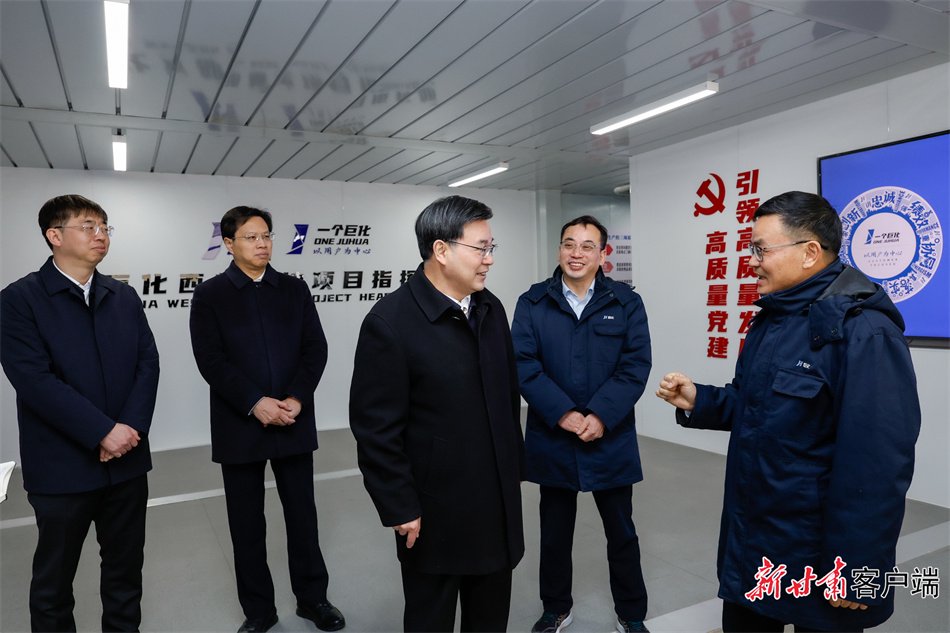
胡昌升在酒泉市嘉峪关市金昌市调研时强调 提升创新能力推进新型工业化 厚植为民情怀增强群众幸福感
Xin Lang Cai Jing· 2026-02-11 14:37
Group 1 - The core message emphasizes the need to enhance innovation capabilities and promote new industrialization while improving people's well-being and happiness [3][5] - The focus is on high-quality development as a primary task, with an emphasis on technological innovation to lead industrial innovation [5][6] - The strategy includes strengthening traditional industries like petrochemicals and non-ferrous metallurgy while expanding clusters in new energy, new materials, and biomedicine [5][6] Group 2 - The initiative aims to create a favorable business environment by actively addressing development challenges faced by enterprises [6] - Community governance is highlighted, with an emphasis on improving the legal, scientific, and refined levels of community management [8] - Safety production measures are prioritized, especially with the upcoming Spring Festival, ensuring thorough risk assessments in various sectors [10]