新能源车

Search documents
崔东树:上半年短续航产品较少!低速电动车市场需求大
Nan Fang Du Shi Bao· 2025-07-03 02:40
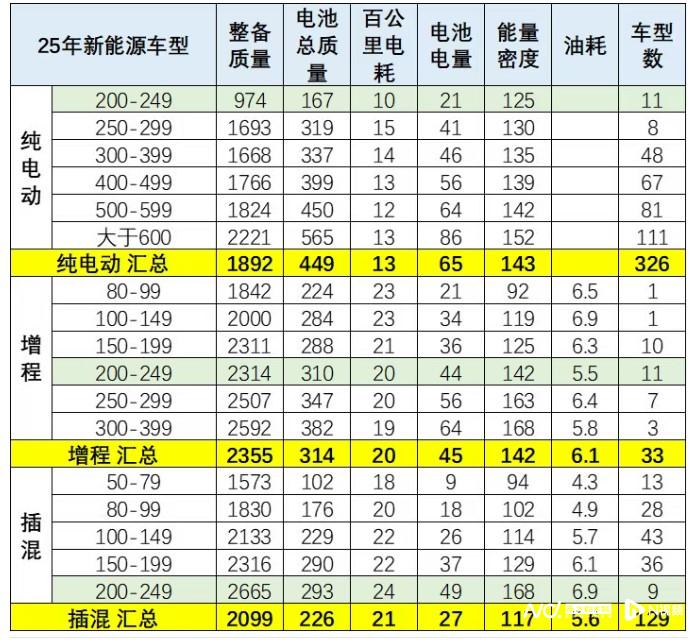
Core Insights - The sales momentum of new energy vehicles (NEVs) remains strong in the first half of the year, with significant improvements in various technical aspects such as power structure, range, and battery energy density [1][2][4] Group 1: Sales and Market Trends - In June, the wholesale sales of new energy passenger vehicles reached 1.26 million units, a year-on-year increase of 29%, with a total of 6.47 million units sold in the first half of the year, marking a 38% year-on-year growth [2] - The number of new energy vehicle models in the tax exemption directory for 2025 is 2,533, which is fewer compared to previous years, indicating a stable technical upgrade in exempt models [2][3] Group 2: Technical Developments - The majority of new pure electric passenger vehicles launched this year have a range exceeding 600 kilometers, with a notable increase in high-energy density battery products [2][4] - The market for short-range products is diminishing, while the demand for low-speed electric vehicles remains significant, suggesting potential growth in this segment [6] Group 3: Product Differentiation - Hydrogen fuel commercial vehicles have gained traction due to substantial subsidies, surpassing plug-in hybrids in the number of models submitted for approval [3] - The new models of plug-in hybrids are primarily focused on higher mileage, with most having a range of 100-200 kilometers, while range-extended vehicles are also seeing rapid growth [7] Group 4: Cost and Performance Considerations - The industry is shifting from merely competing on data to a more pragmatic approach, with manufacturers focusing on safety, cost, and overall performance of new models [8] - The effective control of battery costs has allowed manufacturers to offer vehicles with high ranges (500-600 kilometers) at lower price points, enhancing market accessibility [8]

雷军直播回应小米YU7订单质疑和友商“截胡”
Xin Lang Cai Jing· 2025-07-03 00:49
Core Insights - Xiaomi's Yu7 vehicle received strong market response with over 200,000 pre-orders in just 3 minutes and 240,000 within 18 hours of launch [1] - CEO Lei Jun addressed concerns regarding the pre-order data, clarifying that the statistics align with industry standards and that the cancellation rate for Yu7 is low compared to other models [1] - Competitors have attempted to intercept Yu7 orders using misleading sales tactics, which Lei Jun criticized, emphasizing the importance of focusing on product strengths rather than disparaging competitors [1] Pre-order Data - The Yu7 achieved over 200,000 pre-orders in 3 minutes and 240,000 within 18 hours, indicating strong consumer interest [1] - Lei Jun stated that the cancellation rate for Yu7 is less than 15% of the total orders, which is significantly lower than the transfer orders for other models [1][2] - The decision not to disclose the 24-hour lock order data was made to avoid unnecessary speculation and discussion [1] User Demographics - The average age of Yu7 owners is approximately 33 years, which is three years older than SU7 owners [2] - Female ownership of Yu7 stands at 30%, which is 4.5% higher than the SU7 during its initial sales period [2] - Among Yu7 owners, 52.4% are iPhone users, which is 4.4% higher than the SU7 [2] Future Plans - Lei Jun indicated that due to high domestic demand, Xiaomi will focus on fulfilling local orders before considering international expansion, which may occur around 2027 [2]

“反内卷式竞争”的投资机会
2025-07-02 15:49
"反内卷式竞争"的投资机会 20250702 摘要 反内卷政策升级,人民日报等媒体密集发文,预示行业协会将密集发文 控价控产能,主要集中在新能源车和光伏行业,可能引发市场预期波动, 影响相关公司股价和大宗商品价格。 大宗商品价格下跌源于需求侧居民收入和地产下滑。传统行业经过前期 去产能和企业整合,供给侧大幅出清空间有限,本轮周期股反弹更多源 于市场内生需求,而非供给侧改革。 新能源车和光伏领域是反内卷政策重点,政府鼓励民营企业信心。未来 或通过控制价格实现红利,但难以复制 2015-2016 年供给侧改革驱动 的大宗商品牛市。 钢铁行业:限产政策短期影响有限,但制造业需求超预期增长,成本端 双胶价格下跌提升钢厂利润。关注电炉减产及低位库存对钢铁价格和利 润的推动作用,预计 7-8 月钢铁股将有一波反弹行情。 水泥行业:协会推动供给侧改革,要求企业严格按照设计产能生产,有 望提升标的配置性价比。今年企业具备底线思维,避免激烈价格战,确 保行业微盈利,但需求淡季和错峰执行力度不足构成不利因素。 Q&A 如何理解中央财经委关于建设全国统一大市场的政策? 中央财经委近期强调建设全国统一大市场,旨在依法依规治理企业低价 ...
转债周周谈|成长为矛,业绩为锚
2025-07-02 15:49
Summary of Key Points from Conference Call Records Industry Overview - The conference call discusses the convertible bond market and its performance in the context of the broader equity market, particularly focusing on the Chinese market dynamics and external geopolitical factors [1][5][6]. Core Insights and Arguments - **Market Dynamics**: The convertible bond market is experiencing a structural shift due to favorable external conditions, such as easing geopolitical tensions and supportive domestic policies, which have led to a bullish outlook for July [1][5]. - **Convertible Bonds Performance**: Convertible bonds have shown better resilience and upside potential compared to common stocks, particularly in a low-interest-rate environment where funds are increasingly chasing yield [1][4][5]. - **Sector Focus**: Key sectors to watch include AI, military, semiconductors, humanoid robots, and new consumption areas like dairy and beverages, which are expected to have strong earnings visibility [1][6][11]. - **Banking Sector Trends**: There is a notable acceleration in the exit of bank convertible bonds, with significant amounts expected to flow back into the pure bond market or into new bottom-fishing opportunities [1][7]. Important but Overlooked Content - **Convertible Bond Ratings**: In the first half of the year, 37 convertible bonds had their ratings downgraded, but the impact was manageable, with most experiencing limited price declines [7]. - **Solar Industry Outlook**: The solar sector is currently facing increased competition but is expected to stabilize as leading companies reduce production and consolidate, making it a potential bottom-fishing opportunity [8]. - **Investment Strategies**: Strategies such as downshift speculation and YTM replacement are highlighted as viable approaches for investors, particularly in the pharmaceutical sector [3][27]. - **Company-Specific Insights**: - **Hua Zheng Co.**: The company has turned profitable with a focus on high-frequency substrates and advanced materials, indicating a positive short-term outlook [12]. - **Guo Li Co.**: Expected revenue growth of 50% to 100% due to strong demand in military and semiconductor sectors [13]. - **Shui Yang Co.**: The company is leveraging both proprietary and agency brands to drive growth in the high-end beauty market [14]. - **Hua You Co.**: Positioned well in the new energy vehicle sector, benefiting from strong demand and integrated supply chain advantages [15][17]. - **Jing Wang Electronics**: The company is gaining traction in the GPU supply chain, indicating a positive performance outlook despite industry pressures [18]. - **Anji Technology**: The company is seeing significant growth in semiconductor materials, bolstered by partnerships with major players like TSMC [19]. - **Hang Yu Co.**: The company is well-positioned in the military sector with a solid order book and improving margins [20]. Conclusion - The overall sentiment for the convertible bond market and specific sectors remains optimistic, driven by favorable macroeconomic conditions and sector-specific growth opportunities. Investors are encouraged to focus on high-growth areas with strong earnings visibility while being mindful of potential risks associated with credit and market volatility [1][5][11].
雷军回应友商“截胡”YU7
第一财经· 2025-07-02 14:38
7月2日,小米创始人、董事长兼CEO雷军举行返场直播。 在直播中,雷军也谈到了此事,雷军表示,看到了个别车企销售的"截胡"话术,"我也认真学习了一 下,实话实说,内容不太准确,甚至有一些诋毁和歪曲",雷军强调,"我觉得大可不必",每个产品 有自己的优点,自信的话讲自己优势就行,没必要诋毁。 此外,雷军表示,当前YU7的锁单数量超出想象,希望大家可以稍微多一点点耐心。"如果大家急着 用车,我觉得国产新能源车都还不错,比如明天将发布的小鹏G7、月底将发布的理想i8,当然, Model Y也不错。" 对于年度目标交付量,雷军表示,将尽量扩产,年初交付目标是30万辆,扩产后目标修正到35万 辆。 对于小米YU7上线即爆单的情况,雷军表示,"看到(三分钟)大定数据的第一时间我都愣住了,看 了好几遍才跟现场的人分享。三分钟大定20万单,一小时大定28.9万单,这个数字绝对创造了中国 汽车工业的奇迹,所以大家都非常震惊。" 据证券时报,由于YU7订单"爆单",目前,小米汽车订购数据显示,YU7标准版锁单后预计交付时 间已经排到58周以后,有市场消息称,多家车企推出"截胡"小米YU7订单的策略。 ...

6月新能源车销量跟踪:表现分化,价格战或转向品质战
Haitong Securities International· 2025-07-02 13:34
Investment Rating - The report does not explicitly provide an investment rating for the industry or specific companies within it [27]. Core Insights - The NEV sector in China is experiencing intense competition, with performance among major manufacturers becoming increasingly divergent. The focus is expected to shift from price wars to quality and service upgrades as regulatory scrutiny tightens [8][16]. - BYD's June sales reached 383,000 units, a 12% year-on-year increase, while Geely sold 236,000 units, up 42% year-on-year. Both companies are adjusting their annual targets upwards due to strong first-half performance [9][10]. - Leapmotor achieved record sales of 48,000 units in June, marking a 139% year-on-year increase, while Li Auto and Xiaomi saw month-on-month declines in sales [11][14]. - NIO's wholesale sales were 25,000 units in June, reflecting an 18% year-on-year increase, but the company faces challenges from competitors in the same price segment [15][16]. Summary by Sections Sales Performance - BYD's first-half sales totaled 2.146 million units, achieving 39% of its annual target, while Geely's first-half sales reached 1.409 million units, with 47% of its revised target already met [9][10]. - Leapmotor's cumulative deliveries for the first half were 222,000 units, and it is expected to maintain strong sales momentum with new product launches [11]. - Li Auto's June deliveries were 36,000 units, down 24% year-on-year, while XPeng delivered 35,000 units, marking a 224% year-on-year increase [13][14]. Market Dynamics - The report highlights a shift in competition dynamics, with companies focusing on service upgrades and technological advancements rather than aggressive pricing strategies due to regulatory pressures [8][16]. - The performance of various brands indicates a competitive landscape where established players like BYD and Geely are facing challenges from emerging brands like Leapmotor and NIO [15][16]. Future Outlook - The second half of the year is expected to see continued volatility in sales as new models are launched and companies adapt to stricter regulations. Brands that can offer better value and brand equity are likely to outperform [16].




招银国际每日投资策略-20250702
Zhao Yin Guo Ji· 2025-07-02 03:39
Market Overview - Global stock markets showed mixed performance, with the Hang Seng Index down 0.87% and the S&P 500 up 0.52% year-to-date performance remains strong for most indices, with the Hang Seng Index up 41.21% [1][2] - The Chinese A-share market saw gains, particularly in the pharmaceutical, banking, and non-ferrous sectors, while the computer, retail, and telecommunications sectors experienced declines [3] Industry Insights - The Chinese automotive industry reported robust sales in June for new energy vehicles, with Li Auto's deliveries down 11% month-on-month, while XPeng and NIO met expectations with significant year-on-year growth [5][6] - BYD maintained stable wholesale volumes in June, while Geely raised its annual sales target from 2.71 million to 3 million units, reflecting strong demand [6] - The heavy truck sector in China saw a 29% year-on-year increase in sales in June, driven by both diesel and new energy trucks, exceeding expectations [7] Focus Stocks - Geely Automobile (175 HK) rated as a "Buy" with a target price of 24.00, indicating a potential upside of 48% [8] - XPeng Motors (XPEV US) also rated as a "Buy" with a target price of 28.00, suggesting a 53% upside [8] - NIO (not specified) is undergoing brand integration and personnel streamlining to reduce resource waste, although the effectiveness of these measures is uncertain [5]


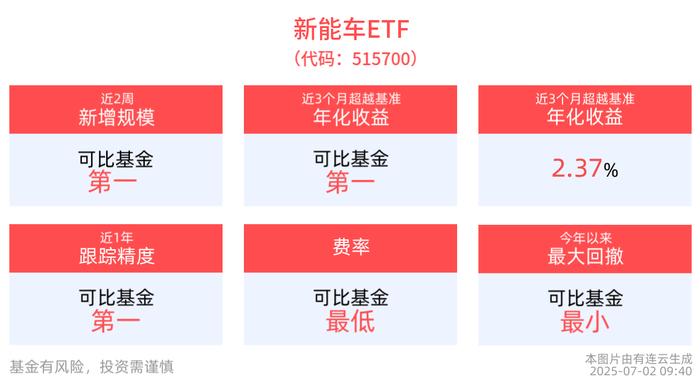
光伏玻璃或正酝酿新一轮联合减产,光伏ETF基金(516180)开盘飘红,新能车ETF(515700)整固蓄势
Xin Lang Cai Jing· 2025-07-02 02:24
消息面上,经历抢装潮短期提振后,光伏玻璃再次进入价格下行区间,头部企业或将发起新一轮联合减 产以稳定市场价格。据业内人士透露,由于目前需求低迷及持续亏损情况下,部分光伏玻璃企业采取减 产或者冷修工作,整体产能呈现下降趋势。 新能源车方面,车企集中公布了6月成绩单,比亚迪继续雄踞榜首,6月销量超38万辆;小鹏汽车交付量 同比增224%,连续8个月超3万台。鸿蒙智行全系交付5.3万辆,零跑汽车交付4.8万辆,均再创新高。理 想汽车交付3.6万辆,同比下降24%。极氪连续四个月销量超4万台;小米汽车交付超2.5万台;蔚来交付 2.5万辆。 华泰证券指出,25年1-5月主流整车企业销量目标完成率普遍在25-45%之间,比亚迪、吉利、赛力斯完 成度高,Q3预计"淡季不淡"。对多品牌的全年销量目标进行统计,国内传统车企和新势力车企平均目 标达成率为35%/30%。比亚迪、吉利、小鹏、零跑达成率超越24年同期,其中吉利、小鹏目标达成率较 高,在40%以上。该机构认为,补贴政策和新能源车优质供给周期(银河A7、方程豹钛7、小鹏G7、理 想i8、零跑B01等)共振,预计Q3-Q4自主品牌销量趋势及市占率持续向上。 截至2025 ...



【立方早知道】美联储释放降息新信号/车企上半年销量密集出炉/科创板第五套标准重启后首家拟IPO企业过会
Sou Hu Cai Jing· 2025-07-02 00:57
Group 1: IPO Activity - A-share IPO activity has surged in the first half of 2025, with a total of 177 companies accepted for listing, marking a significant increase compared to previous years [1] - In June alone, 150 companies were accepted, accounting for over 80% of the total for the first half of the year, setting a new monthly record [1] - The increase is attributed to the gradual easing of the "phase tightening IPO" policy and the withdrawal of non-compliant applications, which has reduced pressure on exchanges and improved acceptance and review efficiency [1] Group 2: Federal Reserve Signals - Federal Reserve Chairman Jerome Powell indicated that most committee members expect a rate cut later this year, depending on economic data [3] - Following Powell's comments, the probability of a rate cut in July rose to approximately 25%, up from less than 20% previously [3] - Goldman Sachs predicts that the Fed will restart rate cuts in September, with expected cuts of 25 basis points in September, October, and December [3] Group 3: Automotive Industry Performance - BYD reported June sales of 382,500 new energy vehicles, up from 341,700 in the same month last year, with a cumulative sales increase of 33.04% year-on-year [8] - Great Wall Motors sold 110,700 vehicles in June, a year-on-year increase of 12.86%, with a total of 197,700 vehicles sold in the first half of the year [8] - Xiaomi's automotive division delivered over 25,000 vehicles in June [8] Group 4: Innovation in Pharmaceuticals - The National Healthcare Security Administration and the National Health Commission issued measures to support the high-quality development of innovative drugs, emphasizing the use of healthcare data for drug research [10] - The measures aim to enhance collaboration among healthcare, insurance, and pharmaceutical sectors to facilitate innovative drug development [10] Group 5: Corporate Developments - He Yuan Bio's IPO application has been approved, marking the first company to pass under the newly restarted fifth set of standards for the Sci-Tech Innovation Board [14] - The company plans to raise 2.4 billion yuan for projects including the construction of a human albumin industrialization base and new drug research [14] - Zhongke Environmental announced the acquisition of 100% equity in two environmental companies for a total of 354 million yuan, expanding its waste treatment capabilities [19]
整理:7月1日欧盘美盘重要新闻汇总
news flash· 2025-07-01 15:31
Group 1 - BYD Company reported June sales of new energy vehicles at 382,600 units, an increase from 341,700 units in the same month last year, reflecting a growth of approximately 12.5% year-over-year [2] Group 2 - The U.S. JOLTs job openings unexpectedly rose to the highest level since November of the previous year, leading traders to slightly reduce expectations for a Federal Reserve interest rate cut [3] - Oil prices are set to increase, with the cost of filling a tank expected to rise by 9 yuan [4] - The first company, He Yuan Biotechnology, has passed the review for an IPO under the fifth set of standards on the Sci-Tech Innovation Board [4]