玩具

Search documents
“黑天鹅”突袭!“瑞士概念股”全线大跌!
Zheng Quan Shi Bao Wang· 2025-08-04 00:08
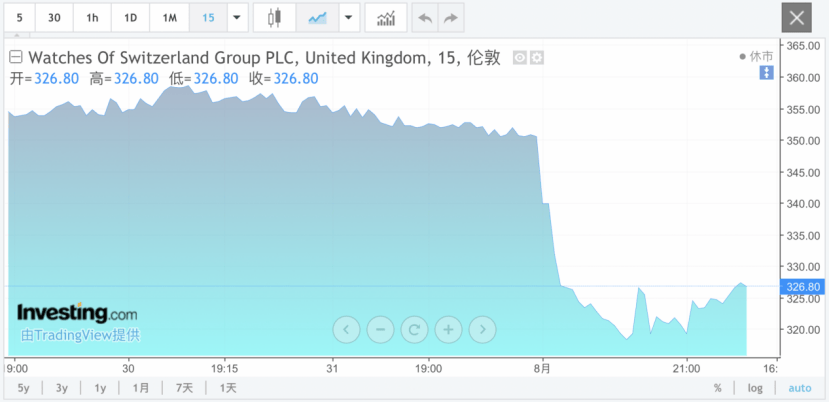
Core Viewpoint - The announcement of a 39% tariff on Swiss goods by President Trump is seen as a "black swan" event, leading to significant declines in Swiss stocks and raising concerns about the impact on the Swiss economy and export-dependent companies [1][4][8]. Group 1: Market Reaction - Following the tariff announcement, Swiss stocks experienced a sharp decline, with UBS Group dropping nearly 4% and Swiss watchmakers falling by 6.8% in London trading [1][4]. - The Swiss stock market's reaction was delayed due to the national holiday coinciding with the tariff announcement, resulting in heightened anticipation for the market's opening [4][8]. Group 2: Economic Impact - The Swiss economy is expected to suffer a "devastating blow" due to the high tariff, particularly affecting the export-driven sectors [4][5]. - The Swissmem association indicated that the 39% tariff would have an "extremely severe impact" on Switzerland's technology industry and overall exports [5]. Group 3: Trade Negotiations - The tariff decision came as a surprise during the final moments of trade negotiations, where significant disagreements on trade balance were revealed [8]. - The Swiss government had previously approved a trade agreement framework with the U.S., which was overturned by Trump's unilateral decision [8]. Group 4: Future Projections - Analysts predict that if the 39% tariff remains in place, it could lead to a GDP loss of approximately 0.6% for Switzerland, with potential further losses if additional tariffs on pharmaceuticals are implemented [7]. - Companies like Richemont and Swatch Group are expected to face substantial challenges due to the new tariff regime [7].

“黑天鹅”突袭!全线大跌!
券商中国· 2025-08-03 23:41
Core Viewpoint - The unexpected announcement of a 39% tariff on Swiss goods by President Trump is viewed as a "black swan" event, leading to significant declines in Swiss stocks and raising concerns about the impact on the Swiss economy and export-dependent companies [1][6][9]. Group 1: Tariff Announcement and Market Reaction - The Swiss stock market's reaction to the tariff announcement was delayed due to the holiday, with significant declines expected upon reopening [1][4]. - The 39% tariff is among the highest globally, second only to Syria's 41%, and is seen as a devastating blow to the Swiss economy and its export-driven market [5][6]. - Major Swiss companies, including UBS and Swatch Group, experienced sharp declines in their stock prices following the announcement [1][8]. Group 2: Economic Impact - Analysts predict that if the 39% tariff remains in place, it could lead to a GDP loss of approximately 0.6% for Switzerland, with further losses possible if additional tariffs on pharmaceuticals are implemented [8]. - The Swiss technology industry and overall exports are expected to face "extremely severe" impacts due to the high tariff rate [7][8]. - The sudden reversal in trade negotiations highlights the unpredictability of Trump's trade policies, even after prior agreements had been reached [9][10]. Group 3: Broader Trade Implications - The new tariff policy is part of a broader trend that could elevate the U.S. actual tariff rate to 17%, marking the highest level since the Smoot-Hawley Tariff Act of 1933, which had severe consequences for international trade [11][12]. - Experts describe the day of the tariff announcement as a "dark day" for global trade, indicating long-term challenges for the established trade system [13].

华尔街见闻早餐FM-Radio|2025年8月4日
Sou Hu Cai Jing· 2025-08-03 23:28
Market Overview - The U.S. non-farm payroll data showed a weak increase of 73,000 jobs in July, significantly below expectations, leading to a downward revision of the previous two months by 258,000 jobs [9] - The unemployment rate rose to 4.2%, matching expectations, while hourly wages increased by 3.9% year-on-year, higher than the expected 3.8% [9] - The market reacted negatively, with the Nasdaq dropping over 2% and the S&P 500 recording its largest decline since May [1] - Berkshire Hathaway reported a 59% drop in Q2 net profit and warned that tariffs would impact performance, with a significant write-down of $3.8 billion on its investment in Kraft Heinz [8] Company News - Berkshire Hathaway's cash reserves are nearing historical highs, and the company has been a net seller of stocks for 11 consecutive quarters, with no stock buybacks in Q2 [8] - The company’s top five holdings include American Express, Apple, Bank of America, Coca-Cola, and Chevron [8] - OPEC+ has agreed to a significant production increase of 548,000 barrels per day starting in September, restoring previously suspended cuts [9] Industry Insights - The U.S. trade representative stated that the tariff policy will largely remain unchanged, with significant tariffs imposed on various countries, including a 39% tariff on Switzerland [12] - The semiconductor and pharmaceutical sectors face increased tariff risks, particularly if the U.S. imposes high tariffs on these products [23] - The consulting industry is undergoing significant changes due to AI, with firms like McKinsey adapting their business models to embrace AI technologies [26]

华尔街见闻早餐FM-Radio | 2025年8月4日
Hua Er Jie Jian Wen· 2025-08-03 22:58
Market Overview - The U.S. non-farm payroll data for July showed an increase of only 73,000 jobs, significantly below expectations, leading to heightened expectations for interest rate cuts by the Federal Reserve [2][10] - The S&P 500 index recorded its largest drop since May, falling by 1.60% to 6238.01 points, while the Nasdaq dropped over 2% [4] - The VIX index, a measure of market volatility, surpassed 20, indicating increased investor anxiety [2] Company News - Berkshire Hathaway reported a 59% drop in net profit for Q2, with cash reserves nearing historical highs, and warned that tariffs could negatively impact its performance [3][9] - Berkshire made a significant write-down of $3.8 billion on its investment in Kraft Heinz, which has been labeled as one of Buffett's major failures [9] - OPEC+ has agreed to a substantial increase in oil production, planning to add 548,000 barrels per day starting in September [9] Employment Data - The U.S. unemployment rate rose to 4.2%, matching expectations, while average hourly earnings increased by 3.9% year-over-year, surpassing the anticipated 3.8% [10] - The downward revision of previous months' job gains by a total of 258,000 has raised concerns about the reliability of employment data [10] Trade and Tariff Developments - The U.S. Trade Representative indicated that the current tariff policies will largely remain unchanged, despite ongoing negotiations [11][12] - President Trump has increased tariffs on various countries, including a 39% tariff on Swiss goods, which has surprised Swiss officials [11][21] Industry Insights - Goldman Sachs noted a chaotic week for U.S. stocks, with strong earnings from major tech companies overshadowed by new tariffs and poor employment reports [13] - The European banking sector has seen a 34% increase in stock prices this year, reaching the highest levels since 2008, driven by rising interest rates and improving economic conditions [25] Emerging Trends - The robotics sector is expected to see significant advancements in flexible operations and human-machine interaction capabilities, indicating a positive outlook for future applications [26] - The cobalt market is facing a severe shortage, with imports from the Democratic Republic of Congo dropping over 60% in June, leading to expectations of rising prices [26]

全球贸易史上的黑暗一天
Zhong Guo Xin Wen Wang· 2025-08-03 10:58
Group 1: Tariff Implementation - The new tariff rates will increase to 15% for most countries and regions, with some major trade partners receiving lower rates between 10% and 20% due to investment commitments to the U.S. [2] - Countries that did not make sufficient concessions in recent negotiations face significantly higher tariffs, such as Canada at 35% and Brazil at 50% [4] Group 2: Historical Context - The new tariffs will raise the U.S. actual tariff rate to 17%, the highest since the Smoot-Hawley Tariff Act of 1933, which exacerbated the Great Depression [5][6] - The actual tariff rate was only 1.2% last year, indicating a dramatic shift in trade policy that could reshape multinational production and trade cost structures [7] Group 3: Impact on U.S. Companies - U.S. companies are becoming the largest "taxpayers" under the new tariff regime, with tariff revenue soaring to $27 billion in June, nearly four times that of the previous year [8] - Companies like Ford and Hasbro are already adjusting their financial forecasts due to increased costs from tariffs, with Ford estimating an additional $800 million in expenses [9] Group 4: Consumer Impact - Retail giants like Walmart and Target are currently managing costs through inventory but are expected to raise prices as tariffs take effect, with a significant portion of manufacturers already beginning to pass on costs [9][10] - The inflationary effects of the tariffs are anticipated to become more pronounced in the fourth quarter of this year and into the first quarter of next year, impacting consumer prices directly [10] Group 5: Economic Outlook - The new tariffs are expected to erode corporate profits and market confidence, leading to potential cuts in investment and hiring by U.S. companies [10] - The overall economic impact is still being assessed, but early signs indicate that the tariffs are reigniting inflation and could slow economic growth [10]

巴菲特继续卖卖卖
2 1 Shi Ji Jing Ji Bao Dao· 2025-08-03 03:40
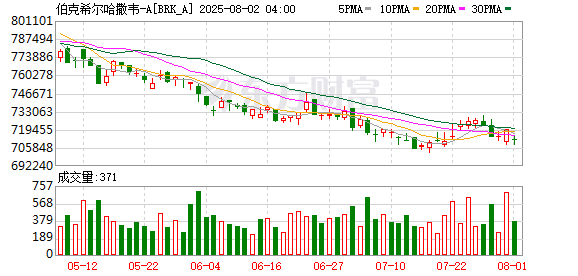
Core Viewpoint - Berkshire Hathaway's financial results for Q2 showed significant fluctuations, with revenue exceeding market expectations but net profit experiencing a dramatic decline compared to the previous year [2][5]. Financial Performance - Q2 revenue reached $92.515 billion, surpassing market expectations of $91.963 billion, but down from $93.653 billion year-over-year [2][4]. - Net profit for Q2 was $12.370 billion, exceeding market expectations of $10.703 billion, but down 59% from $30.348 billion in the same quarter last year [2][4]. Investment Performance - Investment net income for Q2 was $4.97 billion, a significant drop from $18.75 billion in the same period last year [5]. - Berkshire's top five holdings accounted for 67% of its total portfolio value as of June 30, 2025, including American Express, Apple, Bank of America, Coca-Cola, and Chevron [5]. Market Context - In Q2, U.S. stock indices showed mixed performance, with the Dow Jones up 4.98%, Nasdaq up 17.75%, and S&P 500 up 10.57%, while Berkshire's stock price fell 8.72% [7]. - Trade tensions and concerns over Warren Buffett's retirement have negatively impacted investor sentiment [7]. Stock Trading Activity - Berkshire sold approximately $3 billion worth of stocks in Q2, marking the 11th consecutive quarter of net stock sales [9]. - The company held $344.1 billion in cash and cash equivalents at the end of Q2, slightly down from $347.7 billion in the previous quarter [9]. Strategic Outlook - Buffett emphasized a cautious approach to investing, indicating that while cash levels are high, the company is actively seeking investment opportunities [9]. - The preference for equity investments over cash equivalents remains unchanged, with a focus on acquiring good businesses [9].
AI玩具消费趋势白皮书
Sou Hu Cai Jing· 2025-08-03 00:24
Core Viewpoint - AI toys are reshaping the traditional toy industry by integrating artificial intelligence, driving a transformation towards a high-tech companionship economy through emotional value and intelligent interaction [1][7][10]. Group 1: Industry Overview - The global AI toy market is expected to exceed 100 billion by 2030, with a compound annual growth rate (CAGR) of over 50% [45]. - The Chinese AI toy market is projected to grow at a CAGR of over 70%, with significant growth driven by advancements in computing power and reduced training costs [45][39]. - JD.com holds the largest online market share in AI toys, nearly double that of its closest competitor, with a rapid growth rate of over 400% year-on-year [43][45]. Group 2: Consumer Insights - AI toys differ from traditional toys by offering interactive capabilities and emotional companionship, enhancing their value proposition significantly [51][52]. - The market features a range of AI toys categorized by price, with entry-level products under 300 yuan, mid-range products between 300-1000 yuan, and high-end products over 1000 yuan, each with distinct functionalities [53][56]. Group 3: Technological Support - AI toys leverage advanced technologies such as voice recognition, computer vision, and large language models to provide personalized learning and entertainment experiences [18][24]. - The development of low-cost hardware and specialized chips is crucial for real-time interaction and personalized responses in AI toys [38][20]. Group 4: Future Trends - The industry is expected to diversify its business models, including subscription services and educational content sales, while focusing on standardization and quality improvement [11][10]. - The integration of AI technology is anticipated to enhance production efficiency and foster innovation in product design and manufacturing processes [38][46].


伯克希尔二季度净利润暴跌59%,巴菲特继续“卖卖卖”
2 1 Shi Ji Jing Ji Bao Dao· 2025-08-02 15:41
Core Viewpoint - Berkshire Hathaway's financial results for Q2 showed significant fluctuations, with revenue exceeding market expectations but net profit experiencing a dramatic decline compared to the previous year [2][5]. Financial Performance - Q2 revenue reached $92.515 billion, surpassing market expectations of $91.963 billion, but down from $93.653 billion year-over-year [2][4]. - Q2 net profit was $12.370 billion, exceeding market expectations of $10.703 billion, but down 59% from $30.348 billion in the same quarter last year [2][4]. Investment Performance - Investment net income for Q2 was $4.970 billion, a significant drop from $18.750 billion in the same period last year [5]. - The fair value of Berkshire's top five holdings accounted for 67% of its portfolio, including American Express, Apple, Bank of America, Coca-Cola, and Chevron [5]. Market Conditions - In Q2, U.S. stock markets experienced volatility due to tariff uncertainties, with the Dow Jones up 4.98%, Nasdaq up 17.75%, and S&P 500 up 10.57%, while Berkshire's stock price fell 8.72% [6]. - Trade tensions accelerated in the first half of 2025, posing threats to Berkshire's diversified businesses, with revenue declines reported in its clothing and toy brands [6]. Leadership Transition - Warren Buffett announced plans to retire by the end of the year, raising concerns among investors despite having named Greg Abel as his successor in 2021 [7]. Stock Management - In Q2, Berkshire sold approximately $3 billion in stocks, marking the 11th consecutive quarter of net stock sales, and did not engage in stock buybacks [8]. - As of the end of Q2, Berkshire's cash and cash equivalents stood at $344.1 billion, slightly down from $347.7 billion in the previous quarter, with Buffett indicating a cautious approach to investment opportunities [8].
2025年AI玩具消费趋势白皮书-京东&深圳市玩具行业协会
Sou Hu Cai Jing· 2025-08-02 03:40
Core Viewpoint - The white paper discusses the AI toy industry, covering its current development status, consumer insights, technological support, best practices, and future trends. It highlights the rapid growth of the AI toy market, driven by favorable government policies and technological advancements, with a significant market presence on platforms like JD.com [1][8][12]. Group 1: Current Development Status - AI toys represent a fusion of AI and traditional toys, utilizing large models and various technologies for intelligent interaction, with 2025 seen as a pivotal year for the industry [1][24]. - The global and Chinese AI toy markets are experiencing rapid growth, with JD.com leading the online market [1][50]. - The industry chain features a technology-intensive upstream, a manufacturing-focused midstream, and a diverse downstream channel structure [1][51]. Group 2: Consumer Insights - AI toys differ significantly from traditional toys in interaction methods, providing emotional companionship and educational value [1][59]. - The consumer demographic has expanded from children to all age groups, with varying motivations and usage scenarios, such as Z-generation parents focusing on education and companionship, while single adults seek emotional support [1][66][70]. Group 3: Technological Support - The technology framework consists of a software layer and a hardware layer, with advancements in real-time communication and sensor modules [1][12]. - The integration of cognitive interaction systems is a notable trend, with JD.com's JoyInside technology offering multimodal interaction advantages [1][12]. Group 4: Best Practices - Successful products like LING Universe and companies like LuKa Doctor have demonstrated strong sales and marketing performance, leveraging technological and resource integration [1][12][14]. Group 5: Future Trends - The commercialization of the industry is in its early stages, with potential for diverse revenue channels in both B2B and B2C sectors [2][12]. - The AI toy market is projected to reach over 100 billion yuan by 2030, with a compound annual growth rate (CAGR) exceeding 70% in China [1][49][50].

AI玩具最大的敌人,是「七天无理由退货」
36氪· 2025-08-01 10:15
Core Viewpoint - The AI toy industry is facing significant challenges, including high return rates and a lack of product-market fit, leading to skepticism about its future viability [5][7][22]. Group 1: Market Feedback and Challenges - The current return rate for AI plush toys is between 30% and 40%, indicating consumer dissatisfaction with the products [5][12]. - Many AI toys are priced between 300-400 yuan, but their production costs are generally under 100 yuan, leading to high consumer expectations that are often unmet [19][20]. - Common issues reported by consumers include heavy AI characteristics, response delays, complex interactions, and connectivity problems, which detract from the intended experience of having an emotional and engaging companion [6][15]. Group 2: Product Development and Market Dynamics - Most AI toys on the market are simple in design, typically consisting of a plush toy and a voice interaction box, which has led to a crowded and competitive market [9][11]. - The reliance on e-commerce platforms and their return policies can be detrimental to companies that fail to deliver satisfactory product experiences [12][22]. - Many companies in the AI toy sector are still operating at a loss and depend on financing to sustain their operations, highlighting the financial strain within the industry [7][18]. Group 3: Future Directions and Innovations - New entrants in the AI toy market are exploring differentiated products that incorporate multi-modal interactions and emotional value, targeting a broader audience beyond just children [27][28]. - Companies are beginning to recognize the limitations of current AI toys and are adjusting their designs to improve user experience, such as integrating voice boxes into the toys themselves and enhancing interaction capabilities [25][26]. - The ultimate goal for many AI toy companies is to create personalized AI companions, which requires sustained user engagement and interaction to refine the AI's capabilities [23][24].