Workflow
贵金属
icon
Search documents
综合晨报-20251231
Guo Tou Qi Huo· 2025-12-31 03:01
1. Report's Industry Investment Ratings No relevant content provided. 2. Core Views of the Report - The current fundamental pattern of crude oil is dominated by oversupply, leading to a downward shift in the oil - price center, despite geopolitical conflicts causing occasional price spikes [2]. - Precious metals are supported by the Fed's easing prospects and geopolitical risks, but short - term adjustments are inevitable due to excessive gains driven by funds [3]. - For various metals, non - ferrous metals and precious metals generally show certain trends, with each metal having its own supply - demand and price characteristics. For example, copper prices are affected by the Fed's interest - rate cut expectations, and aluminum shows an oscillatingly strong trend [4][5]. - For energy and chemical products, most products face supply - demand imbalances, with some affected by geopolitical factors and some by seasonal and policy factors. For example, fuel oil is affected by geopolitical tensions and high - inventory pressure [22]. - Agricultural products' prices are influenced by factors such as weather, supply - demand relationships, and policies. For example, soybean and bean - related products are affected by South American weather and export situations [36]. - In the financial market, the stock index shows an oscillatingly strong trend, and the bond market has different trends for different - term bonds [48][49]. 3. Summary by Related Catalogs Energy Crude Oil - Geopolitical tensions increase concerns about supply disruptions, but the market is still dominated by oversupply. EIA predicts a daily increase of over 2 million barrels in global inventories, and the oil - price center is expected to shift downward [2]. Fuel Oil & Low - Sulfur Fuel Oil - Geopolitical factors provide short - term support, but the supply - surplus situation remains unchanged. High - sulfur fuel oil demand may increase, but Singapore's high inventory is a significant pressure. Low - sulfur fuel oil supply is expected to recover, and demand remains weak [22]. Asphalt - Commercial inventory de - stocking is weak, and the supply of heavy raw materials is unstable due to the escalating situation between the US and Venezuela, providing bottom - end support for prices [23]. Metals Precious Metals - Overnight, precious metals turned upward. The Fed's easing prospects and geopolitical risks support their strength, but short - term adjustments are needed due to excessive gains. After volatility decreases, a long - position strategy can be considered [3]. Copper - Overnight, copper prices rebounded, with large short - term price fluctuations near the New Year. The market focuses on the Fed's interest - rate cut expectations in 2026. The previous options strategy should be continued, and attention should be paid to refinery production schedules and social inventory changes [4]. Aluminum - Overnight, Shanghai aluminum fluctuated within a narrow range. After a significant correction, the panic sentiment eased. The fundamental driving force of the aluminum market is insufficient, and the oscillatingly strong trend remains unchanged. Long positions can be held based on the 40 - day moving average [5]. Casting Aluminum Alloy - The spot price of Baotai ADC12 remained at 21,900 yuan. Scrap aluminum is still in short supply, and the cost in some areas may increase due to tax adjustments. The seasonal spread between casting aluminum alloy and Shanghai aluminum is weaker than in previous years, maintaining around 1,000 yuan [6]. Alumina - Alumina is in a state of significant oversupply, and the cost has room to decline as the bauxite price falls. The short - term decline in the spot price is slowing down, but medium - term stabilization requires large - scale production cuts [7]. Zinc - The supply - side pressure of zinc is weakening, and the overall upward trend remains unchanged. The consumption outlook in January is moderately optimistic, but the real - estate sector restricts the upside of zinc prices. Shanghai zinc is expected to oscillate in the range of 22,800 - 23,800 yuan/ton [8]. Lead - The maintenance of primary lead smelters continues, and the low social inventory supports the price, but battery enterprises' inventory checks at the end of the year suppress demand. Shanghai lead is expected to oscillate at the bottom, with a price range of 16,800 - 17,500 yuan/ton [9]. Nickel & Stainless Steel - Nickel prices rose again, but the spot trading was cold. The Indonesian Nickel Ore Association reduced the ore quota and will modify the mineral benchmark price formula in early 2026. Stainless - steel costs increased due to the rising nickel - iron price, and social inventory decreased. Short - term policy sentiment dominates, and it is advisable to wait and see [10]. Tin - Shanghai tin rebounded with a reduction in positions. Attention should be paid to the possible mining conference around the New Year. It is recommended to hold a 350,000 - yuan call - selling option and observe the adjustment range [11]. Iron Ore - The supply pressure of iron ore is still large, but with the sign of iron - water production bottoming out and the expectation of steel - mill winter - storage replenishment, the short - term price is supported. However, the positive factors have been reflected in the recent price increase, and the future trend is expected to be oscillatory [16]. Coke - The price oscillated upward during the day. The fourth round of price cuts for coke was fully implemented, and the coking profit was average. The inventory increased slightly, and the downstream demand was still resilient but with a strong willingness to suppress prices. The price faces fundamental pressure after correcting the premium, and market sentiment is affected by policy expectations [17]. Coking Coal - The price oscillated upward during the day. The Mongolian coal customs - clearance volume decreased seasonally, and some domestic coal mines reduced or stopped production. The total coking - coal inventory increased slightly. Similar to coke, it faces fundamental pressure after correcting the discount, and market sentiment is affected by policy expectations [18]. Manganese - The price oscillated strongly during the day. The manganese ore spot price increased. There are structural problems in the port inventory, and the demand for semi - carbonate ore may increase. The iron - water production decreased seasonally. It is recommended to try long positions when the price is low [19]. Silicon Iron - The price oscillated strongly during the day. There are expectations of coal - supply guarantee, which may reduce the power cost and lanthanum - carbon price. The iron - water production rebounded, and the overall demand is still resilient. The supply decreased significantly. It is recommended to try long positions when the price is low [20]. Chemicals Polycrystalline Silicon - The spot price of polycrystalline silicon increased slightly. The downstream silicon - wafer production in December was lower than expected, so the production schedule in January may be slightly increased. The battery - cell production is expected to continue to decline in January. The factory inventory is at a high level and continues to accumulate. The price is expected to oscillate at a high level [13]. Industrial Silicon - The weekly operating rate in the northwest main - production area fluctuated slightly. The demand side is still under pressure, and the demand for polycrystalline silicon may weaken again. The upward momentum of the future price depends on the implementation of production - reduction expectations, and the trend may change from strong oscillation to consolidation [14]. Urea - The urea price oscillated strongly. The supply tightened temporarily, and the production - enterprise inventory decreased significantly. The agricultural procurement slowed down, and the industrial demand was mainly for rigid needs. The supply may increase in the short term, and the price may decline slightly [24]. Methanol - The methanol main - contract price increased with an increase in positions. The import volume is expected to decrease gradually, and the coastal MTO device is approaching the restart time. The medium - term port inventory may enter a de - stocking cycle. The short - term port inventory is accumulating. The medium - term price is expected to be strong [25]. Pure Benzene - The pure - benzene price oscillated at night. The port inventory continued to increase, higher than the same period in previous years. There are expectations of device maintenance and downstream production increase in the future, but the supply may also increase. The short - term price oscillates at the bottom, and the medium - term can consider long - short spreads [26]. Styrene - The cost side does not provide obvious positive driving force for styrene. The supply and demand are expected to increase simultaneously, but there is an expectation of inventory accumulation, which is difficult to boost the price [27]. Polypropylene, Plastic & Propylene - The cost pressure on downstream propylene has been slightly relieved, but the demand recovery is limited. The supply of polyethylene is expected to increase, and the downstream procurement enthusiasm is not high. The supply of polypropylene is expected to increase slightly, and the short - term demand is still weak [28]. PVC & Caustic Soda - PVC shows an oscillatingly strong trend. The supply may increase in the short term, and the demand is weak. The inventory pressure is large, and it is expected to oscillate within a range. Caustic soda runs strongly, but the supply pressure is large, and the downstream demand growth is limited, so the upward space is restricted [29]. PX & PTA - The PX price rose due to strong expectations but started to oscillate after a decline. The short - term supply may increase, and the downstream demand may decline. PTA is expected to reduce inventory at a low load, and the processing margin has slightly recovered. The main driving force is the raw material PX [30]. Ethylene Glycol - The weekly production of ethylene glycol decreased, and the port inventory increased. The downstream polyester is expected to reduce production around the Spring Festival, and the fundamental situation is weakening. However, the reduction in arrival volume and device load eases the inventory - accumulation pressure. The price oscillates at a low level. The long - term supply pressure is still large [31]. Short - Fiber & Bottle Chips - Short - fiber enterprises' inventory is at a low level, but it is the off - season for demand. The long - term supply - demand pattern is relatively good. Bottle - chip demand has weakened, and the inventory has decreased. The long - term problem of over - capacity exists, and the price is mainly driven by cost [32]. Building Materials Glass - Glass prices are running strongly due to environmental - protection pressure and production - capacity reduction. The industry inventory is increasing slightly, and the demand is insufficient. The industry will continue to reduce production capacity, and a new balance is expected to be achieved [33]. Rubber 20 - Number Rubber, Natural Rubber & Butadiene Rubber - Favorable policies have been introduced, and the international crude - oil price has risen slightly. The global natural - rubber supply is entering the production - reduction period. The demand is average, the natural - rubber inventory is increasing, and the synthetic - rubber inventory is decreasing. The cost support is strengthening. Before the New Year's Day holiday, RU&NR are strong, and BR should be observed [34]. Fertilizers Soda Ash - The soda - ash price is strong due to the call for anti - involution and significant inventory reduction. The production may increase in the future, and the supply pressure is large. The demand for heavy soda ash has slightly declined. The short - term inventory reduction should be observed for sustainability, and the long - term faces oversupply pressure [35]. Agricultural Products Soybean & Bean Meal - This week's soybean crushing volume is expected to decline, and the bean - meal output will decrease. The downstream demand is light, and the inventory may remain high. The South American weather has improved, and the trading logic focuses on US soybean exports and South American production expectations. The bean - meal price will follow the US soybean price and oscillate at the bottom [36]. Soybean Oil & Palm Oil - Near the holiday, the domestic soybean - oil and palm - oil prices rebounded. The South American new - season soybeans are expected to have a good harvest, and the domestic soybean inventory is high. The palm - oil high - inventory pressure in Malaysia needs to be digested. The short - term macro - atmosphere is optimistic [37]. Rapeseed & Rapeseed Oil - The domestic rapeseed inventory is at a low level, and the supply - side expectation supports the near - month contracts. The EU's rapeseed supply - demand balance has been slightly adjusted. The market focuses on Australian rapeseed crushing and policies. The short - term strategy is to wait and see [38]. Soybean No.1 - The domestic soybean main - contract price is strong. The auction price provides support, and the spot - purchase price has increased. The South American new - season soybeans are expected to have a good harvest. Short - term attention should be paid to domestic policies and the spot market [39]. Corn - The northeast and north - port corn prices are strong. The low - temperature weather makes farmers reluctant to sell, and the supply of ground - stored corn is tight. The resumption of low - price old - wheat auctions may suppress the corn price. The Brazilian first - crop corn planting rate is high. The short - term Dalian corn futures will oscillate [40]. Live Pigs - The live - pig 03 - contract price continued to rise, and the spot price increased rapidly due to reduced end - of - month sales and tight large - pig supply. There is still an expectation of second - fattening replenishment in the short term, but the long - term supply pressure is large, and it is recommended to short after the 03 - contract price rebounds [41]. Eggs - The egg - futures price is weakly adjusted. The spot price is in a low - level oscillation range. The 2 - month contract is expected to be weak, and the 4 - and 5 - month contracts in the first half of next year may be strong. The high - premium contracts in the second half of next year may have a complex trading rhythm [42]. Cotton - Zhengzhou cotton prices rose yesterday, and the spot trading was average. Although the new - cotton production has increased significantly this year, the commercial inventory is lower than the same period last year, and the sales progress is fast, providing support for the price. The demand is stable in the off - season. The industry can consider hedging opportunities [43]. Sugar - Overnight, US sugar oscillated. The rainfall in Brazil in December increased, and the previous drought was slightly alleviated. The international sugar supply is sufficient, and the upward pressure on US sugar remains. The domestic market focuses on the new - season production. The Guangxi production progress is slow, but there is a strong expectation of production increase in the 25/26 season, and the rebound of Zhengzhou sugar is expected to be limited [44]. Apples - The apple - futures price oscillates. The cold - storage trading is light, and the demand has entered the off - season. The market's bearish sentiment has increased, and a bearish strategy is recommended [45]. Wood - The wood - futures price is at a low level. The external - market quotation has decreased, and the domestic spot price is weak. The demand is in the off - season, and the port inventory is decreasing. The low inventory provides some support, and it is advisable to wait and see [46]. Pulp - Pulp prices rose yesterday. The short - term upward space is limited due to weak downstream demand. The port inventory has been decreasing for five consecutive weeks. The new - year contract, especially the 01 contract, may face less warehouse - receipt pressure. The paper - mill procurement is mainly for rigid needs, and the market game is intense. It is advisable to wait and see [47]. Financial Products Stock Index - Yesterday, the Shanghai Composite Index remained flat with ten consecutive positive days. Most stock - index futures contracts rose, and the basis of all contracts was at a discount. The external - market performance was divided. After precious metals shifted from a one - way upward trend to a high - level volatile pattern, the performance of the stock index and other risk assets needs to be observed. The A - share market is expected to be oscillatingly strong, and attention can be paid to the rotation of low - level sectors [48]. Treasury Bonds - On December 30, 2025, treasury - bond futures showed mixed results. The 30 - year bond rose, and the 10 - and 5 - year bonds fell slightly. The ultra - long - term bonds showed an oversold - recovery trend, and the short - term contracts were relatively weak. In the short term, the allocation of ultra - long - term bonds may increase, and it is advisable to participate in the butterfly - spread strategy to make the yield - curve convex [49].
中信建投提出2026年全球宏观十大机遇
Sou Hu Cai Jing· 2025-12-31 02:53
Core Insights - CITIC Securities has identified ten major global macro opportunities for 2026, reflecting the ongoing macro paradigm shift and trend forces [1] Group 1: Investment Opportunities - Gold continues to see increased reserves, with precious metals maintaining a strong position [1] - Silver is undergoing a value reassessment, while strategic metal resources are emerging [1] - The integration of new technologies and manufacturing is accelerating commercial applications [1] Group 2: Market Dynamics - The construction of a unified large market is expected to release consumer demand [1] - Continued robust international trade and corporate expansion overseas [1] - The optimization of resource allocation through the "New Four Bulls" [1] Group 3: Financial and Economic Trends - Strengthening of Hong Kong's role as an international financial center [1] - The internationalization of the Renminbi and the benefits of Asia-Pacific integration [1] - The shift towards a more accommodative monetary policy in the U.S. is likely to benefit capital inflows into emerging markets [1]
黄金早参|美联储议息会议表态同意降息,内部分歧加剧,金价冲高回落
Mei Ri Jing Ji Xin Wen· 2025-12-31 02:53
中信期货分析认为,最新公布的12月FOMC会议纪要显示,政策分歧仍存但方向未改:多数委员认为在 通胀回落与劳动力市场边际走弱背景下,进一步降息仍具合理性,仅在节奏上保持审慎。央行持续购金 构成长期底座,官方部门新增库存具备战略属性,回流概率低;ETF持仓维持高位,配置资金黏性较 强。叠加降息预期延续、美元中枢承压以及发达经济体债务与政策不确定性,黄金仍处于"慢变量"主导 的上行通道中。历史经验显示,阶段性快速回撤后往往经历"稳态—修复"路径,短期以区间震荡消化涨 幅,中期重回基本面定价。 12月30日,金价冲高回落,盘中一度上涨至4420美元,盘中受美联储议息会议谨慎降息表态,金价快速 回落,截至收盘,COMEX黄金期货收涨0.2%报4352.3美元/盎司,黄金ETF华夏(518850)跌2.03%, 黄金股ETF(159562)跌0.4%,有色金属ETF基金(516650)涨1.3%。 消息面上,今日凌晨,美联储公布的12月会议纪要显示, FOMC在12月会议上同意降息,但官员们分 歧严重。纪要显示,如果通胀如预期般逐步下降,大多数官员认为进一步降息是合适的。委员们一致认 为,准备金余额已经下降到充足的水平 ...
节前资金流出,铂钯继续大幅回调
Zhong Xin Qi Huo· 2025-12-31 02:02
Report Summary 1. Report Industry Investment Rating No specific industry investment rating is provided in the report. 2. Report's Core View - On December 31, platinum and palladium prices continued to decline significantly. The closing price of the main platinum contract on GFEX was 589.85 yuan/gram, a 13% drop, and the closing price of the main palladium contract was 447.45 yuan/gram, also a 13% drop. The approaching New Year's holiday led to weak market sentiment and capital outflows, causing the sharp decline [1]. - The supply - demand fundamentals of platinum are healthy, and the macro - expectations are positive. The price of platinum is expected to fluctuate with an upward trend. The supply - demand situation of palladium shows that although it is loose in the long - term, the short - term spot shortage and favorable macro - environment suggest that the palladium price will also fluctuate with an upward trend. However, due to the sharp price fluctuations in the short - term and the approaching holiday, it is advisable to wait and see in the short - term. The long - short positions between domestic and overseas markets are recommended to be held or increased, and the long - platinum and short - palladium positions can be held or temporarily liquidated for profit [2][3]. 3. Summary by Related Content Platinum - **Price Movement**: On December 31, the main platinum contract on GFEX closed at 589.85 yuan/gram, down 13% [1]. - **Main Logic**: After the price correction, the domestic - foreign price difference of platinum has narrowed. As of the close on December 31, the domestic closing time of the main platinum contract on GFEX had a premium of 35.16 yuan/gram over the NYMEX platinum (tax - included), still higher than the import cost, so there is a risk - free arbitrage opportunity and the price difference is expected to converge in the future. But due to issues like hedging quota limitations, the short - term price difference may remain high. In terms of supply, South Africa, the major producer of platinum - group metals, still faces risks of power supply and extreme weather. In terms of demand, the platinum market is in a structural expansion stage. Demand in the automotive catalyst field is relatively stable, the hydrogen energy industry is an important future growth point, and jewelry and investment demand are expanding. The "interest rate cut + soft landing" combination will further increase the long - term price elasticity [2]. - **Outlook**: The price of platinum is expected to fluctuate with an upward trend. It is advisable to wait and see in the short - term due to sharp price fluctuations and the approaching holiday. The long - short positions between domestic and overseas markets are recommended to be held or increased, and the long - platinum and short - palladium positions can be held or temporarily liquidated for profit [2]. Palladium - **Price Movement**: On December 31, the main palladium contract on GFEX closed at 447.45 yuan/gram, down 13% [1]. - **Main Logic**: The geopolitical situation in Russia is the key factor affecting supply. The US Department of Commerce is investigating the import of unforged palladium from Russia, and the report has not been released, leading to a temporary supply shortage in other regions. In terms of demand, palladium faces significant structural pressure. Although the long - term supply - demand of palladium is loosening, the short - term spot shortage makes the price firm, and the Fed's re - entry into the interest - rate - cut cycle provides some support for the palladium price [3]. - **Outlook**: The price of palladium is expected to fluctuate with an upward trend. It is advisable to wait and see in the short - term due to sharp price fluctuations and the approaching holiday. The long - short positions between domestic and overseas markets are recommended to be held or increased, and the long - platinum and short - palladium positions can be held or temporarily liquidated for profit [3]. Commodity Index (December 30, 2025) - **Comprehensive Index**: The comprehensive index is 2343.82, up 0.17%; the commodity 20 index is 2683.42, down 0.17%; the industrial product index is 2271.47, up 0.56% [49]. - **Non - ferrous Metal Index**: On December 30, 2025, the non - ferrous metal index was 2675.54. The daily increase was - 0.03%, the increase in the past 5 days was + 1.47%, the increase in the past month was + 6.49%, and the increase from the beginning of the year to the present was + 15.91% [51].
黄金中流砥柱,白银乘风而起:2026年金银展望
Zhong Hui Qi Huo· 2025-12-31 01:59
Report Industry Investment Rating There is no information about the report industry investment rating in the provided content. Core Viewpoints of the Report - In 2026, the gold and silver markets are expected to maintain a strong trend driven by the transformation of the macro - financial order and the tight micro - supply - demand structure, but their logical paths will significantly diverge [1][2][3]. - Gold's core narrative revolves around the deepening of "de - dollarization" and the revaluation of credit assets. It is expected to rise in a high - level shock in 2026, with the price range between $4,700 - $5,055 per ounce [2]. - Silver will enter an independent bull market dominated by "rigid industrial demand" and "supply bottlenecks". It is expected to challenge the $75 - $100 per ounce range in 2026 [3]. - For trading strategies, gold should be allocated as a "ballast stone" in the portfolio on dips; silver can be considered for trend - following long positions driven by industrial demand, but strict stop - losses are required. Attention can be paid to the arbitrage window brought by the mean - reversion of the gold - silver ratio [3]. Summary by Relevant Catalogs 1. 2025: Gold and Silver Continued to Shine 1.1 K - shaped Differentiation in the Performance of Major Asset Classes in 2025 - Equity and fixed - income assets: Chinese stocks rose 17.60% in 2025, and global stocks rose 17.63%. In the bond market, domestic bonds' returns dropped to 0.64%, while global bonds were relatively stable at 3.02% [9]. - Precious metals: Gold's return reached 53.91% in 2025, and silver's return was as high as 132.11%, becoming the best - performing asset class of the year [10]. - Energy and commodities: Crude oil had a return of - 10.82% in 2025, falling for two consecutive years. Industrial products and agricultural products also showed negative growth [11]. - Other assets: Real estate continued to slump, while foreign exchange and cash had stable and moderate positive returns [13][14]. 1.2 Liquidity Release and Demand Imagination Space Boosted the Surge of Gold and Silver - Gold showed strong anti - decline ability, with positive returns in 9 out of 12 observed years. In 2025, its increase was as high as 53.91% [15]. - Silver had higher volatility and elasticity. In 2025, it soared by 132.11%, driven by strong industrial demand and financial speculation funds [15]. 1.3 Multiple Narratives Drove the Soaring of Gold and Silver in 2025 - Gold market: It had two clear bull markets in 2025. The first wave was triggered by Trump's radical policies, and the second wave was due to the Fed's dovish turn and the revaluation of the US dollar's credit. At the end of the year, the price fluctuated at a high level [17][18]. - Silver market: It lagged behind in the first half of the year and then led the rise. In December, a "short - squeeze" market pushed the silver price to a new high [21]. 2. Multiple Factors May Push the Gold Price Higher 2.1 Global Monetary System Reconstruction: Gold Value Revaluation under the De - dollarization Wave - Dollar's decline in global reserves: The dollar's share in global official reserves dropped to 56.3% in Q2 2025, and it is expected to continue to decline. Gold's share in global official reserves has increased, and it is expected to reach the historical median level of 34% in 2026 [25][32]. - Emerging market central banks' gold purchases: Since 2022, emerging market central banks have been accelerating their gold purchases to hedge against the dollar risk. In 2022 - 2024, the average annual gold demand of central banks was 1072.3 tons, more than double the previous level [33]. 2.2 Monetary Policy Easing of Countries Led by the Fed - Global monetary policy has shifted from tightening to easing since 2025. The Fed's interest - rate cuts will reduce the opportunity cost of holding gold, which is beneficial to the gold price [41][43]. 2.3 Long - term Benefits of Expansionary Fiscal Policy and Global Debt Levels to the Gold Price - The continuous expansion of fiscal deficits and government debts in major economies, especially the US, has weakened the credibility of sovereign - credit currencies. Gold, as a hard asset, has become the preferred choice to hedge against such risks [45]. 2.4 Re - evaluation of Inflation Expectations and Gold's Safe - haven Attribute - In 2026, global inflation shows significant differentiation. Whether inflation is high or there is a deflation risk, the value of gold as an ultimate safe - haven asset will be reflected [51][55]. 2.5 Market Investment Demand: Resonance of Institutional Allocation and ETF Fund Inflows - Global gold ETFs: In 2025, the inflow of funds into global gold ETFs reached a new high since 2020. In 2026, the return of ETF investors and the continuous buying of central banks will jointly push up the gold price [56][58]. - Institutional investors' re - balance of gold asset allocation: In 2026, adding gold to the investment portfolio can reduce volatility and improve risk - adjusted returns. The proportion of gold assets held by institutional investors has increased from 1.5% to 2.8% [60]. 2.6 Geopolitical Risks: Ultimate Safe - haven Asset in an Uncertain Environment - Geopolitical conflicts: In 2025, geopolitical tensions provided support for the gold price. In 2026, although the risk may be reduced, it cannot be completely eliminated, and gold's strategic value will continue to exist [62][63]. - Global elections: The elections in major economies in 2025 - 2026 will bring policy uncertainties, which will strengthen the allocation value of gold as a tool to hedge against policy risks [66]. 2.7 Gold Supply Side: Fundamental Constraint of Scarcity - Gold supply is limited. The annual growth rate of new gold mining is slow, and the production cost has increased significantly. The cost - support effect on the gold price will be reflected in the pricing [69][72][73]. 2.8 Gold Demand Side: Strong and Diverse - Global gold demand has been increasing in the past three years. The consumption structure is changing from jewelry - dominated to investment and official - reserve - driven. Central bank gold purchases and gold ETF investments have become the key driving forces [77][79][80]. 3. The Global Silver Supply - Demand Gap is an Important Driver of Capital Inflows 3.1 Silver Supply Status and Capacity Bottlenecks - Silver supply has been in a state of tightness. The annual compound growth rate of global silver mine production has been negative since 2019. More than 70% of silver comes from associated mines, which restricts supply growth. It is expected that the supply growth will remain slow in the future [81][83]. 3.2 Photovoltaic Industry: Core Growth Engine of Silver Demand - The photovoltaic industry is the core driver of silver demand growth. The demand for silver in the photovoltaic field accounts for 17% of the total silver demand in 2024. The replacement of P - type batteries by N - type batteries will increase the demand for silver [88][89]. 3.3 Silver Demand Potential in the New - Energy Vehicle Field - New - energy vehicles have become an important growth engine for silver demand. The silver consumption of pure electric vehicles is 1.7 times that of fuel - powered vehicles. It is predicted that the annual growth rate of silver consumption in the automotive industry will be 4.5% - 12.5% from 2025 - 2027 [94][96]. 3.4 Silver Demand Potential in the Fields of Artificial Intelligence, 5G, and the Internet of Things - These emerging fields provide new application spaces for silver. The silver demand in these fields is expected to increase significantly in the future, and they will jointly form the "four pillars" of silver industrial demand [97][98]. 3.5 Support of Continuous Inventory Depletion to the Silver Price - As of December 2025, global silver inventories are at a low level. The low - inventory problem is caused by the long - term contradiction between the explosion of photovoltaic demand and the rigidity of mineral supply, which will support the silver price in the future [100][103][104]. 4. Forecast of Gold and Silver Price Trends in 2026 4.1 Forecast of Gold and Silver Price Trends in 2026 by This Report - Gold: It is expected to rise in a high - level shock in 2026, with the price range between $4,700 - $5,055 per ounce. The price may fluctuate around $4,700 in the first half of the year, break through $5,000 in the middle of the year, and may be adjusted in the second half of the year, but the decline will be limited [105][106]. - Silver: It will enter an independent bull market driven by "structural shortages" in 2026, with the price range between $75 - $100 per ounce. The price is more determined by inventory and delivery risks [108][109]. 4.2 Forecast of Gold and Silver Price Trends in 2026 by Other Institutions - Gold: Most international investment banks are optimistic about the gold price in 2026, with target prices concentrated in the $4,500 - $5,055 range [111][112]. - Silver: The current price has exceeded most institutions' forecasts. Some institutions expect the silver price to reach $100 per ounce [113][114]. 5. Gold and Silver Trading Strategies in 2026 5.1 Unilateral Strategies for Gold and Silver in 2026 - Gold: Adopt a strategy of buying on dips and use it as a core allocation in the investment portfolio. Buy in batches when the price corrects by 5% - 10% [117]. - Silver: Closely monitor the development of key industries such as photovoltaics and new - energy vehicles. Adopt an active long - position strategy when the industrial demand is strong, and set strict stop - losses [118]. - Hedging strategy: Adding precious metals to the investment portfolio can reduce the overall asset volatility and effectively disperse risks [119]. 5.2 Arbitrage Trading Based on the Mean - Reversion of the Gold - Silver Ratio - The gold - silver ratio has a characteristic of mean - reversion. When the ratio is at an extreme level, buy the undervalued one and sell the overvalued one. In 2026, pay attention to the extreme changes in the gold - silver ratio for arbitrage opportunities [122][123].
A股指数集体高开:创业板指涨0.15%,存储器、消费电子、光伏题材走强
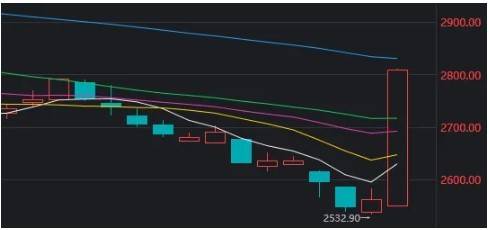
凤凰网财经讯 12月31日,三大股指集体高开,沪指涨0.09%,深成指涨0.17%,创业板指涨0.15%。先进 封装、存储器、消费电子、光伏题材走强,稳定币、商业航天、能源金属概念股走弱。北交所新股N蘅 东光上市涨逾1000%。 | | | | | 沪深京重要指数 | | | | | --- | --- | --- | --- | --- | --- | --- | --- | | 名称 * * ● | 咸新 | 张幅% | | 涨跌 涨跌家数 | | 用 | 现手 金额 | | 上证指数 | 3968.73 | 0.09 | 3.62 | 1047/784 | 0.03 | 350万 | 350万 62.61 7. | | 深证成指 | 13627.26 | 0.17 | 23.19 | 1542/867 | -0.01 | 808万 | 808万 119.18亿 | | 北证50 | 1449.56 | -0.07 | -1.08 | 149/87 | -0.15 | 17.5万 | 7.70 Z 17.5万 | | 创业板指 | 3247.74 | 0.15 | 4.84 | 760/445 | 0.0 ...
注意,泡沫快要破了!
Sou Hu Cai Jing· 2025-12-31 01:35
最近,以白银为首的贵金属市场简直"杀疯了 "。 27号之前,白银一天就涨了10%,国内的铂金、钯金期货更是接连涨停。结果转眼到29号,贵金属市场突然大幅跳水。 白银大跌9%,铂金、钯金暴跌14%,国内期货连续跌停,锡、铜等其他金属也跟着快速下跌。 这让我不禁想起1980年的白银泡沫,还有2011年的白银见顶。每一次,市场都在喊"这次不一样",但每一次,泡沫破裂的逻辑却出奇一致:当推动价格上 涨的故事被戳破,雪崩就开始了。 而现在, 经过这一轮疯狂之后 ,这个故事也已经摇摇欲坠 , 泡沫的裂痕 也越来越明显 : 从经验看,我们又回到了45年前那种"一盎司白银比一桶油还贵"的魔幻场景。 从技术指标看,白银已经严重超买,RSI远远超过70的阈值,冲到80以上;隐含波动率80%也逐渐接近大宗商品见顶时破百的疯狂水平。 现实中,已经有小道消息说白银空头被"绞杀",白银基金甚至出现"多杀多"的情况。 这一切 似乎都在暗示,这轮贵金属泡沫 已经来到 了 破裂 的 边缘 。 至少,已经 进入泡沫破裂的前夜 了! 然而,很多人根本没意识到, 这其实是一场人为制造的泡沫。 翻看各种分析白银等贵金属的逻辑,基本都绕不开下面三点: ...
白银从“非对称暴利”走进“高波动决胜局” 2026年将在泡沫争议中冲刺100美元?
Zhi Tong Cai Jing· 2025-12-31 01:12
Core Viewpoint - Silver prices have experienced significant volatility, with a recent peak above $84 followed by a sharp decline, raising concerns about a potential bubble in the market. However, analysts from Societe Generale caution against solely relying on quantitative models that suggest bubble behavior, emphasizing the need for a nuanced interpretation of price movements [1][2]. Group 1: Market Analysis - The recent surge in silver prices is attributed to a combination of macroeconomic factors, including expectations of lower interest rates from the Federal Reserve, structural supply constraints, and increased industrial demand driven by trends in electrification and renewable energy [3][4]. - The LPPLS model used by Societe Generale indicates that the current market state of silver may resemble a bubble, but analysts argue that this model should be viewed as a diagnostic tool rather than a definitive predictor of market behavior [2][3]. Group 2: Industrial Demand - The World Silver Association highlights that industrial demand for silver is being driven by significant growth in sectors such as AI data centers, electric vehicles, and renewable energy, with projected compound annual growth rates of 17% for the photovoltaic industry and 13% for the electric vehicle sector [4][5]. - The association forecasts that the demand for silver in industrial applications will continue to rise, particularly as global data center IT power capacity is expected to increase dramatically by 2025, necessitating more silver for essential components [5]. Group 3: Future Projections - Analysts predict that silver could reach $100 per ounce by 2026, supported by ongoing market dynamics and investment trends, although this target is viewed as an extreme bullish scenario [6][7]. - The dual role of silver as both an industrial metal and a store of value is attracting significant investment, with experts suggesting that the long-term bullish factors for silver remain strong [6][7].
2025年12月31日,国内黄金9995价格多少钱一克?
Sou Hu Cai Jing· 2025-12-31 00:46
芝商所上调保证金触发集中抛售 据交易所数据显示,截至8点30分,国内黄金(99.95%)最新报价为986.34元/克,上涨0.04%。 国际黄金价格报4350.4美元/盎司,下跌0.82%。 以下是今日对黄金价格走势影响较大的3个主要资讯: 央行购金长期支撑与短期避险降温交织 2025年全球央行前三季度净购黄金634吨,全年购金需求创纪录,95%的央行预期未来继续增持,为金 价提供长期支撑。但近期乌克兰和平谈判出现初步进展,短期避险情绪降温,叠加美元短线走强,共同 推动金价阶段性回调,长期上涨逻辑未被打破。 声明:市场有风险,投资需谨慎。本文为AI基于第三方数据生成,仅供参考,不构成个人投资建议。 来源:市场资讯 芝商所宣布上调贵金属等金属期货履约保证金超10%,叠加年末交易流动性稀薄,大量投资者赶在新规 生效前集中卖出平仓,引发12月29日国际贵金属价格大幅下跌,后续迎来阶段性反弹。此次调整被视为 打压短期过热行情的导火线,加剧多头被动减仓放大短期波动。 年末获利了结叠加技术超买回调 2025年黄金累计涨幅近70%,12月26日现货金价触及4549.92美元历史新高后,技术指标长期处于超买 区间。年末投资者 ...
国际金价、银价,大跌!
Sou Hu Cai Jing· 2025-12-31 00:42
分析人士: 芝商所上调保证金曾导致银价大跌 由于近期贵金属和工业金属期货价格快速上涨,大幅波动风险加剧,美国芝商所集团宣布全线上调包括 金、银、钯金、锂等在内的金属期货交易保证金。新规将于当地时间本周一收盘后生效,其中,黄金期 货保证金上调10%,白银期货上调约13.6%,铂金上调约23%。 大幅上调保证金将显著提升市场投机交易成本,部分投资者赶在新规生效前获利了结,引发国际金属期 货价格在29日出现多轮下跌。当天亚洲交易尾盘时段,国际贵金属价格跌幅再度扩大,国际金价跌破每 盎司4500美元整数关口。 截至北京时间29日15时35分, 分析人士指出,CME提高保证金的操作让人们回想到了历史上的相似情形。 但也有分析人士认为和以往投机驱动的周期不同,支撑此轮白银涨势的不仅因为白银是贵金属里相对可 负担的一种投资品,还因为它在工业领域具有不可替代性,就连马斯克也对此发声。近期,马斯克在旗 下社交平台X上针对银价上涨的现象发文称:这可不好,白银被用于许多工业生产环节。 纽商所明年2月交割的黄金期价报每盎司4497.9美元,跌幅为1.20%; 3月交割的白银期价报每盎司75.930美元,跌幅为1.65%; 1月交割的 ...