光伏设备及元器件制造

Search documents
10月中国物价指数释放积极信号,行业供需全方位改善
Di Yi Cai Jing· 2025-11-09 13:13
Group 1: Inflation Data - The core CPI increased by 1.2% year-on-year in October, marking the highest level since March 2024 and the sixth consecutive month of growth [4] - The overall CPI turned from a decrease of 0.3% in September to an increase of 0.2% in October, indicating a positive shift in consumer prices [2][5] - The PPI decreased by 2.1% year-on-year in October, but the decline has narrowed for three consecutive months, reflecting improvements in certain industry supply-demand relationships [6][8] Group 2: Economic Signals - The October inflation data signals a steady enhancement of economic vitality and the continuous release of domestic demand potential, supported by effective policies [1][4] - The recovery in core CPI suggests a robust recovery in domestic consumption, particularly in service consumption, indicating a solidifying price foundation [4][13] - The improvement in price data is seen as a comprehensive result of macroeconomic policy effects and balanced supply-demand relationships [4][8] Group 3: Future Outlook - The upcoming inflation trends are expected to show "strong food, weak energy, and stable core" characteristics, with potential for slight rebounds in food prices due to seasonal factors [5] - The government emphasizes the need for policies to further stimulate domestic demand and enhance consumer spending, which is crucial for economic growth [10][12] - The overall economic environment is projected to improve, with CPI gradually rising and PPI deflationary pressures easing, contributing to a more stable price level [13]

国家统计局发布数据!年内首次回正
Jin Rong Shi Bao· 2025-11-09 13:08
Group 1: CPI Analysis - In October, the Consumer Price Index (CPI) increased by 0.2% month-on-month and year-on-year, driven by policies to expand domestic demand and the impact of the National Day and Mid-Autumn Festival holidays [1][2] - The core CPI, excluding food and energy prices, rose by 1.2% year-on-year, marking the sixth consecutive month of growth [1][2] - Significant increases in vegetable prices, which rose by 4.3% month-on-month, contributed to the CPI's year-on-year improvement, with the decline in pork and fruit prices also easing [2][3] Group 2: PPI Analysis - The Producer Price Index (PPI) saw a month-on-month increase of 0.1% in October, marking the first rise of the year, despite a year-on-year decline of 2.1% [1][4] - The improvement in supply-demand relationships in certain industries, driven by anti-involution policies, has supported price increases in sectors such as coal, cement, and photovoltaic equipment [4][5] - Specific price increases included a 1.6% rise in coal mining and washing, a 0.8% increase in coal processing, and a 0.6% rise in photovoltaic equipment manufacturing [4][5] Group 3: Future Outlook - Analysts expect the PPI to steadily recover year-on-year by 2026, while the CPI is anticipated to remain at low levels, indicating a moderate inflationary trend [6]
黄金有色影响较大,物价有待继续观察
GOLDEN SUN SECURITIES· 2025-11-09 12:38
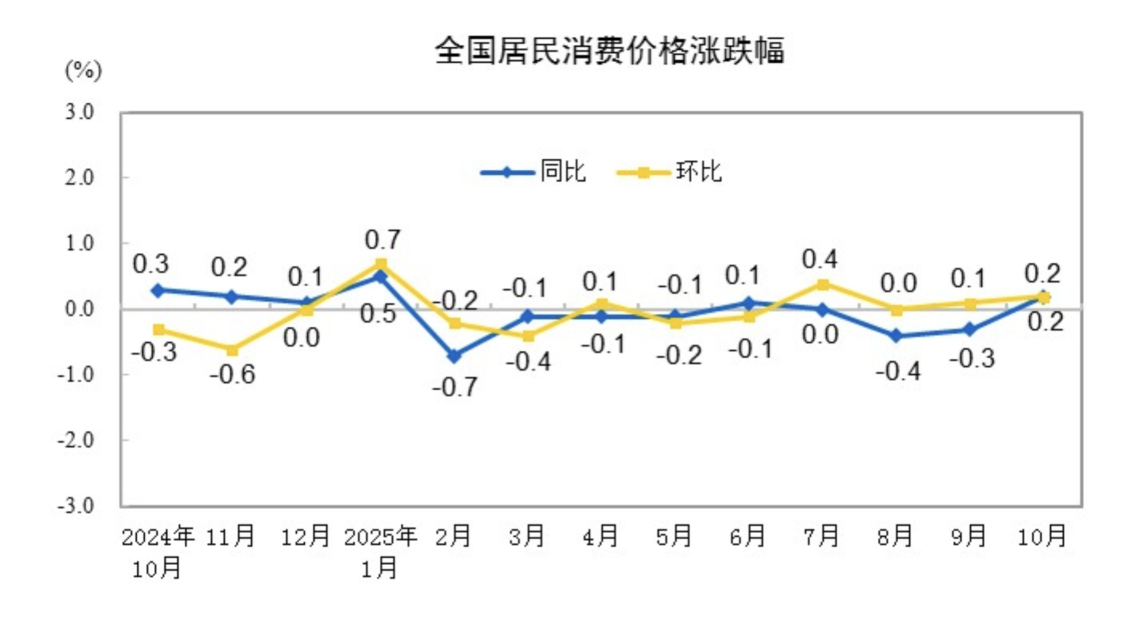
Group 1: Inflation Trends - In October, the Consumer Price Index (CPI) shifted from a decrease of 0.3% to an increase of 0.2%, marking the highest value since February of this year, with a seasonal level higher than the previous two years [1][8] - The Producer Price Index (PPI) saw a narrowing decline of 0.2 percentage points to -2.1%, marking the third consecutive month of narrowing [1][8] - Gold prices significantly impacted both CPI and PPI, with domestic gold futures prices increasing by 52.8% year-on-year, a substantial rise of 9.5 percentage points compared to September [2][12] Group 2: Food Prices and Core CPI - Food prices decreased by 2.9%, with the decline narrowing by 1.5 percentage points from the previous month, affecting CPI by approximately 0.54 percentage points [2][16] - Core CPI rose by 1.2%, the highest since March 2024, with a month-on-month increase of 0.2% [2][9] - The increase in core CPI was primarily driven by gold prices, with other goods and services related to gold also showing a significant year-on-year increase of 12.8% [2][12] Group 3: PPI and Industry Performance - The PPI for October showed a year-on-year decline of 2.1%, with notable performance in the non-ferrous industry, where prices increased by 5.3% and 2.4% for mining and metal processing, respectively [3][21] - The narrowing decline in PPI was attributed to ongoing capacity management and increased demand for coal mining and washing, with a reduction in the decline of 1.2 percentage points compared to the previous month [3][21] - Life goods PPI decreased by 1.4%, with the decline narrowing by 0.3 percentage points from the previous month [3][21] Group 4: Market Outlook and Strategy - The rise in prices is influenced by multiple factors, including the increase in gold prices and weather-related impacts on vegetable prices, leading to an unexpected overall price increase [4][23] - The bond market is entering a recovery phase, with a recommendation for a barbell strategy to manage risks while benefiting from potential interest rate declines [4][25] - The 10-year government bond yield is expected to recover to a range of 1.6%-1.65% by the end of the year [4][25]
10月份CPI同比上涨0.2% PPI同比降幅持续收窄
Yang Shi Wang· 2025-11-09 11:54
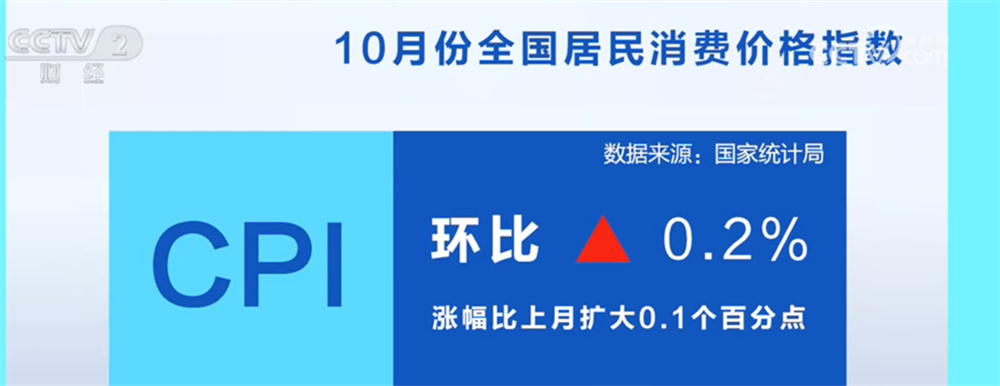
Group 1 - In October, the Consumer Price Index (CPI) increased by 0.2% year-on-year, marking a shift from decline to growth, and a month-on-month increase of 0.2%, with the growth rate expanding by 0.1 percentage points compared to the previous month [1] - The core CPI, excluding food and energy prices, rose by 1.2% year-on-year, with the growth rate expanding for the sixth consecutive month [1] Group 2 - In October, the Producer Price Index (PPI) increased by 0.1% month-on-month, marking the first increase of the year, while the year-on-year decline narrowed by 0.2 percentage points for the third consecutive month [1] - The continuous improvement in supply and demand relationships in certain domestic industries has led to price increases in key sectors such as coal processing and photovoltaic equipment manufacturing, with prices rising for over two consecutive months [1]
【新华解读】10月份我国物价走势向好 释放“内需改善”积极信号
Xin Hua Cai Jing· 2025-11-09 11:04
Core Insights - The Consumer Price Index (CPI) in China has turned from a decline to an increase year-on-year, with the core CPI rising for the sixth consecutive month, indicating a positive shift in domestic demand [1][2] - The Producer Price Index (PPI) has shown its first month-on-month increase this year, signaling improvements in the upstream production sector [1][4] CPI Analysis - In October, the CPI increased by 0.2% month-on-month, slightly above seasonal levels, and turned from a 0.3% decline to a 0.2% increase year-on-year [1][2] - The core CPI, excluding food and energy, rose by 1.2% year-on-year, marking a continuous expansion for six months [1][2] - Key contributors to the CPI increase include rising prices in food, services, and industrial consumer goods [2] PPI Analysis - The PPI increased by 0.1% month-on-month in October, marking its first rise this year, while the year-on-year decline narrowed to 2.1% [1][4] - Factors such as improved market supply-demand relationships and price recoveries in key industries contributed to the PPI's positive change [4] Sector-Specific Insights - Service prices rose by 0.2% month-on-month and 0.8% year-on-year, with industrial consumer goods prices increasing by 0.3% month-on-month and 2.0% year-on-year [2][3] - The jewelry sector saw significant price increases, with gold and platinum jewelry prices rising by 50.3% and 46.1% year-on-year, respectively [2] Future Outlook - Experts predict that the CPI is likely to continue rising, while the PPI's year-on-year decline is expected to narrow further, with potential for positive growth in the first half of next year [5]
PPI环比转正,谁是拉手?:——2025年10月价格数据点评
EBSCN· 2025-11-09 10:53
Group 1: CPI Insights - In October, the CPI year-on-year increased by 0.2%, up from -0.3% in the previous month, exceeding market expectations of -0.1%[2][4] - The core CPI year-on-year growth rose to 1.2%, compared to 1.0% in the previous month[2][4] - Food prices saw a narrowing year-on-year decline from -4.4% to -2.9%, with a month-on-month increase of 0.3%, surpassing the seasonal average decline of -0.4%[4][5] Group 2: PPI Insights - The PPI year-on-year decline narrowed to -2.1% from -2.3%, while the month-on-month PPI increased by 0.1%, marking the first increase of the year[2][6] - The improvement in PPI is attributed to enhanced industrial supply-demand relationships and rising international metal prices, with copper mining prices increasing by 5.3% month-on-month[6][7] - The prices in the coal mining sector rose by 1.6% month-on-month, indicating a recovery in upstream industries[6][7] Group 3: Future Outlook - CPI is expected to continue its upward trend in Q4, potentially reaching an annual average of 0.7% in 2026, driven by recovering food prices and ongoing consumption policies[8][9] - The PPI's year-on-year decline is anticipated to continue narrowing, although the timeline for a return to positive growth remains uncertain due to slow supply-side adjustments[9][10]
“反内卷”见效?核心CPI涨幅持续半年扩大,但猪肉价格跌跌不休
Jing Ji Guan Cha Bao· 2025-11-09 10:32
Group 1: CPI and Core CPI Trends - In October, the national CPI shifted from a year-on-year decrease of 0.3% in September to an increase of 0.2% [1] - The core CPI, excluding food and energy prices, rose by 1.2% year-on-year, marking the highest increase since March 2024 and the sixth consecutive month of growth [1] - Food prices decreased by 2.9%, with the decline narrowing by 1.5 percentage points compared to the previous month, impacting the CPI by approximately 0.54 percentage points [1] Group 2: Pork Price Dynamics - The price of pork has seen significant year-on-year declines, with decreases of 8.5%, 9.5%, 16.1%, 17.0%, and 16% from June to October [1] - The National Development and Reform Commission reported that pig farming is currently facing a loss of 192.70 yuan per head due to low pork prices [2] - Despite efforts to control production capacity, the actual reduction in breeding sows has been limited, with a total of 40.35 million breeding sows reported as of the end of September, which is 103.5% of the normal holding level [2] Group 3: PPI Trends - The PPI decreased by 2.1% year-on-year in October, continuing a trend of negative growth for 37 consecutive months, although the decline has narrowed by 0.2 percentage points compared to the previous month [2] - The PPI experienced a month-on-month increase of 0.1% in October, marking the first increase of the year, attributed to improved supply-demand relationships in certain industries and the transmission of international commodity prices [2][3] - Key industries are seeing a reduction in price declines due to ongoing capacity governance and safety regulation efforts, with notable improvements in coal mining and manufacturing sectors [3]
CPI由降转涨 PPI降幅收窄——透视10月物价数据
Xin Hua Wang· 2025-11-09 08:51
Core Insights - The Consumer Price Index (CPI) increased by 0.2% year-on-year and month-on-month in October, marking a shift from a 0.3% decline in the previous month [1][2] - The Producer Price Index (PPI) decreased by 2.1% year-on-year, but the decline narrowed by 0.2 percentage points compared to the previous month, continuing a trend of narrowing for three consecutive months [1][6] CPI Analysis - The CPI's year-on-year increase of 0.2% is attributed to effective domestic demand policies and the impact of the National Day and Mid-Autumn Festival holidays [1] - Core CPI, excluding food and energy, rose by 1.2% year-on-year, marking the sixth consecutive month of growth [1] - Service prices increased by 0.8%, with a notable rise in accommodation, airfare, and tourism prices due to heightened travel demand during the holidays [2][3] PPI Analysis - The PPI experienced its first month-on-month increase of 0.1% this year, driven by improved supply-demand dynamics in certain industries [5] - Year-on-year, the PPI's decline of 2.1% reflects a narrowing trend, with specific industries like coal mining and photovoltaic equipment manufacturing showing reduced price declines [6] - Prices in sectors such as art and craft manufacturing and sports equipment manufacturing saw significant increases, indicating a positive response to consumption-boosting policies [6]
年内首次转正!国家统计局发布重要数据
天天基金网· 2025-11-09 07:00
Group 1: CPI Analysis - In October, the Consumer Price Index (CPI) increased by 0.2% both year-on-year and month-on-month, with the core CPI (excluding food and energy) rising by 1.2%, marking the highest increase since March 2024 [3][7][8] - The rise in CPI was influenced by policies aimed at expanding domestic demand and the effects of the National Day and Mid-Autumn Festival holidays [4][6] - Food prices increased by 0.3% in October, contrary to the seasonal expectation of a decline, with significant price rises in fresh vegetables, lamb, fresh fruits, and seafood [7][8] Group 2: PPI Analysis - The Producer Price Index (PPI) saw a month-on-month increase of 0.1% in October, marking the first positive change of the year, while the year-on-year decline was 2.1%, a reduction of 0.2 percentage points from the previous month [8][10] - The improvement in supply-demand relationships in certain industries contributed to the price increases, particularly in coal mining and photovoltaic equipment manufacturing [10][11] - The prices of non-ferrous metals rose significantly due to international price increases, with the mining sector seeing a month-on-month rise of 5.3% [10][11]

0.2%、0.1%,上涨!从10月份CPI和PPI数据透视经济发展趋势
Yang Shi Wang· 2025-11-09 06:39
Group 1 - In October, the Consumer Price Index (CPI) increased by 0.2% month-on-month and year-on-year, driven by policies to expand domestic demand and the impact of the National Day and Mid-Autumn Festival holidays [1][3] - The CPI's month-on-month increase of 0.2% represents an expansion of 0.1 percentage points compared to the previous month, with significant price increases in accommodation, air tickets, and travel services due to heightened travel demand during the holidays [3] - The core CPI, excluding food and energy prices, rose by 1.2% year-on-year, marking the highest increase since March 2024 and continuing a trend of six consecutive months of growth [3] Group 2 - The Producer Price Index (PPI) saw a month-on-month increase of 0.1%, marking the first rise of the year, influenced by improved supply-demand relationships in certain domestic industries and the transmission of international commodity prices [6] - Key industries such as photovoltaic equipment manufacturing, battery manufacturing, and automotive manufacturing experienced a narrowing of year-on-year price declines, indicating a positive shift in market conditions [6] - The construction of a modern industrial system and the orderly release of consumption potential have led to price increases in industries such as non-ferrous metal smelting and rolling processing, electronic materials manufacturing, and shipbuilding [6]