
新能源

Search documents
地方两会时间开启 谋划2026年稳增长“施工图”
Xin Hua She· 2026-01-28 13:51
Core Insights - Local governments in regions such as Zhejiang, Beijing, and Guangdong are outlining their development plans for the next five years, focusing on technology innovation, modern industrial systems, and effective demand potential [1][2] Economic Growth Targets - Various regions have set their economic growth targets for 2026, with Tianjin and Guangdong aiming for 4.5%, Beijing and Henan around 5%, Hebei above 5%, and Zhejiang between 5% and 5.5% [1] Consumer Spending and Service Sector - Key strategies include promoting consumption upgrades, enhancing service consumption potential, and fostering new growth points in consumption. Beijing plans to support education, health, and elderly care services, while Tianjin aims to improve service supply in areas like health and home care [2] Technology Innovation and Industrial Development - Strengthening technology innovation and building a modern industrial system are priorities. Guangdong aims to create a globally influential industrial technology innovation center, while Beijing focuses on accelerating the application of major technological achievements [2][3] Artificial Intelligence Development - Several regions are emphasizing the promotion of artificial intelligence applications. Zhejiang targets a revenue growth of over 20% in its AI core industry, projecting revenues to exceed 800 billion yuan by 2026 [3] Emerging Industries - Regions are working to enhance their modern industrial systems by developing new emerging industries such as new materials, renewable energy, and biomedicine. Zhejiang and Guangdong are both focused on expanding these sectors [4] Policy Support and Economic Growth - Local governments are committed to expanding domestic demand and accelerating the development of new productive forces, combining policy support with innovation to stimulate new economic growth [5]
江苏镇江:破立之间绘就绿色发展新图景
Xin Lang Cai Jing· 2026-01-28 13:39
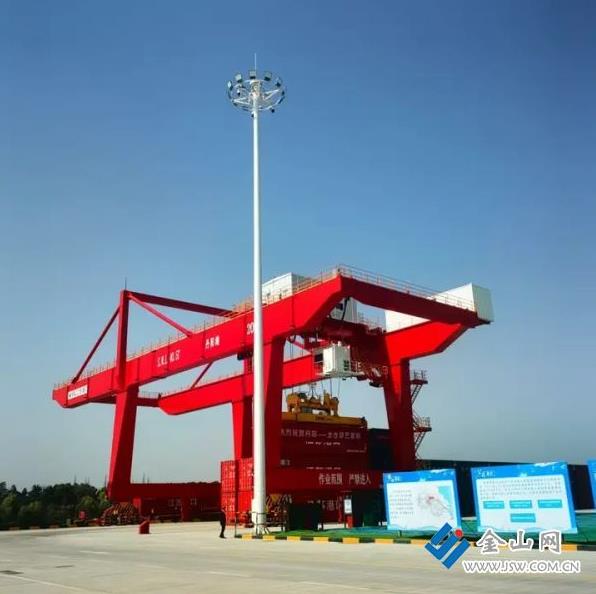
龙门吊将重30多吨的集装箱缓缓提起、移动,轻轻放上"腾运078号"货轮……随着丹阳港的正式运营, 江苏省镇江市无内河集装箱运输的历史结束了,这也成为镇江市运输结构"减重向轻"的生动体现。 这只是过去一年镇江绿色低碳发展中的一个场景。在"十四五"收官之年,面对发展与减排的考题,镇江 市交出了一份颇具辩证思维的答卷:既做"减法",严控煤炭消费、推动产业焕新;更做"加法"与"乘 法",加速新能源布局、培育新质生产力、创新体制机制。用一场系统性的绿色变革,重塑城市发展底 色。 能源的"破"与"立" 能源是碳减排的主战场,其转型犹如"大象转身"。在镇江,这场转身有壮士断腕的"破",更有敢做敢为 的"立"。 在孚能科技(镇江)有限公司的车间里,新一代动力电池生产线高速运转。这家企业不仅是新能源产业 链上的关键一环,其申报的省级前沿技术研发项目也获得了重点支持。公司研发负责人表示,持续的科 技攻关是提升产品竞争力、降低生产能耗的核心。 这正是镇江市产业绿色转型的缩影。一方面,对化工、冶金等传统产业深入开展节能降碳诊断,实施淘 汰落后、设备更新等"五大行动",2025年推动10家制造业企业获批用于设备更新的国债资金超2亿元, ...

【“十五五”开好局起好步】江苏徐州:从“滚石上山”到“骏马无疆”,解码一座老工业城市的“策马”新生
Xin Lang Cai Jing· 2026-01-28 13:39
Core Viewpoint - Xuzhou is actively transforming its industrial landscape by integrating traditional manufacturing with innovative technologies, aiming for a modernized industrial system and sustainable growth. Group 1: Industrial Transformation - Xuzhou is leveraging global-leading crane technology and digital production lines to enhance traditional manufacturing with smart capabilities [2] - The city is constructing a project with an annual output of 2 million automotive thermal management products, focusing on green energy [2] - A total of 331 related enterprises are forming a future industrial cluster in Xuzhou, leading to continuous breakthroughs in various sectors [2] Group 2: Strategic Industrial Shift - Xuzhou is decisively reducing reliance on traditional coal and steel industries to create space for emerging sectors [5] - The city views its traditional industries not as burdens but as opportunities for efficiency improvements [6] - Significant upgrades are being made in traditional sectors, such as the implementation of advanced technologies in heavy machinery and energy [7] Group 3: Emerging Industries - Xuzhou has developed a complete photovoltaic industry chain and established the largest safety equipment manufacturing base in the country [9] - By 2025, the revenue scale of future industries in Xuzhou is projected to reach 20.42 billion [9] - The city is focusing on advanced sectors like intelligent manufacturing, deep earth development, hydrogen energy, and biomanufacturing [9] Group 4: Innovation Ecosystem - Xuzhou is building an innovation ecosystem that emphasizes efficient transformation and application of technological advancements [10] - The city has established 5 national and 30 provincial innovation platforms in cutting-edge fields [12] - Efforts are being made to enhance the conversion of scientific research into practical applications through various initiatives [12] Group 5: Supportive Environment - Xuzhou is optimizing its business environment by implementing policies that reduce administrative burdens and enhance service efficiency [14] - Financial products tailored to support technology development and green transformation are being introduced [15] - By the end of 2025, the total number of business entities in Xuzhou is expected to exceed 1.5 million, reflecting a robust entrepreneurial ecosystem [15] Group 6: Regional Collaboration - As a regional hub, Xuzhou is promoting industrial collaboration and functional complementarity to enhance its manufacturing reputation [18] - The city is actively participating in initiatives like the Belt and Road and the Yangtze River Delta integration to expand its market reach [18]
新经济、新动能行业洞察系列(一):新经济工业行业进阶中的质效观察
Southwest Securities· 2026-01-28 13:25
Group 1: New Economy Overview - The "new economy" is characterized by information technology and globalization, driven by technological and institutional innovations, representing a profound transformation in economic structure and development methods[2] - In 2024, the value added of the "three new" economies (new industries, new business formats, new models) is projected to reach 24.29 trillion yuan, accounting for 18.01% of GDP, an increase of 0.43 percentage points from the previous year[10] - The third industry constitutes 54.7% of the "three new" economy, highlighting the active role of the new economy in the service sector[10] Group 2: Industrial Sector Insights - The report constructs a monitoring system for the industrial sector's economic climate, focusing on key areas such as new energy, new materials, and aerospace[2] - The industrial sector's economic climate is stabilizing and entering a new cycle, with the manufacturing PMI showing recovery trends since 2020, particularly in high-tech industries[2] - Key industries are experiencing differentiated growth, with the communication equipment sector rebounding strongly, while the computer and home appliance sectors are still seeking a bottom[2] Group 3: Risk Factors - Potential risks include fluctuations in domestic and international economic cycles, adjustments in industrial policies, and geopolitical risks[2]
五年间 甘肃经济增速连续16季度跑赢全国 综合实力实现快速跃升
Zhong Guo Fa Zhan Wang· 2026-01-28 13:19
Core Insights - Gansu Province has shown significant economic growth over the past five years, with a GDP reaching 1.36975 trillion yuan, representing a 33.6% increase compared to the end of the 13th Five-Year Plan [1] Economic Performance - Gansu's economic growth rate has exceeded the national average for 16 consecutive quarters since 2022 [1] - The added value of industrial enterprises above designated size has ranked in the top ten nationally for 30 consecutive months, with the number of such enterprises increasing from 1,832 to 3,382 [1] Industrial Development - Industrial investment has maintained double-digit growth for 54 months, contributing 36.1% to the province's economic growth [1] - The new energy sector has experienced rapid development, with total installed capacity reaching 80.416 million kilowatts, a 2.4-fold increase, and the establishment of a complete manufacturing industry chain for photovoltaic, wind, and thermal power [1] Infrastructure and Technology - The "Green Electricity from Gansu" initiative is expanding, with the operation of the "Gansu Electricity to Shandong" project and the commencement of the "Gansu Electricity to Zhejiang" project [1] - The data center cluster in Qingyang has rapidly developed, achieving a computing power scale of 114,000 P, contributing to the emergence of a "green computing power new city" in the Loess Plateau [1] Strategic Direction - Gansu is actively transforming from an old industrial base to a new one, focusing on quality and strength in its economic development [1]
河北林昌远景新能源科技有限公司成立,注册资本1000万人民币
Sou Hu Cai Jing· 2026-01-28 12:54
天眼查显示,近日,河北林昌远景新能源科技有限公司成立,法定代表人为何江华,注册资本1000万人 民币,由河北昌京新能源科技有限公司全资持股。 序号股东名称持股比例1河北昌京新能源科技有限公司100% 经营范围含新兴能源技术研发;技术服务、技术开发、技术咨询、技术交流、技术转让、技术推广;信息 技术咨询服务;风力发电技术服务;太阳能发电技术服务;储能技术服务(除依法须经批准的项目外,凭营 业执照依法自主开展经营活动)许可项目:发电业务、输电业务、供(配)电业务(依法须经批准的项 目,经相关部门批准后方可开展经营活动,具体经营项目以批准文件或许可证件为准) 企业名称河北林昌远景新能源科技有限公司法定代表人何江华注册资本1000万人民币国标行业电力、热 力、燃气及水生产和供应业>电力、热力生产和供应业>电力生产地址河北省石家庄市裕华区祥泰路66 号中冶盛世广场D区商业办公1913企业类型有限责任公司(非自然人投资或控股的法人独资)营业期限 2026-1-27至无固定期限登记机关裕华区市场监督管理局 来源:市场资讯 ...
广东加快构建现代化产业体系
Yang Shi Wang· 2026-01-28 12:20
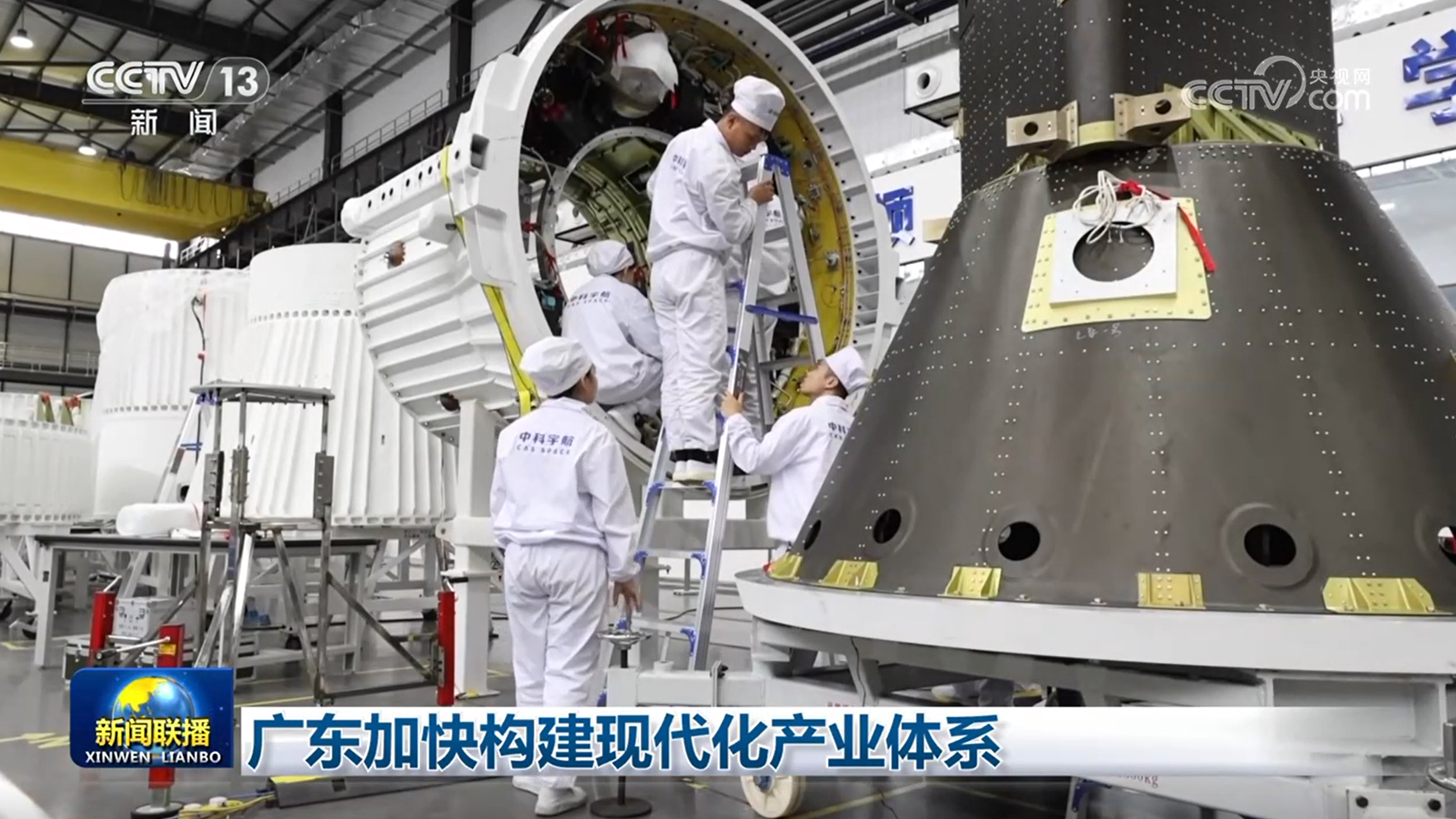
Core Viewpoint - Guangdong is accelerating the construction of a modern industrial system in the first year of the 14th Five-Year Plan, focusing on the transformation of new technologies, products, models, and business formats to foster new productive forces [1]. Group 1: Technological Innovation and Industrial Upgrading - Since the beginning of the year, Guangdong has been leading with technological innovation, optimizing and upgrading traditional industries while actively developing emerging industries and planning for future industries [3]. - In Zhuhai, traditional air conditioning production lines have been upgraded to leading smart factories, doubling production efficiency [3]. - In Guangzhou, autonomous vehicles are seen on major roads every 10 minutes [3]. - Shenzhen has opened over 100 application scenarios for intelligent robots, with approximately 65,000 related enterprises [3]. Group 2: Industrial Growth and Digital Transformation - During the 14th Five-Year Plan, the revenue of large-scale industrial enterprises in Guangdong is expected to rise from 14.9 trillion yuan in 2020 to over 19 trillion yuan by 2025, with several pillar industries ranking first nationwide [5]. - The 14th Five-Year Plan period will see Guangdong accelerating the construction of a stronger modern industrial system through industrial layout, financial support, and policy guarantees [5]. - The province aims to promote the digital transformation of 4,000 large-scale industrial enterprises annually and cultivate 100 national-level green factories [5]. Group 3: Focus Areas and Future Plans - Guangdong will implement key plans for intelligent robots, addressing challenges from technology research to large-scale production and application in commercial services and healthcare [5]. - The province is planning to establish key platforms such as the Global Artificial Intelligence Industry Cooperation Center in the Guangdong-Hong Kong-Macao Greater Bay Area and develop three core industrial clusters in Guangzhou, Shenzhen, and Dongguan [5]. - This year, Guangdong will introduce a provincial action plan for cultivating new tracks, focusing on fields like new energy, new materials, intelligent robots, and smart connected vehicles to create more trillion-level emerging industrial clusters [7].
专访远景科技孙捷:打造零碳园区,需依托新型能源系统等三大体系
2 1 Shi Ji Jing Ji Bao Dao· 2026-01-28 11:59
Core Viewpoint - The construction of national-level zero-carbon parks is a transformative initiative aimed at reshaping industrial forms, upgrading park functions, and transitioning to green development, with a focus on utilizing clean energy and surrounding green power sources [1][2]. Group 1: Zero-Carbon Park Construction - The first batch of national-level zero-carbon parks includes six parks, such as Cangdong Economic Development Zone in Hebei and Shenyang Sino-German High-end Equipment Manufacturing Industrial Park in Liaoning, which are required to complete construction by 2027 [1]. - The construction of zero-carbon parks necessitates collaboration among park management, enterprises, and professional service institutions [1][2]. - The zero-carbon park concept encourages the use of clean energy and aims to supply green electricity directly to the parks through wind, solar, and energy storage [2][3]. Group 2: Three Major Systems - The zero-carbon industrial park relies on three major systems: a new energy system focused on zero-carbon, a zero-carbon digital management system, and a green industrial cluster [3]. - The new energy system emphasizes a high proportion of renewable energy and direct green electricity supply, integrating renewable generation, energy storage, and grid management [3]. - The digital management system utilizes AI and IoT technologies to track and manage energy consumption and carbon emissions in real-time [3][5]. Group 3: Implementation of Indicators - The clean energy ratio in the Ordos zero-carbon industrial park has reached 100%, with 80% of electricity sourced from local wind and solar projects [4]. - The park is developing models to incorporate new indicators such as waste heat and pressure utilization rates into its management platform [4]. - The AI model is being enhanced to optimize resource utilization across various dimensions, including solid waste and industrial water [5]. Group 4: Green Electricity Direct Connection - The green electricity direct connection policy allows for point-to-point supply of green electricity to parks or enterprises, with a limit of 20% electricity being fed back to the grid [6][7]. - The company is exploring new models for green electricity direct connection in various provinces, with some projects already listed for public notice [6]. - The choice between green electricity direct connection and source-network-load-storage projects impacts investment returns, as the latter does not allow for electricity to be fed back to the grid [7]. Group 5: Regional Challenges and Strategies - Different regions face varying challenges in establishing zero-carbon parks, with eastern coastal areas experiencing more significant obstacles compared to the resource-rich northwest [8][9]. - Traditional energy regions must develop zero-carbon parks and provide green electricity to retain and upgrade local industries [8][9]. - Strategies for high-challenge areas include promoting local green electricity supply systems, exploring cross-regional green electricity trading, and maximizing energy efficiency through recycling and resource utilization [9].
动力源:预计2025年亏损2.7亿元-2.9亿元
Sou Hu Cai Jing· 2026-01-28 11:45
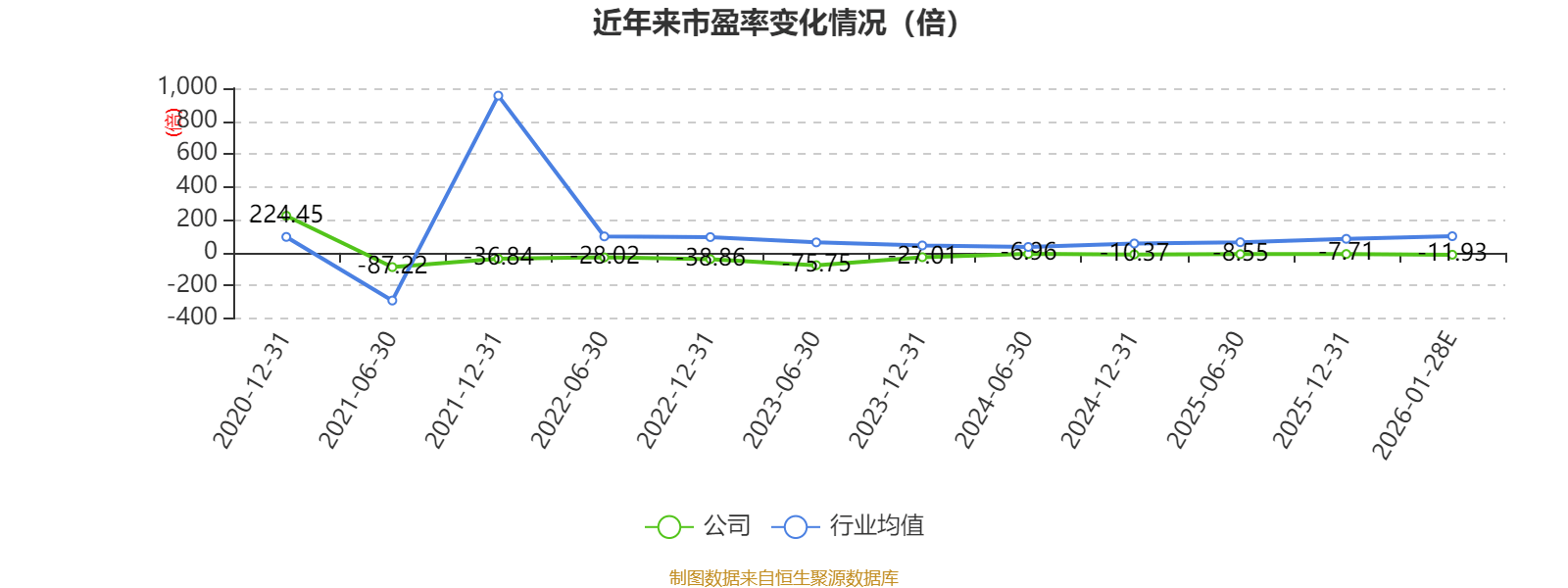
Core Viewpoint - The company is experiencing a decline in revenue and profit due to complex international economic conditions, disruptions in international business, and increased operational costs from layoffs, while it is gradually recovering its product delivery in the second half of the year [7]. Group 1: Business Overview - The company has expanded its main business focus from data communication to include green transportation and energy conversion/utilization, forming three core business areas: data communication, green transportation, and new energy [7]. - The company is actively adjusting its business structure and optimizing personnel configuration, which has led to an increase in management expenses, specifically a severance benefit increase of approximately 11 million yuan [7]. Group 2: Financial Performance - The company reported a decrease in annual revenue compared to the previous year, despite a rise in revenue in the second half of the year due to the resumption of product deliveries [7]. - The company has incurred an increase in financing costs of approximately 12 million yuan due to restrictions from international trade friction [7]. - The company has provisioned for credit impairment losses on accounts receivable and asset impairment losses on fixed assets, intangible assets, and inventory, totaling approximately 70 million yuan, based on preliminary estimates [7]. Group 3: Revenue and Profit Trends - Historical total revenue and net profit figures indicate fluctuations, with projections showing a decline in revenue and net profit growth rates for the upcoming years [8][9].

新乡中宝恒元新能源有限公司成立,注册资本1000万人民币
Sou Hu Cai Jing· 2026-01-28 11:39
Core Viewpoint - A new company, Xinxiang Zhongbao Hengyuan New Energy Co., Ltd., has been established with a registered capital of 10 million RMB, fully owned by Henan Zhongbao Hengyuan Technology Co., Ltd. [1] Company Overview - Company Name: Xinxiang Zhongbao Hengyuan New Energy Co., Ltd. [1] - Legal Representative: Shen Yingchao [1] - Registered Capital: 10 million RMB [1] - Shareholder: Henan Zhongbao Hengyuan Technology Co., Ltd. holds 100% [1] - Company Type: Limited liability company (wholly owned by a legal entity) [1] - Business Duration: Until January 27, 2026, with no fixed term thereafter [1] - Registration Authority: Changyuan Market Supervision Administration [1] Business Scope - The company’s business scope includes: - Technical services, development, consulting, exchange, transfer, and promotion [1] - Research and development of emerging energy technologies [1] - Sales of new energy power equipment and battery-related products [1] - Energy storage technology services [1] - Sales and repair of various measuring instruments and electronic measuring devices [1] - Development and sales of software, including artificial intelligence and blockchain-related software [1] - Operation of electric vehicle charging infrastructure [1] - Sales and leasing of charging control equipment and photovoltaic power generation equipment [1] - Installation services for general mechanical equipment [1]