
生猪养殖

Search documents
下一波的线索是什么?股市不会止步于此,外资继续流入
Zheng Quan Shi Bao Wang· 2025-09-22 11:17
Group 1 - The overall industry selection framework focuses on resources, new productive forces, and globalization [2] - Resource stocks are shifting from cyclical attributes to dividend attributes due to supply constraints and global geopolitical expectations [2] - The globalization of leading Chinese manufacturing companies is expected to convert market share advantages into pricing power and profit margin improvements [2] Group 2 - The Chinese stock market is expected to continue its upward trajectory, driven by the demand for assets and capital market reforms aimed at improving investor returns [3] - The recent communication between Chinese and U.S. leaders indicates a stabilization of short-term risk outlook [3] - The upcoming reforms in the capital market, including the launch of the growth tier on the Sci-Tech Innovation Board, are anticipated to accelerate market adjustments [3] Group 3 - The current market remains in a consolidation phase since September, with a positive funding environment supporting the ongoing trend [4] - The key factor for the continuation of the positive feedback from the funding side is the profitability effect [4] - Focus areas for investment include domestic computing power chains, innovative pharmaceuticals, robotics, chemicals, batteries, and leading consumer stocks [4] Group 4 - The three main drivers of the current upward trend in A-shares remain unchanged, with a focus on low penetration sectors [5] - Attention is drawn to solid-state batteries, AI computing power, humanoid robots, and commercial aerospace [5] - The market is still in a bull market phase, with expectations for further growth [5] Group 5 - There has been significant inflow of both domestic and foreign capital into the Chinese stock market, with a notable increase in passive fund inflows [6] - The reduction in positions in high-priced options indicates a cautious outlook for the Shanghai Composite Index [6] - Overall, the long-term outlook for the Shanghai Composite Index remains bullish [6] Group 6 - The market is currently experiencing a rotation among sectors, with a focus on individual stocks rather than indices [7] - Key areas of interest include humanoid robots, AI, new energy, and innovative pharmaceuticals [7] - The market is expected to continue its rotation while maintaining a high level of focus on individual stock performance [7] Group 7 - The current market conditions suggest that a bull market driven by improving corporate earnings is in the making [8] - Opportunities are identified in upstream resources, capital goods, and raw materials due to improved operating conditions [8] - Domestic demand-related sectors are also expected to present opportunities as earnings recover [8] Group 8 - The market is transitioning from a focus on existing stocks to an expansion of new opportunities driven by incremental capital [9] - The emphasis is on identifying opportunities based on industry trends and economic conditions rather than merely switching between high and low positions [9] - The market is expected to see a broadening of investment opportunities as new capital flows in [9] Group 9 - The potential for low-position stocks to experience a rebound is increasing as the market approaches the fourth quarter [10] - Historical trends indicate that stocks that performed well in the third quarter may not continue their momentum into the fourth quarter [10] - The focus is on cyclical stocks and those benefiting from global pricing resources as key areas for investment in the upcoming quarter [10] Group 10 - The recovery of free cash flow in export-advantaged manufacturing sectors is anticipated due to policy changes and global re-industrialization [11] - The valuation system for China's advantageous manufacturing sectors is expected to undergo systematic restructuring [11] - The return of global capital to China is likely to drive a bullish trend in high-end manufacturing sectors [12]

“重估牛”系列之出清线索:六问六答:“反内卷”行情交易到哪儿了?
Changjiang Securities· 2025-09-22 10:44
Core Insights - The "anti-involution" policy has shown a differentiated catalytic effect on the market, with significant excess returns in most industries like batteries relative to the CSI 300 index, while the coal industry has not outperformed the index [2][5][15] - The implementation of the "anti-involution" policy has led to a recovery in factory prices from the supply side, but this has not yet translated to consumer prices at the residential level [2][22] - Since July, prices of polysilicon and thermal coal have stabilized and rebounded significantly, indicating the impact of the "anti-involution" policy on price recovery [2][34] Market Performance - From July 1 to September 19, 2025, the battery sector saw a 41.13% increase, while the coal sector only increased by 7.36%, compared to a 14.38% rise in the CSI 300 index [15][16] - The coal production in August was 390 million tons, a year-on-year decrease of 3.2%, while coal prices have stabilized, contributing to the coal sector's recent performance [5][14] Policy Developments - Since June, new "anti-involution" policies have been introduced, emphasizing self-discipline and legal norms to promote capacity optimization, with more noticeable effects in quantifiable areas [6][16] - The effectiveness of these policies may vary, with some sectors lacking quantitative policy support, leading to temporary inefficiencies in supply contraction [6][16] Inflation Data - The Producer Price Index (PPI) has shown signs of recovery, with an August year-on-year decline of 2.9%, a narrowing of 0.7 percentage points from the previous month [22][27] - The Consumer Price Index (CPI) has seen an expanded year-on-year decline, primarily due to a drop in consumer goods prices, with food and beverage prices down by 2.5% [27][31] Industry Price Recovery - Since July, polysilicon prices have shown a significant upward trend, reaching an average price of 50 yuan per kilogram by September 19, 2025 [34][38] - Other materials have experienced short-term price increases followed by a return to a downward trend, indicating a mixed recovery across sectors [34][36] Future Outlook - The market is expected to continue on a "slow bull" trend, driven by a revaluation of Chinese assets, with a focus on sectors benefiting from supply-side improvements and policy expectations [7][45] - Key sectors to watch include metals, transportation, chemicals, lithium batteries, photovoltaic, and pig farming, which are anticipated to benefit from the "anti-involution" policies [7][41][45]
国泰海通|农业:猪价跌收储启,9月关注供需博弈
国泰海通证券研究· 2025-09-22 09:40
Group 1: Swine Farming - The national average price of pork has dropped to 13.2 yuan/kg, a decrease of 0.36 yuan/kg week-on-week, attributed to increased supply and weak demand [1] - Supply is expected to face pressure in September due to slow slaughter progress before mid-September and early slaughter after the National Day holiday, leading to overall price pressure [1] - The government will begin a frozen pork reserve of 15,000 tons on September 23, and the effectiveness of this reserve in stabilizing prices will depend on the volume and frequency of storage [1] Group 2: Agriculture and Seed Industry - The Ministry of Agriculture and Rural Affairs has released a new batch of genetically modified corn and soybean varieties, including 96 corn and 2 soybean varieties, with companies like Longping High-Tech and Dabeinong receiving approvals [2] - Most new varieties exhibit pest resistance and herbicide tolerance, with some showing yield increases of over 9% in 2024 production trials, indicating accelerated innovation in China's seed industry [2] - The supportive policy for high-performing varieties is expected to enhance competition and innovation in the seed industry [2] Group 3: Pet Industry - On Douyin, brands like Myfoodie, Weishi, and Blue's ranked highest in daily sales, while Zhongchong's brands saw significant improvements in rankings [3] - The focus of pet brand innovation is shifting from merely pleasing pet owners to prioritizing pet health, with domestic brands showing stronger innovation capabilities [3]

农业重点数据跟踪周报:生猪自繁自养由盈转亏,产能调控政策持续推进-20250922
CAITONG SECURITIES· 2025-09-22 08:56
Core Insights - The report indicates a shift from profit to loss in self-breeding pig farming, driven by ongoing capacity regulation policies [1][7][33] - The overall investment rating for the agricultural sector remains optimistic [1] Group 1: Swine Farming Data Tracking - The number of breeding sows decreased by 0.80% in August compared to July, indicating a slight contraction in supply [19] - The price of market pigs has declined, with the average selling price on September 18 being 13.15 CNY/kg, a week-on-week decrease of 2.74% [28][29] - Profitability in self-breeding and purchased pig farming has turned negative, with losses of 24.44 CNY/head and 199.31 CNY/head respectively as of September 19 [33][36] Group 2: Poultry Farming Data Tracking - The average price of white feather broilers on September 19 was 6.88 CNY/kg, reflecting a week-on-week decrease of 1.99% [34][37] - The profit from white feather broiler farming was negative at -1.56 CNY/bird [34][37] Group 3: Animal Health Data Tracking - The demand for animal health products is expected to rebound, with significant growth in vaccine approvals and product launches [43] - The industry is seeing a recovery in sales, with notable increases in the issuance of various vaccines [43] Group 4: Seed Industry Data Tracking - The average prices for wheat, soybean meal, and corn as of September 19 were 2430 CNY/ton, 3032 CNY/ton, and 2360 CNY/ton respectively, with corn prices showing a year-to-date increase of 11.2% [47][49] Group 5: Pet Industry Data Tracking - Pet food exports in July amounted to 930 million CNY, a year-on-year decrease of 3.0% [52][53] - Domestic sales of pet food continue to grow, with e-commerce platforms showing an overall growth rate of 8% in August [55][57]


农林牧渔行业周报第30期:猪价中枢持续下移,产能调控继续推进-20250922
HUAXI Securities· 2025-09-22 05:16
Investment Rating - Industry Rating: Recommended [3] Core Insights - The pork price center continues to decline, with the average price of live pigs dropping to 12.79 CNY/kg, a week-on-week decrease of 3.55% [2][15] - The agricultural sector is focusing on enhancing grain and oil production capabilities, emphasizing agricultural technology innovation and socialized services [1][14] - The report suggests that the commercialization of genetically modified crops will accelerate, improving self-sufficiency rates for key varieties [1][14] Summary by Sections Planting Industry Chain - The National Agricultural Development Center and the Ministry of Agriculture held a meeting to enhance grain and oil production capabilities, emphasizing the role of agricultural technology and social services [1][14] - Key companies benefiting from this trend include Beidahuang and Suqian Agricultural Development [1][14] Swine Farming - The current market is oversupplied, leading to a continuous decline in pig prices [2][15] - The Ministry of Agriculture plans to reduce the breeding sow inventory by approximately 1 million heads, aiming for a total of about 39.5 million heads [2][15] - Recommended stocks in the swine sector include Muyuan Foods, Wens Foodstuffs, and others [5][15] Key Companies and Stock Recommendations - Recommended stocks in the breeding sector include: - Muyuan Foods - Wens Foodstuffs - DeKang Agriculture - Jingji Smart Agriculture [5][15] - In the feed sector, HaiDa Group is highlighted as a key player [5][15] - In the animal health sector, companies like Jinhe Biology and Zhongmu Co. are expected to benefit [5][15]
罗牛山跌2.01%,成交额4858.77万元,主力资金净流出221.40万元
Xin Lang Cai Jing· 2025-09-22 02:44
Company Overview - Luo Niu Shan Co., Ltd. is located in Haikou City, Hainan Province, and was established on December 19, 1987, with its listing date on June 11, 1997. The company primarily engages in pig farming and slaughtering, cold chain business, real estate, and education services [1]. - The revenue composition of the company includes: livestock farming 64.60%, food processing 13.46%, education 7.73%, real estate 7.16%, warehousing and logistics 4.05%, and others 2.99% [1]. Stock Performance - As of September 22, Luo Niu Shan's stock price decreased by 2.01%, trading at 6.35 CNY per share, with a total market capitalization of 7.312 billion CNY [1]. - Year-to-date, the stock price has declined by 4.37%, with a 3.64% drop over the last five trading days and a 1.55% drop over the last 20 days, while it has increased by 3.25% over the last 60 days [1]. Financial Performance - For the period from January to June 2025, Luo Niu Shan reported a revenue of 1.084 billion CNY, a year-on-year decrease of 42.86%, and a net profit attributable to shareholders of -6.7171 million CNY, a year-on-year decrease of 102.45% [2]. - The company has distributed a total of 200 million CNY in dividends since its A-share listing, with 69.0908 million CNY distributed over the last three years [3]. Shareholder Information - As of September 10, the number of shareholders for Luo Niu Shan was 93,900, a decrease of 0.11% from the previous period, with an average of 12,256 circulating shares per shareholder, an increase of 0.11% [2]. - As of June 30, 2025, the top ten circulating shareholders included several ETFs, with notable increases in holdings from institutions such as Guotai Zhongxin Livestock Breeding ETF and Southern Zhongxin 1000 ETF [3].

温氏股份跌2.04%,成交额2.23亿元,主力资金净流出891.86万元
Xin Lang Cai Jing· 2025-09-22 02:23
Company Overview - Wens Food Group Co., Ltd. is located in Xinxing County, Guangdong Province, established on July 26, 1993, and listed on November 2, 2015 [1] - The company's main business involves the breeding and sales of meat chickens and pigs, with revenue composition: 65.67% from pig breeding, 30.34% from chicken breeding, and 1.90% from other breeding [1] Financial Performance - For the first half of 2025, Wens achieved operating revenue of 49.875 billion yuan, a year-on-year increase of 6.67%, and a net profit attributable to shareholders of 3.475 billion yuan, a year-on-year increase of 161.77% [2] - Since its A-share listing, the company has distributed a total of 28.116 billion yuan in dividends, with 4.942 billion yuan distributed in the last three years [3] Stock Performance - As of September 22, Wens' stock price was 18.74 yuan per share, with a market capitalization of 124.695 billion yuan [1] - Year-to-date, the stock price has increased by 14.89%, but it has decreased by 6.58% in the last five trading days [1] Shareholder Structure - As of June 30, 2025, the number of shareholders was 91,000, a decrease of 20.62% from the previous period, while the average circulating shares per person increased by 43.71% to 65,602 shares [2] - Among the top ten circulating shareholders, Hong Kong Central Clearing Limited holds 139 million shares, an increase of 20.044 million shares from the previous period [3]
巨星农牧跌2.05%,成交额7643.88万元,主力资金净流出853.41万元
Xin Lang Cai Jing· 2025-09-22 02:03
Core Viewpoint - The stock of Juxing Agriculture and Animal Husbandry has experienced fluctuations, with a recent decline of 2.05% and a year-to-date increase of 17.11% [1][2]. Company Overview - Juxing Agriculture and Animal Husbandry Co., Ltd. was established on December 24, 2013, and listed on December 18, 2017. The company is located in Chengdu, Sichuan Province [2]. - The main business activities include breeding and feed production and sales, as well as the research, manufacturing, and sales of mid-to-high-end natural leather [2]. - The revenue composition is as follows: 92.32% from pig breeding, 4.80% from feed, 2.72% from leather products, and 0.16% from other sources [2]. Financial Performance - For the first half of 2025, Juxing Agriculture achieved a revenue of 3.717 billion yuan, representing a year-on-year growth of 66.49%. The net profit attributable to shareholders was 181 million yuan, with a significant increase of 504.12% [2]. - The company has distributed a total of 222 million yuan in dividends since its A-share listing, with 102 million yuan distributed in the last three years [3]. Shareholder Information - As of June 30, 2025, the number of shareholders was 36,300, an increase of 0.70% from the previous period. The average circulating shares per person decreased by 0.70% to 14,044 shares [2]. - The top ten circulating shareholders include various funds, with notable changes in holdings, such as a decrease in shares held by Yin Hua Needy Selected Mixed Fund and a new entry by Guotai Zhongzheng Livestock Breeding ETF [3].

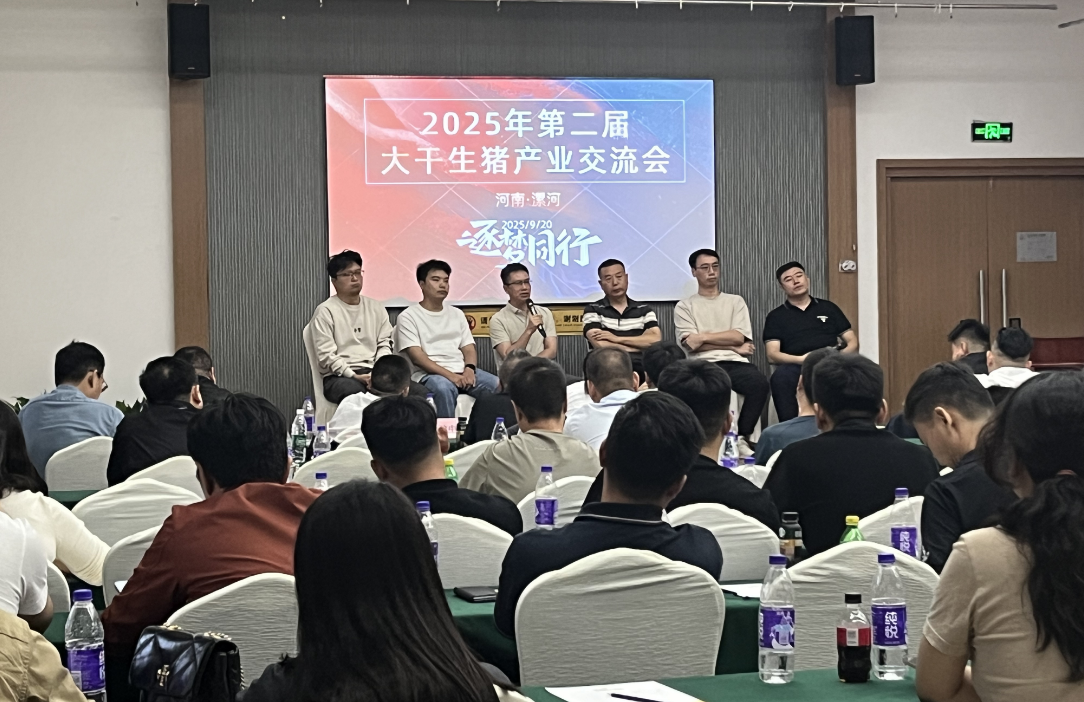
行业聚焦产能调控与市场挑战 期货工具成生猪企业“稳舵手”
Qi Huo Ri Bao· 2025-09-22 01:40
Core Viewpoint - The current pig industry is facing a dilemma of high production capacity and low prices, prompting discussions on capacity regulation and market outlook at a recent industry seminar [1][3]. Group 1: Industry Challenges - The pig industry is caught in a "production-loss" cycle, with high sow productivity and improved farming efficiency leading to oversupply and sustained pressure on prices [3]. - Despite efforts to reduce market supply through measures like lowering slaughter weights, the overall goal of capacity reduction has not been achieved due to high breeding sow inventory and quick recovery of production by large enterprises after cutbacks [3]. Group 2: Risk Management Strategies - Many leading companies plan to maintain current production levels and utilize hedging strategies to manage market risks and lock in profits, indicating a shift towards using financial derivatives for risk management [3][4]. - Companies like Guangxi Shennong emphasize a balanced approach to hedging, focusing on risk prevention while maintaining competitive advantage, viewing hedging as a long-term strategic tool rather than mere speculation [4]. Group 3: Market Outlook - Industry representatives predict that the domestic pig market will exhibit new characteristics, including improved disease prevention capabilities post-African swine fever, a likely long-term saturation of production capacity, and a potential reduction in the amplitude of price fluctuations [5]. - The cyclical nature of the pig market is expected to persist, but future cycles may be shorter compared to the historical average of four years, with factors like hoarding and secondary fattening potentially causing price volatility [5].
当前时点如何看猪价和生猪养殖板块?
2025-09-22 00:59
Summary of Conference Call Records Industry Overview: Swine Industry Key Insights on Swine Prices and Breeding Sector - Current swine prices are declining due to the impact of diarrhea in sows and piglets, despite expectations for seasonal increases in Q3 2025. Increased supply has limited the anticipated price rise [1][2] - The breeding stock of sows is expected to peak between August and September 2025, which will positively influence swine prices in the following 6 to 10 months, leading to a gradual increase in prices over the medium to long term [1][3] - The swine breeding stocks are more focused on medium to long-term price trends rather than short-term fluctuations, with expectations of CPI growth driven by capacity regulation [1][4] Government Measures and Market Impact - The government plans to reduce the breeding stock of sows by 1 million heads by 2025 and has mandated 25 leading companies to implement production cuts to stabilize and enhance future market prices [1][5] - Current market conditions present a favorable opportunity to invest in the swine breeding sector, as leading companies have indicated they will not expand domestic markets, aiding in supply-demand balance [1][6] Investment Opportunities in Swine Breeding Stocks Current Investment Climate - The current stage is seen as a good time to buy into swine breeding stocks, despite market skepticism regarding the effectiveness of capacity regulation. Historical government interventions suggest confidence in achieving regulatory goals [1][6][7] - Short-term price fluctuations are not deemed critical for long-term investment decisions, reinforcing the view that now is a good buying opportunity for the swine breeding sector [1][8] Stock Selection Criteria - When selecting specific stocks, investors should focus on the risk-reward ratio, with recommendations including Muyuan Foods, Wens Foodstuff Group, Dekang Agriculture, Shennong Group, and Juxing Agriculture [1][9] Company-Specific Insights Dekang Agriculture - Dekang Agriculture has adopted a light-asset pig farming model since 2015, accumulating significant experience and achieving a high Return on Invested Capital (ROIC). The company is expected to continue thriving under this model [1][10] Muyuan Foods - Muyuan Foods has seen a cost reduction significantly faster than the industry average, currently at 11.6 to 11.7 yuan per kilogram, with a target of 11 yuan per kilogram by 2025. The company has improved production efficiency through enhanced breeding techniques [1][11] Future Outlook for Muyuan Foods - The company is expected to experience a substantial increase in free cash flow due to reduced capital expenditures. The years 2024 and 2025 may represent the lowest points for free cash flow, but future growth in swine prices and increased breeding capacity will provide considerable returns for shareholders [1][12]