外卖

Search documents
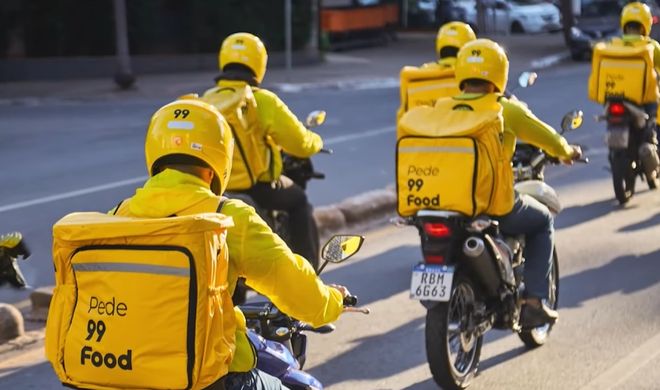
滴滴外卖“三支箭”,射向“自己人”
3 6 Ke· 2025-08-20 10:10
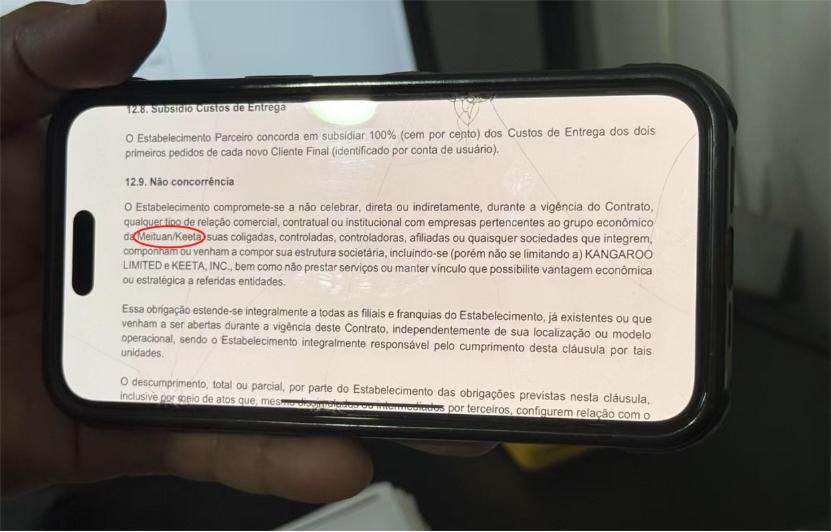
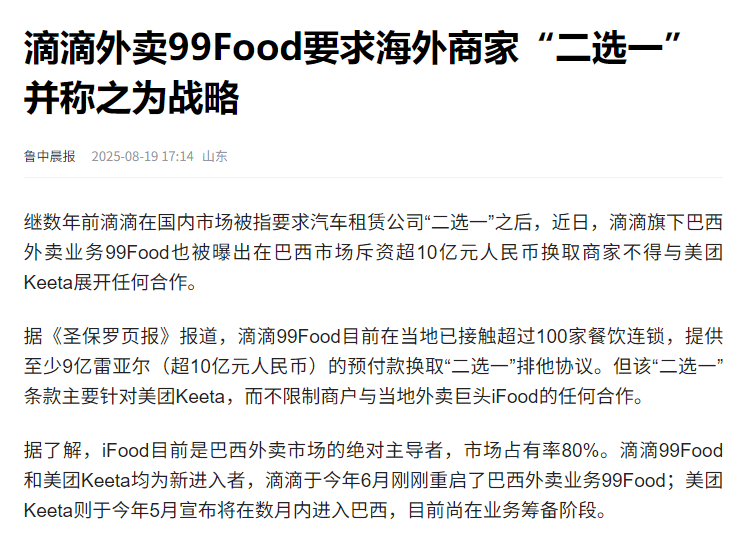
中国科技大厂的"内卷"神功,越来越国际范儿了。 国内"外卖大战"刚有退火迹象,鲜为人知的是,1.8万公里外的巴西市场,滴滴对美团的阻击战已呈白热化。 巴西是拉美最大的经济体,人口超2.1亿,外卖市场规模达120亿美元,年增长率约20%,是全球第五大外卖市场。该 市场长期被本土平台"iFood"垄断,占据约80%市场份额。 今年5月12日,美团旗下海外市场外卖品牌"Keeta"宣布将进军巴西。不足月余,6月9日,滴滴宣布重启其巴西外卖业 务"99Food"。 本应是一场中国双龙鏖战巴西地头蛇的戏码,未成想,一开场便扭曲成了一场内卷倾轧局。 "攘外必先安内",100年过去了,这一隐喻的含金量依旧成色十足。 01 滴滴外卖的"三支箭" 整理巴西与国内两地公开媒体信息可知,从业务重启至今仅两个月,滴滴在巴西外卖市场已连发三支箭,直指它的老 对手美团。 1、与商户签订限制性协议 据媒体报道,今年6月下旬,巴西当地自媒体率先爆出,滴滴的99Food,与当地部分知名连锁参与商户取得接触,提 供给单个商户提供数百万元的现金激励(预付款),签订针对美团Keeta的限制性合约。部分合约内容显示,禁止商户 与美团Keeta合作,但 ...



全民骑手时代,外卖不够送了
投中网· 2025-08-20 07:20
Core Insights - The article discusses the growing trend of part-time food delivery jobs in China, highlighting the increasing number of delivery riders and the changing perceptions of this work among young people [5][8][18]. Group 1: Industry Trends - The number of food delivery riders in China has surpassed 13 million, with a significant increase during the summer, where some platforms saw rider numbers grow to 3.5 times that of the previous year [7]. - The article notes that the demand for delivery services has led to a situation where the number of riders exceeds the number of orders, creating a competitive environment for riders [4][6]. Group 2: Personal Experiences of Riders - Various personal stories illustrate how individuals view food delivery as a viable job option, with some finding it liberating compared to traditional office work [10][14][18]. - Riders express a sense of fulfillment and connection to the community through their work, with experiences ranging from physical challenges to moments of kindness from strangers [12][20][26]. Group 3: Economic Factors - The article highlights that many individuals turn to food delivery as a means to alleviate financial stress, with some riders sharing stories of significant debt and the need for immediate income [16][17]. - The perception of food delivery work has shifted, with more people recognizing it as a legitimate source of income rather than a low-status job [14][18].

卢伟冰:小米汽车预计下半年开始盈利;东方甄选发布辟谣声明 | 早资道
Sou Hu Cai Jing· 2025-08-20 03:15
京东:已为15万外卖全职骑手缴纳五险一金,呼吁各平台一道"履行义务" 卢伟冰:小米汽车预计下半年开始盈利,有信心完成35万辆全年交付目标 8月19日,小米集团合伙人、集团总裁卢伟冰在当晚的业绩电话会上表示,有信心完成35万辆小米汽车的全年交付目标。今年第二季度小米智能电动汽车 及AI等创新业务收入大幅增长234%至213亿元,经营亏损大幅收窄至3亿元,有望于下半年实现单季盈利。不过2022年至2025年上半年小米在汽车等创新 业务上的费用投入超300亿,所以累计来看新业务仍然有较大亏损。 美团上新16城约会"热订榜",开通七夕线上提前订座服务 8月19日,美团美食频道正式上线餐厅"约会热订"入口,并推出约会"热订榜"。该榜单动态追踪餐厅口碑和预订情况,综合测算约会热度值,并按周实时 更新"七夕可预订、服务有保障、预订热度高"的热门约会餐厅。据了解,这轮约会"热订榜"将率先覆盖北京、上海、杭州、深圳、广州等16个热门约会城 市,以一线和新一线为主。与此同时,上榜餐厅均开通了线上订座服务,消费者在逛榜单时,也能提前一键锁座。 东方甄选发布辟谣声明:已启动报警和司法流程 8月19日消息,东方甄选发布辟谣声明:关于周 ...


花国内的钱,打国内的企业,滴滴丢脸丢到南半球了!
Sou Hu Cai Jing· 2025-08-20 02:46
Core Insights - Didi's subsidiary 99Food is aggressively pursuing market share in Brazil by spending 900 million reais (approximately 1 billion RMB) to force merchants into "semi-exclusive agreements" that prohibit them from partnering with Meituan's Keeta, despite allowing continued collaboration with local giant iFood, which holds over 80% market share [1] - This strategy is seen as hypocritical, as Didi itself was a victim of similar tactics in 2022 when iFood imposed exclusive agreements that forced Didi out of the Brazilian delivery market [1] - The Brazilian court has intervened, ordering Didi to cease its unfair competition practices, including the purchase of Google Ads for the term "Keeta," which misleads users and diverts traffic away from Keeta's organic search results [1][7] Industry Context - The Brazilian food delivery market is experiencing a healthy annual growth rate of 20%, indicating a potential blue ocean for new entrants [2] - Instead of focusing on collaborative growth within this expanding market, Didi's actions reflect a more competitive and divisive approach, which may hinder overall industry development [2]
多地暂停汽车置换更新补贴,银行严管信用卡资金入市 | 财经日日评
吴晓波频道· 2025-08-20 00:29
Group 1: Electric Vehicle Industry - China's electric vehicle supply chain companies invested approximately $16 billion overseas last year, slightly surpassing the $15 billion invested domestically, breaking the previous trend of 80% of investments being concentrated domestically [2] - About three-quarters of the overseas investments came from battery manufacturers, with companies like CATL prioritizing overseas expansion due to intense domestic competition [2] - BYD has established factories in Brazil and Thailand, with plans for new facilities in Turkey and Indonesia, while Chery has committed to investing $1 billion in a Turkish electric vehicle factory [2] Group 2: Automotive Subsidy Policies - Several regions, including Qinghai, Guizhou, and Inner Mongolia, have suspended vehicle replacement subsidies, with some areas also halting vehicle scrapping policies [4] - The suspension of these policies is not permanent, as many local governments are expected to resume them once additional funding is allocated [4][5] - The suspension is attributed to the exhaustion of allocated funds due to underestimated demand driven by the subsidy policies [4] Group 3: AI and Manufacturing - Shanghai's plan aims to accelerate the integration of AI in manufacturing, targeting 3,000 companies for smart applications and establishing 10 benchmark factories [6] - The initiative includes financial incentives like computing and data resource vouchers to lower the costs of smart upgrades for companies [6][7] - The plan emphasizes the need for large-scale application and data feedback to enhance the AI ecosystem in manufacturing [7] Group 4: U.S. Stock Market Performance - Approximately 60% of S&P 500 companies exceeded earnings expectations in the second quarter, with an 11% year-over-year increase in earnings per share [10] - The strong performance is attributed to better-than-expected profit margins despite tariff pressures, with technology companies leveraging AI applications for profit growth [11] - SoftBank's $2 billion investment in Intel at $23 per share reflects a long-term vision amidst Intel's operational challenges and restructuring efforts [12][13] Group 5: Credit Card Regulations - Multiple banks have issued warnings against the use of credit card funds for stock market investments, aiming to protect borrowers and maintain financial market stability [14] - The regulations are a response to past incidents where borrowed funds significantly impacted market volatility, highlighting the need for stricter oversight [15]

从奶茶杯回收到再生T恤,美团青山计划让环保扎根消费场景
Sou Hu Cai Jing· 2025-08-19 15:30
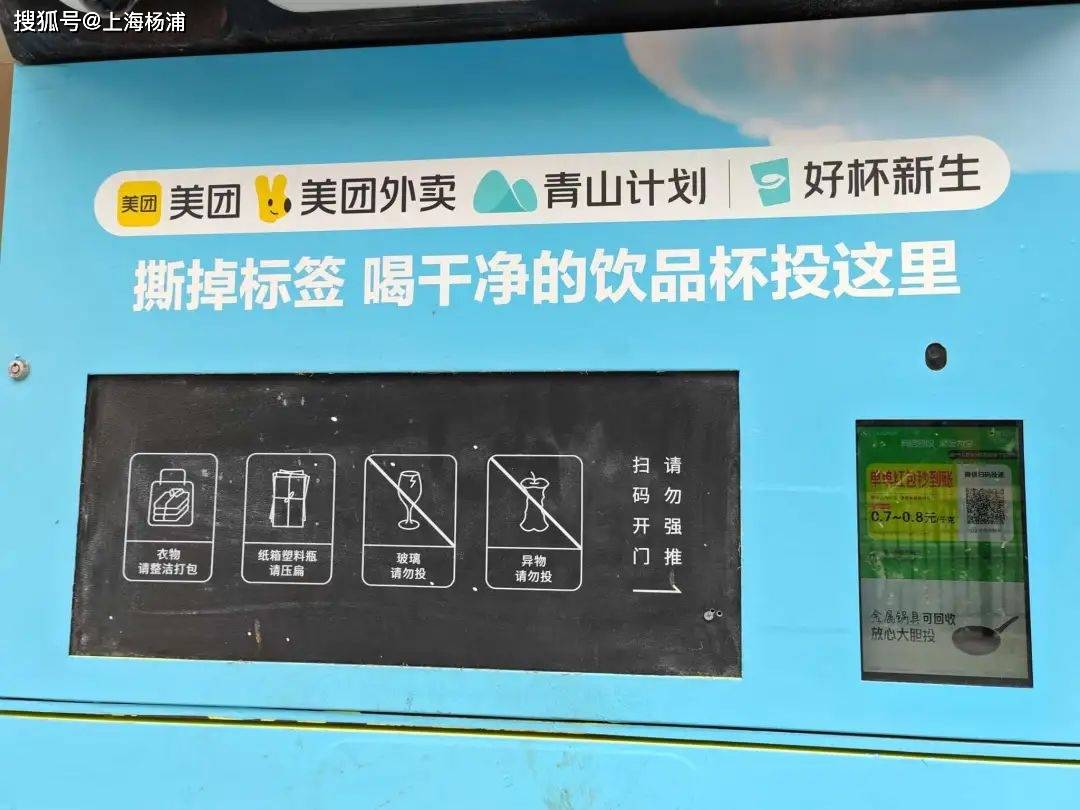
近日,美团青山计划发布八周年进展。截至 2025 年7月底,超过260万商家拥有"商家青山档案",累计有超过5.2亿美团外卖用户使用过 "无需餐具" 功 能,产生超100亿次相关订单。同时,美团青山计划在全国20个省份的 24个城市落地规模化垃圾分类及餐盒回收项目,累计回收塑料餐盒超3.7万吨。 美团核心本地商业CEO王莆中表示,未来将更深度结合用户消费场景,把平台连接力变成生态守护力,打造一个"人人可参与、人人愿参与"的绿色低碳消 费生态;同时以"科技支撑+公益驱动"的双重力量,与生态伙伴们共同探索可持续的发展路径,共筑绿水青山。 在复旦大学的宿舍区,两台奶茶杯回收机让环保融入日常。学生扫描二维码、投入撕掉标签的空杯后,机器即刻称重并通过"爱回收"账户返还奖励。罗同 学对此感触颇深:"教室与宿舍来往的路上就能随手完成回收,环保变得简单又方便。"除奶茶杯外,回收点还接收衣物、纸箱、塑料瓶等物品。这些悄然 改变垃圾处理习惯的回收点,正让环保意识在消费场景中扎根生长。 这一便捷的回收网络源自美团联合喜茶、古茗等15家头部茶饮品牌发起的"立秋公益奶茶行动"。行动不仅推广易回收再生、少印刷的环保杯,更借助"爱 回收" ...
探访外卖新业态:共享厨房与自营模式的创新实践
Sou Hu Cai Jing· 2025-08-19 15:26
Core Insights - The takeaway from the article is that the food delivery market is experiencing significant changes, shifting from price wars to supply chain competition, with Meituan's "Raccoon Canteen" model representing a new paradigm in the restaurant industry [1] Group 1: Industry Trends - The food delivery market has become increasingly competitive, moving beyond just pricing strategies to focus on supply chain efficiencies [1] - Meituan's introduction of the "Raccoon Canteen" model utilizes digital shared kitchens to reconstruct traditional restaurant operations [1] - This innovative approach addresses food safety management issues faced by small and medium-sized businesses while enhancing overall industry efficiency through centralized operations [1] Group 2: Potential Implications - The "light asset + digital" model proposed by Meituan may serve as a new standard for the transformation and upgrading of the restaurant industry [1] - The impact of this model on the competitive landscape of the food delivery market remains to be seen, as it could redefine operational strategies for various players in the industry [1]
美团滴滴,海外开战
Guan Cha Zhe Wang· 2025-08-19 12:35
Core Viewpoint - The article discusses the legal disputes between Chinese food delivery platforms 99Food and Keeta in Brazil, highlighting the competitive landscape and the strategic moves of Chinese companies in the South American market [1][3][5]. Group 1: Legal Disputes - 99Food has filed a lawsuit against Keeta for trademark infringement and unfair competition, claiming that Keeta's branding closely resembles its own, leading to consumer confusion [3][5]. - Keeta has countered by accusing 99Food of attempting to establish a duopoly in the Brazilian market and has raised concerns about 99Food's practices that could hinder competition [5][10]. Group 2: Market Context - The Brazilian online food delivery market is projected to reach $18.8 billion by 2024, making it the largest in Latin America and one of the top ten globally [7]. - Chinese companies are targeting Brazil due to its large population, regional influence, and favorable geopolitical relations, which provide a strategic entry point into other Latin American markets [8]. Group 3: Company Strategies - Meituan's Keeta entered the Saudi Arabian market in 2023 and plans to invest $1 billion in Brazil over the next five years to enhance local consumer experiences and create jobs [8][10]. - Didi has established a significant presence in Brazil with over 50 million users and a market share exceeding 50% in Mexico, indicating its strong foothold in the region [10].
氪星晚报|百度搜索接入荷兰国立博物馆、携程、同程等MCP;外卖全职骑手突破15万,京东为每人每月五险一金平均缴纳约2000元;欧洲专家:美国关税冲击欧洲出口
3 6 Ke· 2025-08-19 12:00
Group 1: Company Performance - Pop Mart reported a revenue of 13.88 billion yuan for the first half of 2025, representing a year-on-year growth of 204.4% [1] - Adjusted net profit for Pop Mart reached 4.71 billion yuan, with a year-on-year increase of 362.8% [1] - Revenue breakdown by region for Pop Mart shows: - China: 8.28 billion yuan, up 135.2% - Asia-Pacific: 2.85 billion yuan, up 257.8% - Americas: 2.26 billion yuan, up 1142.3% - Europe and others: 480 million yuan, up 729.2% [1] Group 2: Corporate Developments - Baidu's search platform has integrated with the Dutch National Museum, Trip.com, and Tongcheng, expanding its MCP offerings [2] - Apple is increasing iPhone production in India to supply new models to the U.S. market [3] - Dazhihui announced it has not engaged in stablecoin, virtual asset trading, or cross-border payment businesses [4] - SoftBank's Masayoshi Son reportedly discussed acquiring Intel's struggling foundry business prior to announcing a $2 billion investment [5] - New companies have been established, including a 1 billion yuan registered capital company by Ninebot in Changzhou [5] and a 1.6 billion yuan enterprise management company in Tianjin involving New City Holdings [6] Group 3: Market Trends - Arm Holdings has hired Amazon's AI chip director to develop its own chips, indicating a competitive move against Nvidia [7][8] - A new hedge fund founded by a former Goldman Sachs trader has secured $1 billion from Millennium Management [8] - European exports are being impacted by U.S. tariff policies, as noted by ING's macro research head [8] Group 4: Government Policies - Thailand is simplifying the process for tourists to exchange cryptocurrency for Thai baht to stimulate tourism [9] - Guangdong Province is encouraging companies to focus on key technologies in commercial aerospace, including reusable liquid rocket engines [9] - Hainan has optimized its personal income tax preferential policies for high-demand talent, adjusting the calculation method for residency days [10]



京东外卖再加码
Hua Er Jie Jian Wen· 2025-08-19 10:59
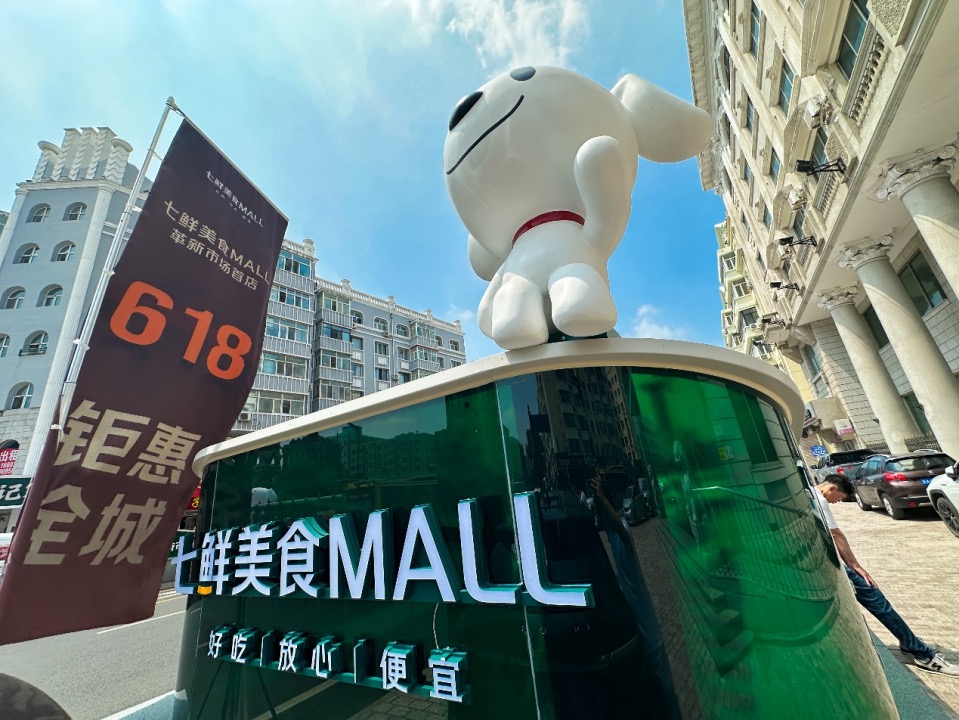
Core Insights - JD's strategy of using food delivery to drive traffic is proving effective, with Q2 financial results showing a 20% increase in overall revenue and retail business income despite the impact of food delivery investments [2] - The opening of JD's Qixian Food Mall has quickly become a popular destination in Harbin, with foot traffic increasing over three times and a near 100% shopping rate [2][16] - JD is innovating in the local lifestyle sector, with plans to expand the Qixian Food Mall to over 10 cities, emphasizing a long-term commitment to quality dining and food delivery [4][13] Business Model and Operations - The Qixian Food Mall employs a "dine-in + delivery" model, allowing customers to enjoy meals on-site or order online, focusing on quality, safety, and affordability [6][11] - The implementation of 100% kitchen live streaming addresses trust issues in the food delivery industry, enhancing customer confidence and reducing complaints [3][18] - JD's supply chain strategy is evident in its partnerships with vendors, allowing them to operate with minimal overhead by utilizing JD's logistics for timely ingredient delivery [4][8] Expansion Plans - JD plans to accelerate the rollout of Qixian Food Malls across multiple cities, with a focus on high-consumption areas and strategic partnerships to mitigate risks [5][14] - The introduction of Qixian Kitchen, with lower price points, aims to capture community markets and complement the offerings of Qixian Food Mall [4][15] Consumer Engagement and Experience - The combination of Qixian Food Mall and Qixian Kitchen is designed to enhance customer experience by providing diverse dining options and seamless integration between dine-in and delivery services [11][12] - The "cross-store selection" feature has significantly boosted delivery order volumes, with over half of delivery customers utilizing this function [22] Market Differentiation - Qixian Food Mall distinguishes itself by offering a mix of traditional and trendy dining options, catering to a wide range of consumer preferences and enhancing overall foot traffic [18][20] - The focus on transparency and quality control through live kitchen feeds sets Qixian Food Mall apart from competitors, addressing prevalent issues in the food delivery sector [3][18]