科技

Search documents
港股估值处于历史低位,外资持续加仓科技板块
Sou Hu Cai Jing· 2025-11-05 02:42
Core Insights - Despite a significant year-to-date increase in the MSCI Hong Kong Index, its valuation remains below the ten-year average, making it one of the cheapest stock markets in the Asia-Pacific region, excluding ASEAN [1] - As of the end of September, passive funds have seen a cumulative inflow of $18 billion into the Chinese stock market this year [1] - The technology sector in Hong Kong has become a focal point for foreign investment, with institutions viewing it as having both valuation safety margins and growth potential [1] - Analysts suggest that with local economic stabilization, a recovery in the IPO market, and improved global liquidity due to the Federal Reserve's interest rate cuts, the Hong Kong technology sector is likely to continue gaining revaluation momentum [1] - Morgan Stanley anticipates that this upward trend will extend until 2026, providing long-term investment opportunities for investors [1] Sector Analysis - The technology sector in Hong Kong is highlighted as a key area for foreign investment due to its attractive valuation and growth prospects [1] - Specific ETFs related to the Hong Kong technology sector include the Hong Kong Stock Connect Technology ETF (159101), which covers the entire technology supply chain, and the Hang Seng Internet ETF (513330), which focuses on leading internet companies [1]
纳指期货早盘跌近1%,纳指相关ETF跌超2%
Sou Hu Cai Jing· 2025-11-05 02:28
Core Viewpoint - The U.S. stock market experienced a decline on Tuesday, led by a drop in technology stocks, with Wall Street's notable short-seller warning of an AI bubble [1]. Group 1: Market Performance - The Nasdaq index futures fell nearly 1% in early trading [1]. - Nasdaq-related ETFs dropped over 2% in early trading [2]. Group 2: ETF Performance - Various Nasdaq ETFs showed significant declines, with the following notable performances: - Nasdaq ETF (513100) at 1.884, down 0.056, a decrease of 2.89% [3]. - Nasdaq 100 ETF (159660) at 2.089, down 0.057, a decrease of 2.66% [3]. - Nasdaq ETF (513110) at 2.132, down 0.058, a decrease of 2.65% [3]. Group 3: Company-Specific Insights - The market sell-off was triggered by a significant drop in the stock price of AI concept stock Palantir, despite the company reporting record revenue and raising its full-year performance expectations [3]. - This performance has intensified concerns regarding the overvaluation of technology stocks, indicating that investors are beginning to reassess the valuation levels within the tech sector [3].


加强知识产权保护促进民营经济高质量发展|营商环境周报
2 1 Shi Ji Jing Ji Bao Dao· 2025-11-05 01:57
Group 1: Intellectual Property and Private Economy - The National Intellectual Property Administration has issued the "Implementation Measures for Promoting the Development of the Private Economy through Intellectual Property" to enhance the intellectual property environment for private enterprises [2][3] - The measures encourage private enterprises to strengthen independent innovation and improve the quality and efficiency of intellectual property examination [2] - The measures also emphasize the protection of innovation results and the establishment of diversified dispute resolution channels for intellectual property issues [2][3] Group 2: Foreign Trade Development - The State Administration of Foreign Exchange has released nine policy measures to facilitate foreign trade and promote cross-border trade payment convenience [4][5] - The measures include expanding the regions for cross-border trade pilot programs and simplifying the settlement procedures for foreign trade enterprises [4] - The notification supports construction companies in managing funds across different countries and projects, enhancing the efficiency of fund utilization [5] Group 3: Local Government Initiatives - Shanghai has introduced the "Local Matching Management Measures for National Major Science and Technology Projects" to improve the management of local science and technology funding [8] - The measures specify that local matching funds will be allocated based on a percentage of the national funding received by local project leaders [8] - Jiangsu Province has initiated a program to cultivate data enterprises, aiming to establish a database of data-related companies to promote high-quality development in the data industry [9]
11.5犀牛财经早报:上市银行前三季度营收合计超4.3万亿元 传奇投资者大举做空英伟达
Xi Niu Cai Jing· 2025-11-05 01:44
Group 1: Banking Sector Performance - The total operating income of 42 A-share listed banks exceeded 4.3 trillion yuan in the first three quarters of 2025, with over 60% of banks reporting year-on-year growth [1] - Analysts noted that the performance was better than expected, attributing the revenue growth to stabilizing net interest margins, despite being in a downward trend [1] Group 2: Insurance Sector Performance - 86 property insurance companies reported a combined net profit of over 77.8 billion yuan in the first three quarters of 2025, with both insurance business income and net profit showing year-on-year increases [1] - The significant growth in net profit was attributed to optimized business structure, improved operational efficiency, and recovering investment returns [1] Group 3: Technology Sector Developments - Michael Burry's Scion Asset Management disclosed significant short positions in AI stocks like Nvidia and Palantir, indicating concerns over market exuberance [3][11] - Tesla's AI5 chip production is expected to begin in 2027, with the AI6 chip anticipated for mid-2028, highlighting the timeline for advancements in AI technology [3] Group 4: Nintendo Financial Results - Nintendo reported a net sales figure of 527.2 billion yen and an operating profit of 88.25 billion yen for the second fiscal quarter, with an upward revision of sales expectations for the Switch 2 console [4] Group 5: AMD and Supermicro Financial Performance - Supermicro's first-quarter net sales were reported at $5 billion, falling short of analyst expectations, while AMD's guidance was deemed not impressive, leading to stock declines [4][11] Group 6: Market Reactions and Trends - The US stock market experienced a significant downturn, with the Nasdaq dropping over 2%, driven by fears of overvaluation and heavy selling in tech stocks [11] - The dollar index reached a three-month high, while commodities like oil and gold saw declines, reflecting broader market volatility [11]


【省民政厅】陕西社会组织发展形成新格局
Shan Xi Ri Bao· 2025-11-05 00:13
Core Points - The province has achieved full coverage of party organizations and work in 547 direct social organizations since 2023 [1][2] - A total of 30,290 registered social organizations exist in the province, employing 333,000 people [1][2] - The province has registered 2,474 new social organizations in technology, economy, and charity sectors over the past five years, while eliminating 2,549 ineffective organizations [2] Group 1: Party Leadership and Organizational Development - Party leadership is emphasized as a guiding principle for social organization development, with a mechanism established for coordinated efforts between government and departments [2] - The province has implemented a unified registration and management system for social organizations, enhancing internal motivation and transitioning from quantity growth to quality improvement [2] - A total of 562 incubation bases have been established, achieving coverage at provincial, municipal, and county levels [2] Group 2: Financial Support and Community Engagement - Social organizations have collectively waived membership fees totaling 4.28 billion yuan for struggling members [3] - Over 8,694 social organizations have implemented more than 3,100 assistance projects, contributing a total of 9.94 billion yuan in support [3] - The province's charity association has formed 12 "joint assistance teams" to support key counties, winning the 12th "Chinese Charity Award" for their efforts [3] Group 3: Employment and Community Services - In the past three years, social organizations and their members have recruited 18,086 college graduates [4] - Community social organizations have provided services such as elderly care and childcare, reaching out to over 50,000 community members [3][4]
纳指重挫2%!估值担忧加剧,美股三大股指齐跌
Di Yi Cai Jing Zi Xun· 2025-11-05 00:09
Market Overview - The U.S. stock market experienced significant declines, with the S&P 500 and Nasdaq indices recording their largest single-day drops in nearly a month, driven by concerns over high valuations following a surge in stock prices due to the AI boom [1] - The Dow Jones Industrial Average fell by 251.44 points to close at 47085.24, a decrease of 0.53%; the S&P 500 dropped 80.42 points to 6771.55, down 1.17%; and the Nasdaq Composite declined by 486.08 points to 23348.64, a drop of 2.04% [1] Sector Performance - Among the 11 major sectors in the S&P 500, 8 sectors declined, with the technology sector leading the losses, down 2.3%; the financial sector, however, saw gains [1] - The Philadelphia Semiconductor Index fell by 4%, negatively impacting overall market performance [1] Individual Stock Movements - Major tech stocks experienced declines: Microsoft down 0.52%, Amazon down 1.84%, Google A down 2.18%, Nvidia down 3.96%, Tesla down 5.15%, and Meta down 1.63%; only Apple saw a slight increase of 0.37% [1] - After-hours trading saw Super Micro Computer drop over 9% due to quarterly revenue falling short of market expectations; AMD fell about 3% despite slightly exceeding revenue expectations, as investors remained cautious about capital expenditure growth [2] Cryptocurrency Market - The cryptocurrency market faced pressure, with Ethereum dropping below $3100, a decline of 14%, and Bitcoin falling over 7%, nearing the $99,000 mark; related stocks also saw significant declines [2] Chinese Stocks - The Nasdaq Golden Dragon China Index fell by 2.05%, with many popular Chinese stocks declining, including Xiaoma Zhixing down nearly 10% and Futu Holdings down over 7%; however, Baidu saw a rise of 3% [2] Executive Insights - Executives from Morgan Stanley and Goldman Sachs expressed concerns about high stock market valuations and potential short-term adjustments, prompting investors to quickly retreat from high-growth sectors [2] - Chuck Carlson, CEO of Horizon Investment Services, noted that investors are increasingly focused on valuation issues, leading to profit-taking despite stable earnings from many companies [3] Commodity Market - International oil prices fell, with WTI crude oil futures down $0.49 to $60.56 per barrel, a decrease of 0.80%, and Brent crude down $0.45 to $64.44 per barrel, a drop of 0.69% [3] - COMEX gold futures decreased by $53.50, settling at $3960.50 per ounce, a decline of 1.33% [3]
澳大利亚股市下跌 受矿业股和科技股拖累
Xin Lang Cai Jing· 2025-11-04 23:49
Group 1 - The S&P/ASX 200 index declined by 0.2% to 8,792.90 points, primarily due to weakness in the materials sector [1] - Technology stocks also contributed to the decline, influenced by concerns over high valuations in the U.S. tech sector [1] - The S&P/NZX 50 index in New Zealand fell by 0.3% to 13,561.03 points, reflecting economic weakness [1] Group 2 - New Zealand's unemployment rate rose to its highest level in nine years in the third quarter, driven by a reluctance among businesses to hire new workers due to a sluggish economy [1]
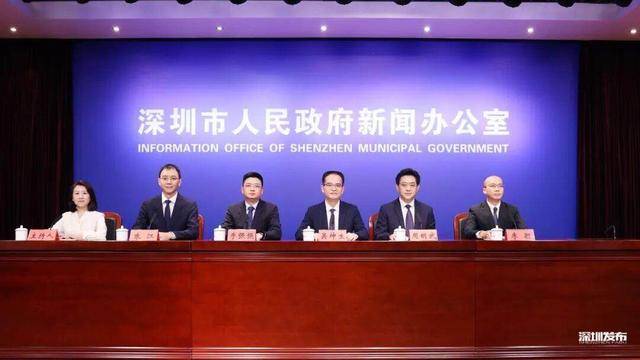
迎接十五运会和APEC“中国年”!深圳跨年消费季启动
Sou Hu Cai Jing· 2025-11-04 22:06
Core Points - The Shenzhen government is launching the "Yue Enjoy Warm Winter, Happy Travel Guangdong" consumption season to boost tourism and consumption in the city, coinciding with the upcoming 15th National Games and the APEC meeting next year [1][3][7] - The initiative aims to enhance city marketing globally, leveraging Shenzhen's unique characteristics and historical opportunities to attract more domestic and international visitors [3][4] Group 1: Event Overview - The consumption season will feature over 500 promotional activities, organized around four monthly themes, seven new consumption experiences, eight cultural and tourism brand IPs, and nine service facilitation measures [5][6] - Activities will include electric vertical takeoff and landing aircraft demonstrations and exclusive consumption packages for residents of Hong Kong and Macau [3][4] Group 2: Cultural Integration - The event will incorporate traditional cultural experiences, such as the "Han and Tang Carnival" and intangible cultural heritage workshops, to enhance cultural confidence and engagement [4] - Eight major cultural and tourism brand IPs will be created to foster a shared consumption experience among the public [4] Group 3: Economic Development - The Shenzhen government plans to support the launch of new consumption routes, "check-in" locations, and food maps, aiming to attract brands to open flagship stores and debut products in the city [6] - The initiative will also promote new business models, such as "AI + consumption" and digital tourism, to upgrade traditional shopping districts and create new consumer landmarks [6] Group 4: Service Enhancement - A comprehensive service guarantee system for cultural and tourism activities will be established, focusing on creating a visitor-friendly environment and promoting Shenzhen as a world-class tourist destination [7] - The city will implement tax-free policies and enhance the shopping experience for inbound tourists, including a "free half-day tour" for visitors [7]
Why are Some Market Pundits Talking About the 1929 Wall Street Crash?
Yahoo Finance· 2025-11-04 16:12
Market Overview - The S&P 500 has gained 2.3% in October, nearing new highs, while the Nasdaq 100 has seen a nearly 5% increase, raising concerns about a potential parabolic trajectory [1] - There is speculation about a possible market correction, with some analysts predicting a 5% pullback [2] Bubble Concerns - The term "bubble" has been frequently mentioned by both the public and notable figures in tech and finance, although opinions vary on whether a bubble exists [3] - Fed Chairman Jerome Powell suggests that the current market dynamics differ from previous bubbles, indicating a more stable environment [3][4] AI Market Dynamics - The current AI boom is compared to past market bubbles, with the assertion that it is not directly analogous to the internet bubble or the 1929 crash [4][6] - Despite concerns about AI spending, particularly highlighted by Meta Platforms' significant stock drop of nearly 15% in two sessions, the broader market remains relatively unaffected [5] Investment Strategies - The article emphasizes the importance of understanding different investment strategies, as the AI market may present unique opportunities compared to past market behaviors [6]
超500场促消费活动!深圳跨年消费季启动
Sou Hu Cai Jing· 2025-11-04 15:14
Core Viewpoint - Shenzhen is launching over 500 promotional consumption activities as part of the "Yue Enjoy Warm Winter, Happy Travel Guangdong" consumption season, aiming to enhance consumer experience and stimulate economic growth [1][4]. Group 1: Event Overview - The consumption season will integrate Shenzhen's unique winter advantages and quality cultural tourism resources, offering themed activities monthly and weekly [1][3]. - Activities will include sports events related to the "15th National Games" and various community sports activities [1][3]. Group 2: Technological and Cultural Integration - The event will feature technology innovations, including demonstrations of electric vertical takeoff and landing vehicles, and establish new product experience zones in collaboration with local tech companies [3][4]. - Cultural experiences will be highlighted through events like "Han and Tang Carnival" and intangible cultural heritage workshops, promoting cultural confidence [3][4]. Group 3: Economic Development Initiatives - Shenzhen plans to enhance its first-release economy by introducing measures to attract brands to open flagship stores and launch new products [4]. - The city aims to innovate consumption formats by promoting new business models such as "AI + consumption" and digital cultural tourism [4]. Group 4: Consumer Experience Optimization - The city will leverage the upcoming APEC meeting to implement new duty-free policies and improve the inbound consumer experience [4][5]. - Shenzhen's retail sales reached 756.08 billion yuan from January to September this year, reflecting a 3.6% year-on-year growth, emphasizing its role as a major consumption city [4]. Group 5: New Landmarks and Marketing Strategies - New cultural and tourism landmarks, such as the world's largest indoor ski resort and the largest outdoor water stage, have opened, enriching the consumer landscape [5]. - The city plans to enhance its marketing efforts in conjunction with the APEC meeting to promote Shenzhen on a national and global scale [5].