
智能手机

Search documents
8点1氪:充电宝新规将落地,原3C认证将全面失效;上海地铁试点“站票车厢” ;超级猩猩客服回应“闭店潮”
36氪· 2025-11-26 00:09
Group 1 - The new national standard for power banks, titled "Mobile Power Safety Technical Specifications," is set to be implemented, rendering the existing 3C certification invalid. The new regulations are expected to be announced in December 2025, officially published in February 2026, and come into effect in June 2026. Approximately 70% of current production capacity may be forced to exit the market due to inability to meet the new technical requirements [2][3] - The implementation of the new standard will provide a six-month buffer period for existing products with 3C certification to clear inventory, while consumers can continue to use older certified products [2][3] Group 2 - The number of primary school students in Hong Kong has dropped to a 30-year low, with only 37,581 applicants for primary one places this year, reflecting a structural decline in the school-age population. This represents a year-on-year decrease of about 4,200 applicants, or approximately 10% [7] - The projected number of eligible children for primary one is expected to decline from 48,600 this year to 34,100 by 2030, indicating a nearly 30% overall decrease [7] Group 3 - Apple has announced layoffs in its sales department as it faces declining iPhone sales, particularly for the new iPhone Air model, which has not met sales expectations. The company is focusing on enhancing customer engagement while continuing to recruit for new positions [8] - The iPhone Air, which represents a significant design shift for Apple, is experiencing challenges in sales, leading to a reduction in production [8] Group 4 - Gree Electric Appliances plans to distribute a cash dividend of 5.585 billion yuan, with cumulative dividends exceeding 170 billion yuan since its listing. The company emphasizes the importance of maintaining operational capacity while meeting shareholder expectations [14][15] Group 5 - NIO reported a record revenue of 21.79 billion yuan for the third quarter of 2025, marking a year-on-year increase of 16.7%. The company also achieved a record delivery of 87,071 vehicles, a 40.8% increase year-on-year [24] - Xpeng Motors announced a total revenue of 181 million yuan for the third quarter, reflecting a year-on-year growth of 72% [25]




8点1氪|充电宝新规将落地,原3C认证将全面失效;上海地铁试点“站票车厢” ;超级猩猩客服回应“闭店潮”
3 6 Ke· 2025-11-26 00:05
Group 1: Charging Power Bank Regulations - The new national standard for mobile power banks, titled "Mobile Power Safety Technical Specifications," is set to be implemented, with the original 3C certification becoming invalid [2][3] - It is anticipated that nearly 70% of existing production capacity will be forced to exit the market due to inability to meet the new technical requirements [2][3] - A six-month buffer period will be provided for existing products with 3C certification to clear inventory, while compliant products can still be carried on flights [2][3] Group 2: Super Monkey Gym Closures - The fitness brand Super Monkey is experiencing a mix of new openings and closures in major cities, with some locations shutting down after just one year of operation [3][4] - The closures are primarily attributed to the expiration of lease contracts without renewal, although new stores continue to open [3][4] Group 3: Hong Kong Education Statistics - The number of primary school students in Hong Kong has dropped to a 30-year low, with applications for primary one seats falling below 40,000 for the first time [6] - The number of eligible children for primary one is projected to decline significantly, with estimates suggesting a drop from 48,600 this year to 34,100 by 2030 [6] Group 4: Apple Sales and iPhone Air Challenges - Apple has announced layoffs in its sales department in response to declining iPhone sales, particularly affecting the new iPhone Air model [5][6] - The company is focusing on enhancing customer engagement while continuing to recruit for new positions [5][6] Group 5: African Swine Fever in South Korea - South Korea has raised its African swine fever crisis alert level to "serious" following an outbreak at a pig farm [9] - The affected farm had 463 pigs, with several deaths reported prior to the confirmation of the virus [9] Group 6: Alibaba's Financial Performance - Alibaba's cloud revenue for the second fiscal quarter of 2026 reached 39.824 billion yuan, marking a 34% year-on-year increase [20] - The company reported that AI-related product revenue has seen triple-digit growth for nine consecutive quarters [20] Group 7: NIO's Financial Results - NIO reported a record revenue of 21.79 billion yuan for the third quarter, reflecting a year-on-year growth of 16.7% [21] - The company delivered 87,071 vehicles during the quarter, achieving a 40.8% increase compared to the previous year [21] Group 8: Zhihu's Financial Report - Zhihu's third-quarter revenue was 659 million yuan, with a year-on-year reduction in operating losses by 16.3% [24] - The paid reading business contributed 386 million yuan, accounting for 58.5% of total revenue [24]



深夜,大逆转!
中国基金报· 2025-11-26 00:02
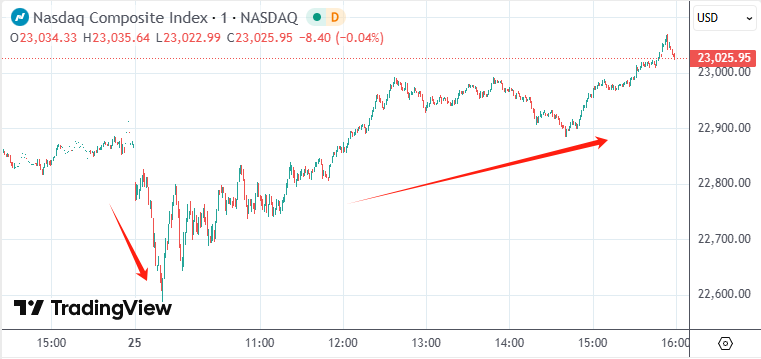
【导读】美股三大指数盘中一度下跌,最终悉数收涨 中国基金报记者 储是 美联储 12 月会议上降息概率上升,美股深夜逆转。因谷歌 TPU" 抢风头 " ,英伟达盘中跳 水。国际油价深夜直线下跌。 美股深夜逆转 美东时间 11 月 25 日(周二),美股三大指数盘中逆转,收盘时均上涨。 热门科技股普遍收涨, META 收涨 3.78% ,谷歌收涨 1.62% ,谷歌市值逼近 4 万亿美 元。而英伟达收跌 2.59% 。 盘中,因有报道称 Meta 可能与谷歌达成协议,在数据中心使用谷歌的张量处理单元( TPU )。受此影响,英伟达一度跌超 7% 。 英伟达在社交媒体上发帖回应,与专为特定 AI 框架或功能设计的 ASIC (专用集成电路)芯 片相比,英伟达能提供更高的性能、更强的通用性以及更好的可替代性。 | 名称 | 现价 | 涨跌幅 ◆ | 员 一 | | --- | --- | --- | --- | | 脸书(META PLATF | 636.220 | 3.78% | 119.51亿 | | META.O | | | | | 谷歌(ALPHABET). GOOG.O | 323.640 | 1.62% ...

11月26日隔夜要闻一览
Sou Hu Cai Jing· 2025-11-25 23:14
Group 1 - U.S. stock indices rose for the third consecutive trading day, with the Dow Jones up 1.43%, S&P 500 up 0.91%, and Nasdaq Composite up 0.67%. The Nasdaq China Golden Dragon Index increased by 0.35% [1] - Dell's Q3 FY2025 earnings report showed revenue below Wall Street expectations, but the company forecasts that fourth-quarter performance will exceed market expectations driven by growth in AI sales [5] - According to Counterpoint Research, Apple is set to reclaim the title of the world's largest smartphone manufacturer for the first time in over a decade, thanks to the successful launch of the new iPhone series and a surge in consumer upgrades [6] Group 2 - Concerns have arisen on Wall Street regarding Nvidia's dominance in the AI infrastructure sector due to reports of Meta negotiating the use of Google's chips in data centers, although Nvidia claims its GPUs are "a generation ahead" of Google's AI chips [4] - Tesla's electric vehicle registrations in Europe for October were reported at only 6,964 units, a significant decline of 48.5% compared to the same period last year, according to the European Automobile Manufacturers Association [8]
美股收盘:纳指逆转1%跌幅收涨,谷歌创新高市值逼近4万亿美元
Feng Huang Wang· 2025-11-25 22:46
Market Overview - The three major U.S. stock indices continued to strengthen during the trading session, closing higher with the Nasdaq Composite Index up 0.67% to 23025.59 points, after initially dropping over 1.2% [1] - The Dow Jones Industrial Average rose 1.43% to 47112.45 points, while the S&P 500 Index increased by 0.91% to 6765.88 points [3][4] Federal Reserve Outlook - Traders are assessing the prospects of a Federal Reserve interest rate cut, with the CME's FedWatch tool indicating an 82.7% probability of a 25 basis point cut at the December meeting [4] - John Williams, President of the New York Fed, signaled a dovish outlook, suggesting there is still room for rate cuts "in the near term" [4] - LNW's Chief Investment Officer Ron Albahary noted that the likelihood of a rate cut has increased from 40% to 80% since last Friday, which could benefit the holiday market [4] Technology Sector Performance - Google's stock rose over 3% amid reports of a potential agreement with Meta to use Google's Tensor Processing Units (TPUs) in data centers, impacting chip stocks negatively, with Nvidia dropping over 7% [5] - Nvidia responded on social media, asserting its leadership in the AI chip market, emphasizing its performance and versatility compared to ASIC chips [11] - Major tech stocks mostly rose, with Nvidia being the only one to decline by 2.59%, while Apple, Microsoft, Amazon, and others saw gains [7] Chinese Stocks - The Nasdaq Golden Dragon China Index increased by 0.35%, with mixed performances among popular Chinese stocks [9] - Notable gainers included Hesai up 10.98% and Bawang Tea up 6.69%, while NIO and Alibaba saw declines of 4.35% and 2.31%, respectively [10] Company News - Nvidia emphasized its continued supply to Google and its leading position in the AI chip industry, claiming to be a generation ahead of competitors [11] - Apple is expected to reclaim its title as the world's largest smartphone manufacturer for the first time in over a decade, driven by strong sales of the new iPhone series [11] - HP plans to lay off 4,000 to 6,000 employees by the end of fiscal year 2028, despite reporting a net revenue of $14.64 billion in Q4, exceeding market expectations [12] - Dell raised its full-year revenue outlook, projecting $111.2 billion to $112.2 billion, up from previous estimates [13] - Alibaba announced plans to invest actively in AI capabilities, potentially exceeding its previously committed investment of 380 billion RMB over three years [15] - Baidu established two new model research departments to enhance its AI capabilities, reporting directly to CEO Robin Li [17] - NIO's chairman Li Bin stated the company's goal is to achieve profitability for the entire year by 2026, highlighting the increasing market penetration of high-end electric vehicles [18]


凭借iPhone 17热销,苹果将超越三星重夺全球最大智能手机制造商地位
Hua Er Jie Jian Wen· 2025-11-25 21:05
Core Insights - Apple is expected to surpass Samsung for the first time in over a decade, reclaiming its position as the world's largest smartphone manufacturer, driven by the success of the new iPhone 17 series [1] Group 1: Market Performance - Apple's iPhone shipments are projected to grow by 10% by 2025, while Samsung's growth is only expected to be 4.6%, allowing Apple to capture 19.4% of the global smartphone market, which is anticipated to grow by 3.3% [2] - Apple has indicated that its sales growth is exceeding expectations, with holiday quarter revenues expected to approach a record $140 billion, supporting optimistic forecasts from external analysts [2] Group 2: Consumer Behavior - The key driver for the increase in shipments is the upgrade cycle reaching a turning point, as consumers who purchased smartphones during the COVID-19 pandemic are now entering the upgrade phase [2] - An estimated 358 million used iPhones are expected to be sold from 2023 to the second quarter of 2025, with these users likely to upgrade to new iPhones in the coming years [2] Group 3: Macro Factors - Apple is benefiting from macroeconomic factors such as the easing of global trade tensions and the depreciation of the dollar, which has boosted purchasing power in emerging markets [3] - Future product launches, including a foldable iPhone in 2026 and a budget model iPhone 17e, are expected to further drive sales growth [3] Group 4: Long-term Outlook - Counterpoint Research forecasts that Apple will maintain its position as the world's largest smartphone seller until 2029 [4]
降了800元 4699元起售 华为发布Mate 80:Pro+变为Pro Max 麒麟9030芯片!渠道商:定价比预计的要低
Mei Ri Jing Ji Xin Wen· 2025-11-25 15:52
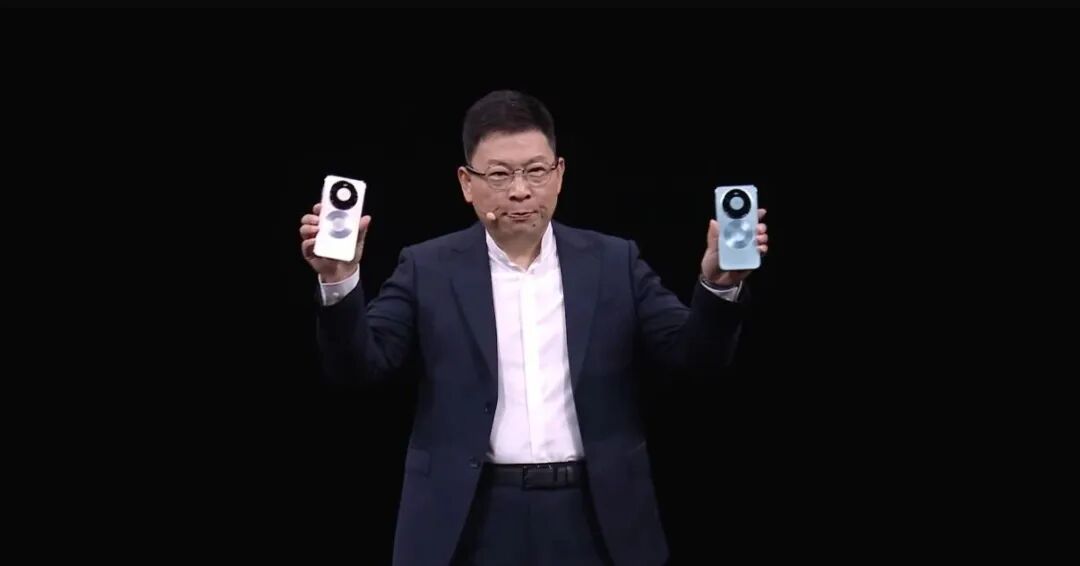
Core Viewpoint - The launch of Huawei's Mate 80 series on November 25 marks a significant development in the competitive smartphone market, with new pricing strategies and technological advancements aimed at regaining market share in the high-end segment [1][4]. Pricing Strategy - The starting price for the Mate 80 series is set at 4,699 yuan, which is 800 yuan lower than the previous generation. The Mate 80 Pro and Mate 80 Pro Max series are also priced 500 yuan lower than their predecessors [1][8]. - This pricing strategy is expected to provide Huawei with a competitive edge in a market where other brands have increased their prices [8]. Technological Advancements - The Mate 80 series features the new Kirin 9030 chip, built on a 7nm process, marking a significant iteration in Huawei's chip technology [4][6]. - The series is the first to launch with HarmonyOS 6, which has over 300,000 applications and services, indicating progress in Huawei's software ecosystem [6]. Market Position and Competition - Huawei's market share in the high-end smartphone segment is reported at 21.4% for 2023, with a notable recovery in its competitive stance against Apple, which holds 61.8% [4]. - The smartphone market is currently experiencing a contraction, with a 3% year-on-year decline expected by Q3 2025, and the competition among top manufacturers is intensifying [7]. Sales Performance - The Mate series has historically contributed significantly to Huawei's sales, with the Mate 40 series achieving sales of 30 million units at its peak [5]. - The Mate 80 series is seen as crucial for Huawei's strategy to reclaim its position in the high-end market, especially after previous supply chain challenges [7]. Future Outlook - Analysts suggest that while the Mate 80 series may face challenges in gaining immediate traction, it could solidify Huawei's position in the high-end market in the long term [8]. - The ongoing development of the HarmonyOS ecosystem is expected to create a competitive barrier, potentially reducing user attrition [7].
降了800元,4699元起售,华为发布Mate 80:Pro+变为Pro Max,麒麟9030芯片!渠道商:定价比预计的要低
Mei Ri Jing Ji Xin Wen· 2025-11-25 15:09
Core Insights - The smartphone industry is experiencing intense competition as Huawei launches its Mate 80 series, which includes significant price reductions compared to previous models [1][9] - The Mate 80 series features the new Kirin 9030 chip and is the first to run on HarmonyOS 6, indicating Huawei's advancements in both hardware and software [3][7] - Huawei's market share in the high-end smartphone segment is showing signs of recovery, with a reported 21.4% share in 2023, compared to Apple's 61.8% [3][4] Pricing Strategy - The starting price for the Mate 80 series is set at 4699 yuan, which is 800 yuan lower than the previous generation, while other models also see price reductions of around 500 yuan [1][9] - This pricing strategy may provide Huawei with a competitive edge in a market where other brands are increasing prices [9] Product Features - The Mate 80 series incorporates advanced technologies such as the second-generation Kunlun glass and emergency communication capabilities, allowing for connectivity over 13 kilometers without a network [4] - The new Kirin 9030 chip represents a significant technological advancement for Huawei, marking a return to high-performance chip production [7] Market Position - As of Q3 2025, Huawei holds a 16% market share in the Chinese smartphone market, closely following Vivo's 18% and surpassing Apple's 15% [8] - The competition remains tight, with the gap between the top and fifth-ranked manufacturers narrowing to just 3% [8] Future Outlook - Analysts suggest that while the Mate 80 series may face challenges in the short term due to market adjustments and competition from Apple's iPhone 17 series, it has the potential to strengthen Huawei's position in the high-end market over time [8] - The ongoing development of the HarmonyOS ecosystem, with over 300,000 applications, is expected to enhance Huawei's competitive stance against established operating systems [7]
雷军斥资超1亿港元
Sou Hu Cai Jing· 2025-11-25 13:10
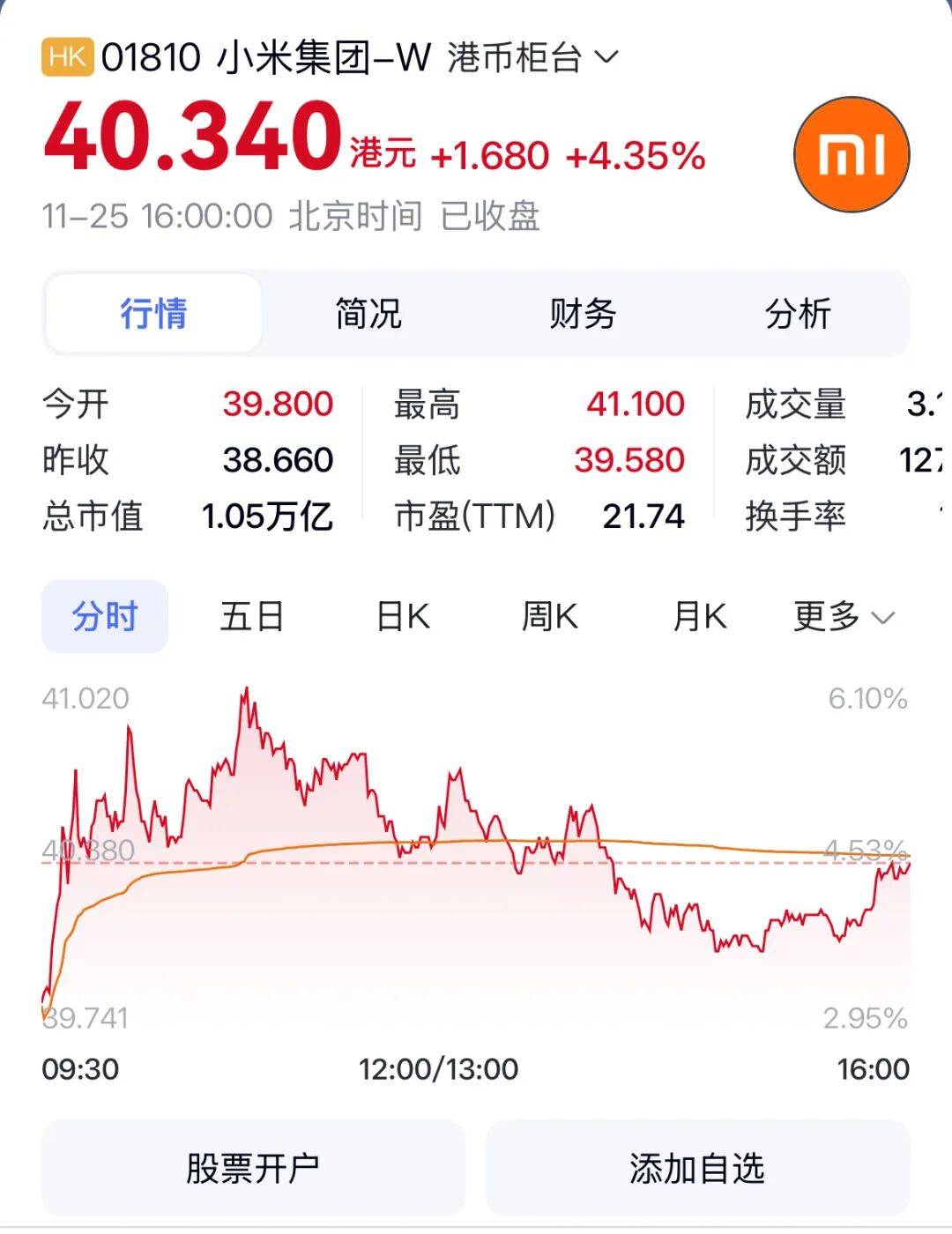
Group 1 - Xiaomi's stock price increased by 4.35% to HKD 40.34 as of November 25 [1] - Founder and CEO Lei Jun invested over HKD 100 million to purchase 2.6 million shares, raising his ownership stake to 23.26% [1] Group 2 - Xiaomi reported a total revenue of RMB 113.1 billion for Q3 2025, a year-on-year increase of 22.3% but a quarter-on-quarter decline of 2.4% [3] - Adjusted net profit for the third quarter was RMB 11.3 billion, reflecting an 80.9% year-on-year increase and a 4.4% quarter-on-quarter growth [3] - The smart electric vehicle and AI innovation segment achieved an operating profit of RMB 700 million, marking its first profitable quarter [3] - Xiaomi has invested over RMB 7 billion in AI this year and established a team of over 1,800 for smart driving, with R&D centers in Beijing, Shanghai, and Wuhan [3]

华为上新!Mate 80系列性能最高提升42%,多款机型逆势降价
Guo Ji Jin Rong Bao· 2025-11-25 12:31
Core Viewpoint - Huawei continues to release its flagship products later in the year, unveiling the Mate 80 series and Mate X7 in late November, despite the competitive smartphone market in September and October [1] Pricing Summary - The starting prices for the Mate 80 series are as follows: Mate 80 at 4699 yuan, Mate 80 Pro at 5999 yuan, Mate 80 Pro Max at 7999 yuan, and Mate 80 Extraordinary Master series at 11999 yuan [1] - Compared to the previous Mate 70 series, the Mate 80 series has lower starting prices, with the Mate 80 decreasing by 800 yuan and the Mate 80 Pro and Pro Max decreasing by 500 yuan [1][3] Performance Improvement - The Mate 80 and Mate 80 Pro (12GB RAM) show a performance increase of 35% compared to the Mate 70 series, while the Mate 80 Pro (16GB RAM) and Mate 80 Pro Max show a 42% performance increase [4] Operating System and Ecosystem - The Mate 80 series is the first to feature HarmonyOS 6, with over 27 million devices running HarmonyOS and more than 300,000 applications available [4] - Market research indicates that by Q3 2025, HarmonyOS is expected to capture 4% of the global smartphone operating system market [4] Market Position and Competition - Huawei's Mate series has become synonymous with high-end flagship smartphones, with a significant market share in the premium segment, holding about one-third of the market for smartphones priced over $600 in Q3 2023 [6] - The release of the Mate 80 series is seen as a move to solidify Huawei's position in the high-end market, especially against competitors like Apple, which has seen a 37% increase in sales [7] Foldable Phone Launch - In addition to the Mate 80 series, Huawei launched the Mate X7 foldable phone, maintaining similar pricing to the previous Mate X6 series, with prices starting at 12999 yuan [8][10] - Huawei has released 12 foldable phone models since the launch of its first foldable phone in 2019, achieving over 10 million units shipped and holding more than 68% market share in the foldable phone segment in China [10]
