
服务消费

Search documents
商务部:9月商品零售额增长3.3%,以旧换新相关商品销售保持较快增长
Yang Shi Wang· 2025-10-27 03:55
Core Insights - The consumption market in China is showing steady growth, with significant contributions from various sectors and initiatives aimed at boosting consumer spending [1][2] Group 1: Overall Consumption Trends - In September, the total retail sales of consumer goods reached 4.20 trillion yuan, marking a year-on-year growth of 3.0% [1] - For the first three quarters, the total retail sales amounted to 36.59 trillion yuan, with a growth rate of 4.5%, which is 1.0 percentage point faster than the entire previous year [1] - Per capita consumer spending reached 21,600 yuan, reflecting a growth of 4.6% [1] - The contribution rate of final consumption expenditure to economic growth stood at 53.5% [1] Group 2: Replacement Consumption - The retail sales of goods increased by 3.3% in September, with significant growth in sales related to the "old for new" consumption initiative [2] - Retail sales of communication equipment, furniture, and cultural office supplies saw increases of 16.2%, 16.2%, and 6.2% respectively [2] - Passenger car retail sales reached 2.241 million units, growing by 6.3% [2] - As of October 22, 2025, applications for the automobile replacement subsidy exceeded 10 million [2] Group 3: Service Consumption - Service retail sales grew by 5.2% in the first three quarters, outpacing goods retail sales by 0.6 percentage points [2] - Sectors such as cultural and recreational services, communication services, tourism consulting, and transportation services experienced double-digit growth [2] - Service consumption accounted for 46.8% of total household consumption expenditure [2] Group 4: New Consumption Trends - New types of consumption, including smart and green products, are expanding rapidly [2] - In September, sales of smart wearable devices and robotic vacuum cleaners increased by over 15%, while sales of energy-saving dishwashers and organic food grew by more than 10% [2] - Retail sales of new energy passenger vehicles reached 1.296 million units, growing by 15.5%, with a penetration rate of 57.8% [2] Group 5: Inbound Consumption - The scale of inbound consumption is expanding, supported by policies such as expanding visa-free entry and optimizing tax refund processes [2] - In the third quarter, the number of foreign visitors entering and exiting China reached 20.134 million, a growth of 22.3% [2] - Among these, the number of visa-free foreign visitors was 7.246 million, marking a growth of 48.3% [2]
激活消费潜能 构筑高质量发展新格局
Zhong Guo Zheng Quan Bao· 2025-10-22 20:16
Core Viewpoint - The Chinese government emphasizes the importance of boosting consumption as a long-term strategic choice for economic security, industrial upgrading, and improving people's livelihoods, especially in the context of a complex global environment [1] Group 1: Consumption as Economic Driver - Consumption is identified as the most fundamental and stable pillar of economic growth, providing solid support for long-term development [1] - The current structural issues in China include insufficient consumption and low industrial prices, necessitating a shift from investment and export-driven growth to a consumption-driven model [1][2] - The transformation towards a strong domestic consumption market is crucial for enhancing economic quality and resilience against external shocks [1] Group 2: Structural Upgrades in Consumption - Chinese consumer behavior is shifting from quantity to quality, with increasing demand for high-quality goods and services, particularly in sectors like culture, tourism, education, and healthcare [2] - This structural upgrade in consumption is driving supply-side responses, prompting companies to innovate in technology, business models, and resource allocation towards high-value sectors [2][3] - The goal of boosting consumption is to improve the actual living standards of families, reflecting a country's economic development and social progress [2] Group 3: Potential of the Chinese Consumption Market - China's consumption market has significant growth potential, supported by a large population base, despite challenges like an aging population [3][4] - The current consumption as a percentage of GDP is around 40%, which is lower than that of major developed countries, indicating room for optimization [3] - Service consumption in China is also lagging behind, with only 46.1% of per capita consumption in 2024 being service-related, compared to higher levels in Japan and the U.S. [3] Group 4: Systematic Solutions for Consumption Activation - The core issues in the consumption market stem from both demand and supply constraints, necessitating a comprehensive approach to stimulate consumption [5] - Strategies include stabilizing and increasing household income, improving the consumption environment, and enhancing the quality of supply [6][7] - Infrastructure investment is crucial for creating a favorable consumption environment, promoting a cycle of "infrastructure boosting consumption" [8]
新场景激发市场新活力
Shang Hai Zheng Quan Bao· 2025-10-22 18:10
Group 1 - Service consumption is becoming a significant driver of consumption growth, with policies aimed at expanding service consumption through new growth points, diversified consumption scenarios, and optimized service supply [1] - In 2024, the proportion of per capita service consumption expenditure to total per capita consumption expenditure is projected to reach 46.1%, indicating a need for diversified service supply and innovative consumption scenarios to further unleash service consumption potential [1] Group 2 - China's consumption market is expected to continue growing, with the market scale projected to exceed 50 trillion yuan, maintaining its position as the second-largest globally [2] - The average annual growth rate of social retail sales over the past four years is 5.5%, with expectations for this year to surpass 50 trillion yuan [2] - Experts suggest implementing targeted policies to stimulate commodity consumption and release service consumption potential, focusing on short-term measures like tax reductions and fiscal subsidies for low-income groups and rural residents [2] - In the long term, enhancing the social security system and promoting income distribution reform are recommended to further stimulate domestic demand and service consumption [2]
前三季度消费稳健有力、向上向好 政策红利释放业态模式创新按下“加速键”
Yang Shi Wang· 2025-10-22 08:44
Core Insights - Since 2025, the consumption market has shown stable growth due to the implementation of policies aimed at boosting consumption, leading to the continuous release of consumption potential [1] - The retail sales of consumer goods in the first three quarters of 2025 increased by 4.5% year-on-year, reflecting a steady growth in market sales compared to the same period last year [3] - The contribution rate of final consumption expenditure to economic growth reached 53.5%, an increase of 9.0 percentage points compared to the previous year, continuing to serve as a main engine for economic growth [16] Consumption Trends - The growth of service consumption has accelerated, with service retail sales increasing by 5.2% year-on-year in the first three quarters, outpacing the growth of goods retail sales by 0.6 percentage points [9] - The "old-for-new" policy has driven significant growth in related retail categories, with furniture retail sales increasing by 21.3% year-on-year, and home appliances and cultural office supplies seeing increases of 25.3% and 19.9%, respectively [12] - Online consumption has continued to thrive, with online retail sales growing by 9.8% year-on-year in the first three quarters, indicating a sustained acceleration in growth since May [14] Policy Impact - The macroeconomic research department of the National Information Center indicates that the policy dividends are continuously being released, and innovations in business models are effectively stimulating consumer enthusiasm and meeting the demand for quality and diversified consumption upgrades [6]

消费潜力持续释放 消费市场实现稳定增长
Yang Shi Wang· 2025-10-21 12:13
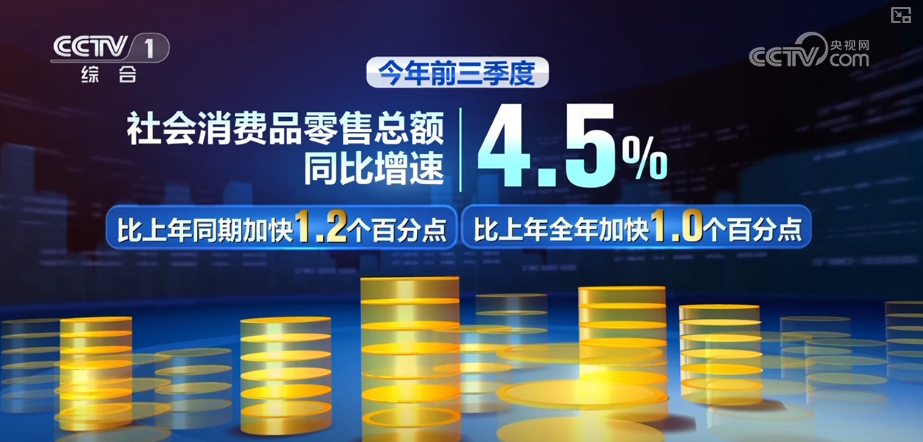
Core Insights - The consumer market in China has shown stable growth this year, driven by effective consumption-boosting policies and the expansion of new consumption formats, models, and scenarios [1] Group 1: Retail Performance - The total retail sales of consumer goods in the first three quarters increased by 4.5% year-on-year, which is an acceleration of 1.2 percentage points compared to the same period last year and 1.0 percentage point compared to the entire last year [3] - Service consumption has accelerated, with retail sales in the service sector growing by 5.2% year-on-year in the first three quarters, outpacing the growth of goods retail sales by 0.6 percentage points [3] - Specific service categories such as cultural, sports, and leisure services, communication and information services, and transportation services have all achieved double-digit growth [3] Group 2: Specific Product Categories - The "trade-in" policy has significantly boosted retail sales in related categories, with furniture retail sales increasing by 21.3% year-on-year in the first three quarters [5] - Retail sales of household appliances and audio-visual equipment, as well as cultural and office supplies, grew by 25.3% and 19.9% year-on-year, respectively, showing a marked acceleration compared to the previous year [5] Group 3: Online Consumption - Online retail sales increased by 9.8% year-on-year in the first three quarters, with growth accelerating since May, indicating a strengthening role of online consumption in driving total retail sales [5] Group 4: Economic Contribution - Final consumption expenditure contributed 53.5% to economic growth in the first three quarters, an increase of 9.0 percentage points compared to the entire last year, reinforcing its role as the main engine of economic growth [6]

(经济观察)消费稳步扩大 中国经济主引擎持续发力
Zhong Guo Xin Wen Wang· 2025-10-20 11:50
Group 1 - The core viewpoint of the article highlights that China's consumer market is steadily expanding, with a 4.5% year-on-year growth in retail sales of consumer goods in the first three quarters, contributing 53.5% to economic growth, an increase of 9 percentage points from the previous year [1][2] - The increase in consumer spending is attributed to effective consumption-boosting policies, including the issuance of 300 billion RMB in special bonds to support the replacement of old consumer goods [1][2] - The retail sales of household appliances, cultural office supplies, furniture, and communication equipment have all seen double-digit growth due to the "old for new" policy, with over 8.3 million applications for car replacements this year [1][2] Group 2 - Service consumption has also accelerated, with service retail sales growing by 5.2% year-on-year, outpacing goods retail sales by 0.6 percentage points [2] - New consumption models such as instant retail, live streaming sales, and social e-commerce are rapidly growing, with online retail sales increasing by 9.8% year-on-year [2] - Despite the growth in consumption, the retail sales growth rate is still below the overall economic growth rate, indicating a need to enhance consumer willingness [2][3] Group 3 - Future strategies should focus on stabilizing and expanding employment, promoting stable income growth, and enhancing consumer capacity and willingness [3] - There is a call for more systematic and comprehensive measures to stimulate domestic demand and release consumption potential, alongside current consumption-boosting policies [3] - Maintaining economic stability and growth is crucial for boosting consumer confidence and expectations in the face of increasing uncertainties [3]
核心CPI温和上涨,消费向好积极信号|新京报快评
Xin Jing Bao· 2025-10-20 11:05
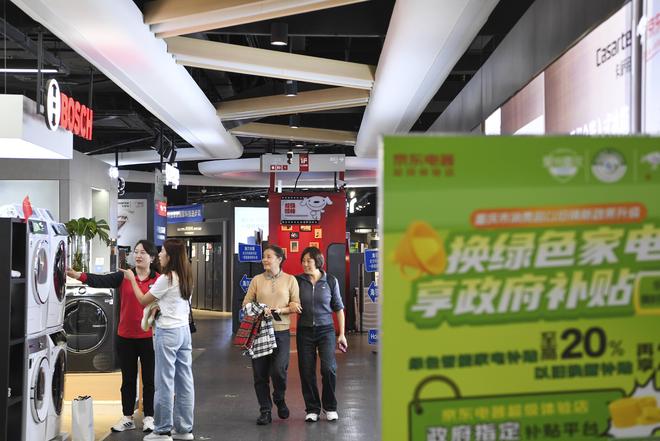
Core Insights - The article highlights the effectiveness of proactive fiscal policies in stimulating consumer demand in China, with a focus on the recent economic data released by the National Bureau of Statistics [2][3]. Economic Data Summary - In the first three quarters of this year, China's Consumer Price Index (CPI) slightly decreased by 0.1% year-on-year, while the core CPI, excluding food and energy, increased by 0.6%, with a notable rise of 1.0% in September, marking the first return to a 1% increase in nearly 19 months [2]. - Final consumption expenditure contributed 53.5% to economic growth, an increase of 9.0 percentage points compared to the previous year, reinforcing its role as a key driver of economic growth [2]. Policy Measures - The "Special Action Plan to Boost Consumption" was introduced in March, outlining 30 key tasks across eight areas, including actions to increase residents' income and enhance service consumption [3]. - The government allocated 300 billion yuan in special long-term bonds to support consumption, particularly through trade-in programs, which have led to double-digit growth in retail sales of household appliances and related goods [3]. Retail Performance - Retail sales of household appliances and audio-visual equipment increased by 4.4% year-on-year in the first three quarters, with a significant jump of 20.5% in September, marking a 17.1 percentage point acceleration from August [4]. - The automotive market is also showing signs of recovery, with over 8.3 million trade-in applications for vehicles submitted by September 10, averaging more than 30,000 applications per day [4]. Financial Policies - The central bank has implemented personal consumption loan interest subsidies and support for service industry loans, effectively reducing credit costs for residents and businesses, thereby stimulating consumption potential [4]. - There is a notable shift in consumer spending from goods to services, with service retail sales growing by 5.2% year-on-year in the first three quarters, outpacing goods retail sales [4]. Future Considerations - There is a need to solidify the foundation for consumer recovery, focusing on improving residents' income and optimizing income distribution to enhance consumption levels [5]. - Improving consumer expectations is crucial, as it significantly influences consumption decisions, and a coordinated policy framework is essential for maximizing the effectiveness of measures aimed at expanding domestic demand and promoting consumption [5].
核心CPI温和上涨,消费向好积极信号 | 新京报快评
Xin Jing Bao· 2025-10-20 10:39
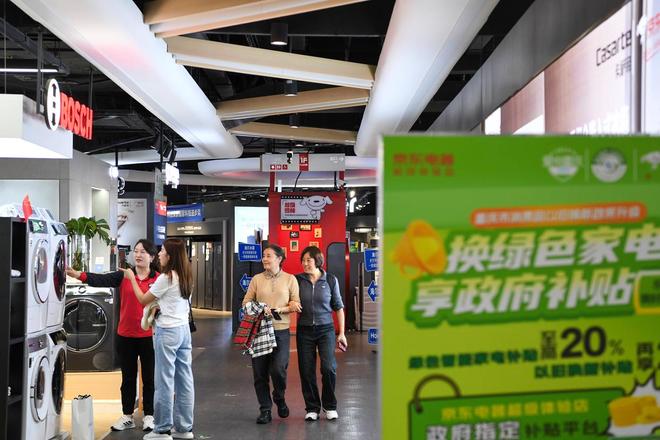
Core Insights - The article highlights the effectiveness of proactive fiscal policies in stimulating consumer demand in China, with a focus on the positive impact of the "trade-in" policy on household consumption [2][3]. Economic Data Summary - In the first three quarters of this year, China's Consumer Price Index (CPI) decreased by 0.1% year-on-year, while the core CPI, excluding food and energy, increased by 0.6%, with a notable rise of 1.0% in September, marking the first return to a 1% increase in nearly 19 months [2]. - Final consumption expenditure contributed 53.5% to economic growth, an increase of 9.0 percentage points compared to the previous year, reinforcing its role as a key driver of economic growth [2]. Policy Measures - The "Special Action Plan to Boost Consumption" was introduced in March, outlining 30 key tasks across eight areas, including income enhancement and service consumption improvement [3]. - The government allocated 300 billion yuan in special long-term bonds to support the trade-in policy, which has led to double-digit growth in retail sales of household appliances and audio-visual equipment [3]. Retail Performance - Retail sales of household appliances and audio-visual equipment increased by 4.4% year-on-year in the first three quarters, with a significant jump of 20.5% in September, marking a 17.1 percentage point acceleration from August [3][4]. - The smart home appliance sector saw growth rates exceeding 30% [4]. Automotive Sector - The automotive market is becoming increasingly active, with over 8.3 million trade-in applications submitted by September 10, averaging more than 30,000 applications per day [4]. Financial Policies - The central bank has implemented personal consumption loan interest subsidies and service industry loan interest subsidies, effectively reducing credit costs for residents and businesses, thereby stimulating consumption potential [4]. - Service retail sales grew by 5.2% year-on-year in the first three quarters, outpacing goods retail sales by 0.6 percentage points [4]. Future Considerations - Improving residents' income and optimizing income distribution are crucial for boosting consumption levels [5]. - Enhancing consumer expectations is also a key focus, as it significantly influences consumption decisions [5]. - A coordinated policy framework is essential to maximize the effectiveness of measures aimed at expanding domestic demand and promoting consumption [5].
中国经济秋季报|新业态、新模式、新场景不断拓展 消费“主引擎”作用凸显
Yang Shi Wang· 2025-10-20 08:59
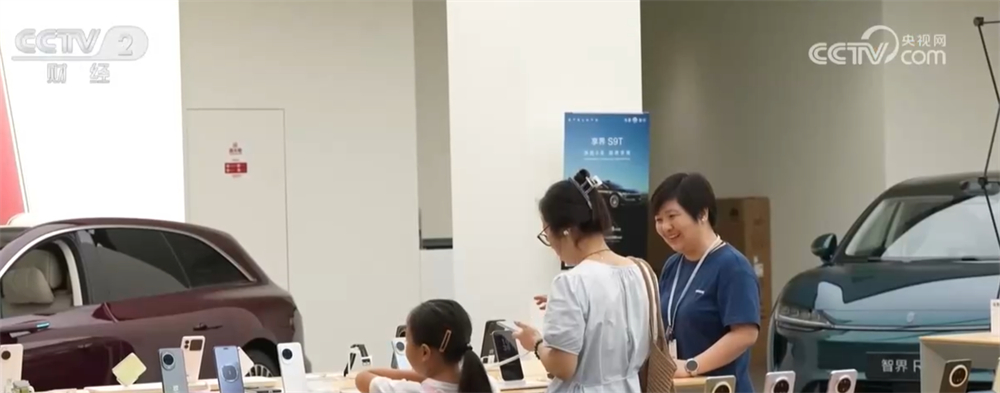
Group 1 - The core viewpoint is that consumption remains the main engine of economic growth, with new types of consumption developing rapidly and market vitality increasing [1] - In the first three quarters, final consumption expenditure contributed 53.5% to economic growth, an increase of 9.0 percentage points compared to the previous year [1] - The "old-for-new" policy has been expanded, with 300 billion yuan in special bonds allocated to support consumer demand [1] Group 2 - The "old-for-new" policy has led to double-digit growth in retail sales of household appliances, audio-visual equipment, cultural office supplies, and furniture [4] - As of September 10, over 8.3 million applications for vehicle replacements under the "old-for-new" policy have been submitted, averaging over 30,000 applications per day [4] - Retail sales of high-efficiency and smart appliances have continued to grow rapidly, driven by policies to expand service consumption [7] Group 3 - Service retail sales increased by 5.2% year-on-year in the first three quarters, outpacing the growth of goods retail sales by 0.6 percentage points [7] - Categories such as cultural and recreational services, communication and information services, travel consulting and leasing services, and transportation services all achieved double-digit growth [7] - The spokesperson from the National Bureau of Statistics emphasized the importance of expanding domestic demand and enhancing market vitality to promote sustained economic development [9]
一户家庭开启智能新生活(“十四五”的发展镜头)
Ren Min Ri Bao· 2025-10-20 00:45
Core Insights - The article highlights the increasing trend of smart home consumption, with an average annual growth rate of 9.6% in service-related consumer spending from 2020 to 2024 [1] Group 1: Smart Home Consumption - Smart home products are becoming essential for modern households, with consumers prioritizing features that enhance convenience and efficiency [1][2] - The sales growth of smart home products is significant, with service robots like vacuum cleaners seeing a 75% increase in sales revenue year-on-year [2] - Consumers are willing to invest in higher-priced smart products, reflecting a shift in spending habits towards technology-driven solutions [1][2] Group 2: Lifestyle Changes - The adoption of smart home technology is leading to improved quality of life, allowing consumers to save time on household chores and engage in other activities [2] - The transition to electric vehicles is also noted, with a 30.1% year-on-year increase in sales, indicating a broader trend towards sustainable consumption [2] - There is a growing trend in service consumption, with consumers increasingly willing to pay for memberships and subscriptions that enhance their lifestyle [2]