芯片半导体

Search documents
杨德龙:政策利好叠加资金推动 本轮慢牛长牛行情行稳致远
Xin Lang Ji Jin· 2025-09-24 11:26
Group 1 - The A-share market has experienced significant changes over the past year, with total market capitalization increasing from 68 trillion to 104 trillion, surpassing the 100 trillion mark [1] - The bull market was initiated by the "924" policy, leading to a rapid rise in the Shanghai Composite Index, which increased by nearly 1000 points within a few trading days [1] - The second wave of the bull market began in late June, driven by sectors such as chips, semiconductors, AI, and innovative pharmaceuticals, further solidifying the bull market trend [1][2] Group 2 - The technology sector has become the new market leader, with the total market capitalization of the electronics industry surpassing that of the banking sector [2] - Over a thousand stocks have doubled in value, primarily in industries like machinery, electronics, and biomedicine, indicating a strong performance in the tech sector [2] - The shift of household savings from real estate to the stock market, along with increased foreign investment, has fueled the liquidity-driven bull market [2] Group 3 - Technology innovation is now a core national strategy, with the market capitalization of technology companies exceeding 25% of the A-share market [3] - The number of technology firms among the top 50 companies has increased from 18 to 24, highlighting the growing importance of tech companies in the market [3] - Financial resources are increasingly directed towards technology sectors, particularly in areas benefiting from domestic substitution policies [3] Group 4 - The channels for long-term capital entering the market are expanding, with various types of long-term funds holding approximately 21.4 trillion in A-shares, a 32% increase since the end of the 13th Five-Year Plan [4] - Regulatory efforts are being made to accelerate the entry of long-term capital, which is expected to favor stable cash flow and high dividend yield companies [4] Group 5 - Financial support for the real economy has intensified, with banks and insurance companies providing 170 trillion in new funds over five years, particularly for high-end manufacturing [5] - Companies with core technologies aligned with new productive forces are likely to receive more resource support, benefiting sectors like high-end equipment and new energy vehicles [5] Group 6 - The capital market is expected to continue its bull market trajectory, with a significant increase in the proportion of technology companies among newly listed firms [6] - The market has seen a notable increase in companies returning value to investors, with total distributions reaching 10.6 trillion over the past five years, an increase of over 80% compared to the previous period [6] Group 7 - Regulatory bodies are actively improving mechanisms for capital formation and long-term capital entry, enhancing market resilience and risk management [7] - The annualized volatility of the Shanghai Composite Index has decreased from 19% to 15.9%, indicating improved market stability [7]
疯狂!15连板暴涨320%!这股遭3次停牌调查,深陷内幕交易危机,2次复牌后照样涨停!第三次还能满血归来吗?
雪球· 2025-09-24 07:58
Market Overview - The A-share market showed strong performance today, with the Shanghai Composite Index rising by 0.83%, the Shenzhen Component Index increasing by 1.8%, and the ChiNext Index up by 2.28% [2] - The total market turnover was 23,471 billion, a decrease of 1,713 billion compared to the previous day, with over 4,400 stocks rising [2] - Today marks the one-year anniversary of the "924 market," during which the Shanghai Composite Index has increased by over 40%, the Shenzhen Component Index by over 65%, and the ChiNext Index by over 108% [3] Company Spotlight: Tianpu Co., Ltd. - Tianpu Co., Ltd. has experienced a remarkable 15 consecutive trading limit increases, with a total rise of 317.72% since August 22 [4][7] - The company has been suspended three times during this period due to trading anomalies, with the stock being under close monitoring by the Shanghai Stock Exchange [8][9] - The recent surge is attributed to the announcement of a share transfer to AI chip developer Zhonghao Xinying, which will result in a change of control of the company [6][11] - Following the disclosure of the transaction, Tianpu Co., Ltd. resumed trading on August 22 and has since seen a cumulative increase of over 320% in its stock price [7] Semiconductor Sector Performance - The semiconductor sector has witnessed a strong rally, with several companies, including SMIC and Jiangfeng Electronics, hitting their daily limit up [14] - TSMC plans to increase prices for its 3nm and 2nm process nodes, with the price for the 2nm process expected to rise by at least 50% compared to the 3nm process, reflecting the high costs associated with advanced technology [16] - Samsung has also raised prices for memory and flash products, with DRAM prices increasing by up to 30% and NAND flash prices rising by 5% to 10% due to supply constraints and increased demand from cloud enterprises [16] Strategic Partnerships - Alibaba has announced a collaboration with NVIDIA to advance Physical AI, covering various aspects such as data synthesis, model training, and environment simulation [21] - Alibaba's stock surged by 8.91%, reaching a nearly four-year high, following the announcement of increased capital expenditure plans [18][21]



除了芯片半导体,还能关注什么?
2025-09-23 02:34
Summary of Conference Call Records Industry or Company Involved - The records primarily discuss the overall market performance, focusing on sectors such as AI, semiconductor, renewable energy, and consumer services, particularly in the context of the upcoming National Day holiday in China. Core Points and Arguments 1. **Market Performance and Sentiment** - The market experienced a significant decline on Thursday, influenced by holiday effects and profit-taking, with total trading volume exceeding 3 trillion [1][2][3] - The risk appetite decreased ahead of the holiday, leading to a mixed market style and a retreat in speculative trading sentiment [1][2][3] 2. **Impact of Federal Reserve's Rate Cut** - The Federal Reserve's 25 basis point rate cut was in line with expectations, but some investors opted to cash out, influenced by concerns over U.S.-China trade negotiations [1][6] - The overall risk appetite remained low, with rapid market rotation and a rise in speculative sentiment in smaller stocks [6] 3. **Investment Opportunities in Core Assets** - In the current mid-term bull market, core assets and blue-chip stocks remain attractive, with significant gains observed in leading companies like Zhongwei and Ningde Times, which saw over 10% increase in a week [7] - The focus remains on large-cap stocks that can absorb more liquidity despite the recent rise in small-cap stocks [7] 4. **AI Sector Performance** - The AI sector has shown remarkable performance, impacting related fields such as semiconductor and robotics, with cyclical sectors like coal and tourism also receiving investment [8] - The mid-term bull market outlook remains intact due to established economic policy bottoms [8] 5. **Trends in Humanoid Robotics** - The humanoid robotics sector has seen a notable rise, influenced by positive developments in the U.S. stock market and Tesla's announcements [9] - Upcoming events like the Yushu listing and Alibaba's cloud conference may act as catalysts for further growth [9] 6. **Renewable Energy and Semiconductor Updates** - Ningde Times has revised its production guidance for 2026, indicating improved industry conditions [10] - Developments in domestic GPU production and semiconductor equipment have been highlighted, with Huawei announcing a three-year AI chip plan [10][11] 7. **Storage Market Dynamics** - The storage sector is experiencing independent growth, with price increases validated by major companies like SanDisk and Micron [12] 8. **Quantum Computing and Optical Communication Developments** - Quantum computing is seeing IPO preparations, while optical communication is gaining traction with new directions being explored [13] 9. **Consumer Services Outlook** - The restaurant and tourism sectors are expected to benefit from policy stimuli aimed at expanding service consumption [14] 10. **Mid-term Market Trends** - The mid-term market outlook is deemed highly certain based on three underlying logics: policy bottom, asset scarcity, and the U.S. rate cut cycle [15] - Short-term volatility is anticipated, with the market expected to stabilize before resuming upward momentum [15] 11. **Market Structure and Sector Rotation** - The market structure is currently dispersed, with notable sector rotation, and opportunities in transitional themes like solid-state batteries and robotics [16] 12. **Key Investment Directions** - Focus on AI expansion, AIGC capital expenditure, and sectors benefiting from interest rate cuts, such as precious and industrial metals [17] 13. **Solid-State Battery Industry Progress** - The solid-state battery sector is rapidly developing, with new projects being signed at industry conferences [18] 14. **Military Industry Attention** - The military sector is worth monitoring due to recent stabilization and ongoing interest from market participants [19] 15. **Innovative Drug Sector Catalysts** - Potential catalysts in the innovative drug sector include upcoming conferences and favorable drug procurement policies [20][21] Other Important but Possibly Overlooked Content - The market's short-term fluctuations are influenced by external factors such as geopolitical events and economic policies, which may not be immediately apparent in daily trading activities [2][3][6] - The emphasis on structural opportunities suggests a need for investors to remain vigilant and adaptable to changing market conditions [16]


杨德龙:美联储降息靴子落地 大盘短期调整不改中长期趋势
Xin Lang Ji Jin· 2025-09-19 08:12
Group 1: Federal Reserve Rate Cut Impact - The Federal Reserve's first rate cut this year has caused significant adjustments in global capital markets, including A-shares and Hong Kong stocks, which experienced profit-taking after previous gains [1] - Despite short-term adjustments, the long-term bullish trend for A-shares and Hong Kong stocks remains intact, driven by policy and capital inflows [1] - The rate cut is expected to stabilize U.S. economic growth and alleviate pressure on the government, which has a high debt burden of $37 trillion [3] Group 2: Economic Indicators and Future Projections - The Fed's decision to cut rates was influenced by lower-than-expected non-farm payroll data and a decline in the unemployment rate, indicating a slowdown in U.S. economic growth [2] - The current federal funds rate is now between 4% and 4.25%, with potential further cuts expected by the end of the year [2] - The anticipated rate cuts may not be isolated, suggesting a new cycle of monetary easing [3] Group 3: Market Opportunities and Sector Focus - The human-shaped robot sector is highlighted as a key area of focus, benefiting from the integration of AI and consumer applications, with significant stock price increases observed [5] - The semiconductor sector remains a critical area for investment, with domestic companies ramping up efforts in chip production and showing strong stock performance [5] - The innovative pharmaceutical sector is expected to rebound in the fourth quarter, despite recent pullbacks due to external policy influences [5] - Traditional consumer stocks may see a resurgence in the fourth quarter as market conditions improve and consumer spending increases [5]
见证历史!芯片重大利好 直线暴涨
Zhong Guo Ji Jin Bao· 2025-09-18 12:12
Core Viewpoint - Nvidia announced a $5 billion investment in Intel, marking a surprising collaboration between the two competitors to jointly develop chips for PCs and data centers, providing support to Intel, which has been facing challenges [2][5]. Group 1: Investment Details - Nvidia's investment price is set at $23.28 per share, leading to a pre-market surge of approximately 33% in Intel's stock price, reaching around $33 per share [2]. - This investment follows a recent agreement where the U.S. government acquired about 10% of Intel, and SoftBank invested $2 billion [5]. Group 2: Strategic Collaboration - Intel will incorporate Nvidia's graphics technology into its upcoming PC chips and will provide processors for Nvidia's hardware-based data center products [4]. - The collaboration signifies a shift in the computing industry landscape, with Nvidia's CEO highlighting the historical significance of merging Nvidia's AI capabilities with Intel's CPU and x86 ecosystem [6]. Group 3: Market Context - Intel aims to enhance its competitive position against AMD in the PC market by combining general processing capabilities with Nvidia's powerful graphics components [6]. - In the data center sector, Nvidia's AI accelerators dominate, pushing Intel to a marginal role, but Intel will supply processors for certain products to integrate with Nvidia's hardware [6]. Group 4: Leadership Statements - Intel's CEO expressed gratitude for Nvidia's investment and emphasized ongoing innovation to support future workloads based on Intel's x86 architecture [7]. - Following the announcement, Nvidia's stock rose over 3%, and European semiconductor stocks, including ASML, increased by approximately 6% [7].


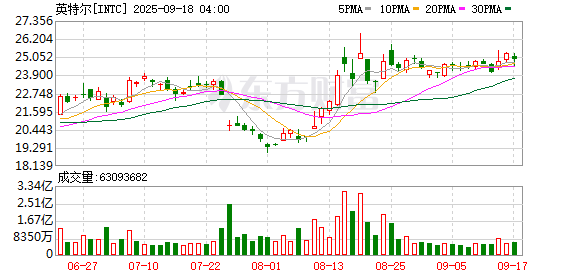
见证历史!芯片重大利好,直线暴涨
中国基金报· 2025-09-18 11:53
Core Viewpoint - NVIDIA announced a $5 billion investment in Intel, marking a surprising collaboration between the two competitors to develop chips for PCs and data centers, highlighting a shift in the semiconductor industry landscape [2][5]. Group 1: Investment Details - NVIDIA's investment price is set at $23.28 per share, leading to a pre-market surge of approximately 33% in Intel's stock price, reaching around $33 per share [3]. - This investment follows Intel's recent capital influx from the U.S. government, which agreed to acquire about 10% of the company, and a $2 billion investment from SoftBank [5]. Group 2: Strategic Collaboration - Intel will integrate NVIDIA's graphics technology into its upcoming PC chips and provide processors for data center products based on NVIDIA hardware, although no specific product launch timeline has been provided [5]. - The collaboration aims to combine NVIDIA's AI and accelerated computing capabilities with Intel's CPU and extensive x86 ecosystem, laying the groundwork for the next generation of computing [6]. Group 3: Market Impact - Following the announcement, NVIDIA's stock rose over 3%, and European semiconductor stocks, including ASML, increased by approximately 6% [6][8]. - The partnership signifies a notable change in the competitive dynamics of the computing industry, as Intel seeks to regain its footing amid market share losses [5][6].

芯片半导体爆发,科创50拉涨2%
Mei Ri Jing Ji Xin Wen· 2025-09-18 02:02
Group 1 - The semiconductor sector saw significant gains in early trading, with companies like Haiguang Information, Longxin Zhongke, Cambricon, and Zhongwei Company leading the rise, contributing to a more than 2% increase in the Sci-Tech 50 Index [1] - On September 16, CCTV reported on the achievements of China Unicom's Sanjiangyuan Green Power Intelligent Computing Center project, showcasing multiple domestic AI chips, indicating a strengthening trend in domestic chip replacement [1] - The signed projects include contributions from Alibaba Cloud, which provided 1,024 devices and 16,384 PingTouGe computing cards, delivering a total computing power of 1,945P [1] Group 2 - The Sci-Tech 50 ETF (588000) tracks the Sci-Tech 50 Index, with 68.77% of its holdings in the electronics sector and 9.85% in the pharmaceutical and biological sector, totaling 78.62%, aligning well with the development of cutting-edge industries like AI and robotics [1] - The ETF also covers various sub-sectors such as semiconductors, medical devices, software development, and photovoltaic equipment, indicating a high content of hard technology [1] - Given the historical performance of the ChiNext board, the future growth potential of the hard technology sector in China is promising, suggesting that investors should continue to pay attention to this area [1]
自主可控预期强化!芯片ETF(159995)涨1.21%,龙芯中科涨14.29%
Sou Hu Cai Jing· 2025-09-16 03:06
Group 1 - The A-share market experienced a collective decline on September 16, with the Shanghai Composite Index dropping by 0.17% during intraday trading [1] - The chip technology sector continued to strengthen, with the Chip ETF (159995) rising by 1.21% as of 10:17 AM, and notable increases in constituent stocks such as Longxin Technology (up 14.29%) and Haiguang Information (up 5.90%) [1] - According to招商证券, the evolution of the global trade landscape has elevated the importance of self-sufficiency in the semiconductor industry as a key strategic focus for China's industrial development, supported by ongoing government policy initiatives [1] Group 2 - The AI innovation cycle, combined with the backdrop of tariffs, has reinforced expectations for self-sufficiency, leading to a sustained recovery in the semiconductor sector, which is now entering a new upward cycle [1] - The Chip ETF (159995) tracks the National Chip Index, comprising 30 leading companies in the A-share chip industry across various segments including materials, equipment, design, manufacturing, packaging, and testing [1] - Notable companies within the ETF include SMIC, Cambricon, Changdian Technology, and Northern Huachuang [1]






龙芯中科触及涨停,科创50高开高走
Mei Ri Jing Ji Xin Wen· 2025-09-16 01:55
Group 1 - The core viewpoint of the article highlights the positive impact of Nvidia's antitrust investigation on the A-share semiconductor sector, with significant gains in stocks like Loongson Technology and Haiguang Information [1] - The China Securities Bank expresses optimism towards technology stocks, anticipating a new round of interest rate cuts by the Federal Reserve starting in September [1] - Historical analysis indicates that during periods of simultaneous monetary easing in China and the U.S., the A-share market typically experiences valuation increases, particularly favoring small-cap and growth stocks over large-cap and value stocks [1] Group 2 - The ChiNext 50 ETF (588000) tracks the ChiNext 50 Index, which has a significant allocation in the electronics sector (68.77%) and the pharmaceutical and biological sector (9.85%), totaling 78.62% [2] - The index aligns well with the development of cutting-edge industries such as artificial intelligence and robotics, while also covering various sub-sectors like semiconductors, medical devices, software development, and photovoltaic equipment [1] - Given the historical performance of the ChiNext board, the future growth potential of the ChiNext 50 is considered promising, and investors are encouraged to keep an eye on the long-term development prospects of China's hard technology sector [1]
太平洋证券:板块轮涨 静待新高
Sou Hu Cai Jing· 2025-09-14 08:10
Group 1: Market Overview - The bond market is expected to challenge new lows, with a target set for the low point of September 30, 2024 [1][5] - A-shares are showing a strong upward trend, particularly in the North Star 50 index, which is anticipated to lead the market [2][5] - The commodity market is expected to maintain a bullish outlook, with a focus on long positions [3][5] Group 2: Sector Performance - The chemical, agriculture, steel, and photovoltaic sectors are at historical lows, providing a higher margin of safety for investors [2] - Semiconductor and optical module sectors have reached their adjustment space, and holding positions is recommended for potential gains [2] - The innovative drug sector has shown resilience after a recent drop, indicating a buying opportunity for high-growth stocks [2] Group 3: Economic Indicators - The U.S. labor market shows signs of slowing, with August non-farm payroll data indicating a softening, which supports a dovish stance from the Federal Reserve [2] - The U.S. economy remains robust, with second-quarter GDP growth revised upward and corporate profits continuing an upward trend since 2021 [2] - China's social financing scale increased by 26.56 trillion yuan in the first eight months of 2025, indicating strong liquidity in the market [4]