
汽车

Search documents
何小鹏内部信要率先量产,什么是“高阶”人形机器人?
Guan Cha Zhe Wang· 2026-02-24 10:25
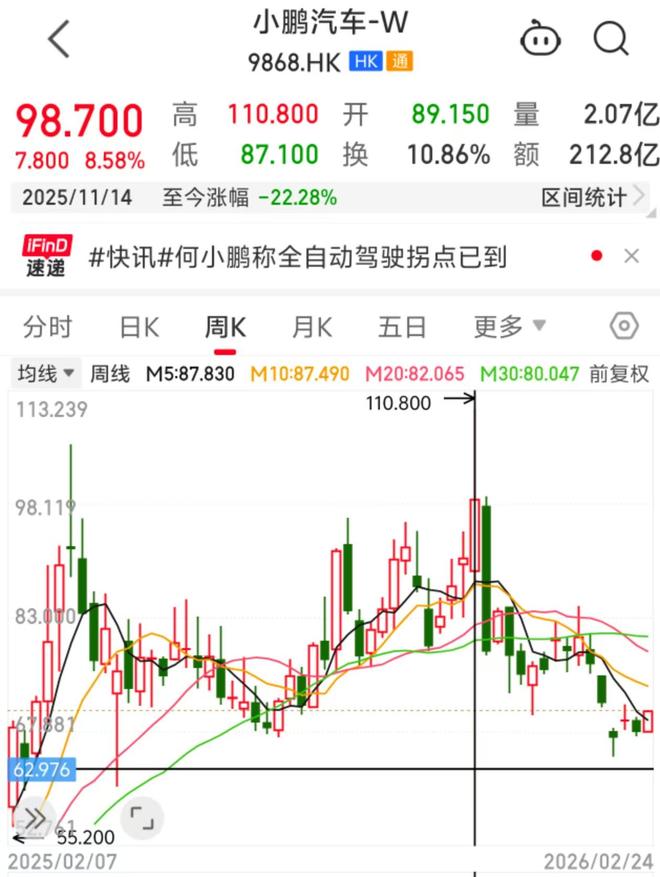
Core Viewpoint - Xiaopeng Motors aims to become the first company globally to mass-produce advanced humanoid robots by the end of the year, with a focus on integrating automotive-grade reliability and AI capabilities [1][12][14]. Group 1: Robot Development and Market Position - The new generation of IRON robots will initially be deployed in guiding and shopping scenarios, with an SDK available for global developers [1][12]. - Xiaopeng's IRON robot features a second-generation VLA model and three Turing AI chips, enabling integrated high-level intelligent capabilities such as conversation and walking [2][10]. - The company’s stock performance has shown a significant increase, reaching a market capitalization of HKD 212 billion, driven largely by the anticipated success of the IRON robot [3][5]. Group 2: Competitive Landscape and Challenges - Xiaopeng's approach to robotics emphasizes a combination of automotive-grade standards and integrated intelligence, distinguishing it from competitors like Yushun and Zhiyuan, which focus on different aspects of robotics [2][15]. - The company faces challenges in commercializing its robots, as competitors have already established a presence in the performance and rental markets [6][9]. - The IRON robot's primary applications will be in Xiaopeng's own production and retail environments, which may limit its scalability compared to competitors targeting broader B2B markets [9][10]. Group 3: Strategic Vision and Future Goals - Xiaopeng Motors is transitioning from being an automotive manufacturer to a technology company focused on advanced AI applications, including robots and flying cars [10][12]. - The company aims to leverage its technological advancements to capture significant market opportunities in autonomous driving and AI by 2026 [12][13]. - Xiaopeng's ambition is to redefine mass production standards in the robotics industry, shifting the focus from quantity to quality and reliability [14][15].


何小鹏内部信要全球率先量产,什么是“高阶”人形机器人?
Guan Cha Zhe Wang· 2026-02-24 10:21
Group 1 - The core message of the news is that XPeng Motors is set to launch its next-generation IRON robot by the end of the year, aiming to become the world's first mass-produced advanced humanoid robot [1][2] - XPeng's CEO, He Xiaopeng, emphasizes the integration of automotive-grade reliability standards with AI capabilities, positioning the IRON robot as a unique offering in the market [2][6] - The company's stock performance has shown a significant increase, reaching a market capitalization of HKD 212 billion, driven primarily by the anticipated success of the IRON robot rather than traditional vehicle sales [2][5] Group 2 - The IRON robot is currently in the research phase, with plans for mass production to begin around April next year, following competitors who have already achieved scale [6] - XPeng's IRON robot features advanced technology, including a self-developed Turing AI chip with a computing power of 3000T and a 720° vision system, enabling it to perform complex tasks [7][9] - The commercial application of the IRON robot is focused on enhancing customer experience in XPeng's automotive showrooms, which may limit its scalability compared to competitors targeting broader B2B markets [9]

现代汽车集团公布重大投资规划:投入10 万亿韩元,打造人工智能、氢能源、机器人未来型产业枢纽
Zhong Guo Qi Che Bao Wang· 2026-02-24 10:13
Core Viewpoint - Hyundai Motor Group announced a significant investment plan to invest 10 trillion KRW (approximately 48.12 billion RMB) over the next five years in the new Mankim area of South Korea, focusing on artificial intelligence, hydrogen energy, and robotics [1] Group 1: Investment Details - The investment will be executed in phases starting this year, aimed at building infrastructure related to new business areas [1] - A memorandum of understanding will be signed with the Ministry of Trade, Industry and Energy of South Korea to formalize this investment [1] Group 2: Focus Areas - The investment will concentrate on three key sectors: artificial intelligence, hydrogen energy, and robotics [1] - This initiative is part of Hyundai's broader strategy to advance cutting-edge technology and industrialization [1]
打“擦边球”被告,特斯拉停止使用“自动驾驶”传播
Guan Cha Zhe Wang· 2026-02-24 09:52
Core Viewpoint - Tesla will cease using the term "Autopilot" in its marketing within the California market due to regulatory concerns about misleading consumers regarding the capabilities of its driving technology [1]. Group 1: Regulatory Actions - California regulators have accused Tesla of misleading consumers with terms like "Autopilot" and "FSD" (Full Self-Driving), threatening to suspend Tesla's dealer license if changes are not made [1]. - Tesla has previously modified its descriptions of FSD to emphasize the need for driver supervision, and the investigation has now focused specifically on the term "Autopilot" [1]. Group 2: Legal Issues - Tesla faced a lawsuit in Miami, Florida, regarding a pedestrian death involving a Tesla owner, questioning whether the company's driver assistance technology bore some responsibility and if its marketing was misleading [1]. - Tesla's legal representatives argue that statements made by CEO Elon Musk about the vehicle's ability to drive without human intervention are forward-looking and do not reflect the current technological capabilities [1]. Group 3: Expert Opinions - A safety expert, Cummings, indicated that the term "Autopilot" could create a false sense of trust among consumers, as it may lead them to believe the technology is as effective in cars as it is in aviation [2]. - Cummings warned that such statements could encourage driver complacency and lead to misconceptions about the vehicle's capabilities [1][2]. Group 4: Strategic Focus - Tesla's CEO Elon Musk is shifting the company's strategic focus towards Robotaxi services and humanoid robots, with plans to begin mass production of a steering wheel-less Robotaxi model called Cybercab this year [2].

对华加税30%!马克龙再度变脸欲当出头鸟,中方点名警告加反制
Sou Hu Cai Jing· 2026-02-24 09:52
Group 1 - The core issue revolves around French President Macron's proposal to impose a 30% tariff on all imports from China, which has raised tensions within the EU and prompted a warning from China regarding potential retaliatory measures against EU dairy products and wine [1][3][24] - The French government is reacting to a significant trade deficit with China, which is projected to exceed 300 billion euros by 2025, with France alone facing a deficit of 10.6 billion USD [16][18] - The competitive pressure from Chinese products, particularly in the electric vehicle and renewable energy sectors, has led to a sense of urgency within France to protect its domestic industries [12][20] Group 2 - Macron's aggressive stance is seen as a response to the challenges faced by European industries, particularly in light of the economic impacts of the Russia-Ukraine conflict and the subsequent energy supply issues [10][12] - The proposal for tariffs has not garnered unanimous support within the EU, with countries like Germany and Italy expressing opposition, highlighting the internal divisions within the bloc [22][24] - China's response to the tariff proposal includes the implementation of countervailing duties on EU dairy products, which could have significant implications for French agricultural exports [41][45] Group 3 - The French media has echoed the government's concerns, suggesting that without action, Europe risks falling into a "destructive recession" due to competition from Chinese industries [24][26] - The situation reflects a broader trend of protectionism in international trade, with France's approach being characterized as a direct challenge to China, which could escalate tensions further [5][7] - The ongoing trade dynamics indicate that France may need to reassess its strategy and engage in dialogue with China to find mutually beneficial solutions, rather than pursuing unilateral measures [51]
整个欧洲都在校准?美国靠不住,德国总理通告全球,下周访问中国
Sou Hu Cai Jing· 2026-02-24 09:29
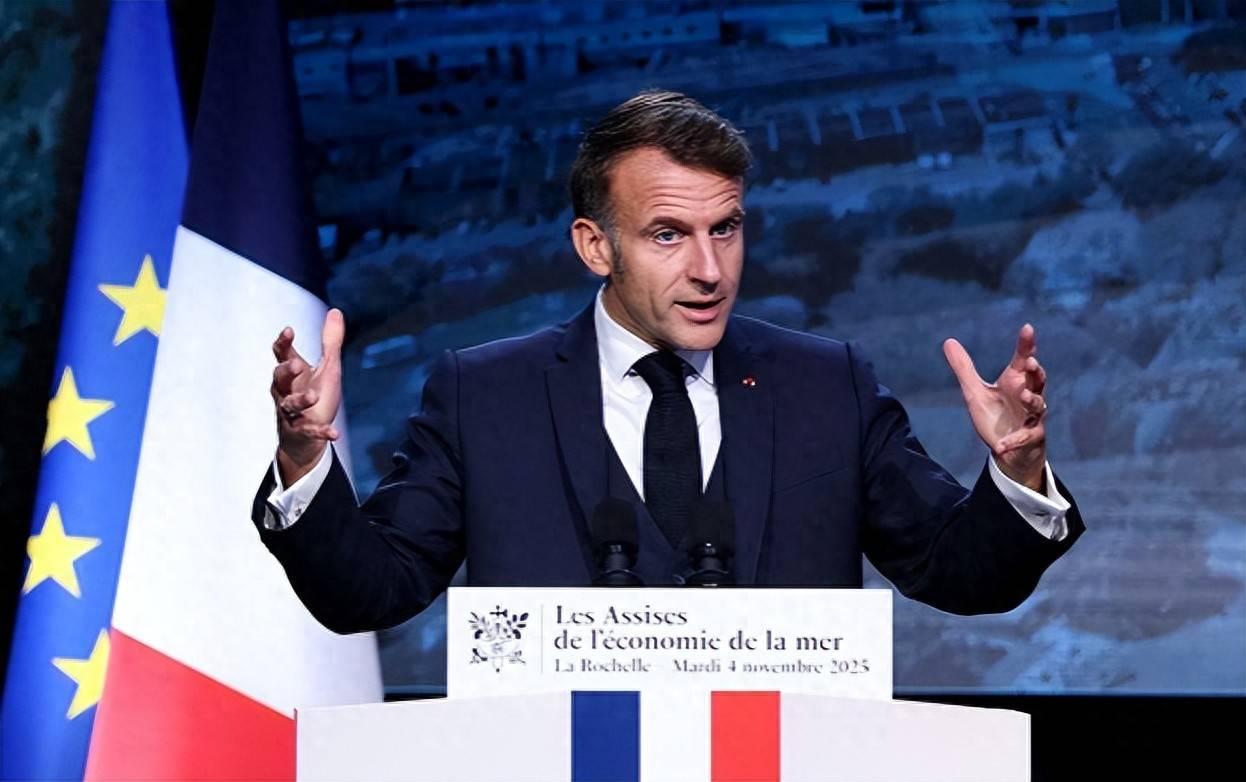
Core Viewpoint - Germany is signaling a potential strategic shift towards China amidst growing tensions with the United States, as indicated by Chancellor Merz's planned visit to China and his criticism of U.S. unilateralism [1][3]. Group 1: Germany's Economic Relations with China - By 2025, the trade volume between Germany and China is expected to reach 253 billion euros, making China Germany's largest trading partner, surpassing the U.S. [5] - Germany's direct investment in China is projected to hit 7 billion euros by 2025, marking a four-year high, reflecting the deepening reliance of German companies on the Chinese market [5]. - The German manufacturing sector, known for its high-end production, increasingly depends on China's vast market and robust industrial chain, indicating that any disruption in trade relations could have significant implications for local economies, employment, and tax revenues [5]. Group 2: Broader European Context - Since 2026, leaders from major European countries, including Ireland, Finland, and the UK, have frequently visited China, suggesting a collective shift towards closer ties with China amidst global trade uncertainties [7]. - Although the EU has not established a unified policy towards China, individual member states are actively seeking to engage with China, indicating a trend of proactive alignment [7]. - European companies are feeling heightened anxiety due to U.S. trade policies, leading them to seek security through diversified partnerships, particularly with China, which offers a large market and complete supply chains [9]. Group 3: Strategic Adjustments - Germany's approach is not merely a shift in allegiance but a recalibration of its economic strategy in response to global pressures, emphasizing the need for stability and diversification rather than a simple realignment [9]. - The current geopolitical landscape is more complex than during the Cold War, with Europe aiming for greater autonomy and a balanced approach rather than outright confrontation or dependency on any single power [9]. - Future interactions between Germany and China, as well as between Europe and China, are expected to focus more on specific projects and industrial cooperation rather than vague political rhetoric, signaling a positive development for global economic relations [9].
恒指公司:因东风集团股份私有化 下月将从多项指数中剔除
Zhi Tong Cai Jing· 2026-02-24 09:07
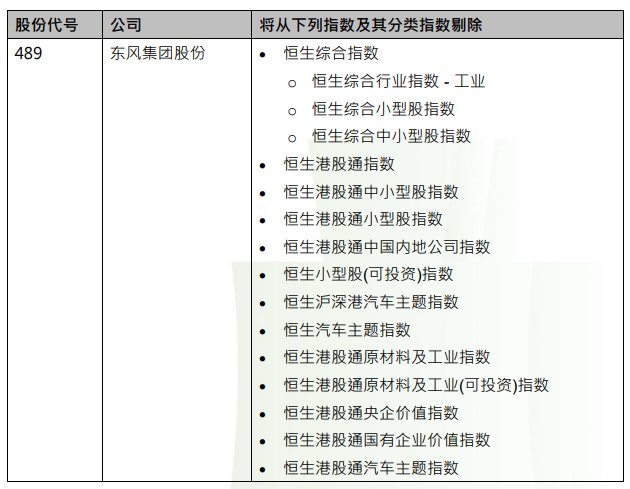
Group 1 - The core announcement states that Dongfeng Group Co., Ltd. (stock code: 00489) will be delisted from the Hong Kong Stock Exchange if the conditions for privatization are met or waived, effective after the market closes on March 10, 2026 [1] - The removal of Dongfeng Group from various indices will take effect starting March 11, 2026 [1] Group 2 - Dongfeng Group will be excluded from the Hang Seng Composite Index [2] - The company will also be removed from the Hang Seng Composite Industry Index - Industrial, Hang Seng Composite Small Cap Index, and Hang Seng Composite Mid and Small Cap Index [2] - Additional indices from which Dongfeng Group will be delisted include the Hang Seng Stock Connect Indexes and various sector-specific indices related to automotive and materials [2]

恒指公司:因东风集团股份(00489)私有化 下月将从多项指数中剔除
智通财经网· 2026-02-24 09:06
智通财经APP获悉,2月24日,恒生指数公司发布公告称,若私有化建议条件达成或获豁免,东风集团 股份(00489)将从香港联合交易所退市。因此,东风集团股份将于2026年3月10日(星期二) 收市后以当天 收市价从下列指数及其分类指数中剔除。下述变动将于2026年3月11日(星期三) 起生效。 | 股份代号 | 公司 | 将从下列指数及其分类指数剔除 | | --- | --- | --- | | 489 | 东风集团股份 . | 恒生综合指数 | | | | 0 恒生综合行业指数 - 工业 | | | | 恒生综合小型股指数 O | | | | O 恒生综合中小型股指数 | | | . | 恒生港股通指数 | | | . | 恒生港股通中小型股指数 | | | . | 恒生港股通小型股指数 | | | . | 恒生港股通中国内地公司指数 | | | . | 恒生小型股(可投资)指数 | | | . | 恒生泸深港汽车主题指数 | | | . | 恒生汽车主题指数 | | | . | 恒生港股通原材料及工业指数 | | | . | 恒生港股通原材料及工业(可投资)指数 | | | . | 恒生港股通央企价值指 ...
“去风险”不应使中德合作脱轨,写在德国总理默茨访华之前
Xin Lang Cai Jing· 2026-02-24 08:56
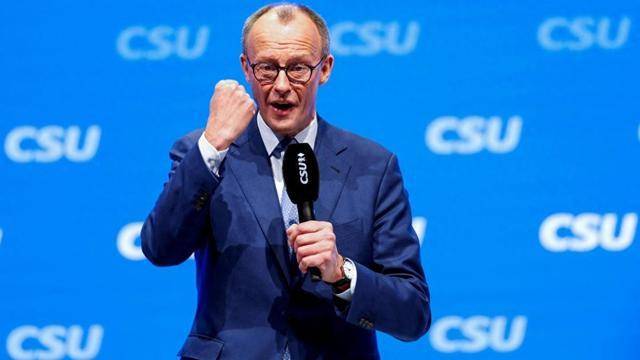
Group 1 - German Chancellor Merz is scheduled to visit China from February 25 to 26, with the visit seen as a "stress test" for Germany's "strategic autonomy" amid rising anxieties in Europe regarding China policy [2][9] - Analysts from institutions like MERICS highlight structural competition in green technology and friction over critical raw materials, reflecting pressures faced by German industries, particularly in automotive and machinery sectors [2][9] - The narrative of "de-risking" may obscure the deeper economic interdependence between Germany and China, as both countries remain deeply intertwined in their economic futures [2][9] Group 2 - China has become the global hub for clean technology manufacturing, dominating investments in solar panels, batteries, and electric vehicles, with Germany importing over €18 billion worth of green technology from China last year [3][10] - The EU acknowledges that importing clean technology is essential for achieving climate goals, and limiting access to competitively priced inputs could slow down the overall transition [4][11] - German companies view the Chinese market as a critical "testing ground" for innovation, with historical protectionism rarely strengthening Europe's industrial base [4][11] Group 3 - From 2016 to 2025, China is projected to remain Germany's most important trading partner, with bilateral trade expected to reach €253 billion by 2025 [5][12] - Direct investment from Germany to China surged by over €7 billion in the first 11 months of 2025, as companies seek to isolate risks and strengthen local supply chains [5][12] - Volkswagen's CEO emphasizes the futility of retreating from the Chinese market, positioning it as the company's "second home market" and committing to an aggressive "In China, for China" strategy [5][12] Group 4 - The upcoming visit by Chancellor Merz is seen as a crucial opportunity to bridge the gap between Europe's industrial anxieties and climate ambitions, advocating for a dual strategy that balances internal cohesion with international cooperation [6][13] - The visit is expected to focus on mutual market access, transparent regulatory frameworks, and open green trade, reinforcing the economic realities binding both regions [6][13] - Despite a fragmented geopolitical landscape, Germany and China share solid common interests in maintaining stability, deepening industrial cooperation, and advancing climate agendas [7][14]

恒指跌1.82% 恒生科技指数跌2.13%
Feng Huang Wang Cai Jing· 2026-02-24 08:33
凤凰网财经讯 港股2月24日收盘走低,恒生指数收报26590.32点,跌491.59点,跌幅1.82%;恒生科技指 数收报5270.7点,跌114.65点,跌幅2.13%。 恒生指数成分股中万洲国际、恒基地产、华润啤酒涨幅居前,中国生物制药、翰森制药、中国人寿跌幅 靠前。恒生科技指数成分股中华虹半导体、联想集团、小鹏汽车-W涨幅居前,金蝶国际、商汤-W、腾 讯音乐-SW跌幅靠前。 ...