半导体

Search documents
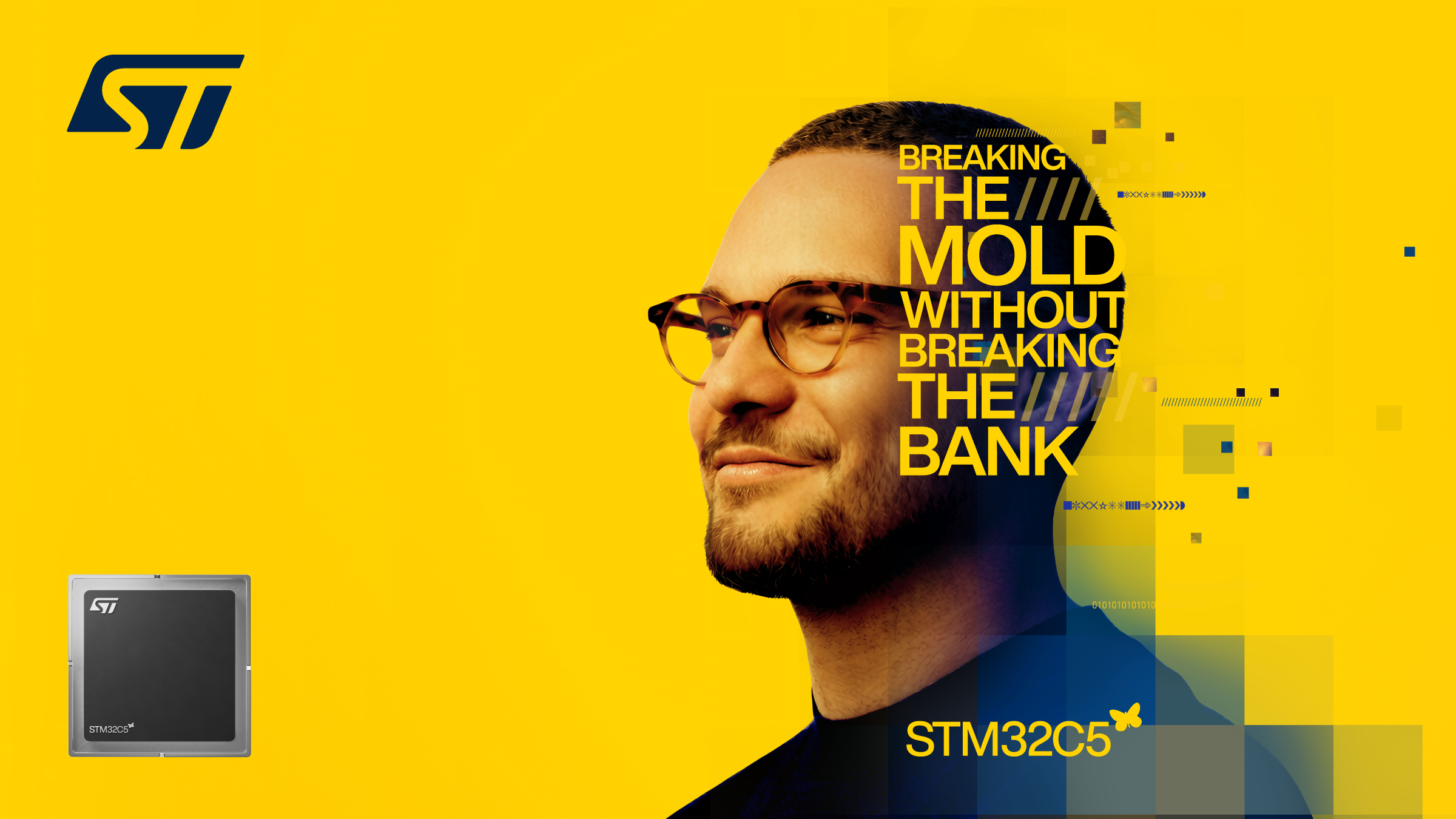
STMicroelectronics' new STM32 series redefines entry-level microcontroller performance and value for smart devices everywhere
Globenewswire· 2026-03-05 07:00
Core Insights - STMicroelectronics has launched a new generation of entry-level microcontrollers, the STM32C5 series, aimed at enhancing the performance of smart devices across various applications while addressing cost, size, and power constraints [1][3]. Product Overview - The STM32C5 series targets a wide range of consumer and professional devices, including smart thermostats, electronic door locks, industrial sensors, robotic actuators, wearables, and computer peripherals [2]. - The new microcontrollers leverage ST's proprietary 40nm manufacturing process, allowing for faster task execution compared to existing entry-level chips, thus enabling modern features like improved sensing and user experiences while maintaining low power consumption [4]. Security Features - The STM32C5 MCUs come with built-in protections against tampering and cyber risks, supporting safer connected devices, which is increasingly important in both consumer and industrial markets [5][13]. Development Ecosystem - Users can benefit from an upgraded STM32Cube environment, which includes size-optimized drivers, enhanced code generation tools, and production-ready software examples, aimed at accelerating development and maximizing product capabilities [6][15]. - The STM32C5 series supports a comprehensive ecosystem that enhances end-device capabilities and reduces time to market, including new development tools and libraries for faster prototyping [18]. Technical Specifications - The STM32C5 MCUs utilize the Arm Cortex-M33 processor, providing advanced performance and efficiency, with on-chip Flash memory ranging from 128Kbyte to 1Mbyte, making it suitable for sophisticated applications [11][12]. - The devices are designed for demanding industrial environments, supporting a wide temperature range from -40°C to 125°C, and comply with industrial safety standards [14]. Market Positioning - STM32C5 MCUs are entering production with package sizes ranging from 3mm x 3mm to 20mm x 20mm, with pricing starting at $0.64 for bulk orders of 10,000 units, positioning them competitively in the market [9].



STMicroelectronics’ new STM32 series redefines entry-level microcontroller performance and value for smart devices everywhere
Globenewswire· 2026-03-05 07:00
Core Insights - STMicroelectronics has launched a new generation of entry-level microcontrollers, the STM32C5 series, aimed at enhancing the performance of smart devices across various applications while addressing cost, size, and power constraints [1][2]. Product Features - The STM32C5 series targets consumer and professional devices, including smart thermostats, electronic door locks, industrial sensors, robotic actuators, wearables, and computer peripherals [2]. - The new MCUs leverage ST's proprietary 40nm manufacturing process, allowing for faster task execution compared to existing entry-level chips, enabling modern features like improved sensing and user experiences while maintaining low power consumption [4]. - Built-in security features in the STM32C5 MCUs protect against tampering and cyber risks, addressing the growing demand for safer connected devices in both consumer and industrial markets [5][12]. Development Ecosystem - The STM32C5 series is supported by an upgraded STM32Cube environment, which includes optimized drivers, enhanced code generation tools, and production-ready software examples to facilitate faster and more efficient development [6][17]. - New tools such as STM32 HAL2 are designed to streamline development processes, making it easier to port code across different STM32 MCUs [18][21]. Technical Specifications - The STM32C5 MCUs utilize the advanced Arm Cortex-M33 processor, providing improved performance and efficiency, with on-chip Flash memory starting from 128Kbyte and scaling up to 1Mbyte [10][11]. - The devices are designed for industrial applications, supporting a wide temperature range from -40°C to 125°C, and comply with safety standards such as IEC 61508 SIL-2 [13]. Market Positioning - STM32C5 MCUs are entering production with package sizes ranging from 3mm x 3mm to 20mm x 20mm, with pricing starting at $0.64 for bulk orders of 10,000 units, positioning them competitively in the market [9].
2026年2月PMI点评:经济“开门红”仍较温和
Orient Securities· 2026-03-05 06:42
Economic Overview - The manufacturing PMI for February 2026 decreased by 0.3 percentage points to 49%, indicating a contraction in the manufacturing sector[7] - Despite the decline, the actual performance is considered better than seasonal expectations due to the impact of the Spring Festival[7] - The construction sector's business activity index fell to 48.2%, down 0.6 percentage points, reflecting reduced activity during the holiday period[7] Supply and Demand Dynamics - The overall supply exceeds demand, with production and new orders PMI at 49.6% and 48.6% respectively, indicating no significant improvement in the supply-demand balance[7] - The gap between raw material purchase prices PMI and factory prices PMI is narrowing, but it remains uncertain if this indicates improved bargaining power for downstream enterprises[7] Sector Performance - High-tech manufacturing PMI recorded at 51.5%, remaining a key driver of economic growth, while consumer goods PMI rose to 48.8% but still below the expansion threshold[7] - Service sector activity index increased to 49.7%, with growth driven by hospitality and entertainment sectors during the Spring Festival[7] External Factors and Risks - Risks include slower-than-expected transmission of counter-cyclical policies, uncertainties in trade policies from other countries, and potential impacts of geopolitical conflicts on commodity prices[4]
英伟达产能大调整:H200让位给下一代芯片Vera Rubin
Hua Er Jie Jian Wen· 2026-03-05 06:40
Core Insights - Nvidia is shifting its manufacturing capacity from the H200 chip to the next-generation Vera Rubin architecture, reflecting the company's latest assessment of the current regulatory environment [1] - The company has paused production of the H200 chip for specific markets, reallocating that capacity to Vera Rubin, which is in high demand from tech giants like OpenAI and Google [1][2] - Nvidia's CFO stated that despite some H200 products receiving export approval, no revenue has been generated from them, indicating a lack of confidence in large-scale sales of the H200 [1] Group 1 - The H200 is an earlier generation AI processor positioned as a compliant product under U.S. export controls, while Vera Rubin is designed for more complex AI systems and is in high demand in the high-end computing market [2] - Nvidia has produced approximately 250,000 H200 chips, and existing inventory is expected to meet demand if only limited orders are approved [2] - A source indicated that Nvidia must pivot to achievable goals rather than waiting in uncertainty, especially given the strong demand for advanced products [2] Group 2 - Nvidia previously sought sales approval for the H200, ramping up production after signals from the Trump administration in December, with expectations of over 1 million orders from customers [3] - The approval process has since stalled, impacting the supply chain that was prepared for H200 deliveries, which were initially planned to start as early as March [3] - Despite the shift in capacity, Nvidia has not completely ruled out the possibility of restarting H200 production if policy changes occur, with existing inventory able to cover demand during a potential three-month ramp-up period [3]

美国关税政策变化及影响
Minmetals Securities· 2026-03-05 06:27
Policy Changes - The U.S. tariff policy has shifted from "emergency state tariffs" to "temporary additional tariffs" with a maximum rate of 15% and a duration of 150 days, requiring Congressional approval for extension[7][10]. - The Supreme Court's ruling has limited the President's ability to impose broad tariffs under the IEEPA, prompting a reliance on Section 122 of the Trade Act of 1974 as a transitional tool[1][9]. Future Tariff Structure - The U.S. tariff system is expected to evolve into a "three-layer parallel" structure: Section 122 as a short-term tool, Section 232 (national security) and Section 301 (unfair trade) as mid-term channels, and Congressional legislation for tariffs and subsidies as a supportive framework[2][3]. - Section 301 investigations against China are still active, indicating ongoing targeted tariff measures despite the general tariff increase[2][14]. Impact on China - The immediate impact on China includes fluctuations in external demand, profit compression in industries, and disruptions in order allocation, rather than a complete loss of competitiveness[3][18]. - China's comparative advantages may be highlighted in sectors where supply chain integrity and cost efficiency remain strong, potentially benefiting domestic manufacturing[3][19]. Long-term Considerations - The temporary nature of Section 122 suggests it is not a long-term solution, and future tariffs may increasingly rely on targeted measures under Sections 301 and 232, which focus on specific industries and national security concerns[13][24]. - The potential for a dual approach combining tariffs and non-tariff measures (e.g., stricter customs enforcement, investment reviews) indicates a shift towards more complex trade friction rather than simple tariff increases[15][24].
特斯拉巨鲸廖凯原购入100万股英伟达股票,称人工智能正处起步阶段
Jin Rong Jie· 2026-03-05 05:29
Core Viewpoint - Billionaire Liao Kaiyuan, a major shareholder in Tesla, publicly announced on March 4 that he purchased 1 million shares of Nvidia stock on March 3, expressing strong belief that artificial intelligence is not in a bubble and is just beginning [1] Group 1: Investment Actions - Liao plans to buy an additional 1 million shares of Nvidia soon to show support for the market [1] - Despite recent skepticism towards Elon Musk and Tesla, Liao primarily holds Tesla shares and U.S. Treasury bonds [1] Group 2: Company Insights - Liao believes that Tesla's energy, cybercap, and Teslabot businesses are not fully priced in, suggesting that bold investors can still buy Tesla to bet on future wealth [1] - He referred to Tesla as "the leading embodied AI on Earth," indicating confidence in its long-term potential [1]

博通电话会全文&详解:2027年AI芯片营收将破1000亿美元,AI不会颠覆基础设施软件!
美股IPO· 2026-03-05 04:40
Core Viewpoint - Broadcom expects AI chip revenue to exceed $100 billion by 2027, driven by strong demand from strategic customers and a robust supply chain strategy [1][4][18] Group 1: AI Chip Revenue and Customer Base - Broadcom anticipates that AI chip revenue will surpass $100 billion by 2027, with a projected installed capacity of nearly 10 gigawatts [5][18] - The company has identified six long-term strategic customers, including Google, Meta, OpenAI, and Anthropic, who are developing custom AI chips [5][18] - The demand for custom chips is expected to grow as clients develop dedicated chips for model training and inference, indicating a long-term expansion rather than a one-time replacement of GPUs [9][35] Group 2: Network Infrastructure Growth - Network revenue is projected to grow significantly, with expectations that it will account for 33% to 40% of AI revenue in the coming quarters [10][30] - Broadcom's Tomahawk 6 switch, with a throughput of 100 Tbps, is experiencing high demand, and the company plans to launch the next-generation Tomahawk 7 in 2027 [10][30] - The company emphasizes the advantages of using direct attach copper cables for low latency and cost efficiency in data center environments [10][30] Group 3: Supply Chain and Production Capacity - Broadcom has secured critical component capacity through 2028, positioning itself as one of the first companies to lock in such long-term supply agreements [11][17] - The company has a strong inventory position, with $3 billion in inventory at the end of the first quarter, reflecting its anticipation of accelerating AI semiconductor demand [11][20] Group 4: Software Business Resilience - Broadcom's infrastructure software, particularly VMware, is expected to benefit from the growth of AI, with a 13% year-over-year revenue increase in the first quarter [12][18] - The company asserts that its infrastructure software will not be displaced by AI but will instead see increased demand as AI applications grow [12][18]


超4500只个股上涨
第一财经· 2026-03-05 03:45
Market Overview - The A-share market showed positive momentum with the ChiNext Index rising by 2.43%, the Shanghai Composite Index increasing by 0.84%, and the Shenzhen Component Index up by 1.67% [3][5] - The total trading volume in the Shanghai and Shenzhen markets reached 1.55 trillion yuan, a decrease of 91.8 billion yuan compared to the previous trading day, with over 4,500 stocks rising [5][6] Sector Performance - MiniLED and smart grid concept stocks experienced a surge, with many hitting the daily limit [5] - The brain-computer interface sector saw significant activity, with stocks like Rock Mountain Technology hitting the daily limit, driven by government reports emphasizing future industry investments [5][6] - Retail stocks were also active, with companies like Maoye Commercial hitting the daily limit, following government plans to adjust consumption tax policies [5] Key Indices - The ChiNext Index opened at 3,236.15, with a high of 3,264.80 and a low of 3,199.76, reflecting a market capitalization of 22.4 trillion yuan [4][8] - The Shanghai Composite Index opened at 4,109.78, showing a gain of 0.67% [8] Commodity Movements - The SC crude oil futures contract surged by 12%, currently priced at 699 yuan per barrel [12] - The shipping index for European routes saw a significant increase, with a rise of 11% to 2,033 points [13]

药业公司跨界收购半导体企业被认定为误导性陈述!公司及责任人拟被罚510万
梧桐树下V· 2026-03-05 03:36
Core Viewpoint - Zhejiang Sunflower Health Technology Co., Ltd. is facing administrative penalties from the Zhejiang Securities Regulatory Bureau for misleading statements regarding its asset acquisition plan, which led to significant stock price increases and trading volume [1][3]. Group 1: Administrative Penalties - The company and its responsible individuals, including Chairman Wu Shaoqin and Secretary Li Lan, are accused of failing to ensure accurate and complete information disclosure, resulting in misleading statements about the acquisition of 100% of Zhangzhou Xipu Materials Technology Co., Ltd. and 40% of Zhejiang Beid Pharmaceutical Co., Ltd. [1][3]. - The proposed penalties include a warning and a fine of 3 million yuan for the company, 1.5 million yuan for Wu Shaoqin, and 600,000 yuan for Li Lan, totaling 5.1 million yuan [1][3]. Group 2: Acquisition Details - The acquisition plan disclosed on September 22, 2025, indicated that the company intended to purchase 100% of Xipu Materials and 40% of Beid Pharmaceutical, which was expected to constitute a major asset restructuring [1][3]. - Xipu Materials, established in November 2020, focuses on high-end semiconductor materials and has achieved international advanced technology levels, with significant growth potential [4]. - Xipu Materials reported revenues of 38.54 million yuan in 2023 and 98.54 million yuan in 2024, with net profits of 40,800 yuan and 1.377 million yuan, respectively [5]. Group 3: Beid Pharmaceutical Overview - Beid Pharmaceutical, a subsidiary in which the company holds a 60% stake, was established in November 2004 and focuses on the research, manufacturing, and sales of various medications [7]. - The company reported revenues of 335.95 million yuan in 2023 and 330.37 million yuan in 2024, with net profits of 5.4 million yuan and 13.87 million yuan, respectively [10].

恒生科技为何跌跌不休?本轮调整到尾声了吗?盛麒、康曼德、资瑞兴、津育等私募齐发声!
私募排排网· 2026-03-05 03:32
Core Viewpoint - The Hang Seng Technology Index has experienced a significant decline, raising questions about whether it represents a value opportunity or a value trap, especially in the context of increasing competition and evolving AI technology [4][10]. Group 1: Market Performance and Valuation - Since October last year, the Hang Seng Technology Index has dropped over 20%, contrasting with slight increases in the Shanghai Composite Index and S&P 500 [2]. - The dynamic price-to-earnings ratio of the Hang Seng Technology Index has fallen below 20 times, placing it in the lower 24% of its historical range over the past decade, prompting discussions about its valuation status [4][10]. Group 2: Factors Behind the Decline - The decline in the Hang Seng Technology Index is attributed to three main factors: intense competition among internet platforms, the impact of reduced automotive subsidies on the automotive sector, and negative narratives surrounding AI affecting traditional software companies [6]. - The index's performance is also influenced by the structure of its constituent stocks, with the top ten stocks accounting for 70.68% of the index's weight, leading to significant performance disparities among them [7]. Group 3: Future Outlook and Investment Opportunities - Some analysts believe the current low valuation of the Hang Seng Technology Index represents a genuine opportunity, as expected profits for 2026 and 2027 are projected to recover, providing a strong margin of safety [11]. - The index's future performance is expected to be closely tied to China's economic recovery and the successful commercialization of AI technologies by leading companies [23][24]. Group 4: AI and Competitive Landscape - The emergence of AI is reshaping the core competitiveness of traditional internet companies, with a focus on integrating AI into business processes to enhance efficiency and create new applications [16][17]. - Companies that can effectively leverage AI are expected to outperform, while those lagging in AI adoption may face significant challenges [14][15]. Group 5: Stock Selection Strategies - Investment strategies during high volatility periods emphasize stock selection based on individual company fundamentals rather than relying on index performance, with a focus on identifying companies with strong growth potential and sound business models [18][19].