汽车

Search documents
2月24日隔夜要闻:AI恐慌、特朗普关税冲击市场 美股三大指数跌超1% 美对黎巴嫩发布最高级别...
Xin Lang Cai Jing· 2026-02-23 23:08
欲览更多环球财经资讯,请移步7×24小时实时财经新闻 来源:环球市场播报 市场 2月24日收盘:美股大幅收跌 特朗普关税大棒打压市场 2月24日美股成交额前20:IBM股价重挫13%,核心业务面临AI威胁 2月24日热门中概股多数下跌 蔚来涨4.54%,携程跌3.01% 原油价格企稳:伊朗核谈与美关税新政带来不确定性 纽约期金涨3.3%,纽约期银涨超7.2% 欧洲股票市场因关税不确定性再现而下跌 诺和诺德股价重挫 宏观 特朗普称美军参联会主席认为打赢伊朗轻而易举 特朗普声称对在贸易协议中"耍花样"的国家征收更高关税 美媒:特朗普政府考虑对六大行业征收新的国家安全关税 美军参联会主席警告:对伊朗动武可能带来重大风险 特朗普最新关税威胁后,欧盟推迟对美贸易协定投票 民主党人敦促美国政府向家庭退还关税款 在中期选举年打出民粹牌 多架美军机降落以色列本-古里安机场 美国务院对黎巴嫩发布最高级别旅行警告 美国下令驻贝鲁特大使馆非必要人员撤离 美"福特"号航母抵达希腊克里特岛苏达湾 优步收购停车应用SpotHero,业务版图突破网约车与外卖配送 兰博基尼放弃推出电动跑车的计划 PayPal市值缩水近半 吸引到收购意向 沃 ...


现象七十二变,2026中国汽车产业认知全景图谱
汽车商业评论· 2026-02-23 23:04
设计 | 常 笑 撰文 | 轩 辕矩阵 编辑 | 黄大 路 2026年,岁次丙午,中国汽车产业在"火马年"的奔腾与热烈中,迎来了一个深具历史意义的节点。 为此,"轩辕矩阵"推出"大咖同行,认知过年"特别策划,邀请72位主机厂和供应链领袖人物和高级管理者,为《汽车商业评论》《轩辕科技评 论》以及《铃声ECHO》的读者们献上新春贺词。 如我们所看到的那样,他们并未重复传统的新春祝词,而是选择以自省式的深度洞察,共同勾勒出这份关于产业焦虑、范式革命与战略转向的 深度白皮书。 这不仅是中国汽车人的一次集体认知"补课",更是向过去十年"唯规模论"时代的正式告别。 加入轩辕同学 , 成就新汽车人! 站在这个从量变向质变跃迁的关键隘口,他们的发声指明了2026年中国汽车的五大核心进化方向: 经营哲学上:行业正从无序的"血酬竞争"转向价值主义,强调品牌向上与可持续的利润回血,守住长期主义的底线。 AI转型上:汽车正从单一的硬件实体向AI原生智能体跃迁,AI不仅重塑了人机交互,更彻底改变了车企的研发体系与组织效能。 全球化进程上:中国市场已由"贸易输出"转型为全球创新的生态中心,出海逻辑从简单的车辆出口升级为技术标准与本土化服 ...




“从未如此精心准备”!德媒:默茨将率“庞大商务代表团”访华,到访北京和杭州
Huan Qiu Shi Bao· 2026-02-23 22:49
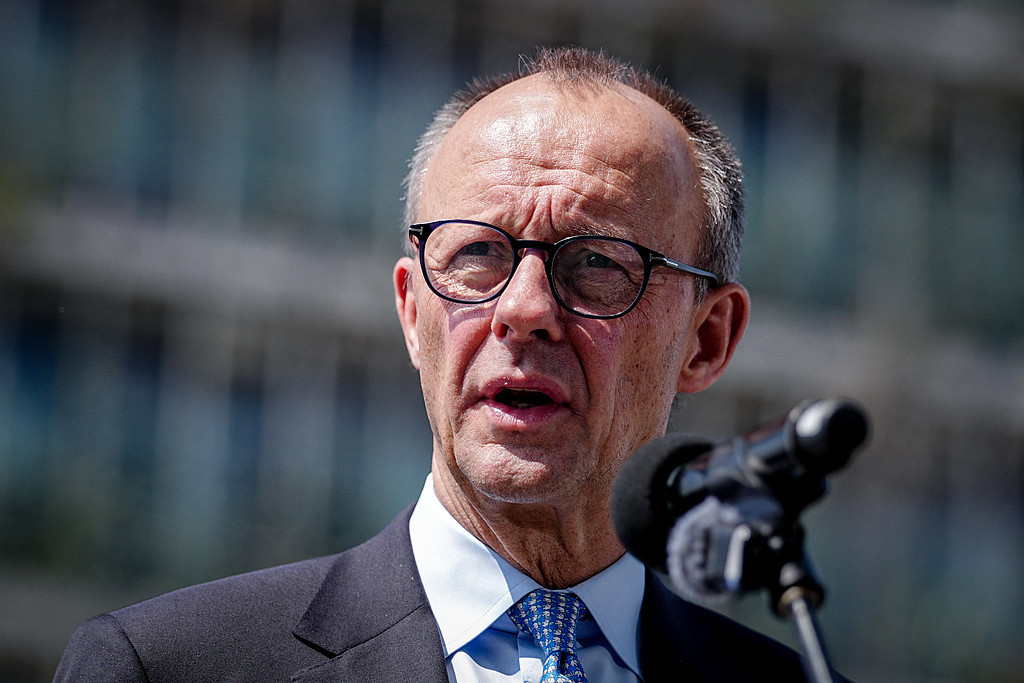
北京外国语大学区域与全球治理高等研究院教授崔洪建23日对《环球时报》记者表示,德国总理此次访华,堪称一次迟来但意义重大的首访。从 德方角度来看,此行主要聚焦两大层面:一是经贸与发展利益,二是政治、安全及外交议题。德方近期表态,希望在竞争与冲突之间找到平衡, 本质上就是要在国家利益与价值立场之间寻求平衡点。 德国联邦统计局20日发布的数据显示,中国去年超越美国,再次成为德国最大贸易伙伴。据"德国之声"报道,2025年中德贸易额达2518亿欧元, 较2024年增长2.1%;德美贸易则因关税争端下降5%,降至2405亿欧元。德国从中国进口商品总值约1706亿欧元,是其对华出口额的两倍多。 【环球时报驻德国特约记者 青木 环球时报记者 丁雅栀 邓孝慈】中国外交部发言人2月23日宣布,德国总理默茨将于25日至26日应邀对中国进行正 式访问。默茨上周在社交平台X上发文称,"愿马年为德中关系注入力量、带来新动力",并表示期待不久后启程访华。欧洲问题专家23日对《环 球时报》记者表示,这是一次迟来但意义重大的访问,近期国际形势的变化,让德国及默茨政府逐渐意识到,必须进一步提升对华关系的重要 性。对默茨本人而言,这次访华也是一 ...
地缘紧张致欧洲经济复苏后劲不足
Xin Lang Cai Jing· 2026-02-23 22:48
Economic Growth and Projections - The Eurozone's GDP is projected to grow by 1.5% in 2025, while the EU's GDP is expected to grow by 1.6%, indicating a slight upward adjustment from previous market expectations [3] - Compared to other major economies like China and the US, Europe's economic recovery shows insufficient momentum [3] Trade and Investment Challenges - Trade frictions and tariff barriers are suppressing exports and investments, with the US targeting the EU in its trade policies, increasing costs for European companies exporting to the US [3] - The uncertainty in global trade policies is dampening business investment confidence, particularly affecting manufacturing sectors reliant on global supply chains [3] Energy Supply and Price Volatility - The prolonged Russia-Ukraine conflict and energy sanctions are reshaping Europe's energy landscape, with the EU planning to ban new gas contracts with Russia starting in 2026 [4] - Transitioning to liquefied natural gas from the US and Qatar faces challenges such as inadequate infrastructure and high costs, leading to potential inflation and reduced purchasing power [4] - Despite advancements in renewable energy, the slow upgrade of electrical grid infrastructure is causing inefficiencies in power distribution, leading to a mismatch in generation and transmission capabilities [4] Inflation and Monetary Policy Dilemmas - The inflation rate in Europe is expected to approach the 2% target by 2025, but supply chain disruptions from geopolitical conflicts pose upward risks to inflation [4] - The European Central Bank faces a dilemma between supporting economic growth and controlling inflation, with expectations that central banks will maintain stable interest rates throughout 2026 [4] Internal Disparities and Market Integration - Structural weaknesses in the European economy are becoming more pronounced, particularly with core economies like Germany, France, and Italy facing industrial output declines and fiscal crises [5] - Southern European countries like Spain are becoming growth leaders, but their smaller economic size cannot compensate for the weaknesses of the larger economies [6] Systemic Policy Responses - The EU is implementing a series of systemic policies to address internal and external challenges, including reforms to deepen the single market and eliminate internal barriers [7] - Initiatives include establishing a unified regulatory framework for market access, tax, and intellectual property to reduce cross-border operational costs [7] - The EU is also focusing on crisis response mechanisms to ensure market resilience against geopolitical conflicts and supply chain disruptions [7] - Significant investments are planned in strategic areas like AI, quantum computing, and clean technology to address innovation gaps and capital outflows [7] - The EU aims to accelerate green and digital transitions, with expectations for green industry investments to exceed €500 billion by 2025, representing 35% of global investments [7] - A "new independence" strategy is being promoted to reduce reliance on external powers in technology, energy, and security [7]

2月24日热门中概股多数下跌 蔚来涨4.54%,携程跌3.01%
Xin Lang Cai Jing· 2026-02-23 21:17
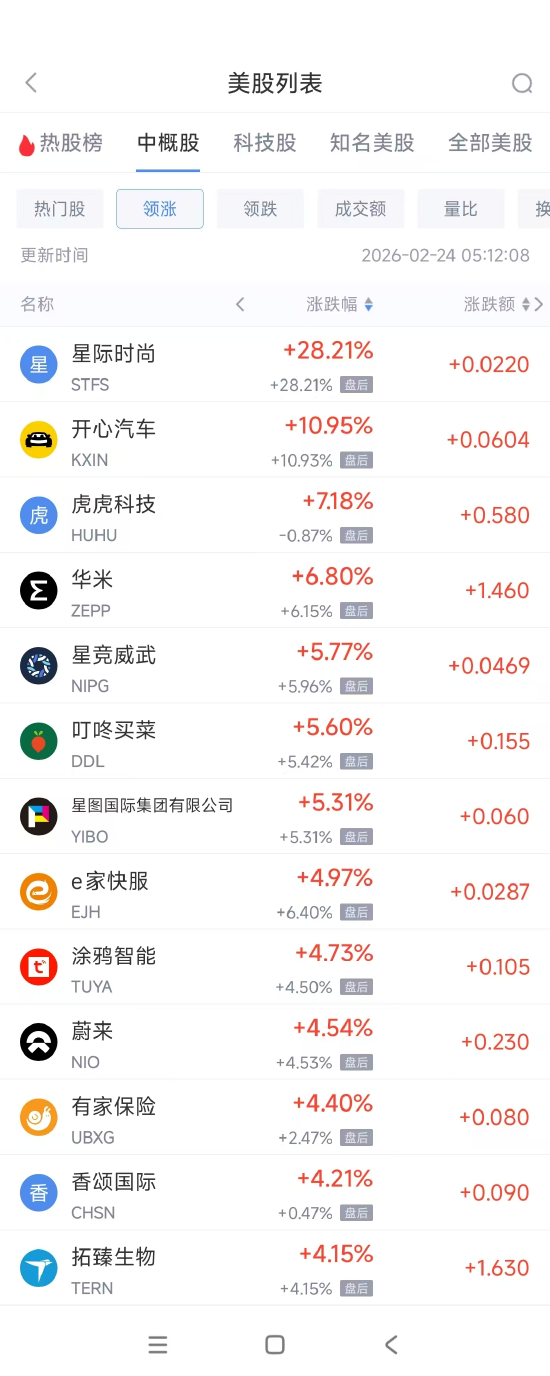
Group 1 - The Nasdaq China Golden Dragon Index (HXC) declined by 0.95% on February 24, with most Chinese concept stocks experiencing a drop [1][9] - Among the stocks that increased, Pinduoduo rose by 0.78%, NIO increased by 4.54%, and Tuozhen Bio gained 4.15% [1][9] - Notable declines included Alibaba down by 1.10%, Baidu down by 1.42%, and Futu Holdings down by 5.55% [1][9] Group 2 - The Dow Jones Industrial Average fell by over 800 points, closing down 821.91 points or 1.66% [2][9] - The Nasdaq Composite Index dropped by 258.80 points, a decrease of 1.13% [2][9] - The S&P 500 Index fell by 71.76 points, down 1.04% [2][9] Group 3 - The top gainers among Chinese concept stocks included Star Fashion with a rise of 28.21% and Happy Auto with an increase of 10.95% [3][12] - The largest losers included Biya International down by 20.50% and NetClass Technology down by 16.46% [5][13]


特朗普访华前夜,对全球加税15%!中美关系突生变数,背后有三重玄机
Sou Hu Cai Jing· 2026-02-23 20:45
Core Viewpoint - The article discusses the significant political and economic developments surrounding President Trump's planned visit to China and the recent Supreme Court ruling against his tariff policies, highlighting the complexities and uncertainties in U.S.-China relations. Group 1: Supreme Court Ruling and Tariff Implications - The U.S. Supreme Court ruled that President Trump does not have inherent authority to impose tariffs during peacetime, overturning previous tariff measures implemented under the International Emergency Economic Powers Act [3][5] - The ruling could lead to the U.S. Treasury facing pressure to refund approximately $175 billion in tariffs deemed illegal, with numerous companies already filing lawsuits for refunds [5][21] - The ruling is expected to lower the effective tariff rate from 12.8% to 8.3%, impacting American households with an estimated annual loss of $1,681 due to increased consumer prices [6] Group 2: Trump's Response and New Tariff Policy - In response to the Supreme Court ruling, Trump announced a new 10% import tariff on all countries, utilizing a rarely invoked provision of the Trade Act of 1974, which allows for tariffs but limits them to 15% and requires congressional approval for extensions [8][10] - Within 24 hours, Trump increased the tariff rate from 10% to 15%, the maximum allowed under the new legal framework, indicating a rapid shift in policy [10] - The new tariffs are set to take effect on February 24, with a list of exempted goods including critical minerals and certain agricultural products [8][20] Group 3: Impact on U.S.-China Relations - Trump's planned visit to China from March 31 to April 2 is seen as a critical opportunity to address ongoing trade tensions, with the backdrop of the recent tariff changes adding complexity to the discussions [10][12] - The Chinese government has not officially confirmed the visit, reflecting a different diplomatic pace compared to the U.S., and emphasizing the importance of mutual respect in negotiations [12][22] - The visit comes at a time when Trump faces domestic pressure due to low approval ratings and economic challenges, making diplomatic achievements crucial for his administration [14][24] Group 4: Global Reactions and Future Considerations - Other global economies, including Germany and France, have expressed concerns over the new U.S. tariff policy, indicating potential retaliatory measures and emphasizing the negative impact on consumers [16][20] - The article notes that the new tariffs may create competitive disadvantages for Chinese products if other countries benefit from reduced costs, complicating the trade landscape [16] - The ongoing issues surrounding Taiwan and military sales are also highlighted as potential flashpoints that could affect the outcome of the upcoming visit [18][24]
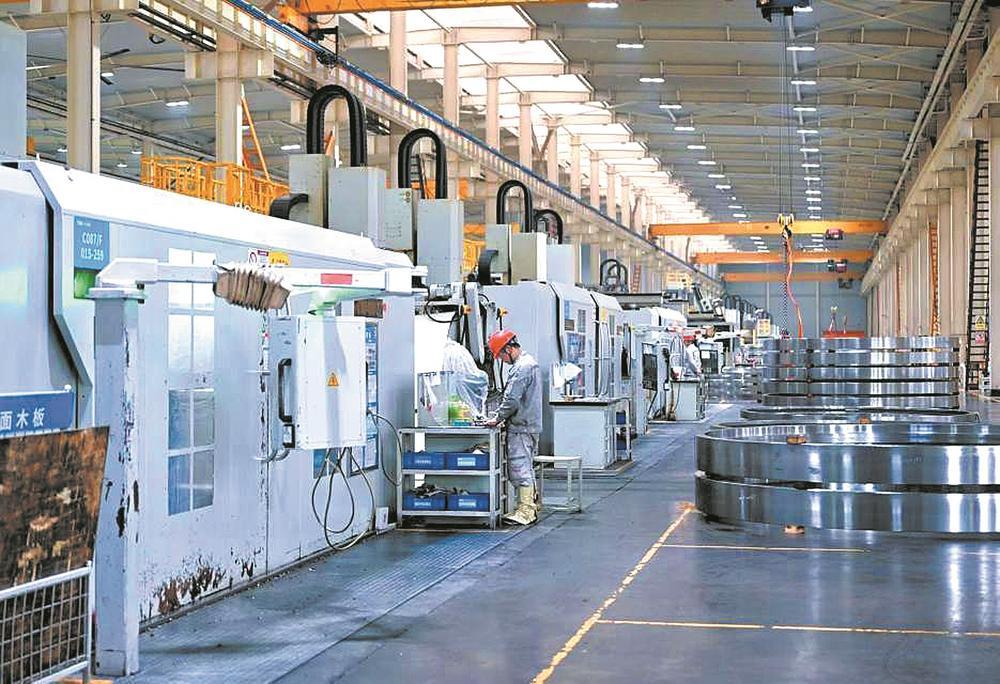
春节“不打烊” 成都工业企业奋战“开门红”
Xin Lang Cai Jing· 2026-02-23 20:39
Core Viewpoint - Chengdu's industrial enterprises are rapidly resuming production after the Spring Festival, aiming for a strong start to the year, with many companies operating at full capacity to meet domestic and international orders [4][5][6]. Group 1: Production Resumption - Key industrial enterprises in Chengdu are leading the recovery of production, with some maintaining 24-hour operations during the holiday to fulfill orders [5]. - For instance, BaMo Technology reported that all orders for the first quarter are fully booked, and employees are working diligently to ensure timely delivery [5]. - China National Beverage Corporation's Sichuan branch achieved full production capacity on the second day of the new year, producing 237,000 products in one day, matching regular output levels [5]. Group 2: Production Efficiency - Chengdu Tianma Precision Machinery Company has improved its production efficiency to 70% of normal capacity post-holiday, compared to only 50% in previous years [5]. - China National Heavy Duty Truck Group's Chengdu subsidiary expects to produce 10,000 vehicles in the first quarter, with a projected output value of 2.8 billion yuan [6]. Group 3: Regional Collaboration - Various districts and industrial parks in Chengdu are working in unison to boost production, with companies like Quan Yi Food ramping up operations to meet a quarterly output target of 260 million yuan [7]. - In Jin Tang County, Sichuan Natuo New Materials has maintained full production since December, achieving over 1 billion yuan in output [8]. Group 4: Technological Innovation - Chengdu's robotics industry is showcasing its capabilities, with local companies exporting products to over 40 countries, enhancing production efficiency [9]. - The "Chengdu-made" robots are not only improving industrial productivity but also providing innovative solutions in community services, such as elder care [9].
节后重大!900亿资金待入场,2条主线被出炉,A股上涨有戏?
Sou Hu Cai Jing· 2026-02-23 20:22
Core Insights - The market is poised for significant investment activity with over 90 billion yuan waiting to enter, driven by new ETF funds and active equity funds [1][3][4] - Two main investment themes for 2026 have been identified: technology growth, particularly in AI, and Chinese manufacturing [4][5][7] Group 1: Investment Funds - Over 90 billion yuan is ready to enter the market, primarily from newly listed stock ETFs and active equity funds that were raised before the Spring Festival [3][4] - Three new ETFs are set to launch post-holiday, expected to contribute over 1 billion yuan in direct buying power, with additional ETFs in the pipeline totaling around 3 billion yuan [3][4] - A total of 112 active equity funds are waiting to be established, collectively raising approximately 88.75 billion yuan, with 29 of these funds exceeding 1 billion yuan each [4] Group 2: Investment Themes - The first investment theme is technology growth, focusing on AI and related sectors such as robotics and smart driving, which are expected to see significant advancements [5][7] - The second theme is Chinese manufacturing, highlighting the country's strong position in sectors like new energy vehicles and electronics, which are anticipated to drive economic growth [5][7] Group 3: Market Conditions - The market has shown a relatively stable performance leading up to the Spring Festival, with the index fluctuating around 4100 points, indicating a cautious investor sentiment [8][9] - Historical data suggests a high probability of market gains in the days following the Spring Festival, with past trends showing an 70% to 80% chance of the Shanghai Composite Index rising [11] - The upcoming earnings reports from listed companies will be crucial in determining the sustainability of stock prices that have been driven up by recent fund inflows [11]

拱火的来了,“美一众盟友惨了,中国巴西受益最大”
Sou Hu Cai Jing· 2026-02-23 18:15
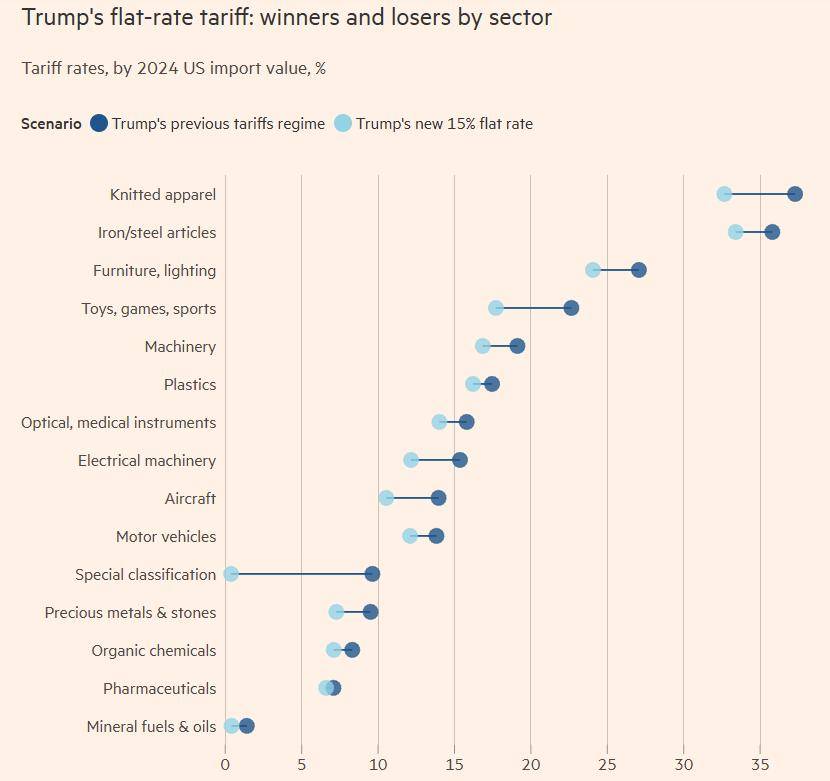
Core Viewpoint - The new 15% global uniform tariff introduced by Trump is expected to benefit countries like China and Brazil, while traditional allies such as the UK, EU, and Japan will face significant losses [1][6]. Group 1: Impact on Countries - Brazil will see the largest average tariff reduction of 13.6 percentage points, followed by China with a 7.1 percentage point decrease [1]. - The new tariff structure will particularly benefit countries previously criticized by the U.S., such as Mexico, Canada, Vietnam, Thailand, and Malaysia, in sectors like apparel, furniture, toys, and plastics [1]. - The UK is projected to be the most adversely affected, with an average tariff increase of 2.1 percentage points, disappointing around 40,000 exporting companies [6]. - The EU will experience an overall average tariff increase of 0.8 percentage points, with Italy and France being the most impacted [6]. Group 2: U.S. Trade Policy and Reactions - The U.S. government has indicated a willingness to utilize legal provisions to impose additional tariffs, signaling a new round of trade negotiations [2]. - U.S. Treasury Secretary and Trade Representative have defended the new tariffs, asserting that all trade partners wish to maintain existing agreements despite the changes [8][10]. - The U.S. Trade Representative plans to initiate investigations into unfair trade practices, particularly concerning overcapacity in Asian countries [10]. Group 3: Future Trade Dynamics - The uncertainty surrounding U.S. tariff policies remains high, with potential for further investigations and tariffs based on the 1974 Trade Act [1][10]. - Trump's upcoming visit to China is aimed at maintaining bilateral stability and encouraging China to fulfill agreements, including purchasing U.S. agricultural products and aircraft [11][12].
欧洲股市因关税不确定性再现而下跌 诺和诺德股价重挫
Xin Lang Cai Jing· 2026-02-23 17:24
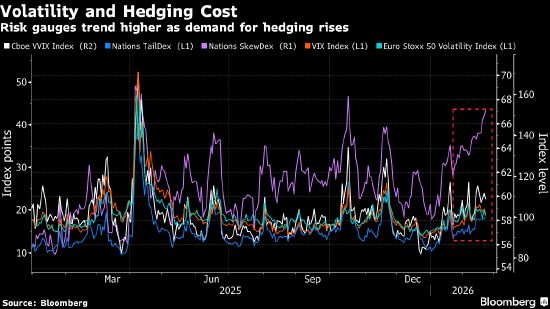
Group 1 - European stock markets declined, with the Stoxx 600 index closing down 0.5%, driven by losses in financial services, media, and tourism sectors, while personal care and utilities outperformed the market [1] - Novo Nordisk's stock plummeted after its new weight-loss injection drug underperformed compared to a competing product from Eli Lilly in a recent trial [1] - The European Parliament's major political groups announced a suspension of legislative work to approve the US-EU trade agreement following the US Supreme Court's overturning of Trump's global tariff measures, leading to new global tariffs announced by Trump [1] Group 2 - KBC Securities' global equity head noted that the current options seem limited and less impactful, which could be beneficial for consumer stocks, but concerns remain about market participants' willingness to endure upcoming volatility from tariff news [3] - Investors are already grappling with worries over high valuations and the disruptive impact of artificial intelligence, with tariff-related news adding complexity to the market landscape [3] - Significant upcoming events include Trump's State of the Union address and Nvidia's earnings report, with potential for increased volatility in software stocks following the release of Anthropic's new model [3]