零食

Search documents
洽洽食品涨2.00%,成交额9935.84万元,主力资金净流入663.10万元
Xin Lang Cai Jing· 2026-01-12 05:44
Group 1 - The core viewpoint of the news is that Qiaqia Food has experienced fluctuations in stock price and financial performance, with a notable decrease in revenue and net profit for the year-to-date period [1][2]. - As of January 12, Qiaqia Food's stock price increased by 2.00%, reaching 22.95 CNY per share, with a total market capitalization of 11.609 billion CNY [1]. - The company has seen a year-to-date stock price increase of 6.15%, with a 3.10% rise over the last five trading days and an 8.61% increase over the last 20 days [1]. Group 2 - For the period from January to September 2025, Qiaqia Food reported a revenue of 4.501 billion CNY, a year-on-year decrease of 5.38%, and a net profit attributable to shareholders of 168 million CNY, down 73.17% year-on-year [2]. - The company has distributed a total of 4.693 billion CNY in dividends since its A-share listing, with 1.654 billion CNY distributed over the past three years [3]. - As of September 30, 2025, the number of shareholders decreased by 5.84% to 54,300, while the average number of tradable shares per person increased by 6.20% to 9,297 shares [2].

好想你涨4.57%,成交额8370.80万元,主力资金净流入224.40万元
Xin Lang Zheng Quan· 2026-01-12 01:49
Core Viewpoint - The stock price of Haoxiangni has shown significant growth, with a year-to-date increase of 20.00% and a recent surge of 45.24% over the past 60 days, indicating strong market interest and performance [2]. Financial Performance - For the period from January to September 2025, Haoxiangni reported a revenue of 1.062 billion yuan, reflecting a year-on-year decrease of 9.77%. However, the net profit attributable to shareholders was -4.7088 million yuan, which represents a substantial year-on-year increase of 92.24% [2]. - The company has distributed a total of 1.638 billion yuan in dividends since its A-share listing, with 921 million yuan distributed over the past three years [3]. Stock Market Activity - On January 12, Haoxiangni's stock rose by 4.57%, reaching 13.26 yuan per share, with a trading volume of 83.708 million yuan and a turnover rate of 1.86%, resulting in a total market capitalization of 5.937 billion yuan [1]. - The stock has appeared on the "Dragon and Tiger List" once this year, with the most recent instance on January 7, where it recorded a net buy of -49.7474 million yuan [2]. Shareholder Structure - As of September 30, 2025, Haoxiangni had 46,300 shareholders, a decrease of 20.94% from the previous period, with an average of 7,432 circulating shares per shareholder, an increase of 26.49% [2]. - The top shareholders include various funds, with notable positions held by Xingquan Commercial Model Mixed Fund and others, indicating a diverse institutional interest [3].

行业周报:肉奶价格有望共振上行,关注零食春节行情催化-20260111
KAIYUAN SECURITIES· 2026-01-11 10:12
Investment Rating - The industry investment rating is "Positive" (maintained) [1] Core Viewpoints - The supply-demand structure of raw milk is improving, and the snack food sector continues to show upward momentum. The food and beverage index increased by 2.1% from January 5 to January 9, ranking 24th among 28 sectors, underperforming the CSI 300 by approximately 0.7 percentage points. Sub-sectors such as processed foods (+6.7%), soft drinks (+5.8%), and snacks (+4.5%) performed relatively well [3][10][12]. Summary by Relevant Sections Weekly Insights - The supply-demand dynamics for raw milk are optimizing, and the snack food sector is experiencing sustained growth. The recent policy by the Ministry of Commerce to implement safeguard measures on imported beef is expected to alleviate the impact on domestic industries, leading to a potential increase in beef prices over the next 2-3 years. The domestic dairy sector is facing challenges, with a continuous reduction in dairy cow inventory, which may lead to a widening supply-demand gap post-Spring Festival [10][11]. Market Performance - The food and beverage index rose by 2.1% from January 5 to January 9, ranking 24th out of 28 sectors, and underperformed the CSI 300 by about 0.7 percentage points. Leading individual stocks included Qianwei Yangchun, Anji Food, and Yangyuan Beverage, while stocks like Jiabi You, *ST Chuntian, and Xianle Health saw declines [12][13]. Upstream Data - As of January 6, the GDT auction price for whole milk powder was $3,407 per ton, reflecting a 10.4% year-on-year decrease. The domestic fresh milk price was 3.03 yuan per kilogram, down 2.9% year-on-year. The domestic milk price is expected to remain under pressure in the short to medium term [19][21]. Recommended Stocks - The report recommends focusing on companies that are likely to benefit from the improving raw milk supply-demand balance and the growth in the snack food sector. Notable mentions include: - Yuran Agriculture: Expected to benefit from the recovery in raw milk prices. - Modern Dairy: Anticipated to gain from the overall industry improvement. - Yili Group and Mengniu Dairy: Expected to see positive impacts from the anticipated recovery in milk prices [10][11]. Snack Food Sector - The snack food sector is projected to continue its upward trend, particularly during the Spring Festival season. Companies such as Weilang Delicious, Ganyuan Food, and Yanjin Food are highlighted for their potential growth due to seasonal demand and strategic initiatives [11][12].






周观点、两湖零食调研反馈:环比走出底部,旺季将至可期-20260111
GOLDEN SUN SECURITIES· 2026-01-11 05:56
Investment Rating - The report suggests a positive outlook for the liquor sector, with a recommendation to invest in specific companies based on supply and demand improvements expected in 2026 [1] Core Insights - The snack industry is showing signs of recovery, with companies entering the critical phase of preparing for the Spring Festival, which is expected to boost performance in Q1 2026 due to low base effects and seasonal demand [2] - Companies are adjusting their channel operations and product priorities in response to evolving market demands, leading to gradual improvements in their performance [2] - Specific companies like 甘源食品 (Ganyuan Food) and 劲仔食品 (Jinzai Food) are highlighted for their strategic adjustments and potential for recovery in 2026 [3][4] Summary by Sections Liquor Sector - The liquor market is expected to see a dual improvement in supply and demand by 2026, with short-term sales showing signs of recovery [1] - Recommended companies for investment include 泸州老窖 (Luzhou Laojiao), 古井贡酒 (Guojingongjiu), and 贵州茅台 (Kweichow Moutai) among others [1] Snack Industry - The snack sector is entering a critical preparation phase for the Spring Festival, with companies like 甘源食品 (Ganyuan Food) and 劲仔食品 (Jinzai Food) making strategic adjustments to improve their market positions [2][3][4] - 甘源食品 is expected to recover from a significant revenue decline by leveraging new product launches and channel improvements [3] - 劲仔食品 is shifting focus to new product categories to drive growth, despite facing some revenue pressures [4] Market Trends - The overall food and beverage sector is projected to experience a rebound, with specific attention on the performance of major brands and their strategic responses to market changes [1][2]
TA们扎堆赴港上市,拼的是什么?
Sou Hu Cai Jing· 2026-01-10 01:18
Group 1 - Hunan Mingming Henmang Commercial Chain Co., Ltd. is set to become the first "bulk snack stock" in Hong Kong after passing the listing hearing [2] - The snack industry has seen a surge in companies seeking to list in Hong Kong since 2025, with major players focusing on expanding store networks, supply chains, and product offerings [2] - Three squirrels experienced a significant decline in stock price, dropping over 30% in 2025, with a reported 52.9% year-on-year decrease in net profit attributable to shareholders for the first three quarters of 2025 [2] Group 2 - The book "Corporate Culture Landing: Building Core Competitiveness Across Cycles" offers insights into overcoming challenges in corporate culture implementation [8] - The author proposes a three-stage model for corporate culture implementation, emphasizing the need for a well-structured cultural system and practical methods for effective execution [8] - The book includes case studies from companies like Huawei and Alibaba, providing a systematic approach to translating abstract cultural concepts into actionable practices [8]


2026年味零食大礼包:旺旺大礼包以情感共识
Zhong Guo Zhi Liang Xin Wen Wang· 2026-01-09 08:07
Core Insights - The report from iiMedia Consulting indicates that 78% of consumers value the emotional significance of Spring Festival gifts, while 63% focus on cultural elements, suggesting that snack gift boxes should combine sentiment and traditional flavors [1] Group 1: Challenges in Spring Festival Gifting - Emotional expression is often vague, with most snack gift boxes only meeting the criteria of being "tasty and presentable," lacking unique emotional narratives, which diminishes the potential for lasting memories [2] - The understanding of "cultural flavor" is superficial, limited to red packaging, and fails to deeply explore traditional customs, thus not conveying the cultural memory of the Spring Festival [2] - There is a universal anxiety regarding gift selection for recipients of different ages and backgrounds, making it difficult to choose gifts that are both universally acceptable and meaningful [2] Group 2: Core Solutions of Wangwang Gift Box - The gift box serves as an emotional carrier with a zero-explanation cost for emotional consensus, as the name "Wangwang" embodies auspicious and celebratory meanings recognized by society [4] - It connects collective memories through classic products like Xianbei and Snow Cakes, evoking taste memories across generations, thus linking the past and present [4] - The brand's positive image and transparent pricing make it suitable for gifting to various relationships, balancing intimacy and distance [4] Group 3: Cultural Integration in the Gift Box - The visual design of the 918g zodiac-themed gift box centers on the horse, incorporating elements like magnolia and couplets, symbolizing prosperity and good fortune, making it a "readable" micro-painting of the Spring Festival [5] - The independent packaging design fits various Spring Festival scenarios, promoting sharing and joy, thus acting as a "social catalyst" for family gatherings [5] - The gift box has dual attributes, serving as both family reserves and direct New Year gifts, aligning perfectly with the social structure of the Spring Festival [5] Group 4: Product Assurance and Quality - The gift box includes a variety of flavors such as savory rice snacks, sweet candies, and creamy drinks, ensuring broad appeal across different age preferences [7] - Core products like Snow Cakes and Xianbei utilize baking methods rather than frying, addressing modern health concerns and enhancing the gift box's thoughtful nature [7] - Independent packaging enhances hygiene and convenience, while the "one pack at a time" concept aligns with the beautiful notion of "steady flow" during the Spring Festival [7] Group 5: Deeper Value of Choosing Wangwang Gift Box - The strong brand consensus and emotional memories ensure clear communication of sentiments, reducing transmission loss [9] - The transformation of rich traditions into shareable experiences allows for natural integration of cultural elements into the 2026 Spring Festival [9] - The gift box combines cultural depth, emotional warmth, and broad acceptance, making it a comfortable choice for both givers and receivers [9] Group 6: Practical Gifting Recommendations - Select themes based on relationships, such as the 918g zodiac-themed box for close relatives and the 650g classic box for casual friends, ensuring appropriateness for the 2026 Spring Festival [10] - Include cultural annotations when gifting, such as explaining the design's auspicious meaning, to enhance the cultural significance and thoughtfulness of the gift [10] - Personalize the gift by pairing it with items like tea or honey, creating a unique "customized New Year gift" that emphasizes the emotional and cultural aspects of the gift box [10]

春节消费回暖,品牌如何制胜?乐事以“产品+营销”撬动增长
21世纪经济报道· 2026-01-09 07:53
Core Viewpoint - The article emphasizes the significant growth in consumer spending during the 2026 Spring Festival, driven by emotional consumption and the strategic marketing efforts of brands like Lays, which are capitalizing on the festive atmosphere and consumer sentiment [1][10]. Group 1: Consumer Trends - In 2025, the overall sales during the Spring Festival increased by 8.7% year-on-year, with consumer willingness to spend during the holiday rising by 11% [1]. - Emotional consumption is becoming a key driver, with consumers increasingly valuing emotional connections over price [1][10]. - The average price of all categories during the Spring Festival rose by 13.8%, with snacks benefiting from the "gift economy" and social settings [1]. Group 2: Lays' Product Strategy - Lays launched over ten new Spring Festival limited edition products, including various gift boxes and snack combinations, catering to diverse consumer preferences [3]. - Some products feature popular IP collaborations, such as "Kung Fu Panda," enhancing their appeal with festive meanings [3][11]. - Lays introduced new single-pack flavors with auspicious names, integrating taste innovation with New Year blessings [3]. Group 3: Marketing and Brand Positioning - Lays positions itself as a "Spring Festival happiness amplifier," engaging consumers during festive moments through diverse snack offerings [5]. - The brand has a history of integrating products with traditional celebrations and collaborating with celebrities to strengthen brand recognition [6]. - Recent marketing campaigns featuring celebrities like Shen Teng and Fan Chengcheng have generated significant social media engagement, enhancing brand visibility [8][10]. Group 4: Channel Strategy and Market Preparation - The article notes a trend towards multi-channel development, with increased e-commerce penetration and offline membership store coverage [10]. - Lays is preparing for the terminal market by creating immersive in-store displays to attract consumers and enhance the shopping experience [10]. - The brand's marketing strategy aims to alleviate promotional challenges for distributors and retailers, fostering mutual benefits through increased consumer attention [10]. Group 5: Future Outlook - As the 2026 Spring Festival approaches, Lays is set to leverage its limited edition series and innovative marketing strategies to meet consumer expectations for a festive atmosphere [11].

从蜜雪冰城到泡泡玛特,河南品牌全球征战,“中原生长模式”为什么赢麻了?
3 6 Ke· 2026-01-09 00:24
Core Insights - The article highlights the rise of Henan brands in the consumer market, emphasizing their deep integration into daily life and their unique growth model rooted in local consumer needs [3][4][10]. Group 1: Brand Performance - The sales of the retail chain "胖东来" (Pang Dong Lai) have shown significant growth, with projected sales reaching 235.31 billion yuan by 2025, marking a 38.71% increase [6]. - "胖东来" achieved approximately 70 billion yuan in sales in 2022, increasing to about 107 billion yuan in 2023, and expected to reach 170 billion yuan in 2024 [7]. - "巴奴火锅" (Ba Nu Hot Pot) is positioned as a high-end brand with a customer unit price of 138 yuan, significantly higher than competitors like 海底捞 (Haidilao) at 97.9 yuan [8]. Group 2: Global Expansion - "蜜雪冰城" (Mixue Ice City) opened its first store in Los Angeles, marking a significant step in its global strategy, with a total of 53,014 stores worldwide as of mid-2025 [12]. - "泡泡玛特" (Pop Mart) has expanded its global presence with over 500 stores across more than 80 countries, reporting a 365%-370% increase in overseas revenue in Q3 2025 [15]. Group 3: Supply Chain and Production - Henan's agricultural strength supports its brands, with the province producing 1/10 of the country's grain and housing major companies like 牧原股份 (Muyuan Food) and 双汇集团 (Shuanghui Group) [10][18]. - "蜜雪冰城" operates five production bases, with the largest capable of supplying 121 million tons of beverage ingredients annually, supported by a logistics system that can deliver within 12 hours [18]. Group 4: Consumer Behavior and Market Positioning - Henan brands cater to a large population, with a focus on cost-effective products that resonate with local consumers' practical spending habits [19]. - The founders of these brands often come from humble beginnings, which helps them understand consumer needs and market dynamics better [20]. Group 5: Challenges and Market Dynamics - Despite their success, brands like "巴奴" and "胖东来" have faced scrutiny over product quality and service, highlighting the challenges of maintaining trust during rapid expansion [25][26]. - The article emphasizes the need for these brands to balance fast growth with product integrity and consumer trust in a changing market landscape [27].

卫龙 “失宠”
3 6 Ke· 2026-01-07 07:47
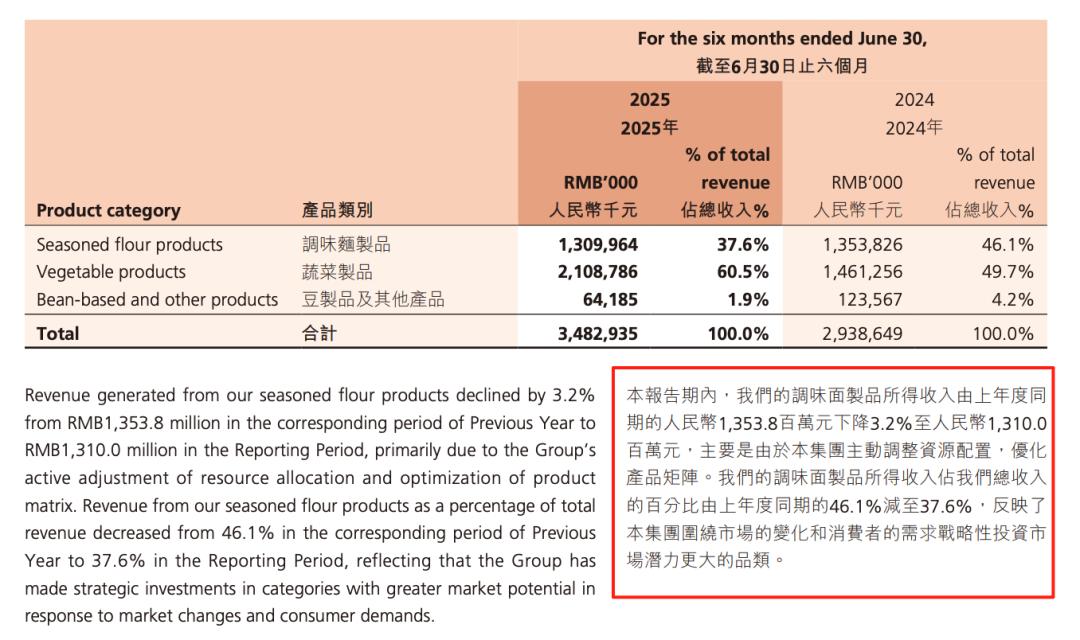
Core Viewpoint - The company Wei Long, known for its spicy strips, is facing a decline in its core business as revenue from seasoned flour products has dropped, leading to a shift in its market position and reliance on other product lines like vegetable products [1][7][11]. Group 1: Business Performance - In the first half of 2025, revenue from seasoned flour products (spicy strips) decreased by 3.25% to RMB 1.31 billion, accounting for 37.6% of total revenue, down from 46.1% in 2024 [2][7]. - The vegetable products segment, led by konjac products, saw a significant increase in revenue, reaching RMB 2.11 billion, a year-on-year growth of 44.31%, and now represents 60.5% of total revenue [2][11]. - Overall revenue for the first half of 2025 was RMB 3.48 billion, compared to RMB 2.94 billion in the same period of 2024, marking an 18.5% increase [2][11]. Group 2: Management Changes - The departure of key executives, including the CEO and CFO, has led to a family takeover of management positions, with all core roles now held by members of the Liu family [3][13]. - This shift towards a family-run governance structure raises concerns about transparency and market adaptability [18][20]. Group 3: Market Challenges - The spicy strip segment is experiencing intense competition, with many new entrants leading to market share erosion for Wei Long [10][11]. - Consumer preferences are shifting away from spicy strips, with healthier options like konjac products gaining popularity [9][10]. - The company's heavy reliance on offline sales channels, which accounted for 90.4% of revenue in the first half of 2025, limits its ability to adapt to the growing e-commerce market [23][24]. Group 4: Future Outlook - The company's growth is increasingly dependent on the vegetable products segment, which poses risks if this growth slows down due to rising raw material costs and intensified competition [11][12]. - Wei Long's product innovation has stagnated, with other product lines, such as bean-based products, showing a 48% decline in revenue [25]. - To regain its market position, Wei Long must overcome its family-centric governance and embrace market-driven management and innovation strategies [25][26].
国盛证券:2026年白酒业有望迎来改善 大众品配置优选两条复苏与成长双主线
Zhi Tong Cai Jing· 2026-01-07 03:29
Group 1: Core Insights - The report from Guosheng Securities indicates that the liquor industry is expected to fully release risks by 2025, with improvements in supply and demand anticipated in 2026, characterized by a "supply-first, demand-gradual" recovery [1] - Current market conditions show a triple bottom in sales, pricing, and financial reports, with short-term improvements in sales expected during the Spring Festival, and mid-term recovery in sales, pricing, and financial reports anticipated [1] Group 2: Consumer Trends - The overall consumption landscape is stabilizing, but prices are under pressure, with structural growth changes continuing; the food and beverage sector saw a cumulative decline of 4% in 2025, with liquor significantly impacted, down 7% year-to-date [1] - High-end consumption is recovering first, with experiential consumption leading the way; product life cycles are shortening, and there is a clear trend towards health-oriented products and improved trust in channels [1] Group 3: Liquor Industry Analysis - The supply side is clearing, with leading companies like Kweichow Moutai and Wuliangye stabilizing prices and boosting channel confidence; the industry is expected to prioritize volume over price and focus on sales and market share in 2026 [2] - Demand is gradually recovering, with sales showing signs of improvement; the peak sales period around the Spring Festival is expected to see continued recovery, particularly for leading brands [2] Group 4: Beer and Beverage Sector - The beer sector is anticipated to benefit from restaurant recovery, with expectations for volume and price performance to exceed forecasts; key stocks include Beijing Beer and China Resources Beer [3] - The beverage industry is expanding steadily, with segments like sugar-free tea and energy drinks leading growth; companies with strong brand and channel capabilities are likely to stand out in a competitive landscape [3] Group 5: Food Sector Insights - The restaurant supply chain is seeing a recovery in demand, with price wars easing; leading companies like Anjijia are expected to navigate price pressures effectively [4] - The snack sector is focusing on retail transformation and product-driven growth, with opportunities for standout products; the dairy sector is expected to see a turning point in raw milk cycles in the second half of 2026 [4] - The health supplement market in China is still in a growth phase, with new ingredients and effects presenting explosive opportunities; companies like H&H International Holdings are highlighted for their resilience [4]